2025-06-20 21:02
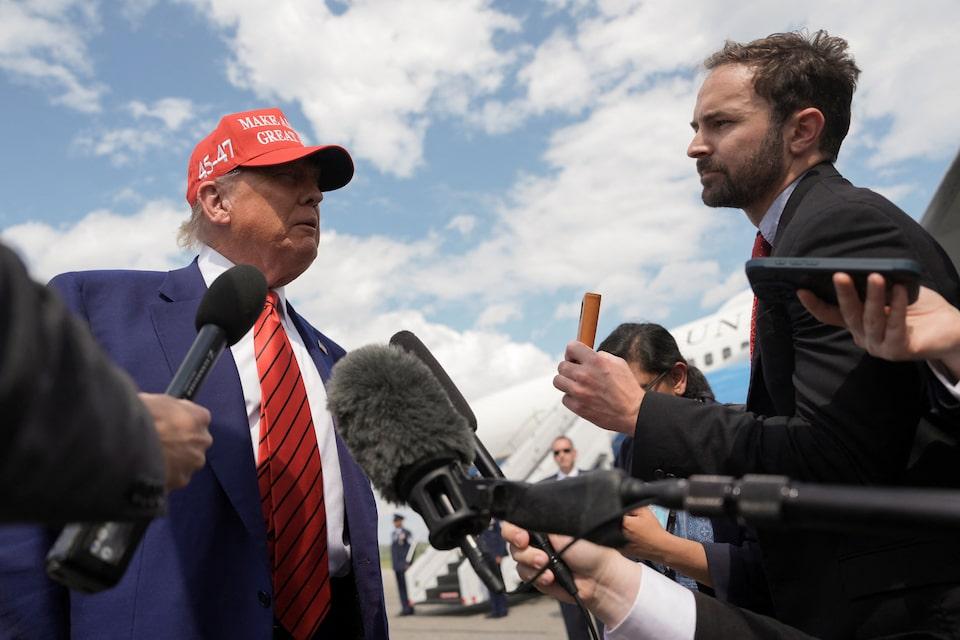
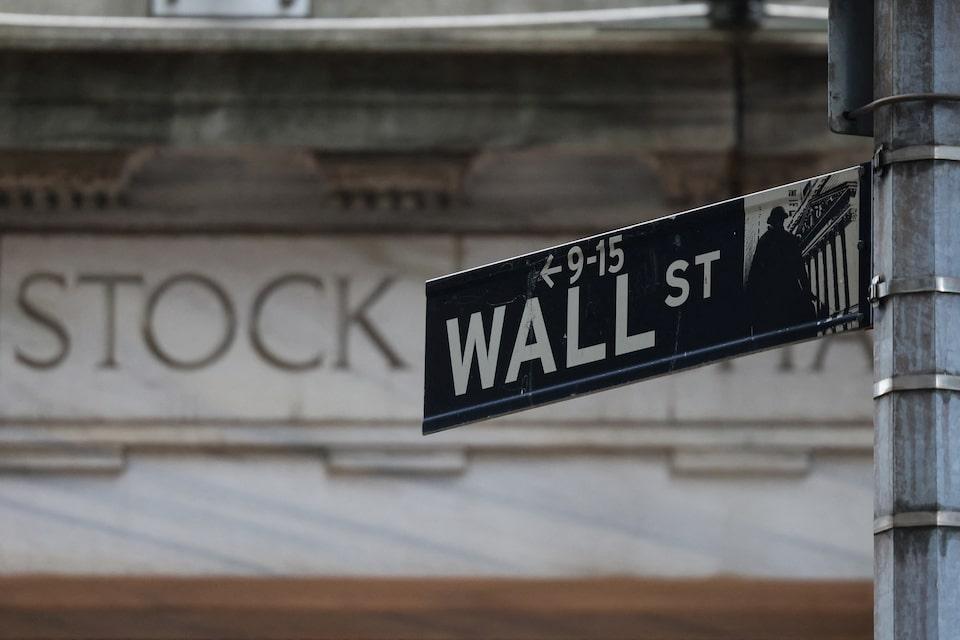
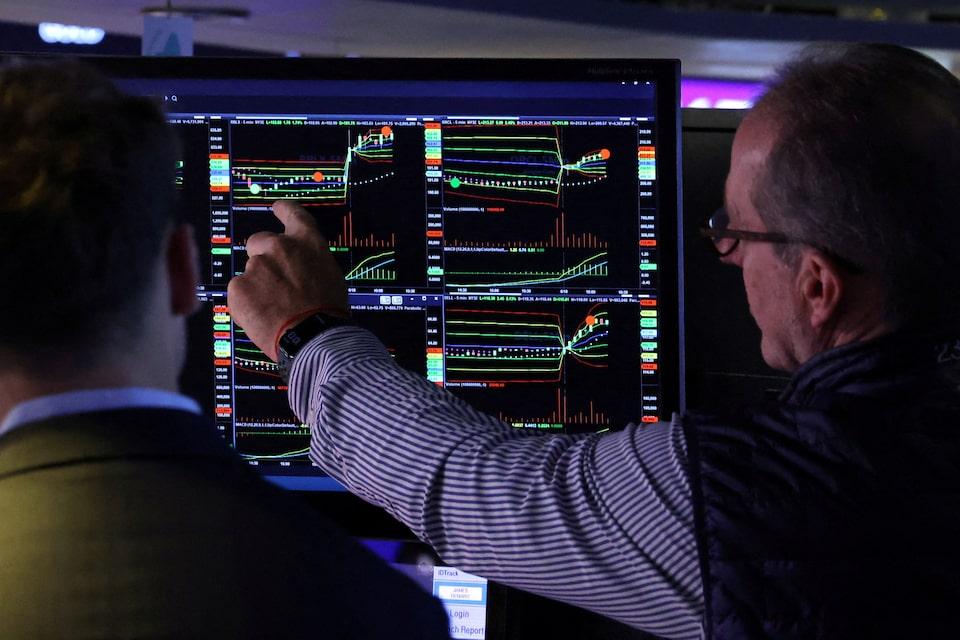
Kroger gains after lifting annual sales target Accenture falls as new bookings decreased in Q3 Indexes: Dow up 0.1%; S&P 500 down 0.2%; Nasdaq down 0.5% NEW YORK, June 20 (Reuters) - The S&P 500 and Nasdaq ended lower on Friday, with investors on edge over the Iran-Israel conflict heading into the weekend, as the U.S. considers whether to get involved. Trading was choppy for much of the session. The S&P 500 also ended lower for the week, while the Nasdaq registered a weekly gain. Sign up here. Iran said it would not discuss the future of its nuclear program while under attack by Israel, as Europe tried to coax Tehran back into negotiations. The White House said on Thursday that President Donald Trump will decide in the next two weeks whether the U.S. will get involved in the Israel-Iran air war, adding pressure on Tehran to negotiate. "Investors are a little bit nervous about buying stocks right in front of this situation and, more specifically, right in front of this weekend," said Rick Meckler, a partner at Cherry Lane Investments in New Vernon, New Jersey. Israel's attacks have been aimed at suppressing Tehran's ability to build nuclear weapons. A week into its campaign, Israel said it had hit dozens of military targets. Tech-related megacap stocks, including Nvidia (NVDA.O) , opens new tab, were among the biggest negatives on the S&P 500 and Nasdaq. The Dow Jones Industrial Average (.DJI) , opens new tab rose 35.16 points, or 0.08%, to 42,206.82, the S&P 500 (.SPX) , opens new tab lost 13.03 points, or 0.22%, to 5,967.84 and the Nasdaq Composite (.IXIC) , opens new tab lost 98.86 points, or 0.51%, to 19,447.41. For the week, the Dow was little changed, the S&P 500 was down 0.2% and the Nasdaq was up 0.2%. Friday's volume was higher than the recent average. The day marked a "triple-witching" event, which is the simultaneous expiration of stock options, stock index futures, and stock index options contracts that takes place once every quarter. U.S. exchanges' volume was 20.91 billion shares, compared with the 18.06 billion average for the full session over the last 20 trading days. Investors also weighed comments from Federal Reserve officials after the Fed on Wednesday left interest rates unchanged and Fed Chair Jerome Powell warned inflation could pick up pace over the summer as Trump's tariffs work their way to consumers. Fed Governor Christopher Waller said he felt the inflation risk from tariffs was small, and that the Fed should cut rates as soon as its next meeting. Richmond Fed President Tom Barkin took a more tempered view, saying there was no urgency to cut rates. Kroger (KR.N) , opens new tab shares jumped 9.8% after the grocery chain increased its annual sales growth forecast. Shares of Accenture (ACN.N) , opens new tab fell 6.9% after the IT services provider said new bookings decreased in the third quarter. Declining issues outnumbered advancers by a 1.1-to-1 ratio on the NYSE. There were 102 new highs and 59 new lows on the NYSE. On the Nasdaq, 1,894 stocks rose and 2,651 fell as declining issues outnumbered advancers by a 1.4-to-1 ratio. https://www.reuters.com/business/wall-st-futures-edge-lower-middle-east-war-enters-second-week-2025-06-20/
2025-06-20 20:43
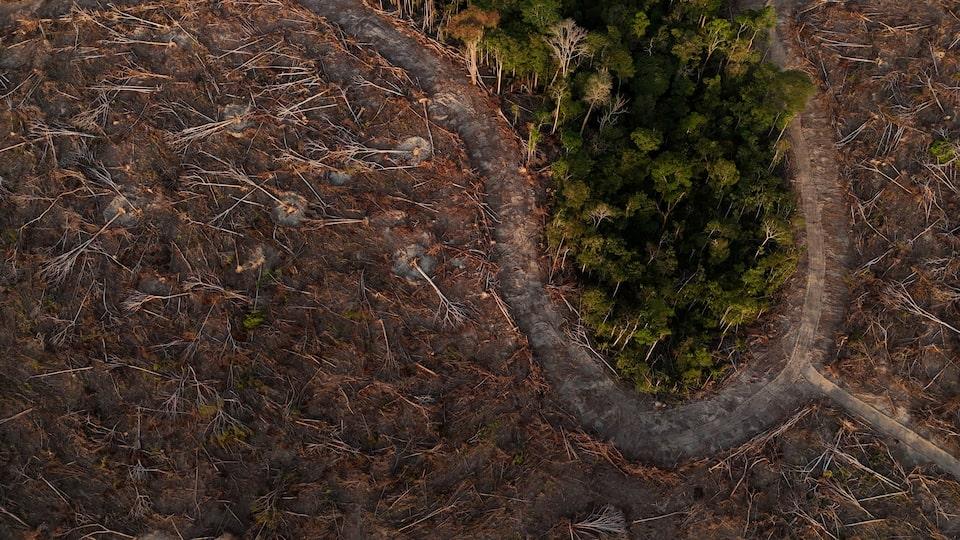
* Brazilian farmers are pushing soy crops deeper into Amazon * Powerful farm lobby attacks Amazon Soy Moratorium * Regrown rainforest does not get the same protection SANTAREM, Brazil, June 20 (Reuters) - Brazilian soy farmers are pushing further into the Amazon rainforest to plant more of their crops, putting pressure on a landmark deal signed two decades ago aimed at slowing deforestation. Many are taking advantage of a loophole in the Amazon Soy Moratorium, a voluntary agreement signed by the world's top grain traders in 2006 that they would not buy soy grown on land deforested after 2008. Sign up here. The Moratorium , opens new tab protects old-growth rainforest that has never before been cleared, but excludes many other kinds of vegetation and forests that have regrown on previously cleared land, known as secondary forests. While this land is also important for preserving the fragile Amazon biome, farmers can raze it and plant soy without violating the terms of the Moratorium and could even market it as deforestation-free. The most recent official annual report on the Moratorium, which covers the crop year 2022-2023, showed that soy planted on virgin forest has almost tripled between 2018 and 2023 to reach 250,000 hectares, or 3.4% of all soy in the Amazon. Its study area is limited to municipalities that grow over 5,000 hectares of soy. However, Xiaopeng Song, a professor at the geographical sciences department of the University of Maryland who has tracked the expansion of soy over the past two decades, found more than four times that forest loss. Satellite data he analyzed exclusively for Reuters shows 16% of Brazilian Amazon land under production for soy, or about 1.04 million hectares, is planted where trees have been cleared since 2008, the cutoff date agreed in the Moratorium. "I would like to see secondary forest and recovered forest included in the Moratorium," said Song. "It creates loopholes if we only limit it to primary forest." Abiove, the soy industry body overseeing the Moratorium, said in a statement that the agreement aims to rein in deforestation of old-growth forests while other methodologies have broader criteria that could lead to "inflated interpretations." Reuters was unable to make a detailed comparison because Abiove declined to share granular data. Data in the Moratorium report comes from Brazil's National Institute of Space Research, and its assessments are recognized internationally and monitored independently. Abiove said it was aware that some soy was planted in areas where regrown forests had been cut. The discrepancy over how to define a forest has huge implications for conservation. Deforestation, drought and heat driven by climate change bring the rainforest closer to a tipping pointbeyond which it starts an irreversible transformation into a savannah. Most scientists are calling not only for a halt to all deforestation but also for increased efforts to reforest. Viola Heinrich, a post-doctoral researcher at the GFZ Helmholtz Centre for Geosciences, who has extensively studied secondary forests in the Amazon, said these were "crucial" in limiting global warming even if initially less biodiverse. "We cannot achieve the goals of the Paris Agreement without actively increasing the carbon sink," she said, referring to regenerating ecosystems that rapidly absorb and store carbon. Secondary forests absorb carbon at a faster rate than old-growth forests, but store less of it. 'STOLEN AGAIN' On a scorching afternoon late last year, on the outskirts of Santarem, a port city by the Amazon River, farmers were in the last stages of clearing land. Felled trees were neatly stacked up in rows, ready to be burnt. Some of these trees were around three decades old, part of a secondary forest on land that was once razed to make way for cattle but later abandoned, satellite images showed. "What can be stolen once, can be stolen again," said Gilson Rego, of the Pastoral Land Commission, a church-affiliated group working with locals affected by deforestation, as he pointed to surrounding areas where soy had been planted. In the last five years, Rego saw the area dedicated to the crop soar. More than a dozen soy and subsistence farmers who spoke to Reuters said the main draw was the nearby Cargill terminal from where soy is shipped worldwide because it reduces costs for logistics. Cargill did not respond to requests for comment. The boom helped Brazil overtake the United States in 2020 as the world's largest soy exporter. About two thirds of it ships to China, whose largest buyer, Cofco, has signed up to the Moratorium and said earlier this year that it was committed to it. Nearly all of it is used to fatten animals for meat production. Still, Song estimated an additional 6 million hectares of the rainforest would have been lost to soy in Brazil without the Moratorium and related conservation efforts, considering the pace of expansion elsewhere. Neighboring Bolivia, he said, had become a deforestation hot spot. Brazilian farmers have always opposed the Moratorium and complained that even a small amount of deforestation can lead traders to block purchases from entire farms, a policy that Abiove is considering changing. Thousands of properties that cover some 10% of soy's footprint in the region are currently blocked. Adelino Avelino Noimann, the vice president of the soy farmers association in Para state, where Santarem is located, said the soy boom was creating opportunities in a poor country. "It's not fair that other countries in Europe could deforest and grow, and now we are held back by laws that are not even ours," said Noimann. LEGAL ATTACKS Farming groups allied with right-wing politicians, once a fringe movement, have launched lawsuits and legislative attacks on the Moratorium in the capital Brasilia, and half a dozen major agricultural states, seeking to weaken its provisions. At the end of April, a justice from Brazil's Supreme Court said it would allow the country's biggest farming state, Mato Grosso, to withdraw tax incentives from signatories of the Moratorium. The ruling still needs to be confirmed by the full court. Andre Nassar, the president of Abiove, the soy industry body that oversees the Moratorium, has already hinted that it could weaken rules to appease farmers. "The solution is not ending the Moratorium or keeping it as it is," Nassar told senators in April. "Something needs to be done." Global traders including ADM, Bunge, Cargill, Cofco and Louis Dreyfus Company had all signed up back in 2006. Abiove and the grain traders it represents have declined to publicly discuss details but environmental group Greenpeace, which is part of some discussions, said last year that behind closed doors there was a push from traders to weaken it. Environmentalists like Andre Guimaraes, an executive director at IPAM, another nonprofit that monitors the agreement, said that even with its faults it was important. "We still see the expansion of soy in the Amazon," he said. "But it could be worse." Other environmentalists said it should be reinforced by closing loopholes. Abundant water and nutrient-rich soil are the main reasons farmers from other parts of the country, including the soy heartland Mato Grosso, have moved to Para. "Here, we can have as many as three harvests," said Edno Valmor Cortezia, the president of the local farmers union, adding that farmers there can grow soy, corn and wheat on the same plot in a single year. In the municipality Belterra near Santarem, soy expansion stopped short only at a local cemetery and school. Raimundo Edilberto Sousa Freitas, the principal, showed Reuters court records and supporting evidence for two instances when 80 children and teachers had symptoms of pesticide intoxication last year. One farmer was later fined, the records showed, but the crop continues to claim more of the area every year. Occasionally, a few imposing trees that are protected by law are left in sprawling fields of soy, the last reminder of the lush biome that was once there. https://www.reuters.com/sustainability/climate-energy/corporate-deal-that-protected-amazon-soy-farming-starts-show-cracks-2025-06-20/
2025-06-20 20:41
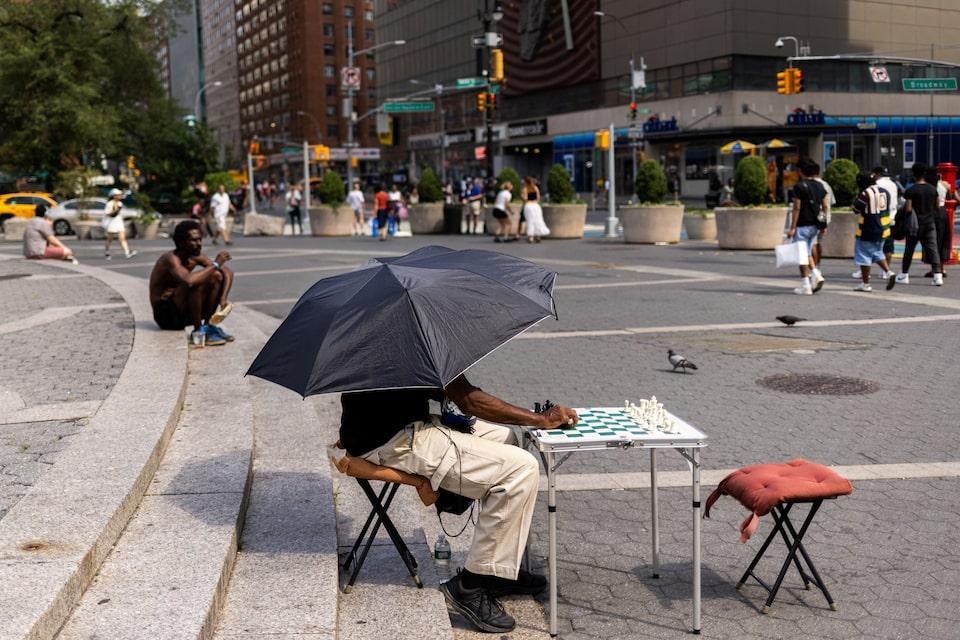
Heat dome causes extreme temperatures across US Midwest and East Coast Chicago and NYC open cooling centers, urge residents to seek relief Heat exhaustion and heatstroke pose serious health risks during high temperatures June 20 (Reuters) - Major cities across the United States are preparing for extreme temperatures caused by a heat dome that hit the U.S. Plains on Friday and is expected to expand to much of the rest of the country over the coming days. Potentially dangerous temperatures of 105 degrees Fahrenheit (40 Celsius) or over are expected this weekend in parts of the Midwest, including Chicago, before spreading to the Ohio Valley and much of the East Coast towards the start of next week, according to the National Weather Service. Sign up here. A heat dome is a ridge of high-pressure air in the upper atmosphere that stalls and traps hot air while keeping cooler air away even at night. In preparation, Chicago is opening cooling centers across the city, Mayor Brandon Johnson told a news conference on Friday. City workers are also checking on people who are homeless living in camps, urging them to go to a cooling center. "Chicago knows better than any other city in America of the danger of extreme weather, particularly extreme heat," said Johnson, referring to the upcoming 30-year anniversary of a heat wave that killed 700 Chicagoans. New York City Mayor Eric Adams urged residents to locate their nearest cooling center. Adams said the city would open up an extensive network of cooling centers and was working to distribute heat safety information to vulnerable residents. Heat affects health in several ways. Heat exhaustion, which can include dizziness, headaches, shaking and thirst, can affect anyone, and is not usually serious, providing the person cools down within 30 minutes. The more serious version is heatstroke, when the body's core temperature goes above 105 degrees Fahrenheit (40.6 degrees Celsius). It is a medical emergency and can lead to long-term organ damage and death. Symptoms include rapid breathing, confusion or seizures, and nausea. Heat advisories were already in effect across cities in Colorado, Nebraska and Kansas on Friday, with temperatures in Denver, Colorado, expected to rise to 100 degrees Fahrenheit by 3 p.m. Some of the highest temperatures on Friday are expected in towns close to the Nebraska-Kansas border, with those in Kansas's St. Francis and Oberlin, and McCook, Nebraska, likely to rise to 105 degrees and over before the end of the day, according to the National Weather Service. Forecasters say it is difficult to link record-breaking heat experienced across the United States in recent years to human-induced climate change, but such extremes are becoming more frequent because of global warming. https://www.reuters.com/business/environment/us-cities-prepare-extreme-temperatures-heat-dome-blankets-country-2025-06-20/
2025-06-20 20:35
ORLANDO, Florida, June 20 (Reuters) - - TRADING DAY Making sense of the forces driving global markets Sign up here. By Jamie McGeever, Markets Columnist I'd love to hear from you, so please reach out to me with comments at [email protected] , opens new tab. You can also follow me at @ReutersJamie and @reutersjamie.bsky.social. Cautious optimism around a possible de-escalation in the week-long war between Israel and Iran helped foster a relatively positive tone across world markets on Friday, lifting most stock markets and sealing oil's biggest decline in over a month. You'll note a high degree of equivocation there. President Donald Trump taking up to two weeks to decide on America's involvement offers no immediate clarity, even if he is open to direct talks, and negotiations between Iran's foreign minister and his European counterparts in Geneva are at the early stage. However, Wall Street didn't feel much of the earlier optimism on Friday. Tehran insists it will not talk directly to Washington about a new nuclear deal until Israel ceases its attacks. The bombing and retaliatory strikes continue. It's a fluid and fragile situation, but compared to a week ago when the conflict started, it's perhaps less bleak, which explains why many markets have regained their footing. It's worth remembering that Wall Street and world stocks earlier this week were a whisker away from their record highs. Developments in the war and on the diplomatic field over the weekend will go a long way to setting the tone for markets on Monday. And investors will continue to digest what was, in many ways, a pretty monumental week for central banks. To recap, the Federal Reserve took a hawkish turn in its projected interest rate path even though Chair Jerome Powell signaled policymakers are flying blind, while the Bank of Japan took a dovish turn in its balance sheet reduction plans. The Swiss National Bank cut rates to zero and admitted, albeit reluctantly, that rates could go negative, Norway's central bank delivered a surprise rate cut, and Brazil's central bank defied expectations by raising rates to the highest since 2006 and signaling it could tighten policy further. A raft of Fed officials are on the stump next week, and investors will be looking through the blizzard of headlines to see how the consensus stacks up against the new, less dovish 'dot plots'. Top of the bill will be Powell's semi-annual testimony to Congress on Tuesday and Wednesday. Fed Governor Christopher Waller told CNBC on Friday that a rate cut should be on the table next month because inflation is tame and unlikely to be boosted on a lasting basis by import tariffs. But Richmond Fed President Thomas Barkin told Reuters in an interview there's no rush to cut rates because tariffs could indeed fuel inflation. What's more, the economy and labor market are holding up well right now. It's gone pretty quiet on the trade front, an indication that the Trump administration is finding it harder than it imagined to secure the dozens of trade deals it promised - Trump himself has said that China and Japan are "tough" in their negotiations. China is not blinking, and why should it? As CIBC economists point out, China holds all the cards when it comes to global rare earths and pharmaceuticals supply, the U.S. is a much smaller market for its exports than it used to be, and Beijing has a wider array of retaliatory tools at its disposal than it did in 2018. Last but not least, "the tolerance to pain in autocratic China is notably higher than in the (still) democratic US," they note. The next few weeks will be pivotal for markets as investors eye the half-year point, the July 9 expiry of Trump's pause on 'reciprocal' tariffs, and Trump's two-week window to decide on the level of U.S. involvement in the Iran-Israel war. This Week's Key Market Moves Chart of the Week Two charts again, and they are related. The first is from Goldman Sachs and shows wage pressures in the developed G10 countries noticeably cooling (admittedly from elevated levels). This helps explain the second, from economist Phil Suttle, which shows developed and emerging market interest rate paths are diverging sharply - interest rates are coming down in DM, not so in EM. How long will that divergence last? Here are some of the best things I read this week: What could move markets on Monday? Opinions expressed are those of the author. They do not reflect the views of Reuters News, which, under the Trust Principles , opens new tab, is committed to integrity, independence, and freedom from bias. Trading Day is also sent by email every weekday morning. Think your friend or colleague should know about us? Forward this newsletter to them. They can also sign up here. https://www.reuters.com/business/autos-transportation/global-markets-trading-day-graphic-2025-06-20/
2025-06-20 19:54
LONDON, June 20 (Reuters) - Canada's Teck Resources (TECKb.TO) , opens new tab is weighing options to expand production of germanium, a strategic metal key to chipmaking, and is currently talking with governments, including Canada and the United States, on available funding, said Doug Brown, VP communications & government affairs. Teck's plan comes amid growing efforts to diversify supplies of critical minerals needed for the tech and defence sectors, as geopolitical tensions and trade barriers complicate access to materials mainly produced or refined in China. Sign up here. "We are examining options and market support for increasing production capacity of germanium," he told Reuters. China, which supplies around 60% of the world's refined germanium, restricted exports of the metal - along with gallium and antimony, all having broad military applications - to the United States, further escalating trade tensions between the world's two largest economies following Washington's crackdown on Beijing's chip sector. The export curbs were part of a broader effort launched in 2023, when China began imposing restrictions on critical mineral shipments, citing national security concerns. By controlling the export of these minerals, China aims to exert influence over the industries that use them, including renewable energy, defence, and chip manufacturing. Germanium is also used in semiconductors and infrared technology, fibre optic cables and solar cells. Teck is exploring ways to add to the current processing line using existing technology as one of the options, Brown said. Teck is North America's biggest germanium producer, and the fourth largest globally. Most of its germanium, a by-product of zinc ore concentrate at its Red Dog operations in Alaska, goes to the United States, via smelting and refining in British Columbia. Canada's germanium exports to the United States are currently exempt from tariffs as they comply with the USMCA (United States, Mexico, Canada) trade agreement. In a speech in Washington last January, Canada's Energy and Natural Resources Minister Jonathan Wilkinson welcomed partnerships with the United States to invest in critical minerals, including germanium. Canada's Energy Ministry declined to comment on funding for Teck, while saying that the prime minister is leading broader trade negotiations with the United States. https://www.reuters.com/world/china/teck-resources-eyes-output-boost-chipmaking-metal-germanium-2025-06-20/

2025-06-20 19:52
WASHINGTON, June 20 (Reuters) - President Donald Trump predicted on Friday that the United States will be able to negotiate trade deals with both India and Pakistan. Speaking to reporters as he arrived in New Jersey, Trump spoke optimistically about the potential for trade agreements with the two countries. Sign up here. https://www.reuters.com/world/china/trump-predicts-trade-deals-with-india-pakistan-2025-06-20/