2025-06-20 19:35
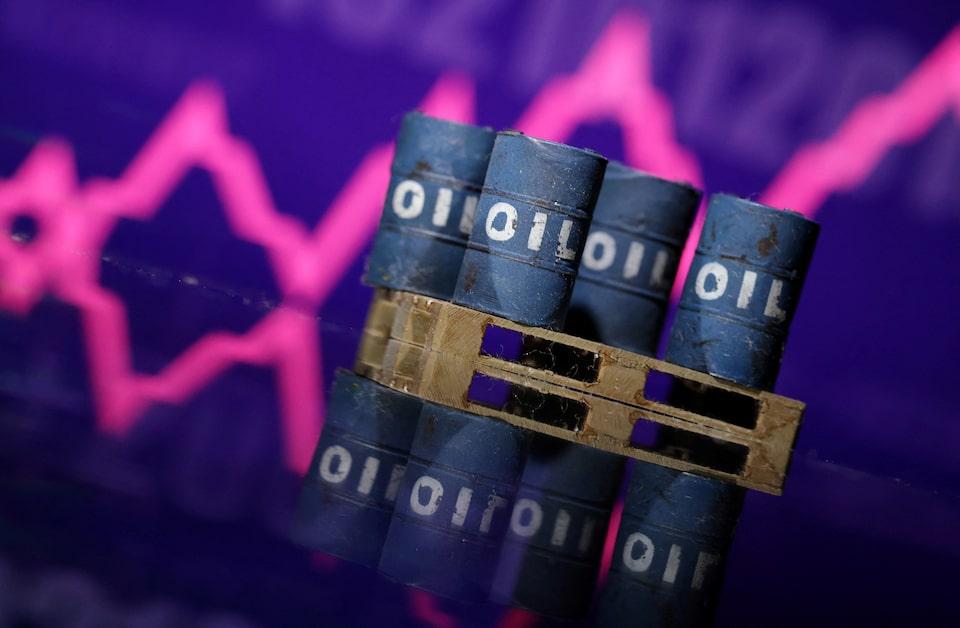
Hedging activity spikes as producers lock in higher prices US crude futures jump after Israel strikes Iran Oil producers need $65 a barrel on average to profitably drill HOUSTON, June 20 (Reuters) - Israel's surprise attack on Iran last week had oil prices spiking which sent U.S. producers scrambling to lock in the price gain, driving record hedging volumes that will help shield them from future price swings. West Texas Intermediate crude futures rose further this week, closing on Friday at around $75 a barrel. This prompted U.S. producers to secure additional price gains through 2026, having already driven hedging activity on the Aegis Hedging platform to a record high last Friday. Sign up here. Aegis Hedging, which handles hedging for roughly 25-30% of U.S. output, according to internal estimates, saw a record volume and greatest number of trades done on its trading platform on June 13. The U.S. produces some 13.56 million barrels per day of oil, according to the latest government figures. U.S. crude futures jumped 7% on June 13 to around $73 a barrel, after Israel struck Iran, the largest single day rise since July 2022. Prices had been hovering under where many producers would opt to hedge, hitting a four-year low of $57 a barrel in May as OPEC+ started hiking output while U.S. President Donald Trump waged a trade war. The jump on June 13 gave traders an opportunity to lock in prices for their barrels not seen in several weeks. When prices react to risk-related events - such as Israel's attack on Iran - as opposed to supply-and-demand fundamentals, the front of the oil futures curve rises more than later contracts, influencing whether producers opt for short- or long-term hedging strategies, according to Aegis Hedging. "In this case it was probably a six-month effect," said Matt Marshall, president of Aegis Hedging. Oil producers need a price of $65 a barrel on average to profitably drill, according to the first quarter 2025 Dallas Federal Reserve Survey. U.S. crude futures closed below $65 every day from April 4 to June 9, according to LSEG. "We stay disciplined and pay close attention to market volatility. We watch for accretive pricing to our existing hedges and layer in hedges to reduce risk to our asset revenue as well as meet our reserve-based lending covenants," said Rhett Bennett, chief executive at Black Mountain Energy, a producer with operations in the Permian Basin. A reserve-based lending covenant refers to a type of loan producers can obtain, based on the value of the company's oil and gas reserves. "Producers recognized that this could be a fleeting issue and so they saw a price that was above their budget for the first time in a few months, and instead of doing a structure that would give them a floor which is below market, they opted to be aggressive and lock in," said Aegis' Marshall. Aegis' customers often have hedging policies in which a certain amount of production must be hedged by a certain time in the year. "Producers had two months of hedges that they needed to catch up on," Aegis' Marshall said. Traders on June 13 exchanged the most $80 West Texas Intermediate crude oil call options since January on the Chicago Mercantile Exchange, expecting more upside to prices. A total of 33,411 contracts of August-2025 $80 call options for WTI crude oil were traded that day on a total trading volume of 681,000 contracts, marking the highest volume for these options this year, according to CME Group data. https://www.reuters.com/business/energy/oil-hedging-volumes-hit-new-records-us-producers-rush-lock-soaring-prices-2025-06-20/
2025-06-20 18:58
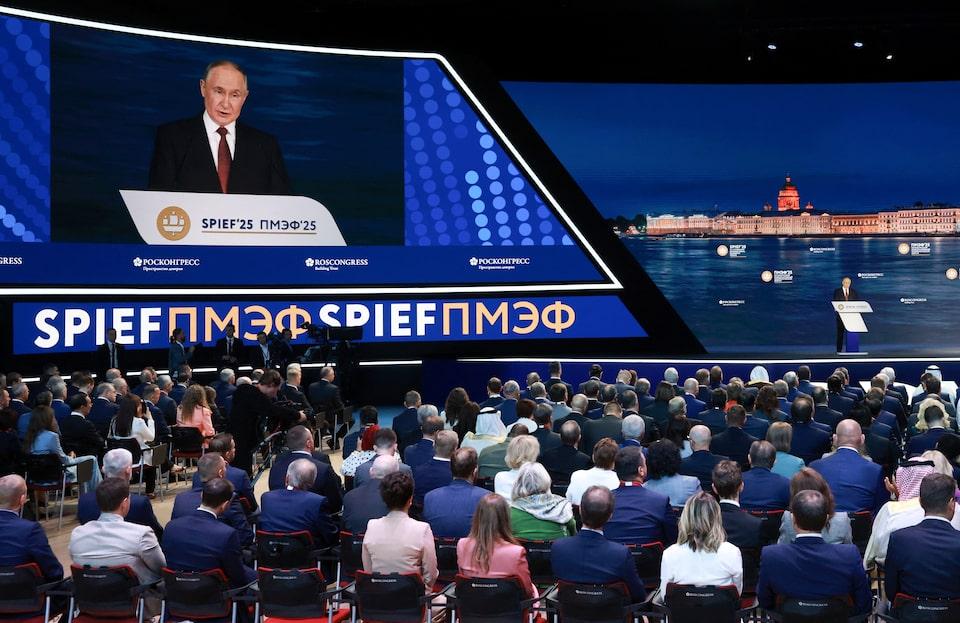
Putin says Russia must not let economy slip into recession Tells officials to ensure balanced growth for cooling economy Pressure mounting on central bank to cut rates more quickly Sberbank says it has financed no new projects this year ST PETERSBURG, Russia, June 20 (Reuters) - Russian President Vladimir Putin on Friday dismissed claims the war in Ukraine is devastating the Russian economy, citing continued growth, low debt and economic diversification as signs of resilience, while business leaders voiced concern about the economy's health. Speaking at the closing session of the Saint Petersburg Economic Forum, Putin responded to a moderator’s statement that credible reports suggest the war is “killing” the Russian economy. “As a well-known writer once said: ‘The reports of my death are greatly exaggerated,’” Putin said, quoting Mark Twain. Sign up here. Putin said 43% of Russia’s GDP is now unrelated to the energy or defence sectors, underscoring efforts to diversify the economy. The three-day forum featured intense debate over the risks of economic stagnation. Inflation remains high at 9.59% annually, more than double the central bank’s 4% target, but it has been gradually easing since late April, according to the economy ministry. In October, the Bank of Russia raised its key interest rate to its highest level since the early 2000s to combat inflation. Earlier this month, it cut the rate by one percentage point to 20%. But the Kremlin has criticised the move as insufficient, warning that the economy could cool too rapidly after two years of war-driven growth. “Our most important task is to ensure the economy’s transition to a balanced growth trajectory,” Putin said in a keynote address. He defined balanced growth as moderate inflation, low unemployment and sustained economic momentum. "At the same time, some specialists and experts point to the risks of stagnation and even recession. This should not be allowed under any circumstances," Putin said. Striking a more pessimistic tone, Economy Minister Maxim Reshetnikov warned on Thursday that Russia is teetering on the edge of a recession. He said future monetary policy decisions will determine whether the country avoids a downturn. Central Bank Governor Elvira Nabiullina, who has led the institution through multiple crises since 2013, has faced criticism over high interest rates and currency volatility. She remains in her post with Putin's personal support. Deputy Prime Minister Alexander Novak said: "It's time to cut the rate and start heating up the economy. Demand for credit is weak, said German Gref, CEO of Russia's largest lender, Sberbank (SBER.MM) , opens new tab, and called for faster rate cuts. "It is especially worrying that we, as the largest bank, which finances ... almost 60% of all investment projects in the country, have not financed a single new project since the new year," Gref said on Friday. Alexey Mordashov, majority shareholder of steelmaker Severstal, warned of a looming credit crisis and rising bankruptcies. He noted that steel consumption fell 14% in the first five months of 2025 compared to the same period last year. "This cooling is a serious problem right now,” Mordashov said. “Continuing with the current monetary policy could worsen these negative consequences.” https://www.reuters.com/markets/europe/russia-must-not-let-economy-slip-into-recession-says-putin-2025-06-20/
2025-06-20 18:08
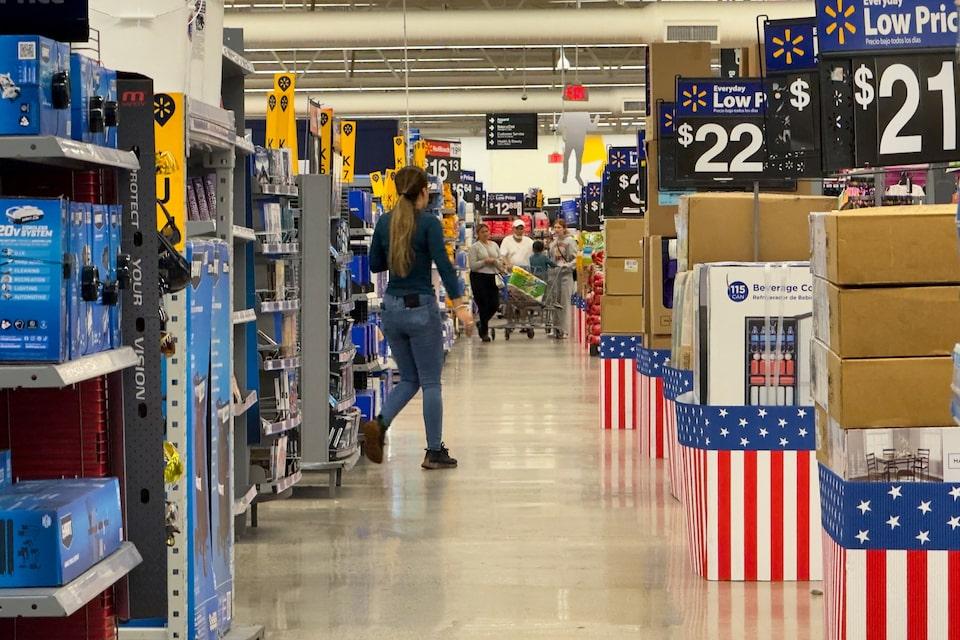
June 20 (Reuters) - A measure of future U.S. economic activity fell in May for the sixth straight month and triggered a recession signal, held down by consumer pessimism, weak new orders for manufactured goods, an uptick in jobless benefits claims and a drop in building permit applications. The Conference Board's Leading Economic Index fell by 0.1% to 99.0 last month after a downwardly revised 1.4% drop in April, which was the largest decline in the index since the spring of 2020 at the start of the COVID-19 pandemic. The decline matched the consensus expectation among economists polled by Reuters. Sign up here. A rebound in stock prices in May following a series of temporary roll backs in President Donald Trump's wave of tariffs was the main positive contributor to the index, the Conference Board's senior manager for business cycle indicators, Justyna Zabinska-La Monica, said in a statement. But that was slightly outweighed by those other factors. "With the substantial negatively revised drop in April and the further downtick in May, the six-month growth rate of the Index has become more negative, triggering the recession signal," she said. "The Conference Board does not anticipate recession, but we do expect a significant slowdown in economic growth in 2025 compared to 2024, with real GDP growing at 1.6% this year and persistent tariff effects potentially leading to further deceleration in 2026." The Leading Index had signaled a recession a few years ago during the peak of the inflation wave that followed the pandemic, but the economy never slid into contraction. https://www.reuters.com/world/us/us-leading-indicators-slip-may-triggering-recession-signal-conference-board-says-2025-06-20/
2025-06-20 17:43
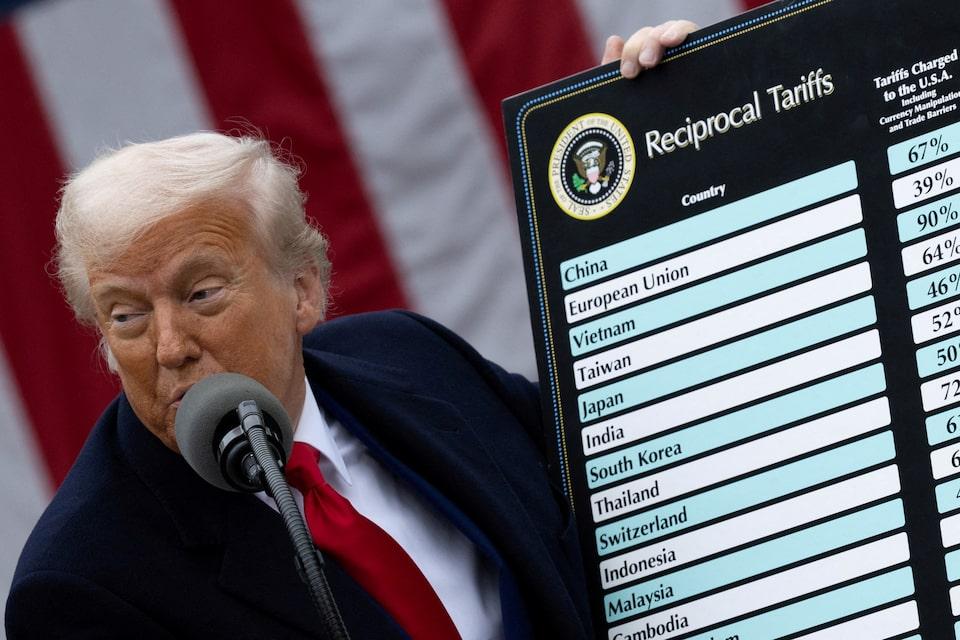
WASHINGTON, June 20 (Reuters) - The U.S. Supreme Court declined on Friday to speed up its consideration of whether to take up a challenge to President Donald Trump's sweeping tariffs even before lower courts have ruled in the dispute. The Supreme Court denied a request by a family-owned toy company, Learning Resources, that filed the legal challenge against Trump's tariffs to expedite the review of the dispute by the nation's top judicial body. Sign up here. The company, which makes educational toys, won a court ruling on May 29 that Trump cannot unilaterally impose tariffs using the emergency legal authority he had cited for them. That ruling is currently on hold, leaving the tariffs in place for now. Learning Resources asked the Supreme Court to take the rare step of immediately hearing the case to decide the legality of the tariffs, effectively leapfrogging the U.S. Court of Appeals for the District of Columbia Circuit in Washington, where the case is pending. Two district courts have ruled that Trump's tariffs are not justified under the law he cited for them, the International Emergency Economic Powers Act. Both of those cases are on appeal. No court has yet backed the sweeping emergency tariff authority Trump has claimed. https://www.reuters.com/legal/government/us-supreme-court-declines-speed-up-decision-taking-up-fight-over-trump-tariffs-2025-06-20/
2025-06-20 17:42
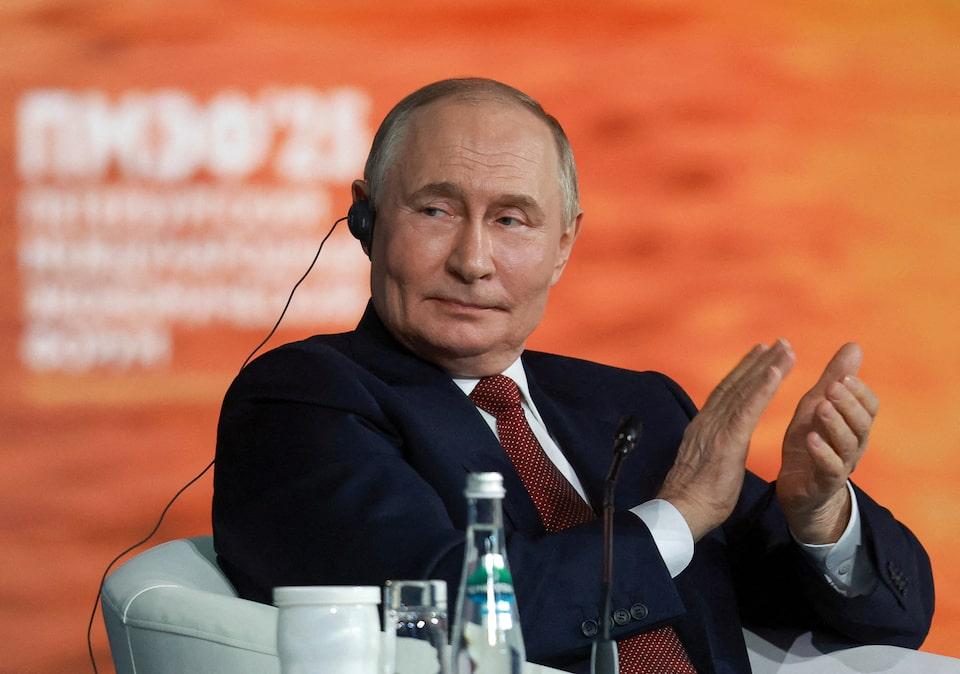
Oil markets have rallied since Israel-Iran conflict escalated Putin says OPEC+ is raising oil output, but gradually ST PETERSBURG, Russia, June 20 (Reuters) - Russian President Vladimir Putin said on Friday that oil prices had not risen significantly due to the conflict between Iran and Israel, and that there was no need for the OPEC+ group of oil producers to intervene in oil markets. Oil prices have rallied as a week-old air war between Israel and Iran escalated and uncertainty about potential U.S. involvement kept investors on edge, with Brent crude futures touching their highest since late January. Sign up here. Putin said the price of oil now stands at around $75 per barrel, while before the conflict escalated it stood at $65. "Of course, we see that the current situation in the Middle East, the current situation related to the conflict between Iran and Israel, has led to a certain increase in prices. But this increase, in the opinion of our experts, is not significant," Putin told the St Petersburg Economic Forum. Iran is the third largest producer among members of the Organization of the Petroleum Exporting Countries. Hostilities could disrupt its supply of oil and thereby increase prices. Putin also said OPEC and allies including Russia - a group known as OPEC+, which pumps about half of the world's oil - were increasing oil output, but doing so gradually, to ensure balance in the oil market and "comfortable" prices. "We will all see together how the situation unfolds. So far no immediate response is required," he said. https://www.reuters.com/business/energy/putin-says-no-need-opec-intervene-oil-market-due-iran-israel-conflict-2025-06-20/
2025-06-20 13:49
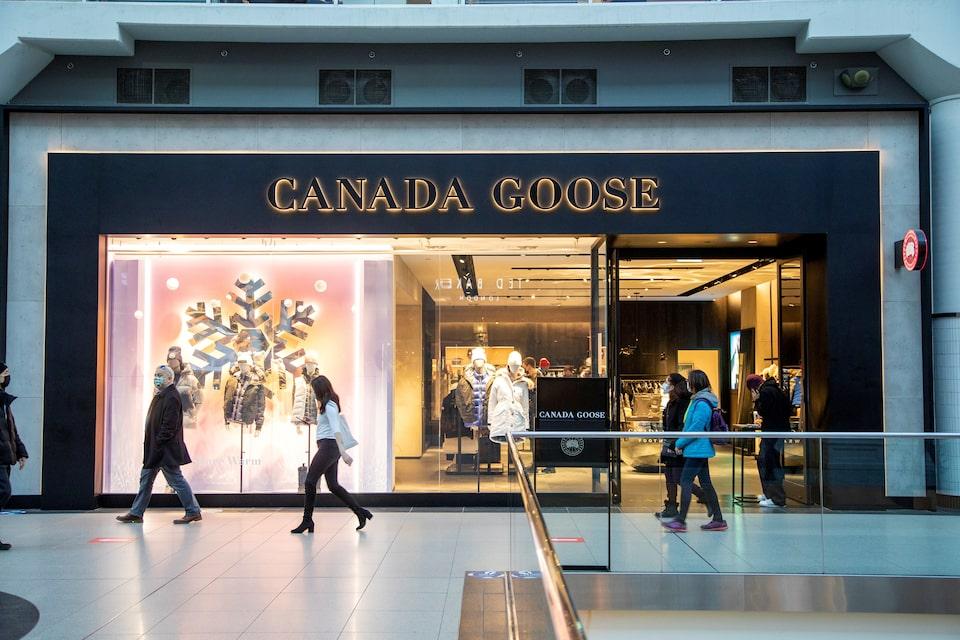
Retail sales in April grew by 0.3% led by motor vehicles, parts Advanced estimate show sales likely to contract by 1.1% in May Analysts had estimated April sales to increase by 0.5% OTTAWA, June 20 (Reuters) - Canada's retail sales were up in April on a monthly basis but were below estimates, data showed on Friday, as the momentum seen in the previous months when customers advanced purchases to beat the impact of tariffs continued. Retail sales in April grew by 0.3% to C$70.11 billion ($51.11 billion) from 0.8% observed in the month earlier, Statistics Canada said, adding sales grew in six of the nine subsectors. Sign up here. An advanced estimate of sales shows that the number is likely to contract by 1.1% in May. "Canadian consumers continued to spend in April, but a decline in the May advance estimate for retail sales provides another indication that the economy is heading for a stall in Q2," Andrew Grantham, senior economist at CIBC Capital Markets wrote in a note. Retail sales are closely watched by economists and analysts as they give an indication of the trend of the GDP. They had been largely increasing in the previous months as uncertainty around the timing and magnitude of tariffs brought forward purchases. The sales have started showing signs of decline as tariffs have come into effect and analysts expect that they are likely to go down in the coming months. Feedback from respondents for April highlighted the effects of trade tensions between Canada and the United States on Canadian retail businesses, the statistics agency said. "Despite six of nine subsectors posting monthly gains in retail sales, all nine subsectors saw a negative impact on sales," it said. Analysts polled by Reuters had estimated the April sales to increase by 0.5% on a monthly basis and 0.2% excluding automotive and parts sales. StatsCan reported that excluding automotive and parts sales, the number shrank by 0.3% from a drop of 0.8% in March. The biggest jump in sales in April came from sales at motor vehicle and parts dealers, registering a growth of 1.9%, and was led by sales at new car dealers and used car dealers. This is the biggest category of sales and contributes over a quarter of total retail sales. The biggest drop in sales came from gasoline stations and fuel vendors which shrank by 2.7% and were closely followed by sales at retailers selling clothing and accessories posting a drop of 2.2%. In volume terms, retail sales increased 0.5% in April. ($1 = 1.3718 Canadian dollars) https://www.reuters.com/world/americas/canadas-retail-sales-up-april-likely-post-big-drop-may-2025-06-20/