2025-06-20 10:47
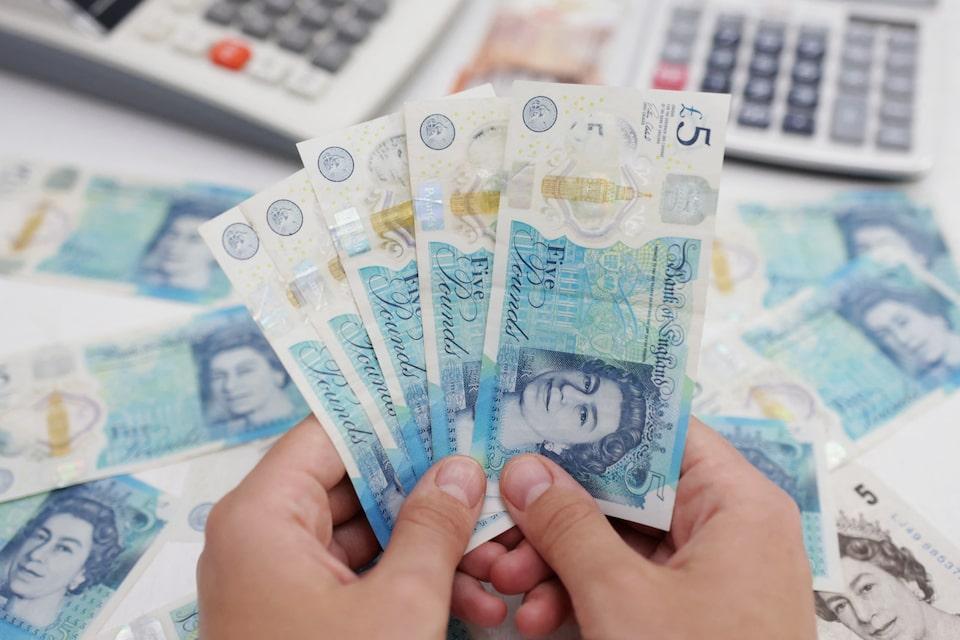
June 20(Reuters) - Sterling gained slightly against the dollar on Friday but was set for a loss on the week as uncertainty over the Israel-Iran conflict fuelled demand for traditional safe havens such as the greenback. Weak UK retail data earlier in the session and the Bank of England's decision on Thursday to keep rates unchanged had little effect on the pound. Sign up here. Sterling was 0.2% higher at $1.3495 but eased 0.6% against the dollar on the week, after two consecutive weeks of gains. The dollar was set for its biggest weekly rise in more than a month on Friday. The BoE said it was monitoring risks from a weaker labour market and higher energy prices on the back of the conflict as it held interest rates at 4.25% as expected on Thursday, sending the pound down briefly against the U.S. dollar. "The pound was only lightly touched by a consensus Bank of England hold yesterday," ING FX Strategist Francesco Pesole wrote in a note to clients. "Yesterday's 6-3 vote split for a cut can be interpreted marginally on the dovish side and is allowing markets to reinforce their conviction call on an August cut." Markets now priced in a near-60% chance for a quarter-point cut at the BoE's next policy meeting. The euro was marginally up to 85.43 pence on Friday, set for its second week of gains in a row. Sterling briefly pared some earlier gains against the U.S. dollar after weak British retail sales data, which saw volumes recording their sharpest drop since December 2023 last month, as demand fell after shoppers splurged on food, summer clothes and home improvements the month before. "Retail sales in May brought significant payback" after a "hard to explain" strength in the previous four months, Allan Monks, chief U.K. economist at J.P. Morgan, said. The figures came alongside government borrowing figures which showed a slightly larger than expected budget deficit of 17.7 billion pounds ($23.88 billion) for May. Britain's economy grew at a faster-than-expected pace in the first quarter of 2025 but shrank in April, as a property tax break ended and U.S. tariffs started to sting. The BoE forecasts overall growth of 1% for 2025. ($1 = 0.7413 pounds) https://www.reuters.com/world/uk/sterling-set-weekly-loss-middle-east-conflict-overshadows-domestic-data-2025-06-20/
2025-06-20 10:35
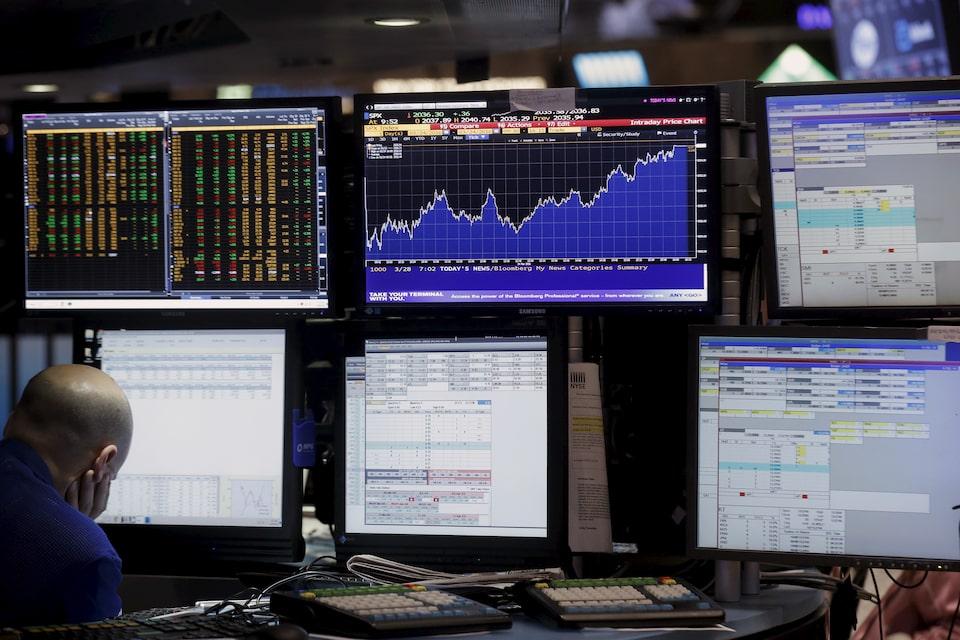
US attacks on Iran raise concerns over oil, retaliation S&P 500 near February highs but showing signs of stagnation Rising oil prices spark worries about inflation and Fed policy Investors look to upcoming U.S. economic data for market direction NEW YORK, June 22 (Reuters) - Investors are bracing for a knee-jerk selloff in stock markets on Monday after the weekend's U.S. attack on Iran raised the specter of retaliation and higher oil prices. The Middle East situation takes center-stage for markets, overshadowing U.S. economic data releases this week, as investors assess the impact of President Donald Trump's sudden decision to join Israel's military campaign against Iran on sentiment, inflation and interest rates. Sign up here. Trump called the attack "a spectacular military success" in a televised address to the nation and said Iran's nuclear enrichment facilities had been "obliterated". He said the U.S. military could go after other targets in Iran if the country did not agree to peace. Iran said it reserved all options to defend itself, warned of "everlasting consequences", and stepped up its strikes on Israel. "It’s hard to imagine stocks not reacting negatively and the question is how much. It will depend on Iranian reaction and whether oil prices spike," said Steve Sosnick, chief market strategist at Interactive Brokers in Connecticut. "Really what we’re looking at is secondary order effects – the price of oil, market stability, price hikes through the economy. No globally important stock is directly affected by what happened tonight.” The S&P 500 (.SPX) , opens new tab is hovering just below its February highs but has rebounded sharply from its early-April selloff, as tariff-related tensions have eased. However, the U.S. benchmark index appears to be taking a breather at some 2.7% below its February closing high. The index has gone 27 trading sessions since coming within 5% of its February high but has not yet set a new record. The Israel-Iran conflict has already sent oil prices sharply higher and led to caution in markets. So far, the oil market has absorbed most of the impact from geopolitical turmoil, with equities relatively stable. Yet stock investors remain concerned that higher oil prices could stoke inflation and upset plans for interest rate cuts from the Federal Reserve. On Wednesday, the Fed held rates steady and policymakers signaled borrowing costs are still likely to fall this year. But they estimated the overall pace of expected future rate cuts would be slower than they saw at their March meeting. They cited expectations that higher inflation would flow from President Donald Trump's tariff plans. "The question is oil prices and what that does to inflation – which has implications for monetary policy and how long the Fed keeps rates "meaningfully restrictive"," said Sonu Varghese, global macro strategist at Carson Group. While investors expect the Middle East tensions to spur a near-term bout of nervousness in stock markets and a rush to safer assets such as the dollar and Treasuries, some also envisage a de-escalation in the situation. "I think it’s going to be very positive for the stock market," said Mark Malek, chief investment officer of Siebert Financial, referring to how investors had been primed for two weeks of uncertainty based on White House statements that Trump would take that long to decide on his next move. "So this will be reassuring, especially since it seems like a one and done situation and not as if (the U.S.) is seeking a long-drawn out conflict." Investors will also parse a slew of incoming data releases, including U.S. business activity and housing sales on Monday, consumer confidence numbers on Tuesday and the PCE Price Index on Friday. U.S. consumer confidence plunged in the past few months, with households fearing tariffs could prompt a recession and higher inflation. However, with inflation in check and the U.S. reaching a truce in its trade fight with China, investors were expecting to see a pickup in sentiment. "Remember, the survey-based data all got crushed in the March, April, May time frame ... my expectation is we're still going to see an improvement," Mark Hackett, chief market strategist at Nationwide said before the U.S. struck Iran. https://www.reuters.com/business/wall-st-week-ahead-stocks-take-breather-investors-assess-geopolitics-economic-2025-06-20/
2025-06-20 10:26
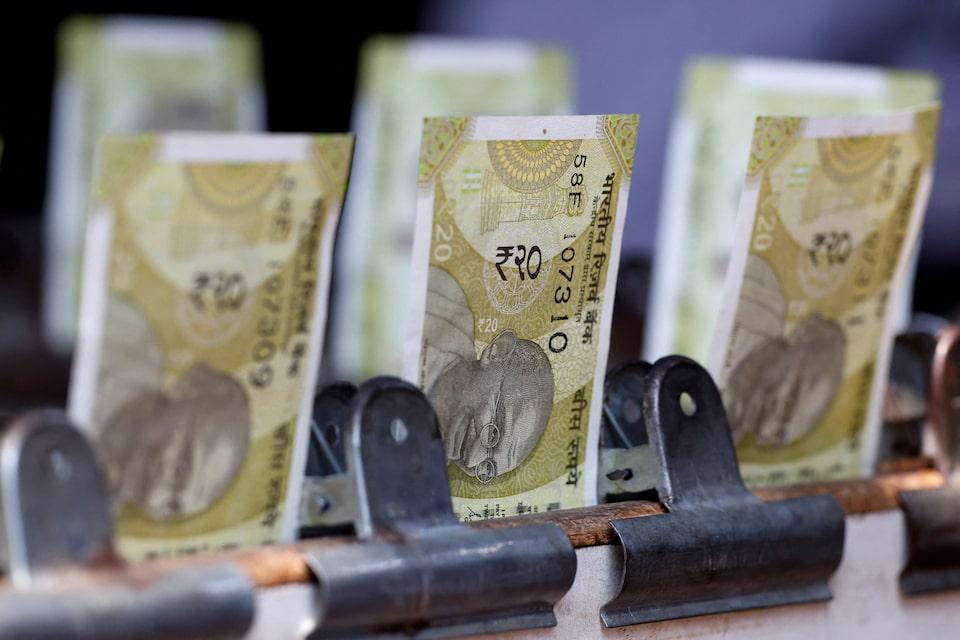
MUMBAI, June 20 (Reuters) - The Indian rupee ended modestly higher on Friday but fell for a second consecutive week as the conflict between Iran and Israel remained the key driver for global markets and kept energy prices elevated, pressuring oil-sensitive currencies in Asia. The rupee ended at 86.5850, up from its close of 86.7225 in the previous session. It was down nearly 0.6% on the week. Sign up here. While escalating tensions in the Middle East kept risk appetite under pressure for much of the week, markets found some relief on Friday after U.S. President Donald Trump pushed back a decision on U.S. military involvement in the Israel-Iran war. Brent crude oil prices declined more than 2% on the day after rallying to a five-month high of $79.04 per barrel earlier in the week. Most equity gauges in Asia logged gains, with India's benchmark equity indexes, the BSE Sensex (.BSESN) , opens new tab and Nifty 50 (.NSEI) , opens new tab, rising 1.3% each. Analysts pointed out that oil prices and the Middle East conflict would likely remain the key drivers for FX markets in the near term. On the day, the dollar index was a tad lower at 98.6 but was on course for a weekly gain. "The FX market has taken the somewhat lower probability of the U.S. intervening in Iran already this weekend as an opportunity to re-enter USD short positions, especially against European currencies," ING Bank said in a note. "This confirms that a constant flow of oil-positive, risk-negative geopolitical news is needed to keep the dollar supported," the note added. For the rupee, meanwhile, traders will also gauge the extent of portfolio inflows that a large IPO scheduled next week will draw. Sizeable inflows could help the rupee hold ground above the 86.50 mark while a sharp rise in crude oil prices could build momentum for a fall below 87, a trader at a foreign bank said. https://www.reuters.com/world/india/rupee-gains-slightly-cap-week-clouded-by-middle-east-conflict-2025-06-20/
2025-06-20 09:46
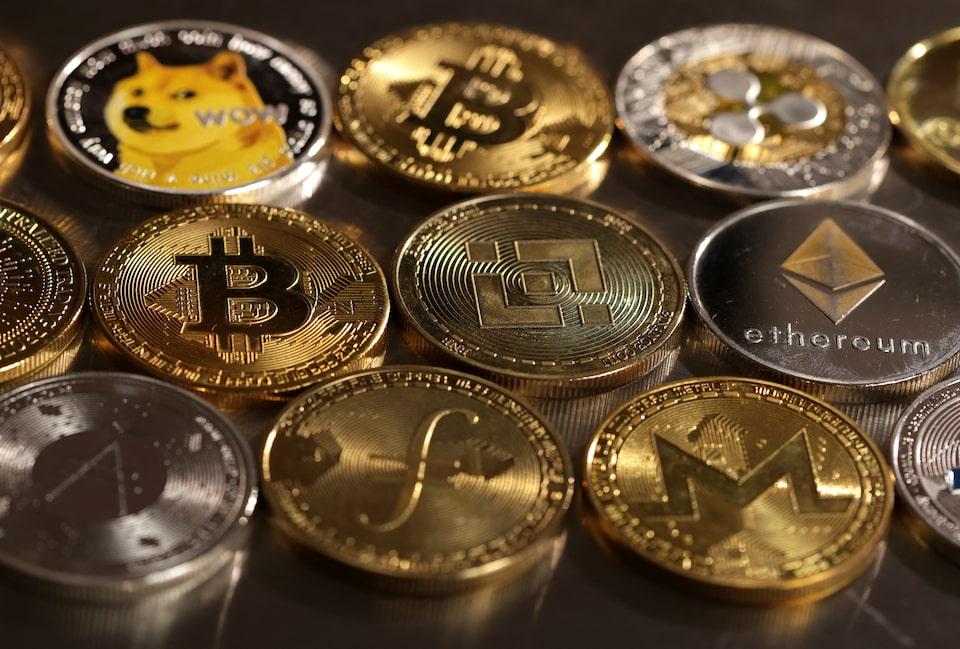
COPENHAGEN, June 20 (Reuters) - Norway aims to impose a temporary ban on the establishment of new data centres that mine cryptocurrency with the most power-intensive technology, in order to conserve electricity for other industries, the Nordic country's government said on Friday. "The Labour Party government has a clear intention to limit the mining of cryptocurrency in Norway as much as possible," Minister for Digitalization and Public Administration Karianne Tung said in a statement. Sign up here. "Cryptocurrency mining is very power-intensive and generates little in the way of jobs and income for the local community," she added. A temporary ban could be introduced during the autumn of 2025, the government said. https://www.reuters.com/technology/norway-plans-temporary-ban-power-intensive-cryptocurrency-mining-2025-06-20/
2025-06-20 07:51
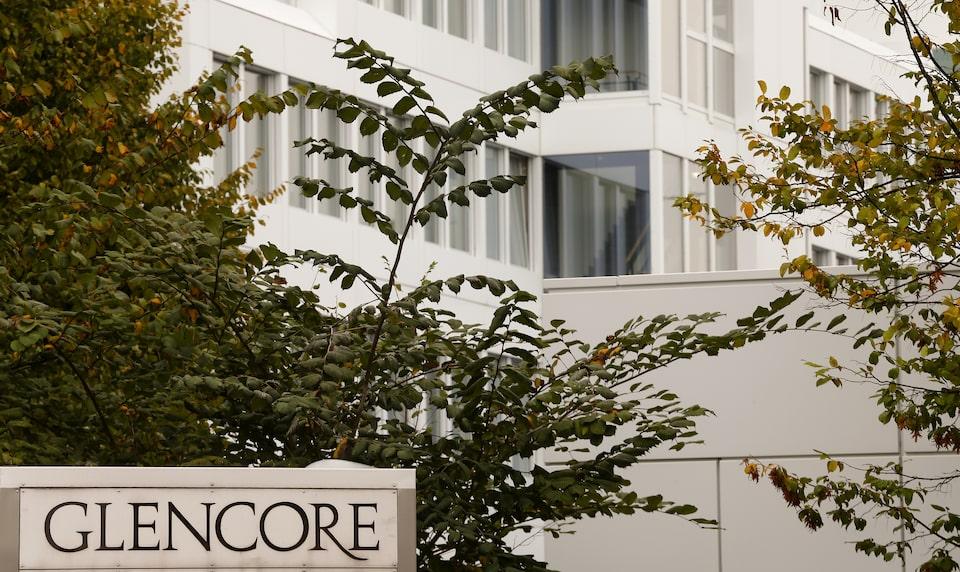
MELBOURNE, June 20 (Reuters) - Glencore (GLEN.L) , opens new tab has called its Mount Isa copper smelter unviable and is waiting to hear back on its requests for assistance from state and federal governments to keep the facility open amid tough global conditions, it said on Friday. The UK-listed miner has been sounding the alarm in local media about its Mount Isa smelting business in Queensland state as its related mining operations are set to close next month. Sign up here. It will then have to procure copper concentrate to process when excess global smelting capacity has pushed global processing fees to historic lows. "A combination of unprecedented smelting market conditions, high costs like energy, gas and labour, and a shortage of copper concentrates is currently making the Mount Isa copper smelter unviable," Glencore said in a statement. Glencore said it has approached both federal and Queensland state governments for support to keep the copper smelter and refinery operating. Several lawmakers visited the plant on Friday including Australia's industry and science minister, Tim Ayres, and Queensland resources minister, Dale Last. The state and federal governments have engaged extensively with Glencore to explore options for a viable path forward for the smelter, which is a critical asset for regional and state economies, the ministers said in a joint statement. "Any closure of the Mount Isa copper smelter would have a detrimental impact on Australia's sovereign capability and other facilities downstream that rely on the smelter," Ayres said in the statement, without giving any details on what options there might be to provide Glencore with any funding. Glencore said that it had put forward ideas for a "regional solution that would bridge the current economic gap and enable the smelter and refinery to continue operating." "We want to continue operating the smelter and refinery and look forward to hearing feedback from both federal and Queensland governments on a possible way forward,” said Troy Wilson, chief operating officer for Glencore’s Australian metals business, in a statement. https://www.reuters.com/markets/commodities/glencore-says-australia-copper-smelter-unviable-asks-government-help-2025-06-20/
2025-06-20 07:45
Oil up 20% in June but well below 2022 peak Dollar correlation with oil weakening Market inflation expectations creeping up LONDON, June 20(Reuters) - Global benchmark Brent crude oil is up around 20% so far in June, and set for its biggest monthly jump since 2020 as Israel-Iran tensions flare-up. Although relatively contained, the rise has not gone unnoticed just three years after Russia's invasion of Ukrainetriggered a surge in energy prices that ramped up global inflation and sparked aggressive interest rate hikes. Sign up here. Here is a look at what rising oil means for world markets. 1/ HOW HIGH? Oil prices have crept rather than surged higher with investors taking comfort from no noticeable interruption to oil flows. Still, pay attention. The premium of first-month Brent crude futures contract to that for delivery six months later this week rose to a six-month high as investors priced in an increased chance of disruptions to Middle East supply . It remained elevated on Friday. Trading at around $77 a barrel, Brent crude futures are below 2022's $139 high, but nearing pain points. "If oil goes into the $80-100 range and stays there, that jeopardizes the global economy," said ABN AMRO Solutions CIO Christophe Boucher. "We are just below that threshold." 2/ SUPPLY SHOCK? Traders have an eye on shipping, often seen as a key energy bellwether. About a fifth of the world's total oil consumption passes through the Hormuz Strait between Oman and Iran. Disruption here could push oil above $100, analysts say. Blocked shipping routes would compound any supply shock, as any increased output from OPEC+ may not reach the international market, said hedge fund Svelland Capital director, Nadia Martin Wiggen. The Organization of the Petroleum Exporting Countries' most recent monthly oil market report found production by the broader OPEC+ group rose in May by 180,000 barrels per day to 41.23 million bpd, less than the 411,000-bpd hike called for by the group's increase in its May quotas. Wiggen is watching freight rates closely. "So far, freight rates show that China, with the world's biggest spare refining capability, hasn't started panic buying oil on supply concerns," she said. "Once China starts to buy, freight rates will rise, and world's energy prices will follow." 3/ NO OIL, NO GROWTH Rising oil prices raise worries because they can lift near-term inflation and hurt economic growth by squeezing consumption. High oil prices work like a tax, say economists, especially for net energy importers, such as Japan and Europe, as oil is hard to substitute in the short term. Lombard Odier's chief economist Samy Chaar said that sustained oil prices above $100 would shave 1% off global economic growth and boost inflation by 1%. Unease rose after Israel launched its strike on Iran a week ago. An initial rally in safe-haven bonds soon evaporated as focus turned to the inflationary impact of higher oil. The euro zone five-year, five-year forward, a closely-watched gauge of market inflation expectations, climbed to its highest level in almost a month . "In the United States, $75 oil is enough to, if it's sustained, boost our CPI forecast by about half a percent by the year end, to go from 3 to 3.5%," said RBC chief economist Frances Donald. Turkey, India, Pakistan, Morocco and much of eastern Europe where oil is heavily imported are set to be hit hardest by the rise in crude prices. Those that supply it - Gulf countries, Nigeria, Angola, Venezuela and to some degree Brazil, Colombia and Mexico should get a boost to their coffers, analysts say. 4/ OH KING DOLLAR A shift is taking place in the dollar. In recent years, the currency has risen when oil rallies, but it has had only limited support from oil's latest rise, with a weekly gain of 0.7% . Analysts expect the dollar's downward trend to resume, given expectations of limited Middle East risks for now and underlying bearish sentiment. It has weakened around 9% so far this year against other major currencies, hurt by economic uncertainty and concern about the reliability of U.S. President Donald Trump's administration as a trading and diplomatic partner. No doubt, a weaker dollar heals the sting from higher oil, which is priced in dollars. "For oil-importing countries, the dollar's fall offers some relief, easing the impact of soaring oil prices and mitigating wider economic strain," UniCredit said. 5/ COMPLACENT STOCKS? In the absence of an oil-supply shock, world stocks are happy to stick near all-time highs. "Investors want to look past this until there's a reason to believe this will be a much larger regional conflict," said Osman Ali, Goldman Sachs Asset Management's global co-head of Quantitative Investment Strategies. Gulf markets sold off on the initial news, then stabilised somewhat, helped by the higher oil prices. U.S. and European energy shares, particularly oil and gas companies have outperformed (.SPNY) , opens new tab, (.SXEP) , opens new tab, as have defence stocks. (.SXPARO) , opens new tab Israeli stocks, (.TA125) , opens new tab up 6% in a week, have been the most notable outperformer. Stocks of oil consumers have been the worst hit, airlines stand out. https://www.reuters.com/business/energy/global-markets-oil-graphic-2025-06-20/