2025-06-20 05:54
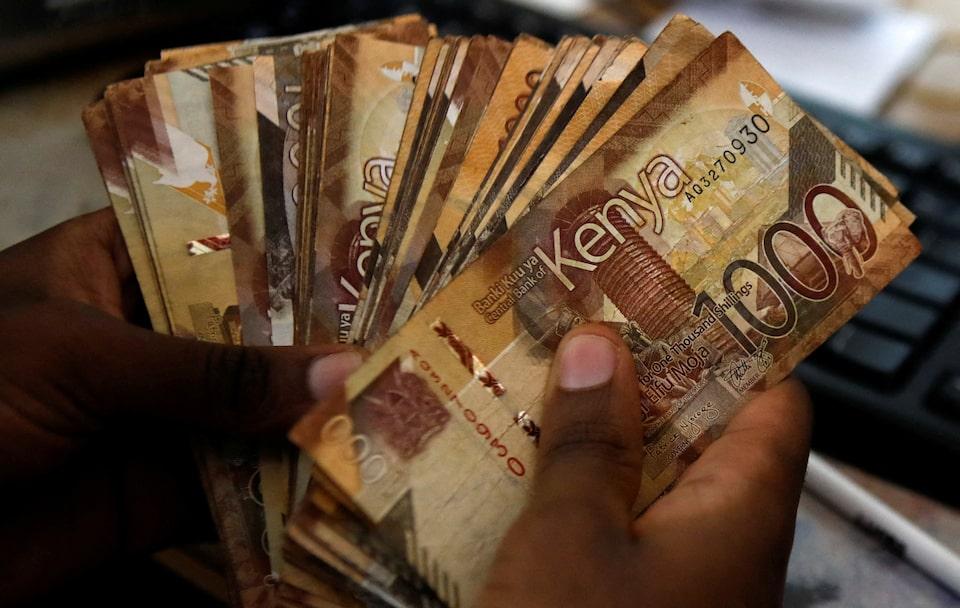
PAPSS payment system allows trade settlement in local currencies Experts says move aims of lowering trade costs South Africa using G20 presidency to advance local payments US President Trump warns against de-dollarisation efforts NAIROBI, June 20 (Reuters) - Africa's push for local currency payments systems - once little more than an aspiration - is finally making concrete gains, bringing the promise of less costly trade to a continent long hobbled by resource-sapping dollar transactions. But efforts to move away from the dollar face strong opposition and the threat of retaliation from U.S. President Donald Trump, who is determined to preserve it as the dominant currency for global trade. Sign up here. The move by Africa to create payments systems that do not rely on the greenback mirrors a push by China to develop financial systems independent of Western institutions. Countries like Russia, which face economic sanctions, are also keen for an alternative to the dollar. But while that movement has gained a sense of urgency due to shifting trade patterns and geopolitical realignments following President Trump's return to the White House, African advocates for payment alternatives are making their case based on costs. "Our goal, contrary to what people might think, is not de-dollarisation," said Mike Ogbalu, chief executive of the Pan-African Payments and Settlements System, which allows parties to transact directly in local currencies, bypassing the dollar. "If you look at African economies, you'll find that they struggle with availability for third-party global currencies to settle transactions," he said. Africa's commercial banks typically rely on overseas counterparts, through so-called correspondent banking relationships, to facilitate settlements of international payments. That includes payments between African neighbours. That adds significantly to transaction costs that, along with other factors like poor transport infrastructure, have made trade in Africa 50% more expensive than the global average, according to the UN Trade and Development agency. It is also among the reasons so much of Africa's trade - 84%, according to a report by Mauritius-based MCB Group - is with external partners rather than between African nations. "The existing financial network that is largely dollar-based has essentially become less effective for Africa, and costlier," said Daniel McDowell, a professor at Syracuse University in New York specialising in international finance. HOMEGROWN SYSTEMS According to data compiled by PAPSS, under the existing system of correspondent banks, a $200 million trade between two parties in different African countries is estimated to cost 10% to 30% of the value of the deal. The shift to homegrown payments systems could cut the cost of that transaction to just 1%. Systems like PAPSS allow a business in one country, Zambia for example, to pay for goods from another like Kenya, with both buyer and seller receiving payment in their respective currencies rather than converting them into dollars to complete the transaction. Using currencies like the Nigerian naira, Ghanaian cedi or South Africa's rand for intra-Africa trade payments could save the continent $5 billion a year in hard currency, Ogbalu told Reuters. Launched in January 2022 with just 10 participating commercial banks, PAPSS is today operational in 15 countries including Zambia, Malawi, Kenya and Tunisia, and now has 150 commercial banks in its network. "We have also seen very significant growth in our transactions," Ogbalu said, without providing usage data. The International Finance Corporation, the World Bank's private sector lending arm, has, meanwhile, started issuing loans to African businesses in local currencies. It views the switch as imperative for their growth, relieving them from the currency risks of borrowing in dollars, said Ethiopis Tafara, IFC's vice-president for Africa. "If they are not generating hard currency, a hard-currency loan imposes a burden that makes it difficult for them to succeed," he said. GEOPOLITICS AND THE TRUMP FACTOR Africa's campaign to boost regional payments systems has found a platform at the Group of 20 major economies, with South Africa leading the charge as holder of the G20's rotating presidency. It held at least one session on boosting regional payments systems when South Africa hosted a meeting of G20 finance ministers and central bank governors. And South Africa wants it to follow up the talk with concrete actions. The next meeting of G20 finance officials is scheduled for mid-July. "Some of the most expensive corridors for cross-border payments are actually found on the African continent," Lesetja Kganyago, South Africa's central bank governor, told Reuters during a G20 meeting in Cape Town in February. "For us to function as a continent, it's important that we start trading and settling in our own currencies." Talk of moving away from the dollar - either for trade or as a reserve currency - has drawn aggressive reactions from President Trump, however. After BRICS - a grouping of nations including Russia, China, India and Brazil along with Africans like South Africa, Egypt and Ethiopia - weighed reducing dollar dependence and creating a common currency, Trump responded with threats of 100% tariffs. "There is no chance that BRICS will replace the U.S. Dollar in International Trade, or anywhere else, and any Country that tries should say hello to Tariffs, and goodbye to America!," he wrote on Truth Social in January. In the months since, Trump has demonstrated his willingness to use tariffs to pressure and punish allies and foes alike, a strategy that has upended global trade and geopolitics. No matter its intentions in moving to more local currency transactions, Syracuse University's McDowell said Africa will struggle to distance itself from more politically motivated de-dollarisation efforts, like those led by China and Russia. "The perception is likely to be that this is about geopolitics," he said. https://www.reuters.com/world/africa/under-shadow-trump-warning-africa-pioneers-non-dollar-payments-systems-2025-06-20/
2025-06-20 05:42
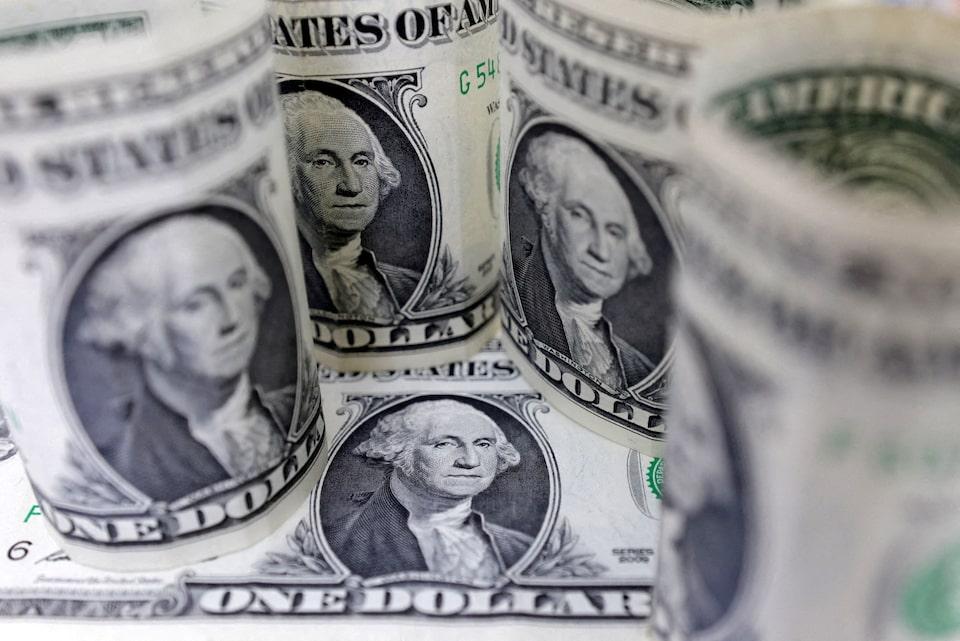
Dollar rises to three-week high vs yen Fears of US involvement in Middle East conflict spark dollar demand Iran rejects nuclear discussions while under fire But it backs further talks with Europe Oil prices, war and tariffs cloud central banks' policy outlooks June 20 (Reuters) - The U.S. dollar rose to a three-week high against the safe-haven yen and gained ground on the Swiss franc on Friday amid signs tension in the Middle East is easing after Iran backed continued discussions with Europe on its conflict with Israel. Iran's Foreign Minister Abbas Araqchi said Tehran backed further talks with Germany, France, Britain and the EU and would be prepared to meet again in the near future following talks in Geneva. Sign up here. Israel and Iran have been waging a week-long air battle as the Israeli government seeks to thwart Tehran's nuclear ambitions, and market participants are nervous about possible U.S. attacks on Iran, sparking a surge in the greenback. The dollar index, which measures the U.S. currency against six peers, including the Swiss franc, the Japanese yen, and the euro, is poised to rise 0.6% this week. On the day, however, the index remains flat after a Federal Reserve governor said rate cuts should be considered as soon as July, given recent inflation data. "The market's already expecting two rate cuts. That was just confirmed by the Fed this week. So, Mr. (Chris) Waller coming out and saying that, would indicate that it's coming sooner rather than later," said Joseph Trevisani, senior analyst at FX Street. Iran said on Friday it would not discuss the future of its nuclear programme while under attack by Israel, as Europe tried to coax Tehran back into negotiations. Meanwhile, the White House said on Thursday that President Donald Trump would decide on the potential involvement of the United States in the conflict in the next two weeks. That helped soothe nervous investors worried about an imminent U.S. attack on Iran, even though the prospect of a broadening Middle East conflict kept risk appetite in check. Brent crude fell more than 2%, but at around $77 a barrel, it was close to the January peak it hit last week. The drop supported the currencies of net oil-importing economies such as the euro and the yen. The euro rose 0.3% at $1.1534, while the yen fell 0.29% to 145.88 per dollar. The recent spike in oil prices added a new layer of inflation uncertainty for central banks across regions, which have been grappling with the potential impact of U.S. tariffs on their economies. Although the Federal Reserve this week stuck with its forecast of two interest rate cuts this year, Chair Jerome Powell warned of "meaningful" inflation ahead. Analysts saw the central bank's delivery as a "hawkish tilt" further underpinning the greenback's gains this week. The Swiss franc was flat at 0.8166 per dollar but was set for its largest weekly drop since the third week of April, after the country's central bank lowered interest rates to 0%. Investors were, however, taken aback by an unexpected 25-basis-point interest rate cut by Norges Bank, and the krone is down more than 2% against the dollar this week. Though geopolitical tensions were the main market focus this week, concerns about a trade war and the impact it may have on costs, corporate margins, and overall growth are ever-present, as Trump's early July tariff deadline looms. These concerns have weighed on the dollar, which is down about 9% this year. Currencies positively correlated to risk sentiment, such as the Australian and New Zealand dollars, were down 0.3% against the buck. Elsewhere, the yuan was flat at 7.1820 after China kept benchmark lending rates unchanged as expected. Sterling was flat at $1.3471, paring earlier gains after British retail sales data showed volumes recorded their sharpest drop since December 2023 last month. "The default setting may be position adjusting," said Marc Chandler, chief market strategist at Bannockburn Global Forex. https://www.reuters.com/world/middle-east/dollar-set-finish-week-upbeat-note-buoyed-by-safe-haven-appeal-2025-06-20/
2025-06-20 05:40
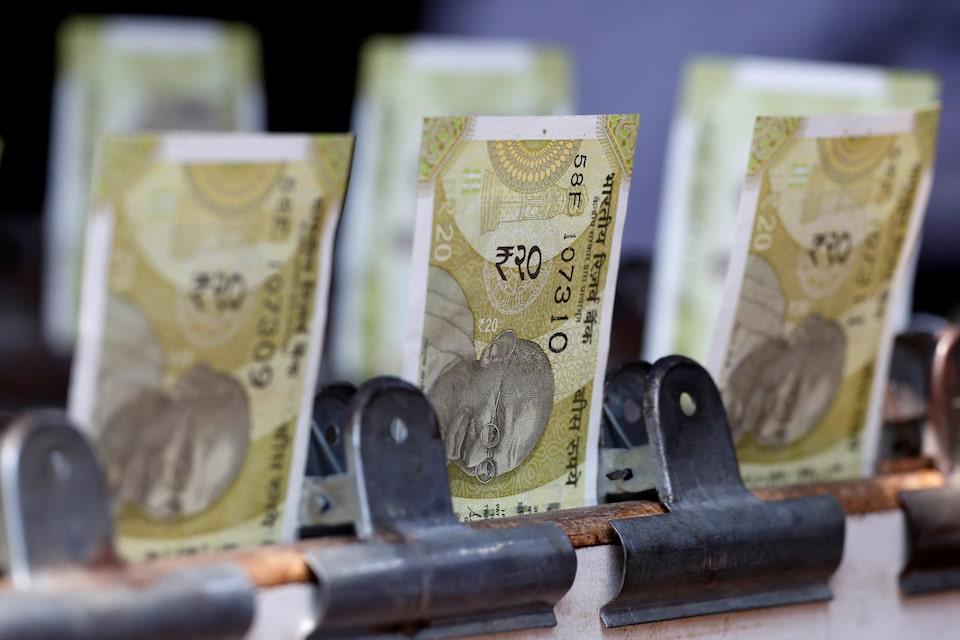
MUMBAI, June 20 (Reuters) - Lingering concerns over a potential escalation in the Iran-Israel conflict, coupled with expectations of portfolio inflows are fuelling mixed views on the rupee's trajectory for the coming week, traders said. A spike in oil prices from a potential escalation in the conflict could weigh on the rupee, but an upcoming large IPO expected to draw foreign inflows may help recoup recent losses, they added. Sign up here. The rupee has declined little over 1% this month so far, with a large stock of its decline occurring after Israel attacked targets in Iran last Friday. The attacks also raised concerns about disruption of global oil prices, sending Brent crude oil futures to a five-month peak of $79 per barrel hit on Thursday. The currency hit a three-month low on Thursday but eased 0.1% to 86.63 as of 11:05 a.m. on Friday, comforted by a dip in oil prices after the White House said President Donald Trump will decide in the next two weeks whether the U.S. will become involved in the Israel-Iran air war. Meanwhile, expectations that Indian lender HDB Financial's $1.5 billion IPO is likely to draw sizeable inflows could are seen as a positive for the rupee, a trader at a private bank said. The trader pointed out that he would prefer to keep tight stop-losses on speculative positions since the risk of two-way moves next week could be elevated. On the technical front, the dollar-rupee pair is "nearing overbought territory, with a possible dip toward 86.35–85.95 before resuming an uptrend toward 87.80–88.00," said FX advisory firm Mecklai Financial said in a Friday note. On the day, most Asian currencies ticked up as well with the Korean won leading gains. The dollar index eased below the 99 handle while India's benchmark equity indexes, the BSE Sensex (.BSESN) , opens new tab and Nifty 50 (.NSEI) , opens new tab rose about 0.9% each. https://www.reuters.com/world/india/middle-east-worries-portfolio-inflow-hopes-feed-rupee-bears-bulls-alike-2025-06-20/
2025-06-20 05:39
Global stocks ease as Trump holds off Middle East intervention Oil slips, but posts weekly gain No clear progress from European negotiations on Iran Flight to safety boosts U.S. Treasuries NEW YORK, June 20 (Reuters) - Major Wall Street indexes closed lower on Friday while oil prices fell after U.S. President Donald Trump held back from immediate military action in the Israel-Iran conflict. All eyes remained trained on the Middle East one week after an initial Israeli assault drew Iranian retaliation. The U.S. imposed Iran-related sanctions a day after Trump said he might take two weeks to decide on further action. Sign up here. According to preliminary data, the S&P 500 (.SPX) , opens new tab lost 0.21%, while the Nasdaq Composite (.IXIC) , opens new tab shed 0.49%. The Dow Jones Industrial Average (.DJI) , opens new tab, however, rose 38.47 points, or 0.09%, to 42,210.13. Stocks had been broadly positive at the open, and dipped in and out of negative territory during the session. Global benchmark Brent crude futures fell 2.3% to settle at $77.01 a barrel, but gained 3.6% in the week. Front-month U.S. crude - which did not settle on Thursday due to a U.S. holiday and expires on Friday - ended down 0.28% at $74.93, with a weekly gain of 2.7%. "Investors are a little bit nervous about buying stocks right in front of this situation and, more specifically, right in front of this weekend," said Rick Meckler, a partner at Cherry Lane Investments in New Vernon, New Jersey. The new sanctions target entities, individuals and vessels providing Iran with defence machinery, and were seen as a sign of a diplomatic approach from the Trump administration. "However, while Israel and Iran carry on pounding away at each other, there can always be an unintended action that escalates the conflict and touches upon oil infrastructure," PVM analyst John Evans said. European foreign ministers urged Iran to engage with the U.S. over its nuclear programme after high-level talks in Geneva about a potential new nuclear deal ended with little sign of progress. Europe's main bourses had ended their session a touch higher, following similar gains across Asia (.MIAPJ0000PUS) , opens new tab. MSCI's gauge of stocks across the globe (.MIWD00000PUS) , opens new tab fell 0.01% on the day. Gains on Hong Kong's Hang Seng, and South Korea's Kospi (.KS11) , opens new tab linked to newly elected President Lee Jae Myung's stimulus, had boosted Asian shares during that session. FED SPLIT Federal Reserve policymakers made their first public comments since Chair Jerome Powell said on Wednesday that borrowing costs were likely to fall this year, but that he expects "meaningful" inflation ahead as Trump's tariffs raise prices for consumers. The close split between governors on how to manage the risks was in full view as Governor Christopher Waller said the central bank should consider cutting as soon as the next meeting, while the Richmond Fed's Tom Barkin said there was no urgency to cut. Powell had also cautioned on Wednesday against holding on too strongly to the forecasts. Treasury yields fell after Waller's comments, and as concerns about the Middle East conflict supported demand for safe haven bonds. The yield on benchmark 10-year notes fell 2 basis points to 4.375%, from 4.395% late on Wednesday. Demand rose for the U.S. dollar, pushing the greenback to a three-week high against the yen. The dollar rose 0.03% against a basket of currencies including the yen and the euro , with the euro up 0.3% at $1.1528. The index is poised to rise 0.6% this week. Prices for gold , another traditional refuge, fell 0.13% to $3,365.91 and were poised for a weekly loss. https://www.reuters.com/world/china/global-markets-wrapup-1-2025-06-20/

2025-06-20 05:36
Chinese authorities issue first red alerts for 2025 Most years result in billions of dollars in economic losses Meteorologists attribute extreme weather to climate change BEIJING, June 20 (Reuters) - Central and southern China were on high alert for more flash floods on Friday as the annual East Asia monsoon gathered pace and extreme rainfall threatened disruption in the world's second-largest economy. Red alerts, the first for this year, were issued late on Thursday covering the provinces of Anhui, Henan, Hubei, Hunan, Guizhou, and Guangxi region, state news agency Xinhua reported, citing the water resources ministry and national weather forecaster. Sign up here. Extreme rainfall and severe flooding, which meteorologists link to climate change, increasingly pose major challenges for policymakers as they threaten to overwhelm ageing flood defences, displace millions, and wreak havoc on China's $2.8 trillion agricultural sector. China's rainy season, which arrived earlier than usual this year in early June, is usually followed by intense heat that scorches any crops that survive waterlogged soil, depletes reservoirs, and warps roads and other infrastructure. Economic losses , opens new tab from natural disasters exceeded $10 billion last July, when the rainfall typically peaks. Damage was triple that amount in 2020 when China endured one of its longest rainy seasons in decades, lashed by rain for more than 60 days, or about three weeks longer than usual. On Thursday, heavy rain in southern Hunan triggered the largest floods since 1998 in the upper and lower reaches of the Lishui River after its water levels breached the safety mark by more than two metres. Videos uploaded to Douyin, as TikTok is known in China, show the river spilling onto main roads and carrying debris downstream. In the hilly metropolis of southwestern Chongqing, apartment blocks were submerged in muddy waters and some vehicles were swept away as floods gushed down streets, according to state media on Thursday. In some cases, the waters almost reached the top of power lines. Nearly 300 people were evacuated from towns and villages in a mountainous county in Chongqing, where cumulative daily rainfall had reached 304 mm (12 inches), with at least one local river swelling by 19 metres due to converging precipitation from the mountains, state broadcaster CCTV reported. On Wednesday, power supply was disrupted in the city of Zhaoqing in southern Guangdong province as flood waters rose more than five metres above warning levels, breaking historical records, local media reported. https://www.reuters.com/business/environment/china-warns-extensive-flooding-after-heavy-rains-2025-06-20/

2025-06-20 05:04
LONDON, June 20 (Reuters) - Copper smelters are now so desperate to find raw material they are paying miners for converting their concentrates into refined metal. So-called treatment and refining charges (TCRC) should be a core revenue stream for copper smelters but spot charges have been negative since the start of the year and the mid-year negotiations have also kicked off with a negative number. Sign up here. Low treatment charges feed copper's perennial bull narrative of too little mine supply but the current implosion in processing fees is as much about too much demand from too many new smelters. The imbalance looks unsustainable, particularly if smelters accept a negative charge for the mid-year talks, which set the price for much higher volumes than the spot market. But equally unsustainable is the copper industry's preference for pricing concentrates on an annual or semi-annual basis. ACID LIFELINE The good news for smelters is that spot treatment charges appear to have stopped falling. The bad news is that they have done no more than stabilise at $-45 per ton (TC) and -4.5 cents per lb (RC) level, according to Benchmark Mineral Intelligence. Smelters which chose to lock in tonnages over the full year are partly insulated but this year's benchmark terms of $21.5 per ton were also the lowest in at least 20 years. The mid-year negotiations look likely to generate a still lower outcome, although smelters will understandably balk at locking in a negative TCRC for contracts that could run into 2026. Smelters have a couple of financial life-lines in the form of valuable by-products such as gold and silver. They also produce sulphuric acid, which has been rising sharply in price in China thanks to demand from the phosphate fertilizer industry. But a copper smelter's main source of income should really be copper, which is clearly not the case right now. TOO MANY SMELTERS It's not as if mines haven't been increasing production. Global output rose by 2.1% in 2023, 2.8% in 2024 and by another 1.2% in the first quarter of this year, according to the International Copper Study Group. China's imports of copper concentrates have been running strong, hitting a new annual high of 28.2 million tons bulk weight last year and up 7.5% year-on-year in the first four months of 2025. It's just that too much Chinese smelting capacity has been brought on line too quickly with newcomers chasing down available tonnage. Scrap is an alternative feed for some but this is an increasingly competitive market and Chinese imports of copper recyclable material are no more than flat so far this year relative to 2024. The rapid scale-up of Chinese processing capacity is clear to see in the country's production of refined metal. May output jumped by almost 14% year-on-year, according to the National Bureau of Statistics. Local data provider Shanghai Metal Market estimates production so far this year has grown by 11% over 2024 levels. A couple of Western smelters have already closed under the margin squeeze. Glencore (GLEN.L) , opens new tab placed its Pasar smelter in the Philippines on care and maintenance in February. Sinomine did the same with its Tsumeb plant in Namibia earlier this month. But Chinese operators are doubling down in what appears to be a last-man-standing strategy. BREAKING POINT The world's mines are not going to be able to lift collective output by the same margin as China has increased smelting capacity. And the stresses in the raw materials supply chain are only going to get worse as new smelters fire up in Indonesia, ending the country's role as a key concentrates supplier to Asian smelters. Something will have to give, particularly since Chinese copper demand is expected to cool due to a scaling-back of subsidies for the over-heated solar panel sector. But with Chinese smelters not blinking, it could take some time before the current supply-demand imbalance is corrected through more capacity closures. That means more stress also on the industry's price discovery process, which is still rooted in annual deals. There has been some movement towards quarterly pricing and even spot pricing but largely in China. This, as smelters are finding out, is a big problem if the annual price is a negative number. A negative mid-year deal sets an ominous precedent. Markets such as iron ore have moved away from annual benchmarks which couldn't capture spot price volatility or sudden shifts in supply dynamics. Even lithium, widely perceived as too bespoke a commodity for standardised futures trading, can now be hedged on a liquid CME contract. It may be time for copper smelters to have a fundamental rethink about how they price their role in the processing chain. Because right now they're quite literally giving money away to the miners. The opinions expressed here are those of the author, a columnist for Reuters https://www.reuters.com/markets/commodities/copper-smelters-are-facing-both-market-pricing-crises-2025-06-20/