2025-06-20 05:36
Chinese authorities issue first red alerts for 2025 Most years result in billions of dollars in economic losses Meteorologists attribute extreme weather to climate change BEIJING, June 20 (Reuters) - Central and southern China were on high alert for more flash floods on Friday as the annual East Asia monsoon gathered pace and extreme rainfall threatened disruption in the world's second-largest economy. Red alerts, the first for this year, were issued late on Thursday covering the provinces of Anhui, Henan, Hubei, Hunan, Guizhou, and Guangxi region, state news agency Xinhua reported, citing the water resources ministry and national weather forecaster. Sign up here. Extreme rainfall and severe flooding, which meteorologists link to climate change, increasingly pose major challenges for policymakers as they threaten to overwhelm ageing flood defences, displace millions, and wreak havoc on China's $2.8 trillion agricultural sector. China's rainy season, which arrived earlier than usual this year in early June, is usually followed by intense heat that scorches any crops that survive waterlogged soil, depletes reservoirs, and warps roads and other infrastructure. Economic losses , opens new tab from natural disasters exceeded $10 billion last July, when the rainfall typically peaks. Damage was triple that amount in 2020 when China endured one of its longest rainy seasons in decades, lashed by rain for more than 60 days, or about three weeks longer than usual. On Thursday, heavy rain in southern Hunan triggered the largest floods since 1998 in the upper and lower reaches of the Lishui River after its water levels breached the safety mark by more than two metres. Videos uploaded to Douyin, as TikTok is known in China, show the river spilling onto main roads and carrying debris downstream. In the hilly metropolis of southwestern Chongqing, apartment blocks were submerged in muddy waters and some vehicles were swept away as floods gushed down streets, according to state media on Thursday. In some cases, the waters almost reached the top of power lines. Nearly 300 people were evacuated from towns and villages in a mountainous county in Chongqing, where cumulative daily rainfall had reached 304 mm (12 inches), with at least one local river swelling by 19 metres due to converging precipitation from the mountains, state broadcaster CCTV reported. On Wednesday, power supply was disrupted in the city of Zhaoqing in southern Guangdong province as flood waters rose more than five metres above warning levels, breaking historical records, local media reported. https://www.reuters.com/business/environment/china-warns-extensive-flooding-after-heavy-rains-2025-06-20/

2025-06-20 05:04
LONDON, June 20 (Reuters) - Copper smelters are now so desperate to find raw material they are paying miners for converting their concentrates into refined metal. So-called treatment and refining charges (TCRC) should be a core revenue stream for copper smelters but spot charges have been negative since the start of the year and the mid-year negotiations have also kicked off with a negative number. Sign up here. Low treatment charges feed copper's perennial bull narrative of too little mine supply but the current implosion in processing fees is as much about too much demand from too many new smelters. The imbalance looks unsustainable, particularly if smelters accept a negative charge for the mid-year talks, which set the price for much higher volumes than the spot market. But equally unsustainable is the copper industry's preference for pricing concentrates on an annual or semi-annual basis. ACID LIFELINE The good news for smelters is that spot treatment charges appear to have stopped falling. The bad news is that they have done no more than stabilise at $-45 per ton (TC) and -4.5 cents per lb (RC) level, according to Benchmark Mineral Intelligence. Smelters which chose to lock in tonnages over the full year are partly insulated but this year's benchmark terms of $21.5 per ton were also the lowest in at least 20 years. The mid-year negotiations look likely to generate a still lower outcome, although smelters will understandably balk at locking in a negative TCRC for contracts that could run into 2026. Smelters have a couple of financial life-lines in the form of valuable by-products such as gold and silver. They also produce sulphuric acid, which has been rising sharply in price in China thanks to demand from the phosphate fertilizer industry. But a copper smelter's main source of income should really be copper, which is clearly not the case right now. TOO MANY SMELTERS It's not as if mines haven't been increasing production. Global output rose by 2.1% in 2023, 2.8% in 2024 and by another 1.2% in the first quarter of this year, according to the International Copper Study Group. China's imports of copper concentrates have been running strong, hitting a new annual high of 28.2 million tons bulk weight last year and up 7.5% year-on-year in the first four months of 2025. It's just that too much Chinese smelting capacity has been brought on line too quickly with newcomers chasing down available tonnage. Scrap is an alternative feed for some but this is an increasingly competitive market and Chinese imports of copper recyclable material are no more than flat so far this year relative to 2024. The rapid scale-up of Chinese processing capacity is clear to see in the country's production of refined metal. May output jumped by almost 14% year-on-year, according to the National Bureau of Statistics. Local data provider Shanghai Metal Market estimates production so far this year has grown by 11% over 2024 levels. A couple of Western smelters have already closed under the margin squeeze. Glencore (GLEN.L) , opens new tab placed its Pasar smelter in the Philippines on care and maintenance in February. Sinomine did the same with its Tsumeb plant in Namibia earlier this month. But Chinese operators are doubling down in what appears to be a last-man-standing strategy. BREAKING POINT The world's mines are not going to be able to lift collective output by the same margin as China has increased smelting capacity. And the stresses in the raw materials supply chain are only going to get worse as new smelters fire up in Indonesia, ending the country's role as a key concentrates supplier to Asian smelters. Something will have to give, particularly since Chinese copper demand is expected to cool due to a scaling-back of subsidies for the over-heated solar panel sector. But with Chinese smelters not blinking, it could take some time before the current supply-demand imbalance is corrected through more capacity closures. That means more stress also on the industry's price discovery process, which is still rooted in annual deals. There has been some movement towards quarterly pricing and even spot pricing but largely in China. This, as smelters are finding out, is a big problem if the annual price is a negative number. A negative mid-year deal sets an ominous precedent. Markets such as iron ore have moved away from annual benchmarks which couldn't capture spot price volatility or sudden shifts in supply dynamics. Even lithium, widely perceived as too bespoke a commodity for standardised futures trading, can now be hedged on a liquid CME contract. It may be time for copper smelters to have a fundamental rethink about how they price their role in the processing chain. Because right now they're quite literally giving money away to the miners. The opinions expressed here are those of the author, a columnist for Reuters https://www.reuters.com/markets/commodities/copper-smelters-are-facing-both-market-pricing-crises-2025-06-20/

2025-06-20 04:32
A look at the day ahead in European and global markets from Stella Qiu So, President Donald Trump said we may need to wait two more weeks until he decides whether to launch a U.S. attack on Iran. In the meantime, markets are mostly breathing a sigh of relief but remain cautious over conflict in the Middle East. Sign up here. Brent crude oil prices fell 2.5% on Friday, erasing some of their recent gains but still on track for a 3.7% weekly rise, up for a third straight week. Falling oil prices appear to have given European stocks a reason to cheer, with EUROSTOXX 50 futures rising 0.7% and FTSE futures up 0.3%. Nasdaq futures and S&P 500 futures were both 0.2% lower. Some analysts have pointed to Trump's two-week deadlines for other key decisions, including in letters to U.S. trade partners on tariff negotiations, and the hope is that Tehran in the interim will be pressured to come to the negotiating table. Stocks were mixed in Asia on Friday, with Japan and Australia falling while China was higher. South Korea's share benchmark (.KS11) , opens new tab outperformed with a jump of 1.1%, topping the 3,000 level for the first time since early 2022, after newly elected President Lee Jae Myung announced a stimulus spending plan. The U.S. dollar was also on the back foot, although it is set for a weekly gain of 0.5% on safe-haven flows spurred by the Middle East conflict. Still, one week of gains would not reverse the recent declining trend and many analysts expect the dollar's losses have further to run. China kept its benchmark lending rates unchanged on Friday as widely expected while data from Japan showed core inflation at a two-year high, keeping pressure on the Bank of Japan to hike rates again. Investors, however, doubt that such a move would come before December. Overnight, a number of central banks in Europe sent out dovish signals, including Norway's central bank which delivered its first rate cut since 2020. The Swiss National Bank cut rates to zero and did not rule out going negative, while the Bank of England held policy steady but saw a need for further easing. Key developments that could influence markets on Friday: -- Germany PPI data for May -- UK retail sales data for May -- ECB releases its economic bulletin https://www.reuters.com/world/china/global-markets-view-europe-2025-06-20/
2025-06-20 03:28
India is global leader in equity derivative trading volumes Global trading firms expand India teams, add hires Interest swells after Jane Street's $2.4 billion profit Surging demand for top university talent drives up pay MUMBAI, June 20 (Reuters) - Half a dozen global trading giants, from Citadel Securities and IMC Trading to Millennium and Optiver, are ratcheting up their presence in India's booming derivatives markets, fuelling a hiring spree and pushing exchanges to improve technology. The firms' hiring plans, being reported for the first time, come amid expectations that large domestic consumer and investor bases will help shield India from global turmoil sparked by the trade policies of U.S. President Donald Trump. Sign up here. The South Asian nation made up nearly 60% of global equity derivative trading volumes of 7.3 billion in April, the Futures Industry Association says, while its regulators say notional turnover of the contracts has grown 48 times since March 2018. For Western firms, the gold rush is too big to ignore, particularly after U.S. trading firm Jane Street earned $2.34 billion from its India trading strategy last year, some of the firms' executives said. "We have seen competition increasing both on the trading front, where you see more players going for the same opportunities, and on the job market as well," said Jocelyn Dentand of global high-speed trader IMC Trading. The firm plans to grow its team by more than 50% by the end of 2026 to stand at more than 150, added Dentand, the managing director of its India unit. Foreign investors turned buyers of Indian stocks in April and May, purchasing a net $2.8 billion, as they abandoned their previous selling stance from October 2024 to March 2025, prompted by high valuations and slower growth in earnings. Citadel Securities, a market-making firm founded by well-known investor Kenneth Griffin, runs a leaner team of around 10, including a recently hired chief operating officer for India as well as a country head of trading, said a source familiar with the firm's plans, adding that it continued to seek talent. Citadel Securities declined to comment for the report. Hedge fund Millennium is expanding its India desk via Dubai and Singapore, said a source with direct knowledge of the matter, who also sought anonymity on the same grounds. Millennium declined to comment for the story. Netherlands-based Optiver, which launched India operations in 2024, plans to grow its team to 100 by the end of 2025, a spokesperson said, up from 70 now. "Optiver is investing ambitiously in India, with a view to expanding to 100 FTEs by year-end and scaling further in the years ahead," the spokesperson added. Amsterdam-based trading firm Da Vinci and London-based Qube Research and Technologies are also recruiting for quantitative trading roles in India, public postings for jobs show. RUSH FOR TECH, TALENT Global trading firms are also looking to expand in India by recruiting aggressively from top domestic universities and poaching from home-grown competitors. They have hired about 300 people in India in the last two years across the trading, technology, compliance, risk, and legal functions, Hong Kong-based recruiter Aquis Search estimates. "We foresee a good run for the next few years," said Annpurna Bist, its head of quant and tech. Intensifying competition has driven up salaries, with even junior traders paid more than double the figure of three years ago, said Bhautik Ambani, head of AlphaGrep Investment Management, one of India's leading quant trading firms. India's top engineering schools have become the favoured hunting grounds for talent. "We almost solely hire our traders and software engineers from Indian Institutes of Technology (IITs)," said IMC's Dentand, referring to the country's chain of prestigious engineering schools. But hiring efforts are now being widened to the universities beyond the IITs, Dentand said. The influx of global trading firms has opened up opportunities for India's two main exchanges, which are both upgrading their tech infrastructure. The National Stock Exchange of India (NSE) plans to add 2,000 co-location racks over the next two years while older stalwart the Bombay Stock Exchange (BSE) aims to scale up to 500 by the end of fiscal 2026, from none in March 2024. Such racks are servers at exchanges that cut trade execution times to microseconds. "We are a late entrant and need to provide additional value for the unfulfilled demand from high-frequency trading firms and quant firms, amongst others, for co-location racks," said BSE Chief Executive Sundararaman Ramamurthy. The exchange has spent between 4.5 billion rupees and 5 billion rupees ($52 million to $58 million) on technology in the last two years, he said. The NSE and regulator the Securities and Exchange Board of India (SEBI) did not respond to queries for the report. ($1=85.9675 rupees) https://www.reuters.com/business/finance/global-trading-giants-step-up-india-presence-fuelling-talent-rush-exchange-2025-06-20/
2025-06-20 03:08
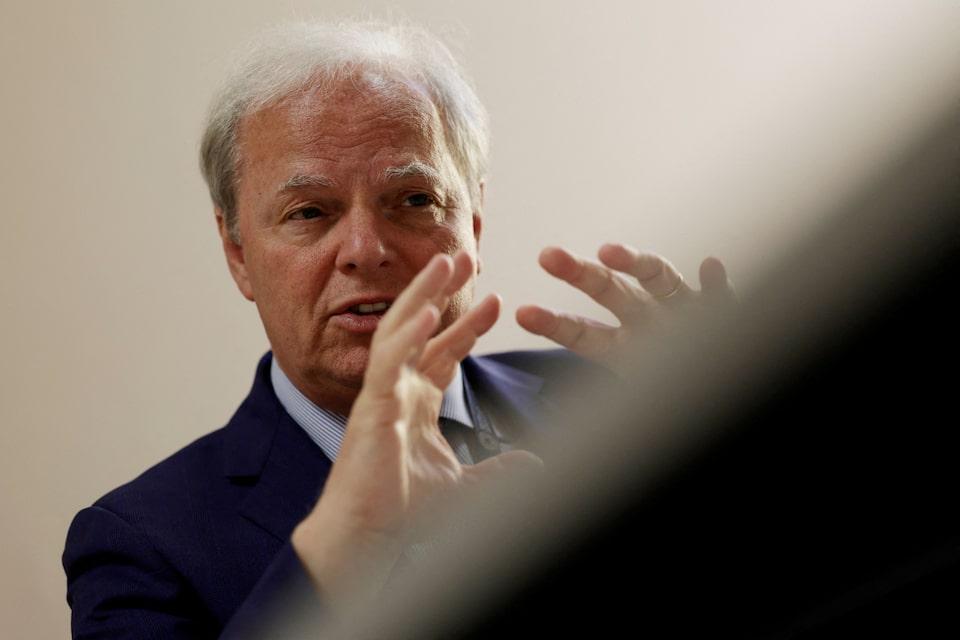
LONDON, June 20 (Reuters) - The World Bank is urging "radical" debt transparency for developing countries and their lenders to stave off future crises, it said in a report released on Friday. The Bank wants to broaden the depth and detail of what sovereign countries disclose regarding new loans, as more of them enter complex, off-budget borrowing deals due to global market turmoil. Sign up here. "When hidden debt surfaces, financing dries up and terms worsen," World Bank senior managing director Axel van Trotsenburg said in a statement, adding: "Radical debt transparency, which makes timely and reliable information accessible, is fundamental to break the cycle." The Bank wants countries to make legal and regulatory reforms that mandate transparency when signing new loan contracts and to share more granular debt data. It also wants more regular audits, the public release of debt restructuring terms, and for creditors to open their loan and guarantee books. It is calling for better tools for international financial institutions to detect misreporting. The World Bank and other multilateral banks have been pressing for years to improve lending transparency. The proportion of low-income countries reporting some debt data is now above 75%, up from below 60% in 2020. But only 25% of them disclose loan-level information. As financing costs spike due to trade wars and geopolitical risk, more countries are using arrangements such as central bank swaps and collateralized transactions that complicate reporting. Senegal has used private debt placements as it negotiates with the International Monetary Fund over misreporting of its previous debts, and Cameroon and Gabon have also used what are known as "off-screen" deals. Angola recently had to pay a $200-million margin call after a rout in its bond prices. In Nigeria, the central bank disclosed in early 2023 that billions of U.S. dollars of its foreign exchange reserves were tied up in complex financial contracts negotiated by the previous leadership. The Bank said broader loan coverage and deeper loan-by-loan disclosures would enable the international community to fully assess public debt exposure. https://www.reuters.com/business/finance/world-bank-urges-radical-debt-transparency-developing-countries-2025-06-20/
2025-06-20 02:37
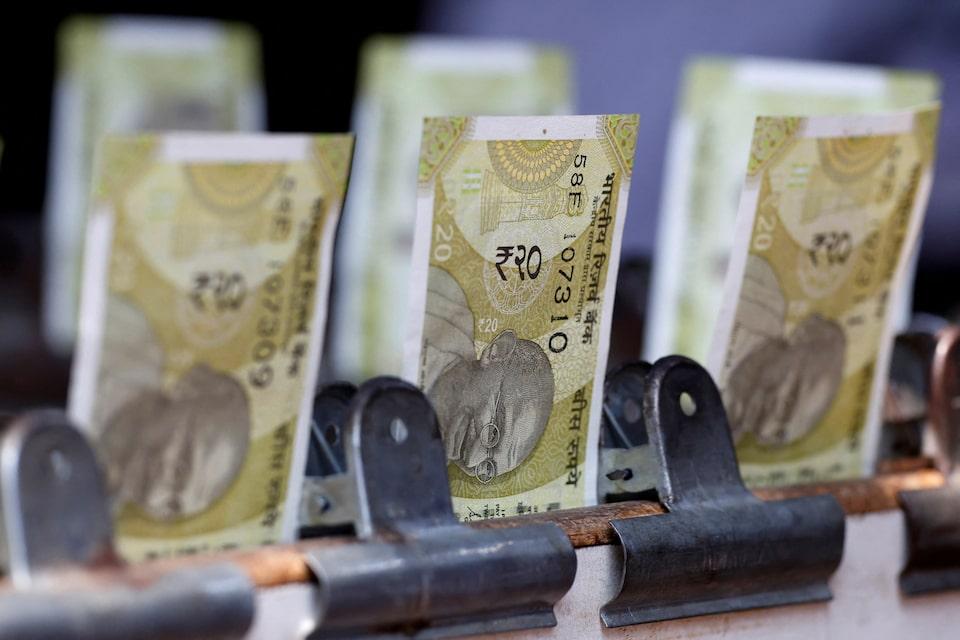
MUMBAI, June 20 (Reuters) - The Indian rupee is likely to open higher on Friday, buoyed by a decline in oil prices and a pullback in the U.S. dollar, while worries over the Israel-Iran conflict continue to linger. Non-deliverable forwards suggest the rupee will open in the 86.60 to 86.64 range, compared to 86.7225 in the previous session. The local unit fell to an over three-month low on Thursday, pressured by a surge in crude prices and hedging by importers. Sign up here. Brent crude futures were down 2%, having hit their highest level since mid-January on Thursday, amid the U.S. weighing whether to become involved in the Israel-Iran conflict. President Donald Trump will decide in the next two weeks whether the U.S. will become involved in the Israel-Iran air war, the White House said. This reduces speculation that the U.S. is planning to imminently join Israel in attacking Iran’s nuclear facilities, ANZ Bank said, sparking a pullback in oil prices. "A consistent drop in oil is the best support the rupee can have," an FX trader at a private bank said. "The dollar’s retreat, which is partly tied to reduced risk aversion, will help too. However, any meaningful rupee upside will need a material de-escalation in the Middle East conflict,” he said. The dollar index was back below the 99 handle while most Asian currencies were higher. The rupee, like most oil-sensitive Asian currencies, has been under pressure this week amid fears that a wider Middle East conflict could push oil prices higher and trigger a bout of risk aversion. The rupee is down 0.75% this week through Thursday, putting it on track for its worst weekly performance in one-and-a-half months. Brent crude, despite Friday’s pullback, remained up nearly 4% for the week, adding to the nearly 12% surge it posted in the previous week. KEY INDICATORS: ** One-month non-deliverable rupee forward at 86.74; onshore one-month forward premium at 9.25 paise ** Dollar index down at 98.64 ** Brent crude futures down 2.3% at $77 per barrel ** Ten-year U.S. note yield at 4.39% ** As per NSDL data, foreign investors sold a net $69.2 mln worth of Indian shares on June 18 ** NSDL data shows foreign investors sold a net $2.8 mln worth of Indian bonds on June 18 https://www.reuters.com/world/india/trumps-iran-comments-cool-off-oil-rally-offering-rupee-respite-2025-06-20/