2025-06-19 23:06
LONDON, June 20 (Reuters) - British consumer confidence rose this month to its highest level of 2025 as sentiment about the economy improved, but the threat of rising energy bills stemming from war in the Middle East is hanging over the outlook, a survey showed on Friday. The consumer confidence index from market research firm GfK rose to -18 in June from -20 in May, the highest reading since December. A Reuters poll of economists had pointed to an unchanged reading. Sign up here. Nonetheless, the index remains below its long-run average of -11, and is lower than a year ago. Brent crude oil futures have increased by around 20% since the end of May - potentially a bigger problem for Britain which already has some of the most expensive energy prices in Europe and the highest rate of headline inflation in the region. The Bank of England said on Thursday it would remain vigilant about the risks to inflation from the conflict between Israel and Iran. "With petrol prices set to rise in the coming weeks following the escalation of the conflict in the Middle East, and with ongoing uncertainty as to the full impact of tariffs, there is still much that could negatively impact consumers," said Neil Bellamy, consumer insights director at GfK. The survey's gauges of past and future economic ticked higher in June, although the indexes that measure personal financial confidence - a better guide to consumer spending - were flat. Official retail sales data for May, due at 0600 GMT, are expected to show a fall in sales volumes following a surprise surge in April that statisticians linked to good weather. https://www.reuters.com/world/uk/uk-consumers-turn-little-less-gloomy-may-gfk-survey-shows-2025-05-22/

2025-06-19 22:27
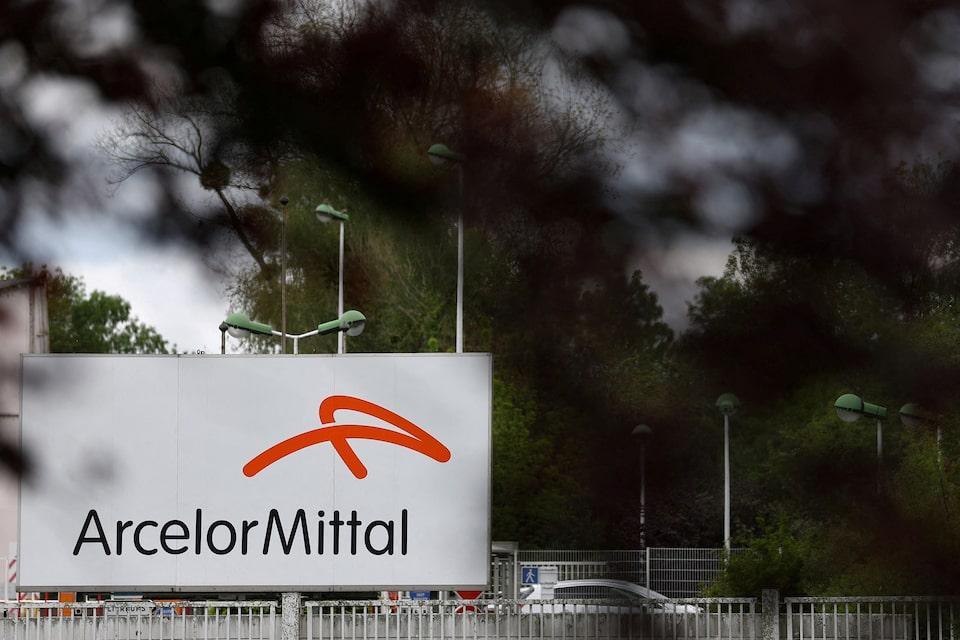
ArcelorMittal turns down 1.3 billion euros in subsidies German ministry regrets decision, notes no money has flown yet Thyssenkrupp steel, Salzgitter stick with green steel projects BERLIN, June 20 (Reuters) - ArcelorMittal (MT.LU) , opens new tab, the world's second-largest steelmaker, said on Thursday it had dropped plans to convert two plants in Germany to carbon-neutral production because the country's energy costs were too high. The decision to turn down 1.3 billion euros ($1.5 billion) of public subsidies is the latest blow to a German industrial sector that is still reeling from suddenly losing access to the Russian gas that had powered its factories for decades. It also casts doubt over the green hydrogen strategy launched by the previous government. Sign up here. The government had hoped the subsidies would encourage ArcelorMittal to convert existing plants at Bremen in the north and Eisenhuettenstadt in the east to use furnaces fired with hydrogen, which can be created from renewably generated electricity. But the steelmaker said it had decided not to go ahead with the plans because energy costs in Germany were too high and there was too much uncertainty about its future energy mix. "The first electric arc forges are being built in countries that can offer competitive and predictable electricity provision," it said, highlighting a recent investment in an electricity-fuelled forge in nuclear-powered France. "Electricity prices in Germany are high both by international standards and compared to neighbouring countries," it said, adding that the entire European steel industry was also suffering because consumers were importing so much rather than buying from local producers. The German economy ministry said it regretted the company's decision. "The important thing is that no money has yet been paid. This means that no money has to be reclaimed," a ministry spokesperson said in an emailed statement to Reuters. Germany has approved subsidies totalling 6.9 billion euros to steelmaking projects that further its climate goals, including the sum for the now-dropped Arcelor project. Three other projects - belonging to Salzgitter (SZGG.DE) , opens new tab , Thyssenkrupp's steel unit TKSE and Stahl-Holding-Saar - remain under way, the ministry spokesperson said. TKSE and Salzgitter both said they were sticking with their plans to build green steel sites, and called on the government to ensure significantly improved market conditions for such projects. Germany is rapidly building out renewable electricity networks, but the transition from reliance on Russian gas has proven lengthy and economically painful, despite generous subsidies on offer to industries that rely on natural gas to switch to hydrogen in its place. The conservative-led government that took office this year criticised the previous left-leaning government's energy strategy but has not so far spelled out a radically different approach. "The European steel industry is under unprecedented pressure to preserve its competitiveness," said ArcelorMittal Europe head Geert van Poelvoorde. "And that's before the extra costs of decarbonisation." He urged the European Commission to act to cap imports of certain kinds of steel into Europe, saying foreign competition was the most urgent problem the industry faced. ($1 = 0.8699 euros) https://www.reuters.com/sustainability/climate-energy/arcelormittal-drops-plans-green-steel-germany-due-high-energy-costs-2025-06-19/
2025-06-19 21:59
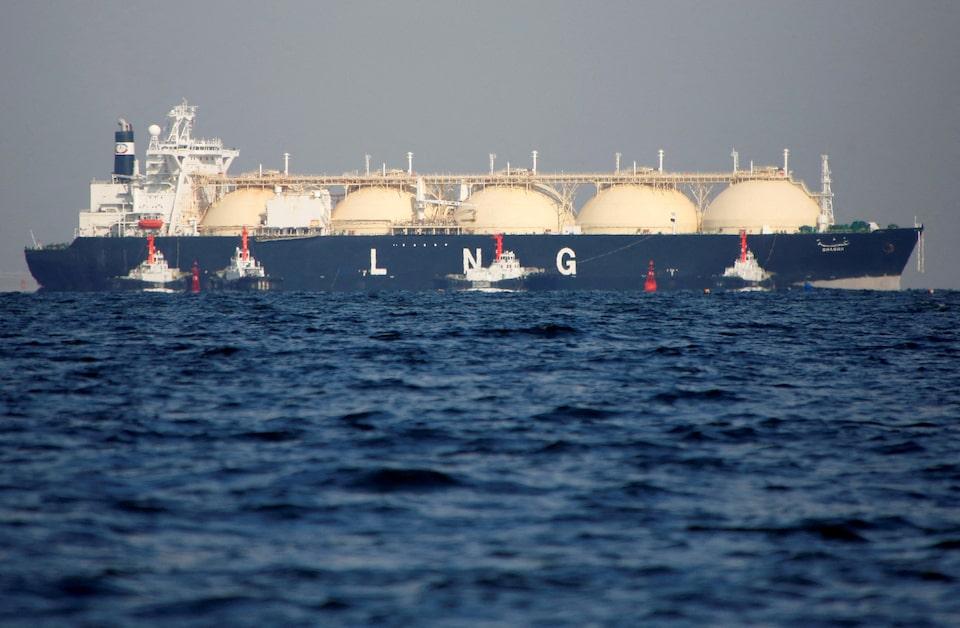
Japan 2040 LNG demand may rise if decarbonisation tech lags -METI More deals to come as utilities face expiring volumes, says analyst Buyers to enhance trading ops, seek flexible deals to hedge demand uncertainty TOKYO/SINGAPORE, June 19 (Reuters) - Japan is back in the spotlight for liquefied natural gas producers as the boom in artificial intelligence, rising costs for cleaner energy and a new national energy plan drive appetite for long-term LNG deals. While imports by China, the world's biggest LNG importer, are expected to fall this year, buyers in number two Japan are securing long-term supply deals again, including a potential landmark deal with Qatar. Sign up here. Japan's LNG imports had fallen for a decade as nuclear power plants, idled after the Fukushima disaster, restarted and as renewable energy sources increased. Data centres are expected to use enormous amounts of power to sustain the AI boom, while Japan's 7th Strategic Energy Plan in February identified gas as a realistic transition fuel for the nation's goal of zero net carbon emissions by 2050 and "an important energy source even after carbon neutrality". "We had expected that electricity demand in Japan would decline, but the growth of data centres is bending that curve," Yukio Kani, global CEO of JERA, the country's top power generator and LNG buyer, told Reuters. "If we want quick solutions for data centres, Japan needs LNG. That is one external change." Rising costs have also dimmed prospects for alternative fuels like hydrogen and ammonia, Kani said. "Until two or three years ago, we expected faster development of ammonia, but now we have to pause," he said. "So we've been shifting back to LNG over the past year or so." 'STILL IN THE MIX' In Japan's energy plan, the Ministry of Economy, Trade and Industry forecast annual LNG demand would fall to between 53 million and 61 million tons in 2040 if it met its emissions reductions target, from 66 million tons last year. But in a risk scenario where decarbonisation technologies lag, METI forecast demand could instead rise to 74 million tons. The plan calls for public-private cooperation to secure long-term contracts for the super-chilled fuel, given price volatility and supply disruption risks. Under Japan's previous decarbonisation-focussed energy plan, gas importers had hesitated to sign long-term contracts. The new plan makes it easier for buyers to commit to long-term contracts, said Takashi Uchida, chairman of the Japan Gas Association and top city gas provider Tokyo Gas (9531.T) , opens new tab. "It's very clear that LNG has a role to play as a transition fuel, and it's now firmly still in the mix for this investment cycle," said Lachlan Clancy, energy partner at law firm Herbert Smith Freehills Kramer. Japan has also been auctioning new gas-fired power capacity mainly to replace aging coal power plants, awarding 7 gigawatts (GW) over the past two years, according to the Organization for Cross-regional Coordination of Transmission Operators, Japan. In March the organisation projected LNG-fired capacity would rise to 85.75 GW by 2034 from 79.98 GW in 2024. Japan's energy plan projects power generation will increase by between 12% and 22% from 2023 levels to between 1,100 and 1,200 terawatt-hours in 2040. Consumption by Japan's data centres will soar 80%, or about 15 TWh, by 2030, the International Energy Agency forecasts. To feed this growth, Morgan Stanley sees Japan's LNG imports rising to 78 million tons in 2030 as gas-fired power generation rises amid high costs for generating solar and wind power. 'UNCERTAINTY AHEAD' Among the spate of deals since METI released the energy plan, Osaka Gas (9532.T) , opens new tab signed a 15-year pact with Abu Dhabi National Oil Company, Kyushu Electric Power (9508.T) , opens new tab said it would sign a deal with Energy Transfer (ET.N) , opens new tab, its first long-term deal with a U.S. supplier, and JERA inked four 20-year deals with U.S. suppliers NextDecade (NEXT.O) , opens new tab, Sempra Infrastructure, Cheniere Marketing and Commonwealth LNG. By comparison, from late 2022 to early this year, Japanese buyers had announced only three deals longer than 10 years. More deals are likely soon, Rystad Energy analyst Masanori Odaka predicts, as some utilities seek to replace expiring volumes for supply security and meet seasonal demand. JERA and Mitsui & Co (8031.T) , opens new tab are in talks for long-term supply from QatarEnergy's North Field expansion project, Reuters reported last month. Uncertainty persists, however, over Japan's demand for LNG, tied to questions over its ability to meet its carbon neutrality targets and its pace of nuclear plant restarts. To address this, importers are enhancing trading operations and pursuing flexible-term contracts. "With the government presenting multiple future scenarios, it is no longer possible to provide a definitive outlook for energy supply and demand - highlighting the uncertainty ahead," said Tokyo Gas' Uchida. https://www.reuters.com/sustainability/boards-policy-regulation/japan-returns-long-term-lng-deals-ai-boom-national-energy-plan-2025-06-19/
2025-06-19 21:43
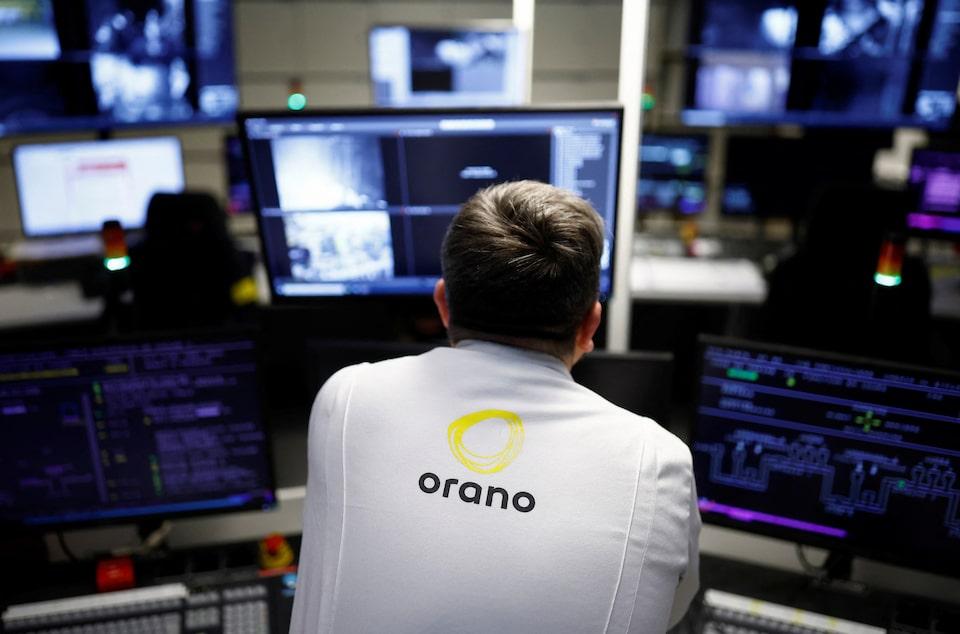
NIAMEY/PARIS, June 20 (Reuters) - Niger plans to nationalise the Somair uranium mine operated by France's Orano after months of worsening relations between the French state-owned company and its local partners following a 2023 coup in the West African nation. Niger's decision to nationalise Somair comes amid a wave of mine nationalisations across West Africa, prompting concerns from global miners and other foreign investors who have invested billions of dollars into the region. Sign up here. In a statement late on Thursday, Niger accused the French company of taking a disproportionate share of the mine's commercialised production compared to its shareholding. "According to the shareholders' agreement, the uranium produced by SOMAÏR is removed by the shareholders in proportion to their respective stakes. However, the figures....are far from reflecting this sharing rule," the statement said. Orano holds a 63% stake in Somair, while Niger's state-owned Sopamin owns the remainder, but the government said Orano had taken 86.3% of production between 1971, when the mine was launched, and 2024, without elaborating. It also accused Orano of what it called "irresponsible, illegal and unfair" behaviour pointing to the company's decision to withdraw French nationals working on the project, disconnect it from the group's IT system, and halt production at the mine. Orano declined to comment on Niger's plans to nationalise Somair. It did not immediately respond to a request for comment on the government allegations. Orano has been pursuing arbitration against Niger and filed lawsuits in the country against state actions, and had warned of government interference at Somair, which it said was damaging the mine's financial situation. It was exploring a potential sale of its stake in Somair, after Niger blocked uranium exports from the mine and took control of it, according to a Financial Times report in May. The government seized control of the mine in December. In neighbouring Mali, Canada's Barrick Mining (ABX.TO) , opens new tab had its Loulo-Gounkoto gold complex placed under state control by a court on Monday in a major escalation of a dispute over taxes and ownership. Burkina Faso has also nationalised five gold mines this month. https://www.reuters.com/world/africa/niger-nationalize-somair-uranium-venture-operated-by-frances-orano-2025-06-19/
2025-06-19 21:26
MEXICO CITY, June 19 (Reuters) - Mexican authorities this week discovered a clandestine mini-refinery in the eastern state of Veracruz, along with half a million barrels of crude oil they suspect were stolen from the country's pipelines. The government has sought to clamp down on theft of crude oil and refined products as well as illegal imports, known as huachicol, a practice that generates substantial losses for state energy company Pemex and the government. Sign up here. Authorities have previously linked organized crime and Pemex employees to the illegal trade. Reuters was unable to contact the owners of the clandestine refinery. Security Minister Omar Garcia Harfuch said on Wednesday on X that during intelligence actions and overflights, "a clandestine operation was identified." It produced artisan or alternative diesel, light naphtha or solvents, and treated oils or light fuel oil, he said, all without the proper permits in operations that posed a risk to local ecosystems. Authorities discovered 500,000 liters of crude oil as well as production infrastructure that fed the country's illicit fuel market. A Pemex source said that although the discovery was not significant in terms of the volume, it highlighted the impunity with which criminals operate freely in the country, as well as the extensive network of complicity between various sectors. Separately, authorities also discovered 1.2 million liters of hydrocarbons, fuel trucks and containers in the northern state of Nuevo Leon. In late May, authorities also recovered more than 3 million liters of hydrocarbon products in the southeast of the country. https://www.reuters.com/business/energy/mexican-authorities-discover-clandestine-mini-refinery-crackdown-illegal-2025-06-19/

2025-06-19 21:26
June 19 (Reuters) - A federal judge on Thursday blocked President Donald Trump's administration from forcing 20 Democratic-led states to cooperate with immigration enforcement in order to receive billions of dollars in transportation grant funding. Chief U.S. District Judge John McConnell in Providence, Rhode Island ruled , opens new tab that the U.S. Department of Transportation lacked authority to require the states to cooperate with U.S. Immigration and Customs Enforcement to obtain transportation funding and that the condition violated the U.S. Constitution. Sign up here. McConnell said the administration provided no plausible connection between cooperating with immigration enforcement and the purposes Congress intended for the funding, which is to support highways, bridges and other transportation projects. "Congress did not authorize or grant authority to the Secretary of Transportation to impose immigration enforcement conditions on federal dollars specifically appropriated for transportation purposes," McConnell wrote. The judge, an appointee of Democratic President Barack Obama, issued a preliminary injunction preventing such a condition from being enforced against the 20 states that sued along with their government subdivisions, like cities. The Trump administration did not respond to a request for comment. It has argued the policy was within the department's discretion. The ruling came in a lawsuit filed by a group of Democratic state attorneys general who argued the administration was seeking to unlawfully hold federal funds hostage to coerce them into adhering to the Republican president's hardline immigration agenda. They sued after U.S. Transportation Secretary Sean Duffy on April 24 notified states they could lose transportation funding if they do not cooperate with the enforcement of federal law, including with ICE in its efforts to enforce immigration law. Since returning to office on January 20, Trump has signed several executive orders that have called for cutting off federal funding to so-called sanctuary jurisdictions that do not cooperate with ICE, as his administration has moved to conduct mass deportations. Sanctuary jurisdictions generally have laws and policies that limit or prevent local law enforcement from assisting federal officers with civil immigration arrests. California Attorney General Rob Bonta, in a statement, hailed McConnell's ruling, saying Trump had been "treating these funds – funds that go toward improving our roads and keeping our planes in the air – as a bargaining chip." The 20 states are separately pursuing a similar case also in Rhode Island, challenging new immigration enforcement conditions the Homeland Security Department imposed on grant programs. https://www.reuters.com/legal/government/us-judge-blocks-trump-plan-tie-states-transportation-funds-immigration-2025-06-19/