2025-06-19 18:33
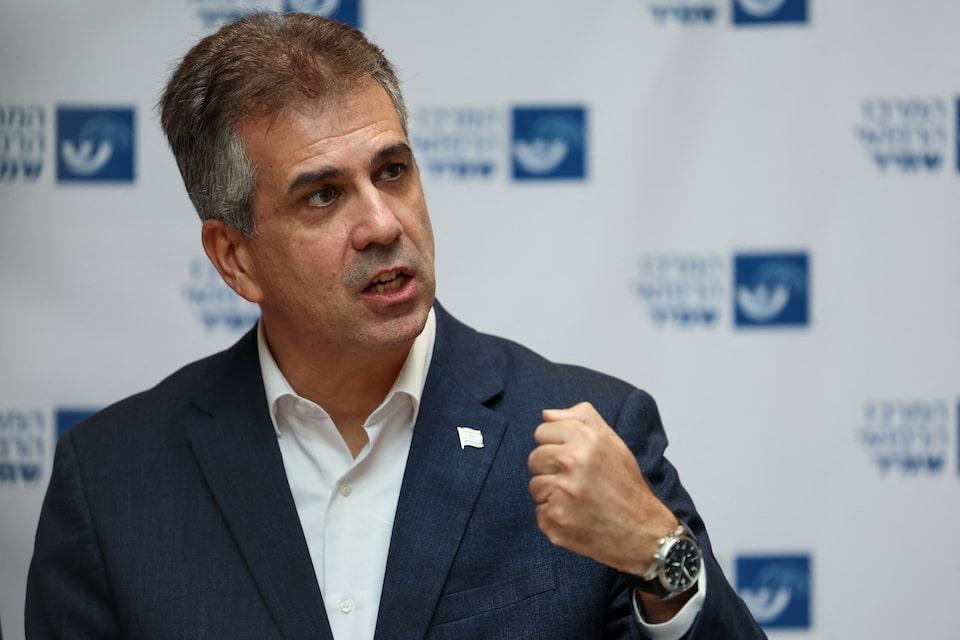
CAIRO, June 19 (Reuters) - Israel has resumed limited natural gas exports from surplus supplies, the country's Energy Ministry said on Thursday, nearly a week after shutting down two key offshore fields as Israel and Iran waged an air battle. A ministry spokesperson told Reuters that exports are now resuming "from surpluses, after domestic needs are met." Sign up here. An energy ministry source said most of the limited exported gas is currently flowing to Jordan, and only "tiny volumes" reached Egypt this week. Egyptian fertilizer producers, who were forced to halt operations due to the supply disruption, told Reuters they have yet to receive any gas but expect flows to resume next week. The Egyptian Petroleum Ministry did not immediately respond to a Reuters request for comment. Following military escalation in the region, Israel halted exports on June 13 after closing the Leviathan field, operated by Chevron and the Karish field operated by Energean. Only the Tamar field has remained operational, supplying mainly domestic demand. Israeli Energy Minister Eli Cohen said on Wednesday that exports would only resume once military authorities deemed it safe. "I don't want to use our strategic storage, so therefore, I needed to cut exports," he told Reuters. Egypt, which has increasingly relied on Israeli gas since a domestic production decline in 2022, is scrambling to compensate for the supply gap. The country has ramped up fuel oil use in power plants and has signed deals to import over $8 billion worth of liquefied natural gas, while preparing additional floating regasification units. Israeli gas typically accounts for up to 60% of Egypt's total gas imports and around a fifth of its total consumption, according to data from the Joint Organisations Data Initiative (JODI). https://www.reuters.com/business/energy/israel-restarts-limited-gas-exports-amid-ongoing-conflict-egypt-still-waiting-2025-06-19/
2025-06-19 17:04
ABUJA, June 19 (Reuters) - The Nigerian Navy has arrested 76 vessels and at least 242 suspects in anti-oil theft operations, and destroyed more than 800 illegal refining sites during a two-year crackdown, it said on Thursday. Rampant oil theft from pipelines and wells has crippled Nigeria's oil industry in recent years, damaging government finances and stifling exports. Sign up here. Since June 2023, naval authorities have seized around 171,000 barrels of crude and millions of litres of illegally refined fuels from criminal networks, Chief of Naval Staff Vice Admiral Emmanuel Ogalla said at a briefing in the capital Abuja. The navy also began verifying oil cargoes loaded at Nigeria's five major export terminals in January to combat oil theft at its source, Ogalla said. The navy has acquired patrol boats, three new ships and three AW 139 Trekker helicopters. It is also building two additional seaward defence boats and will take delivery of two 76-meter offshore patrol vessels from Dearsan Shipyard in Turkey. https://www.reuters.com/business/energy/nigerian-navy-cracks-down-oil-theft-arrests-76-vessels-two-years-2025-06-19/

2025-06-19 15:31
Norway delivers surprise 25 bps rate cut Diverging central banks another headwind for markets New status quo in markets could be era of central bank surprises LONDON, June 19 (Reuters) - Investor unease about an increasingly uncertain environment is rising, as Norway's shock rate cut on Thursday highlights how U.S. tariffs, Middle East conflict and a shaky dollar make global monetary policy and inflation even harder to predict. Norway's crown slid roughly 1% against the dollar and the euro , in a sign of how unexpected the move was. And Switzerland, which cut borrowing costs to 0% on Thursday, confounded some expectations among traders for a return to negative rates in the deflation-hit nation, as its central bank warned of a cloudy global outlook. Sign up here. Just a day earlier the U.S. Federal Reserve kept rates on hold and chair Jerome Powell said "no one" had conviction on the rate path ahead. The conclusion for markets: monetary policy uncertainty is one more headwind to navigate against a backdrop of geopolitical and trade risks. Global stocks pulled away from recent peaks, a gauge of expected volatility in European equities (.V2TX) , opens new tab touched a two-month high as stocks across the region fell and government bonds, usually geopolitical risk havens, sold off. "We're at a moment of considerable policy and macro uncertainty," said BlueBay chief investment officer at RBC Global Asset Management Mark Dowding. "We can't see a clear trend on interest rates," he added, which meant he was holding back from active market bets across the group's investment portfolios. Volatility was set to rise, some investors said, because a choppy dollar and oil prices whipped around by geopolitics meant that central banks were far less able to provide markets and investors a clear route map for the future. "You cannot just take your cues from the central banks anymore as they are facing a harder job of reading the economy themselves," T.S. Lombard director of European and global macro Davide Oneglia said. BROKEN MODELS Rate-cutting European central banks are not just diverging from the Fed, which is grappling with the inflationary risks of President Donald Trump's tariffs. They are also struggling to navigate a new era where the dollar , the lynchpin of world trade, commodity prices and asset valuations, has turned weaker and more volatile under trade war stress and government debt anxiety. "That's a massive, massive fundamental shift in global markets that everyone is trying to assess," Monex Europe head of Macro Research Nick Rees said. "All of those standard economic rules of thumb we use for forecasting are completely broken right now." The dollar is down almost 9% against other major currencies this year but has risen following the outbreak of a war between Israel and Iran. European Central Bank policymaker Francois Villeroy de Galhau said on Thursday the ECB might have to adapt its rate cut plans if oil price volatility was long-lasting. The new status quo in markets could well be an era of central bank surprises that create rapid shifts in the market narrative, asset pricing and volatility trends, analysts said. "We're getting into this next cycle in which variables are much more volatile, because, rather than (monetary policy) being just easily predictable, events just take over and policy and human factors, as we now know with Donald Trump, play an important role," Oneglia said. Norway's surprise cut came because the crown was a "runaway top currency" of the trade-war era, added Societe Generale's head of FX strategy Kit Juckes. With investors chasing around the world to identify stores of wealth that are not U.S. dollars, meanwhile, the Swiss franc has soared, cutting the costs of imports and pushing the economy into deflation. On Thursday, the franc rose against the dollar as traders saw the SNB's cut as too small to keep deflation at bay. Ninety One multi-asset head John Stopford said the hazard risk was rising for global stocks and that options products that aim to offer protection from incoming volatility looked fairly cheap. He was buying bonds issued in nations where inflation and rates could come down materially, such as New Zealand, but was negative on longer-dated U.S. Treasuries and German Bunds where economic uncertainty was higher and government borrowing was likely to rise. Global stocks (.MIWD00000PUS) , opens new tab remain almost 20% above their April trough, after investors relaxed about tariffs. Stopford said there was more to worry about in the short term. "The stock market feels like it's a thatched house in a hot country with a fire hazard risk, and people aren't charging much to insure the house," Stopford added. https://www.reuters.com/business/finance/oil-war-tariffs-tear-up-markets-central-bank-roadmap-2025-06-19/
2025-06-19 14:59
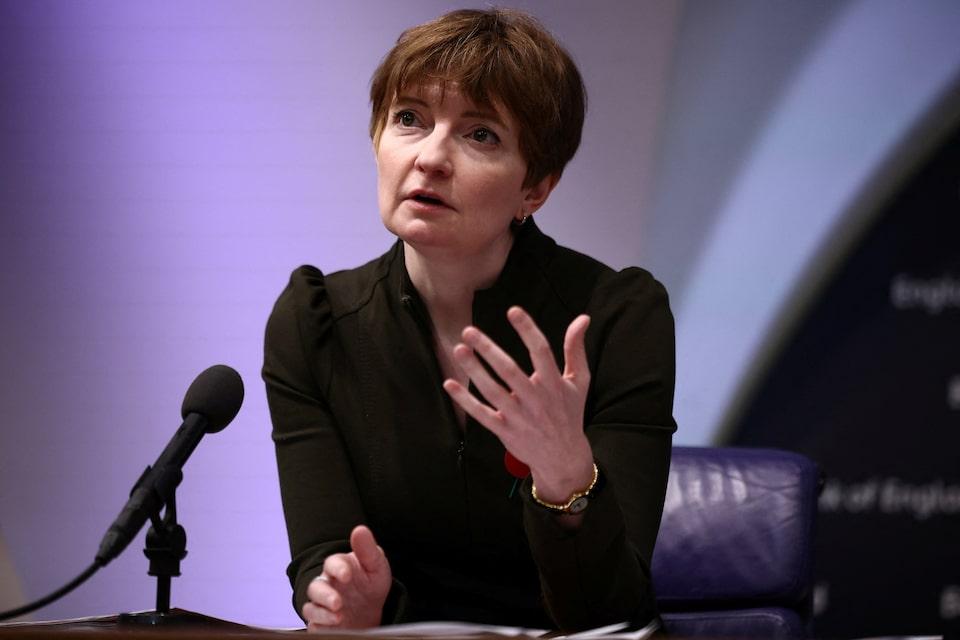
LONDON, June 19 (Reuters) - Bank of England Deputy Governor Clare Lombardelli said on Thursday that British services price inflation - a key measure of domestic price pressures - remained "sticky" despite data showing a slight fall in May. Lombardelli, who was speaking after the central bank kept interest rates at 4.25% in a 6-3 vote split earlier on Thursday, also said the slowdown in Britain's labour market was as expected. Sign up here. "We've seen a rise in a number of elements of inflation. Services inflation is proving to be quite sticky, but we've also seen recent rises in energy prices, other regulated prices," Lombardelli told reporters. "We are seeing some broad weakening in the labour market. I mean, this is in line with what we expected, and actually quite similar to what we set out in our latest Monetary Policy Report in May, but it's important that we consider those changes," she added. Figures published on Wednesday showed British inflation fell to 3.4% in annual terms in May, and service price inflation cooled more than expected to 4.7% from 5.4% in April. https://www.reuters.com/sustainability/sustainable-finance-reporting/uk-services-inflation-is-proving-sticky-boes-lombardelli-says-2025-06-19/
2025-06-19 12:33
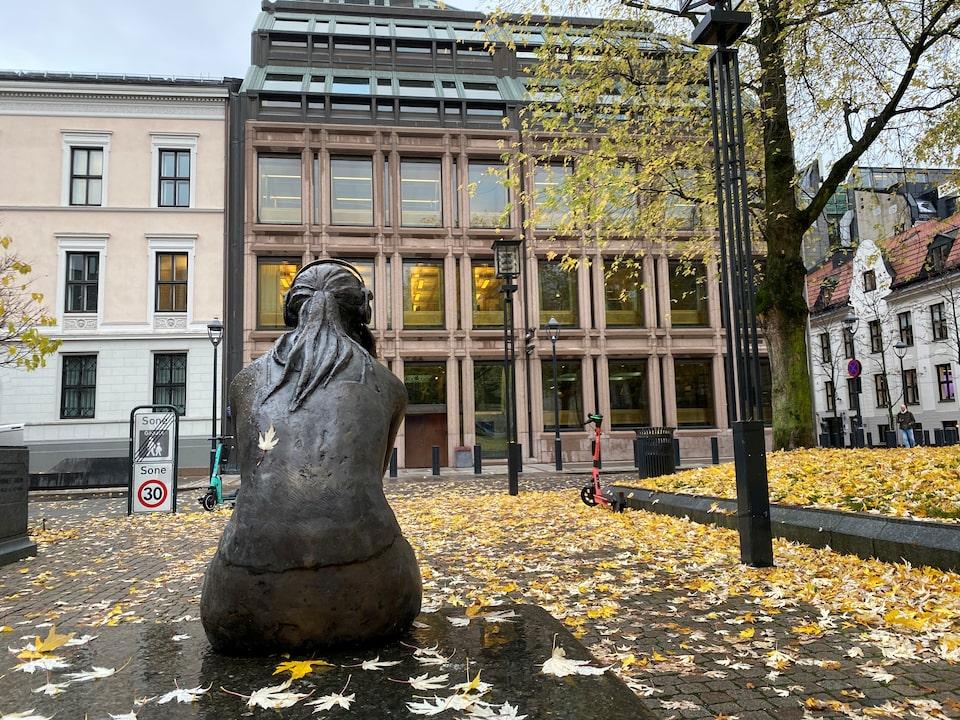
Norway surprises with rate cut Switzerland on verge of negative rate territory The Fed holds out on rate cuts for now LONDON, June 19 (Reuters) - Central banks are grappling with elevated uncertainty about economic growth and inflation, complicating decision-making, especially for those trying to calibrate policy as they near the end of their rate-cutting cycles. That's making life hard for investors too. Norway's central bank on Thursday gave markets a shock by cutting interest rates, and even the U.S. Federal Reserve is warning not to put much weight on its policy projections. Sign up here. 1/ SWITZERLAND The Swiss National Bank cut its benchmark rate to 0% on Thursday, in response, it said, to falling inflation, a stronger Swiss franc and economic uncertainty caused by unpredictable U.S. trade policy. The big question is whether it will cut rates into negative territory next time. The SNB is keeping all options on the table, but chairman Martin Schlegel says the hurdle to further cuts is higher now rates are at zero. 2/ CANADA The Bank of Canada held rates at 2.75% in early June and said another cut might be necessary if the economy weakened in the face of tariffs. That pause was the second in succession for the BoC, after an aggressive cutting cycle which shrank rates by 225 basis points over nine months. Markets anticipate one further 25 bps cut by year-end. 3/ SWEDEN Sweden's central bank cut its key rate to 2% from 2.25% on Wednesday and said that, with price pressures weak, it may ease further before year-end to boost sluggish growth. The Riksbank has been one of the more aggressive central banks, with 200 bps of cuts since May 2024. 4/ NEW ZEALAND Markets expect the Reserve Bank of New Zealand to hold steady on July 9 after a 25 bps rate cut to 3.25% in May to protect the China-focused economy. The RBNZ also warned that global trade uncertainties made future moves unclear. Markets see one more 25 bps cut this year, on top of the 225 bps of cuts already this cycle. 5/ EURO ZONE The ECB cut rates earlier this month, its eighth cut since mid-2024, and kept all options on the table , opens new tab for its next meetings. ECB President Christine Lagarde says the euro zone central bank's 2% inflation target is in reach. The question for investors is whether inflation will undershoot that target, and necessitate further easing. Markets price in one more rate cut by year-end. 6/ UNITED STATES The Federal Reserve held rates steady on Wednesday and signalled borrowing costs are still likely to fall in 2025, although Chair Jerome Powell warned against putting too much weight on that projection. "No one holds these ... rate paths with a great deal of conviction, and everyone would agree that they're all going to be data-dependent," Powell said. He added that if not for tariffs, rate cuts might be in order given recent inflation readings have been low. Markets still see roughly two 25 bps cuts by year-end. 7/ BRITAIN The sometimes surprising Bank of England met market expectations on Thursday, keeping interest rates at 4.25%. The BoE has been cutting roughly once a quarter for the past year, and markets expect it to continue at that pace, with two more cuts priced in by year end. Three of the nine rate-setters voted on Thursday for a cut however. Some investors speculate softening labour data could cause the BoE to up the pace of cuts, though others reckon it will be held back by high UK inflation. 8/ AUSTRALIA Weak growth data and fears commodities producers and miners will take a blow from a U.S.-China trade war means the Reserve Bank of Australia stands ready to deliver rapid rate cuts. The RBA cut rates by 25 bps to 3.85% in May and traders see borrowing costs dropping to near 3% by year-end. 9/ NORWAY Norway's central bank cut its policy interest rate by 25 bps to 4.25% on Thursday, its first reduction since 2020, a decision that took most analysts by surprise and weakened the currency. The Norges Bank has been the most cautious among developed market central banks on rate cuts, and governor Ida Bache said only one or two more reductions were planned this year. 10/ JAPAN The Bank of Japan, the sole central bank in hiking mode, kept rates steady on Tuesday, as expected by investors. Escalating Middle East tensions and U.S. tariffs complicate the BOJ's task of raising still-low interest rates and reducing a balance sheet that has ballooned to roughly the size of Japan's economy. On Tuesday it decided to decelerate the pace of its balance sheet drawdown next year, signalling its preference to move cautiously in removing remnants of its decade-long stimulus. https://www.reuters.com/business/finance/global-markets-cenbank-2025-06-19/
2025-06-19 12:28
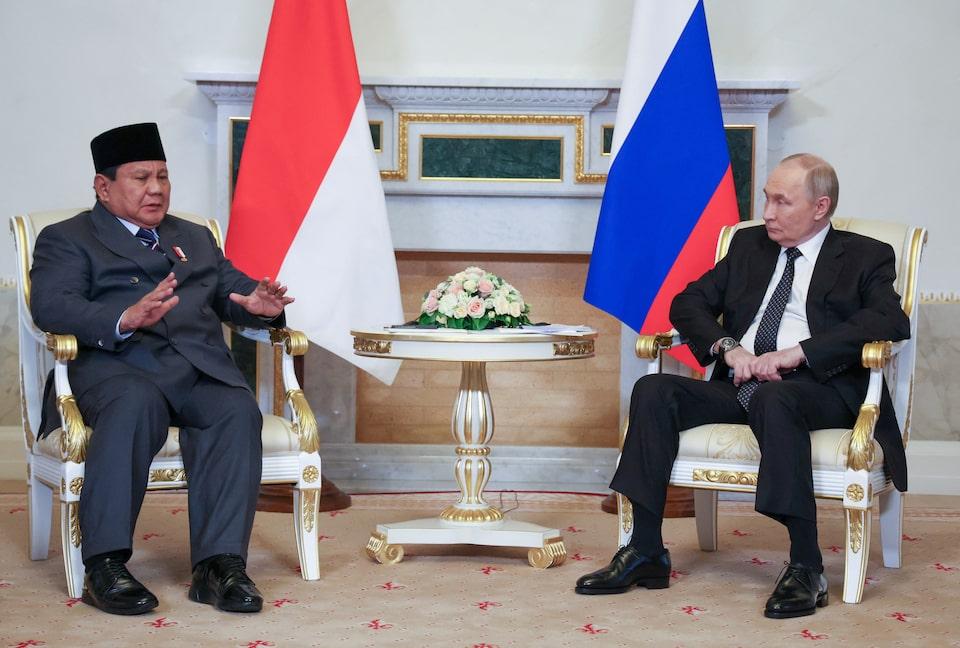
ST PETERSBURG, Russia, June 19 (Reuters) - Indonesian President Prabowo Subianto held talks with President Vladimir Putin in the northern Russian city of St Petersburg on Thursday as they explore ways to deepen what some officials have called a burgeoning strategic partnership. The deepening of ties between Russia and Indonesia, part of Moscow's bid to forge new relations with the Global South amid Western attempts to isolate it over the Ukraine war, has perturbed some powers such as Australia. Sign up here. Meeting in the Constantine Palace, Putin noted Indonesia's entry into BRICS as a full member and said he was sure it would make a significant contribution to the grouping, which he said was gaining clout in the world. Prabowo thanked Putin for his support over Indonesia's entry to BRICS and said that ties between the two countries were improving. Russia and Indonesia's foreign ministers, Sergei Lavrov and Sugiono, speaking in Moscow earlier this week, mentioned a possible strategic partnership between the two countries. Russia has proposed deepening military, security, trade and nuclear ties with Indonesia, which has the world's fourth largest population. Prabowo previously visited Russia in August 2024, when he was defence minister and president-elect, and described Moscow as a "great friend", saying he hoped for stronger cooperation on defence, energy and education. Indonesia has said that it wants to build its first nuclear power plant by 2032, with 500 MW capacity, aiming for it to come online in the next decade. Authorities said interested developers included Russia's Rosatom, China CNNC, and U.S. small modular reactor producer NuScale. Indonesia, Southeast Asia's biggest economy, currently relies mostly on coal as a source of power despite boasting massive potential for renewable energy sources such as hydro, solar and geothermal. With expectations of high energy demand in the future, Indonesia is seeking to boost power generation capacity while capping its carbon emissions, eyeing nuclear power as the solution. Prabowo has maintained Indonesia's non-aligned foreign policy, vowing to befriend any country, including Russia and the United States. He has said Indonesia will not be joining any military bloc. China is Indonesia's largest trading partner, but recently Prabowo's government announced a raft of concessions for trade with the U.S. as it looks to neutralise the effect of tariffs. Russia has praised what it says is Indonesia's balanced position on the Ukraine war. Russia and Indonesia conducted their first joint naval exercises in the Java Sea last November. https://www.reuters.com/world/china/putin-meets-indonesias-prabowo-russia-bid-deepen-ties-2025-06-19/