2025-06-19 12:25
LONDON, June 19 (Reuters) - Britain on Thursday published long-awaited environmental guidance which is expected to impact the future development of two vast North Sea oil and gas fields by companies including Shell (SHEL.L) , opens new tab and Equinor (EQNR.OL) , opens new tab. The guidance sets out how greenhouse gas emissions that would come from the oil and gas being used, known as downstream emissions, should be treated in any future government decisions to approve extraction. Sign up here. "This new guidance offers clarity on the way forward for the North Sea oil and gas industry, following last year’s Supreme Court ruling," energy department minister Michael Shanks said in a statement. "It marks a step forward in ensuring the full implications of oil and gas extraction are considered for potential projects and that we ensure a managed, prosperous, and orderly transition to the North Sea’s clean energy future, in line with the science." The document was ordered by the government following a landmark Supreme Court ruling last year which said planning authorities should have considered the impact of climate-warming emissions in approving an oil well near Gatwick Airport. In January a Scottish court said Britain's decisions to approve Shell's Jackdaw and Equinor's Rosebank projects in the North Sea were unlawful and must be retaken. https://www.reuters.com/sustainability/climate-energy/uk-publishes-environmental-guidance-expected-impact-north-sea-drilling-2025-06-19/

2025-06-19 12:22
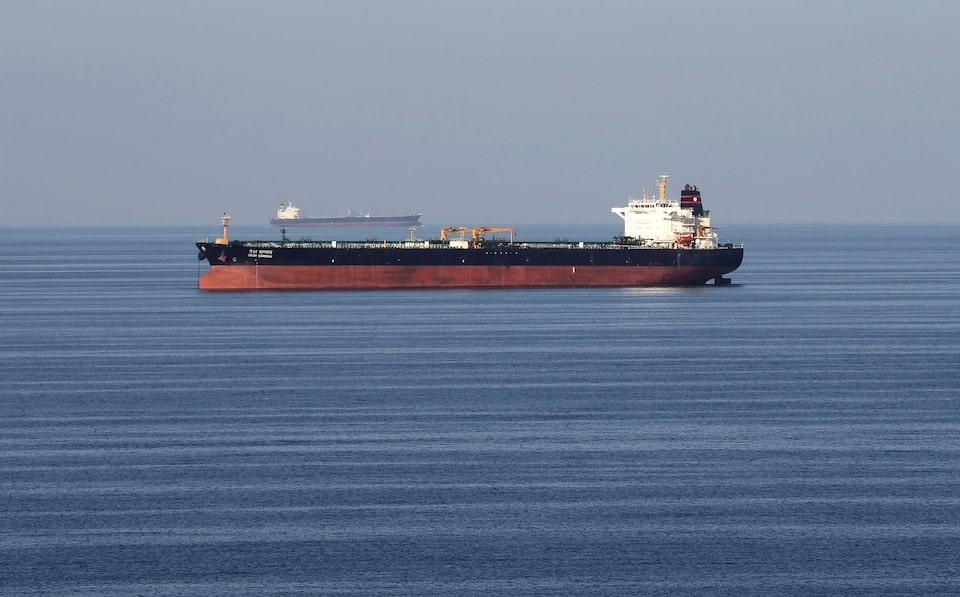
DUBAI, June 19 (Reuters) - Iran could shut the Strait of Hormuz as a way of hitting back against its enemies, a senior lawmaker said on Thursday, though a second member of parliament said this would only happen if Tehran's vital interests were endangered. Iran has in the past threatened to close the Strait of Hormuz to traffic in retaliation for Western pressure, and shipping sources said on Wednesday that commercial ships were avoiding Iran's waters around the strait. Sign up here. "Iran has numerous options to respond to its enemies and uses such options based on what the situation is," the semi-official Mehr news agency quoted Behnam Saeedi, a member of the parliament's National Security Committee presidium as saying. "Closing the Strait of Hormuz is one of the potential options for Iran," he said. Mehr later quoted another lawmaker, Ali Yazdikhah, as saying Iran would continue to allow free shipping in the Strait and in the Gulf so long as its vital national interests were not at risk. "If the United States officially and operationally enters the war in support of the Zionists (Israel), it is the legitimate right of Iran in view of pressuring the U.S. and Western countries to disrupt their oil trade's ease of transit," Yazdikhah said. President Donald Trump is keeping the world guessing about whether the United States will join Israel's bombardment of Iranian nuclear sites. Tehran has so far refrained from closing the Strait because all regional states and many other countries benefit from it, Yazdikhah added. "It is better than no country supports Israel to confront Iran. Iran's enemies know well that we have tens of ways to make the Strait of Hormuz unsafe and this option is feasible for us," the parliamentarian said. The Strait of Hormuz lies between Oman and Iran and is the primary export route for Gulf producers such as Saudi Arabia, the United Arab Emirates, Iraq, and Kuwait. About 20% of the world’s daily oil consumption — around 18 million barrels — passes through the Strait of Hormuz, which is only about 33 km (21 miles) wide at its narrowest point. https://www.reuters.com/world/middle-east/irans-options-against-foreign-aggression-include-closing-strait-hormuz-lawmaker-2025-06-19/
2025-06-19 12:14
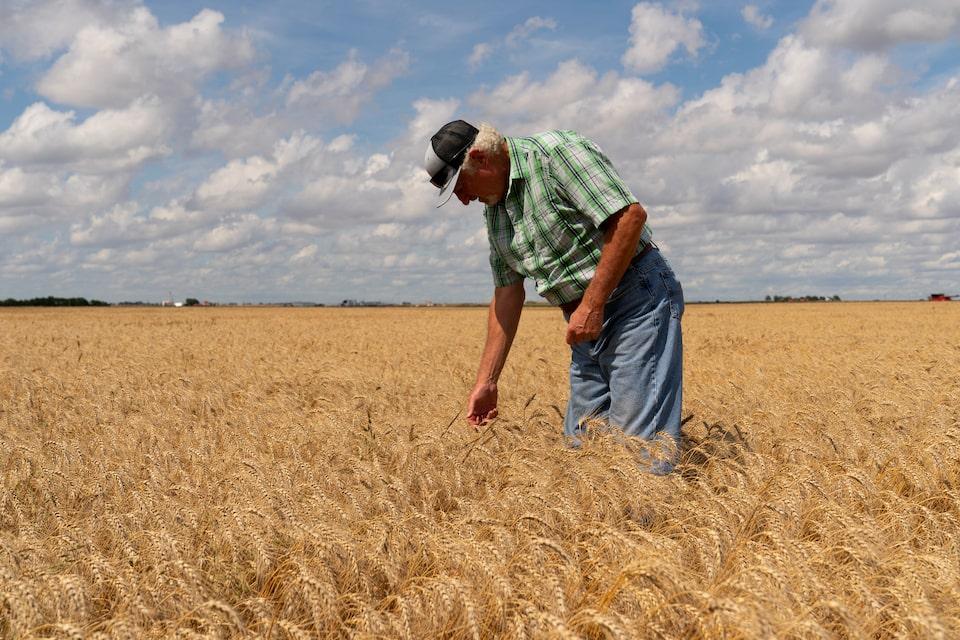
Windmills, corn and soybeans spring up in former wheat fields Historically, wheat was the best crop from Texas through Montana Drought-hit yields or low prices make bumper crops unprofitable COLBY, Kansas, June 19 (Reuters) - On a foggy morning in May, Dennis Schoenhals drove a carload of crop scouts around the wheat fields of northern Oklahoma, part of an annual tour to evaluate the health of the crop. But on some fields, Schoenhals and other farmers had already abandoned plans to harvest the grain for sale because prices had sunk to five-year lows. Farmers cut their losses early this year across the U.S. wheat belt, stretching from Texas to Montana. They were choosing to bale the wheat into hay, plow their fields under or turn them over to animals to graze. In Nebraska, wheat acreage is less than half of what it was in 2005. Sign up here. For farmers with crop insurance, damaged or unprofitable wheat fields can still earn revenue. But many agree that chasing insurance payouts is not the best business model. The Great Plains have long been celebrated for the "amber waves of grain" in the popular hymn "America the Beautiful." The region's states produce most of the U.S.-grown crop of hard red winter wheat, favored by bakers for bread. But with prices hovering around $5 per bushel, U.S. wheat farmers have reached an inflection point, with many forced to either lose money, feed wheat to cattle or kill off the crop. Interviews with more than a dozen farmers and analysts across Kansas, Nebraska and Oklahoma, along with a review of U.S. Department of Agriculture data, revealed a vast disparity in profit for wheat compared to other crops. This has led farmers to abandon more fields before harvest. In parts of the region, prolonged drought has lowered yields in recent years. Farm revenue has also suffered in years with healthy rainfall, as abundant global supplies have weighed on prices. Many have pivoted to corn, soy or livestock, often after generations of their family growing wheat exclusively. "They can’t sustain that," said Schoenhals, 68, who raises crops and cattle near Kremlin, Oklahoma, and is president of the state's wheat growers association. "Eventually you either change to other crops if you’re able to, or you go out of business," he said. Two years ago, severe drought drove farmers to abandon about a third of the U.S. crop. This year, healthy green stalks shot through the cracked soil, and farmers had expected to harvest the most bushels per acre since 2016. But wheat prices hit a five-year low in May. Every year since 2020, farmers have abandoned between a fifth and a third of the winter wheat crop, U.S. Department of Agriculture data show. Nationwide, corn and soybeans dominate crop fields, with wheat a distant third , opens new tab in planted acreage. Hard red winter wheat exports hit historic lows , opens new tab in 2024 after drought and lower prices in other wheat-producing areas of the world squeezed the U.S. commodity's competitiveness. In Kansas, the leading U.S. producer of hard winter wheat, the disparity between acreage and value is particularly stark. About 1.3 million more farm acres in Kansas were planted with wheat than with corn in 2024, USDA data show, but corn's value of production , opens new tab was more than twice as high. Plentiful global supplies have kept benchmark U.S. prices stuck at lows that discourage farmers from growing wheat, producers and analysts told Reuters. Supplies are so ample that droughts in important grain-growing regions of China and Russia this year have barely budged prices. “We’re below profitable levels for these guys,” said Darin Fessler, an analyst with Lakefront Futures in Lincoln, Nebraska, who grew up on a row crop farm in nearby Sutton. The way things stand, he said, many farmers have "eaten a lot of their own money and burned up working capital. These bankers are going to say: 'show me some profits or we’re going to have some farm sales.'" HERITAGE BUT NO PROFIT Ties to wheat farming run deep in the Plains. Historically, European settlers in Kansas struggled to find a foothold until Mennonites from Ukraine arrived with seeds of Turkey Red wheat, a variety that proved able to withstand the area’s dry soil, harsh winters and extreme temperature swings. The seeds spread to neighboring Oklahoma and Nebraska, where pioneers established homesteads in the sandy, light earth in which wheat thrived but other crops struggled. Hard red winter wheat has remained the main variety of wheat sown , opens new tab in the U.S. Images of golden stalks adorn hotel lobbies and road signs, and towns include the word in their names. Pulitzer Prize-winning author Willa Cather, a daughter of Red Cloud, Nebraska, wrote a celebrated poem describing "the miles of fresh-plowed soil, heavy and black, full of strength and harshness." Now, U.S. wheat growing is on a steady decline , opens new tab, with farmers finding surer profits from corn, soybeans or cattle. On the wheat quality tour in May, weeks before Nebraska wheat is usually harvested, no wheat could be seen for miles around Red Cloud. When Royce Schaneman joined Nebraska's wheat board 19 years ago, wheat fields stretched for 2.2 million acres across the state. Since then, acreage has shrunk to less than a million acres, he said. In Cheyenne County in southern Nebraska, the state's most productive wheat-growing land, about one in five fields was abandoned this year. "The feeling out in the country is not good," he said. Generations of farmers grew wheat because the crop thrived on rainfall alone. In recent decades, farmers have invested in pricey irrigation systems, experimented with hardier varieties and used fertilizer to improve yields. Agronomists have helped farmers grow more bushels per acre even as climate change has brought more drought and pests. Producers in the southern Plains have experimented with other types of wheat such as durum, the kind used for pasta, and a gluten-free variety, pursuing customers willing to pay more. Profits remain elusive. “It’s heritage, but there’s no profit," said Lon Frahm, the CEO of Frahm Farmland, a 40,000-acre operation in Colby, Kansas. Surrounding Thomas County is now dotted with wind farms. Farmers there once grew wheat exclusively, he said, but they have started to diversify due to more frequent drought and global competition depressing prices. Frahm himself now mainly plants corn. He irrigates, fertilizes and harvests the grain using multimillion-dollar machines, then stores it in gleaming, 80-foot steel grain bins. His 7,000 acres of wheat sometimes produce just 5 percent of his farm's total output. "There's certainly profit in corn," he said. https://www.reuters.com/world/us/amber-waves-grain-recede-americas-heartland-wheat-farmers-struggle-2025-06-19/
2025-06-19 12:12
LONDON, June 19 (Reuters) - The Bank of England's expectation that interest rates will move gradually downwards is not a prediction for its next policy decision in August, Governor Andrew Bailey said on Thursday. "I expect that the path of interest rates will continue to be gradually downwards. Now I'm not giving you a prediction on August by saying that," Bailey said in a video clip published on the BoE's LinkedIn page. Sign up here. https://www.reuters.com/markets/europe/boes-bailey-says-gradual-rate-cut-view-is-not-prediction-august-2025-06-19/

2025-06-19 12:08
ST PETERSBURG, Russia, June 19 (Reuters) - Saudi Energy Minister Prince Abdulaziz bin Salman, asked if the kingdom and Russia would step in to replace any potential loss of Iranian oil, said on Thursday that the country will "only react to realities". The prince, speaking at an economic forum in St Petersburg, added that OPEC+ has been a reliable organisation that was attentive to circumstances when they prevailed, declining to comment on hypothetical questions. Sign up here. Oil prices have risen more than $10 over the past week on Middle East escalations after Israel attacked Iran last week. While the two foes have targeted energy infrastructure in each other's countries, a disruption to Middle Eastern oil exports or production has yet to happen. The U.S. is weighing a direct involvement in the conflict, an option which analysts say would raise the risk premium to oil prices even higher, increasing the chances of disruptions to energy supplies. Iran is a member of the Organization of the Petroleum Exporting Countries, but is exempt from production cuts that the group along with other allies including Russia have in place. OPEC+, as the alliance is known, was in the process of increasing production targets for eight of its members before Israel's attack on Iran last week. The group of eight which includes Saudi Arabia, Russia, the UAE, Iraq, Kuwait, Oman, Algeria and Kazakhstan will meet next on July 6 to decide on whether to increase production further from August. At their last meeting, Russia favoured pausing an output hike of 411,000 bpd for July, but eventually agreed for the hike to go ahead. https://www.reuters.com/business/energy/saudi-energy-minister-potential-loss-iranian-oil-we-only-react-realities-2025-06-19/

2025-06-19 12:00
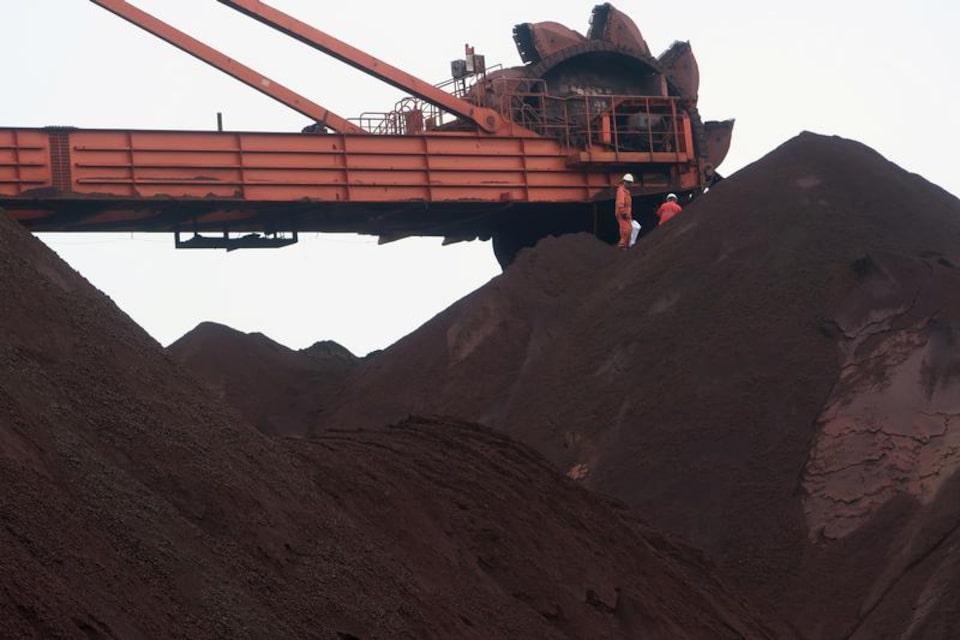
LAUNCESTON, Australia, June 19 (Reuters) - China's iron ore imports are on track in June for their strongest month this year, showing a resilience that isn't being mirrored in the sluggish steel sector. China, which buys about 75% of global seaborne iron ore, is expected to import almost 110 million metric tons of the key steel raw material, according to commodity analysts LSEG and Kpler. Sign up here. Arrivals in June are estimated by Kpler at 109.56 million tons, while LSEG is forecasting 109.1 million. This would be up about 11% from May's official imports of 98.13 million tons and would be the strongest month since December's 112.49 million, which was the second-highest on record. The question is why are Chinese steel mills and traders buying more iron ore even as the steel sector shows signs of slowing amid both domestic and foreign headwinds? The answer likely lies in price moves, with spot iron ore slipping to the lowest in eight months early in June. Iron ore futures on the Singapore Exchange have been trending lower since the high so far in 2025 of $107.81 a ton on Feb. 12. They dropped to $94.17 a ton on June 18, the lowest since Sept. 30, before recovering slightly to end at $94.30 on Wednesday. The low in June is too late to have any impact on imports this month, given the lag between when cargoes are arranged and when they are delivered, but it's worth noting that the Singapore price has been dropping steadily since its last peak in the middle of May. Another factor that may have driven higher imports in June is re-stocking of inventories, which have been trending lower. Port stockpiles monitored by consultants SteelHome fell to a 16-month low of 132 million tons in the week to June 6. The strong imports seen so far this month have helped lift inventories to 133.4 million tons in the week to June 13, but this is still 9% below the 146.6 million from the same week in 2024. While there may still be some scope to add to inventories in coming weeks, there have to be questions as to how long iron ore imports can continue to show strength if the steel sector is soft. STEEL SAGS China's steel output dropped sharply in May to 85.55 million tons, down 6.9% from the same month last year, according to official data released on June 16. For the first five months of the year steel production has slipped 1.7% to 431.63 million tons. It may also continue to decline in coming months, with the state-backed China Iron and Steel Association saying last week that output is expected to decline 4% this year from 2024. China's steel demand is being crimped by the ongoing struggles of the key property sector, which is showing little sign of responding positively to recent stimulus measures. China's new home prices fell 0.2% month-on-month in May after showing no growth the previous month, according to Reuters calculations based on data released on June 16 by the National Bureau of Statistics. There are also worries about the export-focused manufacturing sector, which is facing higher tariffs from the United States, with the latest statements from President Donald Trump suggesting up to 55% will be levied on all imports. Steel prices have also been trending lower, with Shanghai Exchange rebar contracts ending at 2,982 yuan ($414.74) a ton on Wednesday, down 14% from the peak so far this year of 3,466 yuan on Feb. 5. The contract hit the lowest since February 2020 on June 3 when it dropped to 2,912 yuan a ton. The steel sector would probably be doing worse if it wasn't for the strength in exports, which jumped almost 10% year-on-year in May to 10.58 million tons. For the first five months of the year steel exports rose 8.9% to 48.47 million tons, a record for this period. The problem for China's steel exports is that they may become a victim of their own success as other countries ramp up protectionism, with India and the United States being current examples. Enjoying this column? Check out Reuters Open Interest (ROI), your essential new source for global financial commentary. ROI delivers thought-provoking, data-driven analysis of everything from swap rates to soybeans. Markets are moving faster than ever. ROI can help you keep up. Follow ROI on LinkedIn , opens new tab and X , opens new tab. The views expressed here are those of the author, a columnist for Reuters. https://www.reuters.com/markets/commodities/chinas-iron-ore-imports-rise-even-steel-struggles-2025-06-19/