2025-06-19 10:20
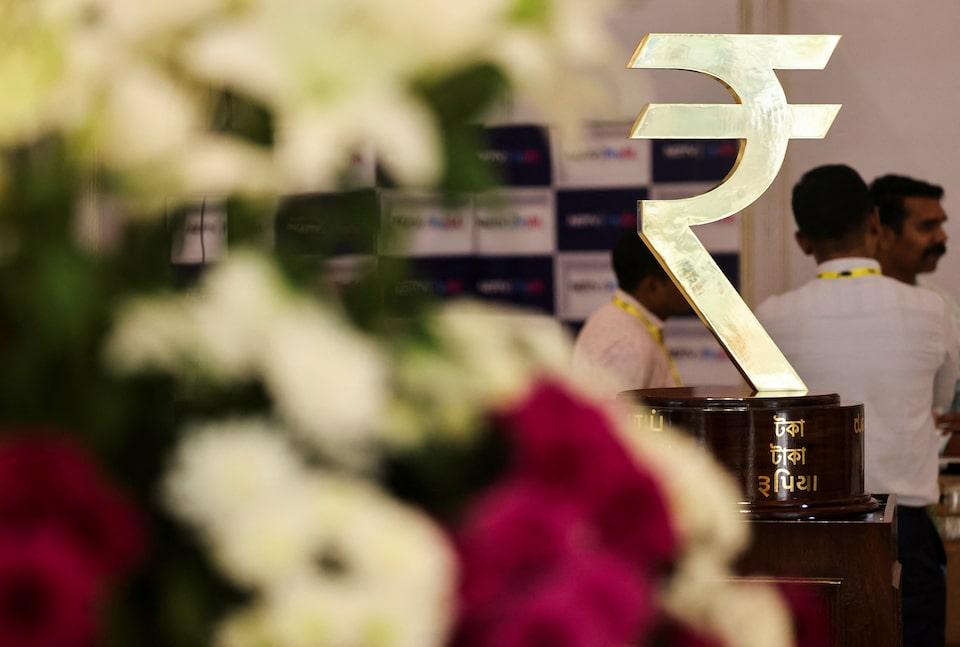
MUMBAI, June 19 (Reuters) - The Indian rupee fell to its weakest level since mid-March on Thursday as risk aversion gripped financial markets, with investors focused on the possibility of U.S. involvement in the Israel-Iran conflict. The rupee touched a low of 86.8925 on the day before slightly paring losses to close at 86.7225 against the U.S. dollar, down 0.3% on the day. Sign up here. Brent crude oil prices rose to near $77 per barrel after Israel struck a key Iranian nuclear site on Thursday and Iranian missiles hit an Israeli hospital. Risk assets remained under pressure, reflecting investor worries about a broader conflict in the Middle East after U.S. President Donald Trump kept the world guessing about whether the country would join Israel's bombardment of Iranian nuclear sites. ANZ believes the most likely scenario is an extended conflict between Iran and Israel, which would see oil supplies come under direct threat, the firm said in a Thursday note. "The price outcome for this scenario would be the USD75–85/bbl range," while an escalation of the conflict, pegged at 20% probability, could push prices to $90-95 per barrel. Oil is a major component of India’s import bill. A $10 barrel increase in crude can widen the current account deficit by up to 0.4% of GDP, economists estimate. Indian government bond yields rose on Thursday as traders squared off positions, fearing further escalation of geopolitical tensions. The country's benchmark equity index, Nifty 50 (.NSEI) , opens new tab, dipped 0.1%. Meanwhile, mild dollar sales from state-run banks helped the rupee limit its losses, three traders said. The currency has declined little under 1% this week so far. The rupee could find some support near the psychologically important 87 level and is likely to trade with a weakening bias in the near term, a trader at a foreign bank said. https://www.reuters.com/world/india/rupee-hits-three-month-low-worries-over-us-role-middle-east-conflict-2025-06-19/
2025-06-19 10:00
LONDON, June 19 (Reuters) - While oil-importing countries won't fully escape a hit in the event of another energy price shock on Middle East tensions, a period of rare dollar weakness will soften the blow considerably for countries outside America. Most crude prices are denominated in U.S. dollars, so when jumps in the oil price occur during periods of relentless dollar strength, the pain is compounded for regions like Europe. Sign up here. This year's dollar swoon, however, has had the opposite effect, cushioning the impact of the oil price increase set off by the unfolding Israel-Iran war. To be sure, we're still far from 'shock' territory. Dollar-based global crude prices have jumped about 14% since early last week, but they remain well below January peaks and about 7% lower year-over-year. But the impact has been even more benign in Europe, due to the euro's 12% rise against the dollar in the year to date. While the oil price in dollars has all but wiped out its decline for the year so far, the euro price of Brent crude is still down 12% in 2025 and is 20% lower than one year ago. "For oil-importing nations, the greenback's decline offers a crucial reprieve, helping to cushion the blow from soaring oil prices and to limit broader economic fallout," UniCredit strategist Tobias Keller wrote on Wednesday. Should the dollar continue to weaken, it could mitigate the relative economic impact on Europe of any renewed energy price squeeze. That, in turn, could support Europe's performance versus the United States this year and further erode the American exceptionalism narrative fueling extraordinary portfolio flows to the U.S. in recent years. What's more, ongoing dollar weakness amid a fresh energy price retreat would just load more pressure on the European Central Bank to cut interest rates to prevent a big undershoot of its 2% inflation target. INCREASINGLY UNSTABLE The dollar/oil link is yet another example of a financial relationship that, in the words of UniCredit's Keller, has become "increasingly unstable" this year. As foreign investors with trillions of dollars invested in U.S. stocks and bonds have started rethinking their dollar exposure in light of America's trade wars, re-worked alliances and upended domestic institutions, the dollar's correlation with stocks, bonds and commodities has shifted. Most obvious is the greenback's apparent loss of its traditional 'safe haven' status during times of great uncertainty and stress, with the dollar falling alongside both stocks and bonds during a turbulent April. The dollar/oil link has become particularly unstable. All else being equal, a stronger dollar should weaken oil prices by sapping non-American demand around the world due to the added local currency cost of a barrel of oil. And the opposite should, in theory, also be true. Yet the cause-and-effect was the other way around in recent years, as a spike in oil prices after Russia's 2022 Ukraine invasion spurred inflation and steep Federal Reserve interest rate rises, followed by a subsequent decline in oil prices and inflation and the beginning of a Fed easing cycle. During that series of events, the dollar moved broadly in tandem with energy prices. When the oil price doubled between mid-2021 and the immediate aftermath of the Ukraine invasion, the dollar index (.DXY) , opens new tab surged by 20%, magnifying the impact of rising energy costs for Europe and elsewhere. But that relationship broke down again last year after the U.S. election, as the dollar initially climbed even as oil prices fell. While the positive correlation resumed after January, the surge in crude this month after the Israel-Iran war broke out has not been matched by a strengthening dollar. Indeed, the greenback is still flirting with new lows. The relationship depends on the backdrop of course. Right now, the primary concern is that a decade of relentless dollar strength now faces a multi-year unwind as trade, economic and investment imbalances are forced to correct. If that prevails, any renewed oil spike would be less severe than last time for the global economy at large. The opinions expressed here are those of the author, a columnist for Reuters. https://www.reuters.com/markets/currencies/ailing-dollar-softens-europes-hit-any-oil-shock-2025-06-19/
2025-06-19 09:20
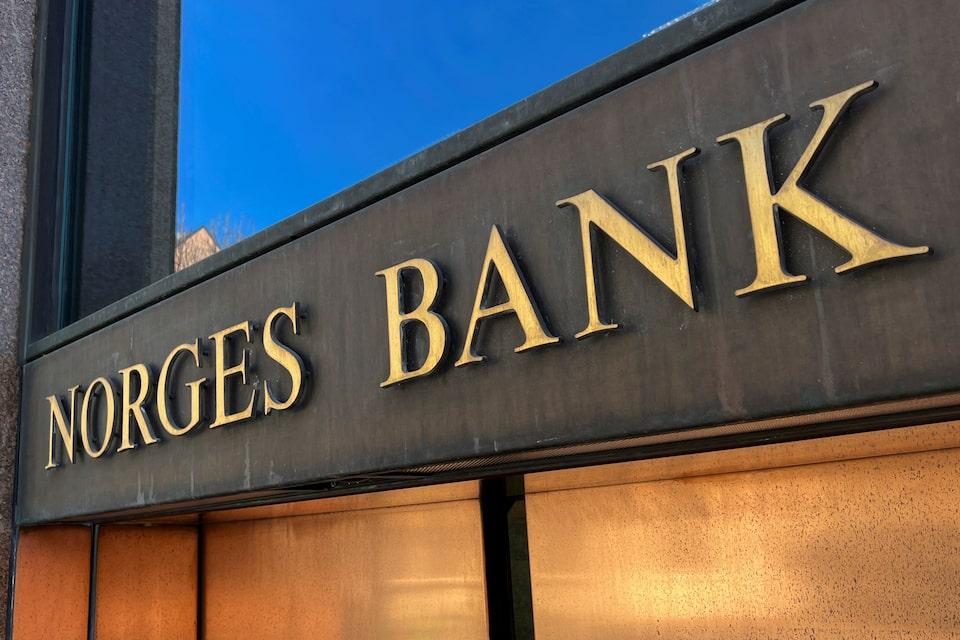
Norway trims rate to 4.25% in first cut since 2020 Central bank plans to cut again this year Says inflation has come down faster than expected Most analysts had predicted rates would stay on hold Currency weakens against the euro, then recovers OSLO, June 19 (Reuters) - Norway's central bank cut its policy interest rate by 25 basis points to 4.25% on Thursday and said there were more cuts to come due to a more benign inflation outlook, a decision that took most analysts by surprise and weakened the currency. "The economic outlook is uncertain, but if the economy evolves broadly as currently projected, the policy rate will be reduced further in the course of 2025," Norges Bank said in a statement. Sign up here. The policy rate could be cut one or two more times by the end of the year, Governor Ida Wolden Bache later told a press conference, lowering borrowing costs to either 4.0% or 3.75%. By the end of 2028 the rate will likely stand at about 3%, Norges Bank said. Thursday's cut was the first since 2020. The Norwegian crown initially weakened to 11.56 against the euro from 11.48 just before the 0800 GMT announcement, but regained lost ground to trade at 11.50 at 0858 GMT. Norges Bank had held its interest rate last month at 4.50%, the highest level since 2008, after postponing in March a long-planned monetary easing due to an unexpected rise in consumer prices. Of the 26 economists in Reuters' June 11-16 poll, 23 had forecast that Norges Bank's key interest rate would stay at 4.50% on Thursday, while only three predicted a cut to 4.25%. "Inflation has declined since the monetary policy meeting in March, and the inflation outlook for the coming year indicates lower inflation than previously expected," Bache said in a statement. "A cautious normalisation of the policy rate will pave the way for inflation to return to target without restricting the economy more than necessary," she added. Core inflation in Norway eased more than expected in May, slowing to 2.8% year-on-year, but remained above the central bank's 2.0% target. NORWAY'S PM WELCOMES MOVE The rate decision comes ahead of a parliamentary election in September, with latest polls suggesting that the minority Labour government may be re-elected. In a rare public statement after a central bank rate decision, Prime Minister Jonas Gahr Stoere welcomed the move. "This is especially good news for everyone with loans," Stoere told news agency NTB. The Norwegian policy stance has so far contrasted with other Western central banks, most of which started cutting rates last year as growth slowed and inflation waned. "The central bank remains vigilant: if wage and price growth remain higher than projected, there will be fewer interest rate cuts," Oeystein Doerum, chief economist at the Confederation of Norwegian Enterprises, said in a statement. The Swiss central bank on Thursday cut its policy rate to zero, citing negative inflation and a cloudy global outlook. Sweden similarly cut its policy rate on Wednesday, by a quarter point to 2.0%, citing economic weakening, while the U.S. Federal Reserve kept rates steady. Both central banks said they may further reduce borrowing costs later this year. Britain's central bank is expected to keep interest rates on hold later on Thursday. https://www.reuters.com/business/finance/norway-central-bank-cuts-rates-surprise-move-2025-06-19/
2025-06-19 07:52
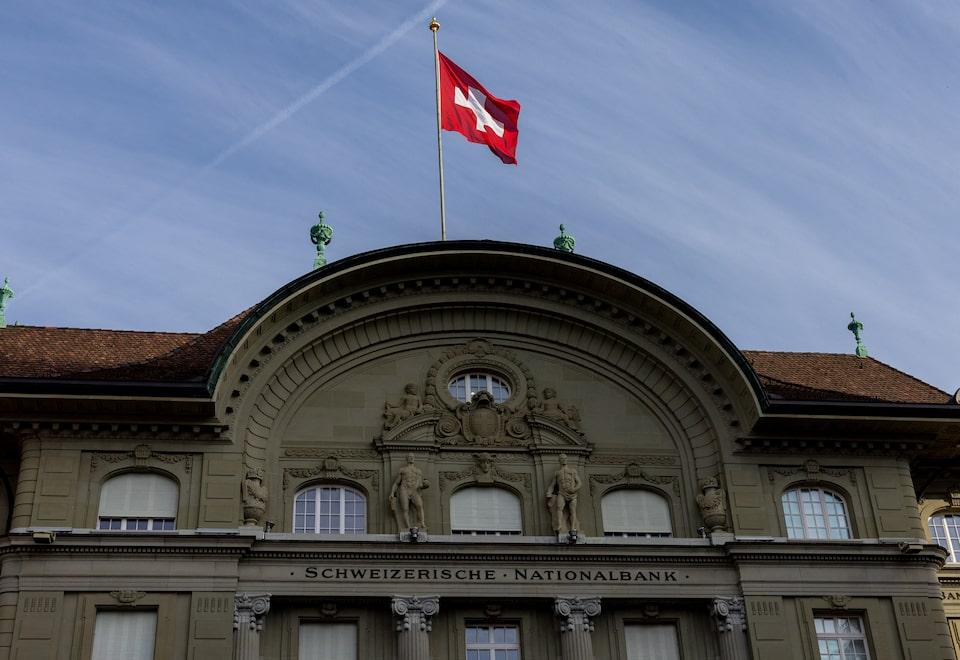
SNB cuts rates with inflation negative and franc strong SNB anticipates weaker global growth, rising US inflation Analysts suggest SNB may pause rate cuts unless economy worsens ZURICH, June 19 (Reuters) - The Swiss National Bank cut its interest rate to zero on Thursday and did not rule out returning borrowing costs to negative territory in future, although it stressed this was not a step it would take lightly. The SNB reduced its policy rate by 25 basis points from 0.25%, as expected by markets and a Reuters poll, to stand on the brink of negative rates for the first time since 2022. Sign up here. The central bank now has the lowest borrowing costs among its peers, with markets giving a 53% probability of further cuts in September. Chairman Martin Schlegel stressed the negative side effects of sub-zero borrowing costs and noted that with rates now at zero, cutting rates again would be a more significant step than in other circumstances. "As a central bank you can never exclude measures, but the hurdle is higher now," Schlegel told reporters. The SNB lowered its policy rate to get inflation back within its 0-2% target range, which it defines as price stability, and seeing low inflationary pressure ahead. Negative interest rates, which the central bank last used between late 2014 and 2022, were unpopular with banks, savers and insurance companies, and the SNB indicated it would be reluctant to revive them. "It's very clear that negative rates would come with challenges and also side effects," Schlegel told Reuters. "For example, for savers, also for pension funds, and also for the real estate market. So we are well aware of the side effects. And of course, we would not take this decision lightly." The Swiss franc briefly strengthened after the decision, but retreated to trade steadily on the day against the dollar at 0.8191 francs. Thursday's cut was the SNB's sixth rate cut in succession and came after Swiss prices fell by 0.1% last month, its lowest reading for four years. In its baseline scenario, the SNB has global economic growth weakening and U.S. inflation rising in coming quarters. In Europe, it saw inflationary pressure decreasing. The central bank said the outlook for the world economy remained subject to high uncertainty. Trade barriers could be raised further, leading to a more pronounced slowdown in the global economy, it noted. FRANC STRENGTH The Swiss move comes on a busy day for central banks, with Norway's central bank surprising markets with its first rate cut in five years, and the Bank of England kept its interest rate unchanged. On Wednesday, the U.S. Federal Reserve held its interest rates steady, but signalled they could fall later this year, while the European Central Bank trimmed its interest rate by 25 basis points earlier this month. In Switzerland, the SNB also lowered its inflation forecasts for 2025, 2026 and 2027, making some analysts expect more rate cuts. "Unless the situation changes drastically between now and September... today's decision paves the way for a further rate cut in September and a return to negative interest rates," said Charlotte de Montpellier, an economist at ING Bank. Capital Economics also thought another rate cut was likely, with deflation more persistent than anticipated by policymakers. Others, however, disagreed, with EFG senior economist GianLuigi Mandruzzato saying the SNB was likely to stop at zero, unless there was a significant downturn in the Swiss economy caused by higher U.S. tariffs. "All options remain on the table, including negative interest rates and foreign exchange market interventions, but for them to be deployed, a further, meaningful deterioration of the outlook would be needed," he said. Switzerland's rate-sensitive two-year bond yield remained in negative territory, a sign markets still anticipate a move in Swiss rates below 0% in the months ahead. The SNB cut rates after the franc, buoyed by safe-haven flows, has gained roughly 11% against the dollar in 2025, pushing down inflation by making imports cheaper. The SNB says it will intervene in foreign currency markets if necessary to keep inflation on track, although two weeks ago, Washington added Switzerland to a list of countries being monitored for unfair currency and trade practices. "The SNB's main concern may not be avoiding the impression of being a currency manipulator – still, it is politically wise not to appear too trigger-happy to go negative with the policy rate," said Karsten Junius, chief economist at J Safra Sarasin. https://www.reuters.com/business/finance/swiss-national-bank-cuts-interest-rates-zero-2025-06-19/
2025-06-19 07:28
Brent crude hits highest close since January 22 US involvement decision expected in two weeks, says White House Potential Strait of Hormuz closure could surge oil prices to $120-$130 per barrel: JP Morgan CALGARY, June 19 (Reuters) - Oil prices jumped almost 3% on Thursday as a week-old air war between Israel and Iran escalated and uncertainty about potential U.S. involvement kept investors on edge. Brent crude futures settled up $2.15, or 2.8%, to $78.85 a barrel, its highest close since January 22. Sign up here. U.S. West Texas Intermediate crude for July was up $2.06, or 2.7%, to $77.20 at 1330 EST (1730 GMT). Trading volumes were light on Thursday due to a U.S. federal holiday. Israel bombed nuclear targets in Iran on Thursday, and Iran fired missiles and drones at Israel after hitting an Israeli hospital overnight. There was no sign of an exit strategy from either side, as Israeli Prime Minister Benjamin Netanyahu said Tehran's "tyrants" would pay the "full price" and Iran warned against a "third party" joining the attacks. The White House said on Thursday that President Donald Trump will decide whether the U.S. will get involved in the Israel-Iran conflict in the next two weeks. That prospect has crude prices grinding higher, said Rory Johnston, analyst and founder of the Commodity Context newsletter. "Consensus (in the market) is increasingly forming that we will see U.S. involvement in some way," Johnston said. Iran is the third-largest producer among members of the Organization of the Petroleum Exporting Countries, extracting about 3.3 million barrels per day of crude oil. About 18 million to 21 million bpd of oil and oil products move through the Strait of Hormuz along Iran's southern coast, and there is widespread concern the fighting could disrupt trade flows. The risk of major energy disruption will rise if Iran feels existentially threatened, and U.S. entry into the conflict could trigger direct attacks on tankers and energy infrastructure, said RBC Capital analyst Helima Croft. On Thursday, JP Morgan said an extreme scenario, in which the conflict widens to the broader region and includes a Strait of Hormuz closure, could result in oil prices surging to $120 to $130 per barrel. Goldman Sachs said on Wednesday that a geopolitical risk premium of about $10 a barrel is justified, given lower Iranian supply and risk of wider disruption that could push Brent crude above $90. Even if Middle East tensions were to cool off in the coming days, oil prices are probably not headed back to the low $60 range they were trading at a month ago, said Phil Flynn, senior analyst at the Price Futures Group. "I think this (conflict) knocks oil out of its complacency," said Flynn. "I would argue that the market has been underplaying geopolitical risk." But DBRS Morningstar said in a note on Thursday that it expects any sudden oil price surge to be temporary. A higher oil price will exacerbate tariff-related headwinds to the global economy and oil demand, so as long as the conflict recedes, the war premium will deflate and prices will cycle lower, DBRS said. Russia's top oil official said on Thursday OPEC+ oil producers should proceed with plans to increase output, noting rising summer demand. Russian Deputy Prime Minister Alexander Novak said at an economic forum in St. Petersburg that OPEC+ should calmly execute its plans and not scare the market with forecasts. https://www.reuters.com/business/energy/oil-falls-investors-weigh-chance-us-intervention-iran-israel-conflict-2025-06-19/
2025-06-19 07:26
BEIJING, June 19 (Reuters) - China's commerce ministry said on Thursday that "a certain number" of rare earth export licence applications had been approved, but declined to give further details such as the exact amount and how many had been extended to U.S. firms. "China will continue to strengthen the approval process for compliant applications, and is willing to further enhance communication and dialogue with relevant countries on export controls," He Yadong, a ministry spokesperson told a regular news conference. Sign up here. https://www.reuters.com/world/china/china-has-granted-rare-earth-export-licences-some-firms-commerce-ministry-says-2025-06-19/