2025-06-19 07:28
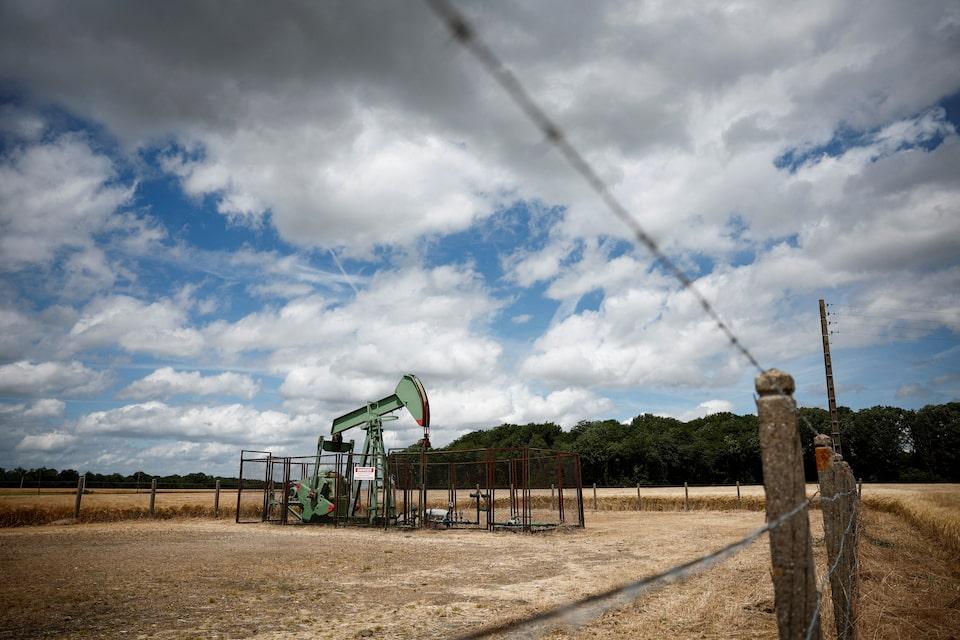
Brent crude hits highest close since January 22 US involvement decision expected in two weeks, says White House Potential Strait of Hormuz closure could surge oil prices to $120-$130 per barrel: JP Morgan CALGARY, June 19 (Reuters) - Oil prices jumped almost 3% on Thursday as a week-old air war between Israel and Iran escalated and uncertainty about potential U.S. involvement kept investors on edge. Brent crude futures settled up $2.15, or 2.8%, to $78.85 a barrel, its highest close since January 22. Sign up here. U.S. West Texas Intermediate crude for July was up $2.06, or 2.7%, to $77.20 at 1330 EST (1730 GMT). Trading volumes were light on Thursday due to a U.S. federal holiday. Israel bombed nuclear targets in Iran on Thursday, and Iran fired missiles and drones at Israel after hitting an Israeli hospital overnight. There was no sign of an exit strategy from either side, as Israeli Prime Minister Benjamin Netanyahu said Tehran's "tyrants" would pay the "full price" and Iran warned against a "third party" joining the attacks. The White House said on Thursday that President Donald Trump will decide whether the U.S. will get involved in the Israel-Iran conflict in the next two weeks. That prospect has crude prices grinding higher, said Rory Johnston, analyst and founder of the Commodity Context newsletter. "Consensus (in the market) is increasingly forming that we will see U.S. involvement in some way," Johnston said. Iran is the third-largest producer among members of the Organization of the Petroleum Exporting Countries, extracting about 3.3 million barrels per day of crude oil. About 18 million to 21 million bpd of oil and oil products move through the Strait of Hormuz along Iran's southern coast, and there is widespread concern the fighting could disrupt trade flows. The risk of major energy disruption will rise if Iran feels existentially threatened, and U.S. entry into the conflict could trigger direct attacks on tankers and energy infrastructure, said RBC Capital analyst Helima Croft. On Thursday, JP Morgan said an extreme scenario, in which the conflict widens to the broader region and includes a Strait of Hormuz closure, could result in oil prices surging to $120 to $130 per barrel. Goldman Sachs said on Wednesday that a geopolitical risk premium of about $10 a barrel is justified, given lower Iranian supply and risk of wider disruption that could push Brent crude above $90. Even if Middle East tensions were to cool off in the coming days, oil prices are probably not headed back to the low $60 range they were trading at a month ago, said Phil Flynn, senior analyst at the Price Futures Group. "I think this (conflict) knocks oil out of its complacency," said Flynn. "I would argue that the market has been underplaying geopolitical risk." But DBRS Morningstar said in a note on Thursday that it expects any sudden oil price surge to be temporary. A higher oil price will exacerbate tariff-related headwinds to the global economy and oil demand, so as long as the conflict recedes, the war premium will deflate and prices will cycle lower, DBRS said. Russia's top oil official said on Thursday OPEC+ oil producers should proceed with plans to increase output, noting rising summer demand. Russian Deputy Prime Minister Alexander Novak said at an economic forum in St. Petersburg that OPEC+ should calmly execute its plans and not scare the market with forecasts. https://www.reuters.com/business/energy/oil-falls-investors-weigh-chance-us-intervention-iran-israel-conflict-2025-06-19/
2025-06-19 07:26
BEIJING, June 19 (Reuters) - China's commerce ministry said on Thursday that "a certain number" of rare earth export licence applications had been approved, but declined to give further details such as the exact amount and how many had been extended to U.S. firms. "China will continue to strengthen the approval process for compliant applications, and is willing to further enhance communication and dialogue with relevant countries on export controls," He Yadong, a ministry spokesperson told a regular news conference. Sign up here. https://www.reuters.com/world/china/china-has-granted-rare-earth-export-licences-some-firms-commerce-ministry-says-2025-06-19/

2025-06-19 07:01
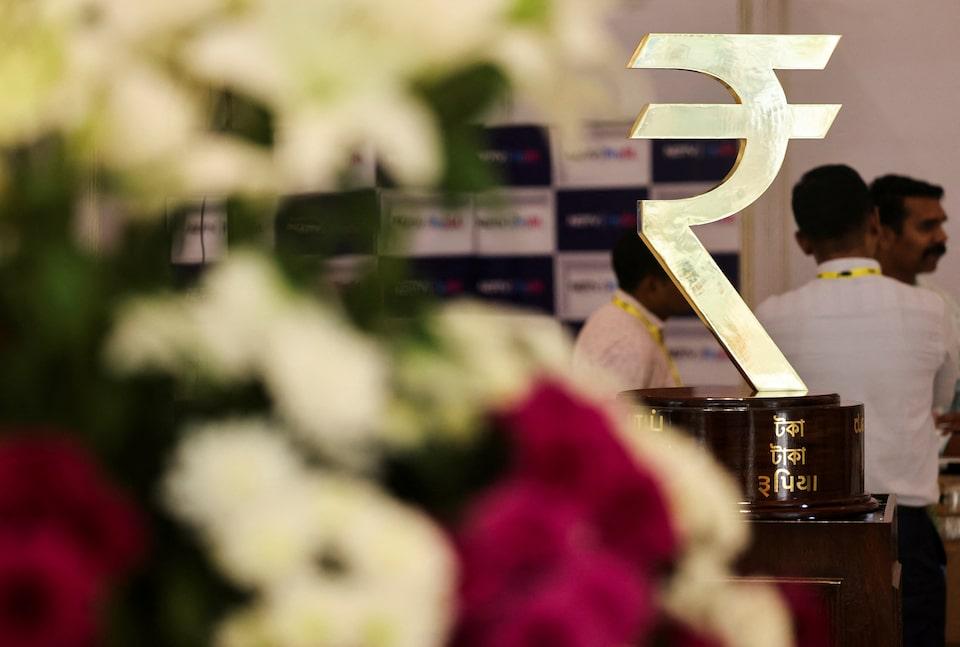
MUMBAI, June 19 (Reuters) - The Indian rupee declined on Thursday to hover around its weakest level in over two months, as persistent worries about escalation in the Iran-Israel air war kept oil prices elevated and dented risk sentiment. The rupee was quoted at 86.6875, as of 12:20 p.m. IST, down 0.2% from its close of 86.4475 on Wednesday. Earlier in the session, it touched 86.71 - its lowest level since April 9. Sign up here. The dollar index was up about 0.2% at 99 and Asian currencies declined, as the possible entry of the United States into the week-old Israel-Iran air war kept financial markets on edge. The Israeli military said on Thursday it had targeted the nuclear reactor in the area of Arak in Iran overnight and what it called a nuclear weapons development site in the area of Natanz. The geopolitical tensions have sparked a jump in oil prices, with Brent crude futures last at $76.8 per barrel, up nearly 19% on the month so far. Traders also pointed to dollar demand from importers weighing on the rupee on the day. The rupee could decline towards 86.70-86.80 if dollar strength and elevated crude oil prices persist, said Amit Pabari, managing director at FX advisory firm CR Forex. Meanwhile, the U.S. Federal Reserve expectedly kept policy rates unchanged on Wednesday. Fed Chair Jerome Powell said that he expects "meaningful" inflation ahead as consumers pay more for goods due to the Trump administration's planned import tariffs. https://www.reuters.com/world/india/middle-east-tensions-importer-dollar-bids-keep-rupee-backfoot-2025-06-19/
2025-06-19 06:55
LONDON, June 19 (Reuters) - Equnior (EQNR.OL) , opens new tab and Gwynt Glas, a joint venture between EDF Renewables UK and ESB, have won seabed leases to build floating wind farms in the Celtic Sea off the coast of Wales and South West England, The Crown Estate said on Thursday. Britain is aiming to largely decarbonise its electricity sector by 2030 to reduce its reliance on fossil fuels and drive down cost and is seeking to increase offshore wind capacity to 43-50 gigawatts (GW) by the end of the decade, from around 16 GW at present. Sign up here. “Floating offshore wind will be transformative for economic growth in Wales and the South West, unlocking thousands of jobs in places like Port Talbot and Bristol, bolstering our energy security and delivering industrial renewal,” Britain’s Energy Secretary Ed Miliband said in the Crown Estate press release. The Crown Estate, which acts as manager of the seabed around England, Wales and Northern Ireland, said Equnior and Gwynt Glas had both won leases giving them the rights each to build 1.5 gigawatt (GW) floating wind projects in its latest seabed leasing round. The companies will pay 350 pounds ($468.55) per megawatt per year for the leases, the Crown Estate said, meaning both groups will pay 525,000 pounds per year for the sites excluding VAT. Floating wind projects can be installed in deeper waters than fixed-bottom foundations, harnessing stronger and more continuous wind to generate more power. The Crown Estate is an independently run, commercial business, whose profits go to the Treasury but its profits are also used as the benchmark for the level of public funding for the Royal Family. ($1 = 0.7470 pounds) https://www.reuters.com/sustainability/climate-energy/equinor-gwynt-glas-win-uk-floating-offshore-wind-leases-2025-06-19/
2025-06-19 06:53
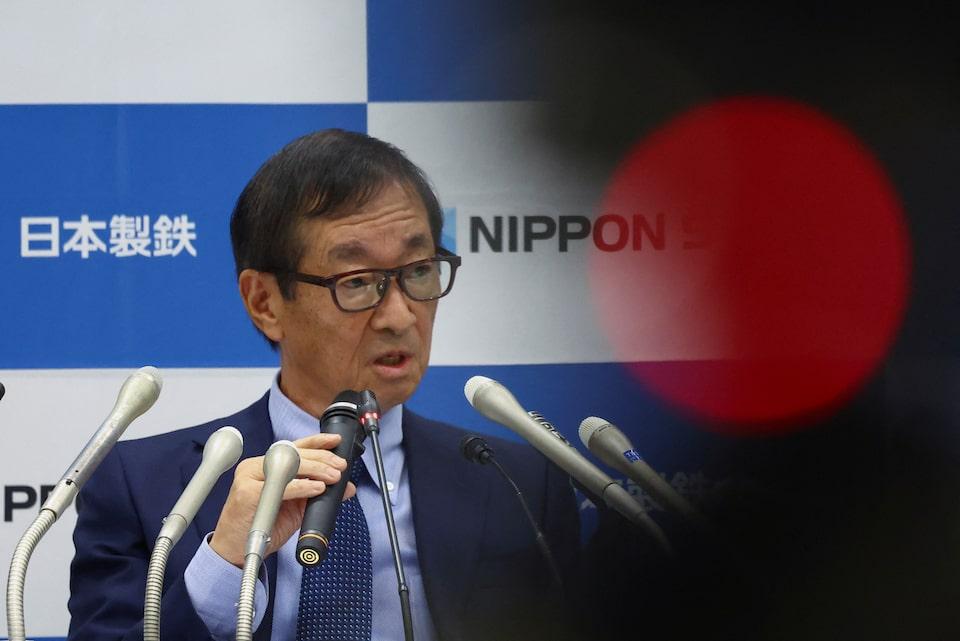
No constraint in pursuing our goals, CEO says Capital increase is an option to fund investment, vice chairman says Nippon Steel shares rise 2.5%, outperforming Nikkei 225 TOKYO, June 19 (Reuters) - The U.S. government's ownership of a golden share in U.S. Steel will not block Nippon Steel (5401.T) , opens new tab from taking any management action that it deems appropriate, the Japanese steelmaker's CEO said on Thursday. Eiji Hashimoto spoke at a press conference in Tokyo a day after Japan's top steelmaker closed its $14.9 billion acquisition of U.S. Steel, confirming Nippon Steel had agreed to give the U.S. government unusual power to help end its 18-month battle to reach a deal. Sign up here. The national security agreement inked with U.S. President Donald Trump's administration hands Washington a non-economic golden share and gives the president the authority to name a board member. "We won't be constrained in pursuing anything we aim to do," Hashimoto said, when asked how the golden share would influence management freedom. "We retain sufficient managerial freedom," he said, noting that the Japanese company accepted the U.S. government's desire to oversee the execution of the investment and proposed a golden share structure as a straightforward way to reflect it. The ultimate agreement with the U.S. government represents an unusual level of control conceded by the companies to save the deal, after a rocky path to approval spurred by high-level political opposition. "We struggled to complete this deal, but our global strategy is starting to take shape," Hashimoto said, adding that the company will consider further global expansion. The golden share gives the U.S. government a veto over a potential relocation of U.S. Steel's headquarters from Pittsburgh, a transfer of jobs overseas, a name change, and any potential future acquisition of a rival business. "We have spent 2 trillion yen ($14 billion) to acquire U.S. Steel ... We have no intention of relocating its headquarters or shifting production or jobs overseas," he said. The agreement inked with the administration also stipulates that Nippon Steel must make capital investments of about $11 billion in the United States by 2028. Hashimoto said he saw no issue with that requirement because the company intended to expand investments beyond its current plans. The Trump administration's policy shift towards imposing higher tariffs had increased the strategic importance of the U.S. Steel acquisition, he said. "This deal is not only a necessary and effective strategy to restore our company to the number one position globally, but also the only path for U.S. Steel to revitalize and grow,” Hashimoto told reporters. "Nippon Steel has limited track record operating a business of this scope," Jefferies analysts wrote in a client note earlier this week. The golden share "could narrow Nippon's flexibility as it is contemplating spending (5 trillion yen to 10 trillion yen) on decarbonisation." Activist investor Strategic Capital is proposing that executive remuneration should be clawed back if the company books impairments. Nippon Steel opposes the proposal. "I am concerned that Nippon Steel's final goal was to acquire U.S. Steel, not boosting returns to shareholders," said Tsuyoshi Maruki, CEO of Strategic Capital. Nippon Steel will consider a capital raising among other options as it weighs how to fund its U.S. investment plans, Vice Chairman Takahiro Mori, the lead negotiator of the deal, said. "The increased leverage from acquisition debt remains a clear credit negative," Roman Schorr, senior analyst at Moody's Ratings, said in a report. "However, this is counterbalanced by the strategic benefits of expanding into the U.S. market, which enjoys tariff protection. U.S. Steel brings a strong asset base following recent investments, complementing Nippon Steel's portfolio," Schorr said, adding the company's investments and cost control would be closely watched. The U.S. government's approach to the deal has been "a purely political and symbolic throwback," said Weston Nakamura, a markets analyst who publishes the Across the Spread newsletter. "I don't see it hindering any operations it hasn't already set out. But the one that might be of friction in the future is if Nippon (Steel) tries to acquire another U.S. steel maker," he added. Nippon Steel shares rose 2.5% in afternoon trading to 2,772 yen, outperforming the broader Nikkei 225 index (.N225) , opens new tab, which fell 0.9%. ($1 = 145.1700 yen) https://www.reuters.com/business/tariffs-boost-strategic-importance-us-steel-deal-nippon-steel-ceo-says-2025-06-19/
2025-06-19 06:40
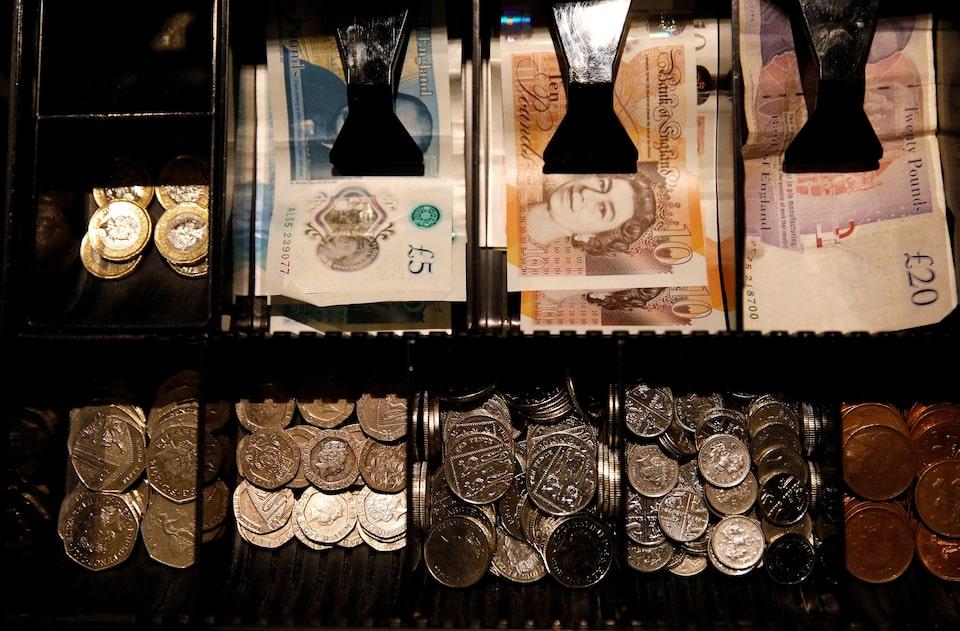
LONDON, June 19 (Reuters) - Sterling slipped versus a stronger dollar on Thursday ahead of the Bank of England's policy decision, with no change to rates the widely expected outcome, while investor sentiment remained fragile given the flaring conflict in the Middle East. At 0618 GMT the pound was 0.24% lower at $1.339 and unchanged against the euro, which held at 85.515 pence. . Sign up here. The dollar strengthened after the Federal Reserve held rates steady as expected on Wednesday, and amid a surge in safe haven demand as a conflict in the Middle East continues and President Donald Trump weighs U.S. involvement. Traders are betting the BoE will follow suit in keeping rates steady on Thursday, even as the UK's economic growth is faltering and inflation cooled slightly in May. The chance of no change stands at 96% with a tiny chance of a 25 basis point rate cut. Attention will be on the voting, after last month's surprise three-way split among policymakers. A Reuters poll last week of 60 economists found that all of them expect the BoE to keep rates at 4.25% in June and almost all forecast a quarter-point rate cut in August. A jump in the price of oil during the ongoing Israel-Iran conflict presents another problem for the central bank to grapple with, as it could keep inflation higher. The pound has slipped more than 1% since last Thursday, but it remains 7% higher against the greenback in 2025, helped by a rush away from U.S. assets spurred by heightened trade uncertainty in light of Trump's tariffs. Also helping out is the fact that the UK is the only country to have struck a trade deal with the United States. Trump and British Prime Minister Keir Starmer finalised the deal at the G7 summit this week. https://www.reuters.com/world/uk/sterling-slips-ahead-bank-england-decision-middle-east-focus-2025-06-19/