2025-06-19 05:55
Erick moves inland over Mexico's Pacific coast Oaxaca residents clean piled-up boats, debris on beaches Storm expected to bring life-threatening floods, mudslides MEXICO CITY/PUERTO ESCONDIDO, June 19 (Reuters) - Erick weakened to a tropical storm after making landfall as a major hurricane on Mexico's southern Pacific coast on Thursday, leaving flooded streets, damaged boats and buildings in Oaxaca as authorities warned of dangerous rains. Erick made landfall as a Category 3 hurricane near the resort town Puerto Escondido around 5:30 a.m. local time (1130 GMT). By mid-afternoon, it had slowed to a tropical storm as it moved inland, with sustained winds weakening to 50 mph (85 kph). Sign up here. In coastal towns, residents began clearing debris. "There are many boats sunk here," said fisherman Eduardo Gonzalez in Puerto Escondido. "We're here to help our colleagues." Officials cautioned that Erick's intense rains remained dangerous. "Life-threatening flooding and mudslides are expected, especially in areas of steep terrain," the U.S. National Hurricane Center said, forecasting up to 8 inches (20 cm) of rain for Guerrero state with up to 4 inches for its neighboring Oaxaca and Michoacan states. Mexico's environment ministry also had warned of waves of up to 10 meters (33 feet). No deaths were immediately reported, Laura Velazquez, the head of Mexico's civil protection agency, said at a press conference. Two hospitals had suffered damage and power supply was compromised, she added. State-owned utility CFE reported that more than 123,000 users had lost power in Oaxaca, with service restored to 26% by late morning. Oaxaca Governor Salomon Jara said roads and highways were significantly damaged. Erick is the earliest major hurricane to make landfall in the eastern Pacific, meteorologists from AccuWeather said. "Rapid intensification near coastal cities is a major concern this hurricane season...as water temperatures continue to increase," said Alex DaSilva, AccuWeather lead hurricane expert. Areas around Acapulco are especially vulnerable, AccuWeather said, as the beach town is still recovering from the impact of Hurricane Otis which hit in 2023. https://www.reuters.com/business/environment/erick-now-an-extremely-dangerous-category-4-hurricane-nhc-says-2025-06-19/

2025-06-19 05:47
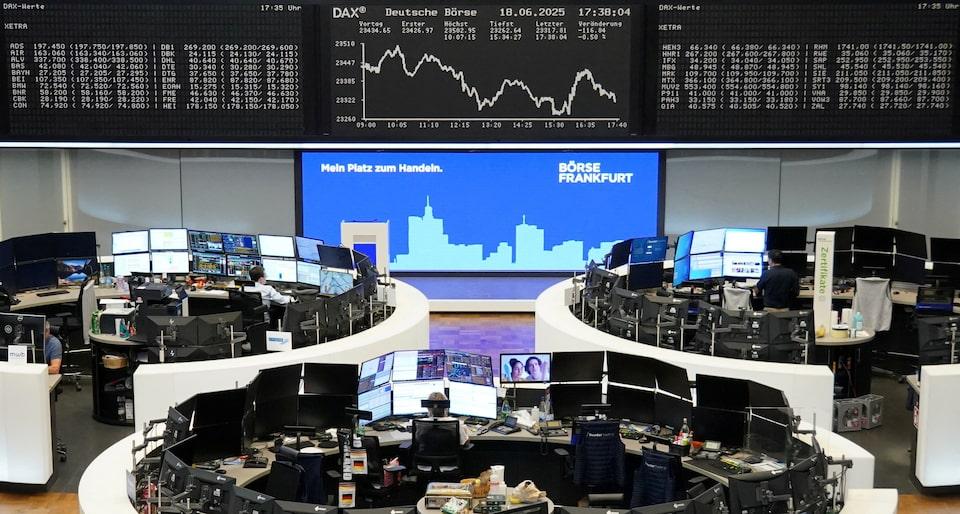
Oil hovers near 4 1/2-month peak on risks of supply shock Dollar firm on safe-haven demand despite mixed signals from Fed Swiss franc steady after SNB cuts rates to 0% TOKYO/LONDON, June 19 (Reuters) - Global stocks fell and the dollar rose on Thursday, reflecting investors' preference for perceived safe havens as concerns mounted over possible U.S. involvement in the Israel-Iran air war, which has ignited a rally in the oil price this week. On the geopolitical front, President Donald Trump kept the world guessing about whether the United States would join Israel's bombardment of Iranian nuclear sites, telling reporters outside the White House on Thursday: "I may do it. I may not do it." Sign up here. A flurry of central bank decisions in Europe highlighted how Trump's erratic approach to trade and tariffs has complicated the job of central bankers in setting monetary policy. In Europe, the STOXX 600 (.STOXX) , opens new tab fell 0.6%, set for a third day of declines, having dropped nearly 2.5% on the week, which would mark its biggest week-on-week decline since the tariff-induced turmoil of April. U.S. S&P 500 futures fell almost 1%, although most U.S. markets - including Wall Street and the Treasury market - will be closed on Thursday for a public holiday. "Market participants remain edgy and uncertain," said Kyle Rodda, senior financial markets analyst at Capital.com. Speculation was rife "that the U.S. will intervene, something that would mark a material escalation and could invite direct retaliation against the U.S. by Iran", he added. "Such a scenario would raise the risk of a greater regional conflict, with implications for global energy supply and probably economic growth." Much of the recent nervousness in markets has been centred around crude supply shocks from the Middle East, which has driven the price of crude oil up by 11% in a week. Brent crude shot up 2% to $78 a barrel on Thursday, close to its highest since January. Gold traded around at $3,365 an ounce, slightly lower on the day. The dollar itself rose broadly, leaving the euro down 0.2% at $1.1462 and the Australian and New Zealand dollars - both risk-linked currencies - fell around 1%. CENTRAL BANK POLICY The Federal Reserve left interest rates unchanged on Wednesday, much to Trump's displeasure, and policymakers retained projections for two quarter-point rate cuts this year. Fed Chair Jerome Powell struck a cautious note about further easing ahead, saying that he expects "meaningful" inflation ahead as a result of Trump's aggressive trade tariffs. Strategists at MUFG said the Fed "is underestimating the weakness in the economy that was present before the tariff shock, specifically, almost ignoring the cracks that have been visible in the labor market for years." On Thursday, the Bank of England left UK rates unchanged, as expected, and policymakers said trade policy uncertainty would continue to hurt the economy, triggering a drop in the pound . The Norges Bank surprised markets on Thursday with a quarter-point cut that weighed on the crown currency , while the Swiss National Bank cut interest rates to zero, as expected, but the fact it did not go below zero gave the franc a lift, leaving the dollar down 0.1% at 0.8184 francs. In commodity markets, the price of platinum hit its highest in almost 11 years, near $1,300 an ounce, driven partly by what analysts said was consumers seeking a cheaper alternative to gold. https://www.reuters.com/world/china/global-markets-wrapup-1pix-2025-06-19/
2025-06-19 05:15
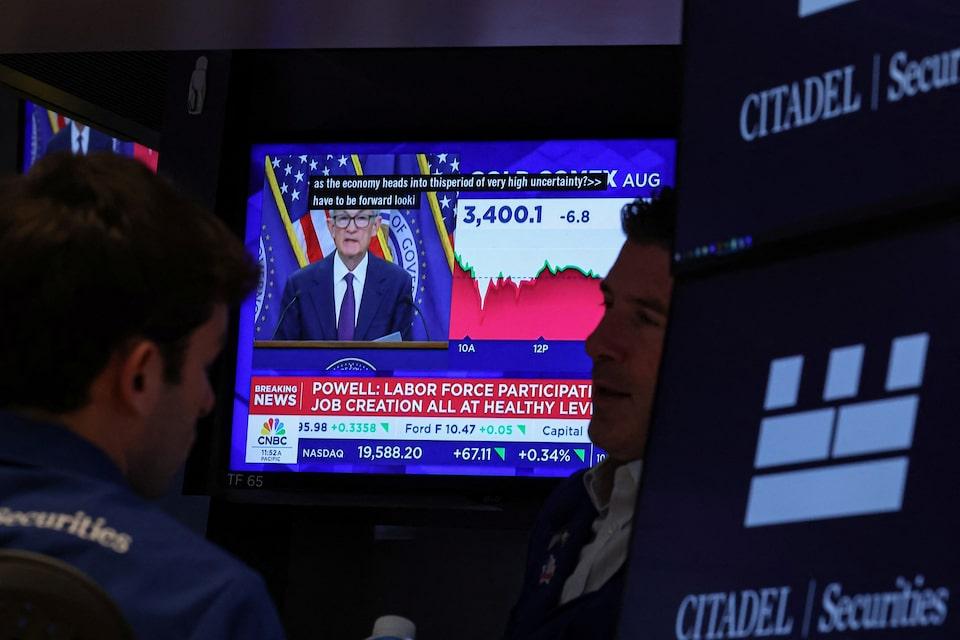
Fed holds rates steady but officials signal fewer cuts ahead Market sentiment fragile as investors eye July tariff deadline Mideast conflict adds to inflation worries NEW YORK, June 18 (Reuters) - A cautious Federal Reserve has put a damper on hopes for interest rate cuts, leaving investors on edge as they navigate a murky mix of geopolitical tensions, inflation risks, and looming growth drag from U.S. President Donald Trump's tariffs. The Fed on Wednesday kept the benchmark interest rate unchanged, as expected. While policymakers reaffirmed that they expected some reduction in borrowing costs this year, they dialed back the anticipated pace of future cuts because of the potential for higher inflation amid uncertainty over the Trump administration's proposed tariff plans. Sign up here. "The calm that the Fed has should be comforting to investors, but it also on the other hand reflects the incredible uncertainty that we have over all the data that is rolling forward," said Bob Savage, head markets strategist at BNY. Investors on Wednesday clung to expectations for two quarter-point rate cuts this year, in line with the median expectation of rate-setting Fed officials. Rates futures traders were largely betting on a cut between September and October, and a second one in December. The market remains on edge after the Fed slightly marked up the outlook for inflation this year. Fed officials revised inflation expectations to 3% this year from a previous forecast of 2.7%, June's summary of economic projections by the Fed showed. Economic growth forecasts for 2025 were revised to 1.4% from a March forecast of 1.7%. Compounding the Fed's more muted economic expectations, a deepening crisis in the Middle East and its potential to push energy prices higher overshadowed a soft core inflation reading for May that had offered some relief to the market. "There's not a lot of things out there that say inflation is going to crash to zero or negative, and so the skew is to the upside, and the Fed recognizes that," said Brad Long, chief investment officer at Fiducient Advisors. U.S. Treasury yields edged higher after Fed Chair Jerome Powell warned in Wednesday's press conference that goods inflation could pick up this summer as tariffs begin hitting consumers. The S&P 500 ended nearly flat on Wednesday, giving back earlier gains after Powell's remarks. Policymakers still anticipate cutting rates by half a percentage point this year, as they projected in March and December, but they slightly slowed the pace from there to a single quarter-percentage-point cut in each of 2026 and 2027, in a protracted fight to return inflation to their 2% target. The number of officials projecting no rate cuts this year increased compared to March, according to the widely followed "dot plot" included in the summary. Robert Tipp, chief investment strategist at PGIM Fixed Income, said the outcome was hawkish. "This Fed is laser-focused on inflation," he said. "They're willing to tolerate some weakness in growth." HOT SUMMER Trump has repeatedly pushed for lower interest rates, but on Wednesday Powell cautioned that a new wave of cost pressures may be on the horizon, as businesses across the supply chain wrestle with how to absorb tariffs. "Every outside forecaster and the Fed is saying ... that we expect a meaningful amount of inflation to arrive in coming months, and we have to take that into account," he said on Wednesday. Meanwhile, Trump said last week he would be willing to extend a July 8 deadline for completing trade talks with countries before higher U.S. tariffs take effect. Blake Gwinn, head of U.S. rates strategy at RBC Capital Markets, said the July tariff deadline remained key for markets. "If I'm thinking of risk events, that is one that looms pretty large from here," he said. For investors, the inflation data in the coming months will be critical, said Michael Reynolds, vice president of investment strategy at Glenmede. "The aggregate picture that they tell... is really going to be informing investors whether you see more of a risk-on rally on the back of rate cuts and expectations of rate cuts, or if we are still in this uncertainty holding pattern." While the inflation outlook is cloudy, economic indicators are painting a picture of slowing momentum in the U.S. economy. Employment growth has been losing steam in recent months and the housing sector is showing fresh signs of strain. Data out Wednesday revealed that housing starts plunged nearly 10% in May, marking their lowest level since the early days of the pandemic in 2020. Stephen Dover, chief market strategist and head of the Franklin Templeton Institute, said he saw opportunities outside of the United States due to political uncertainty and concerns around inflation. In the bond market, he was more positive on short-dated debt because tariffs complicated predictions over the long-term trajectory of bonds. "It's a fool's errand to try to really predict what's going to happen with tariffs," he said. https://www.reuters.com/business/fed-treads-carefully-leaving-markets-anxious-about-tariff-risks-2025-06-19/
2025-06-19 04:51
SNB cuts interest rates to zero; BoE keeps rates unchanged Norges Bank delivers surprise 25 bps cut Bank of England expected to hold rates steady Powell warns on inflation risks from tariffs LONDON, June 19 (Reuters) - The dollar edged up on Thursday as the threat of a broader Middle East conflict loomed over markets, while a raft of rate decisions in Europe highlighted the difficulty central bankers have in dealing with heightened uncertainty. Rapidly rising geopolitical tensions have boosted the dollar, which has reclaimed its safe-haven status lately. Sign up here. Iran and Israel carried out further air attacks on Thursday, with the conflict entering its seventh day. Concerns over potential U.S. involvement have also grown, as President Donald Trump kept the world guessing about whether the United States will join Israel's bombardment of Iranian nuclear sites. The Federal Reserve left rates steady on Wednesday. The Bank of England also left rates unchanged on Thursday, citing elevated global uncertainty and persistent inflation as concerns for the economic outlook. The pound fell initially, but later recouped most of those losses. The Swiss franc, meanwhile, was stronger against the dollar following an expected rate cut from the Swiss National Bank. But the surprise came from the Norges Bank, which delivered a 25 bps rate cut, while markets had expected the Norwegian central bank to hold rates. The dollar and the euro both rallied by 1% against the Norwegian crown , . The crown is still one of the top-performing major currencies against the dollar this year, with a gain of around 11%. Meanwhile, the euro dipped 0.1% to $1.1473. The dollar rose 0.2% against the yen to 145.56 . The dollar index , which measures the currency against six others, was flat at 98.9 and was set for about a 0.8% gain for the week, its strongest weekly performance since late February. ING strategist Francesco Pesole said the fact that geopolitical risks and high oil prices were not "U.S.-induced risks," unlike the risks to U.S. government finances from Trump's tax cut plans or his tariff policies, the dollar could once again take on its role as a safe haven. "The dollar is still in a more favourable spot than the energy-dependent safe-haven alternatives (like the euro) in this environment," he said. U.S. markets were closed on Thursday for the federal Juneteenth holiday, which could mean liquidity is lower. FED STANDS PAT In a widely expected move, the Fed held rates steady, with policymakers signalling they still expect to cut rates by half a percentage point this year, although not all of them agreed on a need for rate cuts. Fed Chair Jerome Powell said goods price inflation will pick up over the course of the summer as Trump's tariffs start to impact consumers. "Ultimately, the cost of the tariff has to be paid, and some of it will fall on the end consumer," Powell told a press conference on Wednesday. "We know that because that's what businesses say. That's what the data say from the past." The comments from Powell underscore the challenge facing policymakers as they navigate uncertainties from tariffs and geopolitical risks, leaving markets anxious about the path of U.S. interest rates. Still, traders are pricing in at least two rate cuts this year though analysts are unsure of the starting point. "Having now kept interest rates unchanged for six months, Chair Powell seemed to indicate that the Fed could well stay paused through the summer, making October the next “live” meeting. We continue to expect policy to remain on hold past the end of the year," economists at BNP Paribas said. Trump, who has been a vocal critic of the Fed chair for not cutting rates more quickly, posted on social media on Thursday that U.S. rates should be "2.5 points lower." https://www.reuters.com/world/africa/dollar-steady-powell-flags-inflation-risks-mideast-worries-rise-2025-06-19/
2025-06-19 04:47
A look at the day ahead in European and global markets from Johann M Cherian Speculation over potential U.S. intervention in the Middle East has grabbed the market's attention this week, rattling investors who were otherwise focused on a series of central bank meetings that are expected to give outlooks on growth and inflation. Sign up here. President Donald Trump was keeping the world guessing on whether the U.S. might join Israel's air campaign against Iran, telling reporters outside the White House on Wednesday: "I may do it. I may not do it. I mean, nobody knows what I'm going to do." Bloomberg News also reported that senior U.S. officials are preparing for a possible strike on Iran in the coming days. This ambiguity has kept markets on edge for nearly a week now, while cracks are emerging among Trump's support base, some of whom fear the president may stray from his isolationist foreign policy stance. Investors have learned to be patient in their response to Trump's often unpredictable policymaking style, although analysts warn that any sign of escalation in the Middle East could spark a knee-jerk reaction in financial markets. Global stocks have steadily cooled after a recent rally, and analysts say the markets' biggest worry remains the lack of headway towards highly anticipated trade deals with Trump's tariff deadline less than a month away. Investors in developed-market bonds have approached the traditionally safe-haven assets with some trepidation. Ten-year bonds in Germany , Britain and the U.S. have been trading in tight ranges over the past few sessions. Amid all the uncertainties, markets are weighing potential inflationary pressures that could keep central banks hawkish. Increased military spending in the U.S. and European economies could drive up government debt levels and undermine the already waning appetite for developed-market bonds. On Wednesday, optimism around the Federal Reserve signalling lower borrowing costs this year was immediately tempered by Chair Jerome Powell's statement that he expects tariffs to add to inflation pressures. The Bank of England will most likely flag the repercussions from a recent spike in crude oil prices when it announces its rate verdict later today, despite signs that price pressures cooled as expected last month. Policy decisions today by central banks in Switzerland and Norway will also be in focus, after the European Central Bank earlier this month chose to err on the side of caution when it hinted at a pause to its rate-cutting cycle. Key developments that could influence markets on Thursday: - Central bank decisions due out of Britain, Switzerland, Norway and Taiwan - Commentary from ECB's Luis de Guindos, Francois Villeroy de Galhau - Eurogroup meeting in Luxembourg - Eurozone finance ministers to discuss Bulgaria's euro adoption, fiscal recommendations - U.S. markets closed for Juneteenth National Independence Day Trying to keep up with the latest tariff news? Our new daily news digest offers a rundown of the top market-moving headlines impacting global trade. Sign up for Tariff Watch here. https://www.reuters.com/world/europe/global-markets-view-europe-2025-06-19/
2025-06-19 02:19
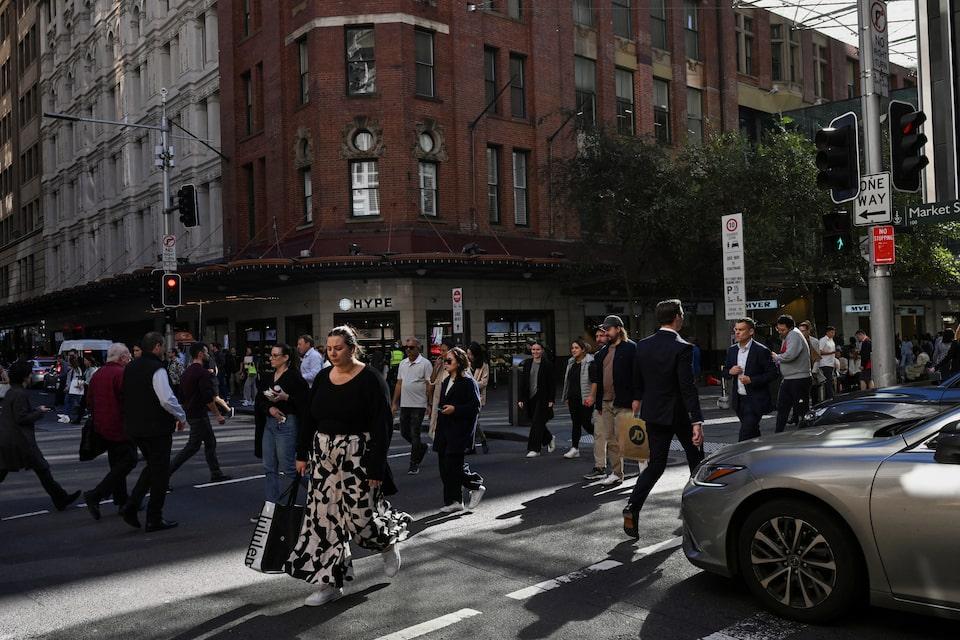
SYDNEY, June 19 (Reuters) - Australian employment dipped in May after solid gains the previous month, data showed on Thursday, though full-time jobs jumped and the jobless rate held steady in a sign of continued resilience in the labour market. Figures from the Australian Bureau of Statistics showed net employment dipped 2,500 in May from April, when they rose a revised 87,600. That was below market forecasts for a 22,500 increase, though the series has been very volatile in recent months. Sign up here. The jobless rate held at 4.1%, where it has been for over a year now. The participation rate dipped slightly to 67.0%. Other details of the report were strong, with full-time jobs rising 38,700 in May and hours worked rebounding by a solid 1.3%, after a flat April. There was little market reaction as the report did not move the dial on policy easing expectations from the Reserve Bank of Australia. Swaps imply a 65% probability for a quarter-point rate cut in July, more or less the same as before. "The drop in jobs does not reflect a sudden reversal of the labour market’s fortunes," said Kar Chong Low, an economist at Oxford Economics Australia "Instead, part of the fall reflects normalisation following exceptionally strong growth in April. Similarly, the rebound in hours worked, the tick down in underemployment, and the jump in full-time work show firms are still demanding workers’ time." The RBA has already cut interest rates twice since February to 3.85% as inflation slowed to the target band of 2-3%. However, consumers have stayed stubbornly frugal and economic growth has remained subdued, with U.S. tariffs and geopolitical conflicts darkening the economic outlook. All of that argues for more policy easing from the RBA in the months ahead, with investors expecting a total easing of 70 basis points by the end of the year. In the meantime, the labour market has proved to be resilient. The unemployment rate remains low at 4.1% and job advertisements are stabilising above pre-COVID levels. Wages have been well-behaved, with growth in the private sector mostly subdued. The central bank is expecting the unemployment rate to peak just a little higher at 4.3% this cycle. https://www.reuters.com/world/asia-pacific/australia-jobs-unexpectedly-dip-may-unemployment-holds-steady-2025-06-19/