2025-06-18 21:24
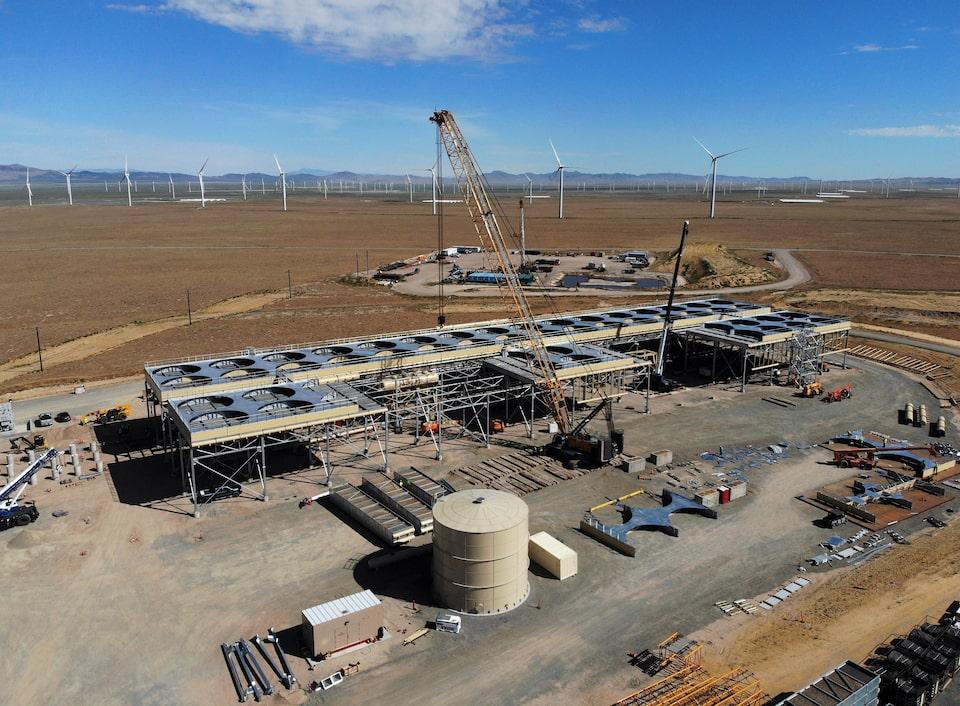
Trump's bill proposes ending wind and solar incentives by 2028 Renewable projects like solar, wind, and batteries face shutdown risk Republican lawmakers from Utah, Alaska, N. Carolina, Kansas at odds over the rollbacks Red states capture 75% of IRA clean energy investments Utah clean energy investments total $3 bln, with $10 bln in announced projects June 18 (Reuters) - In an industrial building in the Salt Lake City suburb of Clearfield, Utah, long strips of U.S.-made steel were fed through machines that punctured, bent and cut them into rods that will soon hold solar panels on rooftops. Next door, workers with rivet tools assembled the pieces into finished products, bundled them into packages with "Made in the USA" stickers and wheeled them onto trucks to be delivered to a customer 800 miles (1,300 km) away in San Diego. Sign up here. The adjacent factories, run by solar racking company PanelClaw, are among the dozens that have popped up since 2022 to meet soaring demand for American-made clean energy equipment incentivized by tax credits in former President Joe Biden's climate change law, the Inflation Reduction Act (IRA). Republican-led states like Utah have captured 75% of manufacturing investments supported by the law, even though no member of the party voted for it, according to think tank Energy Innovation. Just two years into its Utah expansion, however, PanelClaw’s factories, along with countless other clean energy projects across the country, are in jeopardy as U.S. lawmakers consider rolling back those credits in President Donald Trump’s "One Big Beautiful Bill" now in front of the Senate. Earlier this week, a Senate panel published a version of the bill that would end the incentives for wind and solar power by 2028, several years ahead of schedule. Republican Trump had campaigned on a promise to repeal the clean energy tax credits in the IRA, arguing they are expensive, unnecessary and harmful to business. However, the potential loss in jobs and investment that ending those incentives could cause has some Republican lawmakers from red states Utah, Alaska, North Carolina and Kansas at odds over the rollbacks, a dynamic that is complicating final negotiations over the bill. There are 53 Republicans in the Senate, and 51 votes are needed to pass the budget reconciliation bill. "They would be in significant trouble," PanelClaw CEO Costa Nicolaou said of his company's Utah facilities, which are on track to pump out 15 million parts this year. "I mean, we could essentially shut them down if the market goes away, which is what (removing) these credits will do." THE UTAH RIFT Utah’s Republican senators, Mike Lee and John Curtis, disagree over the subsidies supporting clean energy businesses. Lee likes the proposed cuts to government support for renewable energy technologies and predicts the move could save U.S. taxpayers $1 trillion over the next decade. Curtis, on the other hand, is among four Republican senators who penned a letter to Senate Majority Leader John Thune in April saying that repealing the tax credits would disrupt investment. Lisa Murkowski of Alaska, Thom Tillis of North Carolina and Jerry Moran of Kansas also signed the letter. Neither Lee's nor Thune's office, nor the White House responded to requests for comment. Curtis visited PanelClaw’s facility last year, praising it for creating jobs in his state. And more recently, he highlighted the benefits of the IRA subsidies at a Tooele County factory that makes batteries to store power on the grid. The company behind the factory, Fluence Energy (FLNC.O) , opens new tab, an energy storage company backed by industry giants Siemens (SIEGn.DE) , opens new tab and AES (AES.N) , opens new tab, invested $700 million in manufacturing facilities in Utah and other red states, including Texas and Tennessee. "We can’t cut the legs off of these enterprises," Curtis said in a statement. "Doing so would damage Utah’s economy, put America’s energy future in jeopardy, and weaken our national security. We must take a reasonable, responsible approach to energy tax credits." rPlus Energies, which is building the $1.1 billion Green River Energy Center solar and battery project in Emery County, said changes to the credits would threaten its 15-gigawatt pipeline. Green River will add $55 million over 20 years to the tax base for a county historically reliant on coal, and the credits will keep the price of power low, according to rPlus CEO Luigi Resta. "This is a great project," Resta said. "It's a poster child for the benefits of the IRA in Republican states." CROSSING PARTY LINES Clean energy is nothing new in Utah. Nearly a fifth of the electricity comes from renewable sources, primarily solar, and about 9% of homes are powered by solar panels. Tom Mills, who has sold residential solar in the state since 2014, said some homeowners are seeking environmental benefits while others just want to be self-reliant. "This topic crosses party lines," he said. Park City-based Alpenglow Solar, where Mills serves as technical sales director, would have to downsize its 18 employees if incentives for residential solar are eliminated, he said. Utah was the fourth fastest-growing state in 2024, according to the U.S. Census Bureau. Utah County, just south of Salt Lake City, accounted for more than a third of that growth and needs revenue to fund new schools. Amelia Powers Gardner, one of the county's three commissioners, said she backs solar power because it can be built quickly - in half the time needed for natural gas plants - and attract revenue-paying data center owners like Google (GOOGL.O) , opens new tab that want clean power. "I am a Republican," Gardner said. "I would be fine building a gas-fired power plant. But in this case, modular nuclear or solar power - those things can help solve our problems." In Utah, the IRA credits have generated $3 billion in investment, with an additional $10 billion in announced projects, according to Energy Innovation. Nationwide, the IRA has generated $132 billion in announced investments in major energy projects, according to clean energy business group E2. Nearly two-thirds of those investments are in Republican Congressional districts, and the largest beneficiaries include North and South Carolina, Georgia, Michigan, and Texas. "I don't think people necessarily went out of their way to think, 'Oh, I'm going to build these things in red states,'" said Fluence's Americas President John Zahurancik. "That's just where the demand is." GEOTHERMAL RELIEF U.S. solar stocks have slumped on the proposed credit phase-out although some analysts remain skeptical of whether Congress will pass the bill in its current form before Trump's self-imposed July 4 deadline, which could open a window for solar and wind industry lobbyists. The Senate Finance Committee preserved tax credits for hydro, nuclear, and geothermal energy through 2036 after companies urged it to save them. One of the companies, Fervo, backed by Bill Gates' Breakthrough Energy, is constructing an advanced geothermal energy plant in tiny Milford, Utah, that will start supplying customers, including Southern California Edison (EIX.N) , opens new tab and Shell Energy (SHEL.L) , opens new tab, with power next year. "The Senate Finance Committee's markup of the OBBB (One Big Beautiful Bill) appropriately recognizes the valuable role burgeoning firm, clean energy resources like geothermal play in cementing American energy dominance," said Sarah Jewett, Fervo's vice president of strategy. The plant's construction has been a boon to the local economy. Milford Mayor Nolan Davis advocated for the project to replace jobs lost when pork producer Smithfield Foods (SFD.O) , opens new tab cut ties with hog farms in the area. Melissa Wunderlich, a lifelong Milford resident, used to own one of those farms. These days she owns a drive-through diner that is generating more than half of its sales by feeding workers at the Fervo plant. "I've catered for the governor, I catered for Bill Gates," Wunderlich said. "Fervo has been really good." https://www.reuters.com/sustainability/climate-energy/clean-energy-has-fans-trumps-america-complicating-budget-talks-2025-06-18/
2025-06-18 21:07
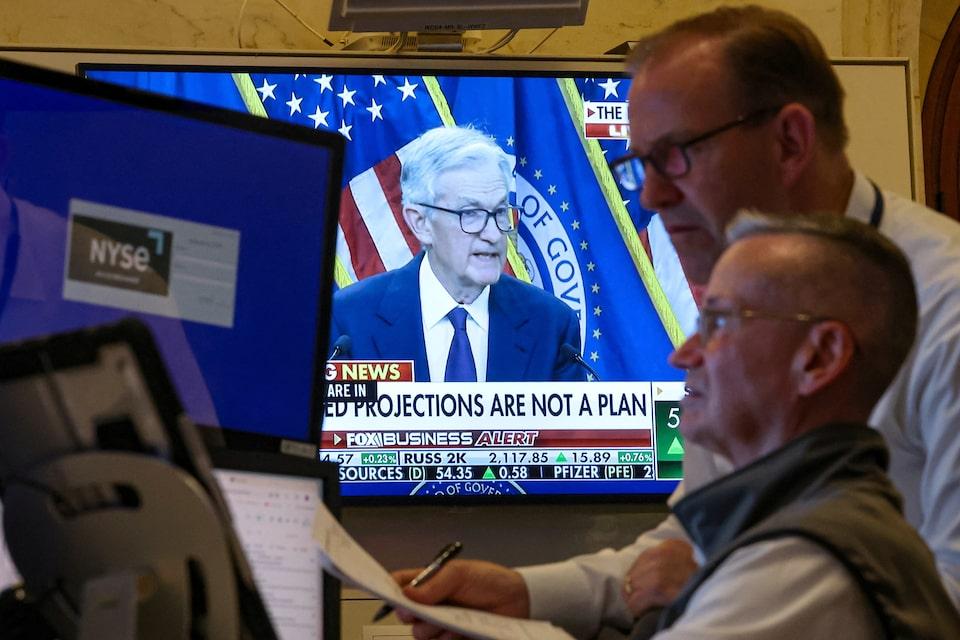
ORLANDO, Florida, June 18 (Reuters) - TRADING DAY Making sense of the forces driving global markets Sign up here. By Jamie McGeever, Markets Columnist Key equity, bond, currency and commodity prices mostly ended little changed on Wednesday, as investors digested the fast-moving developments in the Middle East and the Federal Reserve's latest policy decision and guidance. In my column today I explain why the Bank of Japan's cautious approach to reducing its balance sheet will help keep domestic real rates and yields deeply negative, and keep Japanese money overseas. More on that below, but first, a roundup of the main market moves. If you have more time to read, here are a few articles I recommend to help you make sense of what happened in markets today. Today's Key Market Moves Markets calm in eye of hurricane With the Israel-Iran war entering its sixth day, President Donald Trump leaving the world hanging over his next move and Washington's involvement in the conflict, and the Federal Reserve flagging rising 'stagflation' risks, world markets were remarkably calm on Wednesday. At least, they were calm by the end of U.S. trading, regaining their poise after some intra-day turbulence and settling pretty close to where they ended the previous day. In some ways, this was surprising, given the newsflow. Iranian Supreme Leader Ayatollah Ali Khamenei rejected Trump's demand for unconditional surrender, and the U.S. president said his patience had run out. Asked if he had made a decision on whether to join Israel's bombing of Iran, Trump said: "I may do it. I may not do it. I mean, nobody knows what I'm going to do." Later on Wednesday the Fed kept interest rates on hold as expected, but officials' revised economic projections pointed to slower growth and higher inflation and unemployment over the next couple of years. Stagflation. Trump also resumed his verbal attacks on Fed Chair Jerome Powell before the central bank's policy announcement, calling him "stupid" and berating him for not lowering rates like other central banks. On the other hand, there was ultimately little change in the immediate landscape or near-term outlook for investors to price on Wednesday. The situation in the Middle East is extremely tense, but no more so than 24 hours ago. Trump's equivocation may fuel the uncertainty and tension, but also leaves the door open to more benign outcomes. Perhaps. Similarly, Fed officials may think higher inflation risks mean fewer rate cuts are warranted in 2026 and 2027, but they maintained their central forecast of 50 basis points of rate cuts this year. Investors could reassess on Thursday. U.S. markets will be closed for the Juneteenth federal holiday, but markets everywhere else will be open and investors will have a raft of policy decisions from other central banks to digest too, most notably from the Bank of England and Swiss National Bank. The SNB, flirting with negative interest rates again, will be particularly fascinating. Economists expect it to cut rates 25 basis points to zero, and go negative by the end of the year. Traders are attaching a one-in-four chance it cuts half a point on Thursday. As much of the world frets about the price impact of tariffs, Switzerland is fighting deflation. The franc has never been stronger in broad terms, and its safe-haven status could spur even greater appreciation in the weeks and months ahead. BOJ caution could keep Japanese capital overseas The Bank of Japan is taking a more cautious approach to reducing its balance sheet, meaning Japanese capital invested overseas is less likely to be coming home anytime soon. In the face of heightened economic uncertainty and recent volatility at the long end of the Japanese Government Bond curve, the BOJ announced on Tuesday that it will halve the rate of its balance sheet rundown in fiscal year 2026 to 200 billion yen a quarter. The central bank began gradually shrinking its bloated balance sheet 18 months ago and last August began an even more gradual interest rate-raising cycle, representing a historic shift after years of maintaining ultra-low and even negative nominal rates. All else being equal, this modest tightening would be expected to narrow the yield gap between Japanese and foreign bonds, making JGBs more attractive to domestic and foreign investors while also strengthening the yen. So why hasn't Japanese capital been coming home? In part, because Japan's real interest rates and bond yields remain deeply negative, and the latest BOJ move suggests this is likely to remain the case for the foreseeable future. The prospect of Japanese real returns staying deeply negative is enhanced by current inflation dynamics. Inflation in Japan is the highest in two years by some measures and may prove sticky if Middle East tensions continue to put upward pressure on oil prices. Japan imports around 90% of its energy and almost all of its oil. Japan's yield curve could also potentially flatten from its recent historically steep levels if the BOJ's decision caps or lowers long-end yields. And the curve will flatten further if the BOJ continues to 'normalize' interest rates - something BOJ Governor Kazuo Ueda insists is still on the table, although markets think the central bank is on hold until next year. MARKET MUSCLE Either way, a flatter yield curve won't be particularly appealing to Japanese investors who may be considering pulling money out of U.S. or European markets. And there is a lot of money to repatriate, meaning even marginal shifts in Japanese investors' positioning could be meaningful. While Japan is no longer the world's largest creditor nation, having recently lost the crown to Germany after holding it for more than three decades, it still has plenty of financial muscle with a net $3.5 trillion in overseas stocks and bonds, the highest total ever. Analysts at Deutsche Bank estimate that Japanese life insurers and pension funds hold more than $2 trillion in foreign assets, around 30% of their total assets. What would prompt Japanese investors to repatriate? In a deep dive on the topic last month, JP Morgan analysts said several stars would have to align, namely a sustainable rise in long-term Japanese interest rates, an improvement in the country's public finances, and steady yen appreciation against the dollar. That's a tall order. But if this were to materialize, and banks and other depositary institutions reverted to pre-'Abenomics' asset allocation ratios of 82% domestic bonds and 13% foreign securities, repatriation flows from these institutions alone could amount to as much as 70 trillion yen. That's just under $500 billion at current exchange rates. That's not JPMorgan's base case though, certainly not in the near term. But over the long term, they think some reversal of the flow of capital from JGBs into U.S. bonds over the last decade or more is "plausible". The BOJ's decision on Tuesday probably makes the prospect of any significant capital shift less plausible, though, at least for now. What could move markets tomorrow? Want to receive Trading Day in your inbox every weekday morning? Sign up for my newsletter here. Opinions expressed are those of the author. They do not reflect the views of Reuters News, which, under the Trust Principles , opens new tab, is committed to integrity, independence, and freedom from bias. https://www.reuters.com/business/aerospace-defense/global-markets-trading-day-graphic-pix-2025-06-18/
2025-06-18 21:04
WASHINGTON, June 18 (Reuters) - U.S. Agriculture Secretary Brooke Rollins announced plans on Wednesday to open a sterile fly dispersal facility in Hidalgo County, Texas, as part of the country's effort to fight the encroachment of New World screwworm. The pest, a species of fly that has been eradicated in the U.S. for decades, has been moving northward in Mexico, leading the USDA to close the nation's southern border to cattle imports in May. Sign up here. The Department of Agriculture is also planning to design a sterile fly production facility at Moore Air Base, co-located with the dispersal facility, but that is likely to take two to three years, Rollins said at a press conference at the air base. Rollins also said the USDA is working with state animal health officials to create emergency plans and to stockpile therapeutics in the case of the screwworm crossing into the country. Mexico has also taken efforts to limit the spread of the pest, which can infest livestock and kill within weeks. Rollins said she and her team are working closely with the Mexican government and that USDA staff have been working in Mexico on a collaborative response. One key tool to fighting screwworm is the release of sterile flies, which reduce the mating population of the wild flies. Currently, the only sterile fly production facility in North America is in Panama. The Hidalgo County facility would receive fly larvae from that plant, and raise and disperse the flies by plane, Rollins said. Eighty members of the U.S. Congress, led by Glenn 'GT' Thompson of Pennsylvania, chair of the House Agriculture Committee, sent a letter to Rollins on Tuesday encouraging the USDA to build a domestic sterile fly production plant. Fighting screwworm in the U.S. would require 400-500 million flies per week, while the Panama plant can produce just 100 million per week, the letter said. The USDA has also invested $21 million in updating a plant in Metapa, Mexico, to produce sterile flies. https://www.reuters.com/world/us/usda-plans-sterile-fly-facility-texas-combat-screwworm-2025-06-18/

2025-06-18 21:02
ST PETERSBURG, Russia, June 18 (Reuters) - Russian President Vladimir Putin said on Wednesday that Russia will hold joint military exercises with China in 2025. Sign up here. https://www.reuters.com/business/media-telecom/putin-says-russia-will-hold-military-exercises-with-china-2025-2025-06-18/

2025-06-18 20:57
Fed eyes changes to leverage ratio Lower capital requirements may not be enough to boost Treasuries Swap spreads tighter on Wednesday NEW YORK, June 18 (Reuters) - U.S. Treasury market participants hoping for a long-awaited shift in bank leverage rules may be in for a letdown if U.S. regulators choose to ease capital requirements rather than exclude U.S. government bonds from leverage calculations. The Federal Reserve said this week it would weigh proposals to ease leverage requirements for large banks at a June 25 meeting, launching what's likely to be a wider review of banking regulations. The agenda includes potential changes to the "supplementary leverage ratio," a rule that mandates banks hold capital against all assets, irrespective of risk. Sign up here. Regulators including the Fed, the Federal Deposit Insurance Corporation and the Office of the Comptroller of the Currency have been considering whether to tweak the rule's formula to reduce big banks' burdens or provide relief for extremely safe investments, like Treasury bonds, Reuters has reported. Currently, all banks are required to hold 3% of their capital against their leverage exposure, which is their assets and other off-balance sheet items like derivatives. The largest global banks must hold an extra 2% as well in what is known as the "enhanced supplementary leverage ratio." The Fed is expected to propose tweaks to that ratio in a bid to reduce the overall burden of that requirement, as opposed to broadly exempting categories of assets from the requirement, such as Treasury bonds, according to two industry officials. However, it is possible the Fed could seek input on some exemptions, the officials said. The FDIC announced its own meeting next Thursday, where the agency will also discuss proposed changes to that ratio. On Tuesday, Bloomberg reported that regulators plan to reduce by up to 1.5 percentage points the enhanced ratio for the biggest banks, bringing it down to a range of 3.5% to 4.5%. "Lowering the capital requirements instead of a Treasury carve-out from the SLR is a weaker form of regulatory easing, and in my view it doesn’t fully address the constraint dealers face during intense market stress," said Steven Zeng, U.S. rates strategist at Deutsche Bank. "In our view, the news is moderately underwhelming," analysts at Wells Fargo said in a note. "We think that many market participants were anticipating a carve out of UST assets from the denominator." The Fed did not immediately respond to a request for comment. Spreads between long-term swap rates and Treasury yields tightened on Wednesday, turning more negative, even as earlier in the year they had been widening amid hopes that regulatory shifts in bank capital rules would bolster demand for Treasuries. The move likely reflected disappointment on the news that regulators plan to lower the requirements, said Zeng. "I still think a full carve-out is the most effective way to bolster market liquidity and compress the spread between Treasuries and swaps, but understandably it’s also a significant jump for Fed regulators," he said. The 10-year swap spreads were last at minus 54 basis points from minus 53 on Tuesday, while 30-year swap spreads were last at minus 88 bps from minus 86.5 bps on Tuesday. Banks have argued for years that the SLR, established after the 2007-2009 financial crisis, should be reformed. They say it was meant to serve as a baseline, requiring banks to hold capital against even very safe assets, but has grown over time to become a constraint on bank lending. U.S. Treasury Secretary Scott Bessent has said in a Bloomberg interview last month that a shift in the ratio could bring Treasury yields down significantly. Treasury market participants have come to see it as a major obstacle to banks providing liquidity to traders, particularly at times of heightened volatility, but there are doubts over whether an easing of the requirement will boost Treasury prices. "We’re skeptical that lowering SLR will trigger a massive round of buying in U.S. Treasuries from major U.S. banks," BMO Capital Markets analysts said in a note on Wednesday. https://www.reuters.com/sustainability/boards-policy-regulation/regulators-plans-us-bank-leverage-relief-may-underwhelm-us-treasury-market-2025-06-18/
2025-06-18 20:51
Investors fear U.S. involvement in Israel-Iran conflict could affect stock markets Oil prices may rise sharply if U.S. attacks Iran, impacting global economy Dollar gains as investors seek safe haven June 18 (Reuters) - Financial markets may be in for a "knee-jerk" selloff if the U.S. military attacks Iran, with economists warning that a dramatic rise in oil prices could damage a global economy already strained by President Donald Trump's tariffs. Oil prices fell nearly 2% on Wednesday as investors weighed the chance of supply disruptions from the and potential direct U.S. involvement. The price of crude remains up almost 9% since Israel launched attacks against Iran last Friday in a bid to cripple its ability to produce nuclear weapons. Sign up here. With major U.S. stock indexes trading near record highs despite uncertainty about Trump's trade policy, some investors worry that equities may be particularly vulnerable to sources of additional global uncertainty. Chuck Carlson, chief executive officer at Horizon Investment Services, said U.S. stocks might initially sell off should Trump order the U.S. military to become more heavily involved in the Israel-Iran conflict, but that a faster escalation might also bring the situation to an end sooner. "I could see the initial knee-jerk would be, 'this is bad'," Carlson said. "I think it will bring things to a head quicker." Wednesday's dip in crude, along with a modest 0.3% increase in the S&P 500, (.SPX) , opens new tab came after Trump reporters' questions about whether the U.S. was planning to strike Iran but said Iran had proposed to come for talks at the White House. Adding to uncertainty, Iranian Supreme Leader Ayatollah Ali Khamenei rejected Trump's demand for unconditional surrender. U.S. Treasury yields fell as concerns over the war in Iran boosted safe haven demand for the debt. The U.S. military is also bolstering its presence in the region, Reuters reported, further stirring speculation about U.S. intervention that investors fear could widen the conflict in an area with critical energy resources, supply chains and infrastructure. With investors viewing the dollar as a safe haven, it has gained around 1% against both the Japanese yen and Swiss franc since last Thursday. On Wednesday, the U.S. currency took a breather, edging fractionally lower against the yen and the franc. “I don't think personally that we are going to join this war. I think Trump is going to do everything possible to avoid it. But if it can't be avoided, then initially that's going to be negative for the markets,” said Peter Cardillo, Chief Market Economist at Spartan Capital Securities in New York. "Gold would shoot up. Yields would probably come down lower and the dollar would probably rally." Barclays warned that crude prices could rise to $85 per barrel if Iranian exports are reduced by half, and that prices could rise about $100 in the "worst case" scenario of a wider conflagration. Brent crude was last at about $76. Citigroup economists warned in a note on Wednesday that materially higher oil prices "would be a negative supply shock for the global economy, lowering growth and boosting inflation—creating further challenges for central banks that are already trying to navigate the risks from tariffs." Trump taking a "heavier hand" would not be a surprise to the market, mitigating any negative asset price reaction, Carlson said, while adding that he was still not convinced that the U.S. would take a heavier role. Trades on the Polymarket betting website point to a 63% expectation of "U.S. military action against Iran before July", down from as much as an 82% likelihood on Tuesday, but still above a 35% chance before the conflict began last Friday. The S&P 500 energy sector index (.SPNY) , opens new tab has rallied over 2% in the past four sessions, lifted by a 3.8% gain in Exxon Mobil and 5% rally in Valero Energy. That compares to a 0.7% drop in the S&P 500 over the same period, reflecting investor concerns about the impact of higher oil prices on the economy, and about growing global uncertainty generated by the conflict. Turmoil in the Middle East comes as investors are already fretting about the effect of Trump's tariffs on the global economy. The World Bank last week slashed its global growth forecast for 2025 by four-tenths of a percentage point to 2.3%, saying that higher tariffs and heightened uncertainty posed a "significant headwind" for nearly all economies. Defense stocks, already lifted by Russia's conflict with Ukraine, have made modest gains since Israel launched its attacks. The S&P 500 Aerospace and Defense index (.SPLRCAED) , opens new tab hit record highs early last week in the culmination of a rebound of over 30% from losses in the wake of Trump's April 2 "Liberation Day" tariff announcements. Even after the latest geopolitical uncertainty, the S&P 500 remains just 2% below its February record high close. "Investors want to be able to look past this, and until we see reasons to believe that this is going to be a much larger regional conflict with the U.S. perhaps getting involved and a high chance of escalating, you're going to see the market want to shrug this off as much as it can,” Osman Ali, global co-head of Quantitative Investment Strategies, said at an investor conference on Wednesday. https://www.reuters.com/world/middle-east/investors-see-quick-stock-market-drop-if-us-joins-israel-iran-conflict-2025-06-18/