2025-06-18 16:36
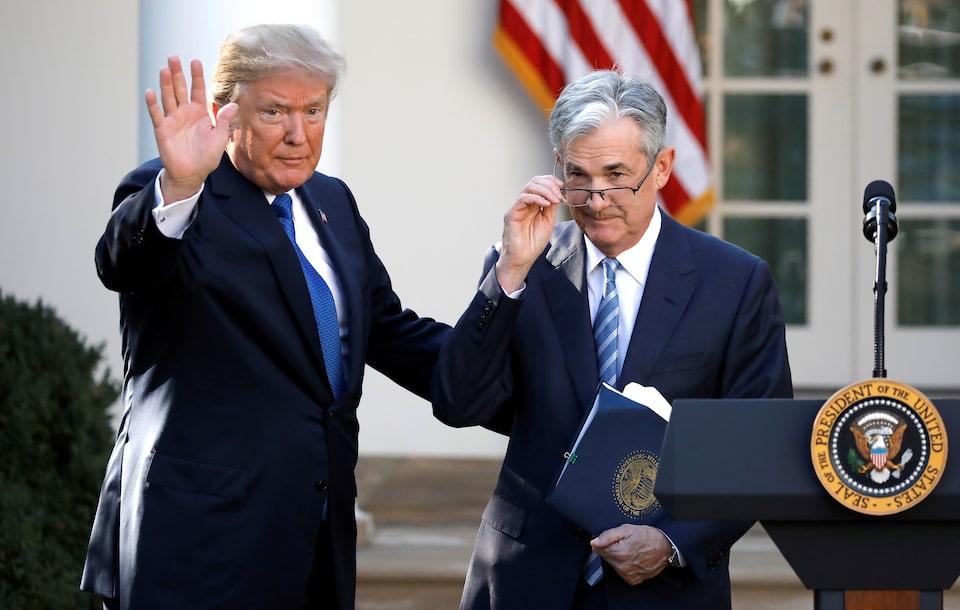
WASHINGTON, June 18 (Reuters) - U.S. President Donald Trump on Wednesday knocked Federal Reserve Chair Jerome Powell for what he expected would be a decision not to lower interest rates and said the man he put in the role during his last term had done a poor job. Trump, speaking to reporters at the White House, mused about appointing himself to lead the U.S. central bank, based on his dissatisfaction with Powell. Sign up here. "Maybe I should go to the Fed," Trump said. "Am I allowed to appoint myself at the Fed? I'd do a much better job than these people." Trump has long criticized Powell and sparked market concern earlier this year when he suggested the central bank chief's termination couldn't come fast enough. Trump has since walked back from that rhetoric, saying he would not fire Powell before his term as chair ends next year, but he has not held back on his broader criticism and has made clear that he will not ask Powell to stay on as the central bank's leader. "What I'm going to do is, you know, he gets out in about nine months, he has to, he gets fortunately terminated ... I would have never reappointed him, (President Joe) Biden reappointed him. I don't know why that is, but I guess maybe he was a Democrat... he's done a poor job," Trump said. The Federal Reserve is expected to keep interest rates unchanged on Wednesday as its policymakers weigh signs of a cooling economy, the risk of higher inflation from U.S. import tariffs, and the escalating crisis in the Middle East. Trump expressed disappointment in advance of the decision and underscored his belief that the Fed had been too late at cutting rates. "I call him 'too late Powell' because he's always too late. I mean, if you look at him, every time I did this I was right 100%, he was wrong," Trump said. https://www.reuters.com/world/us/trump-knocks-feds-powell-muses-about-appointing-himself-lead-central-bank-2025-06-18/
2025-06-18 16:14
High interest rates, tariffs, and geopolitical issues slow M&A Capital tie-up creates tug of war between PE and LPs for profit IPO market revives with 31 IPOs raising $11 billion by May 2025 NEW YORK, June 18 (Reuters) - Private equity firms are holding about $1 trillion in unsold assets, PricewaterhouseCoopers (PwC) said on Wednesday — capital that, in a typical market environment, would have been returned to investors. High interest rates in the United States, President Donald Trump’s on-again, off-again approach to tariff policy, and geopolitical uncertainties have eroded company valuations and contributed to firms holding onto portfolio firms far longer than expected. Sign up here. The capital tie-up is playing a role in the slowdown in dealmaking. Mergers and acquisitions, a key barometer of global economic health, have stalled this year. "Patience is wearing a little bit thin" among limited partners (LP), said Kevin Desai, PwC U.S. deal platform leader. LP firms combine some of the largest and most influential investors in the world and invest trillions of dollars in PE firms in expectation of regular returns. Despite entering 2025 with high hopes for an M&A rally under Trump, deal volume and value have remained largely flat year-over-year, with 4,535 deals totaling $567 billion through May, PwC said. PwC’s May 2025 Pulse Survey found that 30% of respondents have paused or are revisiting deals due to tariff issues, fueling investor frustration over delayed returns. "In a typical M&A cycle, $1 trillion would have already been put back into the market,” Josh Smigel, PwC’s U.S. private equity leader, told reporters while disclosing the firm's 2025 midyear outlook on deal activity. Private equity firms, which deploy LP capital into businesses across industries, currently have $3 trillion invested in 30,000 companies, according to PwC, with 30% held for longer than five years. That is above the traditional timeline by which funds expect to have a profit on their investments. Earlier, these firms could easily hit their rate of return targets by using cheap debt and favorable market conditions. A separate PwC study found 57% of executives, who poured capital into businesses that needed to be fixed, saw the investments shrink or stay the same. So, now, PE firms need to be creative to squeeze profit from assets - often bought at peak prices, said Liz Crego, PwC's industry markets leader. That includes selling a small portion of a business that can be more valuable as a separate entity, she said. A more uncertain market has also led to a decline in cross-border deals to 16.9% of total activity, down from 18.7% in 2021. China-related deals, in particular, face heightened scrutiny and strategic reevaluation, PwC said. CAUTIOUSLY OPTIMISTIC The initial public offering (IPO) market has shown signs of life, with 31 traditional IPOs raising $11 billion through May. While April saw a pause due to tariff shocks, activity resumed in May and June, with fintechs like Chime, valued at $18.4 billion at its Nasdaq debut, leading the charge. Special purpose acquisition companies (SPACs) are also making a modest comeback, with over 50 of those publicly traded shell companies created to raise capital through IPOs. To unlock the $1 trillion held by PEs, the recession cloud over the U.S. would have to recede, Washington would need to provide clarity over tariffs and interest rates must decline, Smigel said. Nevertheless, PwC expects M&A activity to improve in the coming quarters, with pressure from the LP funds looking for returns and as assets are repriced. "Whether that is the back half of 2025 and into 2026, there are reasons to be optimistic," Smigel said. https://www.reuters.com/business/private-equity-sits-1-trillion-amid-uncertainties-ma-stalls-pwc-says-2025-06-18/
2025-06-18 12:48
WASHINGTON, June 18 (Reuters) - U.S. single-family homebuilding increased in May, but a sharp drop in permits for future construction pointed to subdued housing market conditions amid headwinds from tariffs and excess inventory of unsold homes. Single-family housing starts, which account for the bulk of homebuilding, rose 0.4% to a seasonally adjusted annual rate of 924,000 units last month, the Commerce Department's Census Bureau said on Wednesday. Sign up here. President Donald Trump's import duties, including on lumber, aluminum and steel are raising construction costs for builders. The tariffs have heightened uncertainty over the economy, which the Federal Reserve has responded to by pausing its interest rate cutting cycle. The U.S. central bank is later on Wednesday expected to leave its benchmark overnight interest rate in the 4.25%-4.50% range, where it has been since December. Higher borrowing costs have sidelined potential buyers, boosting the supply of new single-family homes on the market to levels last seen in late 2007. A National Association of Home Builders survey on Tuesday showed sentiment among single-family homebuilders plummeted to a 2-1/2-year low in June. The NAHB reported an increase in the share of builders cutting prices to lure buyers, and forecast a decline in single-family starts this year. Permits for future construction of single-family housing dropped 2.7% to a rate of 898,000 units in May. Residential investment, which includes homebuilding, contracted slightly in the first quarter after rebounding in 2024 following steep declines in the prior two years caused by a surge in mortgage rates. "We appear on course for a substantial decline in real activity in the current quarter and perhaps further weakness in the summer," said Stephen Stanley, chief U.S. economist at Santander U.S. Capital Markets. https://www.reuters.com/business/us-single-family-housing-starts-rise-may-permits-slump-2025-06-18/
2025-06-18 12:42
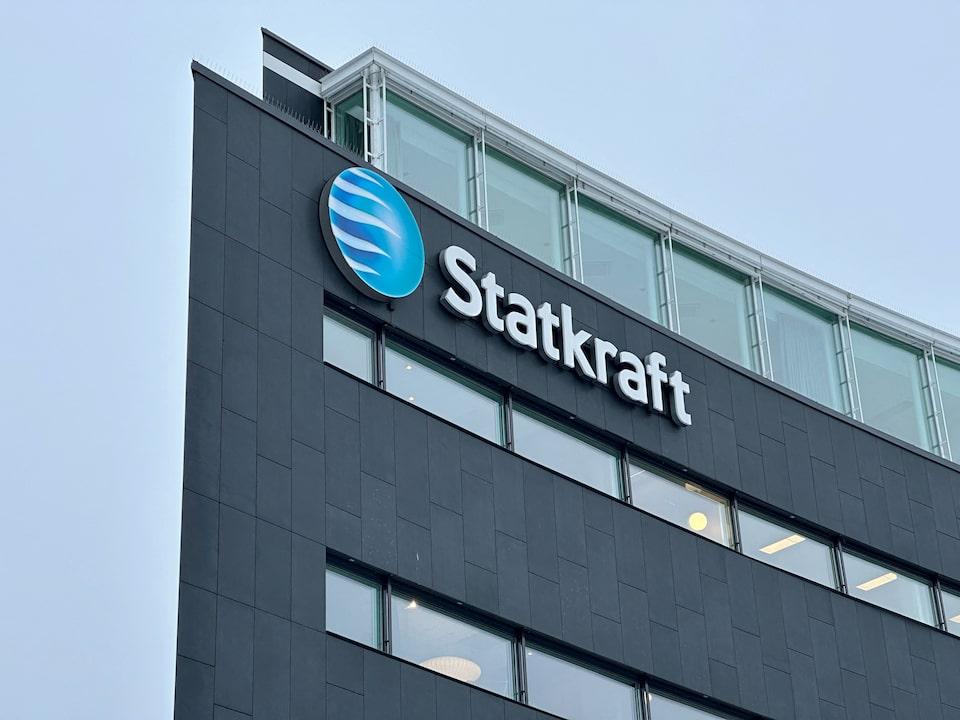
COPENHAGEN, June 18 (Reuters) - Norwegian state-owned utility Statkraft said on Wednesday it would cut its annual costs by around 15% or 2.9 billion crowns ($292 million) by 2027, citing increased global uncertainty, higher expenses and lower power prices. The company already announced in May that it had stopped developing new green hydrogen projects due to higher costs and uncertain demand, after it scaled back its hydrogen ambition last year. Sign up here. "Statkraft needs to adapt to the changing market and increased geopolitical uncertainty," Statkraft CEO Birgitte Ringstad Vartdal said in a statement on Wednesday. The specific measures, including any staff reductions, will be identified during the second half of 2025, the company said. Statkraft said it would prioritise near term profitable technologies, including solar, wind and batteries in fewer markets, pointing to slow development of the offshore wind industry. "Offshore wind will play an important role in the power mix in Europe, but the pace of development of the industry has been slower than previously forecasted, and this has impacted the ability to drive down costs in the short term," Vartdal said. The company said it would stop further activities in new projects, including Norway's upcoming allocation round of Utsira Nord, and that it will stop its development activities in Portugal. It added that it would assess its investment in solar, wind and batteries in Poland, but that it would proceed with the development of the North Irish Sea Array project. Statkraft will continue market activities in both Portugal and Poland, it said. ($1 = 9.9445 Norwegian crowns) https://www.reuters.com/sustainability/climate-energy/norways-statkraft-cut-costs-by-292-mln-may-announce-layoffs-2025-06-18/
2025-06-18 12:14
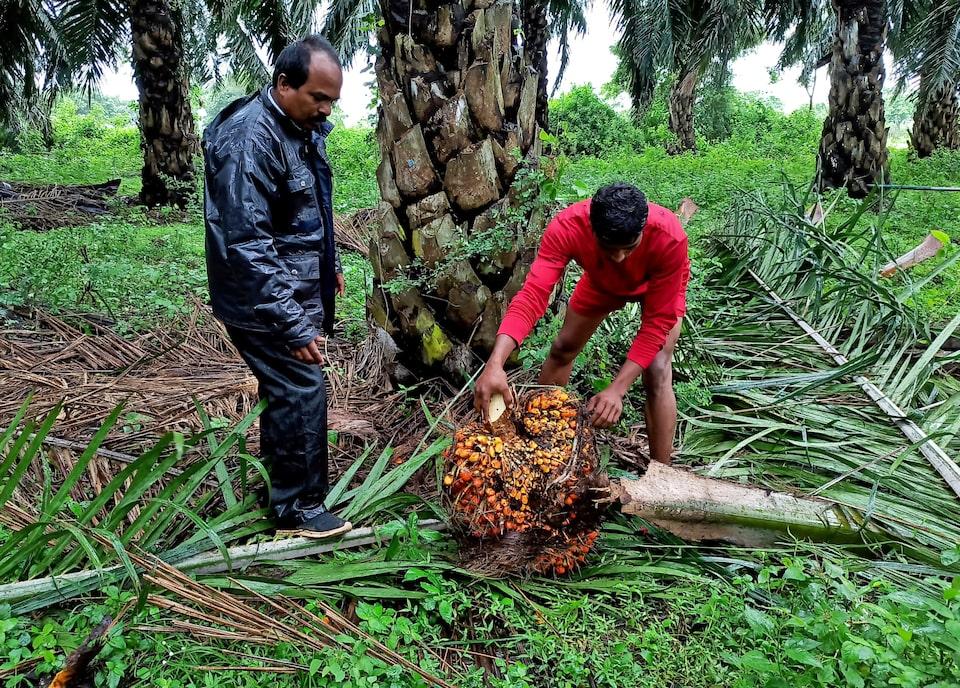
MUMBAI, June 18 (Reuters) - Indian refiners cancelled orders for 65,000 metric tons of crude palm oil (CPO) scheduled for delivery from July to September following a sudden surge in benchmark Malaysian prices, four trade sources told Reuters. Refiners in the world's largest palm oil importer cancelled the orders in the past three days after Malaysian palm oil futures rose more than 6%, hedging their risk against the prospect of falling prices by locking in a profit. Sign up here. "There is a lot of volatility in the market. There was more margin in cancelling bought CPO than in importing, refining, and selling refined palm oil in the local market," said an Indian buyer who operates a refinery on the west coast and cancelled shipments for July delivery. Indian buyers made CPO purchases nearly a month ago around $1,000 to $1,030 per ton, including cost, insurance, and freight, after a rebound in palm oil production brought down prices to their lowest in more than eight months. This week, palm oil futures jumped, tracking a rally in Chicago soyoil futures after the U.S. proposed higher biofuel blending volumes. The sudden rise prompted Indian refiners to cancel contracts at between $1,050 and $1,065 per ton, making a profit of more than $30 per ton, said the sources who spoke on condition of anonymity because they were not authorised to speak to media. Buyers agreed to contract cancellations by accepting a price slightly lower than the current market rate, a decision mutually reached with sellers, said a New Delhi-based dealer with a global trading house. The CPO is being offered at about $1,070 a ton in India for July delivery, compared to $1,020 to $1,030 a month ago. Despite the cancellations, Indian imports are poised to rise in coming months after falling far below average in recent months, bringing down inventories, said Sandeep Bajoria, chief executive of Sunvin Group, a vegetable oil brokerage. India's palm oil imports hit a six-month high in May, driven by low inventories and the oil's price discount to rival soyoil and sunflower oil. Indian buying had gained momentum after India last month halved the import duty on CPO, but the cancellations have disrupted that momentum, said a Kuala Lumpur-based trader with a palm oil producing company. https://www.reuters.com/business/energy/indian-refiners-cancel-palm-oil-orders-july-sept-prices-surge-2025-06-18/
2025-06-18 12:09
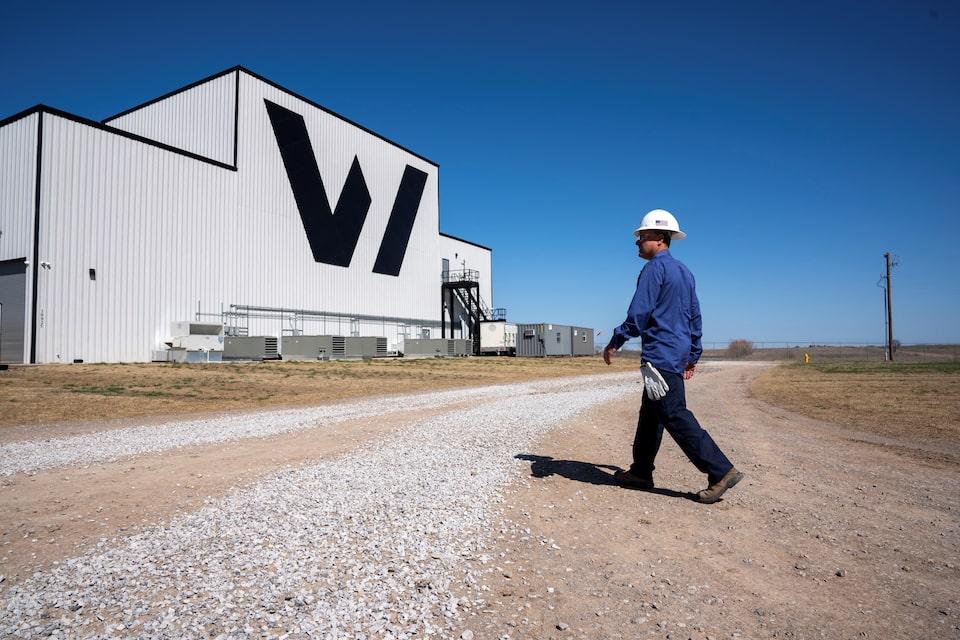
State offers incentives, infrastructure for minerals industry growth China dominates critical minerals and has banned some exports State's challenges include education system, lack of mineral deposits LAWTON, Oklahoma, June 18 (Reuters) - Nestled beneath Oklahoma's Wichita Mountains sits a two-story warehouse containing the only machine in the United States capable of refining nickel, a crucial energy transition metal now dominated by China. The facility, owned by startup Westwin Elements, aims to help Oklahoma become the epicenter for U.S. critical minerals processing, a sector the country largely abandoned decades ago. Sign up here. The state will have to overcome several obstacles to get there, including a lack of major critical mineral deposits, a weak education system and its location at the center of the United States - far from international shipping lanes. Yet Oklahoma's push into minerals processing marks an unexpected twist in the country's efforts to wean itself off Chinese rivals who have blocked exports. President Donald Trump has said he wants to boost U.S. production of minerals used across the economy. In Oklahoma, the country's only nickel refinery, its largest lithium refinery, two lithium-ion battery recycling plants, a rare earths magnet facility, and several electronic waste collection facilities are under construction or in operation - more than in any other state. They join a Umicore (UMI.BR) , opens new tab site that produces germanium crystals for solar panels. An aluminum smelter - the country's first since 1980 - is set to break ground next year at a site bordering an Arkansas River tributary. "I've strategically made a conscious effort to go after some of these new industries that I think are going to be critical," Governor Kevin Stitt, a Republican, told Reuters. "There's money flying into critical minerals from the investment side, so it might as well be located in Oklahoma." Investors and corporate executives say the state's location, lack of mineral deposits, and other detracting factors are outweighed by a string of positives: Oklahoma has railways and highways bisecting the state en route to the three U.S. coasts, a workforce with deep energy experience, state rebates and other financial incentives, a large inland port with access to the Mississippi River watershed, and accommodating regulators. Officials boast on social media that Oklahoma is a "one phone call state," a description meant to evoke what they see as a streamlined regulatory process. Australia-based MLB Industrial, a startup that supplies lithium-ion batteries to the locomotive industry, expanded its business to Oklahoma earlier this year for that very reason. "Other states were looking for a large, established company to invest, rather than a company with a growth profile," said Nathan Leech, MLB's CEO, who moved his family to Oklahoma. "We intend to grow in Oklahoma." A nickel refinery, in particular, has been sought by Washington for years but Chinese market dumping had scared away would-be entrants, said a source familiar with the Trump administration's minerals policy. KaLeigh Long founded Westwin and named it after her desire for the U.S. to shake off Chinese minerals dependence - as she puts it, "The West will win." The firm has built a demonstration facility 85 miles (137 km) south of the state capital that it says can refine 200 metric tons of nickel annually and will expand to produce 34,000 metric tons per year by 2030. If successful, the Westwin facility would refine 10% of America's annual nickel needs, demand projections from Benchmark Mineral Intelligence show, drawing on rock taken from Turkish and Indonesian mines, as well as recycled U.S. batteries. Even as Oklahoma promises state tax rebates and other incentives, Westwin is lobbying Washington not to eliminate a federal production tax credit heavily opposed by Republicans along with other green energy subsidies enacted by former President Joe Biden, as Reuters reported earlier this month. Westwin is in negotiations with the Pentagon for a nickel supply deal that would keep metal inside the United States to make batteries for military drones and other equipment, according to a source familiar with the deliberations. SUSTAINABLE POWER Roughly 220 miles (354 km) northeast, a lithium refinery under construction from Stardust Power (SDST.O) , opens new tab aims to produce 50,000 metric tons of the battery metal per year, about a fifth of what the U.S. is expected to need by 2030. Japan's Sumitomo (8053.T) , opens new tab signed a preliminary agreement in February to buy up to half of the facility's output. Stardust aims for the plant to filter lithium from brines - something that has yet to happen at commercial scale - and will have roughly the same capacity as Tesla's (TSLA.O) , opens new tab refinery under construction in Texas. It will be powered in part by renewable energy; nearly half of the state's electricity is generated by wind turbines. "That was a huge draw," said Roshan Pujari, Stardust's CEO. The company is pushing forward even after rival Albemarle (ALB.N) , opens new tab paused plans to build a large U.S. refinery, citing weak lithium prices. "During these down cycles is the best time to be developing, because why do we want prices to be high when we have nothing to sell?" Pujari said. USA Rare Earth (USAR.O) , opens new tab, which went public earlier this year, chose Oklahoma over Texas for its rare earths magnet facility given what it felt was the personalized support from Stitt and other officials, said CEO Josh Ballard. Magnets made from rare earths turn electricity into motion for EVs; the U.S. stopped making them in the 1990s. Ballard says the facility is slated to open early next year and initially produce 1,200 metric tons annually, enough magnets to build more than 400,000 EVs. That supply is already highly sought after in the United States since China placed export restrictions on rare earths in April. Ballard said he has been fielding "a lot of phone calls" since April from prospective customers. The company on Tuesday signed a preliminary supply agreement with Moog (MOGa.N) , opens new tab for magnets used in AI data centers. "We can do this quickly. It's just a matter of how do we do it, and can the government help be a catalyst?" said Ballard. The company could get a boost from legislation introduced earlier this month by three U.S. senators - including Oklahoma's Markwayne Mullin - that would provide a tax credit for roughly 30% of the cost to manufacture a magnet made from rare earths. Elsewhere, two Oklahoma battery processing facilities - from Green Li-ion and Blue Whale Materials - will break down lithium-ion batteries into copper and other building blocks for new batteries. Natural Evolution, in Tulsa, is spearheading a push to expand electronic waste recycling. Green Li-ion, which has a recycling facility in Atoka - Country music star Reba McEntire's hometown - has held talks with Glencore (GLEN.L) , opens new tab as well as Westwin about buying a recycled version of battery scrap known as MHP, or mixed hydroxide precipitate, that can be used to make nickel products, according to two sources familiar with the negotiations. Glencore declined to comment. Most of the country's recycled batteries are exported now to China in the form of black mass, essentially shredded battery parts. Green Li-ion, which is headquartered in Singapore, moved its U.S. operations to Oklahoma given the state's history with oil and gas extraction, skills it sees as complementary to black mass processing. "This state has a lot of chemical engineers," said Kevin Hobbie, the company's senior vice president of operations. 'SWINGING FOR THE FENCES' Oklahoma's foray into the energy transition hasn't been all smooth sailing. Tesla supplier Panasonic (6752.T) , opens new tab in 2022 chose Kansas over Oklahoma for a battery plant after the Sunflower State wooed it with $1 billion in incentives. In January, EV startup Canoo (GOEVQ.PK) , opens new tab filed for bankruptcy despite a $1 million state grant and Stitt's commitment for his administration to buy 1,000 of the company's vehicles. Canoo, which had several production facilities in Oklahoma, blamed uncertain demand for its cargo vans. State officials say they are trying to recoup the funds. Stitt said he is not bothered by the bankruptcy. "We're going to keep swinging for the fences," he said. The state's education system has also generated negative headlines, due in part to a battle over low standards that could make it difficult to convince high-tech talent and their families to relocate to Oklahoma. The state's pre-kindergarten through twelfth grade educational system, for instance, is ranked 48th out of the 50 U.S. states by U.S. News and World Report, and many schools have moved to a four-day week to save money. Alphabet's (GOOGL.O) , opens new tab Google, which built an Oklahoma data center in 2011, donated funds to the local school district in part to attract faculty. Oklahoma's superintendent of schools is an elected position over which Stitt has no control. The governor successfully pushed for a school voucher system that he said should attract more families. "If I create competition, and now a public school has to compete for a student, it's going to make all boats rise and bring more talent to Oklahoma," Stitt said. The governor said he is focused on helping the minerals refiners in his state grow and is lobbying Trump to require federal contractors to increase the percentage of minerals they buy that are processed in the country. That's a key desire also for Long, the Westwin founder, who spent her youth herding cattle, an experience she said inspired her interest in refining and a reticence for mining. "After seeing the beef and meat industry, I learned that the packer is the one that seems to take the least amount of risk and yet makes the most amount of money," she said. "When I saw mining, I was like, 'The miner is the rancher and the refiner is the packer.' So I decided I want to be the packer." https://www.reuters.com/world/us/rural-oklahoma-strives-become-american-hub-critical-minerals-processing-2025-06-18/