2025-06-18 11:04
WARSAW, June 18 (Reuters) - Polish pipeline operator Gaz-System will receive a 2.2 billion zlotys ($593 million) loan from state bank BGK to finance the onshore segment of Poland's first floating storage and regasification unit near Gdansk, BGK said on Wednesday. The loan, sourced from European Union funds, will finance construction of a 250-km (155-mile) pipeline that will connect the terminal to the core of Poland's gas network, BGK Deputy President Marta Pustula told reporters. The loan will be repaid over 25 years, Pustula added. Sign up here. The floating storage and regasification unit will be based in the Bay of Gdansk and is expected to be completed in 2028. In January, Gaz-System completed the expansion of its LNG terminal in Świnoujście, increasing its regasification capacity to 8.3 billion cubic metres, which corresponds to nearly 50% of the annual gas demand of domestic consumers. ($1 = 3.7112 zlotys) https://www.reuters.com/markets/commodities/polands-gaz-system-get-593-million-loan-countrys-floating-lng-terminal-2025-06-18/
2025-06-18 10:55
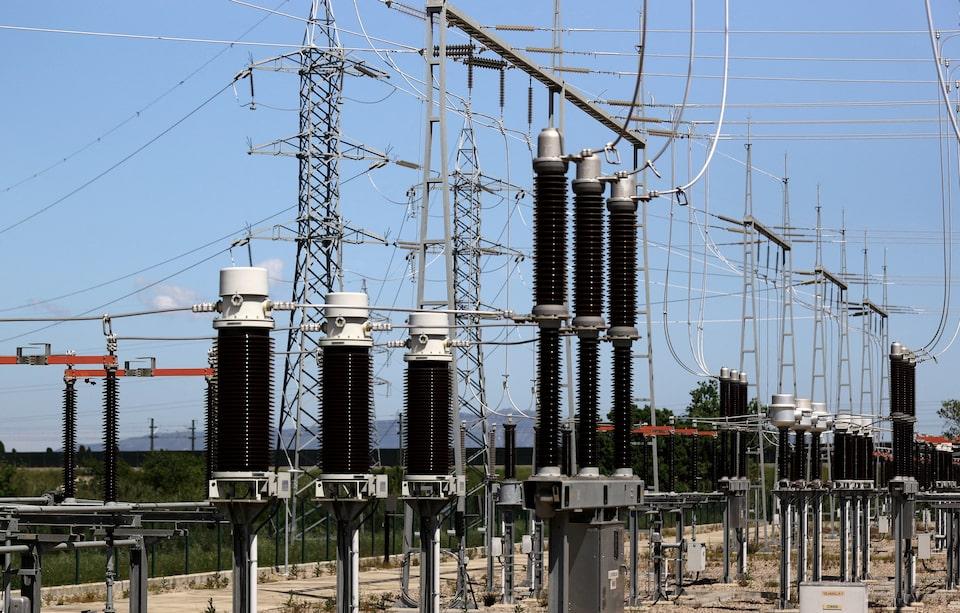
Redeia says own investigation discovered anomalous disconnection of power plants before blackout Some power failed to help maintain an appropriate voltage, Redeia report shows Disputes government report that blamed Redeia for miscalculating energy mix needed System was operating normally before blackout occurred, Redeia said MADRID, June 18 (Reuters) - Spanish grid operator Redeia (REDE.MC) , opens new tab blamed power plants for the massive blackout that affected the Iberian peninsula in April, as it disputed a government report that said its failure to calculate the correct energy mix was a key factor. While agreeing that a surge in voltage was the immediate cause of the outage, REE-owner Redeia blamed it on some conventional power plants - thermal power plants using coal, gas and nuclear - for failing to help maintain an appropriate voltage. Sign up here. "Based on our calculation, there were enough voltage control capabilities planned" by Redeia, operations chief Concha Sanchez told a news briefing on Wednesday. "Had conventional power plants done their job in controlling the voltage there would have been no blackout," she said. Redeia, which is partly state-owned, also discovered anomalies in the disconnection of power plants in the run-up to the April 28 outage, even though voltage in the system was within legal limits, Sanchez said. A combined-cycle plant that was supposed to provide stability to the system disconnected in the first seconds of the blackout when it should not have, while there was also an anomalous growth in demand from the transport network, she said. Aelec, which represents Spain's main electricity companies including Iberdrola (IBE.MC) , opens new tab and Endesa (ELE.MC) , opens new tab, said on Wednesday that "claiming everything was done correctly" while blaming some power plants for the blackout was damaging to the sector's reputation. "The operator failed to safely cover all the system's needs," the lobby added. Redeia on Wednesday released its own full report on the causes of the outage, a day after the Spanish government published its findings. The government's report released on Tuesday said Redeia's miscalculation was one of the factors hindering the grid's ability to cope with a surge in voltage that led to the outage that caused gridlock in cities across the Iberian peninsula and left tens of thousands stranded on trains overnight or stuck in lifts. But Sanchez said the system was in "absolutely normal conditions" at noon just before the blackout and that adding another gas plant to the system to absorb additional voltage would have made no difference. Redeia Chair Beatriz Corredor told the same news briefing she had absolute faith in the company's calculations and that the operator had complied with all procedures and rules. "Red Electrica didn't breach any procedure and has acted diligently," Chief Executive Roberto Garcia Merino said at the briefing, adding that as a result he did not expect the company to face any claims. https://www.reuters.com/business/energy/spains-grid-operator-release-own-report-april-blackout-2025-06-18/
2025-06-18 10:54
LONDON, June 18 (Reuters) - What matters in U.S. and global markets today I'm excited to announce that I'm now part of Reuters Open Interest (ROI) , opens new tab, an essential new source for data-driven, expert commentary on market and economic trends. You can find ROI on the Reuters website , opens new tab, and you can follow us on LinkedIn , opens new tab and X. , opens new tab Sign up here. The alarming Israel-Iran war is keeping world oil prices volatile, but crude moves have not yet hit red-alert territory, and markets are now turning their attention to Wednesday's Federal Reserve policy decision. I'll discuss this and all of the market news below. Be sure to check out today’s column, where I explain why the dollar’s decline may persist despite signs that 'short dollar' is already a crowded trade. Today's Market Minute * Thousands of people were fleeing Tehran on Wednesday after U.S. President Donald Trump said they should leave the capital, while a source said Trump was considering options that include joining Israel in attacking Iranian nuclear sites. * Oil prices eased in Asian trade on Wednesday, after a gain of 4% in the previous session, as markets weighed the chance of supply disruptions from the Iran-Israel conflict against a U.S. Federal Reserve rates decision that could impact oil demand. * While global energy markets are not yet pricing in worst-case scenarios for the Israel-Iran war, oil tanker rates are providing a good real-time gauge of the escalating risks, writes ROI columnist Ron Bousso. * Energy equity investors are adjusting their positions in an attempt to pick winners and cut losers as President Donald Trump's tax-and-spending bill makes its way through the U.S. Congress. Read the analysis from ROI energy transition columnist Gavin Maguire. * As debate rages around 'de-dollarization' and the world's appetite for dollar-denominated assets, one major cohort of overseas investors appears to be quietly backing away from U.S. securities: central banks. Check out the latest from ROI markets columnist Jamie McGeever. Oil ebbs again as Fed meets The intensity of the Middle East conflict went up several more notches overnight amid speculation the U.S. military would join the attacks on Iran. The central question now is whether the U.S. air force would be involved in any attempt to take out Iran's underground nuclear enrichment facilities, particularly the Fordow plant. An Israeli military strike on Iran's nuclear complex at Natanz directly hit the underground uranium enrichment operation there, the U.N. nuclear watchdog said on Tuesday, after initially reporting only indirect damage. Markets have to calculate whether we're apt to see a long drawn-out war and related energy disruptions or a shorter and more decisive outcome that could limit any hit to Iranian crude supply. Back home in the U.S., any energy shock would be economically and politically sensitive. And it's unclear how much public support there would be for involvement in the sort of foreign wars Trump campaigned to keep America out of. So far, U.S. crude prices remain relatively contained despite the war, slipping back slightly again on Wednesday to just under $75 per barrel. Even though spot prices have risen about 14% since the start of last week, they have not breached intraday highs set last Friday nor the $80-plus peak hit in January, and they also remain down 7% year on year. What's more, crude prices remain below the average of the past two years since the latest wave of Middle East conflict was triggered by Hamas's Oct 7, 2023 attack on Israel. Gold price moves have also been moderate over the past week, as the prices of the safe haven have failed to hit new records set in April and slipped on Wednesday. The dollar (.DXY) , opens new tab and Swiss franc both edged lower again too today, the latter impacted by a likely interest rate cut to zero from the Swiss National Bank tomorrow. U.S. stock futures were higher ahead of the open after a near 1% drop in the S&P 500 index on Tuesday. The Fed decision, press conference and new economic projections later today will keep many markets in check, however, not least as they come before the U.S. 'Juneteenth' public holiday and market closures on Thursday. No change in the Fed policy rate is expected, especially now that the edgy energy outlook is adding to the already uncertain U.S. import tariff picture. But the Fed's nods and winks about its future course will be crucial as always, not least its 'dot plot' of policymakers' expectations on future rate moves. The most recent set of quarterly projections penciled in two more rate cuts by year-end, but there's some speculation that may be reduced to one in today's update. As of Wednesday, futures markets were pricing in 45 basis points of easing by December. Treasury yields fell back ahead of the meeting, following a series of soft U.S. economic readings for May on retail, industrial activity and housing. Treasuries got an additional lift as the Fed announced a board meeting for June 25 to consider plans to ease leverage requirements on larger banks, kicking off what is expected to be a broad effort to reconsider bank rules. Changes to the so-called "supplementary leverage ratio," which requires banks to set aside capital against assets regardless of their risk, could enable banks to hold more Treasuries. Elsewhere, stocks were mixed to higher around the world, with Hong Kong (.HSI) , opens new tab underperforming and European defense stocks (.SXPARO) , opens new tab a big gainer. Sweden's crown weakened after the Riksbank cut its key interest rate to 2.0% from 2.25% as expected on Wednesday, saying it may ease further before the end of the year. And Bitcoin remained relatively subdued even after the U.S. Senate on Tuesday passed a bill to create a regulatory framework for dollar-pegged cryptocurrency tokens known as stablecoins, seen by some as a watershed moment for digital assets. In today's deep dive, I look at whether the dollar's steep losses this year may already have run their course or whether this is longer-term exit from the currency. Chart of the day Much like world oil prices, freight rates out of the Persian Gulf have jumped sharply since the start of the Israel-Iran war on June 13. But also like crude prices, these shipping rates have so far failed to even hit their highest points for the year to date, never mind longer-term historical highs. Concerns about shipping disruption and energy supplies have clearly risen, but with too many contrasting scenarios for the conflict's outcome still in play, traders may be wary of betting one way or the other. Today's events to watch * U.S. May housing starts, weekly jobless claims (8:30 AM EDT), April TIC data on foreign holdings of Treasury securities (4:00 PM EDT) * Federal Reserve's Federal Open Market Committee policy decision (2:00 PM EDT), news conference from Fed Chair Jerome Powell and policymakers' new economic and rates projections * European Central Bank Vice President Luis de Guindos and heads of central banks of Italy, Spain, Netherlands, France and Germany meet students in Milan; ECB chief economist Philip Lane speaks in Amsterdam; Bank of Canada governor Tiff Macklem speaks * U.S. corporate earnings: Progressive Opinions expressed are those of the author. They do not reflect the views of Reuters News, which, under the Trust Principles , opens new tab, is committed to integrity, independence, and freedom from bias. Want to receive the Morning Bid in your inbox every weekday morning? Sign up for the newsletter here. https://www.reuters.com/business/finance/global-markets-view-usa-2025-06-18/
2025-06-18 10:27
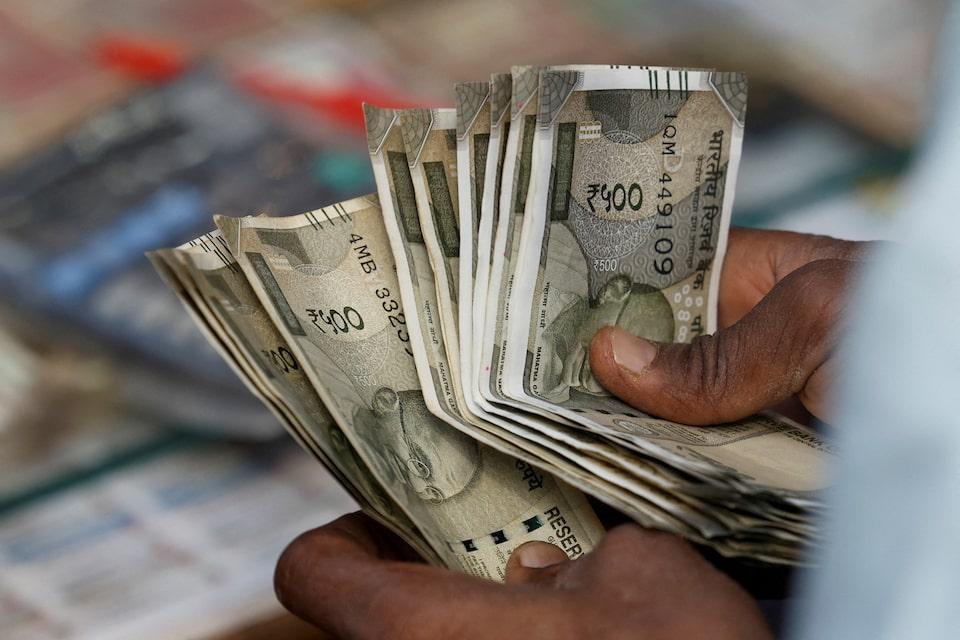
MUMBAI, June 18 (Reuters) - The Indian rupee declined on Wednesday on the back of persistent corporate hedging activity and elevated oil prices as market participants continued to fret over escalating hostilities in the Middle East. The rupee ended at 86.4775 against the U.S. dollar, down nearly 0.3% from its close of 86.24 in the previous session. Sign up here. The currency slipped past 86.50, a closely watched psychological support level, to hit its weakest level in over two months before slightly paring losses. Traders pointed to dollar bids from local corporates, including oil companies, and speculative interest on wagering against the local currency among factors that hurt the rupee. Oil prices remained elevated - albeit cooling off the highs hit on Tuesday - as markets weighed the chance of supply disruptions from the Iran-Israel conflict. Brent crude oil futures were last quoted at $75.5 per barrel. The tepid risk sentiment also weighed on Asian equity markets with India's benchmark equity indexes, the BSE Sensex and Nifty 50 (.NSEI) , opens new tab, logging a fall of about 0.2% each. Meanwhile, the dollar-rupee forward premiums nudged higher. The 1-month forward premium rose to 10 paisa, with traders citing paying interest spurred by arbitrage between non-deliverable and onshore forwards. The 1-year dollar-rupee implied yield also ticked up to 1.83%. Price action on the dollar-rupee pair is "cementing the upward bias," a trader at a foreign bank said, adding that further escalations in the Iran-Israel conflict could push it closer to 87. Later in the day, the focus will be on the U.S. Federal Reserve's policy decision. The central bank is widely expected to keep rates unchanged with updates to its future economic projections and remarks from Chair Jerome Powell keenly awaited by market participants. "The Fed will likely consider any oil price shock as much a threat to growth as to inflation," DBS Bank said in a note. https://www.reuters.com/world/india/rupee-falls-corporate-dollar-bids-elevated-oil-prices-weigh-2025-06-18/
2025-06-18 10:00
LONDON, June 18 (Reuters) - It's tempting to think the dollar's precipitous decline this year will soon taper off, but the move appears neither especially speculative nor cyclical and a durable turnaround could be years away. The dollar index's (.DXY) , opens new tab near 10% decline so far this year against the most-traded currencies marks its steepest first-half loss since 1986, back when the greenback was still reeling from the then G5's "Plaza Accord" agreement to puncture the currency's overvaluation in late 1985. Sign up here. And as overshoots are typical in currency markets, there are some reasonable questions about whether the dollar may have come down too far too soon, leaving it ripe for a correction. Indeed, this month's global fund manager survey from Bank of America suggests at first glance that the dollar move may be overstretched. The survey showed the net underweight position in the dollar is the largest in 20 years. What's more, "short dollar" had found its way into the top three "most crowded trades" on the planet according to investors. That was just behind "long gold" and "long Magnificent 7" megacap stocks. Often seen as a contrarian indicator, crowded trades typically signal an extreme and potentially over-priced move. But history shows that certain trades can stay crowded for quite some time. The scramble for Magnificent 7 stocks, for example, was considered the single most-crowded trade in the same monthly survey for two years through this February. And yet exchange-traded funds tracking these seven mega cap tech stocks more than doubled in price over the same period, before eventually retreating late last year. To be sure, highly speculative or leveraged trades can get overcooked and unwind a lot more quickly. But dollar positioning among currency speculators is nowhere near historic extremes. According to weekly CFTC data, speculative net short dollar positions did accumulate to their most in about two years in April but have been pared back since. And the dollar has resumed its decline this month regardless. 'NAME OF THE GAME' The 20-year high in dollar underweighting by asset managers in the BofA survey, by contrast, is of a different order altogether. That indicates both wariness of U.S. assets at large - due to concerns about the current U.S. administration's approach to global trade, geopolitics and institutional integrity - and a more structural dollar retreat. It's notable that even with this year's 10% dollar decline and the existing underweight among global funds, almost two-thirds of survey respondents still saw the dollar as overvalued. What's more, relatively short interest rates are often the driving force in cyclical currency moves - with the dollar sinking even as widening transatlantic rate gaps suggest otherwise. "The name of the game will be diversifying away from the U.S. and into European and emerging market bonds," said Amundi chief investment officer Vincent Mortier on the release of the giant European asset managers' half-year outlook. For others, such as Carlyle's Jeff Currie, the historic developments weighing on the dollar are related to long-term geopolitical shifts, defense and energy considerations. The basis of his framework is that the U.S. retreat from international engagement - or its arm's-length engagement, as seen over the past week in the Middle East - is making the world more dangerous and more expensive. Tariffs and capital costs are rising, while liquidity is draining. The net result is a weaker dollar, higher commodity prices and a demand for "asset-heavy" sectors like defense, which he argues should lead to higher growth and innovation in those countries with the capacity to fund these efforts. "This is just the beginning of a much larger capital rotation out of the asset light sectors and into asset heavy sectors that are the backbone of global supply chains and slanted towards Europe," Currie wrote. To reinforce the point, he highlights two prior rotations that each lasted about two years. These include the shift from 'BRICS' emerging market economies to U.S. tech in 2014-2015 and, before that, the move from dot.com stocks to BRICS in 2002-04 - the last time asset managers polled by BofA were this underweight dollars. "We believe we are (now) in one of these rotations towards Europe given the valuations discounts in Europe and the region's stronger fundamental backdrop and fiscal capacity for defense," Currie wrote. Of course, the dollar exchange rate, much like any other financial price, rarely moves in a straight line in one direction for very long. But even if we get periodic bounces, the downtrend could persist for a lot longer - even as crowded as it may be already. The opinions expressed here are those of the author, a columnist for Reuters. https://www.reuters.com/markets/currencies/dollar-exit-could-be-crowded-some-time-2025-06-18/
2025-06-18 09:02
ZURICH, June 18 (Reuters) - Wealth grew disproportionately quickly last year in the United States, where over 379,000 people became new U.S. dollar millionaires, more than a 1,000 a day, a report published on Wednesday showed. Private individuals' net worth rose 4.6% worldwide, and by over 11% in the Americas, driven by a stable U.S. dollar and upbeat financial markets, the 2025 Global Wealth Report by UBS (UBSG.S) , opens new tab found. The United States accounted for almost 40% of global millionaires in 2024. Sign up here. In 2023, Europe, the Middle East and Africa had led a rebound in global wealth after a decline in 2022. Greater China - which the report defined as mainland China, Hong Kong and Taiwan - led last year for individuals with a net worth of $100,000 to $1 million, accounting for 28.2%, followed by Western Europe with 25.4% and North America with 20.9%. The majority of people worldwide were below that threshold, however, with over 80% of adults in the UBS sample having a net worth of under $100,000. Overall, about 1.6% registered a net worth of $1 million or more, the report said. Over the next five years, the Swiss bank projects average wealth per adult to grow further, led by the United States, and, to a lesser extent, Greater China. https://www.reuters.com/business/finance/us-added-over-1000-new-millionaires-day-last-year-ubs-report-says-2025-06-18/