2025-06-18 07:17
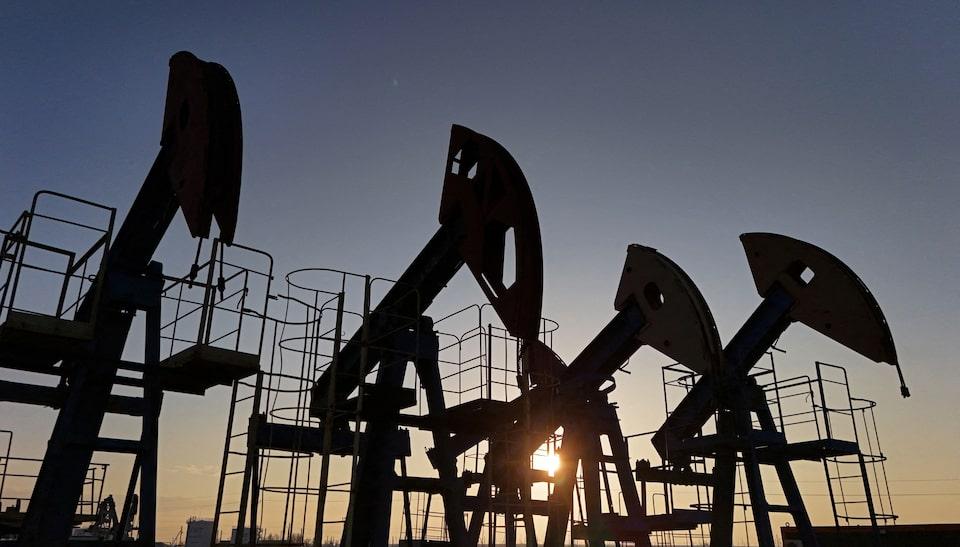
DUBAI, June 18 (Reuters) - The UAE's energy ministry said a collision between two oil tankers near the Strait of Hormuz was likely caused by a navigational misjudgement by one of the vessels. In a statement on Wednesday, it cited preliminary information and did not draw any link with an upsurge in electronic interference during the conflict between Iran and Israel. Sign up here. The Adalynn and Front Eagle oil tankers collided and caught fire on Tuesday 24 nautical miles off the coast of the UAE in the Sea of Oman. No injuries to the crew or any spillage were reported. After Iran and Israel began firing missiles at each other last week, interference has disrupted navigation systems near the Strait of Hormuz, a waterway between Iran and Oman that handles about a fifth of the world's seaborne oil. Tehran has not commented on Tuesday's collision or reports of electronic interference. https://www.reuters.com/world/middle-east/collision-between-two-ships-sea-oman-caused-by-navigational-error-uae-energy-2025-06-18/

2025-06-18 07:13
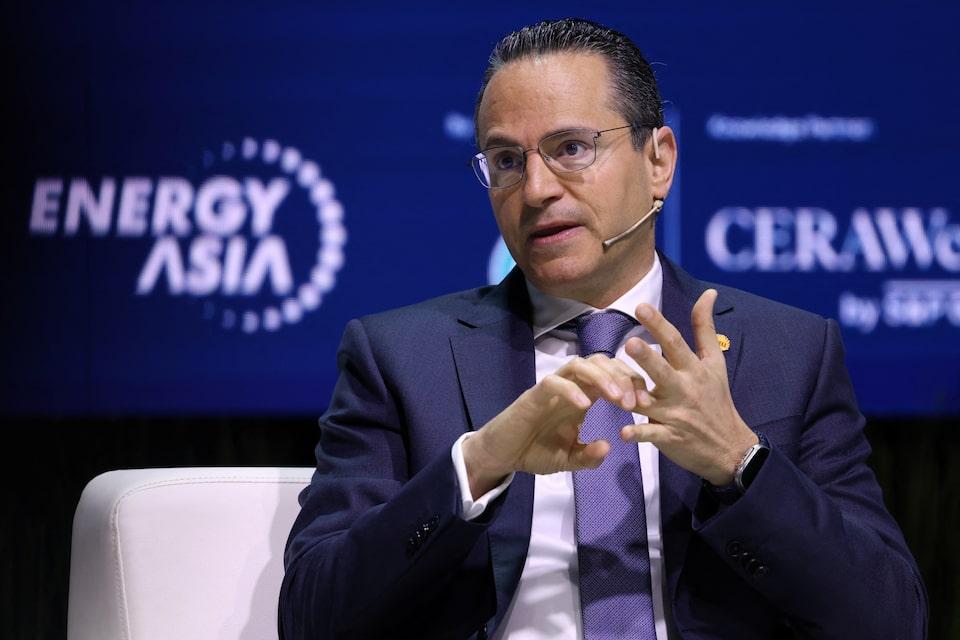
Population growth and the rapid expansion of data centres are driving up electricity needs Data centres alone are expected to more than double their power demand globally by 2030 KUALA LUMPUR, June 18 (Reuters) - Energy majors are pouring money into gas exploration and production in Malaysia and Indonesia to meet rising power demand from growing populations and a proliferation of data centres in the region. The wave of investments come as European majors pivot back to more profitable conventional fuels as countries embark on different energy transition paths, while Southeast Asian governments want more affordable local gas supplies to drive economic growth and improve energy security. Sign up here. At the Energy Asia conference in Kuala Lumpur this week, Shell (SHEL.L) , opens new tab committed to increasing its investments in Malaysia by 9 billion ringgit ($2.12 billion) over the next two to three years, Malaysian Prime Minister Anwar Ibrahim said on Tuesday. "Just between now and 2035, gas production in Southeast Asia is expected to drop by around 20% ... and that needs to be backfilled," Shell CEO Wael Sawan told the conference. "And the most viable backfill is, of course, LNG because the infrastructure is already gas based." On Monday, French major TotalEnergies (TTEF.PA) , opens new tab acquired further stakes in Malaysian gas assets from state energy firm Petronas (IPO-PETO.KL) , opens new tab. "This is where the population is growing I would say. So this is where we need more energy," CEO Patrick Pouyanne said. Italian major Eni (ENI.MI) , opens new tab and Petronas are pressing ahead with a planned joint venture to develop gas assets in Indonesia and Malaysia with a deal expected to be signed by the end of this year. Japan's top explorer Inpex has returned to Malaysia and is working on exploring resources in six blocks offshore Sarawak and Sabah, on top of developing Indonesia's Abadi LNG project, CEO Takayuki Ueda told Reuters. "The demand for natural gas, especially LNG, will actually be increasing over a longer time after 2040, maybe up to 2050," he said. "Given the current, very uncertain and unpredictable geopolitical situation, one of the strategies that we are now taking is local production for local consumption," he added. ConocoPhillips (COP.N) , opens new tab CEO Ryan Lance told local media that the U.S. major plans to invest in Sabah after it dropped the WL4-00 project in Sarawak. Natural gas or LNG is seen as the fuel for the region to replace coal and reduce emissions, while gas-fired power plants can also provide a stable power source for data centres. Petronas CEO Tengku Muhammad Taufik Tengku Aziz said the firm is working to serve a surge in power demand from data centres which is expected to more than double to 945 terawatt hours globally by 2030. "The entire energy systems at our disposal are now working to serve this surge in demand," he said. S&P Global vice chairman Daniel Yergin said gas now has a much bigger profile than it did a couple years ago. "Countries are not going to be able to generate the electricity they need for growth and for data centres without a bigger role for natural gas," he added. https://www.reuters.com/business/energy/energy-majors-lock-onto-southeast-asia-race-more-gas-ai-power-demand-2025-06-18/
2025-06-18 07:01
SEOUL, June 18 (Reuters) - South Korea's central bank governor said on Wednesday he was not against issuing won-denominated stablecoins but had concerns about managing capital flows. "Issuing won-based stablecoin could make it easier to exchange them with dollar stablecoin rather than working to reduce use of dollar stablecoin. That in turn could increase demand for dollar stablecoin and make it difficult for us to manage forex," Rhee Chang-yong told a press conference in Seoul. Sign up here. Stablecoins, a type of cryptocurrency designed to maintain a constant value – typically pegged 1:1 to the U.S. dollar – are widely used by crypto traders to move funds between tokens, and are starting to be adopted by more and more companies. Regulators in many countries are skeptical about cryptocurrencies as they are seen as speculative and as competitors to national currencies. Rhee's comments come as South Korea's left-leaning President, Lee Jae Myung, is seen delivering on his election pledge to allow companies to issue won-based stablecoins. The ruling Democratic Party proposed earlier this month the Digital Asset Basic Act, designed to set up regulatory infrastructure needed to help local companies issue won-denominated stablecoins. President Lee appointed a former crypto firm chief, Kim Yong-beom, as his chief policy officer in his first week in office, further boosting speculation that the government would take action to allow issuance of stablecoins backed by the Korean won. Kim has previously served as vice chairman of the Financial Services Commission before becoming chief executive of Hashed Open Research, a think tank affiliated with crypto venture capital firm Hashed Ventures Inc. Governor Rhee has previously told reporters that allowing stablecoins to be issued by local companies, rather than the central bank, could significantly undermine the effectiveness of monetary policy and capital flow control. https://www.reuters.com/world/asia-pacific/bok-chief-says-he-is-not-against-won-based-stablecoins-has-forex-concerns-2025-06-18/

2025-06-18 07:01
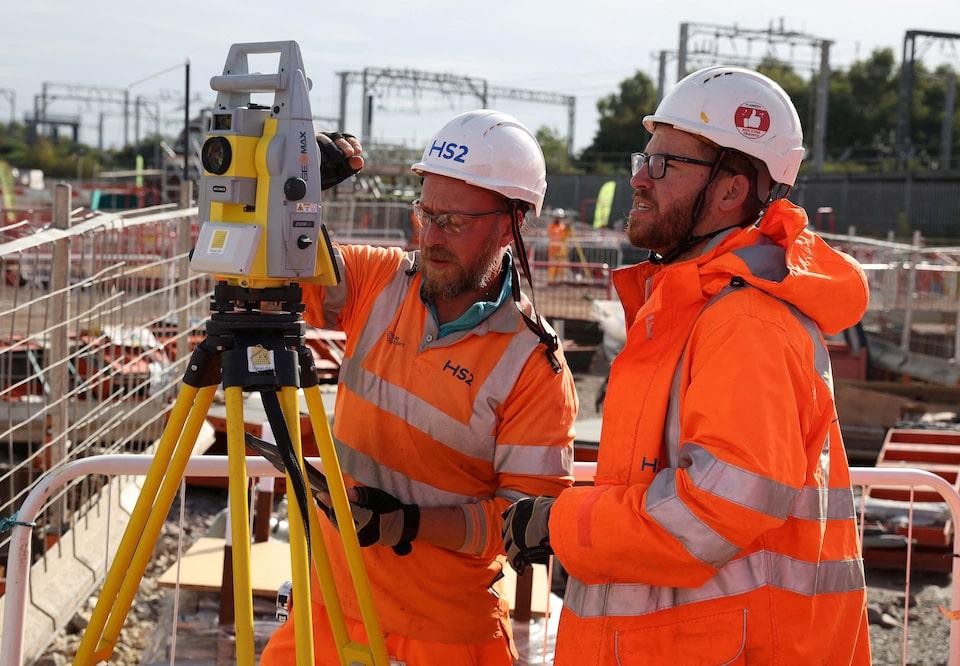
LONDON, June 18 (Reuters) - Britain's new high speed railway line, HS2, which will connect London to the central English city of Birmingham, will be delayed from the 2033 opening date targeted, the BBC reported on Wednesday. It is the latest blow for the project, which has been plagued by cost over-runs. Two years ago, its ballooning budget forced the previous government to cancel the northern half of the project between Birmingham and Manchester. Sign up here. Back when construction was approved in 2012, HS2 was expected to open by 2026 and cost 33 billion pounds ($44 billion). Its cost has spiralled to over 100 billion pounds now. Transport minister Heidi Alexander is expected to tell Parliament on Wednesday that the route will open later than the already delayed 2033 plan, without giving new guidance on when trains will start running, the BBC said it understood. The Department for Transport did not immediately respond to a request for comment. HS2, proposed in 2010, was designed to add capacity and help Britain's infrastructure catch up with other European countries which have extensive high speed tracks. Alexander is expected to release two reports into the problems which have affected HS2, as part of a reset into how Britain builds major infrastructure, the BBC added. Elected in 2024, the Labour government has put speeding up the planning process to deliver new energy and transport projects at the heart of its growth agenda. It has backed expansion at London's Heathrow and Gatwick airports. ($1 = 0.7431 pounds) https://www.reuters.com/world/uk/uk-say-opening-troubled-hs2-rail-link-delayed-bbc-reports-2025-06-18/
2025-06-18 06:54
UK inflation cools to 3.4% as expected Bank of England likely to hold interest rates on Thursday Energy prices, Middle East conflict raise uncertainty Rate-setters likely to emphasise 'careful' policy approach Inflation fall reflects airfares, correction of tax data error June 18 (Reuters) - British inflation cooled in May as expected by the Bank of England, which is set to keep interest rates on hold this week while it assesses international energy markets rocked by escalating conflict in the Middle East. Consumer prices rose in annual terms by 3.4% in May, the Office for National Statistics said on Wednesday, in line with a Reuters poll of economists. Sign up here. The data are unlikely to shift interest rate expectations among economists and investors who think the BoE will leave borrowing costs on hold when it announces its June policy decision on Thursday. Sterling rose slightly against the U.S. dollar after the ONS data release and British government bond yields fell, outperforming German and U.S. debt. Britain now has the highest rate of inflation out of the 16 Western European economies that have reported comparable EU-harmonised data for May, according to a Reuters analysis. The British central bank, which is taking a "careful" approach to cutting interest rates, is likely to double down on that language as the conflict between Israel and Iran enters a sixth day. Oil prices have risen about 14% in just over a week. "The focus now will turn to geopolitical events and the rise in energy prices," Deutsche Bank chief UK economist Sanjay Raja said. "This will undoubtedly complicate the (BoE's) task. Higher energy prices will mean higher inflation expectations." However, Britain's weakening jobs market could cool inflation pressures, he said. Services price inflation - a crucial metric for the BoE - cooled to 4.7% from 5.4% in April, matching the BoE's forecast for May. The Reuters poll had pointed to a reading of 4.8%. Raja said the BoE would be heartened by a drop in its preferred core measure of inflation, which strips out indexed and volatile components as well as rents and holidays and fell below 4% for the first time since February 2022. Earlier this month the ONS said April's headline consumer price inflation reading of 3.5% had been overstated by 0.1 percentage points due to an error in car tax data from the government. April's figures were not amended, but the correct data was used for May's readings. Air fares fell sharply after an Easter holiday spike in April's readings. Gas, electricity and water prices rose in April alongside higher taxes on employers, causing inflation to leap from 2.6% in March. Food prices rose by 4.4% in the 12 months to May, the biggest increase in over a year, the ONS said, a blow for low-income households. Overall goods prices rose by the most since November 2023, up by 2.0%. Some BoE officials have said they disagree with the central bank's key assumption at its May meeting that the recent climb in inflation will not have longer-running effects on pricing behaviour. Market pricing on Wednesday pointed to a 90% chance that the BoE will leave rates on hold this week, with two 0.25 percentage-point cuts priced in by the year's end. The BoE lowered rates by a quarter point to 4.25% on May 8 in a three-way split vote, with two Monetary Policy Committee members favouring a bigger cut and two favouring a hold. The central bank said in May it expects inflation to peak at about 3.7% later this year. Some economists think April might prove to be the high point, although the conflict in the Middle East poses a risk of stronger price pressures. https://www.reuters.com/world/uk/uk-inflation-was-34-may-ons-says-2025-06-18/

2025-06-18 06:34
US involvement in Israel-Iran conflict could risk energy infrastructure Strait of Hormuz disruption could push oil prices to $120 US crude stocks fall by more than expected, EIA data shows NEW YORK, June 18 (Reuters) - Oil prices settled higher on Wednesday in a volatile session as investors weighed the chance of supply disruptions from the Iran-Israel conflict and potential direct U.S. involvement. Brent crude futures settled 25 cents higher at $76.70 a barrel. U.S. West Texas Intermediate crude rose 30 cents at $75.14. Earlier in the session, prices were down around 2%. On Tuesday, prices jumped over 4%. Sign up here. Iranian Supreme Leader Ayatollah Ali Khamenei rejected U.S. President Donald Trump's demand for unconditional surrender, and Trump said his patience had run out but did not indicate what his next step would be. Speaking to reporters outside the White House, Trump declined to say whether he had made any decision on joining Israel's bombing campaign against arch-enemy Iran. "I may do it. I may not do it. I mean, nobody knows what I'm going to do," he said. Trump said Iranian officials had reached out about negotiations including a possible meeting at the White House but "it's very late to be talking," he said. A source familiar with internal discussions said one option Trump and his team were considering included joining Israel in strikes against Iranian nuclear sites. "The crude markets remain in a wait-and-see mode with the Israeli/Iran conflict still offering an array of question marks that could either spike Brent to as high as $83/bbl or prompt a plunge back to about the $68 area," analysts at energy advisory firm Ritterbusch and Associates said in a note. HIGHER RISK Direct U.S. involvement would widen the conflict, putting energy infrastructure in the region at higher risk of attack, analysts say. "The biggest fear for the oil market is the shutdown of the Strait of Hormuz," ING analysts said in a note. "Almost a third of global seaborne oil trade moves through this chokepoint. A significant disruption to these flows would be enough to push prices to $120 (a barrel)." Iran is OPEC's third-largest producer, extracting about 3.3 million barrels per day (bpd) of crude oil. Iran's ambassador to the United Nations in Geneva said Tehran has conveyed to Washington that it will respond firmly to the U.S. if it becomes directly involved in Israel's military campaign. The U.S. Federal Reserve held interest rates steady on Wednesday and policymakers signaled borrowing costs are still likely to fall this year, but slowed the overall pace of expected future rate cuts in the face of estimated higher inflation flowing from the Trump administration's tariff plans. While policymakers still anticipate cutting rates by half a percentage point this year, as they projected in March and December, they slightly slowed the pace from there to a single quarter-percentage-point cut in each of 2026 and 2027 in a protracted fight to return inflation to the central bank's 2% target. Lower interest rates generally boost economic growth and demand for oil. In U.S. supply, crude stocks fell by 11.5 million barrels to 420.9 million barrels last week, the Energy Information Administration said on Wednesday. Analysts had expected a 1.8 million-barrel draw. https://www.reuters.com/business/energy/oil-prices-extend-rise-iran-israel-conflict-enters-sixth-day-2025-06-18/