2025-06-18 06:28
TEL AVIV, June 18 (Reuters) - Israel began flying home citizens stranded abroad on Wednesday, launching a phased airlift operation after the country's surprise military strike on Iran left tens of thousands of Israelis stuck overseas. The first rescue flight, operated by national carrier El Al (ELAL.TA) , opens new tab, touched down at Ben Gurion Airport early Wednesday morning, bringing home passengers from Larnaca, Cyprus. Sign up here. Worldwide, Israel's transport ministry estimates that more than 50,000 stranded Israelis are trying to come home. El Al has said repatriation flights are already scheduled from Athens, Rome, Milan and Paris. Smaller rivals Arkia and Israir (ISRG.TA) , opens new tab are also taking part in the operation. "We are preparing for the airlift to bring all Israelis home," Transportation Minister Miri Regev told the captain of the arriving El Al flight before it landed, according to a statement released by the Israeli Aviation Authority. "We are very emotional about receiving the first rescue flight as part of 'Safe Return'. Land safely," she added. Tel Aviv's airport has been closed to passenger traffic since Israel launched its attack on Friday. The Airports Authority reinforced staffing on Wednesday to ensure the arriving passengers exited the airport quickly. They were shuttled to their parked vehicles or transported via train and bus to city centres nationwide. The operation is being carried out in stages, based on risk levels and security assessments, with an emphasis on the safety of passengers, flight crews, and aircraft, a spokesperson for the airports authority said. Relatives were advised to avoid travelling to airports for security reasons. Iran has fired more than 400 ballistic missiles at Israel since Friday, a large number of them targeting the Tel Aviv area. At least 24 people have died so far in the strikes. There are still be no passenger flights leaving Israel, meaning up to 40,000 tourists are stranded in the country. El Al has cancelled all scheduled flights through to June 23. Large numbers of Israelis seeking to get home have converged on Cyprus, the European Union member state closest to Israel. Flights from the coastal city of Larnaca to Tel Aviv take 50 minutes. Nine flights were expected to depart Cyprus Wednesday for Haifa, and four for Tel Aviv, carrying about 1,000 people, sources in Cypriot airport operator Hermes said. Cruise operator Mano Maritime, whose "Crown Iris" ship carries 2,000 passengers, has said it will make two crossings from Cyprus to Israel's Mediterranean port city of Haifa. Earlier on Wednesday, a cruise ship arrived in Cyprus carrying 1,500 participants to a Jewish heritage programme who had left Israel on Tuesday. https://www.reuters.com/world/europe/israel-launches-airlift-bring-home-stranded-citizens-after-iran-strike-2025-06-18/

2025-06-18 06:14
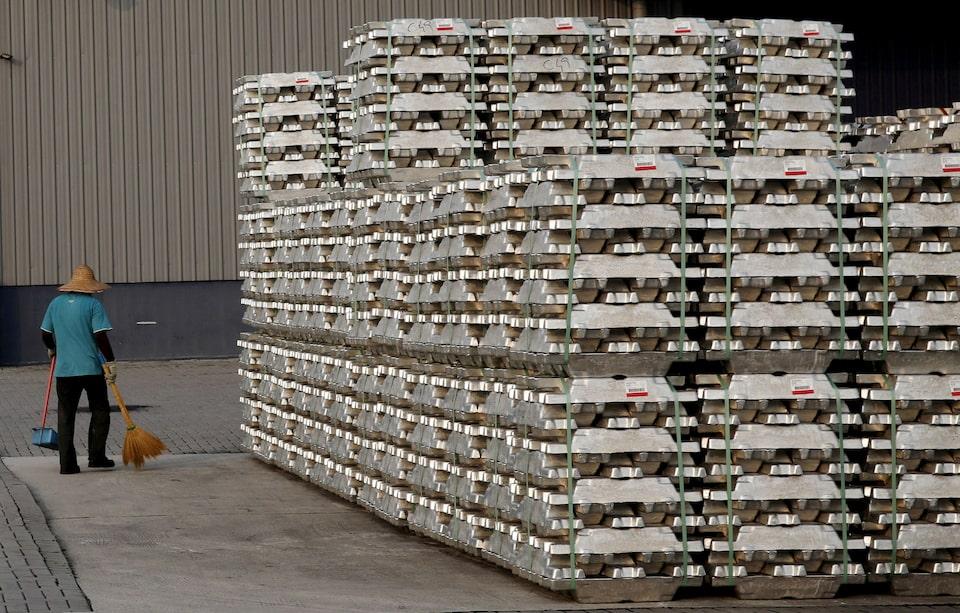
LONDON, June 18 (Reuters) - Where's all the aluminium gone? Two years ago there were over 1.3 million metric tons of the light metal sitting in London Metal Exchange (LME) warehouses. Inventory has since almost halved and is now at levels last seen in 2022. As traders fight over what's left, the London market has become increasingly turbulent, even if it's not apparent from the deceptively calm surface. Sign up here. While the outright LME three-month price has been sedately treading water around the $2,500-per ton level, short-dated spreads have turned tight and volatile. The LME aluminium market is no stranger to titanic tussles for metal by traders with deep pockets. Indeed, the game's taken on a whole new dimension since the exchange banned deliveries of new Russian aluminium in April last year. This latest power play echoes previous LME stocks battles but this time around the LME noise may be masking an important market signal. LARGE MARKET, LARGE POSITIONS Aluminium is the biggest global base metals market with annual consumption of around 100 million tons and aluminium traders have a history of taking outlandishly large positions in the London market. The latest manifestation is the mega long position that has being roiling nearby spread structures over the last month. The benchmark cash-to-three-months period has shifted from a comfortable contango of over $42 per ton in April to small backwardation. The "tom-next" spread, the cost of rolling a position overnight and a reliable indicator of market stress, traded out to a $12.30-per ton backwardation last week. Someone is clearly looking to scoop up a significant volume of aluminium but there are only 321,800 tons of available metal left in LME warehouses and two-thirds of that is Russian. Russian metal was banned , opens new tab in the United States and United Kingdom in April last year and is subject to quotas in Europe , opens new tab prior to a full ban at the end of 2026, making it less desirable than other material. It's not possible to know how much of the 323,000 tons sitting in LME off-warrant storage is also Russian but there has been no sign of this metal moving on to warrant to alleviate the spread tightness. Similarly, if the purpose of the squeeze was to entice metal out of the deep non-LME storage shadows, it doesn't seem to be working. Arrivals have amounted to a negligible 150 tons so far this month. The LME's ban on the delivery of Russian metal produced after April 13, 2024 may be hindering the normal working of the LME stocks grab trade, which is to tighten spreads to force holders to release metal. But that assumes there is a lot of aluminium, whether Russian or anything else, that is available for LME delivery. CHINA'S IMPORT APPETITE GROWS That assumption is starting to look a little questionable, given the conspicuous absence of any significant arrivals of any sort of aluminium in the LME warehouse system since March. Even Russian metal appears to be in hot demand, judging by China's imports so far this year. The country has been soaking up Russian aluminium shunned by Western buyers since the start of the war in Ukraine in 2022. Chinese imports of Russian primary aluminium surged from 291,000 tons in 2021 to 1.13 million tons in 2024. The pace has accelerated again in 2025. Imports jumped by another 48% year-on-year to 741,000 tons in January-April. China's appetite for imported metal results from one of the big structural shifts playing out on aluminium's supply side. The country's smelters are running close to the government's annual capacity cap of 45 million tons. The national annualised run-rate has held steady around the 44-million ton level since the start of the year. Against a backdrop of robust demand, particularly from the solar energy sector, the domestic market for primary metal looks tight. Shanghai Futures Exchange stocks have fallen to a 16-month low of 110,000 tons and the forward curve is in backwardation. SCRAP WARS China's stated policy is to ramp up secondary production from recyclable sources to compensate for the cap on primary metal production. However, that may prove increasingly challenging as recyclable material flows to the United States because it is exempt from the 50% tariffs imposed by the Donald Trump administration. This second big structural shift risks tightening the global supply of scrap, which in turn means processors outside of the United States have to use more primary metal. Scrap flows to China, the world's largest buyer, are in danger of being further disrupted if the European Union decides to impose export tariffs to stem what it terms "scrap leakage". The threat was originally China but now it's the United States. TESTING AVAILABILITY This squeeze on the LME aluminium contract is the latest in a long history of mega trades intended to grab a slice of available stocks. But it doesn't appear to be drawing metal into the system. There may be a Russian kink in this story but this is a test of broader market availability and so far supply has been found wanting. The longer the LME inventory downtrend continues, the more it will look like a market signal rather than the usual LME stocks churn noise. The opinions expressed here are those of the author, a columnist for Reuters https://www.reuters.com/markets/commodities/is-battle-lme-aluminium-stocks-noise-or-signal-2025-06-18/
2025-06-18 06:12
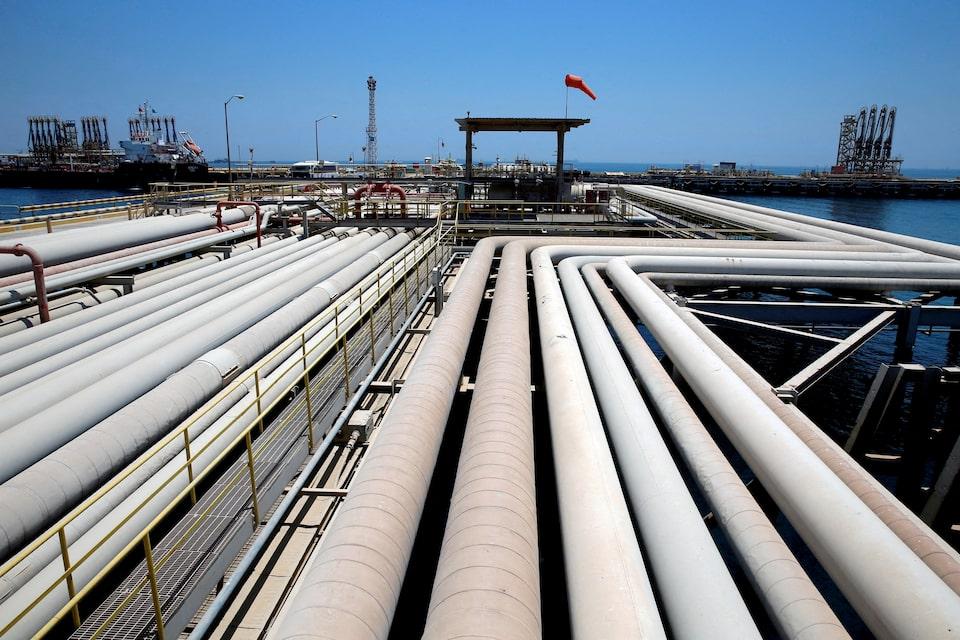
Mideast tanker rates soar by 40% since June 13 Rates in other region rise, reflecting Mideast tensions Ship navigation systems in Gulf face heavy interferences LONDON, June 18 - While global energy markets are not yet pricing in worst-case scenarios for the Israel-Iran war, oil tanker rates are providing a good real-time gauge of the escalating risks. Geopolitical risk has spiked following Israel's surprise bombardment of the Islamic Republic last Friday and Iran's retaliatory ballistic missile strikes, leading to a rally in global energy prices, with Brent crude rising 8% to roughly $75 a barrel. Sign up here. But markets and investors now appear to be in a holding pattern as the conflict unfolds, with possible scenarios spanning everything from an imminent ceasefire and strengthened nuclear deal to a joint U.S.-Israel effort to destroy Iran’s nuclear programme and potentially bring about regime change. For oil markets, the central risk remains the blocking or disruption of maritime traffic through the Strait of Hormuz, a narrow waterway between Iran and Oman through which one-fifth of the world's oil and gas consumption flows. Iranian strikes on energy infrastructure in Saudi Arabia or the United Arab Emirates – both U.S. allies – would represent another major escalation. Current oil prices suggest the market is still largely discounting such extreme scenarios, but trends in the oil tanker market show that oil shipping activity is being impacted even without direct action by Tehran. The benchmark daily rate for a ‘very large crude carrier’ (VLCC) moving oil from the Middle East to China has risen by 40% since June 13, reflecting the higher risk premium tanker owners are now charging to move through the strait. LSEG shipping market analysts anticipate further rate increases in the coming days. Tanker rates in other regions have also risen. For example, VLCC rates between West Africa and China have also jumped by over 40% since Friday. This is partly due to an expectation that crude buyers will seek to secure supplies from regions outside the Middle East in order to reduce the risk of disruption to their refining or trading operations. In another sign of the conflict’s indirect impact on shipping, Qatar’s national energy company instructed liquefied natural gas and oil tankers to stay outside Hormuz and to enter the Gulf only the day before loading, Reuters reported. SPOOFING While no physical attacks have occurred in Hormuz, tensions in the Gulf were heightened on Tuesday after two oil tankers collided and caught fire near the Strait of Hormuz. One of the tankers, the Front Eagle, which was destined for China, was loaded with 2 million barrels of Iraqi crude oil, according to monitoring service TankerTrackers.com , opens new tab. The exact cause of the collision, which resulted in no injuries or spills, is still unclear. But it coincided with a surge in electronic interference among commercial ship navigation systems in recent days around Hormuz and the wider Gulf. This electronic disruption is affecting vessels’ ability to accurately transmit positional data via automated identification systems (AIS), which poses operational and navigational challenges for maritime traffic, the U.S.-led Joint Maritime Information Center said in an advisory , opens new tab. The source of the interference, known as jamming, was unclear. LSEG analysts noted that more than 260 vessels in the Gulf had their AIS positions corrupted at one point in recent days, as they appeared to be “sailing” on the land around the South Pars Central Power Plant in southern Iran. Similar incidents have been recorded in other parts of the world in the past. For example, signal disruptions affecting AIS and GPS signals rose sharply in the Baltic Sea , opens new tab following Moscow's invasion of Ukraine in 2022. The physical oil market, where real-world trade activity overlaps with political and military activity, can often help investors assess risk levels at moments of heightened geopolitical tension. Amid the current fog of war, the tanker market in the Middle East is flashing warning lights. Enjoying this column? Check out Reuters Open Interest (ROI), opens new tab, opens new tab , opens new tab, your essential new source for global financial commentary. ROI delivers thought-provoking, data-driven analysis. Markets are moving faster than ever. ROI, opens new tab, opens new tab , opens new tab can help you keep up. Follow ROI on LinkedIn, opens new tab, opens new tab , opens new tab and X. , opens new tab https://www.reuters.com/markets/commodities/oil-tanker-market-signals-more-middle-east-energy-disruption-ahead-2025-06-18/
2025-06-18 06:10
LITTLETON, Colorado, June 18 (Reuters) - Energy equity investors are adjusting positions across the U.S. power sector in an attempt to pick winners and cut losers ahead of the final passing of President Donald Trump's tax-and-spending bill. The "One Big, Beautiful Bill Act" contains aggressive cuts to several tax credits and incentives tied to clean power generation from renewable energy sources, and has sparked an aggressive selloff in stocks tied to the sector. Sign up here. The bill would also accelerate the phase-out of federal support for electric vehicles, clean energy component manufacturing and wind farm development. However, the latest U.S. Senate proposals - which tweaked the version previously passed by the U.S. House - preserve support for nuclear, geothermal and battery storage projects, and sparked gains in stocks tied to nuclear power. Additional adjustments to the bill proposals are likely before it can be passed into law by Congress, sparking more position jostling by energy investors in the weeks ahead. Below is a breakdown of the key energy sector exchange-traded funds (ETFs) and equities that have and will be most impacted by the proposed budget. SOLAR SOCKED Stocks tied to companies engaged in the production of solar panels and inverters and in the installation of solar systems stand to be among the biggest losers once the proposed bill is passed, regardless of its final make-up. The Trump administration and many Republican lawmakers are against federal subsidies for solar power for several reasons, including concerns about its intermittency and its heavy reliance on components made in China and elsewhere. The Senate's recent budget bill proposal phases out several key solar tax credits and subsidies from 2026, and would eliminate them entirely from 2028. As the solar sector has already been hit by rising interest rates - which lifted the cost of system installations - the speedy gutting of federal support has greatly dimmed the prospects for several companies in the space. Stocks in solar inverter manufacturer Enphase (ENPH.O) , opens new tab and panel makers First Solar (FSLR.O) , opens new tab, Sunrun (RUN.O) , opens new tab and SolarEdge (SEDG.O) , opens new tab have all dropped by 20% or more within the past month as ramifications of the bill proposals were digested. Shares in the Invesco Solar ETF plumbed five-year lows in April, and are down more than 50% over the past two years as investors jettisoned positions and the sector's outlook darkened under the anti-renewables Trump administration. NUCLEAR AND GEOTHERMAL Several energy investors looking to get out of the solar space have pivoted their funds into the nuclear power sector, which has gained support under the current Trump administration. The Global X Uranium ETF (URA.P) , opens new tab has gained more than 35% in value over the past month, and recently scaled its highest levels in more than a decade. Investors have been drawn to the fund by the likelihood of a tightening in the supply of uranium - the main fuel used by nuclear power plants - should more reactors get commissioned once the tax bill becomes law. Stocks in companies tied to geothermal energy production have also rallied recently as provisions tied to supporting the sector were preserved in the latest round of bill wrangling. Shares in Nevada-based Ormat Technologies (ORA.N) , opens new tab, which makes power converters for geothermal plants, are up more than 30% since early May. MAJORS, GRIDS AND LNG Energy investors have also recently increased positions in funds and companies within the traditional oil and gas sector, as the gutting of clean energy subsidies will likely increase demand for fossil fuels. Shares in the SPDR Energy Select Fund - which holds several major oil and gas producers - have rallied on the recent tensions in the Middle East and due to the brighter outlook for U.S. gas demand if renewable generation is stalled. Firms with large natural gas production businesses stand to gain further if the proposed bill slams the brakes on renewable power growth and increases the U.S. power sector's dependence on gas. Shares in the companies tied to the liquefied natural gas (LNG) sector have also fared well lately due to the Trump administration's support for expanding LNG exports. Shares in Cheniere Energy (LNG.N) , opens new tab - the top U.S. LNG exporter - are up around 10% year-to-date and over 50% over the past year. Investors have also increased their exposure to ETFs and companies dedicated to upgrading the U.S. power grid, which have upbeat outlooks regardless of how the final tax bill looks. The First Trust Smart Grid Infrastructure Fund (GRID.O) , opens new tab is up around 12% year-to-date, while the First Trust North American Energy Infrastructure Fund is up about 4%. Going forward, investor interest is likely to also grow in the battery storage sector, with the iShares Energy Storage and Materials ETF (IBAT.O) , opens new tab already on investors' radars. The fund has dropped around 5% in value so far this year due in part to the dimmed outlook for solar power growth, which utilities pair with battery systems to ensure round-the-clock supplies. But in the months ahead utilities will still likely increase their use of battery systems even if they slow their uptake of new solar systems, as the solar-plus-battery combination remains the fastest route to deliver new power to U.S. grids. The opinions expressed here are those of the author, a columnist for Reuters. Enjoying this column? Check out Reuters Open Interest (ROI), your essential new source for global financial commentary. ROI delivers thought-provoking, data-driven analysis of everything from swap rates to soybeans. Markets are moving faster than ever. ROI can help you keep up. Follow ROI on LinkedIn , opens new tab and X , opens new tab. https://www.reuters.com/markets/commodities/us-energy-investors-juggle-exposure-tax-bill-debate-rolls-maguire-2025-06-18/
2025-06-18 06:08
Dollar moved higher after Fed held rate steady Fed sees two cuts this year, but inflation to slow future ones Concern about Middle East conflict continues Iran leader rejects U.S. demand for surrender NEW YORK, June 18 (Reuters) - The U.S. dollar traded higher against most major currencies on Wednesday, but remained weaker against the yen after the Federal Reserve kept interest rates unchanged as economic uncertainty and tariffs continue to paint a murky outlook. Policymakers still forecast slashing rates by half a percentage point this year, but have slowed the pace of future cuts, concerned that President Donald Trump's tariffs would stoke inflation. Sign up here. "The speculation continues to be up in the air. Q2 numbers are going to be key to really coming to the realization that we are under actual recessionary pressures that will force the Fed to really rethink what they're doing," said Juan Perez, director of trading, at Monex USA. "They are receiving mixed signals, so they're sending back mixed signals." With the Fed's decision now behind it, markets remain focused on the fighting between Israel and Iran, which has spurred investors to scoop up safe havens. Israel has bombarded arch-enemy Iran over the past six days to halt its nuclear activity and has asserted the need for a change of government in the Islamic Republic. The U.S. military is also bolstering its presence in the region, Reuters reported, stirring speculation about U.S. intervention that investors fear could widen the conflict in an area with critical energy resources, supply chains and infrastructure. Iranian Supreme Leader Ayatollah Ali Khamenei has rejected Trump's demand for unconditional surrender on Wednesday, and the U.S. president said his patience had run out, but gave no clues on his next step. The dollar has resumed its role as a safe haven, having gained around 1% against both the Japanese yen and Swiss franc since last Thursday. On Wednesday, the U.S. currency took a breather, edging fractionally lower against the yen and the franc and more noticeably so against the euro and the pound. Against a basket of six other major currencies, the dollar is still down around 8% so far this year as confidence in the U.S. economy and the reliability of Trump's administration as a trading and diplomatic partner have faded. U.S. markets are closed on Thursday for the Juneteenth federal holiday. Against the yen , the dollar pared losses and was last seen down 0.06% to 145.18 and was 0.36% higher against the franc at 0.8190 francs. NO CHANGE FROM THE FED Traders were expecting the U.S. central bank to leave borrowing costs unchanged and were looking to parse what Chair Jerome Powell says about the outlook for growth and inflation. Uncertainty was already running high and recent data have begun to show the impact of Trump's erratic approach to trade and tariffs. The escalation of conflict in the Middle East, and the surge in crude oil prices to about $75 a barrel, have further complicated the picture for policymakers. "Although not outright mentioned, inflationary concerns of tariffs and an oil shock coming from the Middle East are also reasons that they are not cutting interest rates," said Phil Blancato, chief market strategist at Osaic. Still, Blancato believes the Fed is "missing the mark by not getting the process of cutting rates." The dollar kept to weaker ranges earlier in the day after data showed the number of Americans filing new applications for unemployment benefits fell, but stayed elevated. Meanwhile, the Swedish central bank cut rates as anticipated, leaving the crown weaker against the euro , which rose 1% to 11.0770 crowns. On Thursday, the Swiss National Bank, the Bank of England and the Norges Bank will deliver their respective rate decisions. The pound fell 0.12% to $1.3411, after having received an early boost from data showing inflation cooled no more than expected to an annual rate of 3.4% in May, ahead of the BoE decision. The euro slipped 0.03% to $1.1476. In the background, an area of frustration for investors was a Group of Seven meeting in Canada that yielded little on the tariff front ahead of Trump's early-July deadline for additional import levies. https://www.reuters.com/world/africa/dollar-steady-investors-monitor-israel-iran-conflict-ahead-fed-2025-06-18/
2025-06-18 05:55
Malaysian bonds record largest foreign inflows since 2014 in May Money managers see increasing interest in Asian fixed income Investors attracted by prospect of rate cuts, currency appreciation SINGAPORE/BENGALURU, June 18 (Reuters) - Bond investors fleeing the United States are finding a haven in stable and lucrative Asian debt markets, with Malaysia leading the pack as the destination for foreign money. Foreign ownership of government bonds from Indonesia to India is soaring, becoming a tailwind for markets that have traditionally been dominated by domestic players. Sign up here. "We're in a very good environment for Asian investments," said David Chao, global market strategist for Asia Pacific at Invesco. "The ingredients are in place for Asia, for emerging markets to outperform." The biggest appeal is the combination of monetary easing and currency appreciation they are offering for the first time in four years, precipitated by U.S. President Donald Trump's policies and a weakening dollar. Malaysian bonds recorded their biggest monthly foreign inflows since 2014 last month, around $3.15 billion. India and Indonesia also got significant inflows. Across Asia, low inflation and policy rates at their peak contrast with the United States, Europe or Japan, where fiscal profligacy has undermined the value of long-term debt. Subdued growth and expected rate cuts further enhance the appeal of locking in peak rates, with the potential for capital appreciation on bonds as yields decline. A weaker dollar also gives investors scope to profit from currency appreciation. "Emerging market assets fundamentally will do well when U.S. rates are dropping, and U.S. dollar is weakening," said Shah Jahan Abu Thahir, head of global markets for Southeast Asia at Bank of America. "The last few years, it was the reverse...so now, anecdotally, there's definitely some interest potentially coming back." BOND ALLURE Data from regional regulatory authorities and bond market associations showed foreign investors bought $34 billion worth of Asian debt securities so far this year - the largest amount in the first five months of a year since at least 2016. That's just the beginning of flows into these under-owned markets, analysts said, and likely to continue so long as economies and monetary settings in this part of the world remain insulated and more stable than developed markets. "We're seeing this fixed income interest across the board in the bigger and small EM countries - Thailand, Philippines, Indonesia and India," Sue Lee, head of markets for Asia South at Citi Group, said. India has been one of the more active markets for clients, due to the string of rate cuts, she said. Investors are positioning themselves ahead of expected rate cuts, locking in yields with the anticipation of bond prices rising as rates decline. Malaysia, where the market remains divided on rate-cut prospects, has an edge over Thailand, where investors reckon the cycle is almost over. Thailand had outflows of about $53.6 million in May, as investors shunned a market with one of the lowest returns in the region and hit hardest by Trump's trade tariffs. The central bank has hinted it has limited room to cut rates further, while the government has said it wants a weaker currency. One-year bond yields are below the 1.75% policy rate. Indonesian government bonds (IndoGBs) offer attractive yields, with a two-percentage point premium over U.S. Treasuries on 10-year IndoGBs . However, concerns over government spending and political uncertainty have tempered investor enthusiasm. Investors say Malaysian bonds offer more value, with its central bank yet to start cutting rates despite weaker growth, and a relatively robust ringgit . Abu Tahir said bonds in Indonesia are regarded as expensive while Thailand has rate cuts priced in and is already at fair value. "It's about what's the expectation and what's the market pricing," he said, predicting Malaysia will cut rates in July, though the market is more divided. "So that's like where the value is because if everybody is expecting a cut, it's already been priced in," he said. The lack of liquidity in Asian bond markets has long been a constraint for investors, with rapid foreign capital flows capable of triggering price volatility. Last month, a rush of capital into Hong Kong caused a spike in its usually stable currency. But analysts say there is less cause for concern, given a benign inflation environment and low foreign ownership. "For the past five years, it's been tumbleweed in terms of portfolio inflows into the region, so actually it wouldn't be bad to see more inflows back into the region," said Claudio Piron, a strategist at Bank of America. "In a way, if it's done in a calibrated, natural way, it may not be bad. A good problem to have." https://www.reuters.com/world/asia-pacific/malaysia-scores-record-flows-bond-investors-favour-asia-2025-06-18/