2025-06-18 05:46
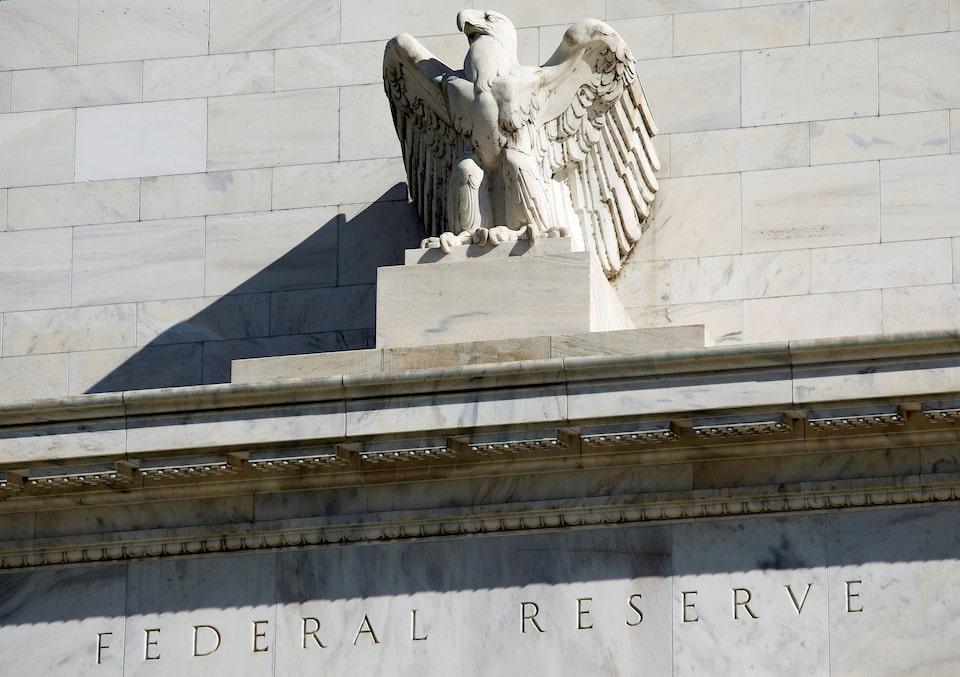
The Fed held interest rates at 4.25%-4.50% range Gold needs to reclaim 3,400 for bulls to take control, analyst says Platinum at highest level since Feb 2021 June 18 (Reuters) - Gold prices fell on Wednesday after the U.S. Federal Reserve held interest rates steady and signaled a slower pace of cuts in the future, and chair Jerome Powell said the central bank is expecting a "meaningful amount of inflation" in coming months. Spot gold was down 0.4% at $3,374.75 an ounce by 3:19 p.m. EDT (1919 GMT). U.S. gold futures settled 0.03% higher at $3,408.1. Sign up here. Spot prices had briefly risen after the Fed held interest rates at its current 4.25%-4.50% range and pointed at a half percentage point reduction by year end. However, "Chair Powell sapped the initial optimism by repeating multiple times that given low and stable unemployment, the Fed is in a good spot to wait and see. He hinted broadly that September could be a live meeting but it wasn't enough for asset markets or gold which were hoping for a more dovish tilt," said Tai Wong, an independent metals trader. "Gold needs to reclaim 3,400 for bulls to take firm control." While policymakers still anticipate cutting rates by half a percentage point this year, they slightly slowed the expected pace from there to a quarter percentage point cut each in 2026 and 2027. Powell also said the forecasts could change based on incoming data, especially on inflation. Meanwhile, Trump said on Wednesday that he may meet with Iran to talk about the Isran-Israel conflict. Geopolitical tensions and low interest rates lift gold's appeal. "The prevailing trend of seeking alternative stores of value beyond the U.S. dollar remains strong, driven by a growing desire for assets that are independent of external control," said Ryan McIntyre, Managing Partner at Sprott Inc. Spot silver fell 1.5% to $36.70 per ounce, while platinum gained 4.3% to $1,319.03, after rising 5% earlier to its highest since February 2021. Palladium fell 0.5% to $1,046.75. Goldman Sachs said in a note that platinum and silver's recent rallies are primarily speculative and lack fundamental support. https://www.reuters.com/world/india/gold-flat-investors-stay-sidelines-ahead-fed-decision-2025-06-18/

2025-06-18 05:40
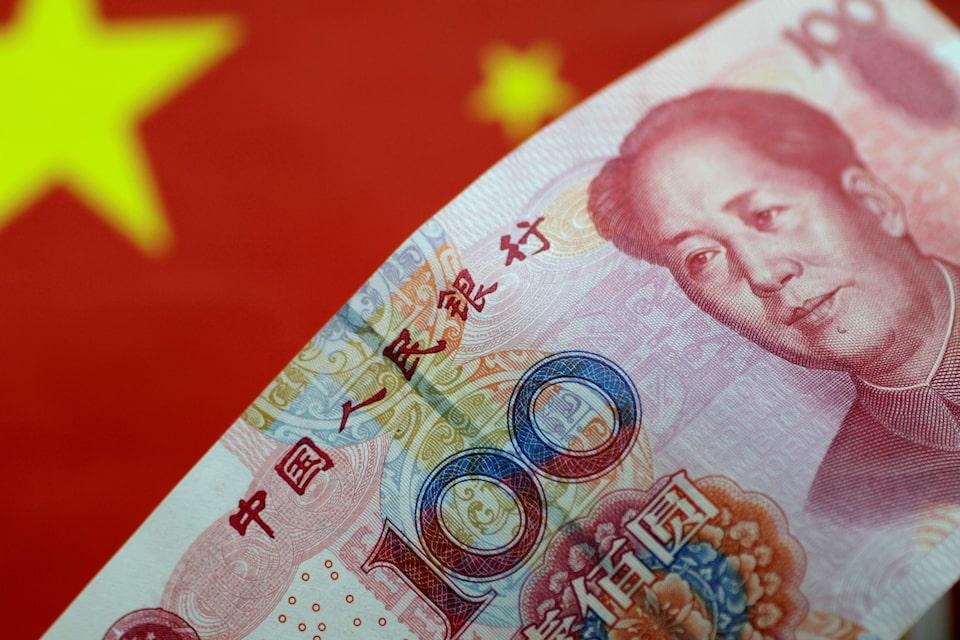
China to expand digital yuan globally, create Shanghai operations center PBOC governor calls for a multi-polar global currency system Financial regulators pledge stable yuan, to further open up financial market SHANGHAI/BEIJING, June 18 (Reuters) - The head of China's central bank pledged to expand the international use of the digital yuan and called for the development of a multi-polar global currency system, where several currencies dominate the world economy. China will establish an international operation centre for e-CNY in Shanghai, People's Bank of China Governor Pan Gongsheng said on Wednesday at the Lujiazui Forum, a high-profile gathering of local and foreign financial industry executives and regulators. Sign up here. The remarks come in the wake of renewed appetite for a global yuan, as international trade tensions sparked by U.S. tariff policies prompt investors to seek alternatives to dollar-based investments. At the same time, China is accelerating efforts to develop financial systems independent of Western institutions, moves that have gained fresh impetus as shifting trade patterns and geopolitical realignments reshape the global economic landscape. "Developing a multi-polar international monetary system will help strengthen policy constraints on sovereign currency countries, enhance the resilience of the system, and better safeguard global financial stability," Pan said. Such a system would pave the way for some currencies to hold sway in their respective regions, lessening reliance on the dollar. Pan expects several key global currencies to coexist in mutual competition with checks and balances in place. Washington's aggressive and chaotic rollout of tariffs has shaken faith in the U.S. currency and other U.S. assets, prompting a broader shift by investors away from the U.S. dollar and towards Asian currencies and the euro. The eroding U.S. dollar appeal also comes amid rising global interest in cryptocurrencies, including stablecoins - a type of virtual currency that is backed by an asset and holds a stable price. GLOBAL YUAN AMBITIONS China has long harboured ambitions for the yuan to be a global currency, similar to the euro or dollar and reflective of the importance of the world's second-biggest economy. But that goal has been hampered by unwillingness to open the capital account, and while there's no sign of that changing, progress on other fronts, where it has gained in places such as Russia and other trading partners, stands to accelerate. On Wednesday, six foreign banks including Standard Bank and First Abu Dhabi Bank agreed to use China's Cross-Border Interbank Payment System (CIPS), the yuan-based international settlement system in future, state broadcaster CCTV reported, a step that further expands the use of yuan in global trade. Pan said that digital technologies have exposed weakness in traditional cross-border payment systems, which are less efficient, and vulnerable to geopolitical risks. "Traditional cross-border payment infrastructures can be easily politicised and weaponised, and used as a tool for unilateral sanctions, damaging global economic and financial order," Pan said. Speaking at the forum, China's foreign exchange regulator vowed to keep the yuan exchange rate basically stable and fend off external shocks and risks. China's ability to counter forex market volatility has improved, said Zhu Hexin, head of the State Administration of Foreign Exchange. Beijing will also further open up its financial market to foreign players, Li Yunze, director of the National Financial Regulatory Administration, told the forum. "Foreign institutions are important bridges and links for attracting investment, talent, and are important participants and active contributors to the construction of China's modern financial system," said Li. China will create a transparent, stable and predictable environment for foreign players and will explore options to open up a wider range of financial areas, said Li. Li added that China's rapidly growing consumer market would also bring more opportunities for foreign institutions. https://www.reuters.com/markets/currencies/chinas-central-bank-says-promote-digital-yuan-multi-polar-currency-system-2025-06-18/
2025-06-18 05:39
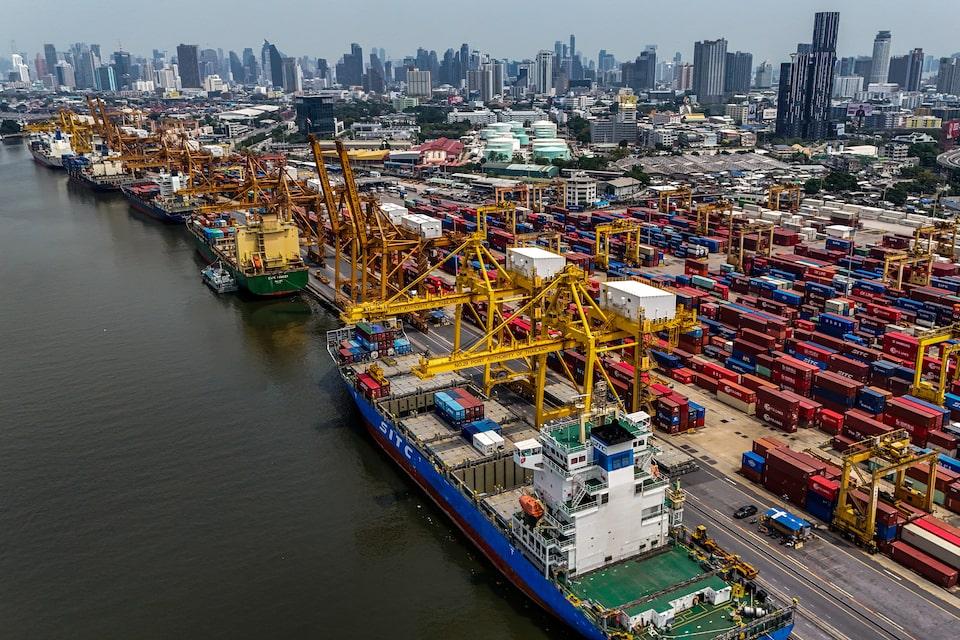
Trade proposal to be submitted to US on Friday, Thailand says Industrial sentiment at 8-month low as tariff threat looms May exports up 18.4% y/y as US shipments surge BANGKOK, June 18 (Reuters) - Thailand held trade talks with the United States on Wednesday and plans to submit a proposal on Friday, a top commerce ministry official said, as tariffs pushed industrial sentiment to an eight-month low. Washington has threatened to impose a 36% tariff rate on imports from Thailand if a reduction cannot be negotiated before a 90-day pause that caps tariffs at a baseline of 10% for most nations expires on July 9. Sign up here. "We held discussion with USTR for two hours this morning," Permanent-Secretary Vuttikrai Leewiraphan told reporters, adding the United States highlighted five issues including tariffs and quotas, non-tariff barriers, digital trade, origin of goods and economics and security. "On Friday, Thailand will submit an initial proposal to address these issues that includes reducing tariffs, purchasing more U.S. goods and increasing investments," he said. The talks come as industrial sentiment in Southeast Asia's second-largest economy fell for a third consecutive month due to concerns about tariffs, according to the Federation of Thai Industries. Thailand's proposal should be of interest to the United States and the negotiations, if not concluded, are expected to continue beyond the 90-day window, Vuttikrai said. The United States was Thailand's largest export market last year, accounting for 18.3% of total shipments worth $55 billion. Washington has put its trade deficit with Thailand at $45.6 billion. The trade talks come as Thai exports rose by their fastest annual rate in more than three years in May, beating expectations after shipments to the United States soared, driven by accelerated shipments before the tariff pause expires, the commerce ministry said in a statement. In the first five months of 2025, exports, a key driver of the economy, rose 14.9% from a year earlier, it said. In May, exports to the United States jumped 35% from a year earlier, while shipments to China rose 28%, government data showed. "We hope export growth will exceed 10% this year," Commerce Minister Pichai Naripthaphan told a press conference, saying the weaker Thai baht would further support shipments. May exports (THCEX=ECI) , opens new tab jumped 18.4% from a year earlier to a record $31 billion, compared with 6.7% increase expected in a Reuters poll. "We hope export growth will exceed 10% this year," Pichai said, adding that the sector will be "a hero" for the economy and he expected upcoming trade talks with the United States to go well. On Monday, Pichai said both countries could agree good terms on tariffs, possibly as low as 10%. Exports of computers and parts surged 104% in May from a year earlier, while shipments of agricultural goods rose 6.8%. Rice export volumes dropped 0.2% on the year. Last month, imports (THCIM=ECI) , opens new tab increased 18% from a year earlier, beating a forecast rise of 13.1%, which led to a trade surplus (THCTR=ECI) , opens new tab of $1.12 billion for the month. https://www.reuters.com/markets/asia/thai-may-exports-jump-184-yy-well-above-forecast-2025-06-18/
2025-06-18 05:27
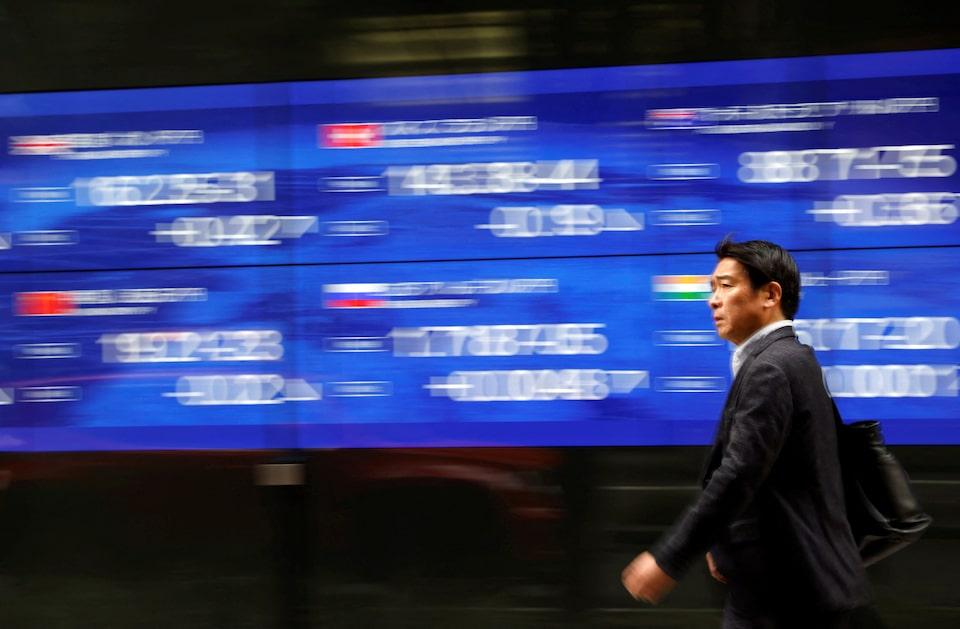
Equity indexes flatten after volatile session Fed signals slower easing, predicts more inflation Oil rises on sixth day of Israel-Iran tension Trump says "anything could happen" US Treasury yields fall, then rise NEW YORK, June 18 (Reuters) - Major Wall Street indexes ended a choppy trading session little changed after the U.S. central bank held interest rates steady on Wednesday, while the six-day-old Israel-Iran air war kept oil prices climbing on fears of escalation and supply disruption. In a much-anticipated address, Federal Reserve Chair Jerome Powell said the Fed expects goods prices for U.S. consumers to go up over the course of the summer under pressure from President Donald Trump's tariffs. Sign up here. The Fed's update earlier in the day signalled borrowing costs were still likely to fall this year, but that future cuts would proceed a little more slowly. Powell has insisted the Fed's moves are based on data. He cautioned on Wednesday not to place too much stock in the forecasts, which could change as more readings come in. "Powell by design left optionality open," said David Seif, chief economist for Developed Markets at Nomura in New York, adding that the chair "was saying we don't know what the impact of the tariffs is going to be. That seems like a fair statement when you've had the largest increase in tariffs that the U.S. has seen in 95 years." The Dow Jones Industrial Average (.DJI) , opens new tab ended 0.10% lower on the day, the S&P 500 (.SPX) , opens new tab fell 0.03% and the Nasdaq Composite (.IXIC) , opens new tab rose 0.13%. Stocks were solidly higher before the Fed statement. Geopolitics remained in focus as Iranian Supreme Leader Ayatollah Ali Khamenei rejected Trump's demand for unconditional surrender, and Trump said his patience had run out but did not indicate his next step. Trump declined to say whether he had made any decision on whether to join Israel's bombing campaign against archenemy Iran. Asked if he thought the Iranian government could fall, Trump said: "Sure, anything could happen." Brent crude futures settled 25 cents higher at $76.70 a barrel. U.S. West Texas Intermediate crude rose 30 cents to $75.14. Earlier in the session, prices had been down around 2%. On Tuesday, prices jumped over 4%. U.S. GOVERNMENT DEBT COSTS RISE AFTER POWELL U.S. Treasury yields pared earlier declines after Powell forecast accelerating inflation. The yield on benchmark U.S. 10-year notes was 4.391%, the same as its level late on Tuesday. Concerns the United States will join the Israel-Iran conflict had boosted demand for safe-haven U.S. debt and helped send yields lower earlier on Wednesday. Those yields surged on April 2 after Trump announced higher-than-expected tariffs, prompting concerns foreign investors would move away from U.S. assets. They stabilised in the ensuing weeks as the president delayed implementing the levies. Economic data from earlier in the week had made for a challenging backdrop to the Fed decision. U.S. retail sales fell by a larger-than-expected 0.9% in May, data showed on Tuesday, the biggest drop in four months. Further data on Wednesday showed the number of Americans filing new applications for unemployment benefits fell last week but stayed at levels consistent with a loss of labor market momentum in June. The yield on the rate-sensitive 2-year note fell 1.1 basis points to 3.939%, from 3.95% late on Tuesday. Markets are closed on Thursday for the federal Juneteenth holiday. https://www.reuters.com/world/china/global-markets-wrapup-1-2025-06-18/
2025-06-18 04:36
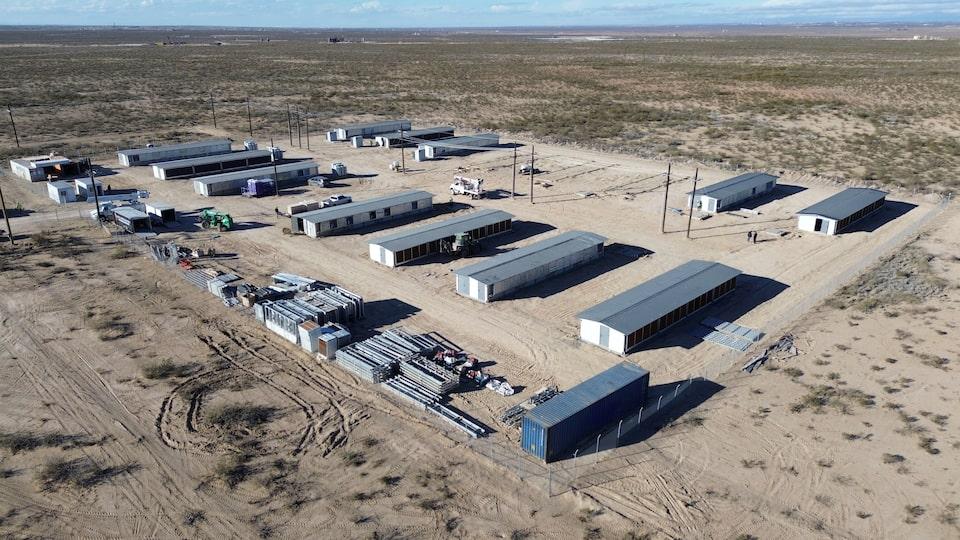
Sino-US trade war is reshaping bitcoin supply chains Three Chinese firms control more than 90% of mining rig market Reliance on China for hardware is risk for US, experts say Chinese firms also up against US security concerns SHANGHAI/SINGAPORE, June 18 (Reuters) - The world's three best-selling makers of bitcoin mining machines - all of Chinese origin - are setting up manufacturing footholds in the United States as President Donald Trump's tariff war reshapes the cryptocurrency supply chain. Bitmain, Canaan and MicroBT build over 90% of global mining rigs - essentially computers dedicated to number-crunching that produces bitcoin. Establishing U.S. bases could shield them from tariffs but risks stoking security concerns the U.S. has with China in areas as varied as chip making and energy security. Sign up here. "The U.S.-China trade war is triggering structural, not superficial, changes in bitcoin's supply chains," said Guang Yang, chief technology officer at crypto tech provider Conflux Network. Moreover, for U.S. firms, "this goes beyond tariffs. It's a strategic pivot toward 'politically acceptable' hardware sources," Yang said. Bitmain, the biggest of the three by sales, started U.S. production of mining rigs in December in a "strategic move" following Trump's presidential electoral win a month earlier. Canaan started trial production in the U.S. with the aim of avoiding tariffs after Trump on April 2 announced his so-called Liberation Day levies, senior executive Leo Wang told Reuters. The initiative is exploratory as the volatile tariff situation precludes heavy investment, he said. Third-ranked MicroBT in a statement said it is "actively implementing a localisation strategy in the U.S." to "avoid the impact of tariffs". The trio dominate a sector analysts estimated to be worth $12 billion by 2028. It is the upstream of a business chain that extends through the energy-intensive process of mining bitcoin, the supporting IT infrastructure and the trading platforms. U.S. rival Auradine - backed by top bitcoin miner by market value, MARA Holdings (MARA.O) , opens new tab - has been lobbying to restrict Chinese supplies to stimulate competition in hardware. "While over 30% of global bitcoin mining occurs in North America, more than 90% of mining hardware originates from China representing a major imbalance of geographic demand and supply," said Auradine's chief strategy officer, Sanjay Gupta. Consultancy Frost & Sullivan estimated the top three held 95.4% of the hardware market in terms of computing power sold as of December 2023. When it comes to Chinese mining rigs, "hundreds of thousands of them connected to the U.S. electrical grid" is a security risk, Gupta said. Canaan's Wang said mining rigs do not threaten security because "they are useless if not applied to bitcoin mining". Still, manufacturers could suffer "collateral damage" from U.S. restrictions on high-tech sales to Chinese firms, he said. Underscoring the risk, Bitmain's AI affiliate, Sophgo, has been blacklisted by the U.S. government on security grounds. Bitmain did not reply to a request for comment. FIRST-MOVER China once dominated the entire bitcoin value chain - from rig-making through mining to trading - until its government banned cryptocurrency activity on the Chinese mainland in 2021 citing risk to financial stability. Miners, traders and exchanges moved abroad. Shielded by their role as technology manufacturers, however, Bitmain, Canaan and MicroBT continued to dominate in hardware. They fended off Western rivals partly due to first-mover advantage in developing high-performance chips tailor-made for mining. Canaan has since moved its headquarters to Singapore from China - though it still has Chinese operations - and set up a pilot production line in the U.S., a market that contributed 40% of revenue last year. "The rationale is to try to reduce the cost for both us and our customers," said Wang, Canaan's vice president of corporate development and capital markets. The prospect of tariffs means "we have to explore all alternatives". The U.S. this year imposed a 10% baseline tariff on imports from many countries plus an extra 20% on imports from China. It has also said it could increase tariffs for Southeast Asian countries where Chinese rig makers have set up assembly plants. CHOKE POINT Trump has promised to be the "crypto president" who popularises cryptocurriencies' mainstream use in the United States. Son Eric Trump together with energy and technology firm Hut 8 (HUT.O) , opens new tab launched miner American Bitcoin with the goal of building a strategic bitcoin reserve. The president's crypto-friendly policies, however, can only highlight China's outsized role in bitcoin infrastructure, potentially putting rig makers in the crosshairs. China's hardware dominance "creates a choke point for U.S. miners," said John Deaton, a U.S. crypto-law attorney. "If China restricts exports or manipulates supply ... it could disrupt bitcoin's network stability and affect U.S. users and investors," Deaton said. The biggest miners by market value - MARA, Core Scientific (CORZ.O) , opens new tab, CleanSpark (CLSK.O) , opens new tab and Riot Platforms (RIOT.O) , opens new tab - are all U.S.-based, so over-reliance on hardware of Chinese origin "is potentially problematic", said Ryan M. Yonk, an economist at the American Institute for Economic Research. Chinese rig makers might be setting up shop in the U.S. but in the short term, U.S. miners will still buy rigs from China and be stung by higher import costs, said Kadan Stadlemann, chief technology officer at crypto platform Komodo. "But this isn't about hurting the industry. It's about forcing a long-overdue shift," he said. https://www.reuters.com/world/china/dominant-chinese-makers-bitcoin-mining-machines-set-up-us-production-beat-2025-06-18/
2025-06-18 04:32
A look at the day ahead in European and global markets from Rae Wee Markets head into Wednesday's Federal Reserve rates decision with much uncertainty around the global economy, trade and geopolitical ties. Sign up here. With the Israel-Iran air war entering a sixth day, the G7 wealthy nations struggling to find unity over the conflict in Ukraine, and more signs of fragility in the U.S. economy, the drumbeat of negative headlines offered little respite for investors. U.S. President Donald Trump's call for Iran's unconditional surrender and comments from him suggesting a more aggressive stance toward Iran have also stoked worries of greater U.S. involvement. It was again a risk-off tone in markets on Wednesday, with shares in Asia falling and the dollar buoyant. Stock futures similarly pointed to a mostly lower opening in Europe, though oil prices steadied a little after surging more than 4% in the previous session. It's an increasingly difficult line for Fed Chair Jerome Powell and his colleagues to tread given the challenging global backdrop, and much attention on the central bank's policy decision will be on its updated Summary of Economic Projections. For now, markets are still pricing in two Fed cuts by December, but that could very well change should Powell strike a more hawkish tone later in the day. Ahead of the Fed outcome, UK inflation data is also due on Wednesday, where consumer prices are expected to have slowed slightly in May after April's bigger-than-expected surge. The reading comes ahead of a policy decision by the Bank of England on Thursday, where expectations are for the central bank to keep rates on hold. Still, investors will be looking for hints on whether a slowing economy and weaker wage growth could speed up the pace of easing. One of Britain's leading business groups on Wednesday slashed its forecast for economic growth in 2025 and next year due to headwinds from Trump's tariffs and an increase in payroll taxes, a survey showed. Key developments that could influence markets on Wednesday: - Federal Reserve rate decision - UK CPI (May) Trying to keep up with the latest tariff news? Our new daily news digest offers a rundown of the top market-moving headlines impacting global trade. Sign up for Tariff Watch here. https://www.reuters.com/world/europe/global-markets-view-europe-2025-06-18/