2025-06-18 06:10
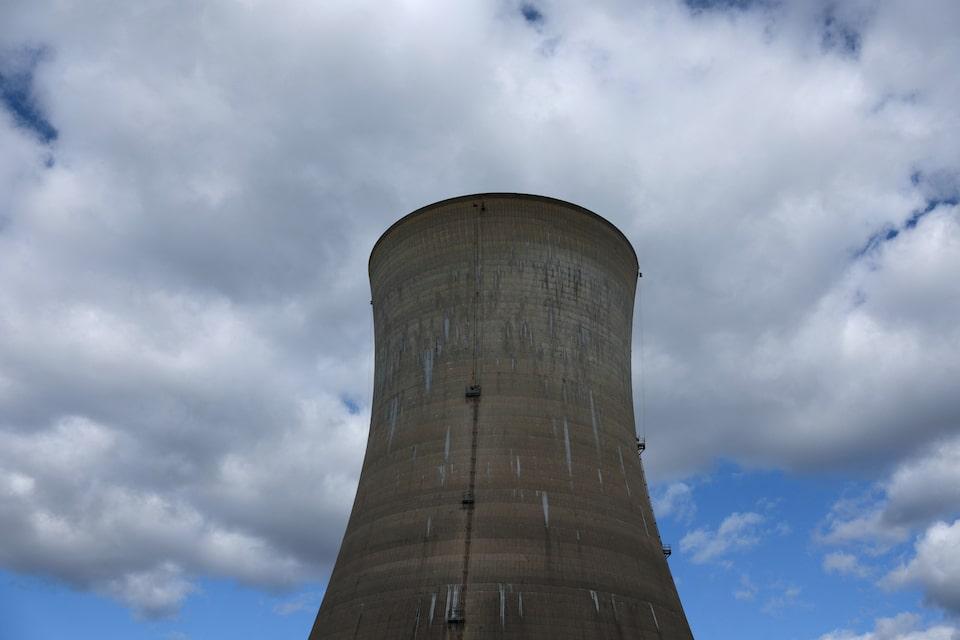
LITTLETON, Colorado, June 18 (Reuters) - Energy equity investors are adjusting positions across the U.S. power sector in an attempt to pick winners and cut losers ahead of the final passing of President Donald Trump's tax-and-spending bill. The "One Big, Beautiful Bill Act" contains aggressive cuts to several tax credits and incentives tied to clean power generation from renewable energy sources, and has sparked an aggressive selloff in stocks tied to the sector. Sign up here. The bill would also accelerate the phase-out of federal support for electric vehicles, clean energy component manufacturing and wind farm development. However, the latest U.S. Senate proposals - which tweaked the version previously passed by the U.S. House - preserve support for nuclear, geothermal and battery storage projects, and sparked gains in stocks tied to nuclear power. Additional adjustments to the bill proposals are likely before it can be passed into law by Congress, sparking more position jostling by energy investors in the weeks ahead. Below is a breakdown of the key energy sector exchange-traded funds (ETFs) and equities that have and will be most impacted by the proposed budget. SOLAR SOCKED Stocks tied to companies engaged in the production of solar panels and inverters and in the installation of solar systems stand to be among the biggest losers once the proposed bill is passed, regardless of its final make-up. The Trump administration and many Republican lawmakers are against federal subsidies for solar power for several reasons, including concerns about its intermittency and its heavy reliance on components made in China and elsewhere. The Senate's recent budget bill proposal phases out several key solar tax credits and subsidies from 2026, and would eliminate them entirely from 2028. As the solar sector has already been hit by rising interest rates - which lifted the cost of system installations - the speedy gutting of federal support has greatly dimmed the prospects for several companies in the space. Stocks in solar inverter manufacturer Enphase (ENPH.O) , opens new tab and panel makers First Solar (FSLR.O) , opens new tab, Sunrun (RUN.O) , opens new tab and SolarEdge (SEDG.O) , opens new tab have all dropped by 20% or more within the past month as ramifications of the bill proposals were digested. Shares in the Invesco Solar ETF plumbed five-year lows in April, and are down more than 50% over the past two years as investors jettisoned positions and the sector's outlook darkened under the anti-renewables Trump administration. NUCLEAR AND GEOTHERMAL Several energy investors looking to get out of the solar space have pivoted their funds into the nuclear power sector, which has gained support under the current Trump administration. The Global X Uranium ETF (URA.P) , opens new tab has gained more than 35% in value over the past month, and recently scaled its highest levels in more than a decade. Investors have been drawn to the fund by the likelihood of a tightening in the supply of uranium - the main fuel used by nuclear power plants - should more reactors get commissioned once the tax bill becomes law. Stocks in companies tied to geothermal energy production have also rallied recently as provisions tied to supporting the sector were preserved in the latest round of bill wrangling. Shares in Nevada-based Ormat Technologies (ORA.N) , opens new tab, which makes power converters for geothermal plants, are up more than 30% since early May. MAJORS, GRIDS AND LNG Energy investors have also recently increased positions in funds and companies within the traditional oil and gas sector, as the gutting of clean energy subsidies will likely increase demand for fossil fuels. Shares in the SPDR Energy Select Fund - which holds several major oil and gas producers - have rallied on the recent tensions in the Middle East and due to the brighter outlook for U.S. gas demand if renewable generation is stalled. Firms with large natural gas production businesses stand to gain further if the proposed bill slams the brakes on renewable power growth and increases the U.S. power sector's dependence on gas. Shares in the companies tied to the liquefied natural gas (LNG) sector have also fared well lately due to the Trump administration's support for expanding LNG exports. Shares in Cheniere Energy (LNG.N) , opens new tab - the top U.S. LNG exporter - are up around 10% year-to-date and over 50% over the past year. Investors have also increased their exposure to ETFs and companies dedicated to upgrading the U.S. power grid, which have upbeat outlooks regardless of how the final tax bill looks. The First Trust Smart Grid Infrastructure Fund (GRID.O) , opens new tab is up around 12% year-to-date, while the First Trust North American Energy Infrastructure Fund is up about 4%. Going forward, investor interest is likely to also grow in the battery storage sector, with the iShares Energy Storage and Materials ETF (IBAT.O) , opens new tab already on investors' radars. The fund has dropped around 5% in value so far this year due in part to the dimmed outlook for solar power growth, which utilities pair with battery systems to ensure round-the-clock supplies. But in the months ahead utilities will still likely increase their use of battery systems even if they slow their uptake of new solar systems, as the solar-plus-battery combination remains the fastest route to deliver new power to U.S. grids. The opinions expressed here are those of the author, a columnist for Reuters. Enjoying this column? Check out Reuters Open Interest (ROI), your essential new source for global financial commentary. ROI delivers thought-provoking, data-driven analysis of everything from swap rates to soybeans. Markets are moving faster than ever. ROI can help you keep up. Follow ROI on LinkedIn , opens new tab and X , opens new tab. https://www.reuters.com/markets/commodities/us-energy-investors-juggle-exposure-tax-bill-debate-rolls-maguire-2025-06-18/
2025-06-18 06:08
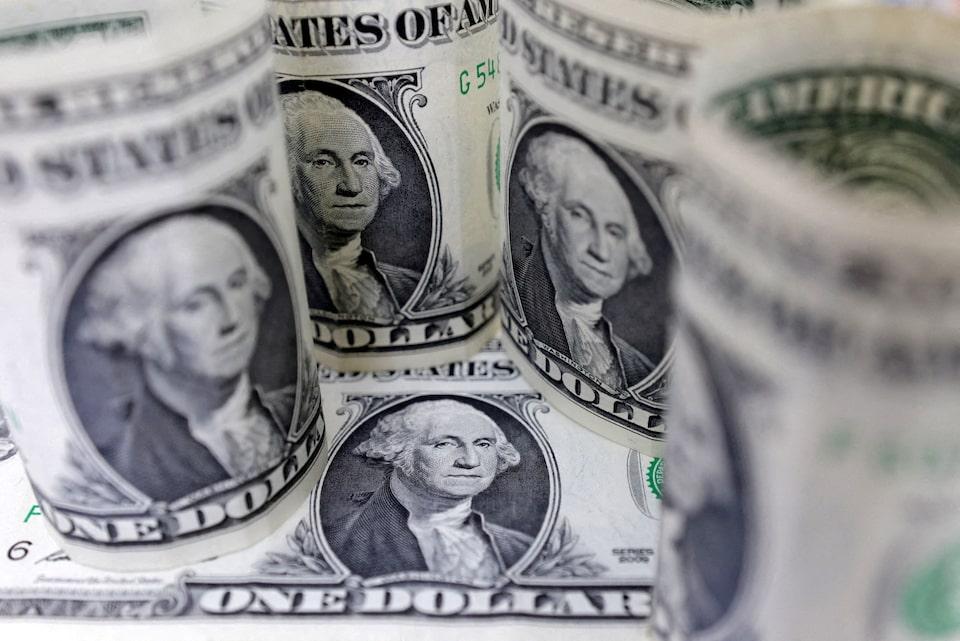
Dollar moved higher after Fed held rate steady Fed sees two cuts this year, but inflation to slow future ones Concern about Middle East conflict continues Iran leader rejects U.S. demand for surrender NEW YORK, June 18 (Reuters) - The U.S. dollar traded higher against most major currencies on Wednesday, but remained weaker against the yen after the Federal Reserve kept interest rates unchanged as economic uncertainty and tariffs continue to paint a murky outlook. Policymakers still forecast slashing rates by half a percentage point this year, but have slowed the pace of future cuts, concerned that President Donald Trump's tariffs would stoke inflation. Sign up here. "The speculation continues to be up in the air. Q2 numbers are going to be key to really coming to the realization that we are under actual recessionary pressures that will force the Fed to really rethink what they're doing," said Juan Perez, director of trading, at Monex USA. "They are receiving mixed signals, so they're sending back mixed signals." With the Fed's decision now behind it, markets remain focused on the fighting between Israel and Iran, which has spurred investors to scoop up safe havens. Israel has bombarded arch-enemy Iran over the past six days to halt its nuclear activity and has asserted the need for a change of government in the Islamic Republic. The U.S. military is also bolstering its presence in the region, Reuters reported, stirring speculation about U.S. intervention that investors fear could widen the conflict in an area with critical energy resources, supply chains and infrastructure. Iranian Supreme Leader Ayatollah Ali Khamenei has rejected Trump's demand for unconditional surrender on Wednesday, and the U.S. president said his patience had run out, but gave no clues on his next step. The dollar has resumed its role as a safe haven, having gained around 1% against both the Japanese yen and Swiss franc since last Thursday. On Wednesday, the U.S. currency took a breather, edging fractionally lower against the yen and the franc and more noticeably so against the euro and the pound. Against a basket of six other major currencies, the dollar is still down around 8% so far this year as confidence in the U.S. economy and the reliability of Trump's administration as a trading and diplomatic partner have faded. U.S. markets are closed on Thursday for the Juneteenth federal holiday. Against the yen , the dollar pared losses and was last seen down 0.06% to 145.18 and was 0.36% higher against the franc at 0.8190 francs. NO CHANGE FROM THE FED Traders were expecting the U.S. central bank to leave borrowing costs unchanged and were looking to parse what Chair Jerome Powell says about the outlook for growth and inflation. Uncertainty was already running high and recent data have begun to show the impact of Trump's erratic approach to trade and tariffs. The escalation of conflict in the Middle East, and the surge in crude oil prices to about $75 a barrel, have further complicated the picture for policymakers. "Although not outright mentioned, inflationary concerns of tariffs and an oil shock coming from the Middle East are also reasons that they are not cutting interest rates," said Phil Blancato, chief market strategist at Osaic. Still, Blancato believes the Fed is "missing the mark by not getting the process of cutting rates." The dollar kept to weaker ranges earlier in the day after data showed the number of Americans filing new applications for unemployment benefits fell, but stayed elevated. Meanwhile, the Swedish central bank cut rates as anticipated, leaving the crown weaker against the euro , which rose 1% to 11.0770 crowns. On Thursday, the Swiss National Bank, the Bank of England and the Norges Bank will deliver their respective rate decisions. The pound fell 0.12% to $1.3411, after having received an early boost from data showing inflation cooled no more than expected to an annual rate of 3.4% in May, ahead of the BoE decision. The euro slipped 0.03% to $1.1476. In the background, an area of frustration for investors was a Group of Seven meeting in Canada that yielded little on the tariff front ahead of Trump's early-July deadline for additional import levies. https://www.reuters.com/world/africa/dollar-steady-investors-monitor-israel-iran-conflict-ahead-fed-2025-06-18/
2025-06-18 05:55
Malaysian bonds record largest foreign inflows since 2014 in May Money managers see increasing interest in Asian fixed income Investors attracted by prospect of rate cuts, currency appreciation SINGAPORE/BENGALURU, June 18 (Reuters) - Bond investors fleeing the United States are finding a haven in stable and lucrative Asian debt markets, with Malaysia leading the pack as the destination for foreign money. Foreign ownership of government bonds from Indonesia to India is soaring, becoming a tailwind for markets that have traditionally been dominated by domestic players. Sign up here. "We're in a very good environment for Asian investments," said David Chao, global market strategist for Asia Pacific at Invesco. "The ingredients are in place for Asia, for emerging markets to outperform." The biggest appeal is the combination of monetary easing and currency appreciation they are offering for the first time in four years, precipitated by U.S. President Donald Trump's policies and a weakening dollar. Malaysian bonds recorded their biggest monthly foreign inflows since 2014 last month, around $3.15 billion. India and Indonesia also got significant inflows. Across Asia, low inflation and policy rates at their peak contrast with the United States, Europe or Japan, where fiscal profligacy has undermined the value of long-term debt. Subdued growth and expected rate cuts further enhance the appeal of locking in peak rates, with the potential for capital appreciation on bonds as yields decline. A weaker dollar also gives investors scope to profit from currency appreciation. "Emerging market assets fundamentally will do well when U.S. rates are dropping, and U.S. dollar is weakening," said Shah Jahan Abu Thahir, head of global markets for Southeast Asia at Bank of America. "The last few years, it was the reverse...so now, anecdotally, there's definitely some interest potentially coming back." BOND ALLURE Data from regional regulatory authorities and bond market associations showed foreign investors bought $34 billion worth of Asian debt securities so far this year - the largest amount in the first five months of a year since at least 2016. That's just the beginning of flows into these under-owned markets, analysts said, and likely to continue so long as economies and monetary settings in this part of the world remain insulated and more stable than developed markets. "We're seeing this fixed income interest across the board in the bigger and small EM countries - Thailand, Philippines, Indonesia and India," Sue Lee, head of markets for Asia South at Citi Group, said. India has been one of the more active markets for clients, due to the string of rate cuts, she said. Investors are positioning themselves ahead of expected rate cuts, locking in yields with the anticipation of bond prices rising as rates decline. Malaysia, where the market remains divided on rate-cut prospects, has an edge over Thailand, where investors reckon the cycle is almost over. Thailand had outflows of about $53.6 million in May, as investors shunned a market with one of the lowest returns in the region and hit hardest by Trump's trade tariffs. The central bank has hinted it has limited room to cut rates further, while the government has said it wants a weaker currency. One-year bond yields are below the 1.75% policy rate. Indonesian government bonds (IndoGBs) offer attractive yields, with a two-percentage point premium over U.S. Treasuries on 10-year IndoGBs . However, concerns over government spending and political uncertainty have tempered investor enthusiasm. Investors say Malaysian bonds offer more value, with its central bank yet to start cutting rates despite weaker growth, and a relatively robust ringgit . Abu Tahir said bonds in Indonesia are regarded as expensive while Thailand has rate cuts priced in and is already at fair value. "It's about what's the expectation and what's the market pricing," he said, predicting Malaysia will cut rates in July, though the market is more divided. "So that's like where the value is because if everybody is expecting a cut, it's already been priced in," he said. The lack of liquidity in Asian bond markets has long been a constraint for investors, with rapid foreign capital flows capable of triggering price volatility. Last month, a rush of capital into Hong Kong caused a spike in its usually stable currency. But analysts say there is less cause for concern, given a benign inflation environment and low foreign ownership. "For the past five years, it's been tumbleweed in terms of portfolio inflows into the region, so actually it wouldn't be bad to see more inflows back into the region," said Claudio Piron, a strategist at Bank of America. "In a way, if it's done in a calibrated, natural way, it may not be bad. A good problem to have." https://www.reuters.com/world/asia-pacific/malaysia-scores-record-flows-bond-investors-favour-asia-2025-06-18/

2025-06-18 05:46
The Fed held interest rates at 4.25%-4.50% range Gold needs to reclaim 3,400 for bulls to take control, analyst says Platinum at highest level since Feb 2021 June 18 (Reuters) - Gold prices fell on Wednesday after the U.S. Federal Reserve held interest rates steady and signaled a slower pace of cuts in the future, and chair Jerome Powell said the central bank is expecting a "meaningful amount of inflation" in coming months. Spot gold was down 0.4% at $3,374.75 an ounce by 3:19 p.m. EDT (1919 GMT). U.S. gold futures settled 0.03% higher at $3,408.1. Sign up here. Spot prices had briefly risen after the Fed held interest rates at its current 4.25%-4.50% range and pointed at a half percentage point reduction by year end. However, "Chair Powell sapped the initial optimism by repeating multiple times that given low and stable unemployment, the Fed is in a good spot to wait and see. He hinted broadly that September could be a live meeting but it wasn't enough for asset markets or gold which were hoping for a more dovish tilt," said Tai Wong, an independent metals trader. "Gold needs to reclaim 3,400 for bulls to take firm control." While policymakers still anticipate cutting rates by half a percentage point this year, they slightly slowed the expected pace from there to a quarter percentage point cut each in 2026 and 2027. Powell also said the forecasts could change based on incoming data, especially on inflation. Meanwhile, Trump said on Wednesday that he may meet with Iran to talk about the Isran-Israel conflict. Geopolitical tensions and low interest rates lift gold's appeal. "The prevailing trend of seeking alternative stores of value beyond the U.S. dollar remains strong, driven by a growing desire for assets that are independent of external control," said Ryan McIntyre, Managing Partner at Sprott Inc. Spot silver fell 1.5% to $36.70 per ounce, while platinum gained 4.3% to $1,319.03, after rising 5% earlier to its highest since February 2021. Palladium fell 0.5% to $1,046.75. Goldman Sachs said in a note that platinum and silver's recent rallies are primarily speculative and lack fundamental support. https://www.reuters.com/world/india/gold-flat-investors-stay-sidelines-ahead-fed-decision-2025-06-18/

2025-06-18 05:40
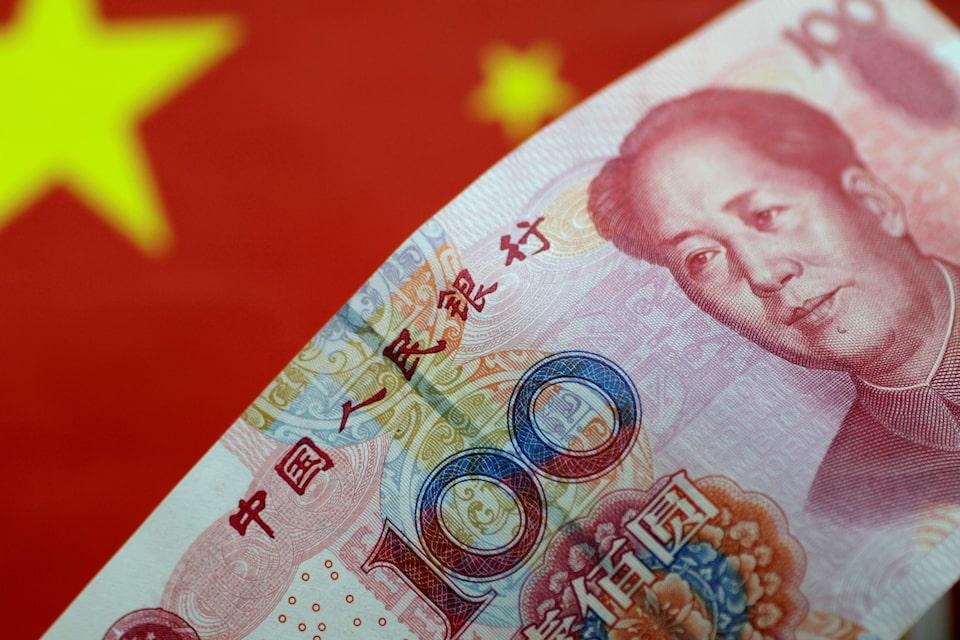
China to expand digital yuan globally, create Shanghai operations center PBOC governor calls for a multi-polar global currency system Financial regulators pledge stable yuan, to further open up financial market SHANGHAI/BEIJING, June 18 (Reuters) - The head of China's central bank pledged to expand the international use of the digital yuan and called for the development of a multi-polar global currency system, where several currencies dominate the world economy. China will establish an international operation centre for e-CNY in Shanghai, People's Bank of China Governor Pan Gongsheng said on Wednesday at the Lujiazui Forum, a high-profile gathering of local and foreign financial industry executives and regulators. Sign up here. The remarks come in the wake of renewed appetite for a global yuan, as international trade tensions sparked by U.S. tariff policies prompt investors to seek alternatives to dollar-based investments. At the same time, China is accelerating efforts to develop financial systems independent of Western institutions, moves that have gained fresh impetus as shifting trade patterns and geopolitical realignments reshape the global economic landscape. "Developing a multi-polar international monetary system will help strengthen policy constraints on sovereign currency countries, enhance the resilience of the system, and better safeguard global financial stability," Pan said. Such a system would pave the way for some currencies to hold sway in their respective regions, lessening reliance on the dollar. Pan expects several key global currencies to coexist in mutual competition with checks and balances in place. Washington's aggressive and chaotic rollout of tariffs has shaken faith in the U.S. currency and other U.S. assets, prompting a broader shift by investors away from the U.S. dollar and towards Asian currencies and the euro. The eroding U.S. dollar appeal also comes amid rising global interest in cryptocurrencies, including stablecoins - a type of virtual currency that is backed by an asset and holds a stable price. GLOBAL YUAN AMBITIONS China has long harboured ambitions for the yuan to be a global currency, similar to the euro or dollar and reflective of the importance of the world's second-biggest economy. But that goal has been hampered by unwillingness to open the capital account, and while there's no sign of that changing, progress on other fronts, where it has gained in places such as Russia and other trading partners, stands to accelerate. On Wednesday, six foreign banks including Standard Bank and First Abu Dhabi Bank agreed to use China's Cross-Border Interbank Payment System (CIPS), the yuan-based international settlement system in future, state broadcaster CCTV reported, a step that further expands the use of yuan in global trade. Pan said that digital technologies have exposed weakness in traditional cross-border payment systems, which are less efficient, and vulnerable to geopolitical risks. "Traditional cross-border payment infrastructures can be easily politicised and weaponised, and used as a tool for unilateral sanctions, damaging global economic and financial order," Pan said. Speaking at the forum, China's foreign exchange regulator vowed to keep the yuan exchange rate basically stable and fend off external shocks and risks. China's ability to counter forex market volatility has improved, said Zhu Hexin, head of the State Administration of Foreign Exchange. Beijing will also further open up its financial market to foreign players, Li Yunze, director of the National Financial Regulatory Administration, told the forum. "Foreign institutions are important bridges and links for attracting investment, talent, and are important participants and active contributors to the construction of China's modern financial system," said Li. China will create a transparent, stable and predictable environment for foreign players and will explore options to open up a wider range of financial areas, said Li. Li added that China's rapidly growing consumer market would also bring more opportunities for foreign institutions. https://www.reuters.com/markets/currencies/chinas-central-bank-says-promote-digital-yuan-multi-polar-currency-system-2025-06-18/
2025-06-18 05:39
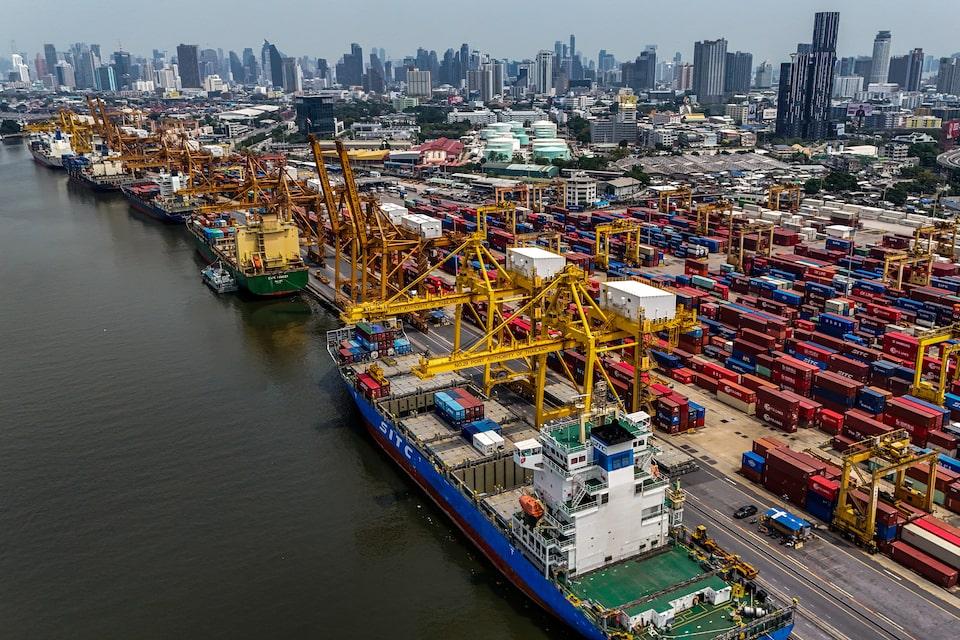
Trade proposal to be submitted to US on Friday, Thailand says Industrial sentiment at 8-month low as tariff threat looms May exports up 18.4% y/y as US shipments surge BANGKOK, June 18 (Reuters) - Thailand held trade talks with the United States on Wednesday and plans to submit a proposal on Friday, a top commerce ministry official said, as tariffs pushed industrial sentiment to an eight-month low. Washington has threatened to impose a 36% tariff rate on imports from Thailand if a reduction cannot be negotiated before a 90-day pause that caps tariffs at a baseline of 10% for most nations expires on July 9. Sign up here. "We held discussion with USTR for two hours this morning," Permanent-Secretary Vuttikrai Leewiraphan told reporters, adding the United States highlighted five issues including tariffs and quotas, non-tariff barriers, digital trade, origin of goods and economics and security. "On Friday, Thailand will submit an initial proposal to address these issues that includes reducing tariffs, purchasing more U.S. goods and increasing investments," he said. The talks come as industrial sentiment in Southeast Asia's second-largest economy fell for a third consecutive month due to concerns about tariffs, according to the Federation of Thai Industries. Thailand's proposal should be of interest to the United States and the negotiations, if not concluded, are expected to continue beyond the 90-day window, Vuttikrai said. The United States was Thailand's largest export market last year, accounting for 18.3% of total shipments worth $55 billion. Washington has put its trade deficit with Thailand at $45.6 billion. The trade talks come as Thai exports rose by their fastest annual rate in more than three years in May, beating expectations after shipments to the United States soared, driven by accelerated shipments before the tariff pause expires, the commerce ministry said in a statement. In the first five months of 2025, exports, a key driver of the economy, rose 14.9% from a year earlier, it said. In May, exports to the United States jumped 35% from a year earlier, while shipments to China rose 28%, government data showed. "We hope export growth will exceed 10% this year," Commerce Minister Pichai Naripthaphan told a press conference, saying the weaker Thai baht would further support shipments. May exports (THCEX=ECI) , opens new tab jumped 18.4% from a year earlier to a record $31 billion, compared with 6.7% increase expected in a Reuters poll. "We hope export growth will exceed 10% this year," Pichai said, adding that the sector will be "a hero" for the economy and he expected upcoming trade talks with the United States to go well. On Monday, Pichai said both countries could agree good terms on tariffs, possibly as low as 10%. Exports of computers and parts surged 104% in May from a year earlier, while shipments of agricultural goods rose 6.8%. Rice export volumes dropped 0.2% on the year. Last month, imports (THCIM=ECI) , opens new tab increased 18% from a year earlier, beating a forecast rise of 13.1%, which led to a trade surplus (THCTR=ECI) , opens new tab of $1.12 billion for the month. https://www.reuters.com/markets/asia/thai-may-exports-jump-184-yy-well-above-forecast-2025-06-18/