2025-06-17 22:18
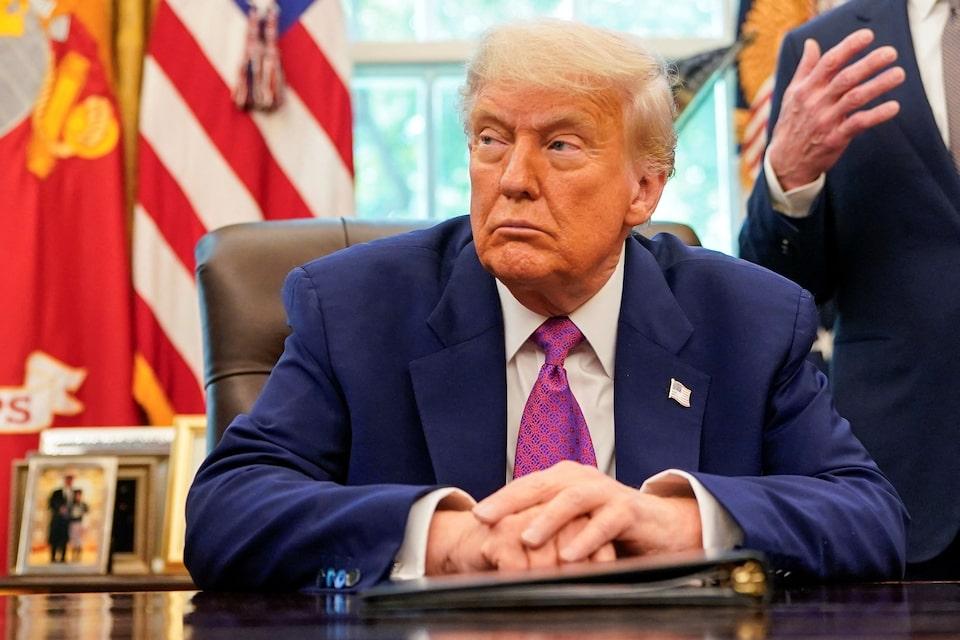
Trump leaves meeting early; Bessent, Hassett and Greer stay EU leader says Washington, Brussels still aim to reach deal Trump says pharmaceutical tariffs coming 'very soon' WASHINGTON, June 17 (Reuters) - U.S. President Donald Trump on Tuesday said Japan was being "tough" in trade talks and the European Union had not yet offered what he considered a fair deal, as a team led by Treasury Secretary Scott Bessent stayed at the G7 meeting in Canada to keep working on trade issues after Trump's abrupt early departure. Trump told reporters aboard Air Force One that the EU would need to offer Washington "a good deal" or face higher tariffs. Sign up here. Trump spoke after leaving the Group of Seven summit early to focus on the Middle East, disappointing trading partners who had hoped to make progress on thorny trade talks. He told reporters Bessent was staying on in Kananaskis, Alberta, to keep talking with counterparts on trade. White House officials said U.S. Trade Representative Jamieson Greer and National Economic Council Director Kevin Hassett also remained in Canada and would be meeting their counterparts. They said Trump met informally with all G7 members, but had not seen the leaders of India, Australia or Mexico, who were also slated to meet him in Canada this week. Mexican President Claudia Sheinbaum tweeted later in the day that she had a "very good" phone call with Trump on Tuesday and they agreed to work together to reach a deal on "diverse topics." The White House later confirmed the call. "We're talking, but I don't feel that they're offering a fair deal yet," Trump told reporters, referring to the European Union. "They're either going to make a good deal or they'll just pay whatever we say they have to pay." European Commission President Ursula von der Leyen told reporters on the sidelines of the G7 summit that the objective was still to reach a deal before higher reciprocal tariffs go into effect on July 9 after a 90-day pause. "It's complex but we are advancing, that is good, and I push hard to pick up more speed, so we are mixed in the negotiations, and we will see what the end brings," she said. Greta Peisch, a trade lawyer at Wiley Rein in Washington, said Trump's departure was disappointing for trading partners since he was leading trade policy and it was sometimes unclear what tradeoffs he was willing to make. "If they don't have a clear view of what that is ... that can obviously slow things down and make it more difficult to conclude the negotiations," she said. PHARMA LEVIES COMING Trump also said there was a chance of a trade deal between Washington and Japan. "They're tough, the Japanese are tough, but ultimately you have to understand we're just going to send a letter saying 'this is what you're going to pay, otherwise you don't have to do business with us'. But there's a chance," he said. Trump also said pharmaceutical tariffs were coming very soon, repeating a threat he has made repeatedly to impose import taxes on medical goods in a bid to force drug makers to rebase production to the U.S. "We're going to be doing pharmaceuticals very soon. That's going to bring all the companies back into America," he said, referring to an ongoing Commerce Department investigation under Section 232 of the Trade Expansion Act of 1962. "It's going to bring most of them back into, at least partially back in." Matthew Goodman, a former senior U.S. official and fellow at the Council on Foreign Relations, said it was always a "stretch goal" for Trump to reach any deals at the G7 summit beyond finalizing the terms of a limited deal with Britain. The U.S.-UK deal, announced by Trump and British Prime Minister Keir Starmer on the sidelines of the G7 Summit in Canada, reaffirmed quotas and tariff rates on British automobiles and eliminated tariffs on the U.K. aerospace sector, but the issue of steel and aluminum remained unresolved. Over a dozen other major U.S. trading partners are still in talks to work out agreements with Trump before the three-month hiatus on his sweeping "Liberation Day" tariffs expires in about three weeks. "I think July 9 is the real deadline. That's when the 90-day pause ends, and I suspect that Trump and his team are trying to use that as maximum pressure to get countries to give more ground," Goodman said. Trump has signaled he could extend the deadline for countries that engaged in negotiations, but repeated his threat to send letters to other countries that simply spell out the U.S. tariffs they would be facing. https://www.reuters.com/world/china/trump-says-eu-not-offering-fair-trade-deal-japan-being-tough-too-2025-06-17/
2025-06-17 22:07
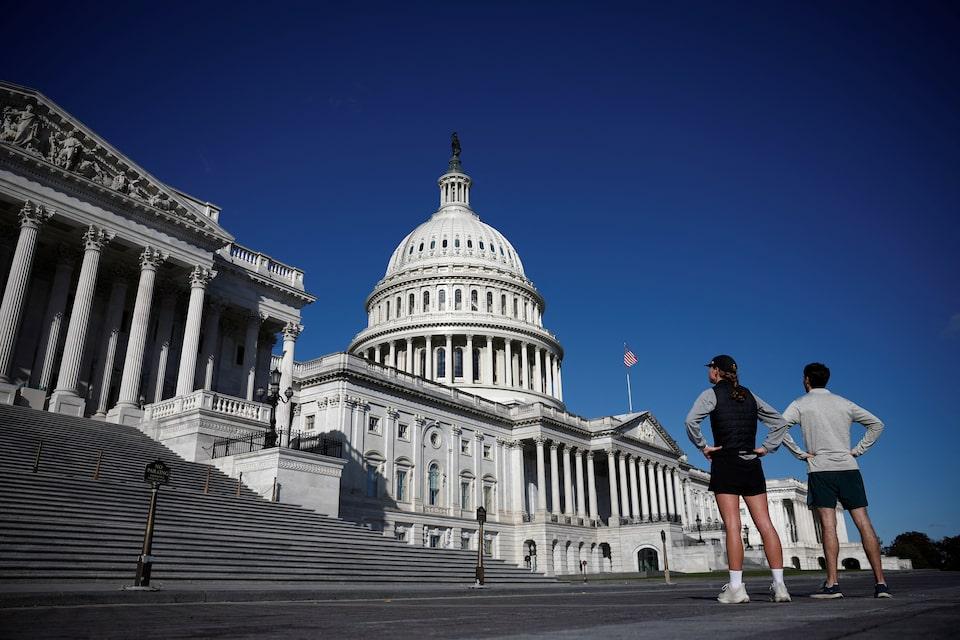
WASHINGTON, June 17 (Reuters) - A U.S. Senate panel proposed making the tax credit for capturing carbon emissions for recovering oil equal to the $85/metric ton tax credit for permanently burying those emissions underground, a boon for oil and gas producers. The finance committee proposed the change to the so-called 45Q tax credit, which was part of the 2022 Inflation Reduction Act, in its draft bill that forms a central part of the sprawling Republican budget package. The House of Representatives version of the bill that passed by one vote last month in that chamber left the credit for enhanced oil recovery projects at $60/metric ton. Sign up here. The change reflects a proposal made by Wyoming Senator John Barrasso, a Republican, to put EOR projects at parity with carbon sequestration that got support from senators from other oil-producing states like North Dakota and Louisiana. Under the IRA, former President Joe Biden's signature climate law, tax credits for permanent removal had a higher value than for EOR because of concerns that carbon capture and direct air capture technologies would encourage oil companies to keep drilling for oil, undermining the fight to limit emissions linked to global warming. Occidental, which has two direct air capture projects in Texas, is planning to permanently remove carbon and store it underground and use CO2 to recover oil, which it says makes the barrels more environmentally friendly. Occidental declined to comment on the Senate change. The Carbon Utilization Research Council, which Occidental chairs, welcomed the decision to put EOR at parity with sequestration. "As production matures with current recovery methods, there is critical need for large-scale injection in formations which will need billions of tons of CO2 captured from industrial sources to sustain oil and gas production with EOR," said Shannon Angielski, executive director of CURC, adding that the barrels of oil produced would be lower carbon intensity. Carbon removal advocacy group Carbon180 said it could risk pulling investment more toward fossil fuel production. "Federal policy should prioritize durable carbon removal projects that can create prosperity for communities across the country — not expanded oil production," said Carbon180 director Erin Burns. Other oil companies involved in carbon capture and DAC include Exxon and Chevron. Sasha Mackler, global policy & advocacy for ExxonMobil Low Carbon Solutions, told Reuters that the company did not lobby for bringing the EOR tax credit to parity with carbon sequestration. https://www.reuters.com/sustainability/climate-energy/senate-bill-would-raise-value-tax-credit-use-captured-co2-produce-more-oil-2025-06-17/
2025-06-17 21:11
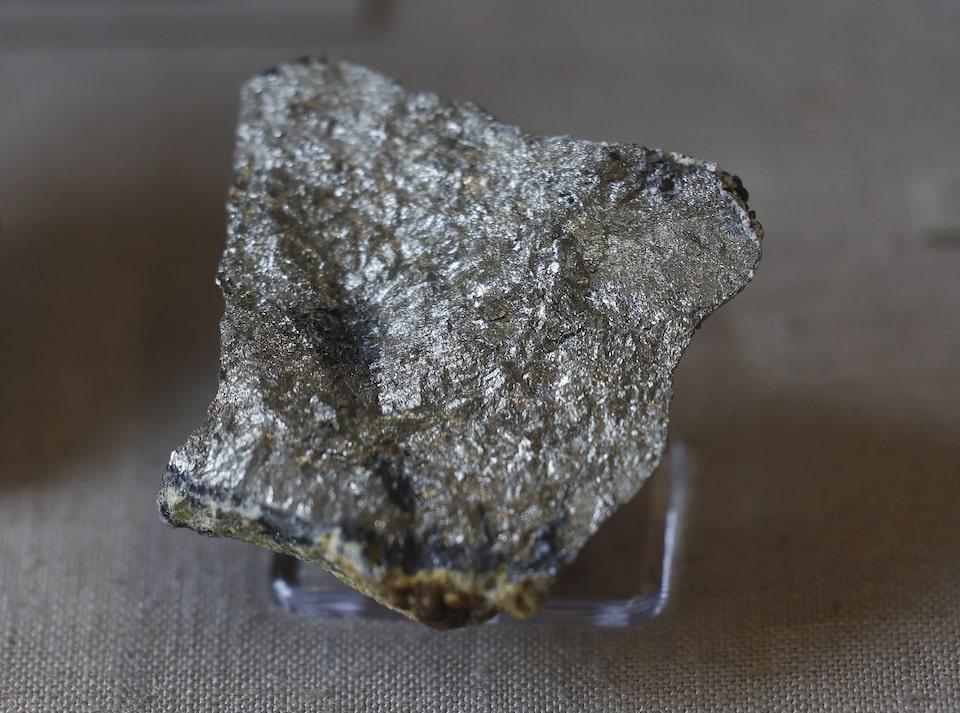
China has severely restricted antimony exports, including ban on shipments to US As prices soar, US battery association views shortage as a national emergency Battery makers are passing higher costs on to customers MELBOURNE, June 18 (Reuters) - When China restricts exports of a key mineral, sometimes the pain is sudden and even crippling - enough to spur a major outcry almost immediately. Other times, it takes longer to be felt. For the world's makers of lead-acid batteries, China's restrictions on critical mineral antimony that were put in place late last year have become a major headache - one that their customers also now have as sky-high procurement costs are passed on. Sign up here. "We consider it a national emergency," said Steve Christensen, executive director at the U.S.-based Responsible Battery Coalition, whose members include battery maker Clarios, Honda (7267.T) , opens new tab and FedEx (FDX.N) , opens new tab. He noted the key role batteries play in industry and civilian life, how antimony is used in military equipment, as well as the surge in spot prices. Antimony now costs more than $60,000 per metric ton, having more than quadrupled over the past year. "There are no quick solutions... We were completely caught off guard collectively, as an industry," he said. China likely produced 60% of all antimony supply in 2024, according to the United States Geological Survey. Much of antimony mined in other countries is also sent to China for processing. Beijing added the mineral to its export control list last September, requiring companies to gain licences for each overseas antimony deal. It then followed up in December with an outright ban on shipments to the U.S. - an action seen as retaliatory after Washington further restricted exports of advanced semiconductors to Chinese companies. China's global exports of antimony are now just a third of levels seen this time last year. Christensen said U.S. companies are hugely reliant on China for their supply of antimony and buyers are increasingly having to procure from an emerging "grey market", where sellers that have stocked up on the material are charging extremely high prices. China's restrictions on antimony precede its controls on rare earths and rare earth magnets that were imposed in response to U.S. President Donald Trump's tariffs and do not appear to have been discussed in last week's efforts to stabilise a truce in trade tensions between the two countries. Last week's talks between China and the U.S. also did not include any agreement on specialised rare earths such as samarium needed for military applications. VULNERABLE Lead-acid batteries, commonly found in gasoline-engine vehicles, are mostly used to start the engine and to power low-voltage instruments. They are also used as sources of backup power in various industries and to store excess energy generated by solar and wind systems. In addition to batteries, antimony is also essential to military equipment such as night vision goggles, navigation systems and ammunition. Overall antimony demand is some 230,000-240,000 tonnes a year with lead-acid batteries accounting for about a third of that, according to consultancy Project Blue. While many battery makers may have access to antimony-lead alloy from recycled materials, Project Blue estimates they collectively need around 10,000 tonnes a year of higher purity antimony to top up the alloy to reach the right battery properties. Securing that additional portion could be challenging. Project Blue director Nils Backeberg said there is enough antimony outside China to satisfy non-Chinese demand but buyers need to compete with Chinese purchasers such as the country's huge solar industry, and China's smelters are able to offer better terms. "With antimony prices at nearly 5x normal market conditions, the cost becomes a factor and with supply limited on the Western market, a shortage is being felt," he said. For now, it seems that battery makers' antimony woes have not yet led to cuts in output, with companies like Germany's Hoppecke saying they have managed to pass on higher costs. Japan's GS Yuasa (6674.T) , opens new tab said it has passed on costs to some customers and is negotiating with more of its customers to do so. One source at an Indian battery maker said antimony represented only a small cost of a battery and price increases were being passed onto customers, but any more price rises could spell trouble. "If the price does increase further, everyone (in the industry) will be vulnerable," said the source who was not authorised to speak to the media and declined to be identified. The companies and the source at the Indian battery maker declined to disclose the size of their product price hikes. In a sign that profits are being affected, India's Exide Industries (EXID.NS) , opens new tab blamed high prices for antimony when it logged smaller-than-expected income for its fourth quarter. Christensen of the Responsible Battery Coalition said policymakers should treat the issue as one of national security, arguing that Western countries had become "overly reliant on a single geopolitical adversary for minerals foundational to both national defense and civilian life." "For the U.S., the path forward must include onshoring processing capacity, scaling domestic recycling, and building strategic mineral alliances with trusted partners. Otherwise, this crisis will repeat itself again and again," he added. Some baby steps towards building an antimony supply chain outside of China are being taken. Clarios, owned by global investment firm Brookfield, said last month it was scouting locations for an up to $1 billion critical minerals processing and recovery plant in the U.S. that will extract antimony among other minerals. Nyrstar, owned by global commodity trader Trafigura, also said last month it could produce antimony at its South Australian metals processing plant but would need government support to do so. https://www.reuters.com/business/autos-transportation/battery-makers-sweat-antimony-shortage-hits-after-chinas-export-curbs-2025-06-17/
2025-06-17 21:10
June 17 (Reuters) - Keyera Corp (KEY.TO) , opens new tab said on Tuesday it has agreed to buy substantially all of U.S.-based Plains' (PAA.O) , opens new tab Canadian natural gas liquids business for C$5.15 billion ($3.77 billion) in cash. The buyout expands Keyera's position with a fully connected natural gas liquids corridor stretching from western to eastern Canada and bringing key NGL infrastructure under Canadian ownership, the Canada-based pipeline operator said. Sign up here. In February, Keyera and Canada-based energy infrastructure firm AltaGas (ALA.TO) , opens new tab entered into long-term agreements for processing liquefied petroleum gases. This comes at a time when U.S. President Donald Trump has imposed tariffs on Canadian goods, with a 10% levy on energy imports, which include oil, natural gas, electricity, coal, uranium, and critical minerals. As a result, Canadian companies are aiming to reduce dependence on the U.S. by expansion opportunities within the country or in other markets such as those in Asia. Keyera said the acquired assets include NGL extraction, fractionation, storage, as well as rail and truck terminals located across Canadian provinces Alberta, Saskatchewan, Manitoba and Ontario. Plains said in its statement the transaction is expected to close in the first quarter of 2026 and that it will divest its Canadian NGL business. The company added that as of June 30 this year it will reclassify the NGL assets associated with the transaction as discontinued operations. Plains said it would retain substantially all those assets in the U.S. and also all crude oil assets in Canada. It currently estimates it will incur about $360 million of entity-level taxes payable in Canada associated with the sale and the restructuring of the remaining Canadian crude assets. Shares of Plains All American Pipeline were up 1.2% after the bell. ($1 = 1.3662 Canadian dollars) https://www.reuters.com/business/energy/keyera-buy-plains-canadian-natural-gas-liquids-business-377-billion-2025-06-17/

2025-06-17 21:03
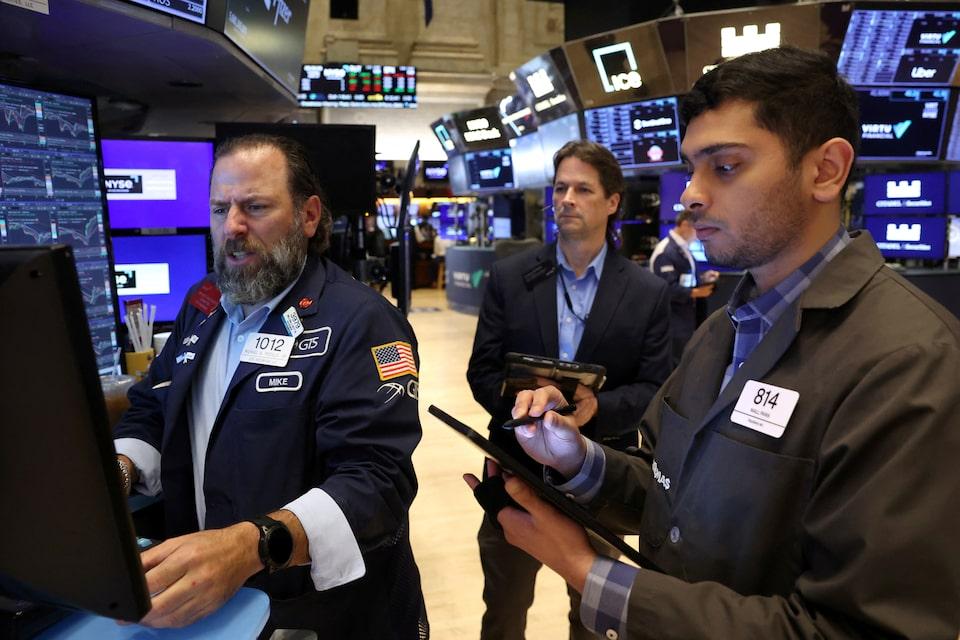
ORLANDO, Florida, June 17 (Reuters) - TRADING DAY Making sense of the forces driving global markets Sign up here. By Jamie McGeever, Markets Columnist A fifth day of war between Israel and Iran pushed oil prices higher and world stocks lower on Tuesday, as investors also digested some weaker-than-expected U.S. economic data and looked ahead to the Federal Reserve's policy decision on Wednesday. In my column today I look at data that show overseas central bank holdings of Treasuries and other U.S. assets parked at the Fed are now the lowest since 2017. By this measure, foreign central banks are de-dollarizing. More on that below, but first, a roundup of the main market moves. If you have more time to read, here are a few articles I recommend to help you make sense of what happened in markets today. Today's Key Market Moves Escalation fuels trepidation Whatever hope there was on Monday for a de-escalation in the Iran-Israel conflict was obliterated on Tuesday as the two countries kept up attacks on each other, and the U.S. sent more fighter jets to the region and bolstered its forces there. Investors were further unnerved after President Donald Trump said on social media that the U.S. has no immediate plans to "take out (kill!)" Iran's Supreme Leader Ayatollah Ali Khamenei but Washington's patience is "wearing thin". Fading prospects of peace triggered a wave of 'risk off' activity across world markets. Stocks fell across the board, oil rose, government bond yields fell sharply and the dollar rediscovered its safe haven appeal to notch its biggest rise in over a month. Curiously, gold barely got any lift, perhaps struggling for renewed momentum so close to its all-time high of $3,500 an ounce. Instead, silver was the best-performing precious metal, climbing to a 13-year high above $37 an ounce. Adding to the caution were U.S. retail sales and industrial production figures, both of which were weaker than economists expected, at least at the headline level. If U.S. consumers are drawing in their horns and factories are feeling the squeeze even before tariffs hit, growth in the second half of the year will slow. The outlook for tariffs, growth and inflation - not to mention war in the Middle East - will guide the Fed's policy decision and revised economic projections on Wednesday. It's an increasingly difficult line for Chair Jerome Powell and his colleagues to tread. The Bank of Japan, meanwhile, adopted a more cautious stance on Tuesday. It left its short-term policy rate on hold at 0.5%, as expected, and voted to slow the pace of balance sheet rundown in fiscal year 2026. With the BOJ's policy rate likely to remain on hold for the rest of the year, according to market pricing, and the pace of balance sheet reduction not changing until March, the impact on Japanese assets in the near term could be limited. Not that investors will be getting complacent - the Israel-Iran war and Fed decision on Wednesday will see to that. Foreign central banks are shrinking U.S. asset exposure As debate rages around 'de-dollarization' and the world's appetite for dollar-denominated assets, one major cohort of overseas investors appears to be quietly backing away from U.S. securities: central banks. That's the conclusion to be drawn from the New York Fed's latest 'custody' data, which shows a steady decline in the value of Treasuries and other U.S. securities held on behalf of foreign central banks. There are many ways to gauge foreign demand for U.S. assets, and they often send conflicting signals. Moreover, the broadest and most accurate measures, like U.S. Treasury International Capital (TIC) or the International Monetary Fund's 'Cofer' FX reserves data, come with a long lag of two months or more. The New York Fed custody holdings figures are weekly, which is as 'real time' as it gets in the world of central bank flows. These figures last week showed that the value of U.S. Treasuries held at the New York Fed on behalf of foreign central banks fell to $2.88 trillion. That's the lowest since January, and the $17.1 billion decline was also the biggest fall since January. Including mortgage-backed bonds, agency debt and other securities, the total value of foreign central banks' U.S. custody holdings at the New York Fed last week dropped to $3.22 trillion, the lowest since 2017. That figure has fallen by around $90 billion since March, just before President Trump's 'Liberation Day' tariff debacle on April 2, with more than half of the decline coming from Treasuries. If these moves are representative of broader trends, then FX reserve managers are reducing their exposure to U.S. bonds, as a share of their overall holdings and in nominal terms too. MURKY PICTURE It's not easy to get a firm handle on the exact composition of central banks' dollar-denominated assets, which are worth trillions and are spread across multiple sectors, jurisdictions and continents. This is why different cuts of central bank data can tell different stories. For example, the latest TIC data show that foreign holdings of U.S. Treasuries rose to a record $9.05 trillion in March, with official sector holdings increasing as well. The official sector held nearly $4 trillion of bills and bonds, around 45% of all foreign exposure. But these figures are nearly three months out of date, and foreign demand for Treasuries in recent months – in the secondary market and, more recently, at auction – has been driven by private sector institutions, not the official sector. There are large pools of 'hidden' FX reserves too potentially worth trillions of dollars, held in offshore accounts, overseen by quasi-official entities like sovereign wealth funds or, in the case of China, state banks. Meghan Swiber, director of U.S. rates strategy at Bank of America, says the fall in custody holdings is a warning sign, especially as it has been accompanied by a modest decline in foreigners' usage of the Fed's overnight reverse repo (RRP) facility. When Treasuries mature, foreign central banks will often park the cash at the RRP. But they haven't been doing that lately, Swiber says, meaning both their Treasury holdings and overnight cash balances at the Fed are falling. "We worry about foreign demand going forward," Swiber wrote on Monday, also pointing out that it's "unusual" for reserve managers to reduce their U.S. Treasury holdings when the dollar is weakening. "This flow likely reflects official sector diversification away from dollar holdings." The $28.5 trillion Treasury market is deep and liquid, and central banks remain significant participants in it. They are cautious and careful by nature, meaning any changes to their holdings will be gradual. But the weekly custody data suggest some central banks may already be getting that ball rolling. What could move markets tomorrow? Want to receive Trading Day in your inbox every weekday morning? Sign up for my newsletter here. Opinions expressed are those of the author. They do not reflect the views of Reuters News, which, under the Trust Principles , opens new tab, is committed to integrity, independence, and freedom from bias. https://www.reuters.com/business/aerospace-defense/global-markets-trading-day-graphic-pix-2025-06-17/
2025-06-17 21:00
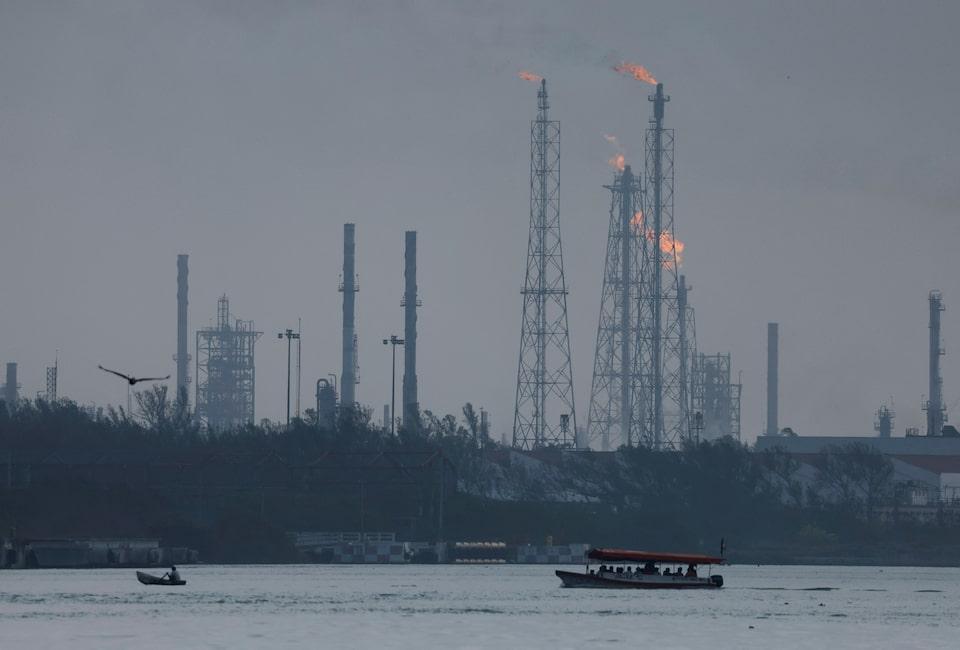
MEXICO CITY, June 17 (Reuters) - The Mexican association that groups major global oil services companies warned that it is going through an "unprecedented crisis" due to the lack of payments from the state-owned oil company Pemex, the world's most indebted energy company. In a letter sent to President Claudia Sheinbaum and released on Monday afternoon, the association warned that many of these companies may have to stop operations as early as July. The letter did not specify the amounts owned to the group's members, which include Baker Hughes (BKR.O) , opens new tab, Halliburton (HAL.N) , opens new tab, Weatherford (WFRD.O) , opens new tab, SLB Oil & Gas (SLB.N) , opens new tab and Grupo Mexico (GMEXICOB.MX) , opens new tab . Sign up here. Pemex, one of Mexico's largest companies, has an outstanding debt with an extensive list of suppliers and contractors of around $20 billion, in addition to another financial debt of $101 billion, despite the injection of billions of dollars from the government in the last few years to face the amortizations. In the letter, the Mexican Association of Oil Services Companies (AMESPAC) urged Pemex to process and release the invoicing for services rendered in 2024, to guarantee regular invoicing and timely payment for those of 2025, and to design a payment plan to settle all historical debts owed to companies of the sector. The service sector has significantly decreased its activities because of the lack of payments from Pemex, AMESPAC said in the letter, adding that "its cash flow is seriously compromised and in most cases it cannot guarantee operational continuity as of July of this year." "We expect a precise response that addresses our concerns and reverses the deterioration of national hydrocarbon production, which compromises Mexico's energy security and sovereignty," the letter concluded. This is not the first time that AMESPAC has called on the government and Pemex to urge payments and their impact on the state-owned company's hydrocarbon production. Last week, Reuters exclusively reported that Hokchi Energy, one of Mexico's largest private oil producers, has sought new ways to market its hydrocarbons in the face of delays in payments by Pemex. Despite numerous promises of payments and partial settlements, liabilities continue to accumulate while oil production continues to fall. Pemex reported an 11% year-on-year plummet in production during the first quarter, in addition to posting losses. https://www.reuters.com/business/energy/mexicos-pemex-payment-crisis-suppliers-threaten-july-shutdown-2025-06-17/