2025-06-17 11:31
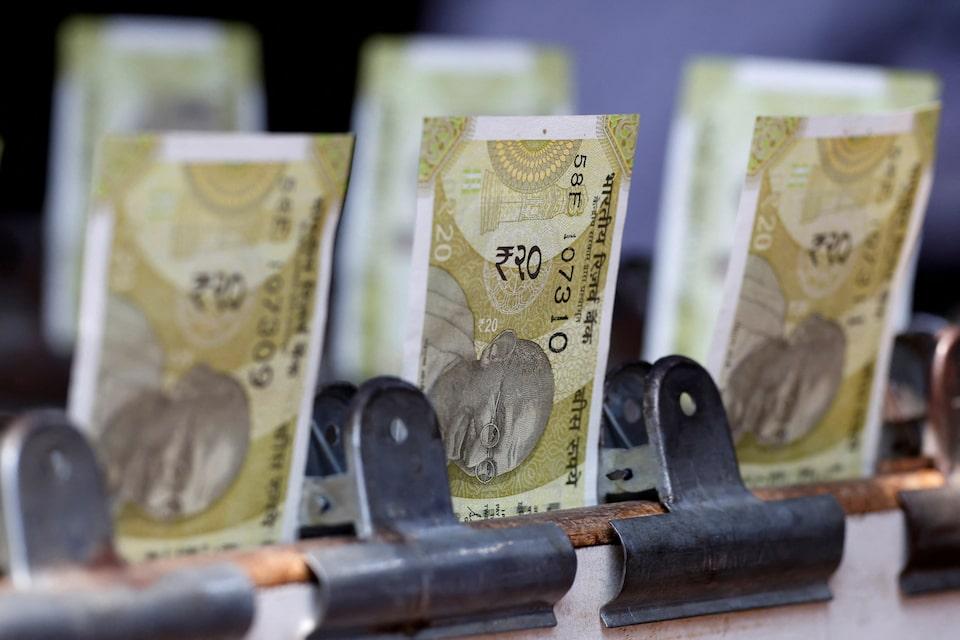
MUMBAI, June 17 (Reuters) - The Indian rupee hit its weakest level in more than two months on Tuesday, hurt by worries over geopolitical tensions in the Middle East and U.S. President Donald Trump's remark that pharmaceutical tariffs were coming very soon. The rupee declined to 86.28 against the U.S. dollar near the end of the trading session, its weakest level since April 9, before closing at 86.24, down 0.2% on the day. Sign up here. Speaking to reporters on Air Force One on the way back from attending a meeting of G7 leaders, Trump said that pharmaceutical tariffs were coming very soon. The rupee extended its losses after the statement, traders said. Indian drugmakers earn a significant share of their revenue from the United States. India's pharma exports to the U.S. stood at $8.73 billion in fiscal year 2024, accounting for about one-third of the industry's overall exports, as per data from government-backed trade body Pharmaceuticals Export Promotion Council of India. Asian currencies were down between 0.1% and 0.5% while the dollar index was steady at 98.1. Brent crude oil futures rose more than 1% to $74.30 per barrel with analysts saying that uncertainty over the Iran-Israel conflict would keep prices elevated. Dollar demand from state-run banks also weighed on the rupee, a trader at a private bank said. "A close over 86.10 indicates that a bullish bias may start to build on USD/INR in the near-term," the trader said. India's benchmark equity index, the Nifty 50 (.NSEI) , opens new tab, fell about 0.3%, in line with losses in most regional peers. While the focus will remain on geopolitical developments in the Middle East, traders are also awaiting the Federal Reserve's policy decision on Wednesday. With the central bank widely expected to keep policy rates unchanged, its projections for policy rates and commentary from Chair Jerome Powell will be in the spotlight. https://www.reuters.com/world/india/rupee-hits-over-two-month-low-hurt-by-geopolitical-worries-trump-tariff-remark-2025-06-17/
2025-06-17 11:30
BAMAKO, June 16 (Reuters) - Mali began construction of a new Russia-backed gold refinery on Monday, which the West African country's military leader said would take it closer to asserting control over its natural resources. The 200-ton capacity facility, in which Mali has a controlling stake, will be built in partnership with Russia's Yadran Group and a Swiss investment company. Sign up here. Mali's interim president Colonel Assimi Goita said last year that all mining companies will be required to process their gold domestically under a revised mining code, without providing a deadline. That reflects a broader regional shift extending across the Sahel, where Guinea, Niger and Burkina Faso have also revised mining codes to mandate local processing, adding value to their exports and boosting the economic benefits of their resources. "Since 1980, Mali’s gold has been exported for refining and sale to countries such as the United Arab Emirates, South Africa, and Switzerland," Goita said at the groundbreaking ceremony for the new plant in Senou, outside the capital Bamako. "This deprives our country of substantial revenues that could be used for the development of its economy." The government has not provided a deadline for the plant's completion. Once fully operational, it will process all gold produced in Mali into dore bars before it is exported, with a capacity nearly four times Mali's annual gold production. Echoing comments from Goita, Yadran President Irek Salikhov said at the ceremony the refinery will become "a regional center for processing gold extracted not only in Mali, but also in neighboring countries — like Burkina Faso". West Africa is a major gold producer, but lacks a functional and globally certified gold refinery despite attempts to create one including by Ghana, the continent's top gold producer. The refinery is part of Goita's sweeping mining reforms introduced since the military leader seized power in 2021 and severed relations with Western partners. Mali's revised mining code, like those of neighbours Guinea, Niger and Burkina Faso, has rattled investors. A Malian court this month put Canadian miner Barrick's (ABX.TO) , opens new tab Loulo-Gounkoto gold complex under temporary state control, escalating an ongoing dispute over Mali's tax claims. Goita said the refinery would enable Mali to better track its gold production and exports. Like many African countries, it loses billions of dollars to gold smuggling due to the absence of certified gold refineries and traceability programmes. https://www.reuters.com/world/africa/mali-starts-construction-russia-backed-gold-refinery-2025-06-17/

2025-06-17 11:30
NAPERVILLE, Illinois, June 16 (Reuters) - The U.S. Crop Watch corn fields have notched their third consecutive week of improved health ratings, though some areas still need heat and sun for the crop to really take off. The producers want their corn to be in the best possible state for pollination, a key yield-determining phase. The wide planting window plus cool, limiting temperatures after planting scatter likely pollination dates for the 11 Crop Watch corn fields all throughout July. Sign up here. This means it is too early for a reliable pollination weather forecast and that good conditions now could easily change, come July. As of Sunday, one producer (western Illinois) expected his corn to begin pollination in about two weeks. Three producers (Indiana, Kansas, Nebraska) target the three-week time frame. Four producers (South Dakota, Western Iowa, Eastern Iowa, southeastern Illinois) see their fields pollinating in about a month. Pollination for the remaining three (North Dakota, Minnesota, Ohio) is likely five or more weeks out. Weather-wise, the rest of June is seen as mostly favorable. Warm weather this week will offer a much-needed boost to crops, and a good portion of the Corn Belt has multiple chances for scattered rain showers. Only a couple of producers said that rain is needed somewhat urgently. The others are in a good spot moisture-wise but will be counting on the predicted rains to maintain or improve crop conditions. The 11 Crop Watch producers assign weekly condition scores to their corn and soybean fields using a scale of 1 to 5. The ratings are similar to the U.S. Department of Agriculture’s system where 1 is very poor, 3 is average and 5 is excellent. Unweighted, average corn conditions rose to 3.82 from 3.8 a week ago, and that is a better score than at this point last year. Ratings dropped in North Dakota as crops are stalled out in cool, cloudy weather, but the Nebraska and Ohio fields improved this week. The 11-field soybean average comes in at 3.18, easily Crop Watch’s worst-ever rating for the week. Ohio joined the ranks this week with a 1, pulling down the average along with North Dakota and southeastern Illinois, both of which also sit in the 1-range. All three of those fields were extremely wet before and after planting, and cool, rainy weather has held back growth. The southeastern Illinois producer places 50% odds on his beans achieving average yields and 0% odds of near-record yields. However, this week’s 10-field average soybean rating without Ohio was unchanged on the week at 3.4. Health declines in Western Iowa and North Dakota were offset by improvements in South Dakota, Nebraska and southeastern Illinois. The soybeans in Indiana have begun blooming, which signals the early reproductive phase. However, this will be a long, drawn-out process for the Crop Watch soybeans, and the yield potential will hinge mostly on late-summer rains. Karen Braun is a market analyst for Reuters. Views expressed above are her own. Enjoying this column? Check out Reuters Open Interest (ROI) , opens new tab, your essential new source for global financial commentary. ROI delivers thought-provoking, data-driven analysis of everything from swap rates to soybeans. Markets are moving faster than ever. ROI , opens new tab can help you keep up. Follow ROI on LinkedIn , opens new tab and X. , opens new tab https://www.reuters.com/markets/commodities/crop-watch-divergent-pollination-outlook-corn-braun-2025-06-16/
2025-06-17 11:21
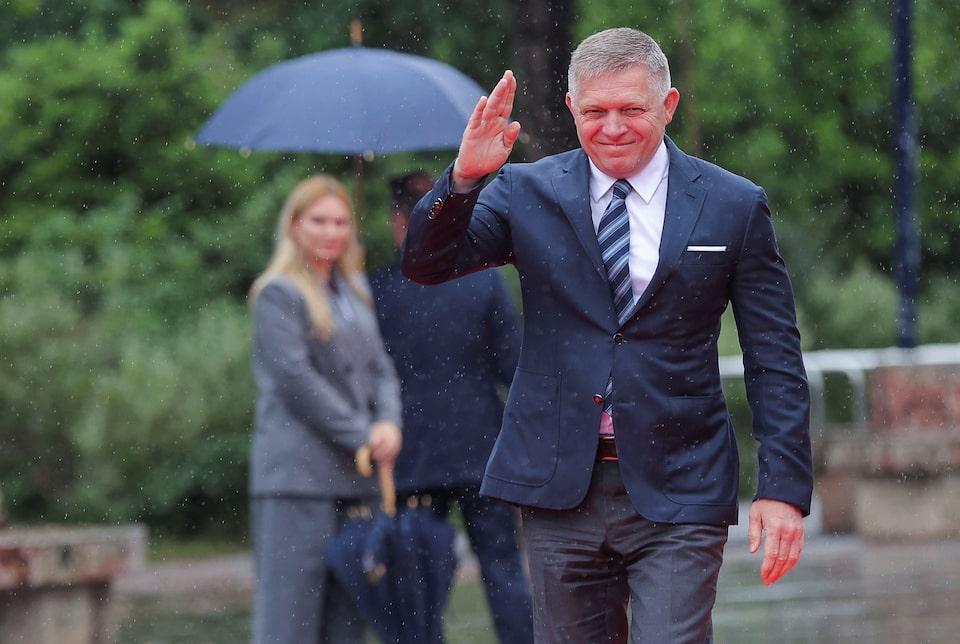
June 17 (Reuters) - Slovakia is close to a deal with Washington that would see U.S. company Westinghouse build a new nuclear reactor in the central European country, Prime Minister Robert Fico said on Tuesday. Slovakia, which currently has five nuclear reactors at two plants, plans to expand its nuclear power capacity in the coming decades to meet growing consumption. The government approved plans last year for a new unit owned by the state and operational by 2040. Sign up here. Fico told a news conference that an agreement between the Slovak and U.S. governments was being prepared and that his government was waiting for the final U.S. position. "As long as this goes through, we can move toward the signing of an intergovernmental agreement that would be aimed at having American company Westinghouse build a new nuclear power unit at the Jaslovske Bohunice nuclear power plant," he said. "It is a huge investment. We are talking about a new unit with output of 1,250 megawatts." He did not say how much the deal would be worth. Slovakia's economy ministry last year estimated costs could run up to 10 billion euros ($11.57 billion). Slovakia's electricity production surpassed its annual consumption in 2023 after Slovenske Elektrarne completed the 472 MW nuclear power Unit 3 at the Mochovce plant. Slovenske Elektrarne is majority owned by Czech energy holding company EPH and the state has a 34% stake. It is now completing another reactor at the same site and also operates two 505 MW units at the Bohunice plant. ($1 = 0.8645 euros) https://www.reuters.com/business/energy/slovakia-near-deal-with-us-westinghouse-build-nuclear-reactor-pm-fico-says-2025-06-17/
2025-06-17 11:20
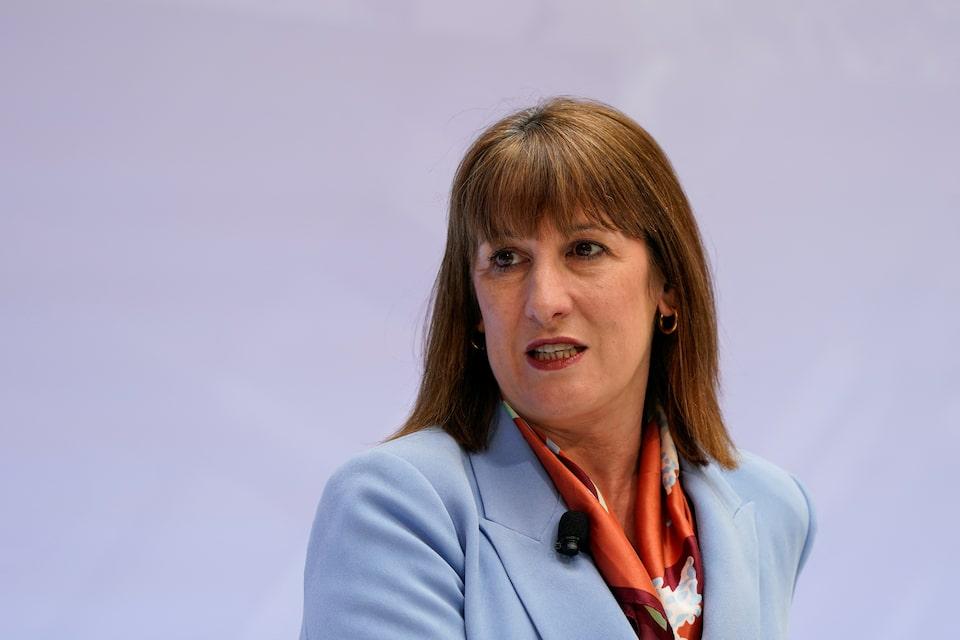
LONDON, June 17 (Reuters) - British finance minister Rachel Reeves said foreign investors should view Britain as an "oasis of stability" at a time of global political and economic turmoil. Speaking at a conference for bond investors hosted by the Financial Times on Tuesday, Reeves said her government was strengthening the public finances and had in recent weeks secured new trade agreements with the United States, European Union and India. Sign up here. "In the age of insecurity we live in today, I hope that people are increasingly looking at Britain and seeing an oasis of stability where we have a sustainable politics, a stable economy and also tough, robust fiscal rules," she said. Britain's global reputation with investors took a big knock in 2022 when bond markets tumbled in response to budget plans from short-lived Conservative Prime Minister Liz Truss, forcing an intervention by the Bank of England. The country's 2016 vote to leave the European Union and subsequent protracted trade negotiations also soured some investors' view of the economy. Reeves is aiming to balance day-to-day spending with tax revenue by 2029/30 but has only 10 billion pounds ($13.6 billion) of leeway to meet that goal - headroom that can easily be eroded by higher borrowing costs, slower growth or unexpected spending needs. Asked if she viewed the public finances as relatively immune to political developments in the United States or the Middle East, Reeves said: "I wouldn't go that far." Reeves ruled out any extra increases to defence spending before the next election due in 2029 beyond Prime Minister Keir Starmer's announcement in February that defence spending will rise to 2.5% of gross domestic product by 2027 from 2.3%. "Any further increase in defence spending would be in a future parliament," she said. ($1 = 0.7374 pounds) https://www.reuters.com/world/uk/uks-reeves-pitches-britain-oasis-stability-investors-2025-06-17/
2025-06-17 11:07
LONDON, June 5 (Reuters) - What matters in U.S. and global markets today I'm excited to announce that I'm now part of Reuters Open Interest (ROI) , opens new tab, an essential new source for data-driven, expert commentary on market and economic trends. You can find ROI on the Reuters website , opens new tab, and you can follow us on LinkedIn , opens new tab and X. , opens new tab Sign up here. Whatever the endgame is in the unfolding Israel-Iran war, global financial markets will take their cue from the oil markets, where prices moved up slightly today as hopes for a quick ceasefire were dashed. I'll discuss this morning's market news below. In my column today, I explain how President Trump’s mounting pressure on the Federal Reserve could backfire. Today's Market Minute * U.S. President Donald Trump urged Iranians to evacuate Tehran, citing Iran's rejection of a deal to curb nuclear weapons development, as Israel and Iran attacked each other for a fifth straight day on Tuesday. * The Group of Seven nations expressed support for Israel in a statement , opens new tab late on Monday, labeling Iran as a source of instability in the Middle East, with the G7 leaders urging broader de-escalation of hostilities in the region. * The Bank of Japan kept interest rates unchanged on Tuesday and announced that it would decelerate the pace of its balance sheet drawdown next year. * Critical energy infrastructure in Israel and Iran has not escaped unscathed from the first few days of the countries' escalated conflict. Worst-case scenarios have yet to be realized, but the war is already having a notable impact on energy production and exports in both countries, writes Roi energy columnist Ron Bousso. * China has built up crude oil stockpiles while refining substantially less than what it has available from imports and domestic production, which will likely enable the world's biggest oil importer to buy lower volumes in the coming months if prices surge over Middle East tensions, writes ROI Asia commodities columnist Clyde Russell. Oil contained as Mideast war wages Despite reports on Monday that Iran was pushing for a ceasefire, the two sides continued to bombard each other overnight. U.S. President Donald Trump left the G7 summit in Canada early to focus on the crisis, issuing an alarming evacuation warning to the residents of Tehran in the process. While U.S. crude prices edged back up above $72 per barrel again on Tuesday, they remain below Friday's close and almost 8% lower than they were this time last year. For now at least, neither Iran's major oil export installations nor the critical regional waterway of the Straits of Hormuz have been closed off. The firmer oil price was enough to knock back global stock markets again after Monday's relief rally, with U.S. index futures giving up about half of yesterday's jump. Gold slipped back to Thursday's levels, while the safe-haven Swiss franc firmed again ahead of the Swiss National Bank's expected easing on Thursday. Moves in U.S. Treasuries and the dollar were minimal ahead of the Federal Reserve's two-day meeting starting later today. Meanwhile, the Bank of Japan left its key rates unchanged as expected earlier on Tuesday. Japan's yen weakened a touch on the BOJ decision, which also included a plan to decelerate the pace of its balance sheet drawdown next year, meaning the central bank will be buying more bonds next year than they would have under the prior plan. "There is bigger downside risk for both Japan's economy and prices," BOJ Governor Kazuo Ueda said at a press briefing after the meeting. The Fed is also unlikely to shift policy this week given the fog surrounding both the trade war and now oil price uncertainties around the Middle East war. Policymakers will, however, update their quarterly economic and rate projections and offer some guidance as to how they see the situation panning out. On trade, Trump said on Tuesday that he still planned to send out letters to negotiating countries on the final U.S. demands before a 90-day reprieve on 'reciprocal' tariffs expires early next month. He also noted that pharma tariffs are coming. The European Union was not yet offering a 'fair deal,' he said, though there was a chance of a deal in the 'tough' talks with Japan. There was better news for Britain as Trump signed an agreement on Monday formally lowering some tariffs on imports from the UK while the countries work toward a formal trade deal. U.S. Senate Republicans , opens new tab, meantime, unveiled proposed changes to Trump's sweeping tax cut and spending bill that would make some business-related tax breaks permanent while limiting the deduction for state and local income taxes. Uncertainty about mounting debt piles and the long-term course of inflation have caused investors around the world , opens new tab to back away from super long-term government bonds where the price sensitivity to shifts in thinking is greatest. That move away from long-duration isn't helped by persistent political pressure on the Fed this year to immediately slash rates. Today's column looks at the risk that White House demands for lower borrowing costs could force the Fed to act tougher than it might have otherwise. Chart of the day The Chicago Fed's index of U.S. financial conditions shows the loosest reading in more than three years, back to levels seen just before Russia's invasion of Ukraine in 2022. Interest rates, stock prices and bond yields are key components of the index, but so, too, are energy prices. And the latest reading came just before the pop in oil prices late last week on the outbreak of the Israel-Iran war. This type of uncertainly is one more reason why the Fed is widely expected to keep interest rates on hold for a few more months. Today's events to watch * U.S. May retail sales, import/export prices (8:30 EDT), May industrial production (9:15 EDT), April business/retail inventories (10:00 EDT) * Federal Reserve's Federal Open Market Committee starts two-day meeting on interest rates; decision and new forecasts on Wednesday * Bank of Canada policy meeting minutes * U.S. Treasury sells 5-year inflation protected securities * U.S. corporate earnings: Jabil Opinions expressed are those of the author. They do not reflect the views of Reuters News, which, under the Trust Principles , opens new tab, is committed to integrity, independence, and freedom from bias. Want to receive the Morning Bid in your inbox every weekday morning? Sign up for the newsletter here. https://www.reuters.com/business/finance/americas-oil-contained-mideast-war-rages-2025-06-17/