2025-06-17 06:10
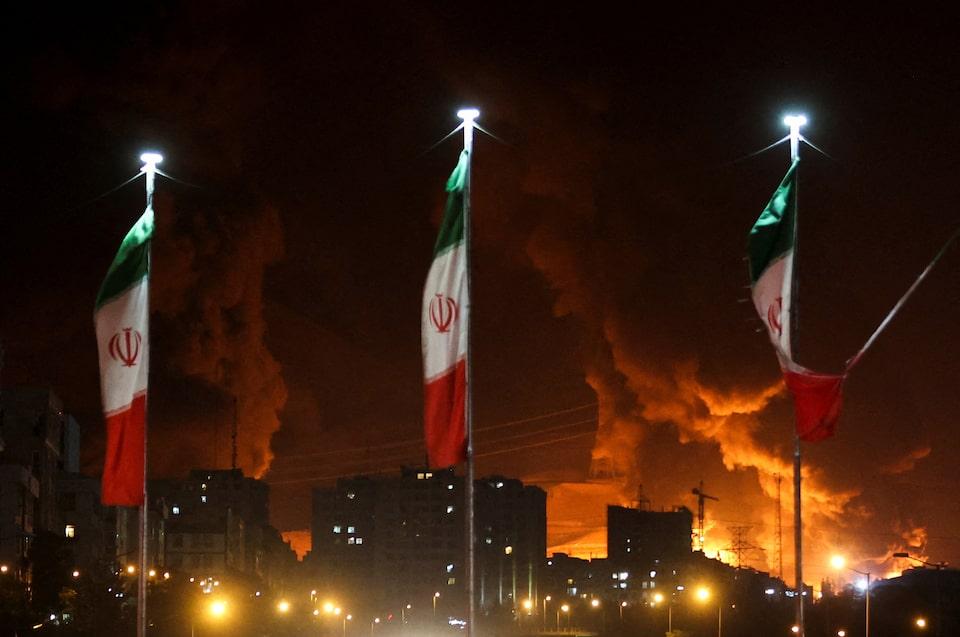
Iran's oil exports drop sharply, Kharg Island activity halts South Pars gas field damaged in Israeli strike Israel shuts down nearly two thirds of gas production, refinery damaged LONDON, June 17 (Reuters) - Critical energy infrastructure in Israel and Iran has not escaped unscathed from the first few days of the countries' escalated conflict. Worst-case scenarios have yet to be realized, but the war is already having a notable impact on energy production and exports in both countries. Benchmark Brent crude oil prices jumped 7% to over $74 a barrel on Friday after Israel launched an unprecedented wave of airstrikes on Iran, prompting Tehran to fire hundreds of ballistic missiles at Israel. Sign up here. Some energy facilities have been hit in both countries since then, leading to significant disruptions to production. However, prices receded slightly on Monday, as it appeared that both sides were not immediately targeting the most sensitive energy infrastructure and supply routes, and following a report that Iran was seeking ceasefire mediation. Investor focus remains squarely on the Strait of Hormuz, a narrow and vital waterway between Iran and Oman in the Mideast Gulf through which between 18 and 19 million barrels per day of crude oil and fuels flow, nearly a fifth of the world's consumption. Another 85 million tons of liquefied natural gas from Qatar and the United Arab Emirates were also sent through the strait last year, equivalent to around 20% of global demand. Disrupting maritime activity through the strait would thus severely impact oil and gas markets, pushing prices much higher, possibly into three-digit territory. This doomsday scenario has not yet played out, but disruption to both Iran’s and Israel’s energy industries has been meaningful nonetheless. Perhaps most notably, Iran's oil exports appear to have essentially ground to a halt in recent days. Total Iranian crude and condensate oil exports this week are currently forecast to reach 102,000 bpd, compared with a weekly average of 1.7 million so far this year, according to analytics firm Kpler. Critically, exports from Kharg Island from which Iran exports over 90% of its oil, appear to have completely halted since Friday. No tankers were anchored at Kharg Island as of Monday, according to LSEG satellite ship tracking data. However, Iran has roughly 27.5 million barrels stored in tankers outside the Gulf, according to Kpler data, which would enable it to sell oil for a few weeks. Iran has produced an average of 3.4 million bpd of crude oil and another 1.3 million bpd of condensate so far in 2025, according to the U.S. Energy Information Administration, with China appearing to be the main buyer. IRANIAN GAS AND CONDENSATE Israel has also directly targeted some Iranian energy infrastructure. Iran on Saturday partially suspended , opens new tab gas production at the South Pars gas field in the Mideast Gulf, in what was probably Israel's first strike on the country's oil and gas sector. South Pars, which is shared with Qatar, is the world's biggest gas field. It produces around 610 million cubic meters of natural gas per day, accounting for around 80% of Iran's total gas output , opens new tab. The portion controlled by Qatar, referred to as the North Field, provides the natural gas for the Gulf state’s enormous LNG industry. The field also produces around 700,000 barrels of per day of condensate, a light oil that is used as feedstock to produce fuels and petrochemicals. The Persian Gulf Star condensate refinery, which became Iran’s largest refinery when it came online in 2017, can process 420,000 bpd of condensates from South Pars. While the extent of the damage to the South Pars field is unknown, any serious issues could meaningfully impact condensate production. In addition, Israel has targeted the Shahr refinery outside Tehran as well as a number of fuel depots around the capital city. Again, the full impact of these strikes on production is unknown. ISRAEL DISRUPTION The conflict has also already had a significant effect on Israel’s energy industry. Israel on Friday shut down two of its three offshore natural gas fields, the Chevron-operated Leviathan field , opens new tab and Energean's Karish field, reducing Israel’s supply by nearly two thirds. While the country’s Tamar field continues to operate, Israel will have to turn to coal and fuel oil as a substitute for the gas in its power plants. These supply outages have had a meaningful impact on Israel's gas exports. Leviathan produced 11.33 billion cubic meters (bcm) in 2024, most of which is exported to neighbouring Egypt and Jordan. Israeli gas accounts for about 15-20% of Egypt’s consumption, data from the Joint Organisations Data Initiative (JODI) shows. The disruption of Israel’s gas supply led Egyptian fertilizer producers to halt operations on Friday. Finally, the ORL oil refinery in Haifa, one of Israel’s two refineries, said on Monday it had shut down all its facilities after a power station used to produce steam and electricity was significantly damaged in an Iranian missile strike. It remains to be seen how long the two sides will continue to exchange blows. If a ceasefire is quickly reached, the ultimate impact on energy markets could be relatively limited. But given how much this conflict has escalated in only a few days, the worst-case scenarios cannot be fully discounted. Enjoying this column? Check out Reuters Open Interest (ROI), opens new tab , opens new tab, your essential new source for global financial commentary. ROI delivers thought-provoking, data-driven analysis. Markets are moving faster than ever. ROI, opens new tab , opens new tab can help you keep up. Follow ROI on LinkedIn, opens new tab , opens new tab and X. , opens new tab https://www.reuters.com/markets/commodities/israel-iran-war-already-takes-toll-oil-gas-sector-2025-06-17/
2025-06-17 06:04
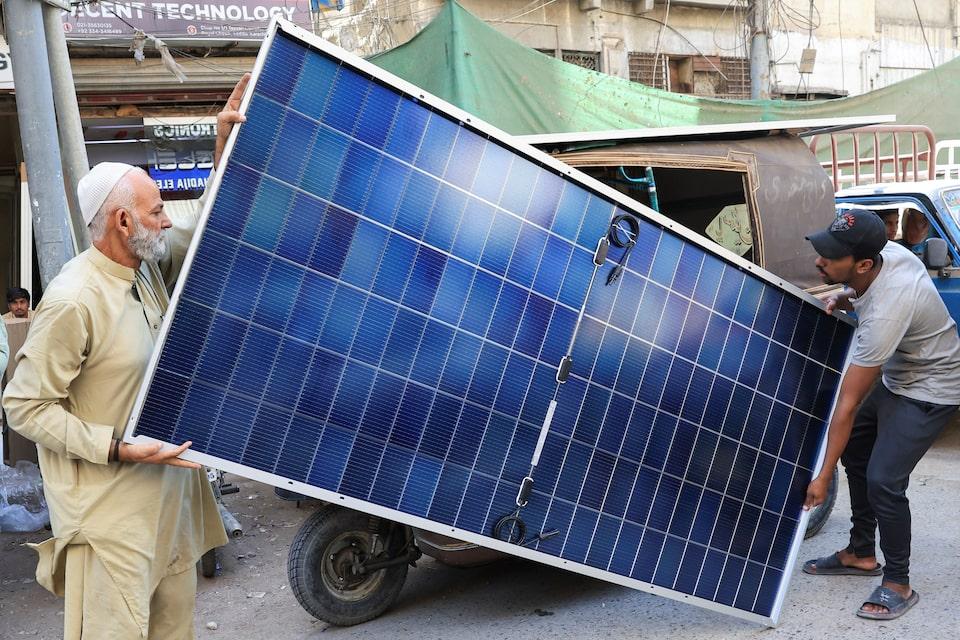
LITTLETON, Colorado, June 17 (Reuters) - Pakistan is rapidly emerging as a key leader in solar power deployment, and not just within emerging economies. The South Asian country has boosted solar electricity generation by over three times the global average so far this year, fuelled by a more than fivefold rise in solar capacity imports since 2022, according to data from Ember. Sign up here. That combination of rapidly rising capacity and generation has propelled solar power from Pakistan's fifth-largest electricity source in 2023 to its largest in 2025. What's more, so far in 2025 solar power has accounted for 25% of Pakistan's utility-supplied electricity, which makes it one of fewer than 20 nations globally that have sourced a quarter or more of monthly electricity supplies from solar farms. EXCLUSIVE CLUB Over the first four months of 2025, solar farms generated an average of 25.3% of Pakistan's utility electricity supplies, Ember data shows. That average compares with a solar share of 8% globally, around 11% in China, 8% in the United States and 7% in Europe. And while the average solar shares in the Northern Hemisphere will climb steadily through the summer months, very few countries will even come close to securing a quarter of all utility electricity supplies from solar farms any time soon. Indeed, only 17 countries have ever registered a 25% or more share of monthly utility electricity supplies from solar farms, according to Ember. Those nations are: Australia, Belgium, Bulgaria, Chile, Cyprus, Denmark, Estonia, Germany, Greece, Hungary, Latvia, Lithuania, Luxembourg, the Netherlands, Pakistan, Portugal and Spain. That list is heavily skewed towards Europe, where the power sector shock from Russia's full-scale invasion of Ukraine in 2022 sparked urgent and widespread power-sector reform and the rapid roll-out of renewable generation capacity. Indeed, Australia and Chile are the only nations aside from Pakistan that are outside Europe, and all included nations boast a far higher gross domestic product (GDP) per capita than Pakistan. IMPORT DRIVE The chief driver of Pakistan's solar surge has been an accelerating import binge of solar capacity modules from China. Between 2022 and 2024, Pakistan's imports of China-made solar components jumped fivefold from around 3,500 megawatts (MW) to a record 16,600 MW, according to Ember. Pakistan's share of China's total solar module exports also rose sharply, from 2% in 2022 to nearly 7% in 2024. And that import binge has continued into 2025. Over the first four months of the year, Pakistan imported just over 10,000 MW of solar components from China, compared with around 8,500 MW during the same period in 2024. That rise of nearly 18% in imported capacity has lifted Pakistan's share of China's solar exports to new highs too, with Pakistan accounting for around 12% of all of China's solar exports so far this year. SOLAR-CENTRIC The frantic deployment of imported solar modules across Pakistan in recent years has upended the country's electricity generation mix. So far in 2025, solar is by far the single largest source of electricity, followed by natural gas, nuclear reactors, coal plants and hydro dams. As solar farms were the fifth-largest supply source for electricity just two years ago, solar's pre-eminence so far this marks a sharp swing towards renewables within the country's utility network. In addition, the country is committed to much more growth in renewable energy generation capacity through the rest of this decade. Pakistan is targeting 60% of electricity supplies to come from renewable sources by 2030, according to the International Trade Administration. Through the first four months of 2025, renewable energy sources generated 28% of the country's electricity, so energy planners are aiming for a more than doubling in that share by the end of the decade. With solar modules representing the quickest and cheapest means to meet those goals, further rapid build-out of the country's solar farm system looks likely, which will cement Pakistan's status as a global solar superpower. The opinions expressed here are those of the author, a columnist for Reuters. Enjoying this column? Check out Reuters Open Interest (ROI), your essential new source for global financial commentary. ROI delivers thought-provoking, data-driven analysis of everything from swap rates to soybeans. Markets are moving faster than ever. ROI can help you keep up. Follow ROI on LinkedIn , opens new tab and X , opens new tab. https://www.reuters.com/markets/commodities/pakistans-solar-surge-lifts-it-into-rarefied-25-club-2025-06-17/
2025-06-17 06:04
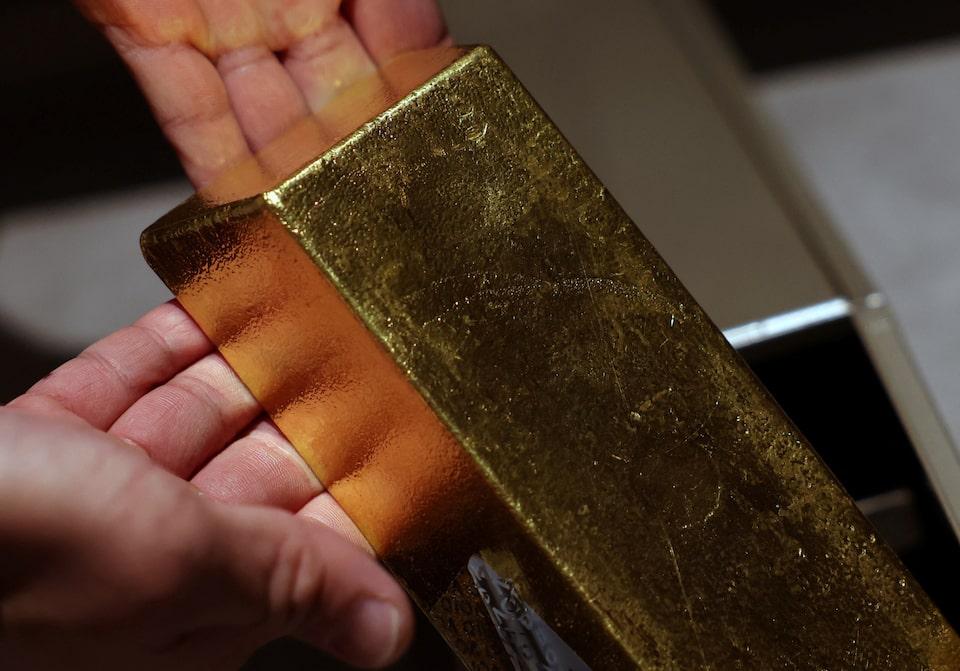
LONDON, June 17 (Reuters) - Central banks around the world expect their gold holdings as a proportion of their reserves to increase over the next five years while expecting their dollar reserves to be lower, a survey by the World Gold Council (WGC) showed. Gold demand from central banks has risen significantly over the past three years despite its price rally to consecutive records. It hit an all-time high of $3,500.05 an ounce in April, up 95% since February 2022 when Russia invaded Ukraine. Sign up here. Seventy three central banks responded to WGC's survey, carried out between February 25 and May 20, and 76% of these expect their gold holdings to be higher in five years compared with 69% last year. Nearly three-quarters of respondents expected central banks' dollar-denominated reserves to be lower in five years compared with 62% last year. "Gold’s performance during times of crisis, portfolio diversification and inflation hedging are some key themes driving plans to accumulate more gold over the coming year," WGC said in a release. Central banks have accumulated more than 1,000 metric tons of gold in each of the last three years, WGC said, adding that this represented a significant rise from the 400-500 ton average in the preceding decade. "This marked acceleration in the pace of accumulation has occurred against a backdrop of geopolitical and economic uncertainty," WGC said. A record 95% of respondents think central bank gold reserves will increase over the next 12 months, up from 81% last year, according to WGC's survey, which also showed the Bank of England remains the most popular location for their gold reserves. Potential trade conflicts and tariffs were cited by 59% of central banks in the survey as relevant to the management of their reserves, the survey showed "A larger percentage of these came from emerging markets and developing economies - 69% - than advanced economy respondents - 40%", the council said. https://www.reuters.com/business/central-banks-favour-gold-over-dollar-reserves-wgc-survey-2025-06-17/
2025-06-17 05:54
Oil prices rise more than 4% on Iran-Israel fighting Trump says Iranian leader is safe "for now" Lack of trade agreements at G7 disappoint Fed expected to hold rates, Chair's comments in focus U.S. Treasury yields fall on flight to safety NEW YORK, June 17 (Reuters) - Wall Street indexes ended lower, oil kept climbing and U.S. borrowing costs fell on Tuesday as U.S. President Donald Trump left the Group of Seven summit early and investors awaited a series of interest rate decisions by major central banks. Trump returned to Washington a day before the summit ends as the Israel-Iran conflict intensified, saying U.S. patience was wearing thin but that he would not kill Iran's leader "for now." Sign up here. Yields on 10-year Treasuries fell, indicating stronger demand for a safe haven as investors weigh the conflict as well as preparing to parse Fed Chair Jerome Powell's tone at a scheduled update on Wednesday. Trump's early departure from Canada nixed hopes for more progress on issues like the tariffs he has promised to impose. "The market was anxious to hopefully hear updates on trade agreements out of the G7 and the news of Trump leaving early was disappointing, although we all know why," said Eric Sterner, chief investment officer at Apollon Wealth Management. "The market is paying attention to the (Middle East) conflict but it feels that's contained to those two countries," Sterner said. "It does cause concern, especially if Iran does anything with the Strait of Hormuz," he added, noting that around 20% of the world's oil supply passes through that waterway. U.S. crude continued to surge and settled 4.46% higher at $74.97 a barrel, while Brent rose to $76.54 per barrel, settling up 4.52% on the day. Stocks stayed under pressure, with the Dow Jones Industrial Average (.DJI) , opens new tab extending losses to end 0.70% lower on the day. The S&P 500 (.SPX) , opens new tab fell 0.84% and the Nasdaq Composite shed 0.91%. There was no noticeable interruption to oil flows, and Qatar said its production at the world's largest gas field was steady after an Israeli air strike led Iran to partially suspend production. Money managers noted that the VIX volatility index (.VIX) , opens new tab, sometimes known as Wall Street's fear gauge, has risen in the last week and hit a more than four-week high on Tuesday, but at 21.6 is well below historic highs. A tariff-induced rout sent it above 60 in April, closer to records above 80 hit during the 2008 financial crisis. "This is like Stage 1 of moving towards a little bit of volatility," said Matt Thompson, co-portfolio manager at Little Harbor Advisors. "The way I read it right now, the VIX marketplace thinks (the conflict) is going to be contained." The VIX futures curve, which reflects longer-term volatility expectations, has lifted, Thompson added, "which indicates to me there is increasing demand for protection but the market is not really rushing." Earlier in the day, in Europe, the STOXX 600 (.STOXX) , opens new tab closed around its lowest in three weeks. CENTRAL BANKS LOOM Investors awaited meetings this week among governors of the Federal Reserve, Bank of England and Swiss National Bank. The Bank of Japan left short-term interest rates unchanged on Tuesday, at 0.5% as expected. The Fed is widely expected to leave interest rates unchanged at Wednesday's meeting, but market participants will be monitoring new projections on how Trump's tariffs could affect growth and inflation. Traders are pricing in two cuts by the end of the year. "One thing that settled the markets earlier this year was the independence of the Fed and the fact they would not be influenced, but data-driven," said Matt Rubin, chief investment officer at Richmond, Virginia-based Cary Street Partners. "Jerome Powell is going to continue to express that they are focused on data at this point, and that data does not warrant a cut." The U.S. 10-year note last yielded 4.389%, 6.5 basis points down from 4.454% late on Monday. https://www.reuters.com/world/china/global-markets-wrapup-1pix-2025-06-17/
2025-06-17 05:36
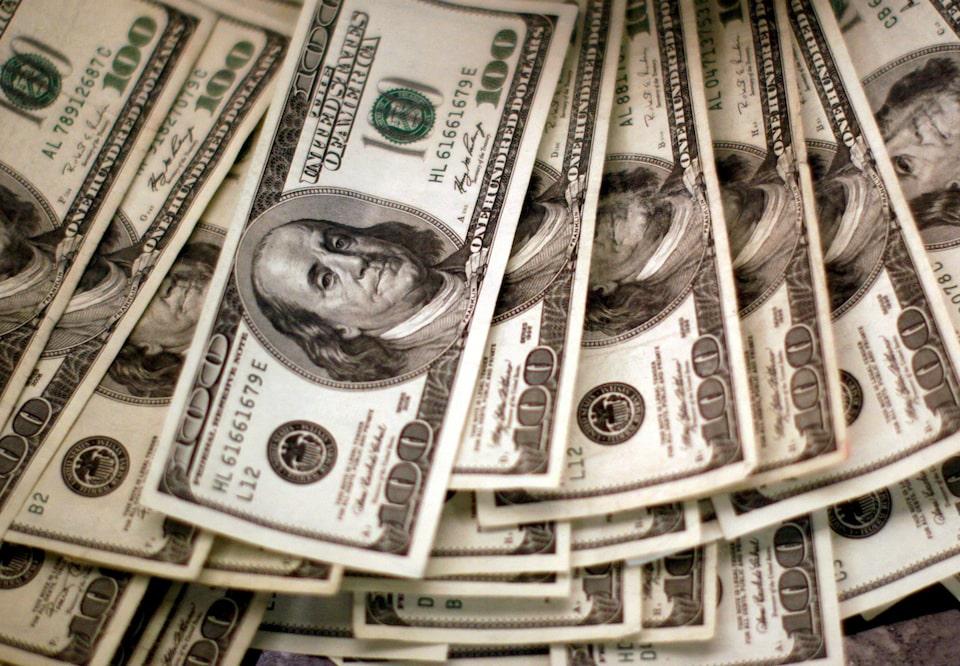
EPFR data shows record inflows to emerging local currency bond funds Local currency bonds deliver returns of more than 10% so far this year US dollar slipped to weakest in three years in recent days LONDON, June 17 (Reuters) - A weakening U.S. dollar is lifting a long-neglected asset class - emerging market local currency debt - after a more than decade-long drought. Emerging market local-currency bond funds saw a new record of inflows in the week to Wednesday, according to EPFR data, notching eight straight weeks of inflows. Sign up here. The nascent flows remain small - and the uncertainty of tariffs, war and other global turmoil are stemming some flows. But investors expect they will continue, giving a boost to local debt markets in large emerging markets from Brazil and Mexico to Indonesia and India. "Many of the big emerging markets tell us about all the foreign buying of debt, and that is starting to pick up across some countries," said Jonny Goulden, head of emerging market fixed income strategy at JPMorgan. "This could be a potential turning point." Yields on the JPMorgan GBI Emerging Market local currency index are at their lowest since 2022 - partly a sign of flows of international cash. Emerging market local currency government bonds have enjoyed returns of more than 10% since the start of the year - more than double the around 4% delivered by the hard-currency peers, according to JPMorgan indexes. The weaker U.S. dollar, and questions over the years-long U.S. exceptionalism trade - when investors parked cash in booming assets of the world's largest economy - is nudging international investors to look elsewhere for bigger returns. The greenback slipped to its lowest level in more than three years last week. Slower global growth - and lower interest rates across the developed world - are adding to the hunt for yields. "The dollar is going to be much, much weaker. Bond yields or interest rates will fall - so there is a search for yield," said Luca Paolini, chief strategist at Pictet Asset Management. Emerging market bonds look set to be one of the main beneficiaries of that momentum, he said. The dynamics combined are helping to end the foreign investor flight from emerging markets' local currency bonds that Goulden said has lasted for some 14 years. In that time, JPMorgan estimates, the asset class has more than doubled from roughly $6 trillion to $13 trillion, with mainly local investors, and some global bond funds, buying. David Hauner, head of global emerging markets fixed income strategy at Bank of America, said that after years of a dollar bull market, and the U.S. exceptionalism trade, allocations to emerging markets were "absolutely rock bottom" - and had much space to grow. "This has been completely neglected for a long period of time, and now, people have to diversify," he said, adding he expected small but steady flows - and double-digit returns on local currency at the end of the year in dollar terms. The money is part of the closely watched global effort on the part of some international investors to diversify away from U.S. dollar holdings, and U.S. assets, after years of outsized returns that lured the bulk of the world's cash. "So far this year to date, local currency has performed very well," said Carlos de Sousa, portfolio manager at Vontobel. "That's a really direct, automatic effect" from the drop in the dollar. The fact that most emerging market central banks are broadly on a rate cutting trajectory - even as the outlook for the U.S. Federal Reserve's actions remain more mixed - is also adding to momentum. Phoenix Kalen, global head of emerging markets research at Societe Generale, called it "a rare moment of goldilocks for local assets." Local currency bonds, Kalen said, offer "compelling value," including in the Philippines, Czech Republic, Hungary, South Africa, Turkey, Brazil and Colombia. The current shift, Goulden, Hauner and others say, has not come close to reversing the years of outflows, and Hauner said it was more a "trickle" so far than a flood. But even small flows can have an outsized impact. "EM as an asset class is much smaller. So if you take out 1% from the U.S., that is basically the equivalent of 20% in emerging markets. So the impact of this flow could be quite meaningful," Bank of America's Hauner said. https://www.reuters.com/world/americas/emerging-market-local-currency-debt-could-end-decade-long-drought-dollar-wanes-2025-06-17/
2025-06-17 05:32
U.S. retail sales drop more than expected in May Yen gives up gains seen after of BOJ decision BOJ to slow balance sheet drawdown in fiscal 2026 Middle East tensions keep markets on edge Trump says everyone should immediately evacuate Tehran NEW YORK/LONDON, June 17 (Reuters) - The U.S. dollar pared losses to trade firmer on the yen on Tuesday, after economic data showed American consumers growing more cautious as trade and inflation uncertainty lingered ahead of the Federal Reserve's decision on interest rate later this week. U.S. retail sales were softer than expected in May, but consumer spending remained supported by solid wage growth. Sign up here. The dollar initially softened on the print, but quickly reversed those loses as the market digested the data's mixed picture, removing strength the yen had gained following the Bank of Japan's (BOJ) rate decision earlier. "The weaker headline retail sales release and last week's softer CPI print add more fuel to rate cut speculation, including calls from (U.S. President) Trump for a 100-bps cut," said Uto Shinohara, senior investment strategist at Mesirow Currency Management. "However, the full inflationary impact of tariffs has yet to pass through." Broader risk sentiment remained fragile with the Israel-Iran conflict entering its fifth day. The BOJ delivered little surprise to markets at the conclusion of its two-day monetary policy meeting, as it stood pat on rates and laid out a new plan to decelerate the pace of its balance sheet drawdown next year in the face of rising risks such as the Middle East conflict and U.S. tariffs. The yen swung between losses and gains after the decision, turning negative during Governor Kazuo Ueda's press conference, with the dollar last up 0.25% on the yen at 145.17 yen. Japanese Prime Minister Shigeru Ishiba and U.S. President Donald Trump have yet to reach a trade deal. Developments in the Middle East are keeping the mood tense, with Trump on Tuesday saying he wanted a "real end" to the nuclear dispute with Iran, and indicating he may send senior American officials to meet with the Islamic Republic. It follows news on Monday from the White House that Trump left the Group of Seven summit in Canada a day early due to the situation in the Middle East, as the president has requested that the National Security Council be prepared in the situation room. "The market is shifting its focus back and forth to the war in the Middle East and the trade war," said Adam Button, chief currency analyst, ForexLive. "So, I think the market struggles to keep the focus on economic data, even with the Fed coming tomorrow." The escalations between Israel and Iran have sent the price of Brent crude higher. Elsewhere, the euro was down 0.37% at $1.1516. The pound was last down 0.5% against the dollar at $1.3506 . Trump signed an agreement on Monday formally lowering some tariffs on imports from Britain as the countries continue working toward a formal trade deal. The risk-sensitive Australian dollar was down 0.22% at US$0.65103. Meanwhile, against a basket of currencies, the dollar rose 0.3% to 98.49. The Federal Reserve's policy decision on Wednesday is taking centre stage for FX market watchers. Expectations are for the central bank to keep rates on hold, though the focus will be on any guidance regarding the rate outlook. "The implications for the Federal Reserve's policy trajectory are mixed, and likely won't become clear for a few months yet," said Karl Schamotta, chief market strategist, Corpay. "At the moment, there's little risk to waiting before launching another round of rate cuts, so we expect an incrementally-hawkish message to emerge from tomorrow's meeting." Meanwhile, investors are also looking ahead to other central bank decisions including from the Bank of England and Sweden's Riksbank later this week to guide the next move in markets. https://www.reuters.com/world/africa/dollar-rises-yen-steady-ahead-boj-rate-decision-2025-06-17/