2025-06-17 06:58
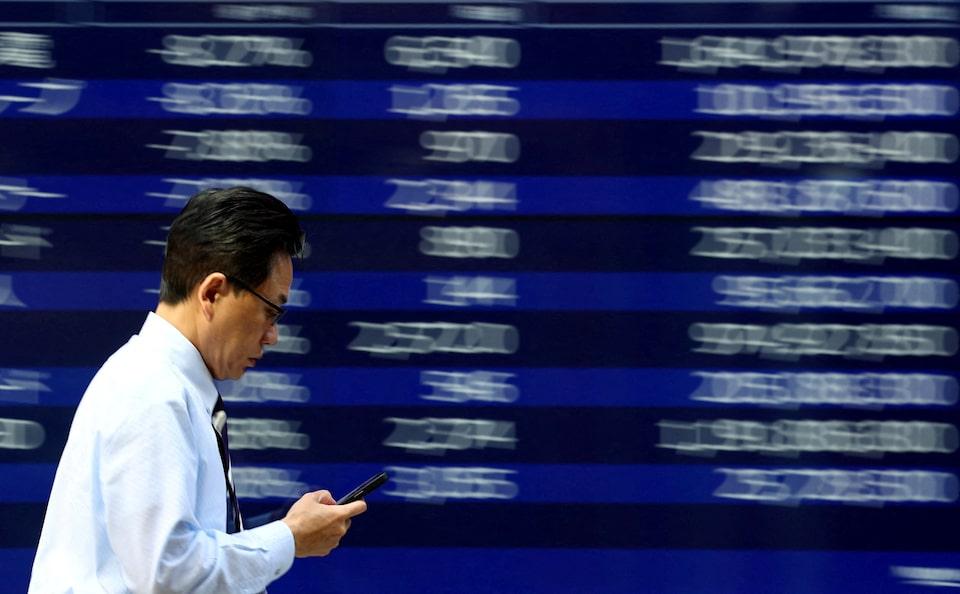
June 17 (Reuters) - Foreign investments in Asian bonds hit a near-10 year high in May, driven by a weaker dollar, concerns over U.S. fiscal risks, and expectations of rate cuts in regional economies. Foreign investors bought Asian bonds worth $15.29 billion on a net basis in May, the most for a month since at least January 2016, according to data from regulatory authorities and bond market associations in South Korea, India, Indonesia, Thailand and Malaysia. Sign up here. Last month, U.S. 30-year Treasury yields hit a 19-month high of 5.161% amid concerns over elevated debt levels, while Moody’s downgraded the U.S. sovereign credit rating by one notch to "Aa1" on worries about a widening fiscal deficit and rising borrowing costs. "Concerns over U.S. fiscal policy may have seen a diversification of investor flows into Asian assets," said Khoon Goh, head of Asia research at ANZ. "Global government yield curves steepened in May, mostly due to long-end yields rising. However, the Asian debt market was not affected by the sell-off in U.S. Treasuries," Goh added. A weaker dollar is also supporting Asian bonds as stronger local currencies potentially give central banks room to cut rates to bolster growth without risking capital outflows. The Reserve Bank of India (RBI) cut its key repo rate by a larger-than-expected 50 basis points earlier this month, while central banks in South Korea and Indonesia lowered their policy rates. South Korean bonds recorded net foreign inflows of $8.2 billion last month, the highest since May 2023. Foreigners also snapped up Malaysian, Indian and Indonesian bonds worth a net $3.15 billion, $2.29 billion and $1.7 billion, respectively. Thai bonds, meanwhile, recorded $54 million worth of cross-border outflows. https://www.reuters.com/world/asia-pacific/asian-bonds-draw-biggest-foreign-inflows-nearly-decade-may-2025-06-17/
2025-06-17 06:39
KUALA LUMPUR, June 17 (Reuters) - Malaysian state energy company Petronas said on Tuesday it expects to take one to two years to set up a planned joint venture with Italian energy group Eni (ENI.MI) , opens new tab on upstream assets in Indonesia and Malaysia. The companies announced a joint venture framework, moving forward with a pact signed in February that they said can deliver up to 500,000 barrels per day of oil equivalent (boe), combining about 3 billion boe of reserves with an additional 10 billion boe of potential exploration upside. Sign up here. "Asia has huge, huge potential," Eni CEO Claudio Descalzi told Reuters on the sidelines of the Energy Asia conference in Kuala Lumpur. "The cooperation between countries, to find synergies and exchange energies and put together resources and competencies, is essential. And that is a very strong example, Indonesia and Malaysia together," Descalzi said. The asset combination focuses on Indonesia's Kutai Basin, where Eni's portfolio includes developments in the Northern and Gendalo-Gandang hubs, which hold substantial gas reserves. "The whole idea of having this as a combination is to have an independent entity created in order to be self-financed," Mohd Jukris Abdul Wahab, executive vice-president and CEO - upstream at Petronas, said at the conference. Petronas has said it was looking to include oil and gas projects in Indonesia's Kutai Basin in the planned joint venture, proposing to swap interests for its assets in Malaysia and Indonesia with Eni's blocks there. However, Petronas said it would exclude Indonesian assets recently awarded to the company, such as the Binaiya and Serpang blocks. The companies said they aimed to finalise their agreement by this year-end, with completion thereafter subject to regulatory approvals. https://www.reuters.com/business/energy/petronas-says-proposed-joint-venture-with-eni-take-1-2-years-set-up-2025-06-17/
2025-06-17 06:30
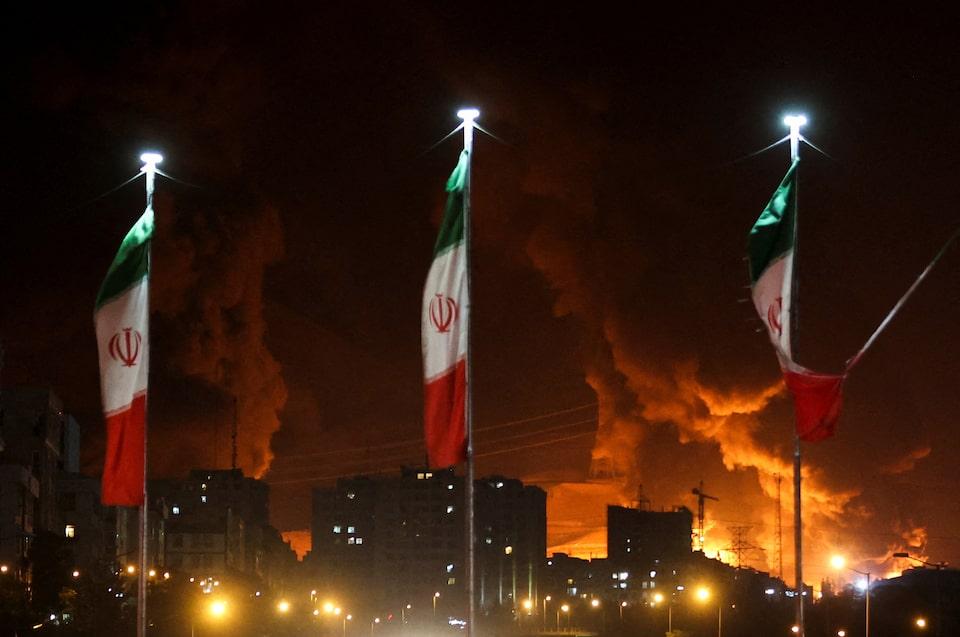
LATEST DEVELOPMENTS Trump says whereabouts of Iranian leader Khamenei are known Aerial attacks by both sides continue US moves additional fighter jets to region Iran reportedly bans officials' use of mobile devices WASHINGTON/DUBAI/JERUSALEM, June 17 (Reuters) - President Donald Trump called on Tuesday for Iran's unconditional surrender and warned U.S. patience was wearing thin, but said there was no intention to kill Iran's leader "for now", as the Israel-Iran air war entered a sixth day. An Israeli military official said approximately 10 ballistic missiles were launched from Iran toward Israel in the early hours of Wednesday morning and most of them were intercepted. Explosions were heard over Tel Aviv. Sign up here. Explosions were also heard in Tehran and the city of Karaj to the west of the capital, Iranian news websites reported. Trump's comments, delivered via social media, suggested a more aggressive stance toward Iran as he weighs whether to deepen U.S. involvement. "We know exactly where the so-called 'Supreme Leader' is hiding," he wrote on Truth Social. "We are not going to take him out (kill!), at least not for now...Our patience is wearing thin." Three minutes later, he posted, "UNCONDITIONAL SURRENDER!" A White House official said Trump spoke to Israeli Prime Minister Benjamin Netanyahu by phone on Tuesday, confirming a report from Axios. Trump's sometimes contradictory and cryptic messaging about the conflict between close U.S. ally Israel and longtime foe Iran has deepened the uncertainty surrounding the crisis. His public comments have ranged from military threats to diplomatic overtures, not uncommon for a president known for an often erratic approach to foreign policy. Israeli Defence Minister Israel Katz said Iran's Supreme Leader Ayatollah Ali Khamenei could face the same fate as Iraqi President Saddam Hussein, who was toppled in a U.S.-led invasion and hanged in 2006 after a trial. Trump said on Monday that he might send U.S. Middle East Envoy Steve Witkoff or Vice President JD Vance to meet Iranian officials. The president said his early departure from the Group of Seven nations summit in Canada had "nothing to do" with working on a ceasefire deal, and that something "much bigger" was expected. Britain's leader Keir Starmer said there was no indication the U.S. was about to enter the conflict. Trump met for 90 minutes with his National Security Council on Tuesday afternoon to discuss the conflict, a White House official said. Details were not immediately available. The U.S. is deploying more fighter aircraft to the Middle East and extending the deployment of other warplanes, three U.S. officials told Reuters. The move follows other deployments that U.S. Defense Secretary Pete Hegseth described as defensive in nature. The U.S. has so far only taken defensive actions in the current conflict with Iran, including helping to shoot down missiles fired toward Israel. REGIONAL INFLUENCE WEAKENS Khamenei's main military and security advisers have been killed by Israeli strikes, hollowing out his inner circle and raising the risk of strategic errors, according to five people familiar with his decision-making process. The Israeli military said on Tuesday it had killed Iran's wartime chief of staff Ali Shadmani, four days after he replaced another top commander killed in the strikes. With Iranian leaders suffering their most dangerous security breach since the 1979 Islamic Revolution, the country's cybersecurity command banned officials from using communications devices and mobile phones, Fars news agency reported. Israel launched a "massive cyber war" against Iran's digital infrastructure, Iranian media reported. Ever since Iran-backed Hamas attacked Israel on October 7, 2023, and triggered the Gaza war, Khamenei's regional influence has waned as Israel has pounded Iran's proxies - from Hamas in Gaza to Hezbollah in Lebanon, the Houthis in Yemen and militias in Iraq. Iran's close ally, Syria's autocratic president Bashar al-Assad, has been ousted. Israel launched its air war, its largest ever on Iran, on Friday after saying it had concluded the Islamic Republic was on the verge of developing a nuclear weapon. Iran denies seeking nuclear weapons and has pointed to its right to nuclear technology for peaceful purposes, including enrichment, as a party to the international Non-Proliferation Treaty. Israel, which is not a party to the NPT, is the only country in the Middle East believed to have nuclear weapons. Israel does not deny or confirm that. Netanyahu has stressed that he will not back down until Iran's nuclear development is disabled, while Trump says the Israeli assault could end if Iran agrees to strict curbs on enrichment. Before Israel's attack began, the 35-nation board of governors of the U.N. nuclear watchdog, the International Atomic Energy Agency, declared Iran in breach of its non-proliferation obligations for the first time in almost 20 years. The IAEA said on Tuesday an Israeli strike directly hit the underground enrichment halls at the Natanz facility. The Iranian news website Eghtesadonline, which covers economic news, reported on Tuesday that Iran arrested a foreigner for filming "sensitive" areas at the Bushehr nuclear power plant for Israel's spy agency Mossad. Iranian security forces also arrested a "terrorist team" linked to Israel with explosives in a town southwest of the capital Tehran, Iranian state media reported. OIL MARKETS ON ALERT Israel says it now has control of Iranian airspace and intends to escalate the campaign in coming days. But Israel will struggle to deal a knock-out blow to deeply buried nuclear sites like Fordow, which is dug beneath a mountain, without the U.S. joining the attack. Israel's Katz said Fordow was an issue that will be addressed. Iran has so far fired nearly 400 ballistic missiles and hundreds of drones towards Israel, with about 35 missiles penetrating Israel's defensive shield, Israeli officials say. Iran's Revolutionary Guards said they hit Israel's Military Intelligence Directorate and foreign intelligence service Mossad's operational centre early on Tuesday. There was no Israeli confirmation. Iranian officials have reported 224 deaths, mostly civilians, while Israel said 24 civilians had been killed. Residents of both countries have been evacuated or fled. Global oil markets are on high alert following strikes on sites including the world's biggest gas field, South Pars, shared by Iran and Qatar. https://www.reuters.com/business/aerospace-defense/trump-urges-tehran-evacuation-iran-israel-conflict-enters-fifth-day-2025-06-17/
2025-06-17 06:29
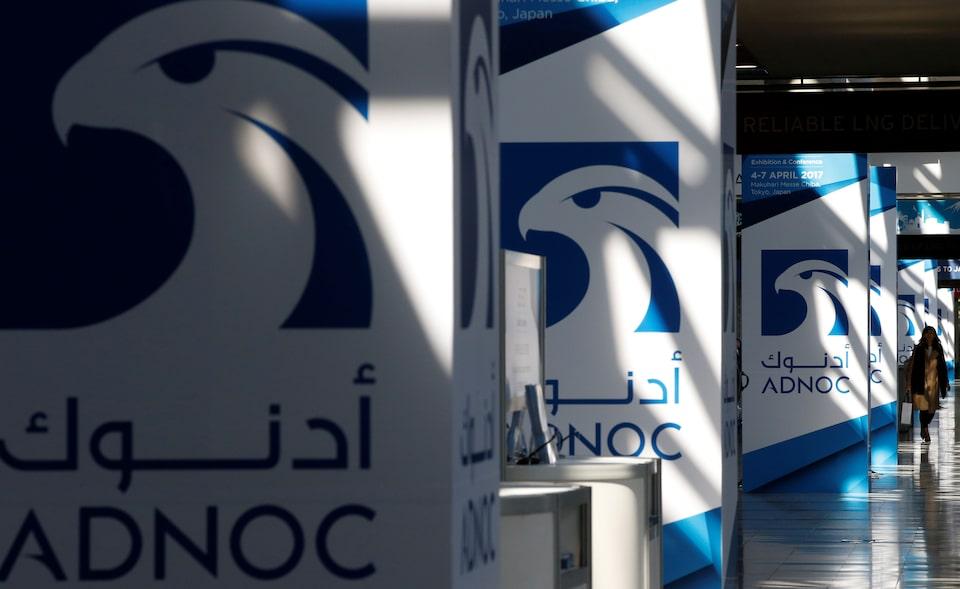
Santos role in domestic gas market poses tough regulatory hurdle ADNOC could appease regulators with plans to accelerate gas projects Santos shares trade 13% below proposed offer, reflecting potential hurdles SYDNEY, June 17 (Reuters) - Abu Dhabi National Oil Company, preparing an $18.7 billion bid for Santos (STO.AX) , opens new tab, is likely to face close scrutiny from Australian regulators worried about local gas supply, but could win them over with pledges to speed up new projects, analysts say. Santos shares closed at A$7.73 on Tuesday, well below the $5.76 (A$8.89) per share proposed takeover offer for Australia's second largest gas producer announced on Monday, which analysts said indicated investors believe the deal will face trouble with regulators. Sign up here. "It's not going to be smooth sailing yet," said Jamie Hannah, Deputy Head of Investments and Capital Markets at VanEck Australia, which owns shares in Santos. However, he added that the offer price "is very attractive and it's straight cash". The bid, which would be the largest ever all-cash takeover in Australia, according to FactSet data, has landed at a time when Australia's Labor government is debating how to deal with a looming gas shortage on the country's east coast from 2027. "We would expect the Foreign Investment Review Board (FIRB) to focus on Santos's key gas infrastructure as it relates to domestic gas supply," said Jarden analyst Nik Burns. Santos' market share in eastern Australia is around 5%, with most of its gas output on that side of the country going to its Gladstone LNG export plant, analysts said. In Western Australia, where it runs two domestic gas plants and has a stake in a third one, it has a 24% market share. The infrastructure assets were not major income-generating assets, so would be very hard to spin off to satisfy any regulatory concerns, said Hannah. "This infrastructure is important for domestic gas supply in both markets. The government needs to decide if they are happy for this to sit in the hands of a foreign government," said MST Marquee analyst Saul Kavonic. ADNOC BRINGS CAPITAL TO THE TABLE On the positive side, Santos holds undeveloped resources, including the Narrabri project and Beetaloo shale gas, that could help fill the expected gas supply gap on the east coast. The bidding consortium, headed by ADNOC's investment arm XRG, could argue it would develop those projects faster than Santos could under its plans to boost capital returns to shareholders, and reduce the risk of an east coast gas shortage. "XRG might point to regulators that its larger balance sheet and funding capacity provides an opportunity to accelerate Santos' undeveloped growth assets," UBS analyst Tom Allen said in a research note. Romano Sala Tenna, portfolio manager at Katana Asset Management, which owns Santos shares, said the market was being too pessimistic about regulatory hurdles. "A large sovereign wealth fund effectively coming in with deep pockets" could pour money into Santos' undeveloped assets, he said. "So I think that is a card that will be appealing to the Australian government." XRG said on Monday that if the deal goes ahead, the consortium aims to build on Santos' legacy as a reliable energy producer "unlocking additional gas supply" and intends to "work closely with the existing management team to accelerate growth". Another factor that could work in favour of the ADNOC-led consortium, which includes the Abu Dhabi Development Holding Company (ADQ) and U.S.-based private equity firm Carlyle, is a trade deal Australia signed last year with the United Arab Emirates, analysts said. Australian Treasurer Jim Chalmers, who has the final say on approving major foreign transactions, said he would listen to the advice of the Foreign Investment Review Board on the deal. Santos Chief Executive Kevin Gallagher declined to comment on the deal and regulatory concerns on the sidelines of a gas conference in Malaysia on Tuesday, other than to say he would "let the process take its course". https://www.reuters.com/business/energy/deep-pockets-could-help-abu-dhabi-win-regulatory-approval-santos-bid-analysts-2025-06-17/
2025-06-17 06:27
Trump wants "real end" to nuclear problem with Iran Federal Reserve policy decision due on Wednesday Citi lowers price targets for gold June 17 (Reuters) - Gold prices rose on Tuesday as the conflict between Israel and Iran prompted investors to seek refuge in safe-haven assets, as they also await the upcoming U.S. Federal Reserve policy meeting. Spot gold was up 0.1% to $3,386.29 an ounce, as of 1203 GMT. U.S. gold futures fell 0.4% to $3,404.90. Sign up here. Israel's attacks on Iran have broadened its conflicts in the region to a level that poses a global threat, Jordan's King Abdullah said in a speech in the European Parliament on Tuesday. U.S. President Donald Trump said he wanted a "real end" to the nuclear dispute with Iran and cut short his trip to the G7 summit in Canada. A separate report said he had asked for his administration's National Security Council to be prepared in the situation room. "Gold still retains its bias for lurching upwards on signs of a worsening Middle East conflict, given the precious metal's stature as the preferred safe haven of late," said Han Tan, chief market analyst at Exinity Group. Zero-yield bullion is considered a hedge against geopolitical and economic uncertainty and tends to thrive in a low-interest environment. "Barring knee-jerk spikes on a worsening geopolitical conflict, bullion bulls’ quest for pushing spot prices sustainably above $3500 may only be fulfilled once the Fed signals a sooner-than-later rate cut," Tan said. The U.S. central bank's rate decision and Chair Jerome Powell's remarks are due on Wednesday. Traders are currently pricing in two cuts by the end of the year. Meanwhile, Citi lowered its short-term and long-term price targets for gold, projecting prices could drop below $3,000 per ounce by late 2025 or early 2026, driven by declining investment demand and an improving global growth outlook, it said in a note on Monday. Elsewhere, spot silver was up 1.9% at $37.01 per ounce, its highest level since February 2012, platinum rose 1.3% to $1,262.43, while palladium gained 1.5% to $1,044.94. https://www.reuters.com/world/india/gold-rises-israel-iran-fighting-trumps-evacuation-call-spark-demand-2025-06-17/

2025-06-17 06:10
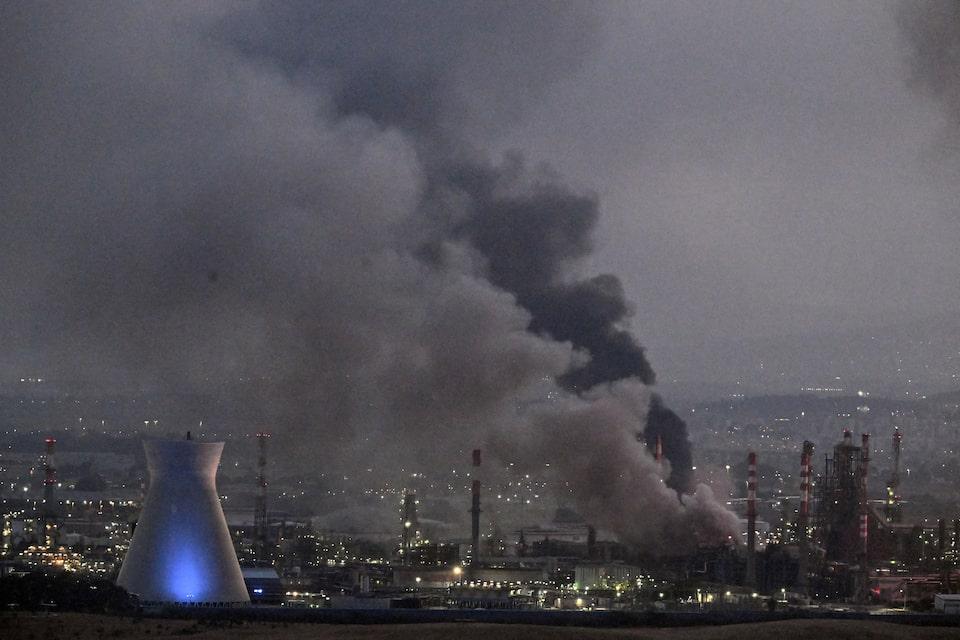
Iran's oil exports drop sharply, Kharg Island activity halts South Pars gas field damaged in Israeli strike Israel shuts down nearly two thirds of gas production, refinery damaged LONDON, June 17 (Reuters) - Critical energy infrastructure in Israel and Iran has not escaped unscathed from the first few days of the countries' escalated conflict. Worst-case scenarios have yet to be realized, but the war is already having a notable impact on energy production and exports in both countries. Benchmark Brent crude oil prices jumped 7% to over $74 a barrel on Friday after Israel launched an unprecedented wave of airstrikes on Iran, prompting Tehran to fire hundreds of ballistic missiles at Israel. Sign up here. Some energy facilities have been hit in both countries since then, leading to significant disruptions to production. However, prices receded slightly on Monday, as it appeared that both sides were not immediately targeting the most sensitive energy infrastructure and supply routes, and following a report that Iran was seeking ceasefire mediation. Investor focus remains squarely on the Strait of Hormuz, a narrow and vital waterway between Iran and Oman in the Mideast Gulf through which between 18 and 19 million barrels per day of crude oil and fuels flow, nearly a fifth of the world's consumption. Another 85 million tons of liquefied natural gas from Qatar and the United Arab Emirates were also sent through the strait last year, equivalent to around 20% of global demand. Disrupting maritime activity through the strait would thus severely impact oil and gas markets, pushing prices much higher, possibly into three-digit territory. This doomsday scenario has not yet played out, but disruption to both Iran’s and Israel’s energy industries has been meaningful nonetheless. Perhaps most notably, Iran's oil exports appear to have essentially ground to a halt in recent days. Total Iranian crude and condensate oil exports this week are currently forecast to reach 102,000 bpd, compared with a weekly average of 1.7 million so far this year, according to analytics firm Kpler. Critically, exports from Kharg Island from which Iran exports over 90% of its oil, appear to have completely halted since Friday. No tankers were anchored at Kharg Island as of Monday, according to LSEG satellite ship tracking data. However, Iran has roughly 27.5 million barrels stored in tankers outside the Gulf, according to Kpler data, which would enable it to sell oil for a few weeks. Iran has produced an average of 3.4 million bpd of crude oil and another 1.3 million bpd of condensate so far in 2025, according to the U.S. Energy Information Administration, with China appearing to be the main buyer. IRANIAN GAS AND CONDENSATE Israel has also directly targeted some Iranian energy infrastructure. Iran on Saturday partially suspended , opens new tab gas production at the South Pars gas field in the Mideast Gulf, in what was probably Israel's first strike on the country's oil and gas sector. South Pars, which is shared with Qatar, is the world's biggest gas field. It produces around 610 million cubic meters of natural gas per day, accounting for around 80% of Iran's total gas output , opens new tab. The portion controlled by Qatar, referred to as the North Field, provides the natural gas for the Gulf state’s enormous LNG industry. The field also produces around 700,000 barrels of per day of condensate, a light oil that is used as feedstock to produce fuels and petrochemicals. The Persian Gulf Star condensate refinery, which became Iran’s largest refinery when it came online in 2017, can process 420,000 bpd of condensates from South Pars. While the extent of the damage to the South Pars field is unknown, any serious issues could meaningfully impact condensate production. In addition, Israel has targeted the Shahr refinery outside Tehran as well as a number of fuel depots around the capital city. Again, the full impact of these strikes on production is unknown. ISRAEL DISRUPTION The conflict has also already had a significant effect on Israel’s energy industry. Israel on Friday shut down two of its three offshore natural gas fields, the Chevron-operated Leviathan field , opens new tab and Energean's Karish field, reducing Israel’s supply by nearly two thirds. While the country’s Tamar field continues to operate, Israel will have to turn to coal and fuel oil as a substitute for the gas in its power plants. These supply outages have had a meaningful impact on Israel's gas exports. Leviathan produced 11.33 billion cubic meters (bcm) in 2024, most of which is exported to neighbouring Egypt and Jordan. Israeli gas accounts for about 15-20% of Egypt’s consumption, data from the Joint Organisations Data Initiative (JODI) shows. The disruption of Israel’s gas supply led Egyptian fertilizer producers to halt operations on Friday. Finally, the ORL oil refinery in Haifa, one of Israel’s two refineries, said on Monday it had shut down all its facilities after a power station used to produce steam and electricity was significantly damaged in an Iranian missile strike. It remains to be seen how long the two sides will continue to exchange blows. If a ceasefire is quickly reached, the ultimate impact on energy markets could be relatively limited. But given how much this conflict has escalated in only a few days, the worst-case scenarios cannot be fully discounted. Enjoying this column? Check out Reuters Open Interest (ROI), opens new tab , opens new tab, your essential new source for global financial commentary. ROI delivers thought-provoking, data-driven analysis. Markets are moving faster than ever. ROI, opens new tab , opens new tab can help you keep up. Follow ROI on LinkedIn, opens new tab , opens new tab and X. , opens new tab https://www.reuters.com/markets/commodities/israel-iran-war-already-takes-toll-oil-gas-sector-2025-06-17/