2025-06-16 23:10
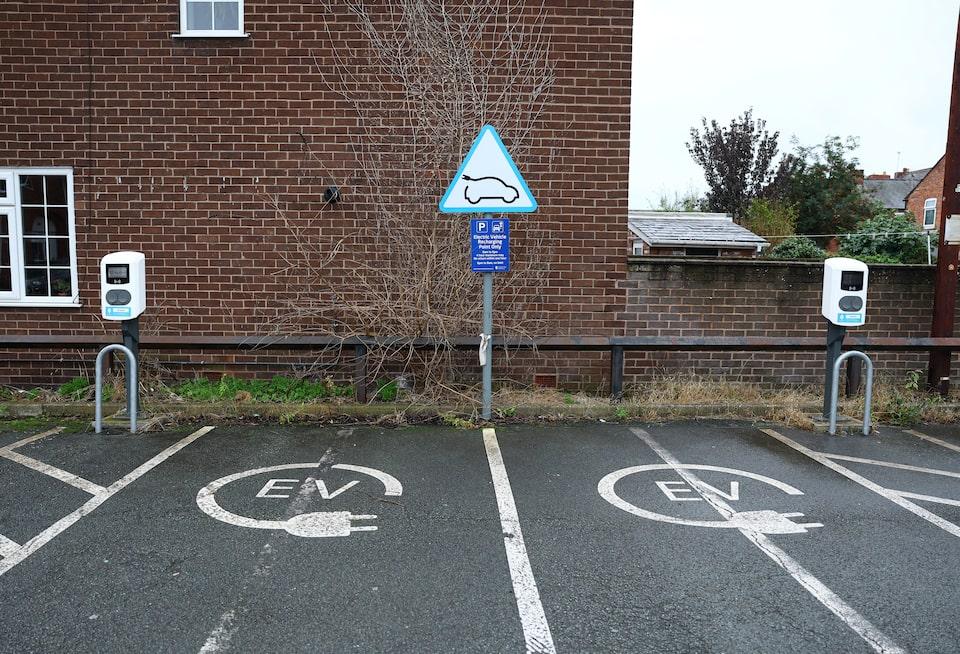
LONDON, June 17 (Reuters) - Drivers are becoming more reluctant to switch to electric vehicles from combustion engines and the trend is more pronounced in Europe than in the United States, a survey published by Shell (SHEL.L) , opens new tab on Tuesday showed. The main obstacle is cost, according to the survey of 15,000 drivers across the world, including Britain, China, Germany and the United States. Sign up here. "Europe surprised us," said David Bunch, Shell's chief for mobility and convenience. "The single biggest barrier to entry is the cost of the vehicle. Range anxiety is still there but it's diminishing." Electric vehicles are on average up to 30% more expensive than internal combustion engine cars. This year, 41% of respondents in Europe said they would consider switching to an electric car compared with 48% last year, while in the United States the number fell three percentage points to 31%, the survey showed. In terms of the pace at which the charging experience is improving, only about half of European drivers said public charging had improved in the last year, below China's 74% and 80% in the United States. Only 17% of European drivers asked said public charging offered value for money, compared with 69% in China and 71% in the United States. Shell runs 75,000 charging points and focuses its EV strategy on fast, on-the-go charging points rather than home-charging. Its core EV markets are China, Britain, Germany, Switzerland, Singapore, the Netherlands and the United States. https://www.reuters.com/sustainability/climate-energy/willingness-switch-evs-fades-faster-europe-than-us-shell-survey-shows-2025-06-16/
2025-06-16 23:04
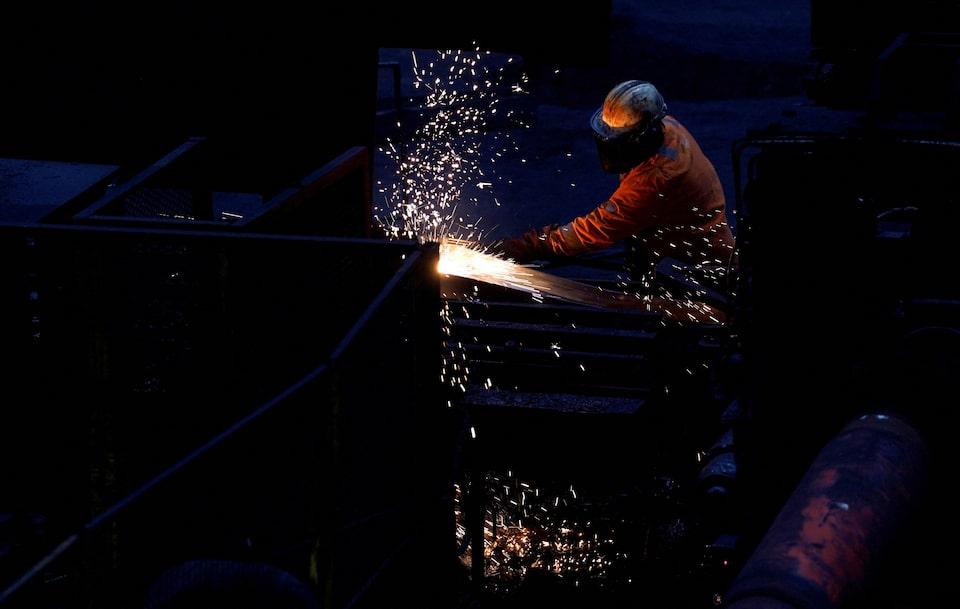
LONDON, June 17 (Reuters) - The British government is set to finalise a 500-million-pound ($679 million) rail steel deal between Network Rail and British Steel, aiming to protect thousands of jobs at a steelmaking plant in Eastern England that was brought under state control earlier this year. The contract will see British Steel supply more than 337,000 metric tons of rail track over five years, the government said on Tuesday, two months after seizing operational control of the steelmaker from its Chinese owners, Jingye, to prevent the closure of its blast furnaces in Scunthorpe. Sign up here. "This is great news for British Steel and a vote of confidence in the UK’s expertise in steelmaking, which will support thousands of skilled jobs for years to come," business minister Jonathan Reynolds said. The contract, which starts in July, will provide publicly owned Network Rail with 80% of its rail needs and will build on the government's 2.5-billion-pound steel fund set up to boost steel production over the next five years, the statement said. To ensure security of supply, Network Rail is set to award smaller contracts to some European manufacturers for around 80,000 to 90,000 metric tons of rail, which will supply specialist rail products alongside British Steel, the statement said. The sector, which has been grappling with high costs and tough competition, last month called for clarity on when U.S. tariffs will be lifted under a landmark U.S.-UK deal agreed in May to remove President Donald Trump's steel levies. ($1 = 0.7363 pounds) https://www.reuters.com/business/world-at-work/uk-finalises-500-million-pound-rail-contract-save-british-steel-jobs-2025-06-16/
2025-06-16 22:57
SAO PAULO, June 17 (Reuters) - Brazilian securities regulator CVM has postponed a shareholder vote on the takeover of poultry and pork processor BRF (BRFS3.SA) , opens new tab by beef processor Marfrig (MRFG3.SA) , opens new tab, the companies said in a securities filing on Tuesday. Shareholders from both firms were set to vote on Wednesday on a deal announced in May that would allow Marfrig - already the holder of a controlling stake in BRF - to complete its takeover in a share-swap deal, forming a global company called MBRF. Sign up here. According to a document on the CVM website, the regulator postponed the meeting for 21 days following a request from minority shareholders, who said they need more information to understand the criteria for each company's valuation and the deal's exchange ratio. Some funds are complaining about the proposed terms, said Igor Guedes, equity analyst at Genial Investimentos, adding that nearly half of remote votes cast related to the plan were abstentions. “Probably a significant portion of the abstention is related with the view of BRF’s minority shareholders that the merger generates financial value, but even so, the proposed exchange ratio would have been unfair.” “We understand the discomfort that exists among BRF minority shareholders," said Leonardo Alencar, an equity analyst at XP Investimentos. Although the CVM suggested this 21-day postponement, he believes that the proposed terms of the deal will not change and the transaction will be approved. BRF and Marfrig in their joint securities filing said the regulator requested additional information from both companies on the terms of their proposed tie-up. They added that they were analyzing the CVM's decision and studying their options, including a potential request for reconsideration of the postponement. The companies had previously said that the takeover was subject to approvals, including from minority shareholders. https://www.reuters.com/world/americas/brazil-regulator-suspends-shareholder-meeting-marfrig-brf-deal-reports-local-2025-06-16/
2025-06-16 22:00
WASHINGTON, June 16 (Reuters) - U.S. Senate Republicans on Monday proposed a tax bill that would extend a clean fuel tax credit through 2031, but trim 20% of the value of the credit for biofuels made from feedstocks produced outside of the United States. The tax credit, established by former President Joe Biden's Inflation Reduction Act but not finalized during his tenure, could prove lucrative for oil and biofuel producers who can demonstrate lower carbon intensity of their fuels. Sign up here. The House tax and spending bill passed in May also extends the tax credit, known as 45Z, through 2031, but bans most foreign feedstocks from being eligible for credits. Both the House and Senate bills would exclude emissions generated from the expansion of agricultural land due to the growth of feedstocks like corn and soy, called indirect land use change, from the calculation of a biofuel's credit value. That change would make it easier for corn-based ethanol to qualify for the credits. But the requirement to calculate those indirect emissions was a key environmental guard rail of the original tax credit, said Sarah Lutz, senior climate campaigner at environmental group Friends of the Earth. "This reckless proposal means dirtier fuel and higher food prices," Lutz said. Both bills also make transportation fuels derived from farm animal manure eligible for the tax credit, a boost to biogas producers who argue that capturing methane from manure and other waste can help cut transportation emissions. https://www.reuters.com/sustainability/climate-energy/us-senate-bill-would-shrink-tax-credit-biofuels-made-foreign-feedstocks-2025-06-16/
2025-06-16 21:59
Senate bill extends tax credits for hydropower, nuclear, geothermal until 2036 Solar shares fall after Senate proposes phase-out of tax credits by 2028 Senate bill allows selling tax credits, easing House restrictions WASHINGTON, June 16 (Reuters) - A U.S. Senate panel proposed a full phase-out of solar and wind energy tax credits by 2028 but extended the incentive to 2036 for hydropower, nuclear and geothermal energy, which are favored by President Donald Trump's administration, according to a draft bill circulated on Monday. The draft bill, part of a sprawling Republican budget package, made several changes that clean energy advocates pressed for to a bill passed in the House last month. But industry representatives said the text did not go far enough to preserve their sector's key incentives. Sign up here. The language released by the committee chair, Republican Senator Mike Crapo, envisages phasing out subsidies enshrined by the Biden-era 2022 Inflation Reduction Act for solar and wind in 2026 by reducing the incentive to 60% of its value and ending it by 2028. Under current law, the tax credits would not start phasing out until 2032. In a change from the House bill, the Senate would grant 100% of the credit to hydropower, nuclear and geothermal facilities until 2033, then phase it out to zero by 2036, according to the draft. Malcolm Woolf, CEO of the National Hydropower Association, praised the extended timeline for new hydro facilities but said the Senate had failed to extend the tax credit to upgrades of existing facilities, many of which are in need of relicensing. "We hope that this measure will be adopted later this Congress to ensure that these multi-purpose facilities continue to provide clean, reliable energy for generations to come," Woolf said in a statement. A summary of the bill text released by Crapo said it would eliminate hundreds of billions of dollars of clean energy subsidies, which it described as unnecessary, and would support consistent energy sources over intermittent renewable energy. Shares of U.S. solar energy companies tumbled in extended trade on Monday after the changes were unveiled. "Despite modest improvements on several provisions, this legislation does not go far enough to remove the threat to one of the greatest economic success stories in American history," Abigail Ross Hopper, president of the Solar Energy Industries Association, said in a statement. The Senate language gives more time for clean energy projects to use the tax credits than the House version, which required that a project must start construction within 60 days of the bill's enactment and be placed in service by Dec. 31, 2028 to qualify for the tax credits. The Senate language changes it so that facilities need to begin construction in a certain year to claim the credit rather than be placed in service. Since the House narrowly passed its version of Trump's budget known as the "One Big, Beautiful Bill Act" last month, some electric utility executives, lawmakers and clean energy industry groups have pressed Senate Republicans to make the provisions related to IRA clean energy tax credits less drastic. Senate Republican moderates, including Alaska's Lisa Murkowski and Utah's John Curtis, have been urging the Senate tax panel to give clean energy projects more time to use the credits. The Senate bill retains some of the restrictions called for in the House bill against the use of tax credits for projects that rely on equipment or critical minerals from foreign adversary nations like China. But under the Senate bill, some publicly traded companies using materials from China would face fewer restrictions. The bill text also introduced a formula for calculating whether a project received "material assistance" from a foreign entity that would preclude it from being eligible for the incentives. Clean energy industry groups had opposed those restrictions because they would severely affect projects that rely on Chinese components in their supply chains. The Senate's version of the bill preserves project developers' ability to sell, or transfer, their tax credits to third parties to reduce financing costs. The House bill had phased out that provision. Like the House bill, the Senate bill eliminates consumer-facing credits for installing rooftop panels and making other energy-related home improvements. "Eliminating the tax credits that save families money is a profound mistake," Ari Matusiak, CEO of the electrification nonprofit Rewiring America, said in a statement. The electric utility industry, which had flagged concerns that nearly 75 gigawatts of planned new generation capacity of renewable energy would be canceled between 2025 and 2032 at a time of rapidly growing energy demand if the House version passed, said the Senate version made progress on key provisions including project timelines and transferability. "These modifications are a step in the right direction," said Edison Electric Institute (EEI) interim President Pat Vincent-Collawn. https://www.reuters.com/sustainability/climate-energy/us-senate-floats-full-phase-out-solar-wind-energy-tax-credits-by-2028-2025-06-16/

2025-06-16 21:02
ORLANDO, Florida, June 16 (Reuters) - TRADING DAY Making sense of the forces driving global markets Sign up here. By Jamie McGeever, Markets Columnist Investor sentiment and risk appetite rebounded sharply on Monday as fears around the Israel-Iran conflict subsided, shifting the spotlight away from geopolitical risk and back towards this week's raft of central bank policy meetings. In my column today I look at why the dollar's status as a safe-haven asset in times of heightened geopolitical uncertainty may be fading in a world of 'de-dollarization'. More on that below, but first, a roundup of the main market moves. If you have more time to read, here are a few articles I recommend to help you make sense of what happened in markets today. Today's Key Market Moves Truce hopes spark rebound Signs of de-escalation between Israel and Iran - or at least hopes of de-escalation - ensured markets started this week much more positively than they finished last week. Whether that optimism is justified remains to be seen but the rebound was pretty strong, taking Wall Street and world stocks back to within sight of their recent highs. It's a very fluid situation, so investors' relief may be short-lived. Iran has called for U.S. President Donald Trump to get Israel to halt its attacks, but both countries continue to fire missiles at each other. Meanwhile, a U.S. official said Trump will not sign a draft G7 leaders' statement calling for de-escalation of the conflict. Optimism that a truce will be reached appears to be stronger in equity markets than elsewhere. Gold gave back Friday's gains but not before hitting $3,451 an ounce, a level last reached when it clocked a record high on April 17, and in volatile trade oil settled 1.7% lower, having surged more than 7% on Friday. Perhaps equity investors have it right. The oil price has less of a bearing on global growth or asset prices than it used to, and markets have been pretty resilient to Middle East conflicts in recent years, with selloffs proving to be shallow and short-lived. Unless there is a real adverse oil price shock, it will probably be a similar story this time around, although spiking inflation would be problematic for central banks. Economists at Oxford Economics sketch out an extreme scenario where the closure of the Strait of Hormuz pushes oil up to $130 a barrel, which could lift U.S. CPI inflation to almost 6%. Oil is nowhere near that yet though. As Deutsche Bank's Henry Allen notes, perhaps the story of the year is how resilient stock markets have been in the face of myriad large shocks - DeepSeek's emergence casting doubt over U.S. tech valuations; Europe's fiscal regime shift triggering the biggest daily jump in German yields since 1990; the U.S. losing its triple-A credit rating; Trump's tariffs and the S&P 500's fifth-biggest two-day fall since World War Two. And yet here we are, with world stocks at all-time highs. Aside from geopolitics, the focus for investors this week will mostly revolve around central banks. The Bank of Japan will deliver its policy decision on Tuesday, and economists expect it to hold off from raising rates again due to the uncertainty around U.S. tariffs. Later this week we have decisions from Indonesia, Brazil, Switzerland, Sweden, Norway, Britain and the U.S. Federal Reserve. Israel-Iran conflict highlights dollar's tarnished safe-haven appeal A dramatic spike in the potential for all-out war between Israel and Iran would typically be expected to spark an immediate and strong rally in the U.S. dollar, with investors seeking the safety and liquidity of the world's reserve currency. That didn't happen on Friday. The dollar's response to Israel's strikes on Iranian nuclear facilities and military commanders, followed by Tehran's initial threats and retaliation, was pretty feeble. The dollar index, a measure of the currency's value against a basket of major peers, ended the day up only around 0.25%. To be sure, the dollar fared better than U.S. stocks or Treasuries, which both fell sharply on Friday. But with oil surging over 7% and gold up a solid 1.5%, a strong 'flight to quality' flow would have lifted the dollar more than a quarter of one percent. The U.S. currency's move was particularly weak given the dollar's starting point on Friday. It was at a three-and-a-half year low, having depreciated 10% year to date, with sentiment and positioning heavily bearish. Yet a significant geopolitical shock generated barely a knee-jerk bounce. For comparison, the dollar rose more than 2% in both the first week of the 2006 Israel-Lebanon War and in the week following Israel's invasion of Southern Lebanon last year. The dollar's weak response to this latest Middle East conflict supports the narrative that investors are now reassessing their high exposure to dollars, in light of some of the unorthodox policies put forward by U.S. President Donald Trump in recent months. The dollar was down slightly early on Monday, and gold and oil were giving back some of Friday's gains too, as markets regained a foothold at the start of a busy week packed with key central bank meetings. PAINED SMILE The dollar has historically been one of the best hedges against short-term volatility sparked by geopolitical risk, behind gold and on a par with oil, according to research published last year by Joe Seydl, senior markets economist at JP Morgan Private Bank. Indeed, a Journal of Monetary Economics paper from last year stated plainly, "The dollar is a safe-haven currency and appreciates when global risk goes up," a trend resulting from the "fundamental asymmetry in a global financial system centered around the dollar" built up over the course of several decades. That latter part of that argument hasn't changed. The dollar accounts for almost 60% of the world's $12 trillion FX reserves, with its nearest rival, the euro, accounting for around 20%. Almost two-thirds of global debt is denominated in dollars, and nearly 90% of all FX transactions around the world have the greenback on one side of the trade. That means traders, financial institutions, businesses, consumers and governments still need to be more exposed to dollars than any other currency, even if they question the direction of current U.S. policy. However, the dollar's downside 'structural' risks are growing, analysts at Westpac noted on Sunday, as concern over Washington's fiscal health and policy uncertainty erode the dollar's 'safe-haven identity'. Investors are now looking to hedge their large dollar exposure more than ever. If this dampens their instinctive demand for dollars in periods of sudden geopolitical tension, uncertainty and volatility, then the so-called 'dollar smile' theory could be challenged. This 'smile' is the idea that the dollar appreciates in periods of financial market stress as well as in 'risk on' periods of strong global growth and investor optimism, but sags in between. This idea was first outlined over 20 years ago by then currency analyst and now hedge fund manager Stephen Jen. If the Israel-Iran conflict continues to escalate, that dollar smile could get rather lopsided. What could move markets tomorrow? Want to receive Trading Day in your inbox every weekday morning? Sign up for my newsletter here. Opinions expressed are those of the author. They do not reflect the views of Reuters News, which, under the Trust Principles , opens new tab, is committed to integrity, independence, and freedom from bias. https://www.reuters.com/business/aerospace-defense/global-markets-trading-day-graphic-pix-2025-06-16/