2025-06-16 21:02
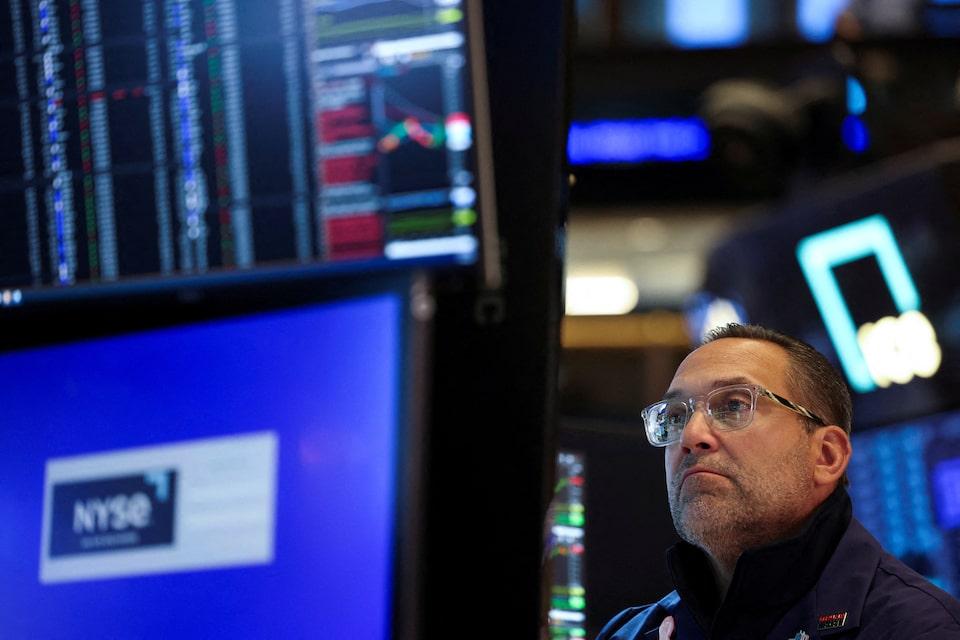
ORLANDO, Florida, June 16 (Reuters) - TRADING DAY Making sense of the forces driving global markets Sign up here. By Jamie McGeever, Markets Columnist Investor sentiment and risk appetite rebounded sharply on Monday as fears around the Israel-Iran conflict subsided, shifting the spotlight away from geopolitical risk and back towards this week's raft of central bank policy meetings. In my column today I look at why the dollar's status as a safe-haven asset in times of heightened geopolitical uncertainty may be fading in a world of 'de-dollarization'. More on that below, but first, a roundup of the main market moves. If you have more time to read, here are a few articles I recommend to help you make sense of what happened in markets today. Today's Key Market Moves Truce hopes spark rebound Signs of de-escalation between Israel and Iran - or at least hopes of de-escalation - ensured markets started this week much more positively than they finished last week. Whether that optimism is justified remains to be seen but the rebound was pretty strong, taking Wall Street and world stocks back to within sight of their recent highs. It's a very fluid situation, so investors' relief may be short-lived. Iran has called for U.S. President Donald Trump to get Israel to halt its attacks, but both countries continue to fire missiles at each other. Meanwhile, a U.S. official said Trump will not sign a draft G7 leaders' statement calling for de-escalation of the conflict. Optimism that a truce will be reached appears to be stronger in equity markets than elsewhere. Gold gave back Friday's gains but not before hitting $3,451 an ounce, a level last reached when it clocked a record high on April 17, and in volatile trade oil settled 1.7% lower, having surged more than 7% on Friday. Perhaps equity investors have it right. The oil price has less of a bearing on global growth or asset prices than it used to, and markets have been pretty resilient to Middle East conflicts in recent years, with selloffs proving to be shallow and short-lived. Unless there is a real adverse oil price shock, it will probably be a similar story this time around, although spiking inflation would be problematic for central banks. Economists at Oxford Economics sketch out an extreme scenario where the closure of the Strait of Hormuz pushes oil up to $130 a barrel, which could lift U.S. CPI inflation to almost 6%. Oil is nowhere near that yet though. As Deutsche Bank's Henry Allen notes, perhaps the story of the year is how resilient stock markets have been in the face of myriad large shocks - DeepSeek's emergence casting doubt over U.S. tech valuations; Europe's fiscal regime shift triggering the biggest daily jump in German yields since 1990; the U.S. losing its triple-A credit rating; Trump's tariffs and the S&P 500's fifth-biggest two-day fall since World War Two. And yet here we are, with world stocks at all-time highs. Aside from geopolitics, the focus for investors this week will mostly revolve around central banks. The Bank of Japan will deliver its policy decision on Tuesday, and economists expect it to hold off from raising rates again due to the uncertainty around U.S. tariffs. Later this week we have decisions from Indonesia, Brazil, Switzerland, Sweden, Norway, Britain and the U.S. Federal Reserve. Israel-Iran conflict highlights dollar's tarnished safe-haven appeal A dramatic spike in the potential for all-out war between Israel and Iran would typically be expected to spark an immediate and strong rally in the U.S. dollar, with investors seeking the safety and liquidity of the world's reserve currency. That didn't happen on Friday. The dollar's response to Israel's strikes on Iranian nuclear facilities and military commanders, followed by Tehran's initial threats and retaliation, was pretty feeble. The dollar index, a measure of the currency's value against a basket of major peers, ended the day up only around 0.25%. To be sure, the dollar fared better than U.S. stocks or Treasuries, which both fell sharply on Friday. But with oil surging over 7% and gold up a solid 1.5%, a strong 'flight to quality' flow would have lifted the dollar more than a quarter of one percent. The U.S. currency's move was particularly weak given the dollar's starting point on Friday. It was at a three-and-a-half year low, having depreciated 10% year to date, with sentiment and positioning heavily bearish. Yet a significant geopolitical shock generated barely a knee-jerk bounce. For comparison, the dollar rose more than 2% in both the first week of the 2006 Israel-Lebanon War and in the week following Israel's invasion of Southern Lebanon last year. The dollar's weak response to this latest Middle East conflict supports the narrative that investors are now reassessing their high exposure to dollars, in light of some of the unorthodox policies put forward by U.S. President Donald Trump in recent months. The dollar was down slightly early on Monday, and gold and oil were giving back some of Friday's gains too, as markets regained a foothold at the start of a busy week packed with key central bank meetings. PAINED SMILE The dollar has historically been one of the best hedges against short-term volatility sparked by geopolitical risk, behind gold and on a par with oil, according to research published last year by Joe Seydl, senior markets economist at JP Morgan Private Bank. Indeed, a Journal of Monetary Economics paper from last year stated plainly, "The dollar is a safe-haven currency and appreciates when global risk goes up," a trend resulting from the "fundamental asymmetry in a global financial system centered around the dollar" built up over the course of several decades. That latter part of that argument hasn't changed. The dollar accounts for almost 60% of the world's $12 trillion FX reserves, with its nearest rival, the euro, accounting for around 20%. Almost two-thirds of global debt is denominated in dollars, and nearly 90% of all FX transactions around the world have the greenback on one side of the trade. That means traders, financial institutions, businesses, consumers and governments still need to be more exposed to dollars than any other currency, even if they question the direction of current U.S. policy. However, the dollar's downside 'structural' risks are growing, analysts at Westpac noted on Sunday, as concern over Washington's fiscal health and policy uncertainty erode the dollar's 'safe-haven identity'. Investors are now looking to hedge their large dollar exposure more than ever. If this dampens their instinctive demand for dollars in periods of sudden geopolitical tension, uncertainty and volatility, then the so-called 'dollar smile' theory could be challenged. This 'smile' is the idea that the dollar appreciates in periods of financial market stress as well as in 'risk on' periods of strong global growth and investor optimism, but sags in between. This idea was first outlined over 20 years ago by then currency analyst and now hedge fund manager Stephen Jen. If the Israel-Iran conflict continues to escalate, that dollar smile could get rather lopsided. What could move markets tomorrow? Want to receive Trading Day in your inbox every weekday morning? Sign up for my newsletter here. Opinions expressed are those of the author. They do not reflect the views of Reuters News, which, under the Trust Principles , opens new tab, is committed to integrity, independence, and freedom from bias. https://www.reuters.com/business/aerospace-defense/global-markets-trading-day-graphic-pix-2025-06-16/
2025-06-16 20:55
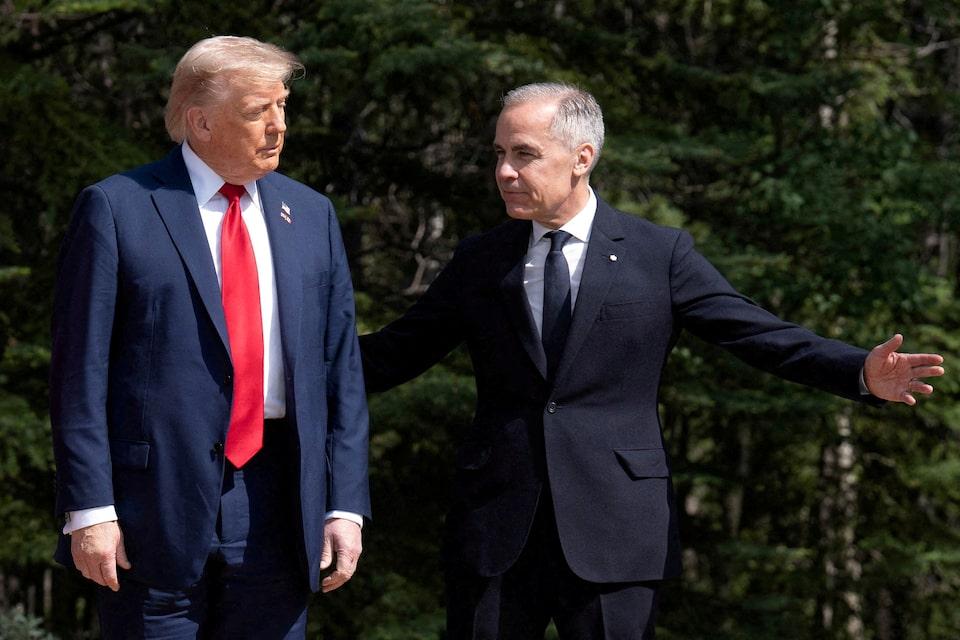
KANANASKIS, Alberta, June 16 (Reuters) - U.S. President Donald Trump said on Monday a new economic deal with Canada was possible but stressed tariffs had to play a role, a position that the Canadian government strongly opposes. Canadian Prime Minister Mark Carney, who won the April election on the back of a promise to fight Trump's tariffs, is pushing for what he calls a new economic and security relationship with the United States. Sign up here. "I have a tariff concept. Mark has a different concept ... we're going to see if we can get to the bottom of it," Trump said when meeting Carney on the sidelines of a G7 summit in Alberta. "I'm a tariff person." Asked whether a deal was possible within weeks, Trump replied: "Yes, it's achievable." Canada, the top supplier of steel and aluminum to the United States, faces tariffs imposed by Trump on both metals as well as on auto exports. Carney said last week the countries were in intense negotiations over the tariffs and that Canada was preparing reprisals if those negotiations do not succeed. Optimism that a deal could be concluded quickly has faded over the past 10 days, with Canadian officials saying privately the United States appears to be in no rush. "We are in the middle of a discussion - we are not at the end of the discussion. Our position is that we should have no tariffs on Canadian exports to the United States," said Kirsten Hillman, Canada's ambassador to Washington. "We will continue to talk until we find a deal that is the best deal we can achieve for Canada," she told reporters after Carney met Trump. https://www.reuters.com/business/autos-transportation/trump-says-tariffs-must-be-part-any-canada-deal-ottawa-pushes-back-2025-06-16/
2025-06-16 20:53
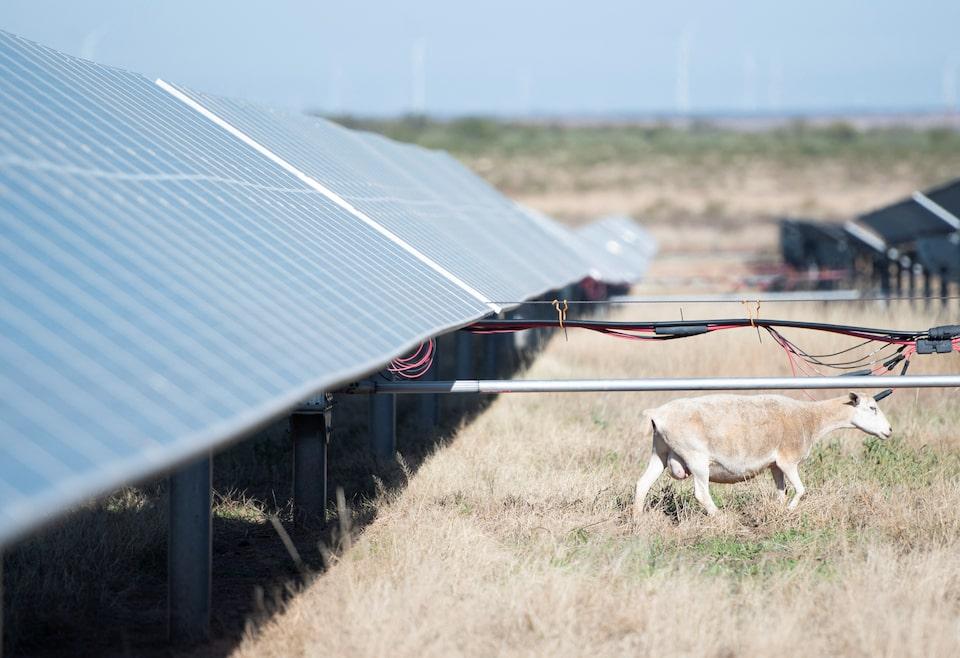
NEW YORK, June 16 (Reuters) - Renewable power like solar and onshore wind is the least expensive and quickest power generation source to deploy in the United States, even without government subsidies, Lazard said in a report on Monday. The cost to build new gas-fired power plants, meanwhile, has hit a 10-year high amidst the country's record electricity use and growing backlogs for turbines and other equipment needed to construct the plants, Lazard, a global financial services firm, said in its annual Levelized Cost of Energy+ analysis. Sign up here. WHY IT MATTERS As U.S. electricity use rises from the expansion energy-intensive data centers and the electrification of industries like transportation, many new power plants will need to be built to meet the rising demand after a nearly 20-year lull. A shift in support of fossil-fired power like coal and gas, over the renewable energy championed by former President Joe Biden, has raised questions about what types of electricity-generating sources will rise to meet the growing demand. Different power-producing sources have varying implications for the reliability of the electric grid and for climate change. BY THE NUMBERS The cost to build a utility-scale solar farm ranged from $38 to $78 per megawatt hour, while costs for natural gas combined cycle plants were $48 to $107 per megawatt hour. Smaller-scale community solar and gas peaker plants, meanwhile, were considerably more expensive. https://www.reuters.com/sustainability/climate-energy/renewable-energy-remains-cheapest-power-builds-new-gas-plants-get-pricier-2025-06-16/
2025-06-16 20:16
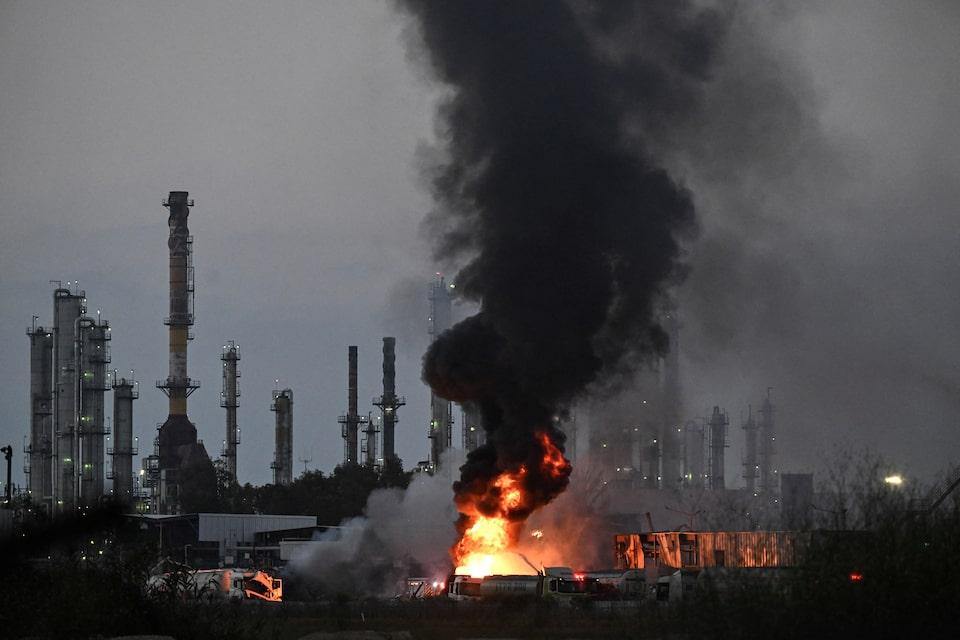
June 16 (Reuters) - Israel's Haifa-based Bazan Group said all refinery facilities have been shut down after a power station used to produce steam and electricity were significantly damaged in an attack by Iran, according to a regulatory filing on Monday. The group said the Iranian attack resulted in the death of three company employees. Sign up here. The refinery is located in Haifa Bay, according to Israeli media. https://www.reuters.com/world/middle-east/israels-haifa-based-bazan-group-says-all-refinery-facilities-shut-down-after-2025-06-16/
2025-06-16 20:08
June 16 (Reuters) - Millennium Management is in talks to sell a minority stake in its management company, in a deal that values the hedge fund giant at $14 billion, the Financial Times reported on Monday, citing people familiar with the discussions. The company is working with Goldman Sachs' Petershill Partners to identify potential buyers for a 10% to 15% equity stake in its management company, the report said. Sign up here. Millennium and Petershill declined to comment. Millennium manages over $75 billion across a range of asset classes, including equities, fixed income and commodities. The company employs more than 6,200 people, according to its website. The company is led by billionaire Israel Englander, who founded it in 1989 with $35 million in capital. https://www.reuters.com/markets/wealth/hedge-fund-millennium-valued-14-billion-minority-stake-sale-talks-ft-reports-2025-06-16/

2025-06-16 19:15
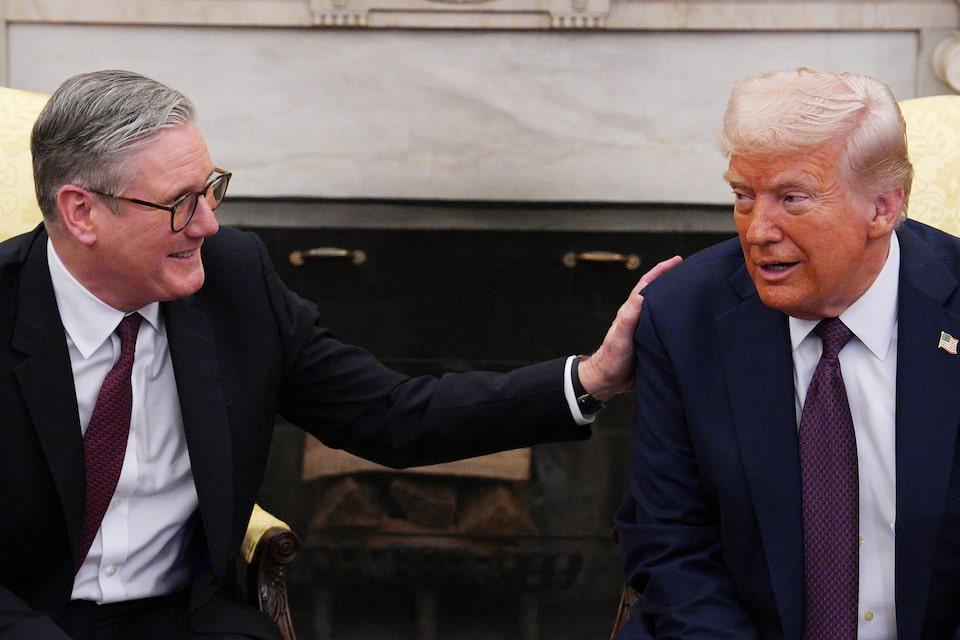
Tariffs eliminated on UK aerospace sector UK looks to avoids elevated tariffs on steel and aluminum imports Starmer calls the deal "a real sign of strength" Trump says UK "very well protected ... because I like them" KANANASKIS, Alberta, June 16 (Reuters) - U.S. President Donald Trump signed an agreement on Monday formally lowering some tariffs on imports from Britain as the countries continue working toward a formal trade deal. The deal, announced by Trump and British Prime Minister Keir Starmer on the sidelines of the G7 Summit in Canada, reaffirmed quotas and tariff rates on British automobiles and eliminated tariffs on the U.K. aerospace sector, but the issue of steel and aluminum remains unresolved. Sign up here. Other critical industries, such as pharmaceuticals, were not mentioned. Trump said the relationship with Britain was "fantastic," as he waved, and then briefly dropped, a document that he said he had just signed. "We signed it and it's done," he said, incorrectly calling it a trade agreement with the European Union, before making clear the deal was with Britain. Starmer called it "a very good day for both of our countries, a real sign of strength" The U.S. intends to impose a quota on steel and aluminum imports from the United Kingdom that would be exempt from 25% tariffs, but it is conditioned upon Britain's demonstrating security on steel supply chains and production facilities, according to an executive order released by the White House. The quota level will be set by Commerce Secretary Howard Lutnick, the White House said. Britain had avoided tariffs of up to 50% on steel and aluminum that the U.S. imposed on other countries earlier this month, but it could have faced elevated tariffs starting July 9 unless a deal to implement the tariff reduction was reached. The two leaders reaffirmed a plan to give British carmakers an annual quota of 100,000 cars that can be sent to the United States at a 10% tariff rate, less than the 25% rates other countries face. The plan will go in effect seven days after it is published in the Federal Register, the White House said. The agreement also eliminates tariffs on the UK aerospace industry, including parts and planes, according to the executive order. Britain was the first country to agree on a deal for lower tariffs from Trump, with the U.S. reducing tariffs on imports of UK cars, aluminum and steel, and Britain agreeing to lower tariffs on U.S. beef and ethanol. But implementation of the deal has been delayed while details were being hammered out and some issues remain outstanding. Britain called the deal a huge win for its aerospace and auto sectors, noting the UK was the only country to have secured such a deal with Washington. “Bringing trade deals into force can take several months, yet we are delivering on the first set of agreements in a matter of weeks. And we won’t stop there," UK Trade Secretary Jonathan Reynolds said in a statement. Reynolds said the two sides agreed to reciprocal access to 13,000 metric tons of beef, while making clear that U.S. imports would need to meet tough UK food safety standards. He said both countries remain focused on securing "significantly preferential outcomes" for the UK pharmaceutical sector, and work would continue to protect industry from any further tariffs imposed as part of Section 232 investigations underway by the U.S. Commerce Department. Asked if the deal protects the United Kingdom from future tariff threats, Trump responded: “The UK is very well protected. You know why? Because I like them. That's their ultimate protection.” https://www.reuters.com/business/autos-transportation/us-uk-trade-deal-be-completed-very-soon-says-starmer-2025-06-16/