2025-06-16 10:06
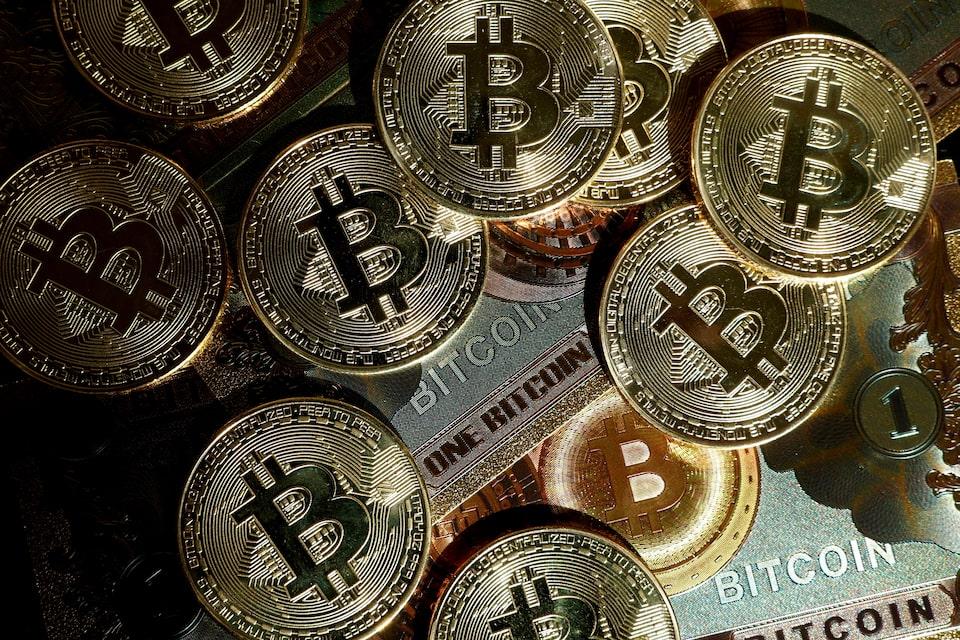
June 16 (Reuters) - Certain public companies, including one founded by President Donald Trump, have been going on a cryptocurrency buying spree, capitalizing on higher token prices and a softening regulatory environment to load up on the attention-grabbing investment. Sixty-one publicly-listed companies not primarily engaged in digital assets have adopted what are known as bitcoin treasury strategies, in which firms allocate a portion of their cash and reserves toward the world's largest cryptocurrency, according to a report from Standard Chartered. Sign up here. Here is what you need to know about the trend: WHY ARE COMPANIES DOING THIS? Many of those companies are seeking to replicate the success of Strategy (MSTR.O) , opens new tab, formerly known as MicroStrategy, a software company that began accumulating bitcoin in 2020 and now holds more than $63 billion worth. Its stock is up more than 3,000% since 2020 as the price of bitcoin has skyrocketed, hitting fresh all-time highs above $110,000 this year. Strategy copycats have doubled their holdings in bitcoin in just the last two months to collectively hold just under 100,000 bitcoin, Standard Chartered said. Those firms include Trump Media & Technology Group (DJT.O) , opens new tab, which raised $2.5 billion last month to invest in bitcoin. While investors can readily buy bitcoin directly or through an exchange-traded fund, investors typically cannot get the same kind of leverage a public company might be able to get through the convertible debt markets to buy bitcoin. Companies like Strategy trade at a premium to their bitcoin holdings because investors believe that those firms can utilize their access to credit markets to purchase even more bitcoin. Strategy and Trump Media & Technology Group did not immediately respond to requests for comment. WHICH COMPANIES ARE DOING THIS? Besides Strategy and Trump Media & Technology Group, a joint venture announced in April between SoftBank, stablecoin issuer Tether, and Cantor Fitzgerald - previously helmed by U.S. Commerce Secretary Howard Lutnick - caught investors' attention. The group is launching a $3.6-billion venture called Twenty One with the goal of acquiring bitcoin. SolarBank, a Toronto-based solar energy company, announced this month it would implement a bitcoin treasury strategy, saying it would expose the company "to a new category of tech-savvy investors." SolarBank has not disclosed how much bitcoin it plans to buy, only saying that the allocation strategy will be determined by management. "Traditionally, people invest in utilities as (an) afterthought. It's a very low return. It's a stable return," said SolarBank CEO Richard Lu. "So, how do we bridge the excitement of the new world and a classic industry? We feel that the crypto part of that is a bridge we need to cross." Upexi (UPXI.O) , opens new tab, a consumer products company, recently launched a treasury for Solana, another top cryptocurrency. "It is a great way for a company to really bring attention to itself and grow," said Brian Rudick, the firm's chief strategy officer. "If a company has a fiduciary duty to do what's best for shareholders, and if you're going to raise funds and invest it in the operating business, or if you can invest in funds and put it into a digital asset treasury that the market is rewarding companies that do so, you should do the latter," Rudick said. WHY NOW? The trend comes as Trump has sought to overhaul U.S. cryptocurrency policy after courting cash from the industry on the campaign trail. He signed an executive order in March to establish a strategic bitcoin reserve and has hosted industry leaders at the White House. Those moves have boosted the price of bitcoin and other cryptocurrencies. "It may be that some firms are trying to get political attention. This is clearly something President Trump has signaled his interest in," said Chester Spatt, a finance professor at Carnegie Mellon University. The stark shift in policy under Trump "is a serious tailwind for more and more institutions to get into the space," said Roshan Robert, CEO of crypto exchange OKX. "How institutions are looking at building out treasury applications is just a part of that broader picture." WHAT ARE THE RISKS? It is unclear if the various crypto treasury strategies will ultimately be successful, particularly if firms are buying in now as prices flirt with record highs in a sector that is no stranger to volatility. Charles Schwab, in a report last month, noted that if a company has significant crypto holdings that suddenly collapse in value, the firm could experience a liquidity crisis. Standard Chartered estimated that if bitcoin were to fall back below $90,000 it would put half of companies' bitcoin treasuries underwater. "As always, there will be some really, really big winners and some really big losers whenever there's a mania like this," said Ravi Doshi, the global co-head of markets at crypto platform FalconX. https://www.reuters.com/sustainability/boards-policy-regulation/what-are-bitcoin-treasury-strategies-latest-trend-public-markets-2025-06-16/
2025-06-16 08:27
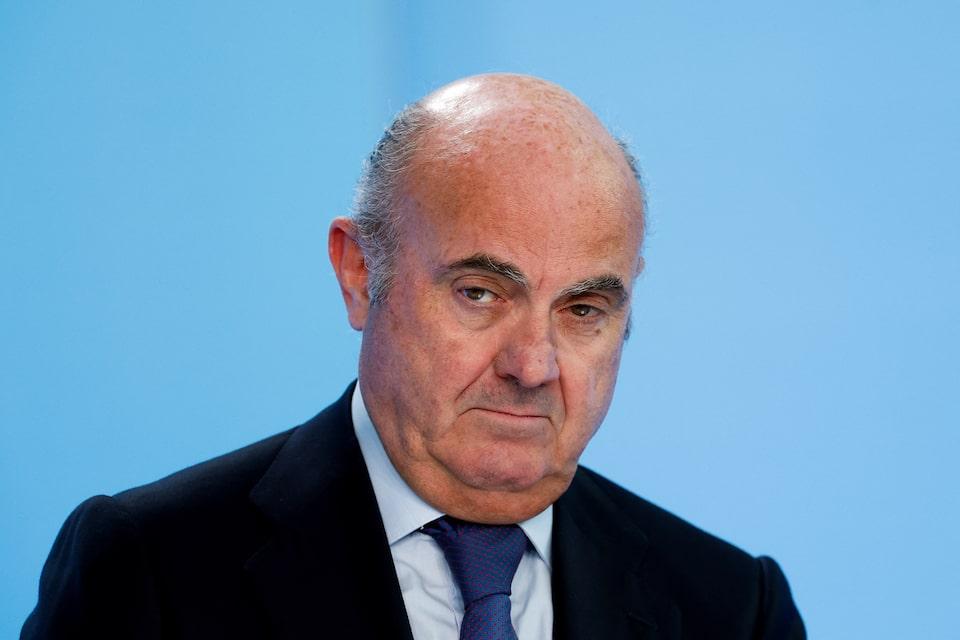
De Guindos says ECB more aware of 'side effects' He expects greater focus on financial stability All instruments will remain in ECB's toolkit after review FRANKFURT, June 16 (Reuters) - The European Central Bank has learned its lesson about aggressive money printing and will pay more attention to the side effects of easy money in the future, the ECB's Vice-President Luis de Guindos told Reuters. Having vanquished high inflation, the ECB is reviewing its long-term strategy as well as its policy toolkit, including the massive bond purchases and negative interest rates it deployed over the last decade when price growth was too sluggish. Sign up here. Its 5 trillion-euro ($5.8 trillion) wave of money printing, known in market parlance as quantitative easing (QE), has been criticised for creating bubbles in property and financial markets, and for setting up the ECB for large losses once interest rates rise. De Guindos said "all the instruments" used in the past would remain in the ECB's toolbox but he and his colleagues had become more aware of their drawbacks. "We have learned much more about side effects, and we are going to pay more attention to financial stability considerations," he told Reuters in an interview. "QE, for instance, was a new instrument." He said another learning point was that "sometimes it's much easier to start using the instrument than to withdraw it". Borrowing costs for Italy shot up in the summer of 2022 when the ECB stopped its bond purchases and prepared to raise interest rates, forcing the central bank to come up with a new safety net for indebted countries. ECB policymaker and Croatian central bank governor Boris Vujcic also said in a recent interview that "the bar for QE would be higher" in the future. The ECB is due to present the conclusions of its strategy review, the first since 2021, in the early summer. Some policymakers in the ECB's hawkish camp were hoping for the new strategy statement to contain self-criticism, but sources told Reuters this was unlikely to feature. A staff analysis presented to policymakers last month found that QE and other stimulus tools such as negative rates had been, on balance, beneficial. This research was expected to be published as working papers in the autumn. De Guindos also said the new strategy statement would mainly reflect the changed economic situation from a world of low inflation and interest rates to one where prices grow faster and trade is disrupted. "I would not expect big surprises," he said of the statement currently being drafted. "It will be much more focused on how the framework for central banks and for the ECB has changed over the last five years." ($1 = 0.8674 euros) https://www.reuters.com/business/finance/ecb-has-learned-its-lesson-about-ills-easy-money-de-guindos-says-2025-06-16/
2025-06-16 07:57
NAPERVILLE, Illinois, June 15 (Reuters) - Speculators have held unusually bullish views in U.S. cattle futures since late last year, which was perfect timing as the domestic herd hit a 74-year low at the beginning of 2025. Since then, U.S. beef prices have hit all-time highs, yet consumers have not relinquished their taste for the premium protein, and cattle futures have continued their climb. Sign up here. In the week ended June 10, money managers boosted their net long in CME live cattle futures and options to a 10-week high of 137,836 contracts. That is a record for the date but comparable with 2017 and 2014, both of which featured a steady easing of bullish bets from here. Funds’ net long in CME feeder cattle hit a record high as of June 10, and they also extended bullish bets in CME lean hog futures and options for a ninth consecutive week. That brought their hog net long to 118,218 contracts, easily the highest ever for this time of year. Spot live cattle futures are up about 16% so far this year and hogs have jumped by a third. Both inked fresh contract highs within the last week. Over in grains and oilseeds, speculators were net buyers in the week ended June 10 of everything but corn and soybean oil, the latter perhaps regrettable given Friday’s events. Money managers were net sellers of CBOT soybean oil futures and options for a fourth consecutive week through June 10, leaving them with a modest net long of 24,768 contracts. However, soyoil futures surged the daily limit on Friday, reaching one-month highs, as the Trump administration proposed higher-than-expected requirements for U.S. biofuel blending in 2026 and 2027. This could boost the demand for domestic soybean oil, particularly as foreign feedstock including used cooking oil from China would be discouraged. Despite the optimism, there was no word yet regarding small refinery exemptions, which could effectively reduce demand. The biofuel news lifted soybeans, which on Friday notched their highest closing price in a month at $10.69-3/4 per bushel. Money managers had increased their near-flat soybean position through June 10 to a net long of 25,639 futures and options contracts. Despite global soybean supplies set to hit record levels this year, speculators have maintained a mildly optimistic stance in recent weeks. U.S. crop prospects are relatively modest and depend on a record yield and a certain acreage, the latter of which could be at risk in favor of corn acres. The big U.S. corn crop expectations have turned funds into bears, as they have been net sellers in 15 of the last 18 weeks. Through June 10, they lifted their net short in CBOT corn futures and options to 164,020 contracts, up about 10,000 on the week. This increases investors’ risk of having to abruptly cover corn shorts should U.S. weather turn unfavorable, but current forecasts do not suggest this is very likely in the near-term. Supportive spring weather boosted U.S. winter wheat conditions to the highest early-June levels in six years, and funds have noticed. Last month they established an all-time net short in Kansas City wheat futures and options, well past the previous record. Although they have been net buyers of K.C. wheat in the latest four weeks, their net short remains extremely heavy. Funds also bought Chicago wheat in the latest four weeks, cutting their net short to 94,011 futures and options contracts from 126,895 over that period. CBOT wheat futures surged more than 3% on Friday, motivated by strength in both the soy complex and crude oil. Crude contracts on Friday posted their largest intraday moves since 2022 after Israel conducted strikes on Iran, and both sides were still trading blows as of Sunday. Aside from the fresh Middle East conflict and any further U.S. biofuel news, grain traders must continue to monitor how U.S. weather is shaping up for the rest of June. Grain and oilseed futures have a history of crashing whenever nonthreatening weather is on tap for the U.S. Corn Belt into early July, when crops are setting up for the critical pollination phase. Karen Braun is a market analyst for Reuters. Views expressed above are her own. Enjoying this column? Check out Reuters Open Interest (ROI) , opens new tab, your essential new source for global financial commentary. ROI delivers thought-provoking, data-driven analysis of everything from swap rates to soybeans. Markets are moving faster than ever. ROI , opens new tab can help you keep up. Follow ROI on LinkedIn , opens new tab and X. , opens new tab https://www.reuters.com/markets/us/raging-bulls-funds-pad-historic-longs-cme-livestock-2025-06-16/

2025-06-16 07:57
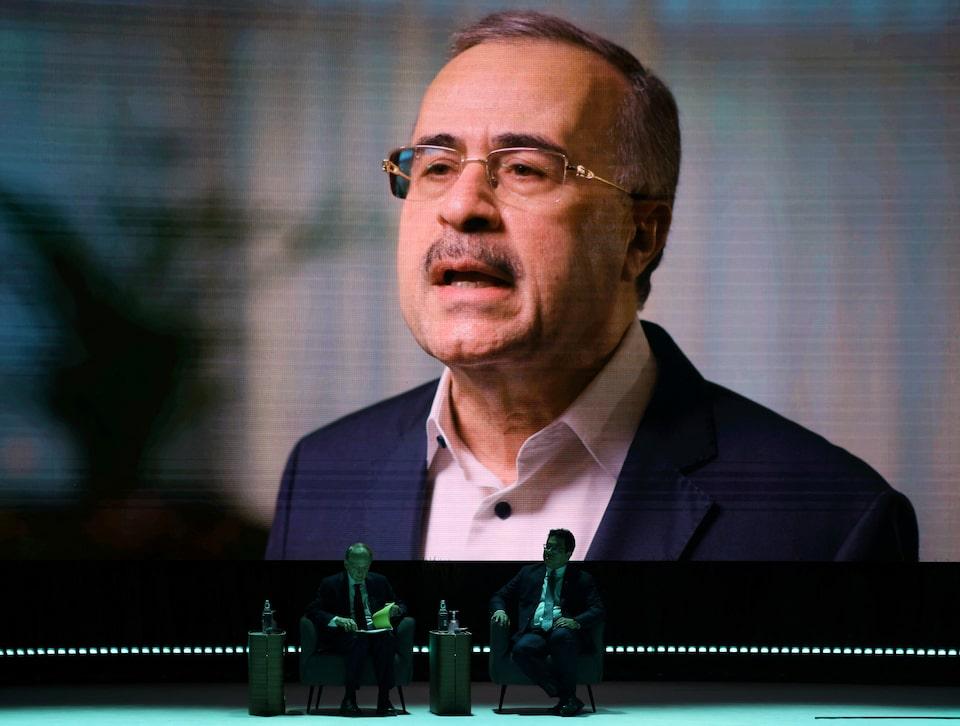
KUALA LUMPUR, June 16 (Reuters) - The importance of oil and gas can't be underestimated at times when conflicts occur, something that was currently being seen, the head of Saudi oil giant Aramco (2222.SE) , opens new tab told an energy conference on Monday. Aramco CEO Amin Nasser delivered his speech to the Energy Asia Conference in Kuala Lumpur by a video link. Sign up here. Oil prices jumped last week after Israel launched strikes against Iran on Friday that it said were to prevent Tehran from building an atomic weapon. The fighting intensified over the weekend. "(History has) shown us that when conflicts occur, the importance of oil and gas can't be understated," Nasser said. "We are witnessing this in real time, with threats to energy security continuing to cause global concern," he said, without directly mentioning the fighting between Israel and Iran. Nasser also said that experience had shown that new energy sources don't replace the old, but added to the mix. He said the transition to net-zero emissions could cost up to $200 trillion, and renewable sources were not meeting current demand. "As a result, energy security and affordability have at last joined sustainability as the transition's central goals," he said. Aramco is the economic backbone of Saudi Arabia, generating a bulk of the kingdom's revenue through oil exports and funding its ambitious Vision 2030 diversification drive. https://www.reuters.com/business/energy/oil-gas-important-times-conflict-saudi-aramco-ceo-says-2025-06-16/
2025-06-16 07:02
NEW DELHI, June 16 (Reuters) - An Air India Boeing 787-8 Dreamliner plane bound for New Delhi returned to its origin of Hong Kong as a precautionary measure on Monday, after the pilot suspected a technical issue mid-air, a source with direct knowledge of the matter told Reuters. The incident comes days after an Air India flight to London, using the same type of Boeing aircraft, crashed in the western Indian city of Ahmedabad moments after take-off, killing 241 of the 242 people on board. Sign up here. The Dreamliner aircraft flying Air India flight AI315 out of Hong Kong on Monday is now undergoing checks, said the source with knowledge of the matter. AI315 made a return to Hong Kong International Airport and requested local standby at around 1 p.m., "landed safely at around 1:15 p.m.", the spokesperson of Airport Authority Hong Kong said. The airport operations were not affected, the spokesperson added. Flight AI315 took off from Hong Kong at around 12:20 p.m. and landed just around an hour later. It reached an altitude of 22,000 feet, and then started descending, according to flight tracking website AirNav Radar. The plane was 7 years old. Boeing and Air India did not immediately respond to a request for comment on the Hong Kong-New Delhi flight. Last week's crash brings a new challenge for both Air India, which has for years been trying to revamp its fleet, and Boeing, which is trying to rebuild public trust following a series of safety and production crises. https://www.reuters.com/world/china/air-indias-dreamliner-returns-hong-kong-after-technical-issue-mid-air-ani-2025-06-16/

2025-06-16 07:00
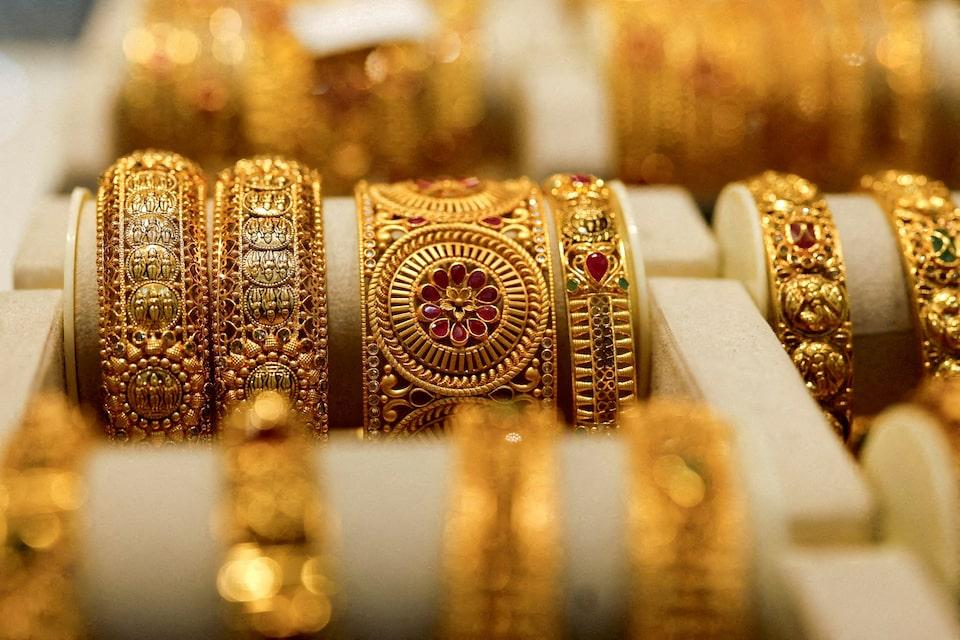
G7 leaders to discuss Israel-Iran conflict in Canada No sign of panic among investors over Middle East escalation Fed policy decision due on Wednesday June 16 (Reuters) - Gold fell on Monday as investors weighed the impact of the ongoing Israel-Iran conflict, while also focusing on the Group of Seven (G7) leaders meeting and the U.S. Federal Reserve policy decision later this week. Spot gold fell 0.4% to $3,419.89 an ounce, as of 1059 GMT, after hitting its highest level since April 22 earlier in the session. Sign up here. U.S. gold futures were down 0.4% to $3,439.80. "Geopolitical tensions are not disappearing near term, as well rates are likely to be cut further by the central bank (Fed), so that should provide a floor to gold," said Giovanni Staunovo, an analyst at UBS. Iranian missiles struck Israel's Tel Aviv and the port city of Haifa before dawn on Monday, part of a wave of attacks by Tehran in retaliation for Israel's strikes on Friday. The dangers of further escalation loomed over a summit of G7 leaders in Canada, as wars in Ukraine and the Middle East add to global economic uncertainty. But there was no sign of panic among investors as currency markets stayed calm and Wall Street stock futures firmed after an early dip. [usd/] "Investors will be watching developments in the Middle East very closely, especially the risk of other countries being dragged into the conflict," said Ole Hansen, head of commodity strategy at Saxo Bank. Gold is considered a safe-haven asset during times of geopolitical and economic uncertainty. It also tends to thrive in a low-interest rate environment. The Fed's interest rate decision on Wednesday followed by Fed Chair Jerome Powell's comments will be eagerly watched. The Fed has held its policy rate in the 4.25%-4.50% range since December. Elsewhere, spot silver rose 0.2% to $36.36 per ounce, platinum rose 1.5% to $1,245.85, while palladium gained 1.3% to $1,041.49. https://www.reuters.com/world/china/gold-hits-near-2-month-high-middle-east-conflict-boosts-safe-haven-demand-2025-06-16/