2025-06-16 06:54
COLOMBO, June 16 (Reuters) - Sri Lanka plans to discuss strategies with the International Monetary Fund (IMF) to lure foreign investment, President Anura Kumara Dissanayake said on Monday, in the aftermath of the Indian Ocean nation's financial crisis. Sri Lanka has recovered strongly from the crisis caused by a record shortage of dollars, thanks to a $2.9-billion bailout from the IMF and efforts to cut inflation, rebuild reserves, and stabilise its currency over four years from March 2023. Sign up here. Beyond last year's economic growth of 5%, Sri Lanka still needs to focus on deeper reforms such as reforming loss-making state enterprises and trimming a bloated public service, Dissanayake said. "As part of efforts to grow sustainably we will offer incentives to attract foreign investment and will hold discussions with the IMF in this regard," he told a conference in Colombo, without giving a timeframe. Sri Lanka defaulted on its foreign debt at the height of the crisis in 2022 but is close to finalising a $22.5-billion rework with support from the global lender. Colombo boosted power prices by 15% last week in its effort to secure IMF executive board approval for the fifth tranche of its facility, standing at about $334 million. Sri Lanka is among the small open economies that face major risks such as tariffs, geopolitical conflict and economic fragmentation, said Gita Gopinath, the IMF's first deputy managing director. "That is why there is no room for policy errors," she added, pointing out that about half of Sri Lanka's 16 past IMF programs had ended prematurely, with reform fatigue setting in and hard-won gains reversed. Sri Lanka started talks with Washington after the United States imposed tariffs of 44% in April on its exports of about $3 billion, which were later suspended. https://www.reuters.com/world/asia-pacific/sri-lanka-plans-imf-talks-ways-lure-foreign-investors-2025-06-16/

2025-06-16 06:38
SINGAPORE, June 16 (Reuters) - Abu Dhabi's National Oil Company (ADNOC), looking to grow a global gas business, is leading a proposed $18.7 billion takeover of Australia's second-largest independent gas producer, Santos (STO.AX) , opens new tab, which has backed the planned bid. Below are key details on Santos' production and reserves in million barrels of oil equivalent (mmboe), its domestic and international oil and gas assets, and a list of its long-term liquefied natural gas (LNG) deals. Sign up here. HEADLINE NUMBERS 2024 production (mmboe) Domestic: 47.6 International: 39.5 Total: 87.1 2025 total production forecast: 90-97 Proved plus probable reserves (mmboe) at end-2024: 1,559 ASSETS AND PROJECTS Santos operates Darwin LNG and Gladstone LNG in Australia, and holds stakes in PNG LNG and the undeveloped Papua LNG project in Papua New Guinea. The company expects output to cease in 2025 at the Bayu-Undan field off East Timor, which feeds the Darwin LNG plant. It plans to replace that supply with gas from the Barossa field, due to start producing in the third quarter of 2025. Santos is a major producer of gas for the domestic market in Western Australia, with stakes in two offshore oil fields, Van Gogh and Pyrenees. It operates two of the state's domestic gas plants, Varanus Island and Devil Creek, and is a partner in the Macedon plant. On Australia's east coast, it produces gas in the Cooper Basin for the domestic market and coal seam gas for the Gladstone LNG export plant. It is also looking to develop the Narrabi coal seam gas project to supply southeast Australia, which faces a gas shortfall from 2027. In the U.S., Santos is developing the Pikka oil project in Alaska, expecting first production in mid-2026. LNG DEALS LNG sales volume in 2024: 5.084 million metric tons In December, Santos signed a 12-year deal to supply Japanese gas distributor Shizuoka Gas with 0.35 million to 0.4 million tons per annum of LNG from 2032. Santos will also supply 20 cargoes or 0.5 million tons of LNG per annum to the Singapore unit of TotalEnergies for a little over three years, from the fourth quarter of 2025. It also inked a deal to supply Glencore Singapore with 19 cargoes or 0.5 million tons of LNG from the fourth quarter of 2025 over three years plus one quarter. Last May, Santos agreed to supply Japanese energy firm Hokkaido Gas with 0.4 million tons of LNG per annum for 10 years, from 2027. https://www.reuters.com/business/finance/australias-santos-targeted-by-adnoc-led-consortium-2025-06-16/
2025-06-16 06:22
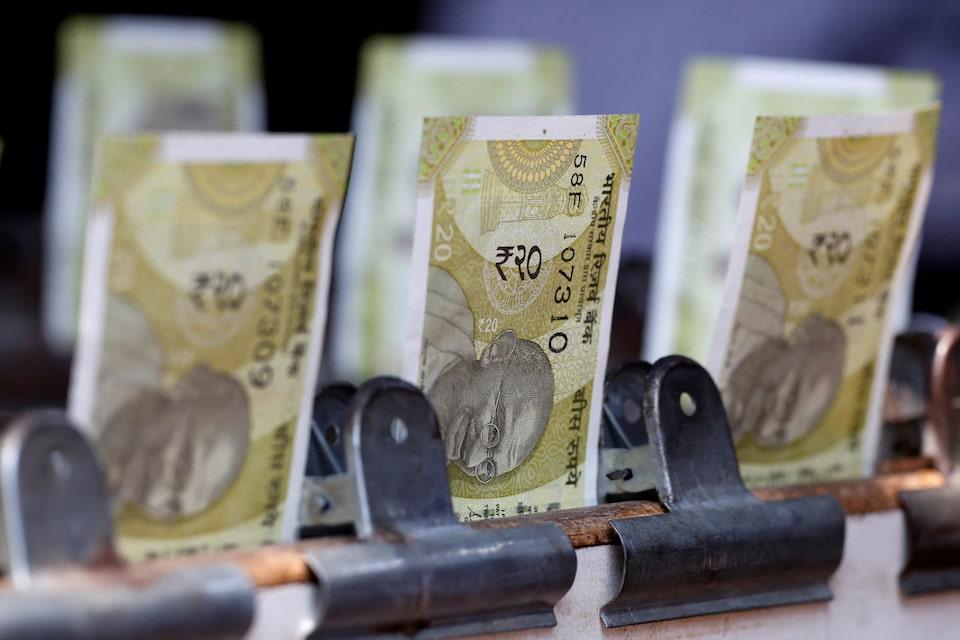
MUMBAI, June 16 (Reuters) - The Indian rupee was little changed on Monday as the impact of risk aversion spurred by an escalation of the Iran-Israel conflict ran into dollar sales from exporters and a rise in local equities. The rupee was at 86.0625 against the U.S. dollar as of 11:50 a.m. IST, nearly flat compared to its close at 86.08 in the previous session. Sign up here. India's benchmark equity indexes, the BSE Sensex (.BSESN) , opens new tab and Nifty 50 (.NSEI) , opens new tab, rose about 0.7% each, turning around from two days of losses spurred by rising geopolitical tensions in the Middle East. The conflict between Iran and Israel escalated over the weekend with both countries launching fresh attacks. Worries over the conflict pushed up crude oil prices with Brent futures quoting at $74.69 per barrel, up over 15% over June so far. "Rising geopolitical tensions have overshadowed positive inflation data from India, driving USD/INR above the 86.00-level. Higher energy costs could weigh on India’s trade balance and stoke inflation," MUFG Bank said in a note. India's trade data for May is due later in the day. Economists polled by Reuters expect India's merchandise trade gap to have narrowed slightly to $25 billion last month, down from $26.4 billion in April. Traders said dollar-selling interest from exporters alongside a broad pullback in the greenback was supporting the rupee. The dollar index was down 0.1% at 98.1 while Asian currencies were trading mixed. The focus this week will be on a series of central bank policy decisions, including the U.S. Federal Reserve on Wednesday. The Fed is widely expected to keep rates unchanged with market participants focusing on future projections for policy rates alongside commentary from Chair Jerome Powell. https://www.reuters.com/world/india/rupee-nearly-flat-wedged-between-risk-aversion-exporter-dollar-sales-2025-06-16/
2025-06-16 06:19
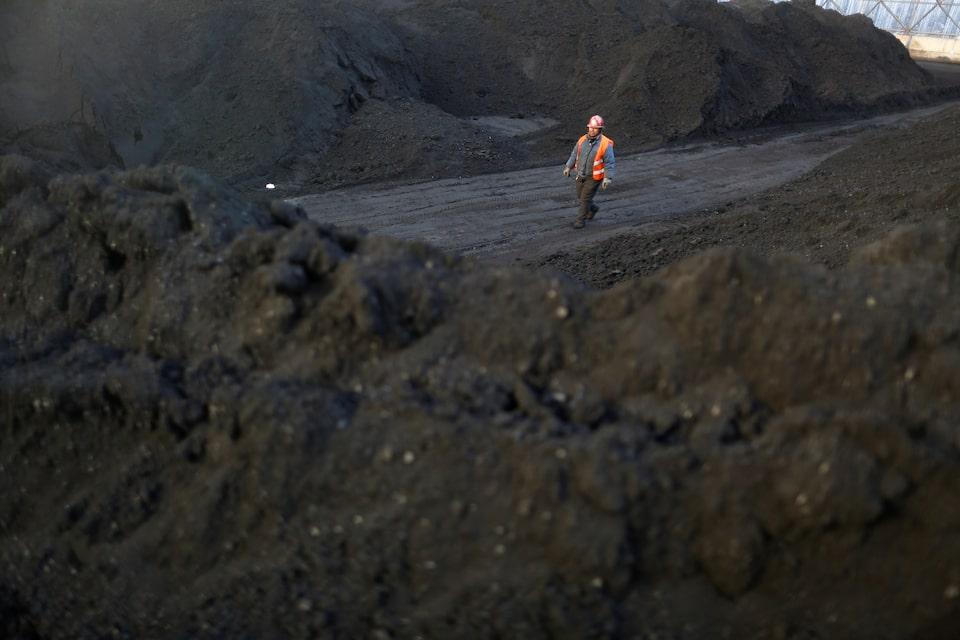
BEIJING/SINGAPORE, June 16 (Reuters) - China sent a rare shipment of at least three cargoes of coking coal to processors in Indonesia's Sulawesi in May, sources familiar with the matter said, encroaching on a market typically dominated by supplies from Australia and Indonesia. The world's biggest importer of coking coal, China is not a major exporter of the steelmaking fuel, and has exported it to Indonesia only three times since the start of 2024, monthly Chinese customs data shows. Sign up here. State-run Shanxi Coking Coal Group (000983.SZ) , opens new tab sold coking coal to China Risun Group (1907.HK) , opens new tab, which was later exported to Indonesia last month, three sources said. Risun runs one of the largest coke-processing plants in Indonesia's Sulawesi region. The state-run group sold another cargo to Hong Kong Jinteng Development Ltd for export to Indonesia, the source said, while the second source added that it also sold a third cargo to a Dexin Steel plant in Indonesia. The sources sought anonymity as they were not authorised to speak on the issue. Shanxi Coking Coal, China Risun and Dexin Steel did not immediately respond to requests seeking comment. Reuters was unable to reach Hong Kong Jinteng Development Ltd. Independent consultant Lawrence Yan said the moves were designed to test the economic feasibility of Chinese supply and show traditional sellers, such as Australia, that Indonesian plants had alternatives. Higher costs and strong competition from Russia and Mongolia made it unlikely the trade would become mainstream, however, he added. In the longer term, as China's slowing steel industry could free up supply of coking coal, turning it into a regular export product, an executive at Chinese trading house Winsway said last week. China exported 78,030 metric tons of coking coal to Indonesia in April, the first shipment since last July. Data for May is not available yet. INDONESIAN COKE OVERCAPACITY Coke processing plants in Sulawesi have emerged as a supply hub for metallurgical coke - a raw material used by steelmakers, boosting demand for coking coal, which is used to make the coke. Indonesia's exports of met coke hit a record high in 2024, according to data from Kpler. However, the region is now struggling with overcapacity, one of the sources said, with utilisation at only 60% to 70%. Indonesia's met coke exports have also been hit by December's import curbs imposed by major buyer India. https://www.reuters.com/markets/commodities/china-sells-coking-coal-indonesia-rare-trade-sources-say-2025-06-16/
2025-06-16 06:09
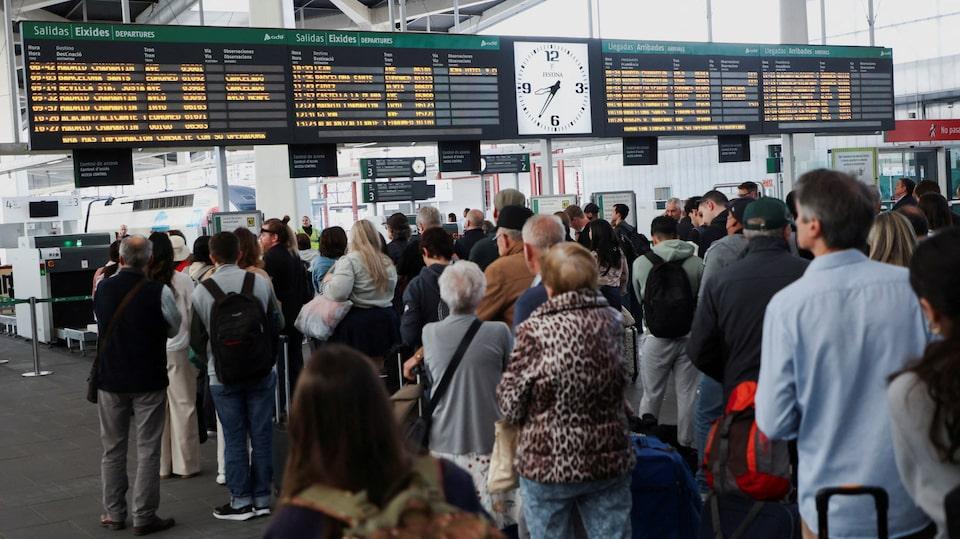
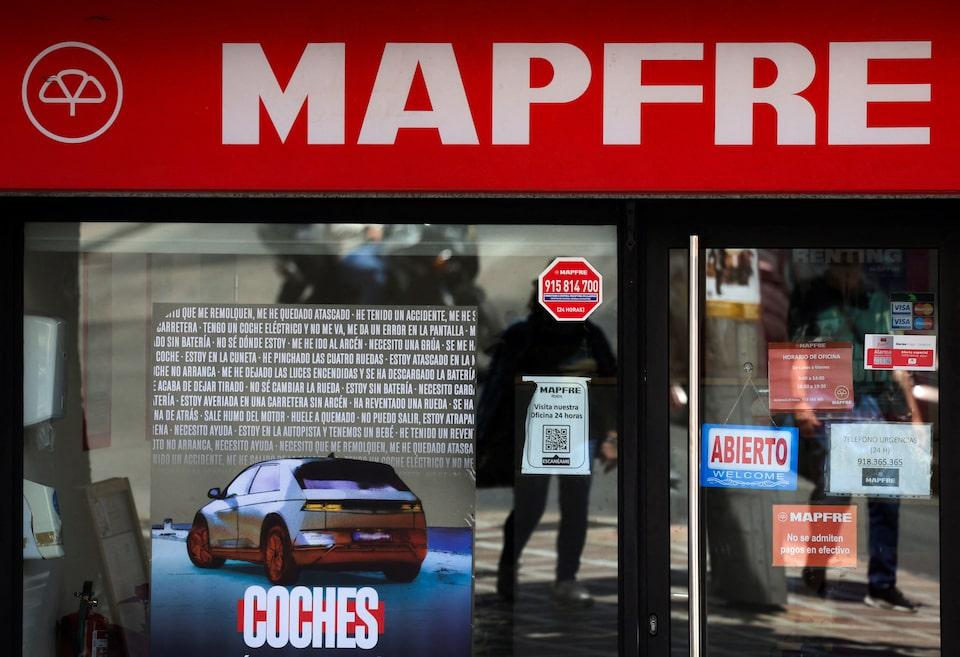
Insurance companies note rise in travel insurance purchases, especially 'Cancel For Any Reason' protection Parametric insurance gains popularity, offering automatic compensation for travel disruptions Business turn to bespoke advice on cross-border travel LONDON/NEW YORK, June 16 (Reuters) - With flight cancellations, delays and other disruptions on the rise, leisure travellers are being increasingly discerning over the level and type of insurance they buy and businesses are turning to specialist advisory services to limit risk. Since 2019, travel disruptions around the world have risen due to everything from COVID-19, extreme weather, volcanic eruptions, military conflict, jet safety issues, computer glitches and fires which have closed airports, grounded planes and stranded millions of passengers. Sign up here. In the U.S., ongoing air traffic controller shortages and aging technology have caused significant disruption. In May, equipment outages, runway construction and staffing shortages caused flight cancellations, diversions and delays at Newark Liberty, one of the main airports serving New York City. On Friday, Israel attacked Iran, forcing carriers to cancel or divert thousands of flights to avoid conflict in the Middle East. Even with insurance, many policies specify a multitude of exemptions in the fine print. As a result, more travellers are taking out higher-end insurance policies, often at higher premiums, to better protect themselves, according to interviews with nine travel executives, insurance companies and analysts. "We're in times that are quite unstable so people are cancelling more frequently than previously," said Duncan Greenfield-Turk, CEO of Global Travel Moments, a luxury travel agency based in London. European tourists have increased their purchases of travel insurance for this summer by 3% compared with last year, according to German insurer Allianz Partners. Squaremouth, the largest travel insurance marketplace in the U.S., has seen a 34% year-over-year increase globally in purchases of "Cancel For Any Reason" protection. British and U.S. holidaymakers in particular are more willing to pay a higher premium to protect their trip, said Anna Kofoed, the CEO of Travel for Allianz Partners. About 32% more travellers globally requested an insurance quote from January to April compared to the same period in 2024, according to data from online travel insurance broker InsureMyTrip. BUSINESSES SEEK TRAVEL ADVICE There has also been a rise in demand for bespoke travel advice as U.S. President Donald Trump has announced a number of immigration-related restrictions including tighter visa vetting procedures and travel bans. World Travel Protection (WTP), a global firm that advises businesses on travel risk, said it has seen a rise in U.S. residents being detained at U.S. borders and told their documents were no longer valid as visa rules were changing. WTP has worked with U.S. government representatives to help those individuals return home, according to Frank Harrison, the company's regional security director for the Americas. "We're seeing a very strong uptick in organizations coming to us wanting to know how to navigate the landscape of the U.S. within the wider business," Harrison said. CIBT, which provides non-legal visa and immigration guidance, has seen a 50% rise in inquiries since November from companies seeking to better prepare their employees for travel to the U.S., according to CEO Steven Diehl. HIGH-END INSURANCE PRODUCTS EMERGE One of the newest areas of business is in parametric insurance, which pays compensation automatically after a "trigger" event such as a flight delay without the need to file a claim. Parametric insurance took off in some countries during the COVID-19 pandemic and in recent months more insurers around the world have begun to offer it. When testing the market last year, Spanish insurer Mapfre's Mawdy unit in Ireland said about 11% more customers opted for higher-tier travel insurance packages when instant compensation was included. Travel destinations have also spotted an opportunity in this burgeoning market. Marriott Bonvoy's villa rentals and waterparks offer parametric weather insurance at the point of booking, automatically paying out on rainy days. Sensible Weather, one of the providers of such coverage, reported its weather guarantees were added to 30% of theme park bookings and 10–15% of higher-value accommodation bookings when they were offered in 2024. In March, Squaremouth launched a new insurance product with cruise-specific benefits such as coverage for being confined on a cruise ship or missing the port of call. "Everyone is trying to make it easier for people to understand that each trip (...) is going to have a different set of concerns whether it's hurricanes or blizzards or what's going on with air traffic controllers," Suzanne Morrow, CEO of online insurance broker InsureMyTrip told Reuters. https://www.reuters.com/business/premium-insurance-demand-rises-with-global-travel-disruptions-2025-06-16/
2025-06-16 06:04
EIB backs Bay of Biscay interconnector project Funding comes after huge Iberian power outage in April Spain, Portugal had sought EU help for power links LUXEMBOURG, June 16 (Reuters) - The European Investment Bank will back a planned power interconnector between Spain and France with an investment of 1.6 billion euros ($1.84 billion), it said on Monday, after Spain and Portugal's governments sought EU help to improve their power links following a huge blackout in April. Spain and Portugal's poor electricity connections to the rest of Europe were thrown into the spotlight by the countries' unprecedented power outage, which experts and officials said could have been less severe if the Iberian Peninsula had more interconnectors to exchange power with other countries. Sign up here. The EIB, the European Union's lending arm, said it would support the Bay of Biscay interconnector via loans to Spain and France's power system operators, Red Electrica and RTE, who aim to launch the 400-kilometre project in 2028. The subsea link would increase the amount of power that France and Spain can exchange, from 2.8 gigawatts to 5 gigawatts. "EIB support for the France-Spain electricity interconnection will be key to ensuring that the Iberian Peninsula is no longer an energy island," EIB Group President Nadia Calvino said in a statement. The causes of the Iberian outage are still being investigated. Following the blackout, Spain and Portugal's governments asked the EU last month to step in to ensure new interconnection projects with France move ahead, a letter previously reported by Reuters showed. Works to strengthen an existing interconnector between France and Spain are expected to wrap this year. France's RTE has also assessed two additional interconnections with Spain over the Pyrenees, but noted that the projects' beneficiaries would be located outside of France. Thomas Veyrenc, board member at France's RTE, said on Monday that the Bay of Biscay project would increase the solidarity between France and Spain. Beatriz Corredor, chair of Red Electrica's parent company, Redeia (REDE.MC) , opens new tab, said the countries should also press ahead with the planned interconnections through the Pyrenees. Iberia has just 3% of its electricity capacity connected to neighbouring countries, far below the EU's target for countries to reach 15% by 2030. ($1 = 0.8675 euro) https://www.reuters.com/sustainability/climate-energy/eib-backs-spain-france-power-link-with-16-billion-euros-2025-06-16/