2025-06-16 05:54
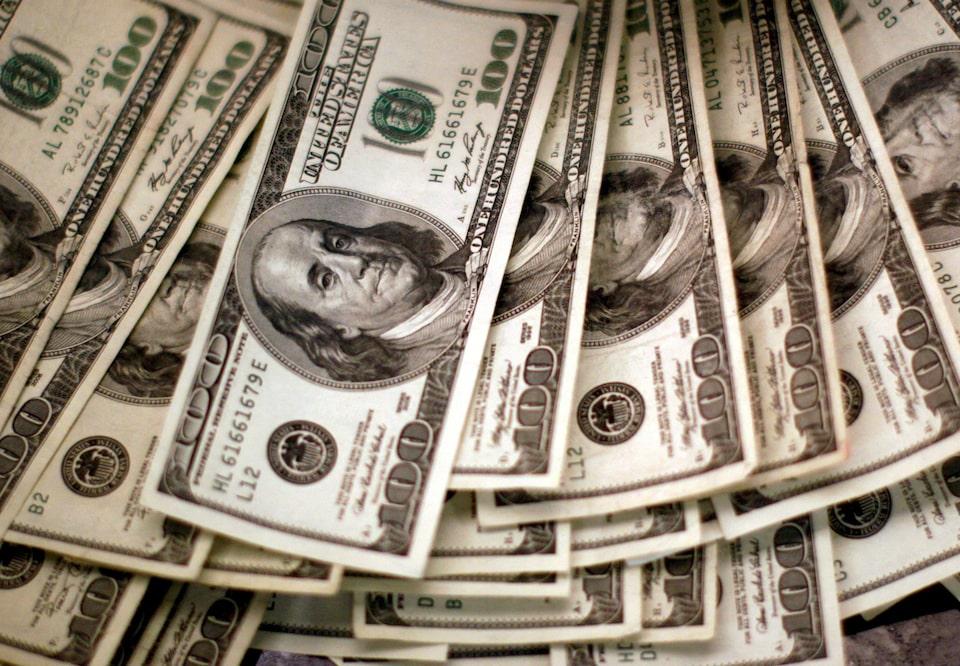
Markets fear Israel-Iran fighting worsens into regional conflict Monetary policy decisions by Fed, BOJ, BoE due this week NEW YORK, June 16 (Reuters) - The dollar strengthened against the safe-haven yen and Swiss franc on Monday, but weakened against most major currencies, as investors monitored the fighting between Israel and Iran for signs it could escalate into a broader regional conflict and braced for a week packed with central bank meetings. Tehran, however, has asked Gulf state leaders to press U.S. President Donald Trump to use his influence on Israel for a ceasefire in return for Iran's flexibility in nuclear talks. That has partly helped the dollar recoup losses against the yen and Swiss franc. Sign up here. Still, market participants mulled the prospect that Iran might seek to choke off the Strait of Hormuz - the world's most important gateway for oil shipping. This could raise broader economic risks from disruptions in the energy-rich Middle East. Meanwhile, the U.S. military moved a large number of refuelling aircraft to Europe to give Trump options as Middle East tensions rise, and the U.S. aircraft carrier Nimitz was heading to the Middle East on a pre-planned deployment. The dollar, which until recently had always been the ultimate safe haven in times of geopolitical or financial turmoil, was last up 0.38% at 144.65 yen after rising nearly 0.4% earlier on Monday. The euro rose 0.23% to $1.1576. The U.S. currency also rose against the Swiss franc at 0.8136 franc, while an index that measures the dollar against six peers declined 0.25% to 98.02. "Beyond the consolidation in U.S. dollar exchange rates, the lack of volatility in risk-sensitive currencies like the Japanese yen and Swiss franc suggest that investor confidence has been unfazed by the conflict between Iran and Israel," said David Song, senior strategist, at Forex.com. U.S. crude futures fell 2.5%, following Friday's sharp rally in the wake of Israel's preemptive strike on Iran. "I still think that (the) surprise of the day is that oil, not gold nor the U.S. dollar has reacted positively to the turmoil," said Marc Chandler, chief market strategist at Bannockburn Global Forex. "The greenback might be losing its safe-haven status, but today is not the test." Currencies that are positively correlated to risk such as the Australian and the New Zealand dollars were 0.6% and 0.9% higher, respectively, while the oil-exposed Norwegian crown was flat, after hitting its highest since early 2023 earlier in the day. On Friday, investors had bought back into the dollar, which has lost more than 9% in value against a basket of six other currencies this year as U.S. President Donald Trump's move to reshape the global trade order heightened economic uncertainty. But analysts were less convinced that the trend could continue until there was more clarity on the tariff front. "The 800-pound gorilla in the room is the U.S. tariff policy," Chandler said. "We've got the July 9 date that the so-called reciprocal tariffs are supposed to end. ... And so that sort of hangs over the market." The U.S. Federal Reserve gives its latest policy decision on Wednesday, with the Israel-Iran conflict adding complexity for policymakers. Investors remain nervous over Trump's deadline on trade deals due in about three weeks, while agreements with major trade partners, including the European Union and Japan, are yet to be signed. They will look for progress in any bilateral meetings with the U.S. on the sidelines of a Group of Seven leaders' meeting in Canada. CENTRAL BANK MEETINGS Top of the agenda this week is a host of central bank monetary policy decisions, with the spotlight on the Fed. The central bank is widely expected to leave borrowing costs steady, but investors will likely lap up its views on recent data that has broadly indicated softening economic activity even as risks to increasing price pressures stay high. The Bank of Japan is expected to deliver its interest rate decision at the end of its two-day meeting on Tuesday, with traders largely pricing in no change to policy. Expectations are that the central bank could also consider tapering its government bond holdings from the next fiscal year as the Japanese government pushes for more domestic ownership. Central banks in Britain, Switzerland, Sweden and Norway are also slated to unveil their policy decisions this week. https://www.reuters.com/world/africa/dollar-inches-up-markets-edge-over-middle-east-conflict-2025-06-16/
2025-06-16 05:40
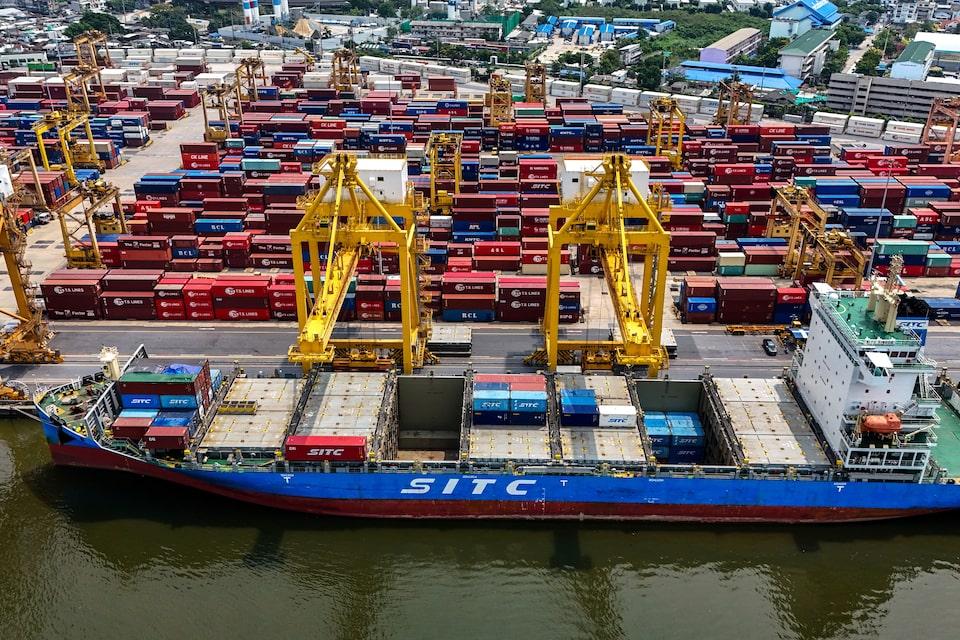
BANGKOK, June 16 (Reuters) - Thailand's commerce minister on Monday said his country would have trade talks with the United States and expressed confidence both sides could agree on good terms on tariffs, possibly as low as 10%. Pichai Naripthaphan told reporters he expected the talks would go well. He said Thai and U.S. officials would hold talks this week via video conference, he said, but said a date for talks at a ministerial level had not yet been set. Sign up here. He did not provide details on what would be discussed in the talks or why he thought the tariff level would be lowered from the 36% rate that the U.S. has said it will put on Thai goods. "Don't worry, we have everything prepared. The negotiation should be successful," he said. "We are in the process of detailing what is involved, but we can't tell you yet." Pichai also said export data in May were "good" and would be released on Wednesday. He also called for a weaker baht to support exports and tourism, saying a level of 37-38 per U.S. dollar was an appropriate level. The baht traded at 32.45 against the U.S. dollar on Monday. https://www.reuters.com/world/asia-pacific/thai-commerce-minister-confident-negotiating-us-tariffs-low-10-2025-06-16/
2025-06-16 05:04
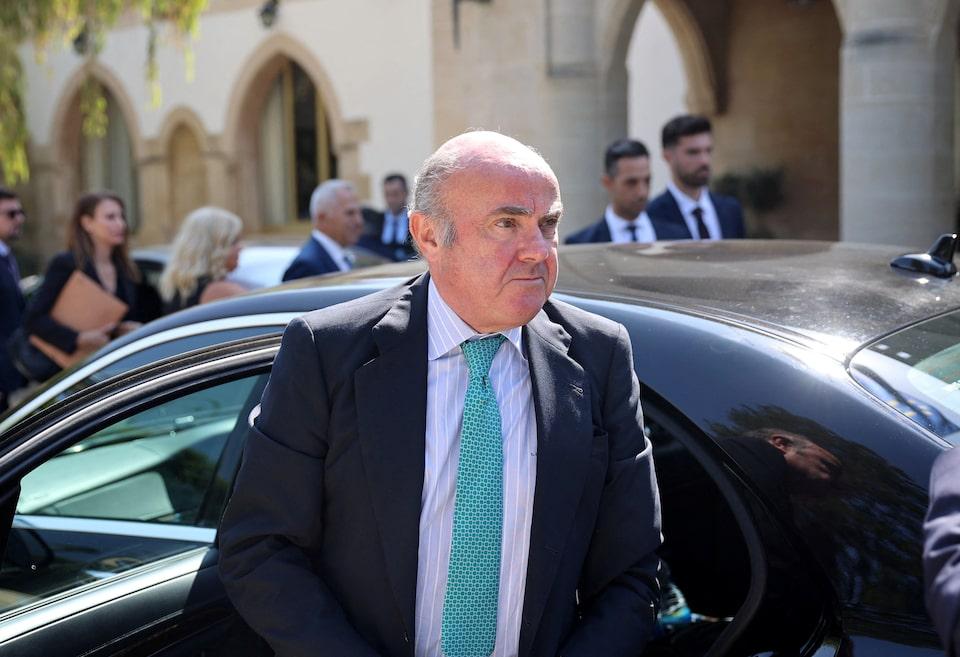
Markets have understood well the ECB's signals Risk of undershooting inflation very limited, de Guindos says Euro's firming not a major concern FRANKFURT, June 16 (Reuters) - Tariffs will weigh on euro zone economic growth and prices for years, but there is little risk of inflation falling too low, and even the euro's surge against the dollar is not a major worry, European Central Bank Vice President Luis de Guindos said. The ECB signalled a pause in policy easing this month despite projections showing price growth dipping below its 2% target temporarily on the strong euro and low oil prices, reviving worries that the ultra-low inflation environment of the pre-pandemic decade could return. Sign up here. But de Guindos played down those fears, arguing that the ECB was finally within striking distance of its target after years of under- and overshooting. "The risk of undershooting is very limited in my view," de Guindos told Reuters in an interview. "Our assessment is that risks for inflation are balanced." A key reason why inflation will rebound to target after dipping to 1.4% in the first quarter of 2026 is that the labour market remains tight and unions will keep demanding healthy increases, keeping compensation growth at 3%, de Guindos argued. While de Guindos did not explicitly argue for a pause in policy easing, he said that financial investors, who now bet on just one more interest rate cut, possibly towards the end of the year, correctly interpreted ECB President Christine Lagarde's message. "Markets have understood perfectly well what the President said about being in a good position," he said. "I think that markets believe and discount that we are very close to our target of sustainable 2% inflation over the medium term." The euro has risen by 11% against the dollar in the past three months, hitting its highest level in almost four years at $1.1632 on Thursday. As well as dealing exporters another blow on top of U.S. tariffs, a stronger euro could lower imported prices further. But de Guindos said the exchange rate had not been volatile, nor had its appreciation been rapid, two key metrics in his view. "I think that, at $1.15, the euro’s exchange rate is not going to be a big obstacle," said de Guindos, a former Spanish economy minister and the longest-serving ECB board member. RESERVE CURRENCY? De Guindos poured cold water on talk that the euro could soon challenge the dollar's status as the world's dominant currency. The euro zone still lacked the necessary financial architecture or defence capabilities to become a real challenger and that is also going to limit its gains, another argument to counter fears over too low inflation. "The role of the U.S. dollar as a reserve currency in the short term is not going to be challenged, in my opinion," de Guindos said. The dollar accounted for about 58% of global foreign exchange reserves at the end of 2024. While that is down 10 percentage points from a decade earlier, the euro's share has not increased from around 20%. Instead, smaller currencies have benefited. Although excessive government spending and erratic policy in the U.S. have raised questions about debt sustainability and the status of the dollar, there are no doubts about the reliability of the U.S. Federal Reserve, de Guindos added. He said the ECB was convinced that the Fed's recently renewed dollar backstop would remain in place and that gold reserves kept by some of the bloc's central banks at the New York Fed were so safe that even the idea of moving them amid the current political turmoil did not come up. https://www.reuters.com/business/finance/ecb-relaxed-about-euro-strength-risk-too-low-inflation-de-guindos-says-2025-06-16/
2025-06-16 05:01
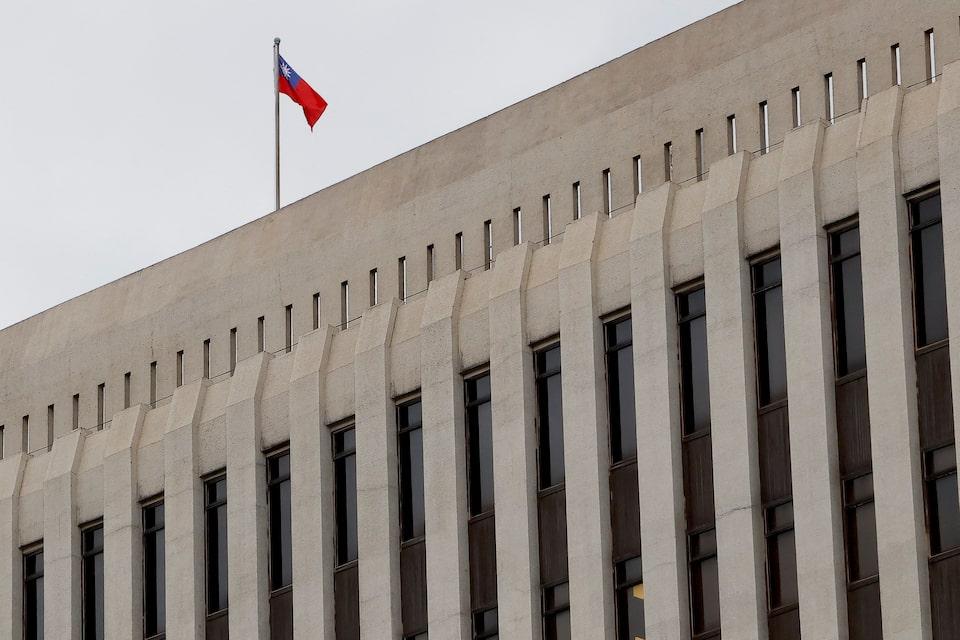
For poll data click: Rates seen unchanged by 29 of 30 economists in a poll Central bank expected to stand pat through Q1 2026 Rate decision on Thursday after 4 p.m. (0800 GMT) TAIPEI, June 16 (Reuters) - Taiwan's central bank is likely to maintain its policy interest rate this week and keep it steady through the first quarter of next year, given the strong performance of the tech-focused economy, according to economists in a Reuters poll. In March, the central bank left the benchmark discount rate (TWINTR=ECI) , opens new tab at 2%, as expected, after raising it from 1.875% in March 2024 in anticipation of a rise in electricity prices. Sign up here. At its next quarterly meeting on Thursday, it is expected to keep the rate steady, according to 29 of the 30 economists surveyed. Economists who provided forecasts beyond this week predicted the bank will maintain its stance through the first quarter of 2026, when they forecast a rate cut to 1.875%. Taiwan's tech-centred, export-dependent economy has been supported by demand from the artificial intelligence boom, which has driven orders for companies such as TSMC (2330.TW) , opens new tab, the world's largest contract chipmaker. "Taiwan's economy is stable and inflation is moderate, so there is no need to cut interest rates," said analyst Chiang Kuang-yu of Masterlink Investment Advisory. The economy is expected to expand 3.1% this year due to the AI boom, the government's statistics agency said last month, though that is slower than last year's growth of 4.59% given uncertainty over U.S. tariffs. On inflation, Taiwan's consumer price index (CPI) rose by a lower-than-forecast 1.55% in May, its lowest level in more than four years. The central bank, which considers 2% its "warning" line, has made easing inflation a priority. Still, Taiwanese policymakers have warned of the impact to the trade-dependent economy posed by higher tariffs threatened by U.S. President Donald Trump. Taiwan and the United States remain in talks to resolve the issue. The central bank is expected to maintain a wait-and-see stance before the end of Trump's 90-day pause on his "reciprocal" tariff rates in early July, Oxford Economics said in a research report. "However, with tariff risks potentially re-emerging from the third quarter and the real estate market continuing to cool, the central bank is projected to initiate an interest rate cut cycle by the end of this year," it added. The Taiwan central bank decision will come one day after the U.S. Federal Reserve, which is widely expected to hold interest rates steady. The Taiwan central bank will also announce its revised economic growth and inflation forecasts for this year on Thursday. https://www.reuters.com/world/asia-pacific/taiwan-set-hold-rates-steady-with-economy-strong-2025-06-16/
2025-06-16 04:42
A look at the day ahead in European and global markets from Wayne Cole. While Israel and Iran continue to exchange missiles, markets have been resilient so far on Monday with most Asian indexes in the black. Chinese retail sales topped forecasts, but to no discernible reaction. Sign up here. Oil jumped 4% at the open, but soon calmed down and is now up around 1%. Given the region's history, war in the Middle East is not surprising and, so far, this one does not look like spreading wider. Crucially, investors seem to be assuming Iran will not threaten to close the Strait of Hormuz since that would risk dragging the United States into the conflict. There's also plenty of scope for Saudi Arabia and the rest of OPEC to expand supply if needed to keep prices restrained. The escalation is certainly an unwanted headache for the G7 meeting in Canada, which faces more than enough confrontation ahead over President Trump's tariffs on allies. There has been little sign of concrete progress on any trade deals, and even last week's U.S.-China tariff truce might not have fixed the restrictions on minerals most closely tied to national security. The spike in oil will be an added complication for the Federal Reserve meeting this week, but it would have to be a sustained rise in prices to be a true inflationary threat. A steady outcome on rates is considered a done deal with the real focus on whether the Fed's dot plots keep two cuts for this year, or scale back to just one as some suspect. It's a busy week for central banks in general, with the Bank of Japan expected to stand pat on Tuesday but maybe signal a slowdown in its bond tapering for next year. The Bank of England and Norges Bank are also seen holding steady, while the Riksbank is likely to cut. Markets are fully priced for a quarter point easing to zero from the Swiss National Bank, with a good chance of going negative given the strength of the franc. Key developments that could influence markets on Monday: - Appearances by ECB members Joachim Nagel and Piero Cipollone https://www.reuters.com/world/china/global-markets-view-europe-2025-06-16/

2025-06-16 03:13
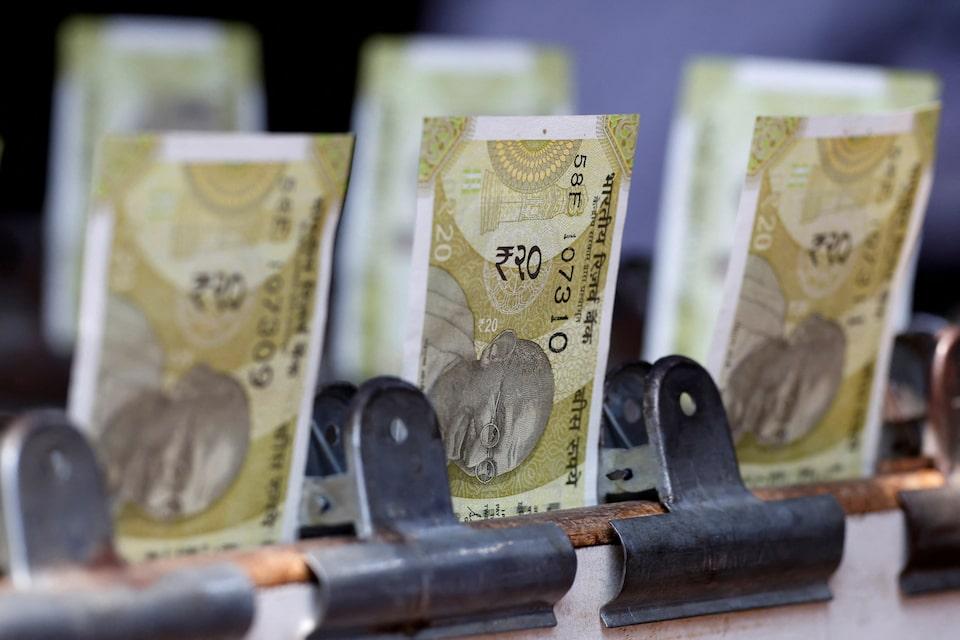
MUMBAI, June 16 (Reuters) - The Indian rupee is set to extend losses at Monday’s open, weighed by fears that the intensifying Israel-Iran conflict is likely to increase oil prices further. Expectations that the Reserve Bank of India (RBI) will step in to curb depreciation pressures amid oil risks may offer some support to the local currency, traders said. Sign up here. The 1-month non-deliverable forward indicated an open in the 86.16-86.20 range, versus 86.08 in the previous session. The Indian currency had slipped to 86.20 on Friday — its weakest level in over two months — following Israel’s attack on Iran. While it recovered from the day’s lows, likely due to an RBI intervention, it still logged its worst daily performance in more than a month. With the Israel-Iran conflict escalating over the weekend and on Monday, the rupee is unlikely to find relief. Early on Monday, Israel's air force attacked sites in central Iran with surface-to-surface missile. Brent crude jumped at open on Monday, climbing past $78, before pulling back. "Oil’s getting jumpy, and if prices keep climbing, it’s hard to bet against (dollar/rupee) moving higher," a dealer at a foreign bank said. "That said, RBI won’t just sit back — they’ll keep a lid on things like they always do." Other Asian currencies were mostly weaker at the start of the week, while the dollar index was little changed. The focus this week is on a series of central bank policy decisions, with the U.S. Federal Reserve’s meeting on Wednesday taking centre stage. "A further escalation in Iranian-Israeli tensions could take oil prices above $80 and would mean more upside for the dollar. The Fed was already likely to keep rates on hold through the third quarter and the latest developments only reinforce that," ING Bank said in a note. KEY INDICATORS: ** One-month non-deliverable rupee forward at 86.26; onshore one-month forward premium at 9.25 paise ** Dollar index up at 98.30 ** Brent crude futures up 1% at $75 per barrel ** Ten-year U.S. note yield at 4.42% ** As per NSDL data, foreign investors sold a net $383mln worth of Indian shares on Jun. 12 ** NSDL data shows foreign investors bought a net $5mln worth of Indian bonds on Jun. 12 https://www.reuters.com/world/india/rupee-braces-more-losses-oil-risks-rbi-likely-provide-support-2025-06-16/