2025-06-13 20:48
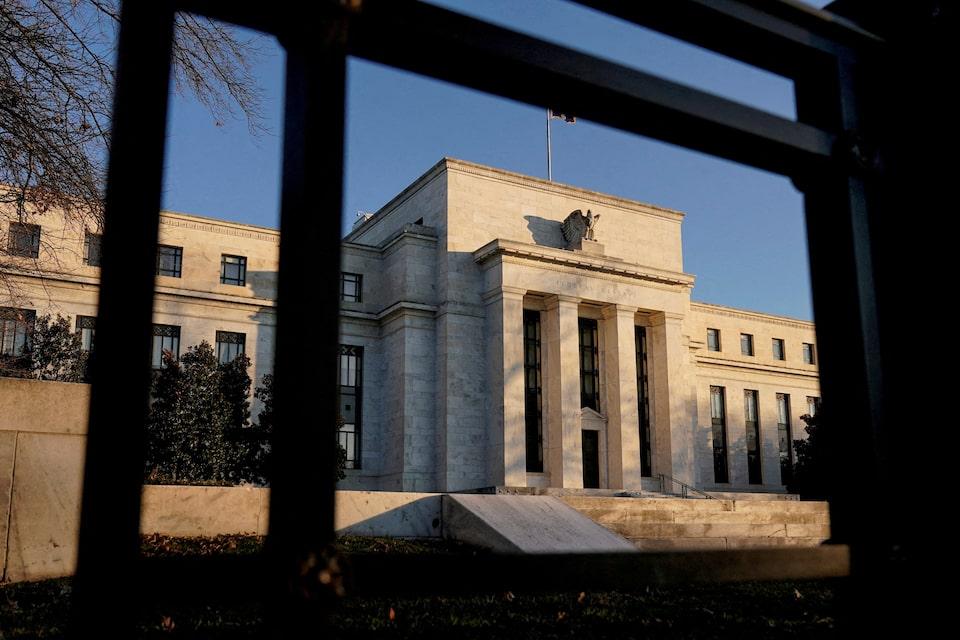
US central bank's monetary policy decision due on Wednesday Fed expected to hold rates steady, investors watching economic projections Monthly retail sales out on Tuesday, with tariff impact under scrutiny NEW YORK, June 13 (Reuters) - The Federal Reserve's balancing act between concerns about a weakening labor market and still above-target inflation will take center stage for investors in the coming week as they weigh risks to the rally in the U.S. stock market. The benchmark S&P 500 (.SPX) , opens new tab has rebounded sharply over the past two months as worries about the impact of trade barriers on the economy have eased since President Donald Trump's "Liberation Day" announcement on April 2 sent the market plunging. Sign up here. The rally hit a stumbling block on Friday as stocks fell globally and investors moved to safe-haven assets after Israel launched a military strike on Iran, and Iran fired missiles in response. Major U.S. indexes ended down over 1% on Friday, with the S&P 500 falling 1.1%. The Fed's two-day monetary policy meeting could present the next major obstacle for markets. While the U.S. central bank is widely expected to hold interest rates steady when it announces its decision on Wednesday, investors are eager for any hints about whether the Fed might be poised to lower rates in the coming months. The fed funds rate has been at 4.25%-4.50% since the central bank last eased in December, by a quarter percentage point. "What the Fed is going to have to try to do next week is encourage the belief that they are able to act without actually promising anything," said Drew Matus, chief market strategist at MetLife Investment Management. "If they move rates lower too early before there is evidence that there is weakening in the economy that they can then point to, they raise the risk of actually boosting inflation expectations further." At its last meeting in May, the central bank said risks of both higher inflation and unemployment had risen. The Fed has a dual mandate to maintain full employment and price stability, and investors will be seeking any signs of whether officials are more concerned about one of those goals and what that means for the path of rates. One area of focus on Wednesday will be an update to Fed officials' projections about monetary policy and the economy, which were last published in March. Larry Werther, chief U.S. economist of Daiwa Capital Markets America, will be watching estimates for unemployment. While the Fed officials' last projection was for unemployment to end 2025 at 4.4%, Werther is projecting a year-end rate of 4.6%, saying recent data including jobless claims has indicated softening in the labor market. "If the unemployment rate is expected to move higher, just aligning with what we've seen in the labor market, and inflation isn't expected to move much beyond what the Fed is projecting, then it opens the door to further easing in support of the labor market later this year," Werther said. Fed funds futures indicate markets expect two rate cuts by the end of this year, with the next one likely in September, according to LSEG data. Such bets were bolstered by benign inflation reports this week. Investors are also focused on Trump's selection to succeed Fed Chair Jerome Powell, with the president regularly urging the central bank to lower rates. Trump earlier this month said a decision on the next chair would be coming soon, although he said on Thursday that he would not fire Powell, whose term ends in May 2026. The release of monthly retail sales on Tuesday will also be in focus. Investors want to see if tariffs are leading to higher prices that pressure consumer spending. Trade developments are likely to continue to keep markets on edge, with a 90-day pause on a wide array of Trump's tariffs set to end on July 8. A trade truce this week between China and the United States offered hope that the two countries can reach a lasting resolution, but the absence of detailed terms left room for potential future conflict. The S&P 500 (.SPX) , opens new tab is up 1.6% so far this year. But the index has gained 20% since its low for the year on April 8, and is 2.7% off its record high set in February. "The market has rallied so hard, so fast," said Marta Norton, chief investment strategist at retirement and wealth services provider Empower. "There is vulnerability to anything that doesn't support that kind of benign narrative that has been established." Wall St Week Ahead runs every Friday. For the daily stock market report, please click https://www.reuters.com/business/wall-st-week-ahead-fed-meeting-focus-investors-seek-rate-path-hints-2025-06-13/
2025-06-13 20:37
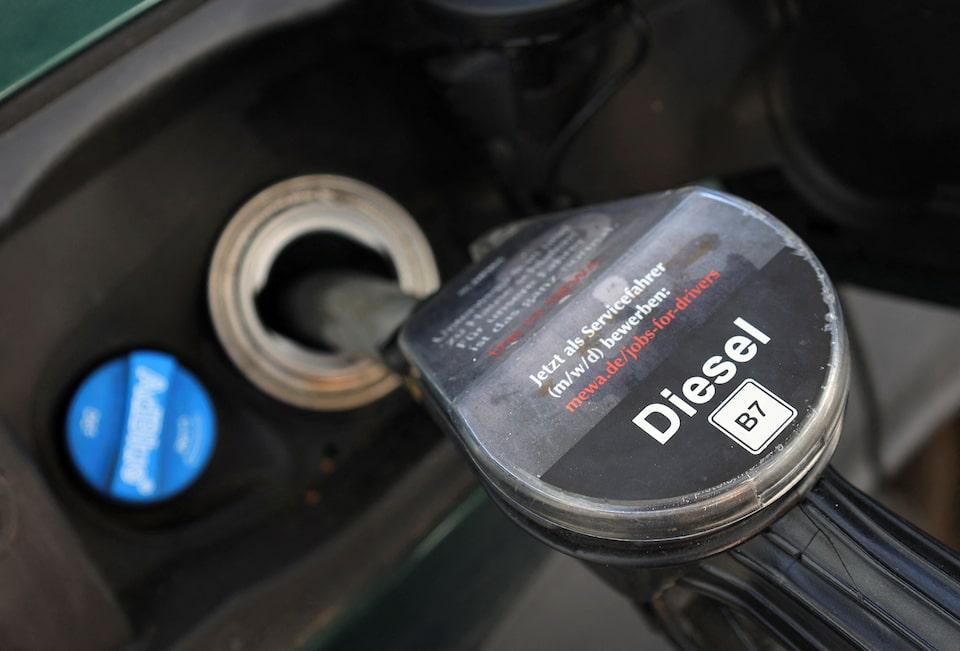
Middle East conflict likely to impact diesel more than gasoline US diesel futures rise 8%, while oil gains 7%, gasoline gains 4% Conflict could impact global diesel output, Middle East exports US retail fuel prices likely to surge over coming weeks NEW YORK, June 13 (Reuters) - U.S. ultra-low sulfur diesel futures hit the highest level since February, outpacing gains in oil and gasoline as analysts warned that diesel supply is the most exposed to the conflict in the Middle East. Israel on Friday launched the biggest ever direct attack on Iran and said the huge wave of airstrikes was only the start of its campaign. Iran has since launched retaliatory strikes, with explosions heard over Tel Aviv and Jerusalem. Sign up here. Crude oil futures jumped about 7% as analysts worried Iran's response could include a blockade of the Strait of Hormuz, through which a fifth of global oil supplies traverses. Diesel futures jumped even more, surging about 8% for their biggest single-day gains since April 2022. Diesel outperformed because the conflict's biggest impact is expected to be on the supply of medium heavy-sour crude grades, which are better suited for production of distillate fuels, StoneX oil analyst Alex Hodes said. The Middle East is also a major export hub for distillate fuels like diesel, gasoil and jet fuel, said Matias Togni, analyst at oil market insights firm Next Barrel. The conflict could impact liquefied natural gas flows within the region and lead to higher diesel and fuel oil consumption for power generation, with Egypt already showing signs of such a switch, Togni said. Combined diesel, gasoil and jet fuel exports from the Middle East averaged 1.76 million barrels per day in May, close to 2% of total world oil consumption, according to Kpler data. RETAIL SPIKE TO FOLLOW Existing inventories for diesel are already low, adding to concerns that the conflict will lower Middle East diesel exports and global production, said StoneX's Hodes. U.S. inventories of diesel and heating oil stood at 108.9 million barrels in the week ended June 6, about 15% below the past five years' average, U.S. Energy Information Administration data showed. Combined with the surge in crude oil prices, those tight inventories are likely to cause a 10 to 30 cents a gallon surge in retail diesel prices in the U.S. over the next two weeks, GasBuddy analyst Patrick De Haan said. By contrast, U.S. gasoline stocks were slightly above the five-year average at 214.7 million barrels, the EIA data showed. GasBuddy is estimating a five to 15 cents per gallon jump in U.S. gasoline prices over the coming weeks. U.S. Gasoline futures rose 8.47 cents to settle at $2.2276 a gallon on Friday, while ULSD futures rose 17 cents to settle at $2.3587 a gallon on Friday. https://www.reuters.com/business/energy/diesel-most-exposed-middle-east-conflict-us-futures-surge-8-2025-06-13/
2025-06-13 20:34
ORLANDO, Florida, June 13 (Reuters) - - TRADING DAY Making sense of the forces driving global markets Sign up here. By Jamie McGeever, Markets Columnist A week that started with investors in a reasonably optimistic mood, betting that the U.S. and China would strike a deal in their trade talks in London, ended on a sour note as Israel's strike on Iran sparked a sharp rise in oil prices and a selloff in world stocks. Washington and Beijing did reach a 'framework' deal, and although there is some ambiguity around the details and it has yet to be ratified, it helped ease global tariff tensions. Investor sentiment was also boosted by signs that global inflation pressures are cooling. Consumer and producer price inflation figures from the U.S., Japan, India and China were all weaker than expected, although the big caveat is the impact of tariffs has yet to be properly felt. Strong demand for long-dated U.S. Treasuries at auction this week also soothed concerns over U.S. debt sustainability. President Donald Trump's 'big, beautiful bill', the budget deficit and federal debt still loom over the market, but there was a temporary reprieve this week. Not so for the dollar. It slumped to its weakest level against a basket of currencies in more than three years and failed to draw any discernible 'safe haven' demand from the flaring geopolitical risk and tensions in the Middle East. Non-U.S. investors continue to reassess their exposure to dollar-denominated assets. Those wanting to cut their exposure will either sell assets outright, buy less, or hedge more. Many long-term investors in Europe are increasing their hedge ratios, which effectively equates to selling dollars on a large scale. The other big move of the week was oil, which surged nearly 10% at one point on Friday. It cooled a bit, but the specter of high energy prices is suddenly back. If so, what does that do for the inflation outlook? We may get an insight into what policymakers think about that next week. The G7 leaders' summit in Canada gets underway on Sunday, and three of the world's most important central banks deliver their latest policy decisions - the Federal Reserve, Bank of Japan and Bank of England. I'd love to hear from you, so please reach out to me with comments at [email protected] , opens new tab. You can also follow me at @ReutersJamie and @reutersjamie.bsky.social. This Week's Key Market Moves Chart of the Week My generosity knows no bounds, so two charts for you again this week. Both highlight current relative market price dynamics that have not been seen for around half a century. The first from Bank of America shows that, in dollar terms, emerging market stocks are the weakest relative to U.S. stocks in 50 years. BofA analysts are in no doubt what investors should do: "long EM... easy allocation decision." I wrote about this last month. The second chart is from veteran strategist Jim Paulsen, who calculates that the market cap value of U.S. fixed income assets as a share of total U.S. equity market cap is the smallest in over 50 years. Along with a historically low equity risk premium, it raises the question of how much further the gap between stocks and bonds can widen. Emerging markets and bonds, your time is ... now? Here are some of the best things I read this week: What could move markets on Monday? Opinions expressed are those of the author. They do not reflect the views of Reuters News, which, under the Trust Principles , opens new tab, is committed to integrity, independence, and freedom from bias. Trading Day is also sent by email every weekday morning. Think your friend or colleague should know about us? Forward this newsletter to them. They can also sign up here. https://www.reuters.com/business/autos-transportation/global-markets-trading-day-graphic-2025-06-13/
2025-06-13 20:26
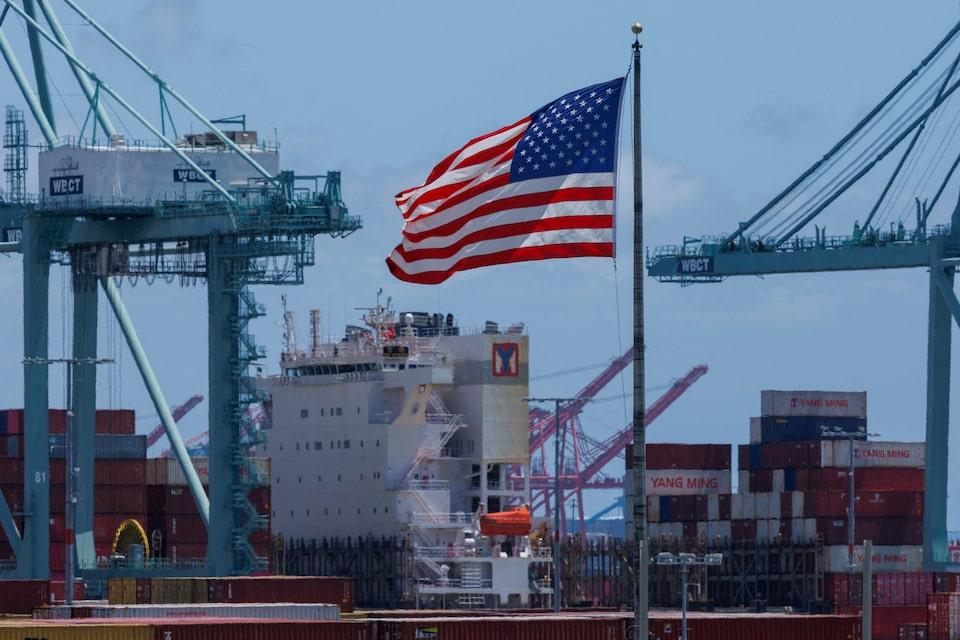
May imports to Port of Los Angeles down 9% year-on-year Incoming cargo due to rebound after China tariffs lowered to 30% from 145% Industry expects 2025 forecasts to decline from 2024 level LOS ANGELES, June 13 (Reuters) - Imports to the busiest U.S. seaport at Los Angeles dropped 9% year-on-year in May and could remain muted through the remainder of 2025, after companies responded to President Donald Trump's 145% tariffs on China by canceling or putting holds on shipments, according to port officials. China is the top U.S. supplier of seaborne goods, and Los Angeles is the No. 1 port for those imports. Domestic businesses ranging from retailer Walmart (WMT.N) , opens new tab to automaker Ford (F.N) , opens new tab rely on the toys, furniture and auto parts that land on its docks. Sign up here. The Port of Los Angeles handled the equivalent of 355,950 20-foot shipping containers of imports in May, when the 145% tariffs began to show up in data. "May marked our lowest monthly volume in over two years," Gene Seroka, executive director of the Port of Los Angeles, said on Friday. "Many importers just simply slammed on the brakes." The ports of Los Angeles and Long Beach handle 31% of U.S. ocean trade and are a barometer for U.S. economic activity. Long Beach has not reported May results. Its CEO previously forecast a more than 10% drop in May imports. The world's two biggest economies last month agreed to a 90-day pause on tit-for-tat tariffs, and the U.S. lowered the duty on many Chinese goods to 30% from 145%. The U.S. and China this week agreed to maintain that lower rate, potentially defusing a high-stakes trade dispute. Ocean shipping company Maersk (MAERSKb.CO) , opens new tab in a customer advisory on Thursday said volumes from China to the U.S. are rising following the May 12 tariff adjustment to 30%. Port executives and shipping consultants also expect imports from China to rebound, albeit at a more moderate level as 30% duties represent a significant cost increase for importers. Seroka said cargo for June appears to have returned to more normal levels with a dozen ships at the port on Friday. "It's one of the very few double-digit ship days we've had in weeks," said Seroka. Nevertheless, his outlook for the remainder of the year is muted because consumer demand is volatile and importers still face a 30% cost increase on goods from China. "I don't see the surge that some observers have called for." Industry forecasts call for 2025 imports to drop from last year due to continued uncertainty over U.S. tariffs, which also are subject to court battles. U.S. consumer sentiment improved for the first time in six months in June as trade tensions between the U.S. and China eased. But households remained worried about the economy as tariffs threaten to send prices even higher. Inventories are growing faster than sales at the most sensitive consumer discretionary companies such as fitness apparel seller Lululemon (LULU.O) , opens new tab, Jefferies analysts said in a client note on Friday. Retailers are importing selectively to avoid having to discount excess stock. The full price hit from tariffs looms as U.S. companies work through stockpiles built before the duties went into effect, said Ernie Tedeschi, director of economics at Yale's Budget Lab. In January 2018, Trump's first administration put tariffs on washing machines. The effect did not show up in consumer price data until three months later, Tedeschi said. "It takes time for these tariffs to go through." https://www.reuters.com/business/autos-transportation/may-imports-drop-9-busiest-us-seaport-145-china-tariffs-2025-06-13/
2025-06-13 20:18
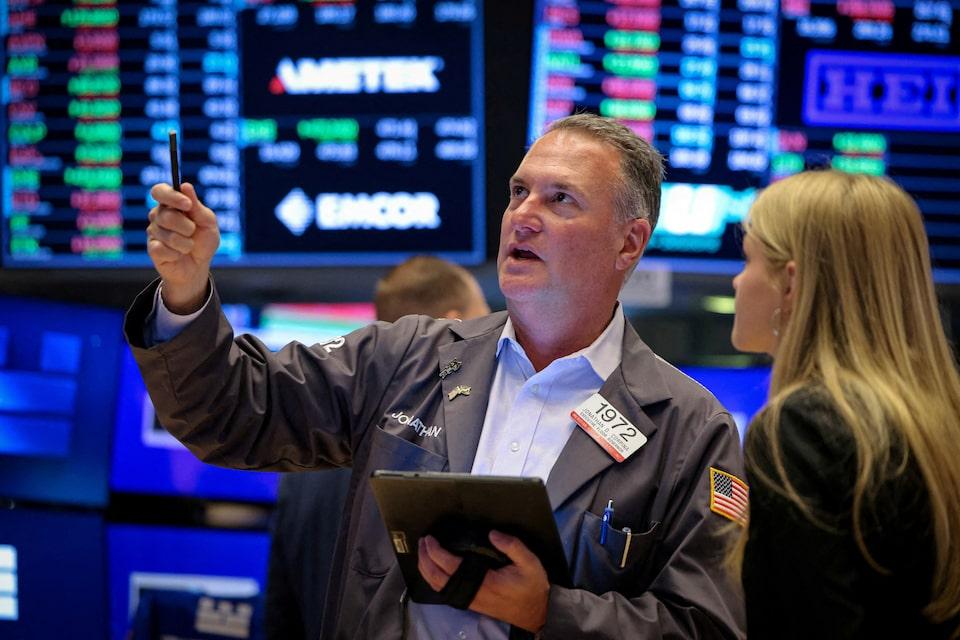
Airline stocks slide as Israel hits targets in Iran US defense firms rise on Israel-Iran conflict Oracle surges for second day on AI optimism S&P 500 -1.13%, Nasdaq -1.30%, Dow -1.79% June 13 (Reuters) - Wall Street ended sharply lower on Friday after Iran launched missiles at Israel in response to intensive Israeli strikes aimed at crippling Tehran's ability to build nuclear weapons. Explosions were heard and seen over Tel Aviv and Jerusalem as sirens sounded across Israel following what the country's military spokesman said was the firing of missiles from Iran. Sign up here. That came after Israel st nuclear facilities and missile factories in Iran, escalating tensions in the Middle East and undermining global investor confidence. Oil prices surged nearly 7% on fears the conflict could disrupt crude supply from the Middle East. U.S. energy stocks rose in tandem, with Exxon (XOM.N) , opens new tab up 2.2% and Diamondback Energy (FANG.O) , opens new tab rallying 3.7%. “It looks as though we could be in for a full-blown military conflict," Elias Haddad, senior markets strategist at Brown Brothers Harriman, said earlier on Friday. "If it ends up closing down the Strait of Hormuz, where a third of global oil supply goes through, this could have some pretty nasty effect on global markets." Airline stocks fell on fears that fuel costs could climb. Delta Air Lines (DAL.N) , opens new tab lost 3.8%, United Airlines (UAL.O) , opens new tab fell 4.4% and American Airlines (AAL.O) , opens new tab declined 4.9%. Defense stocks climbed, with Lockheed Martin (LMT.N) , opens new tab, RTX Corporation (RTX.N) , opens new tab and Northrop Grumman (NOC.N) , opens new tab all gaining over 3%. The S&P 500 declined 1.13% to end the session at 5,976.97 points. The Nasdaq declined 1.30% to 19,406.83 points, while the Dow Jones Industrial Average declined 1.79% to 42,197.79 points. Ten of the 11 S&P 500 sector indexes declined, led lower by financials (.SPSY) , opens new tab, down 2.06%, followed by a 1.5% loss in information technology (.SPLRCT) , opens new tab. Volume on U.S. exchanges was 17.9 billion shares traded, compared with an average of 18.2 billion shares over the previous 20 sessions. For the week, the S&P 500 dipped 0.4%, the Nasdaq lost 0.6% and the Dow fell 1.3%. Photoshop maker Adobe (ADBE.O) , opens new tab fell 5.3% as concerns that the company's pace of AI adoption was too slow overshadowed an increased annual revenue forecast. Oracle (ORCL.N) , opens new tab jumped 7.7% to a record high, rallying for a second day after the technology company gave an upbeat forecast driven by demand for its AI services. Nvidia (NVDA.O) , opens new tab dipped 2.1% and Apple (AAPL.O) , opens new tab lost 1.4%. Visa (V.N) , opens new tab and Mastercard (MA.N) , opens new tab both fell more than 4% after the Wall Street Journal reported that major retailers are exploring cryptocurrencies , opens new tab that could eliminate the need for payment intermediaries. A tame consumer price report, softer-than-expected producer price data and largely unchanged initial jobless claims earlier this week helped calm investor jitters around tariff-driven price pressures. U.S. Federal Reserve policymakers are widely expected to keep interest rates unchanged at their meeting next week. With investors betting the United States will reach trade agreements that reduce President Donald Trump's steep trade barriers, the S&P 500 is now trading just below its February record highs. The University of Michigan's Surveys of Consumers showed consumer sentiment improved for the first time in six months in June amid trade uncertainty. Declining stocks outnumbered rising ones within the S&P 500 (.AD.SPX) , opens new tab by a 6.1-to-one ratio. The S&P 500 posted 10 new highs and 6 new lows; the Nasdaq recorded 37 new highs and 131 new lows. https://www.reuters.com/business/us-stock-futures-fall-after-israel-attacks-iran-2025-06-13/
2025-06-13 20:08
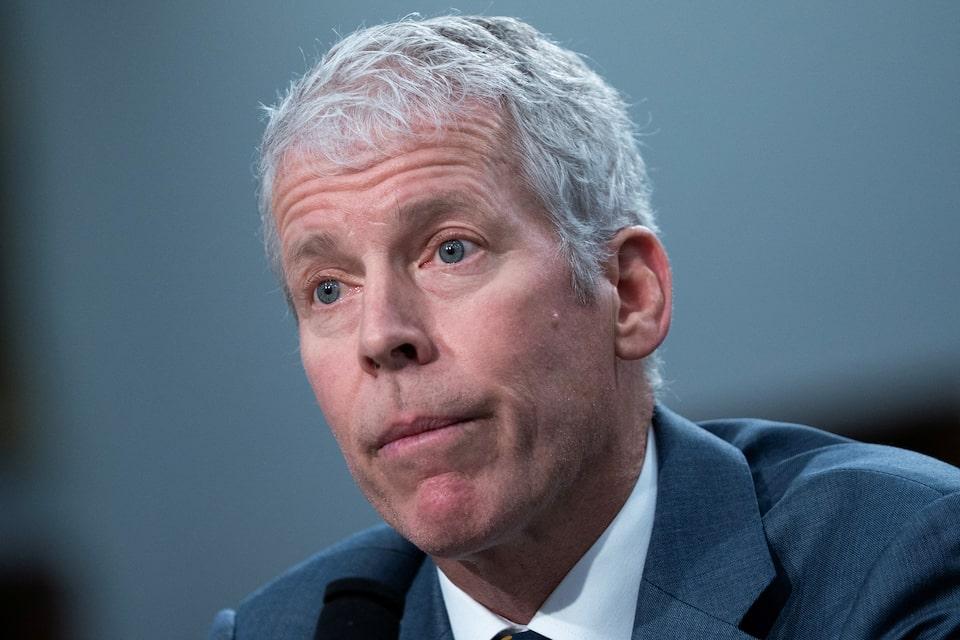
Global oil prices spike 7% amid Middle East tensions Iran's oil and gas sites remain unaffected by recent conflicts Strategic reserves in focus to mitigate rising costs -analyst OPEC criticizes IEA's Birol for raising market fear WASHINGTON, June 13 (Reuters) - U.S. Energy Secretary Chris Wright said on Friday he and his team are working with the White House's National Security Council to monitor the situation in the Middle East and any potential impacts to global energy supply. Wright said on X, after Israel's strikes on Iran's nuclear sites and Iran's response of missiles on Israel, that President Donald Trump's policy of maximizing U.S. oil and gas output, which also involves slashing pollution regulations, has boosted U.S. energy security. Sign up here. Oil and gas sites in Iran, an OPEC member, have not been targeted, analysts have said. Global crude oil prices spiked on Friday, settling 7% higher at more than $74 per barrel on investor worries about conflict spreading to the wider Middle East. And U.S. gasoline prices could rise about 20 cents a gallon in coming days during peak U.S. summer driving season "creating economic pressures and political headwinds for President Donald Trump, who campaigned on lowering energy costs," analysts at ClearView Energy Partners said in a note to clients. ClearView said higher prices could push Trump to focus on tapping strategic petroleum reserves, seeking supply additions from the OPEC+ production group, and could complicate efforts to tighten sanctions on Russia, one of the world's top three oil producers. The U.S. Energy Department did not immediately respond to a question about the potential to tap the U.S. Strategic Petroleum Reserve (SPR), the world's largest, which currently holds 402.1 million barrels of crude. Fatih Birol, the head of the Paris-based International Energy Agency, said on X that the IEA oil security system, which includes the U.S. SPR, has more than 1.2 billion barrels of emergency stocks. The Organization of the Petroleum Exporting Countries slammed Birol's post, saying on X it raises false alarms and "projects a sense of market fear." https://www.reuters.com/business/energy/us-energy-chief-monitoring-any-impacts-global-energy-supply-2025-06-13/