2025-06-13 16:29
STOCKHOLM, June 13 (Reuters) - Swedish pension fund AP7 said on Friday it has blacklisted and sold all its shares in U.S. electric vehicle maker Tesla (TSLA.O) , opens new tab, citing violations of union rights in the United States. "AP7 has decided to blacklist Tesla due to verified violations of labor rights in the United States," the pension fund said in a statement. Sign up here. "Despite several years of dialogue with Tesla, including shareholder proposals in collaboration with other investors, the company has not taken sufficient measures to address the issues," it added. An AP7 spokesperson said the fund's stake in Tesla was, when it was sold in late May, worth around 13 billion crowns ($1.36 billion). At the time, the stake represented around 1% of the AP7 Equity Fund, the spokesperson said. The fund's assets totalled 1,181 billion crowns at the end of May, according to AP7's website. ($1 = 9.5285 Swedish crowns) https://www.reuters.com/sustainability/boards-policy-regulation/swedish-pension-fund-ap7-blacklists-tesla-has-sold-entire-stake-2025-06-13/

2025-06-13 15:45
NEW YORK/WASHINGTON, June 13 (Reuters) - The U.S. Securities and Exchange Commission on Friday named several new division directors, as Chairman Paul Atkins begins to build his team at the top U.S. markets regulator. The SEC tapped Jamie Selway to lead the agency's Trading and Markets division, effective June 17, and Brian Daly, a lawyer from Akin Gump Strauss Hauer & Feld in New York, to run the Investment Management division, according to statements from the regulator. Sign up here. Kurt Hohl, founder of an advisory firm for issues including auditing, compliance and initial public offerings, has been named as Chief Accountant, effective July 7, the SEC said. Atkins, who was nominated by Republican President Donald Trump, arrived in April at the SEC, where he is expected to oversee a deregulatory push. Selway is a longtime market structure and investment technology expert. Reuters previously reported he had been tapped for the role. While at Akin, Daly advised private equity, hedge fund and venture capital fund managers, according to the law firm's website. He is slated to join the SEC July 8. https://www.reuters.com/business/us-securities-exchange-commission-names-markets-unit-chief-2025-06-13/
2025-06-13 15:41
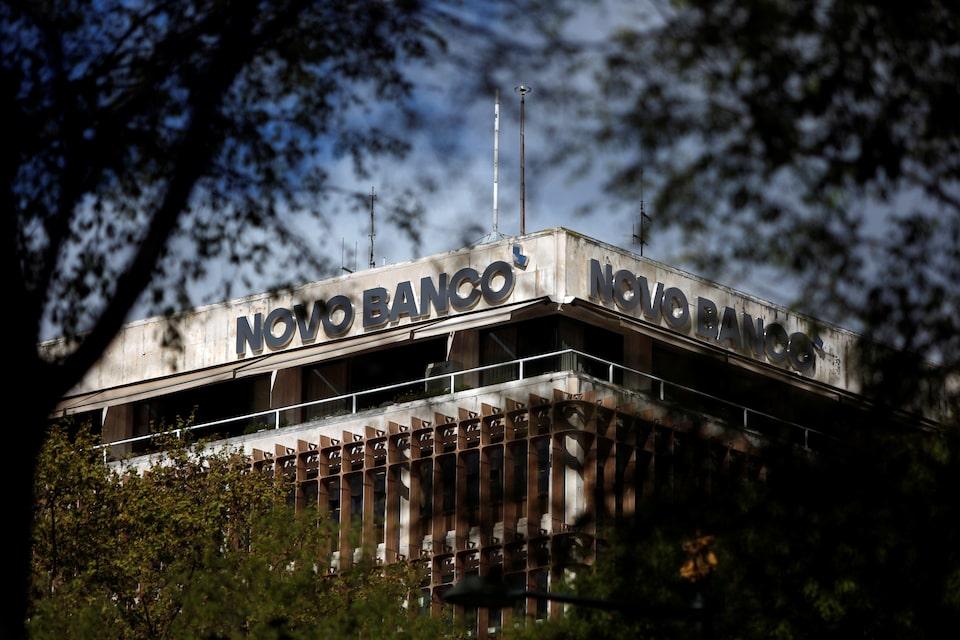
BPCE wants to expand retail operations beyond France Deal aligns with ECB's push for banking consolidation-BPCE CEO Portugal's finance ministry also agrees to sell Novo Banco stake LISBON/PARIS, June 13 (Reuters) - France’s BPCE has agreed a 6.4 billion euros ($7.39 billion) deal to acquire Portugal's Novo Banco, including a 75% stake held by U.S. private equity firm Lone Star, BPCE and Lone Star said on Friday. The Portuguese state and a banking resolution fund financed by the country's banks, who own 11.5% and 13.5% of Novo Banco respectively, said separately on Friday they had also agreed to sell their stakes to BPCE. Sign up here. The acquisition comes amid a wave of cross-border and domestic banking mergers in Europe, where regulators have long urged industry consolidation to better integrate the financial sector and counter growing competition from U.S. banking giants. "I do think that (this) acquisition is fully in line with what the ECB is advocating for, which is European banking consolidation," BPCE Chief Executive Nicolas Namias told reporters in a call. BPCE’s cash acquisition of Novo Banco would give the French bank a second significant retail market outside France, where it currently operates two major banking groups. "This is the biggest cross-border deal in Europe in recent years. I think this is really good news both for the banking union and for the French banking system," Bank of France Governor Francois Villeroy de Galhau said. Novo Banco was created in 2014 from the collapsed Banco Espírito Santo (BES) following a state bailout and was acquired by Lone Star in 2017, which paid 1 billion euros for a 75% stake. Europe's banking sector has seen renewed consolidation activity. In Spain, BBVA (BBVA.MC) , opens new tab has announced a more than 14 billion-euro hostile bid for rival Sabadell (SABE.MC) , opens new tab last year, aiming to gain scale and cut costs in its home market, while the CEO of Italy's UniCredit (CRDI.MI) , opens new tab, Andrea Orcel, has made a move on Germany's Commerzbank and smaller Italian peer Banco BPM, sparking angry reactions in both Berlin and Rome. BPCE already has a small consumer credit operation in Portugal and its subsidiary Natixis has a technology centre handling IT services and back office for the whole group. As of March, Novo Banco had 30 billion euros in deposits and 28.5 billion euros in net loans, equivalent to a 9% market share in Portugal. It has almost 300 bank branches and more than 4,200 employees. BPCE said the deal should complete during the first half of 2026. ($1 = 0.8660 euros) https://www.reuters.com/business/finance/lone-star-agrees-sell-portugals-novo-banco-french-bpce-739-billion-2025-06-13/
2025-06-13 15:05
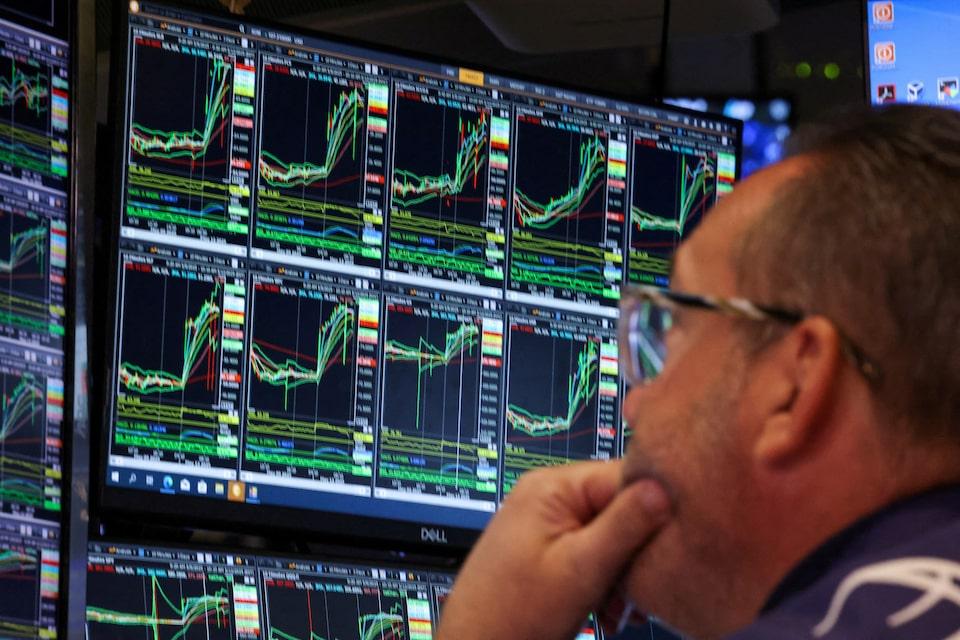
Mid-East escalation brings geopolitical risks back to fore Tension gives battered safe-haven dollar a boost Investors watch for sustained oil price rallies NEW YORK/LONDON, June 13 (Reuters) - U.S. investors on Friday sought refuge in safe-haven assets like the dollar and gold, as oil prices surged after Iran retaliated against Israel's biggest-ever military strike against the major crude producer. Iran launched airstrikes at Israel hours after unprecedented Israeli strikes, stoking some fears of a broader regional conflagration. Explosions were heard on Friday in Jerusalem and Tel Aviv, the country's two biggest cities. Earlier, Israel blasted Iran's huge Natanz underground nuclear site and killed its top military commanders. Sign up here. Investors said the markets would probably muddle through the latest hostilities unless Iranian oil facilities were attacked or other countries are drawn into the war. Worries about possible disruptions to oil shipments prompted crude prices to spike as much as 14%. Oil futures settled 7% higher on the day. "We're entering the next phase of the conflict here with the Iranian response," said Jim Baird, chief investment officer at Plante Moran Financial Advisors in Southfield, Michigan. The money manager said he expected "a bit more of a flight-to-quality trade if we see stocks sell off further" and that this could benefit gold and Treasuries. "The question is still how long will this persist? How intense will it be? Will other parties be drawn in? From a big picture economic perspective, I don't think it changes anything materially," he said. Safe-haven gold prices rose more than 1% and Wall Street's three major equity indexes ended down more than 1%. The outbreak of war brought oil prices into focus. Iran is among the world's largest exporters of crude and borders the Strait of Hormuz, a major choke-point for crude tankers through which roughly a fifth of global consumption flows and which Iran has previously threatened to close in retaliation to Western pressure. As oil prices surged and investors sought safe havens, U.S. government bond yields rose on bets that higher energy prices could stoke inflation. Still, despite the spike in crude prices, the global benchmark Brent remained well under $80 a barrel. Irene Tunkel, Chief U.S. Equity Strategist at BCA Research said she does not see long-term U.S. market implications unless prices soar above $100 a barrel, which would hurt consumer spending. She said that was unlikely unless oil infrastructure is destroyed or "Iran somehow closes the Strait of Hormuz and (the conflict) spills out of Iran and energy production in Iraq is shifted." The strategist also noted that the S&P 500 (.SPX) , opens new tab pullback on Friday, followed a strong rally from April lows. U.S. President Donald Trump said there was still time for Iran to halt the Israeli attacks by reaching a deal to curb its nuclear programme. The attacks came at a time when investors were wondering how central banks would handle interest rates if U.S. consumer prices rise due to Trump's tariffs. Jack Janasiewicz, portfolio manager at Natixis Investment Managers in Boston, said the potential for higher inflation from rising oil prices looked "less supportive" for U.S. government bond prices. But he noted that investors typically take geopolitical crises in their stride. "Historically speaking with these kind of geopolitical events, you get the knee-jerk reaction from the market but the longer-term ramifications tend to fade. History tells us to kind of look past a lot of this stuff," said Janasiewicz. OIL PRICE RALLY Janasiewicz said the ultimate gains in oil prices will depend on how long the war lasts and whether U.S. supply could be ramped up to cap prices if there is a supply disruption. "From a U.S. perspective it's at least a little bit more insulated because domestic producers could certainly ramp up" production, Janasiewicz said. The dollar index , which has recently borne the brunt of investor risk aversion, again took up the mantle of safe haven on Friday and was last up about 0.5%. "The dollar is reverting to that traditional role of safe haven, which we haven't seen for months," City Index strategist Fiona Cincotta said. Despite Wall Street's sell-off, stock prices were still not far off record highs, and some investors had warned that market participants may not be cautious enough. Marlborough fixed income fund manager James Athey said there was a risk investors dive back into riskier assets too quickly if tensions do not ratchet up quickly from here. "In general, markets tend to look through these sorts of events quite quickly but of course therein lies the risk of complacency," he said. "The situation is genuinely tense and fraught and risk assets are still priced for perfection," he said. https://www.reuters.com/business/energy/global-markets-investors-pix-graphic-2025-06-13/
2025-06-13 14:32
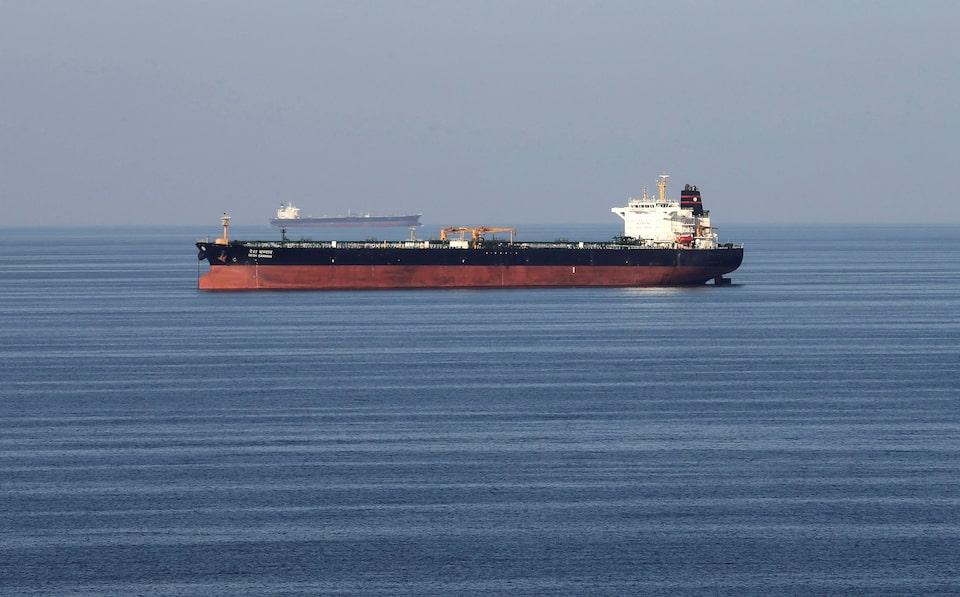
Goldman Sachs forecasts Brent at $59/55 in 2025Q4 Citi: energy prices unlikely to stay elevated for sustained period of time June 13 (Reuters) - Israel's attack on Iran is unlikely to cause a major disruption to oil supply, analysts at two major banks said, but a worst-case scenario involving blockades in the Strait of Hormuz could push prices above $100 per barrel, Goldman Sachs said. Oil prices climbed nearly 9% after Israel launched widescale strikes against Iran targeting nuclear facilities and missile factories, with benchmark Brent crude futures trading near $74.74 per barrel. Sign up here. Goldman Sachs has incorporated a higher geopolitical risk premium into its adjusted summer 2025 oil price outlook, but "we still assume no disruptions to oil supply in the Middle East," the bank said in a note Friday. The bank continues to forecast "that strong supply growth outside U.S. shale will reduce Brent and WTI oil prices to $59/55 in 2025Q4 and $56/52 in 2026." Analysts at Citi also said that supply disruptions should be limited, adding that while heightened geopolitical tensions may linger, energy prices are unlikely to stay elevated for a sustained period. Commerzbank said a further rise in oil prices would depend on supply risks in the event of an escalation, adding that prices are unlikely to fall below $70 for the time being. OPEC Secretary-General Haitham Al Ghais also said the escalation does not justify any immediate changes to supply, as current conditions remain stable. WORST-CASE SCENARIO One of the risk factors the market is considering is a possible blockade of the Strait of Hormuz, a sea corridor through which around a fifth of the world’s total oil consumption travels. While an interruption is unlikely, the strait remains in focus because it may prevent core OPEC+ producers from deploying spare capacity, Goldman Sachs said, adding that in an extreme scenario involving an extended disruption, prices could even top $100 a barrel. JP Morgan had, in a note dated Thursday, said certain worst-case scenarios in the Middle East could send oil to $120–130 a barrel. https://www.reuters.com/business/energy/big-disruption-oil-supply-unlikely-after-israels-attack-iran-say-analysts-2025-06-13/
2025-06-13 12:54
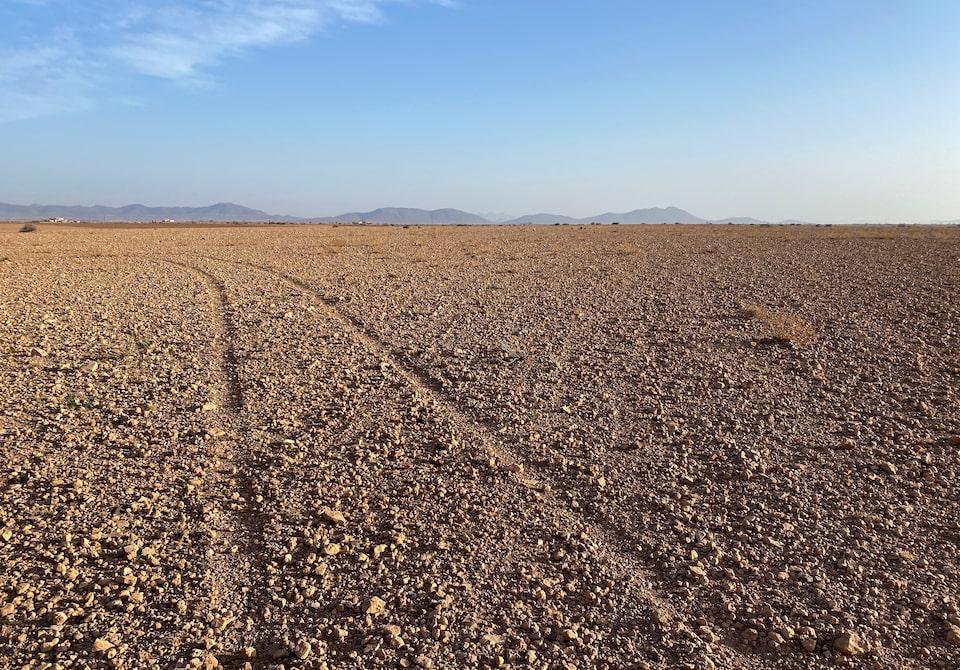
RABAT, June 13 (Reuters) - Morocco is accelerating investments in desalination plants, water transfer projects and new dams to mitigate prolonged drought and meet rising demand from agriculture and cities, water minister Nizar Baraka said. Years of drought have strained water resources, shrunk the national cattle herd and contributed to food price inflation and rising unemployment. Sign up here. Morocco operates 17 desalination plants. It has four others under construction, and plans to build nine more, aiming for a total capacity of 1.7 billion m3 annually by 2030, Baraka told a conference on the country's water challenges held by Medias24 in Casablanca on Thursday. Desalinated water will not be used for wheat due to cost concerns and the scale of agricultural land involved, but will free up more dam water for inland farms, he said. Improved rainfall this year - though still below average - has seen dam filling rates rise to 39.2% as of June 11, from 31% a year earlier, Baraka said. Despite years-long water stress, agriculture using underground water has expanded, along with fresh produce exports to Europe. "There was a mismatch between the pace of agricultural policy and water policy... exacerbated by climate change,” Baraka said. Water-intensive crops like melons have been banned in Tata and reduced by 75% in Zagora, two key producing desert regions, he said. With uneven rainfall across the country, a major waterway - that is already linking the water-rich northwest to Rabat and Casablanca - will be extended by 2030 to fill in dams supporting farmers in the drought-stricken regions of Doukala and Tadla. The waterway is backed by Emirati funding, under a deal which also includes construction of a 1400-km (870-mile) power line by 2030 to deliver renewable energy produced in the south to desalination plants across the country. "Using renewable energy will help significantly reduce water costs," Baraka said. https://www.reuters.com/sustainability/boards-policy-regulation/morocco-invests-desalination-waterways-mitigate-drought-2025-06-13/