2025-06-13 11:52
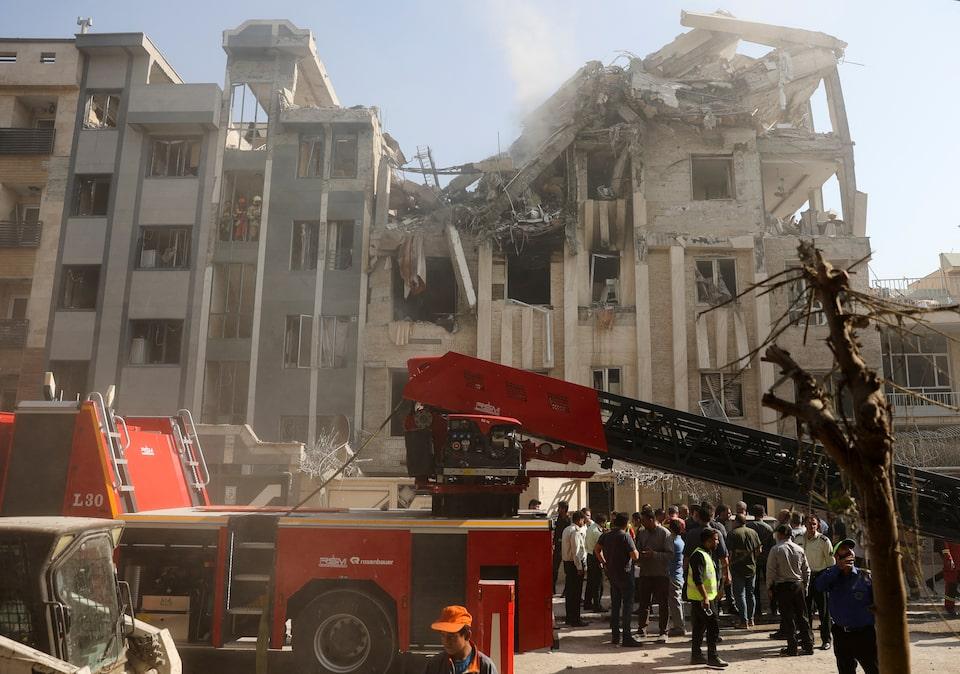
Israel strikes Iran, Iran retaliates Tehran could opt to target Strait of Hormuz, a chokepoint for oil shipping Saudi Arabia, UAE, have sought to bypass Hormuz with pipelines LONDON, June 13 - Israel’s strikes on Iran on Friday have raised the prospect of global oil prices hitting $100 a barrel. If Tehran seeks to escalate the conflict by retaliating beyond Israeli borders, it could seek to choke off the Strait of Hormuz, the world’s most important gateway for oil shipping. Israel launched a wave of strikes on Iran’s nuclear facilities, ballistic missile factories and military commanders, prompting Iran to launch drones against Israel. It is likely the two archenemies will continue to exchange blows in the coming days. Sign up here. Oil prices soared by more than 8% to $75 a barrel on Friday on the news. The United States has sought to distance itself from the Israeli strikes while President Donald Trump urged Iran to return to their bilateral nuclear talks. While Tehran may strike Israel with additional drones or ballistic missiles, it could also opt to target the Middle East military facilities or strategic infrastructure of the United States and its allies such as Saudi Arabia and the United Arab Emirates. This could include oil and gas fields and ports. Of course, the most sensitive point Tehran could target is the Strait of Hormuz, a narrow shipping lane between Iran and Oman. About a fifth of the world's total oil consumption passes through the strait, or roughly 20 million barrels per day (bpd) of oil, condensate and fuel. If that scenario played out, it would likely push oil prices sharply higher, very possibly into triple-digit territory, as OPEC members Saudi Arabia, Iran, the United Arab Emirates, Kuwait and Iraq export most of their crude via the strait, mainly to Asia. To be sure, an Iranian strike in the Gulf risks drawing a response from the United States and its regional allies, dramatically escalating the conflict and stretching Iran's military capabilities. But Iran has been heavily weakened over the past year, particularly following Israel’s successful campaign against Hezbollah, the Iranian-backed militants in Lebanon. With its back to the wall, Tehran could see an attack now as a deterrent. The U.S. military and its regional allies will obviously seek to protect the Strait of Hormuz against an Iranian attack. But Iran could use small speed boats to block or seize tankers and other vessels going through the narrow shipping lane. Iran's Revolutionary Guards have seized several western tankers in that area in recent years, including a British-flagged oil tanker in July 2024. However, any Iranian efforts to block the strait, or even delay transport through it, could spook energy markets and lead to disruptions in global oil and gas supply. BYPASSING THE STRAIT Saudi Arabia and the UAE have sought in the past to find ways to bypass the Strait of Hormuz, including by building more oil pipelines. Saudi Arabia, the world's largest oil exporter, sends some of its crude through the Red Sea pipeline that runs from the Abqaiq oilfield in the east into the Red Sea port city of Yanbu in the west. The Saudi Aramco-operated pipeline has a capacity of 5 million bpd and was able to temporarily expand its capacity by another 2 million bpd in 2019. It is used mostly to supply Aramco’s west coast refineries. Saudi Arabia also exported 1.5 million bpd of oil from its west coast ports in 2024, including 839,000 bpd of crude, according to data from analytics firm Kpler. The UAE, which produced 3.3 million bpd of crude oil in April, has a 1.5 million bpd pipeline linking its onshore oilfields to the Fujairah oil terminal that is east of the Strait of Hormuz. But even the western route could be exposed to attacks from the Iran-backed Houthis in Yemen, who have severely disrupted shipping through the Suez Canal in recent years. Diverting oil away from the Strait of Hormuz would be more difficult for Iraq and Kuwait, which only have coastlines on the Gulf. One factor that could keep a lid on crude prices, however, is that these heightened Middle East tensions come at a time of ample global oil supply. Rising production in the United States, Brazil, Canada, Argentina and other non-OPEC countries has reduced the global market share of the Middle East in recent years. This could help mitigate if not fully offset any supply disruption. Additionally, any serious disruption to oil supplies in the Middle East would also likely prompt the International Energy Agency to trigger the release of strategic reserves. Investors have often shrugged off Middle East tensions in recent years, believing that the potential for a truly regional clash is limited. They may do so again, particularly if this strike pushes Iran back to the negotiating table with the U.S. over Tehran’s nuclear program. But crude prices are apt to be volatile in the coming days as traders seek to get a handle on where this conflict is heading. Enjoying this column? Check out Reuters Open Interest (ROI) , opens new tab, your essential new source for global financial commentary. ROI delivers thought-provoking, data-driven analysis. Markets are moving faster than ever. ROI , opens new tab can help you keep up. Follow ROI on LinkedIn , opens new tab and X. , opens new tab https://www.reuters.com/markets/commodities/israel-strike-puts-all-eyes-hormuz-100-oil-bousso-2025-06-13/
2025-06-13 11:46
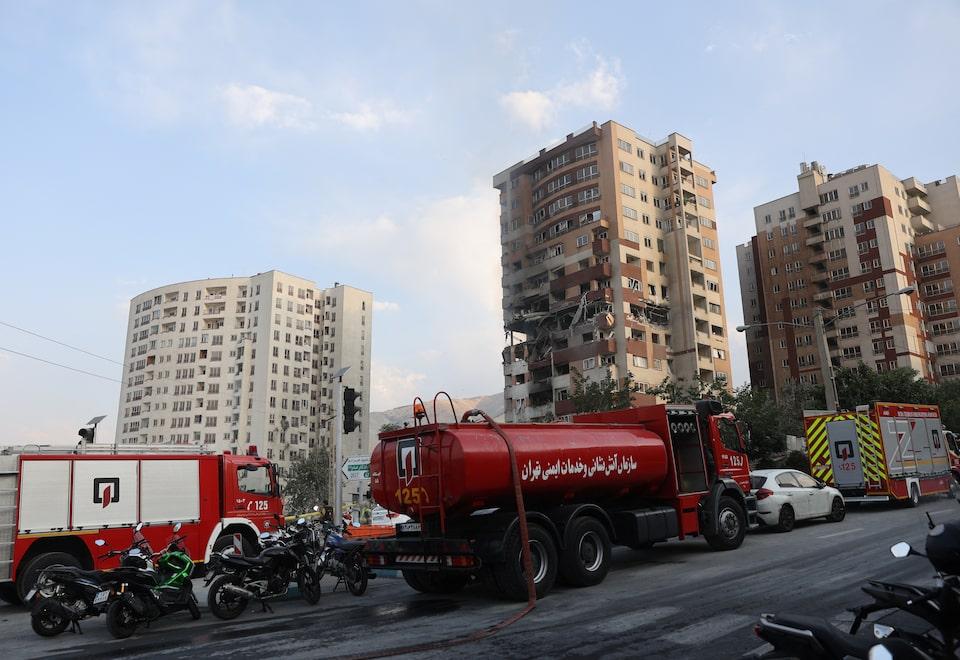
EU to propose measures to ban Russian gas by end-2027 EU to seek details of companies' Russian deals, document shows Curbs on LNG terminals' services to Russia to start Jan 2026 BRUSSELS, June 13 (Reuters) - The European Union will demand companies disclose details of their Russian gas deals to the EU, under upcoming European Commission proposals to ban Russian gas imports by the end of 2027, an internal Commission document seen by Reuters showed. The Commission is preparing to propose legal measures to completely halt the EU's Russian gas imports by the end of 2027, and ban new Russian gas deals by the end of this year. The proposals are due to be published on June 17. Sign up here. An internal European Commission analysis of its upcoming proposals, seen by Reuters, said to enforce the ban, the Commission will require information including the duration, annual contracted volumes, destination clause and date of conclusion of their Russian gas contracts. "The implementation of the measures - as designed in the proposal - requires comprehensive and systematic information about the existing contracts for Russian gas, including specific contractual arrangements," the document said. A Commission spokesperson declined to comment on the upcoming proposals, which could still change before they are published. Gas importers will also be required to disclose the origin of their imports, to ensure it is not Russian, the document said. The disclosures aim to ensure the EU and countries' customs and energy authorities can track that the ban is enforced. "Except for cases where gas can clearly be considered as of Russian origin, the proposal requires importers to present documentation to the customs authorities about the origin of the imported gas," the document said. The Commission's assessment said the upcoming proposals will ban EU LNG terminals from providing services to Russian customers from January 1, 2026, with a longer deadline of June 17, 2026 for existing services contracts under short-term LNG supply deals. The deadline to stop providing these services under long-term contracts with Russia will be December 31, 2027, it said. Simone Tagliapietra, senior fellow at Brussels-based think tank Bruegel, said that the EU may struggle to access information on Russian gas deals, and companies had resisted governments' past attempts to gather this information. "Companies are likely to resist again, unless strong confidentiality protections are guaranteed," Tagliapietra said. "A viable route for the Commission to do so might be to mandate non-public disclosure to national regulators or to the Commission itself under strict confidentiality, possibly aggregated or anonymised for public reporting," he added. The document said the Commission will propose banning Russian gas and LNG imports through an EU trade measure, although it did not specify the specific mechanism. https://www.reuters.com/business/energy/eu-force-companies-share-details-russian-gas-deals-document-shows-2025-06-13/

2025-06-13 10:44
State-run miner IREL asked to halt rare earth exports, sources say IREL exports to Japan under bilateral government agreement India has world's fifth-largest rare earth reserves IREL to increase rare earth mining and processing, source says IREL keen to make magnets for auto, pharma industries, source says NEW DELHI, June 13 (Reuters) - India has asked state-run miner IREL to suspend a 13-year-old agreement on rare earth exports to Japan and to safeguard supplies for domestic needs, two sources familiar with the matter told Reuters, aiming to reduce India's dependence on China. IREL also wants to develop India's capacity for rare earth processing, which is dominated globally by China and has become a weapon in escalating trade wars. China has curbed its rare earth materials exports since April, pressuring automakers and high-tech manufacturers worldwide. Sign up here. In a recent meeting with auto and other industry executives, Indian Commerce Minister Piyush Goyal asked IREL to stop its exports of rare earths, mainly neodymium, a key material used in magnets for electric vehicle motors, one of the sources said. The Commerce Ministry, IREL and the Department of Atomic Energy, which oversees IREL, did not immediately respond to requests for comment. The sources declined to be identified because of the sensitivity of the matter. Under a 2012 government agreement, IREL supplies rare earths to Toyotsu Rare Earths India, a unit of Japanese trading house Toyota Tsusho (8015.T) , opens new tab, which processes them for export to Japan where they are used to make magnets. In 2024, Toyotsu shipped more than 1,000 metric tons of rare earth materials to Japan, commercially available customs data showed. That is one-third of the 2,900 tons mined by IREL, although Japan relies mainly on China for its rare earths supply. Toyota Tsusho and Toyotsu did not immediately respond to requests for comment. IREL has been exporting rare earths due to a lack of domestic processing capacity, but following the recent disruptions to supplies of Chinese material it wants to keep its rare earths at home and expand domestic mining and processing, a second source said, adding that IREL is awaiting statutory clearances at four mines. However, India may not immediately be able to stop supplies to Japan because they fall under a bilateral government agreement, the person said. IREL wants this to be "amicably decided and negotiated because Japan is a friendly nation", the person added. Japan's Trade Ministry said in a statement to Reuters: "We would like to refrain from answering questions about bilateral exchanges in general, not just about this matter." EXPANSION PLANS China's recent export controls on rare earth materials have rocked the global auto industry, which has warned of supply chain disruptions and production halts. China also weaponised its supplies in 2010, when it briefly stopped shipments to Japan. That prompted the Japanese to turn to India for rare earths. India has the world's fifth-largest rare earth reserves, at 6.9 million metric tons, but there is no domestic magnet production. India relies on imported magnets, mainly from China. In the fiscal year to March 2025, India imported 53,748 metric tons of rare earth magnets, government data showed. These are used in automobiles, wind turbines, medical devices and other manufactured goods. Rare earth mining is restricted to IREL, which supplies India's Atomic Energy Department with materials for nuclear power projects and defence-related applications. India lacks wide-scale technology and infrastructure to mine rare earths, and the development of any commercially viable domestic supply chain is years away, analysts said. IREL has a rare earths extraction plant in the eastern Indian state of Odisha and a refining unit in Kerala, in southern India. The miner, founded in 1950, plans to produce 450 metric tons of extracted neodymium in the fiscal year to March 2026 with a plan to double that by 2030, the second person said. It is also looking for a corporate partner for the production of rare earth magnets for the auto and pharmaceutical industries, the person said. India is firming up plans for incentives to companies to set up rare earth processing and magnet production facilities to meet local demand, people familiar with the matter told Reuters earlier this month. https://www.reuters.com/world/india/india-moves-conserve-its-rare-earths-seeks-halt-japan-exports-sources-say-2025-06-13/

2025-06-13 10:36
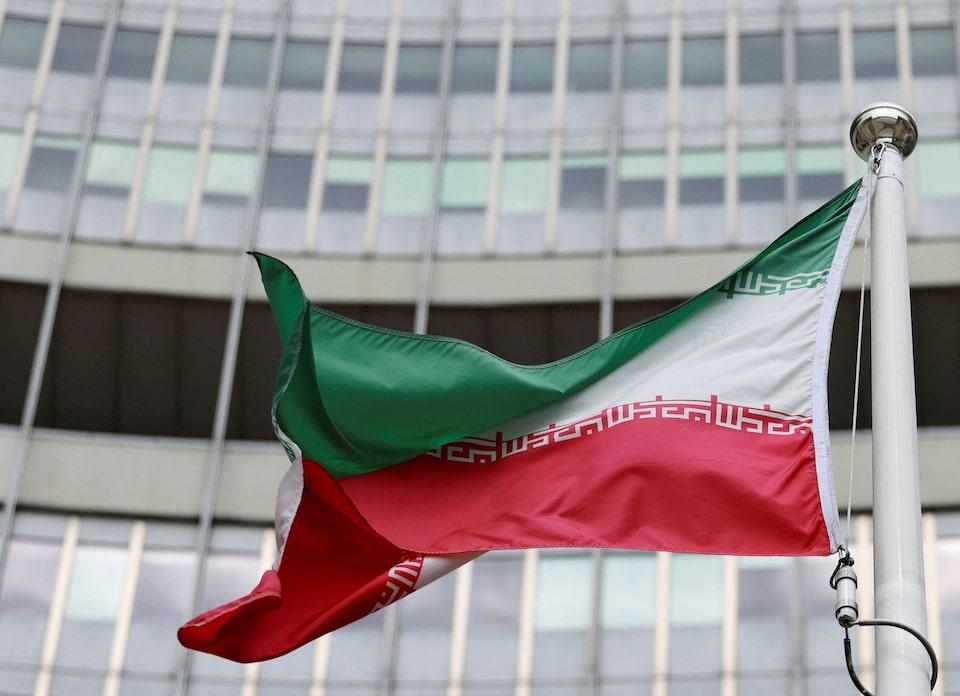
VIENNA, June 13 (Reuters) - An exceptional meeting of the U.N. nuclear watchdog's board of governors will be held to discuss Israel's strikes on Iran after at least one country on the board requested one at Friday's regular, quarterly session of the body, diplomats said. Any country on the board can call a meeting under its rules. Iran, which is not on the board, requested a meeting and its call was supported by board members Russia, China and Venezuela, diplomats said. The diplomats gave differing accounts as to which board member was the first to clearly make the request. Sign up here. https://www.reuters.com/world/china/special-iaea-board-meeting-be-held-over-israels-iran-strikes-diplomats-say-2025-06-13/
2025-06-13 10:07
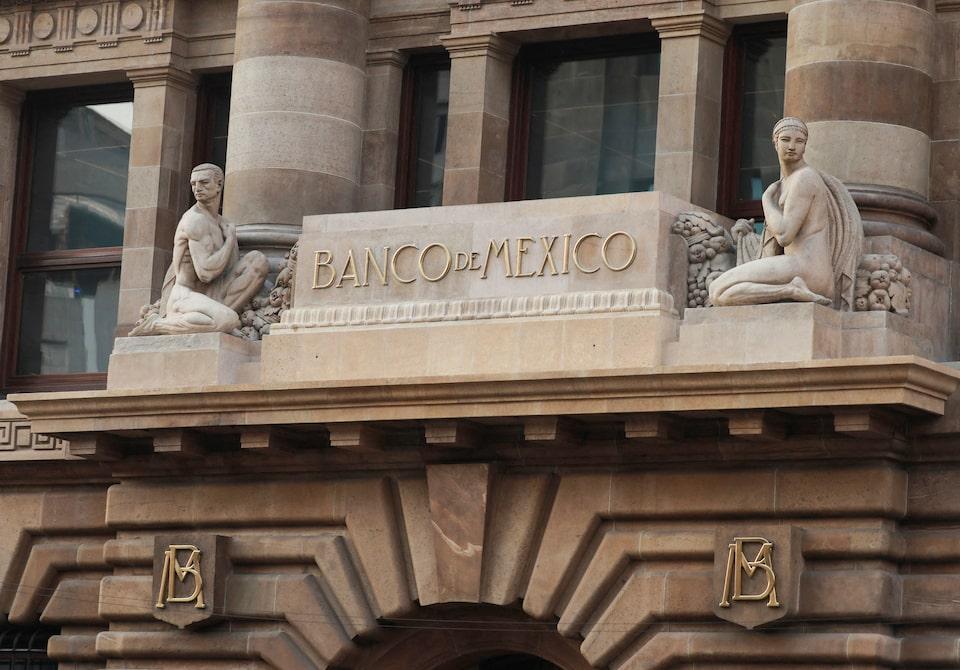
MEXICO CITY, June 13 (Reuters) - Mexico's central bank should avoid cutting its benchmark interest rate by 50 basis points until inflation resumes a clear downward trajectory, Deputy Governor Jonathan Heath told Reuters, adding his view is in the minority among the five-member board. Despite concerns over inflation, Heath said he believes the central bank will vote at the end of June to lower the key interest rate by that magnitude in what would be its fourth consecutive cut of that size, a decision he said he is skeptical of. Sign up here. "I believe it is time to pause, and not continue lowering the rate at the magnitude we have done in recent decisions, in order to give ourselves time to better evaluate the evolution of the data," Heath said in a written response to questions from Reuters. Debate over any rate cut underscores a key challenge confronting Mexico's central bank as it seeks to ease rising inflation while also stimulating Mexico's sluggish economy. Headline inflation in Mexico accelerated to 4.42% in May, exceeding the upper end of the central bank's target range of 3% plus or minus a percentage point. Core inflation, which excludes volatile items like some foods and oil, rose to 4.06%, its highest level in almost a year. Still, Banxico, as the central bank is known, currently forecasts inflation will fall in the third quarter before converging to its target by the third quarter of 2026. Heath said a majority of Banxico's board members believe the pickup in inflation is a "temporary phenomenon." "While I am a bit skeptical that inflation will behave as the official projection anticipates, it is clear to me that my opinion is in the minority," he said, adding he supports a "more cautious, more prudent" approach until inflation "clearly resumes a downward trajectory consistent with a convergence towards our 3% target." In May, Banxico cut its interest rate to 8.5% and reiterated it could make a further reduction depending on inflation. The bank also emphasized that a slowdown in the economy is expected and lowered its GDP growth forecast to 0.1% for 2025 from a previous 0.6% estimate. A dozen economists surveyed by Reuters expect Banxico to move forward with a rate cut of 50 basis points at its next meeting on June 26. https://www.reuters.com/world/americas/bank-mexicos-heath-wants-inflation-reversal-before-more-major-rate-cuts-2025-06-13/
2025-06-13 09:56
June 13 (Reuters) - Middle East tensions are escalating sharply and propelling oil prices higher as a raft of major central banks, led by the U.S. Federal Reserve, make interest rate decisions and G7 leaders meet in Canada. Here's a look at what's coming up for world markets in the week ahead from Rae Wee in Singapore, Lewis Krauskopf in New York, and Lucy Raitano, Dhara Ranasinghe and Marc Jones in London. Sign up here. 1/ MIDDLE EAST IGNITES Israel's strikes on Iran mean another of the major geopolitical tail risks investors have long been worried about has just become a reality. Markets will be closely following how Tehran - which has seen many of its proxies in the region weakened - retaliates and what the world's top powers do in the coming days. The initial reaction has been a spike in oil prices, a drop in stocks and a safe-haven rally spanning gold to government bonds. How the sixth round of U.S.-Iran nuclear talks scheduled to be held on Sunday in Oman will evolve is also unclear. That all has implications for the world economy, and there's likely to be more volatility unless the situation calms down rapidly. 2/FED FOCUS The question of whether the Fed is more worried about inflation or labour markets tops the agenda for investors looking for greater clarity on the interest rate outlook amid the renewed tension in the Middle East and its implications for oil prices. The U.S. central bank is expected to hold rates steady on Wednesday but will offer projections on monetary policy and the economy for the first time since March, when overall estimates of inflation and unemployment were lifted. Markets anticipate roughly two 25 basis-point cuts by the end of the year - the first likely in September - a view bolstered by Wednesday's benign inflation report. Meanwhile, the Fed and chair Jerome Powell remain under pressure to lower rates from President Donald Trump, who says a decision on the next Fed chair will be made soon. Tuesday's May retail sales numbers, meanwhile, could show how tariffs may be affecting consumer spending. 3/ TIGHTROPE The Bank of Japan kicks off its two-day policy meeting on Monday, at a crucial time for investors seeking guidance on the BOJ's rate trajectory and bond tapering plans. Policymakers are expected to stand pat on rates, but the devil will be in the detail of its statement and Governor Kazuo Ueda's news conference. The BOJ has vowed to keep raising rates if underlying inflation approaches its 2% target, but the path ahead has become less certain. A trade deal with Washington remains elusive, and an unwelcome spike in long-end Japanese government bond yields in May complicates matters. The latest bout of volatility in the JGB market has triggered a slew of responses from policymakers seeking to soothe market concerns about worsening government finances. 4/...AND THE REST The flurry of interest rate decisions continues in Europe, with central bank meetings scheduled in Sweden, Switzerland, Norway and the UK. Sweden's Riksbank will kick things off on Tuesday, with markets betting on a 25 bps rate cut. Thursday is busy with Norges Bank expected to hold rates, while the Swiss National Bank (SNB) is seen slashing rates by 25 bps, with an outside chance of a 50 bps cut. Swiss inflation turned negative in May, fuelling discussion around whether Switzerland could be the first big economy to return to negative rates. Meanwhile, weak UK jobs data raised the prospect of more Bank of England (BoE) cuts through the rest of 2025, but markets still expect no rate change on Thursday. A UK spending review on Wednesday brought into focus worries over the fiscal outlook, while data on Thursday showed economic output fell sharply in April. 5/ HANDSHAKE Geopolitics, trade and much more will be on the table at the Group of Seven's June 15-17 summit in Alberta, Canada. A U.S./China agreement on a framework to put their trade truce back on track is positive. Japan, for one, hopes for a trade agreement on the sidelines. Also watch Europe. Some suspect the EU could accept a 10% U.S. tariff with no retaliation for greater U.S. commitments to NATO and Ukraine. The EU wants to discuss lowering a G7 price cap on Russian oil, in efforts to cut Russia's energy supplies. Most G7 members appear ready to do that without the U.S. Ukraine's Volodymyr Zelenskiy hopes for another chat with Trump at the G7, press reports suggest. And G7 host Canada, keen to diversify trade away from America, has invited India's Narendra Modi to attend, after bilateral relations soured in recent years. https://www.reuters.com/business/take-five/global-markets-themes-graphic-2025-06-13/