2025-06-13 06:08
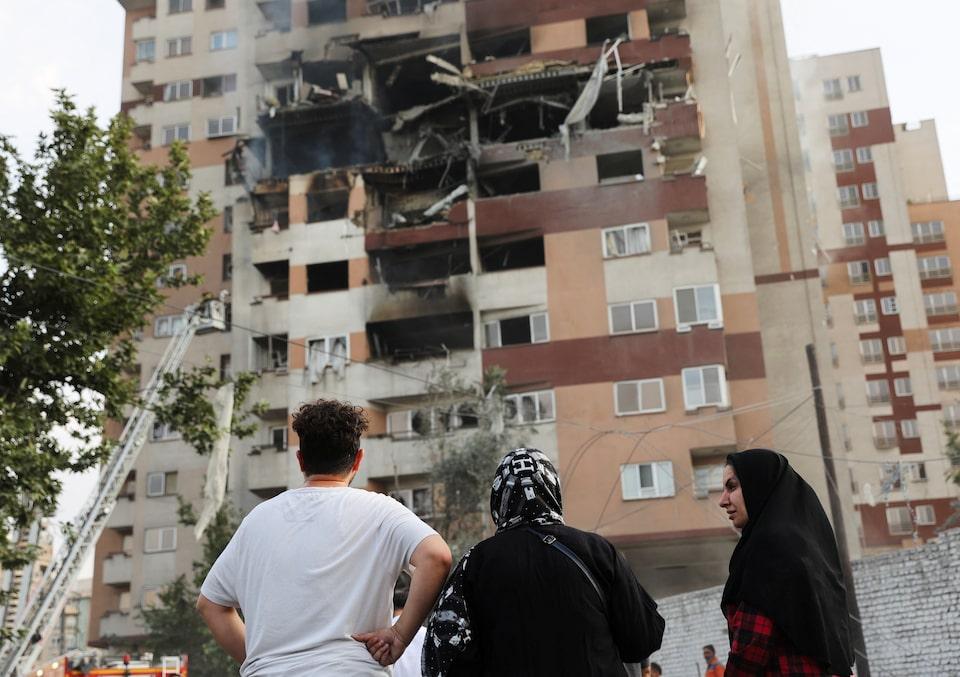
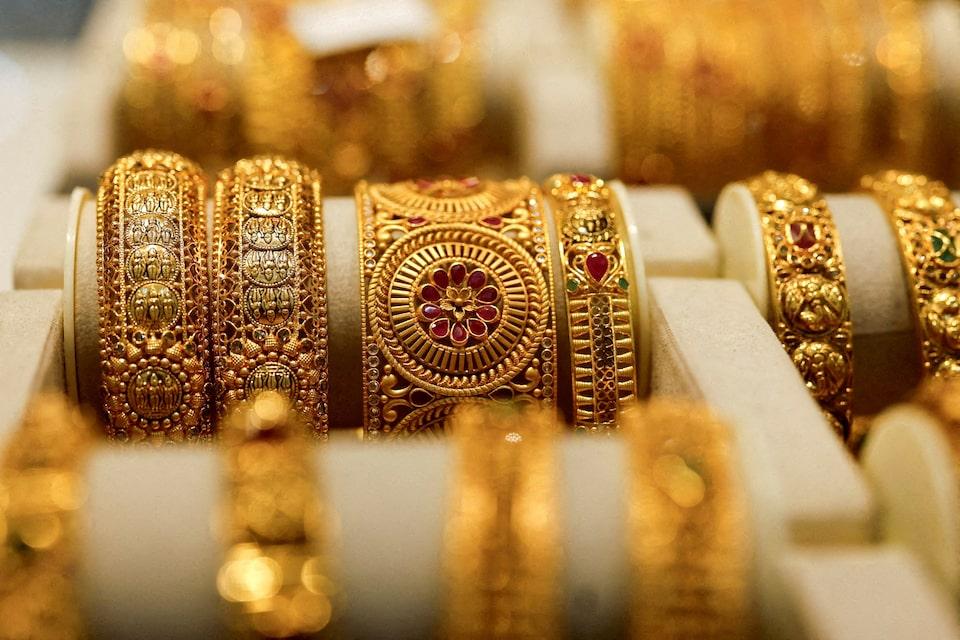
Israel hits Iran nuclear facilities; Tehran launches drones Attacks add to bullish mood in gold market, analyst says Commerzbank expects gold price at $3,400/oz by year-end June 13 (Reuters) - Gold prices rose to a near two-month high on Friday, driven by safe-haven demand as Israel's strikes on Iran escalated tensions in the Middle East. Spot gold was up 1.1% at $3,419.69 an ounce as of 1125 GMT, after hitting its highest point since April 22 earlier in the session. Bullion has gained more than 3.3% so far this week. Sign up here. U.S. gold futures gained 1.1% to $3,439.90. The Middle East was thrust into renewed conflict after Israel launched strikes against Iran, saying it targeted nuclear facilities, ballistic missile factories and military commanders and that this was the start of a prolonged operation to prevent Tehran from building an atomic weapon. Iran launched about 100 drones towards Israeli territory in retaliation. The rising tensions add another layer of market uncertainty, coming on the heels of U.S. President Donald Trump's trade policies. "For now, the attacks add to the bullish mood in the gold market... with the situation being highly in flux, it is too early to tell whether this shock will lastingly lift prices," said Carsten Menke, an analyst at Julius Baer. "Should there be disruptions to oil supplies - either directly due to attacks or indirectly due to politically imposed measures - or should the conflict spread in the region, then gold could show a more lasting reaction." Gold is used as a safe investment during times of geopolitical and economic uncertainty. It also tends to thrive in a low-interest-rate environment. "We now expect a gold price of $3,400 per troy ounce by the end of this year and $3,600 by the end of next year," Commerzbank said in a note. Demand for physical gold weakened across major Asian hubs this week as soaring prices deterred buyers, with rates in India surging past the psychologically key 100,000-rupee mark. Spot silver was down 0.5% at $36.2 per ounce, platinum fell 2.7% to $1,259.94, and palladium fell 0.4% to $1,051.68. All three metals were set for weekly gains. https://www.reuters.com/world/china/gold-tops-1-month-high-middle-east-tensions-spur-safe-haven-demand-2025-06-13/
2025-06-13 05:37
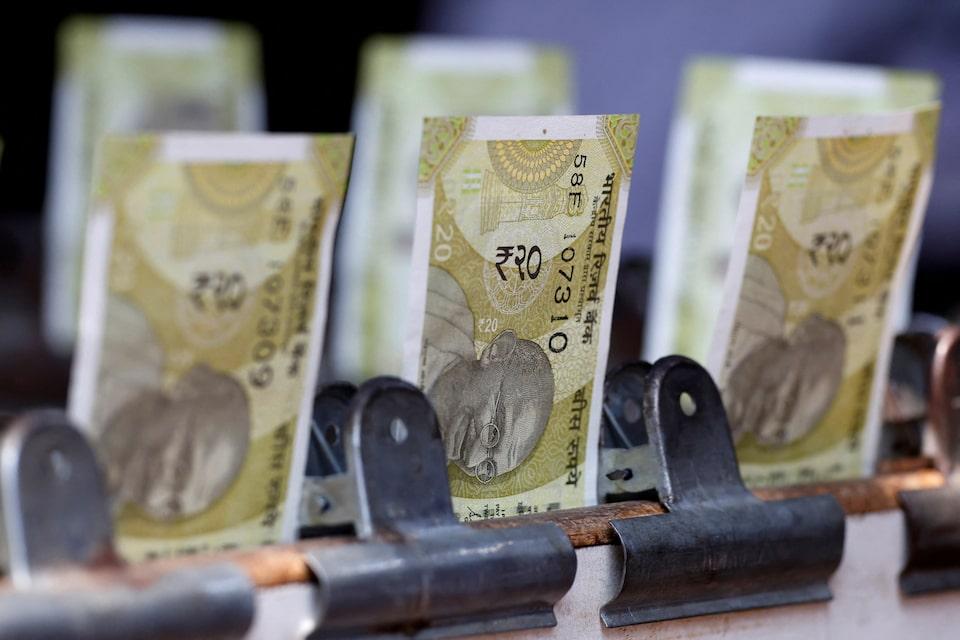
MUMBAI, June 13 (Reuters) - A surge in oil prices after Israel’s strikes on Iran sent the Indian rupee tumbling on Friday, prompting the central bank to step in and limit further losses, traders said. The attack sparked a wave of risk aversion across markets. Asian currencies and equities dropped, U.S. equity futures fell, while safe havens rose. Brent crude surged by as much as 11% at one point. Sign up here. In response, the rupee slipped to 86.20 per dollar, its weakest level in two months. The Reserve Bank of India (RBI) likely intervened to curb volatility and support the currency. A trader told Reuters the central bank likely sold U.S. dollars via state-run banks, stabilising the rupee around the 86.05 level. The RBI typically leans against sharp moves in the spot market, especially those driven by external shocks, traders noted. The rupee was last quoted at 86.12. "Price action was stretched at the open, and the RBI likely intervened in small size," said an fx dealer at a private bank. "Having said that, you can't expect this dip (in dollar/rupee) to hold for long looking at oil prices." Higher oil prices are a significant negative for India, which imports about 80-85% of its crude requirements. A sustained rise in crude worsens the trade and current account deficits, and adds upward pressure on domestic inflation. Additionally, higher oil prices increases dollar demand from refiners. "There is risk of this escalating, though earlier once Israel attacked Iran with the latter retaliating and both claiming success and denying major damage and the tensions faded," said Madhavi Arora, chief economist at Emkay Global Financial Services. "However in this case, more details are awaited and in the near term oil would be highly volatile." Meanwhile, forward premiums rose across tenors, reflecting the potential impact of higher oil prices on Indian interest rates. The 1-year USD/INR annualised premium rose 6 basis points to 1.92%. https://www.reuters.com/world/india/india-central-bank-likely-steps-after-rupee-buckles-under-oil-shock-2025-06-13/
2025-06-13 05:36
MUMBAI, June 13 (Reuters) - The Reserve Bank of India is believed to have sold dollars to support the rupee after a surge in oil prices, triggered by Israeli strikes on Iran, put pressure on the currency, three traders told Reuters on Friday. The Indian rupee dropped to 86.20 to the U.S. dollar before recovering to 86.04 on the back of the RBI's intervention. Sign up here. The central bank sold dollars near 86.05, a currency trader said, citing two state-run banks. https://www.reuters.com/world/india/india-central-bank-steps-contain-fallout-oil-price-jump-rupee-traders-say-2025-06-13/
2025-06-13 05:32
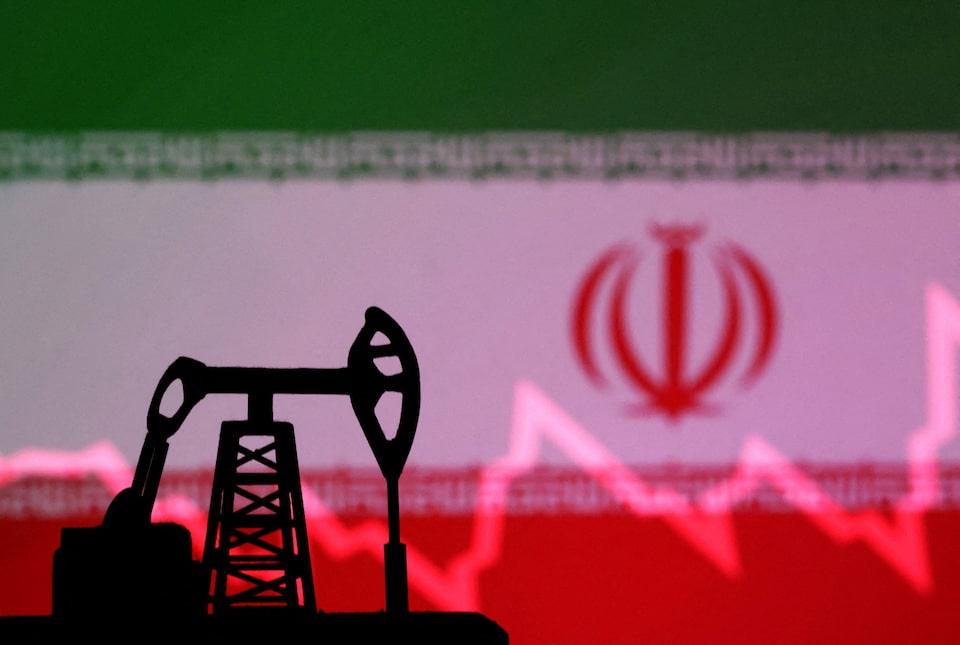
DOHA, June 15 (Reuters) - Israel struck an installation at Iran's South Pars gas field on Saturday, the first attack on Iran's oil and gas sector as part of what the Israeli government had warned would be a prolonged operation to prevent Tehran from building an atomic weapon. Iran has partially suspended gas production from the South Pars field, Iran's portion of the world's largest natural gas reserve, which lies beneath the Gulf and is shared with major gas exporter Qatar. Sign up here. Israel also struck a Tehran fuel depot and an oil refinery near the capital on Saturday, Iran said, but authorities said the situation was under control. Following are some facts on the country's energy industry, exports, and the impact of previous Western sanctions. WORLD'S LARGEST GAS RESERVE Iran produces natural gas from the offshore South Pars gas field, which makes up around a third of the world's largest reservoir of natural gas. Iran shares the reservoir with major gas exporter Qatar, which calls its field the North Dome. Sanctions and technical constraints have meant most gas Tehran produces from the South Pars field is for domestic use in Iran. Iran's total natural gas production totalled 266.25 billion cubic meters in 2023, with domestic consumption accounting for 255.5 bcm, according to data by the Gas Exporting Countries Forum, a grouping of gas exporter nations. About 15.8 bcm of natural gas were exported, the Forum said. Saturday's attack struck four units of Phase 14 of South Pars, around 200 kilometres from Qatar's gas installations, many of which are joint ventures with major international energy firms, including U.S. giants ExxonMobil and ConocoPhilips. Doha has made hundreds of billions of dollars exporting liquefied natural gas to global markets for nearly three decades. The entire reservoir contains an estimated 1,800 trillion cubic feet of usable gas - enough to supply the entire world's needs for 13 years, or to generate enough electricity to supply the U.S. for more than 35 years. SANCTIONS AND OPEC Iran's oil production was at its peak in the 1970s, with record output of 6 million bpd in 1974, according to OPEC data. That amounted to more than 10% of world output at the time. In 1979, the U.S. imposed the first wave of sanctions on Tehran. Since then the country has been the target of several waves of U.S. and European Union sanctions. The U.S. tightened sanctions in 2018 after Trump exited a nuclear accord during his first presidential term. Iran's oil exports fell to nearly zero during some months. Exports rose steadily under Trump's successor President Joe Biden's administration, with analysts saying sanctions were less rigorously enforced and Iran had succeeded in evading them. Iran is exempt from OPEC+ output restrictions. WHO IS THE MAIN BUYER OF IRANIAN OIL? Iran's crude exports have risen to a multi-year high of 1.8 million bpd in recent months, the highest since 2018, driven by strong Chinese demand. China says it does not recognise sanctions against its trade partners. The main buyers of Iranian oil are Chinese private refiners, some of whom have recently been placed on the U.S. Treasury sanctions list. There is little evidence, however, that this has impacted flows from Iran to China significantly. Iran has for years evaded sanctions through ship-to-ship transfers and hiding ships' satellite positions. PRODUCTION AND INFRASTRUCTURE Iran, the third largest producer in the Organization of the Petroleum Exporting Countries, extracts about 3.3 million barrels per day of crude oil, and another 1.3 million bpd of condensate and other liquids, totalling about 4.5% of global supplies. It exported about 1.8 million bpd of crude and condensate in May, close to a 2018 peak, according to Kpler, processing the remainder of its production in its domestic refineries with a total capacity of 2.6 million bpd, according to consultancy FGE. It exported nearly 750,000 bpd of oil products, including LPG, in May, according to Kpler. The country also produces 34 billion cubic feet of gas per day, according to FGE, accounting for 7% of global production. All gas is consumed domestically. Iran's hydrocarbon production facilities are primarily concentrated in the southwest, in the Khuzestan province for oil and in the Bushehr province for gas and condensate from the giant South Pars field. It exports 90% of its crude via Kharg Island. Analysts say Saudi Arabia and other OPEC members could compensate for the drop of Iranian supply by using their spare capacity to pump more. However, with a number of producers in the group currently in the process of raising output targets, their spare capacity is becoming more strained. https://www.reuters.com/world/middle-east/an-overview-irans-energy-industry-infrastructure-2025-02-04/
2025-06-13 05:30
JAKARTA, June 13 (Reuters) - Indonesia and Singapore signed initial deals on Friday to develop cross-border trade in low carbon electricity and collaborate on carbon capture and storage, ministers from both countries said in Jakarta. The electricity deal reaffirmed an earlier agreement to export solar power from Indonesia to Singapore, with a group of companies companies planning to build plants and grid infrastructure to generate and transmit the power. Sign up here. The memorandum of understanding signed by the two countries says they will aim to draw up policies, regulatory frameworks and business arrangements that will enable Indonesian power to be delivered to Singapore. Indonesia expects to export 3.4 gigawatts of low-carbon power by 2035, according to a presentation slide shown by Indonesia's energy minister Bahlil Lahadalia. In another MOU, the two countries said they would look into drawing up a legally-binding agreement for carbon capture and storage that would allow cross-border projects to go ahead. If successful, it will be the first such project in Asia, said Singapore government minister Tan See Leng. Energy firms BP, ExxonMobil, and Indonesia's state company Pertamina are already developing CCS projects in Indonesia. With its depleted oil and gas reservoirs and saline aquifers capable of storing hundreds of gigatonnes of CO2, Indonesia has allowed CCS operators to set aside 30% of their storage capacity for carbon captured in other countries. The two countries also signed a deal for the development of sustainable industrial zones on several Indonesian islands near Singapore, including Batam, Bintan and Karimun. Bahlil said the deals could bring in more than $10 billion of investment from the manufacturing of solar panels, the development of CCS projects and potential investment in industrial estates. https://www.reuters.com/sustainability/climate-energy/indonesia-singapore-sign-deals-power-trade-carbon-capture-2025-06-13/

2025-06-13 05:08
A look at the day ahead in European and global markets from Rocky Swift It had to be Friday the 13th, right? Sign up here. The morning began with explosions in Tehran that appeared to be much more serious than tit-for-tat strikes between Israel and Iran last year. Though a preemptive strike by Israel on Iran's budding nuclear capability had been suspected, the timing and severity still took markets by surprise, with oil prices jumping over 11% at one point. What remains unclear is what role or knowledge the United States had about the offensive and what will Washington do if Iran retaliates. Secretary of State Marco Rubio said the U.S. was not involved, while Israel's state broadcaster said Washington had been notified before the strikes. Steve Witkoff, President Donald Trump's special envoy to the Middle East, had been expected to meet Iran's foreign minister in Oman on Sunday. Oil's jump put it on course for the sharpest daily gain in more than five years. Gold and Treasuries surged in Asian trading, while stock futures pointed to roughly 1.5% declines in Europe and U.S. Britain's FTSE was down less than 0.5% in the futures market. With rubber bullets flying in Los Angeles and missiles dropping in Tehran, global economies are clearly prioritising guns over butter. Major defence contractors in Europe such as Britain's BAE Systems, France's Dassault Aviation, and Sweden's Saab AB may be active today. Key developments that could influence markets on Friday: - German, French final CPI readings for May - Euro zone trade balance, industrial production data for April Trying to keep up with the latest tariff news? Our new daily news digest offers a rundown of the top market-moving headlines impacting global trade. Sign up for Tariff Watch here. (This story has been refiled to correct the hyperlink to the oil price story in paragraph 5) https://www.reuters.com/world/europe/global-markets-view-europe-2025-06-13/