2025-06-12 21:42
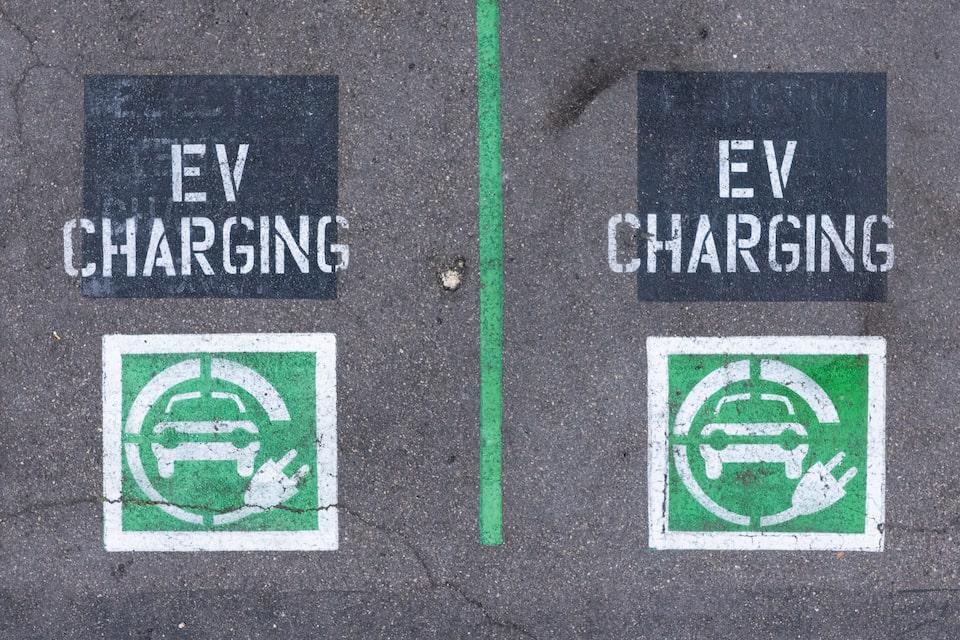
States say U.S. Senate action was unlawful Trump says California EV rules a 'disaster' Automakers praise action calling EV rules unworkable WASHINGTON, June 12 (Reuters) - A group of 11 states led by California on Thursday filed suit challenging a repeal by Congress of the state's 2035 electric vehicle rules and heavy duty truck requirements. U.S. President Donald Trump on Thursday signed three resolutions approved by lawmakers barring California's electric vehicle sales mandates and diesel engine rules, including its landmark plan to end the sale of gasoline-only vehicles by 2035. Sign up here. "We officially rescue the U.S. auto industry from destruction by terminating the California electric vehicle mandate once and for all," Trump said on Thursday. "Trump's all-out assault on California continues," California Governor Gavin Newsom responded. "And this time he's destroying our clean air and America's global competitiveness in the process." The states asked a judge to declare that Trump's repeal of waivers issued by the Environmental Protection Agency under President Joe Biden have no effect on state emissions rules. "The Federal Government carried out an illegal playbook designed to evade lawful procedures that might prevent the 'take down' of disfavored California laws," said the lawsuit filed in U.S. District Court in northern California. The plaintiffs include New York, New Jersey, Colorado, Massachusetts and Washington state. The defendants are Trump, the EPA and its Administrator Lee Zeldin. In March, the Government Accountability Office said the waivers cannot be repealed under the Congressional Review Act. Senate Republicans rejected the advice of the Senate parliamentarian in moving forward under the act. Biden's waiver allowed California to mandate that at least 80% of new vehicles sold in the state be electric by 2035, with the remainder being plug-in hybrids. Trump also signed a resolution to rescind the EPA's 2023 approval of California's plans to require a rising number of zero-emission heavy-duty trucks, and another resolution on California's low-NOx, or low-nitrogen oxide, regulation for heavy-duty highway and off-road vehicles and engines. The lawsuit said regulations requiring "crucial emission reductions from gasoline- and diesel-fueled vehicles got swept in for termination too." The Alliance for Automotive Innovation, representing General Motors (GM.N) , opens new tab, Toyota (7203.T) , opens new tab, Volkswagen (VOWG.DE) , opens new tab, Hyundai (005380.KS) , opens new tab, Stellantis (STLAM.MI) , opens new tab and others, praised Trump's signing, saying the EV rules were unachievable and made cars less affordable, limited consumer choice and reduced industry competition. Alliance CEO John Bozzella said Trump "got behind this repeal before the EV mandates did real damage to the auto industry in America, stood up for customer choice and helped restore a degree of balance to U.S. emissions regulations." Experts and automakers say Trump's repeal significantly reduces the value of Tesla's (TSLA.O) , opens new tab EV emissions credits. The EPA said the lawsuit lacked merit. "This is nothing more than California throwing a temper tantrum because the American people don't want the state's terrible policies," agency spokeswoman Molly Vaseliou said. A separate bill passed by the U.S. House in May would end a $7,500 tax credit for new EVs, impose a new $250 annual fee on EVs for road repair costs and repeal vehicle emissions rules designed to prod automakers into building more EVs. It would also phase out EV battery production tax credits in 2028. Another Senate proposal would eliminate penalties for not meeting federal fuel economy requirements. https://www.reuters.com/sustainability/climate-energy/california-10-other-states-sue-block-trump-killing-2035-ev-rules-2025-06-12/
2025-06-12 21:39
June 12 (Reuters) - U.S. liquefied natural gas producer NextDecade (NEXT.O) , opens new tab said on Thursday that its units have finalized contracts with Bechtel Energy to construct train 4 and train 5 at its Rio Grande LNG facility, with a combined value of about $9 billion. Under engineering, procurement, and construction (EPC) contracts, NextDecade agreed to pay Bechtel about $4.77 billion under a renewed agreement for the fourth liquefaction train. Sign up here. For the fifth train, it executed an EPC contract worth about $4.32 billion. The company expects the pricing validity under the train 4 and train 5 contracts to extend through September 15, 2025, and it aims to achieve a positive final investment decision (FID) on train 4 before the end of the pricing validity period for its EPC contract. LNG developers typically reach FIDs on projects once they have secured enough supply deals to obtain the necessary financing for construction. In late May, the company signed a 20-year deal to supply Japan's power generator JERA with 2 million tonnes per annum of LNG from the fifth liquefaction facility at its Rio Grande project. https://www.reuters.com/business/energy/nextdecade-signs-9-billion-contracts-with-bechtel-construction-lng-sites-2025-06-12/

2025-06-12 21:28
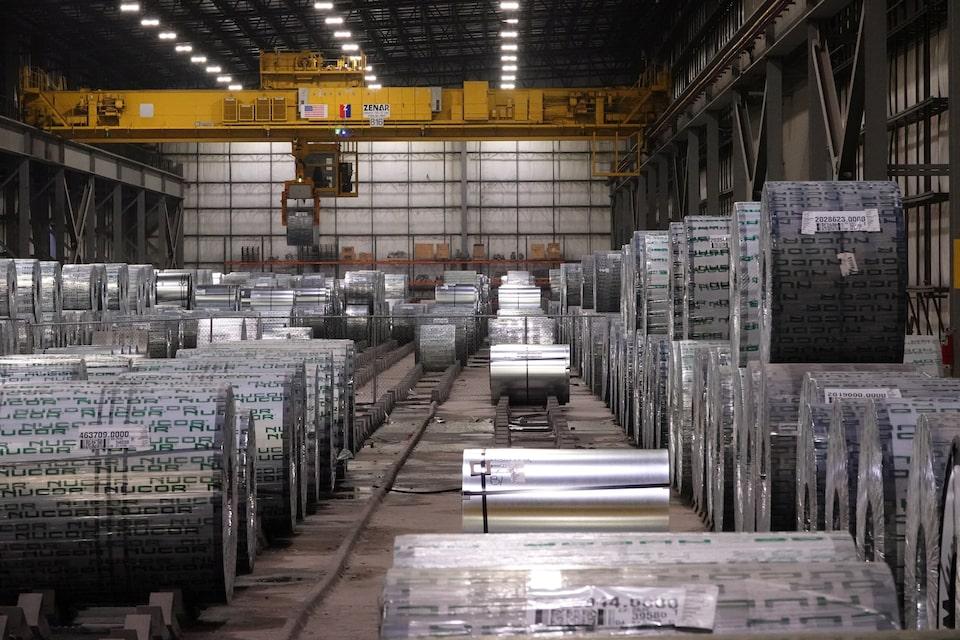
June 12 (Reuters) - A range of imported household appliances including dishwashers, washing machines, refrigerators and more will be subject to President Donald Trump's expanded steel tariffs starting later this month, according to a notice posted on Thursday. The tariffs, which are currently at 50% for most countries, would take effect on an additional range of "steel derivative products" on June 23, the Commerce Department said in the notice. Sign up here. It is the second time since Trump initially ratcheted up tariffs on imported steel and aluminum, first to 25% starting in March and then to 50% this month, that his administration has expanded the list of derivative products affected by the import levies. Just before the first round of duties was set to take effect in March, they added nearly 300 product categories covering everything from horseshoes to bulldozer blades to the tariffs list. This time eight product lines were added: combined refrigerator-freezers; small and large dryers; washing machines; dishwashers; chest and upright freezers; cooking stoves, ranges and ovens; food waste disposals; and welded wire racks. "The tariff imposed ... will be assessed on these derivative products for the value of the steel content in each product," the Federal Register posting said. https://www.reuters.com/world/us/home-appliances-swept-up-expansion-trump-steel-tariffs-2025-06-12/
2025-06-12 21:04
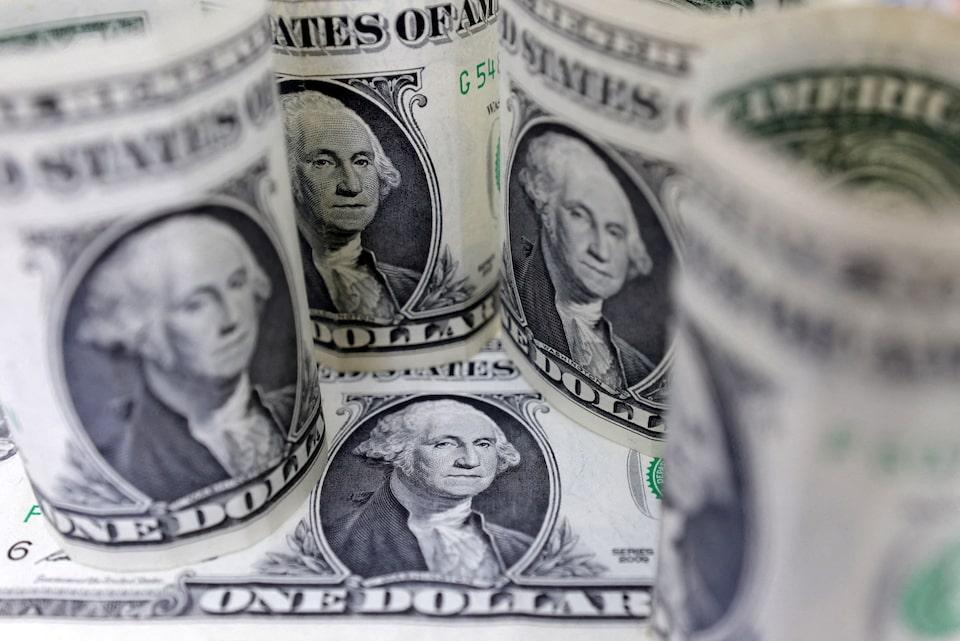
ORLANDO, Florida, June 12 (Reuters) - TRADING DAY Making sense of the forces driving global markets Sign up here. By Jamie McGeever, Markets Columnist I'm excited to announce that I'm now part of Reuters Open Interest (ROI), an essential new source for data-driven, expert commentary on market and economic trends. You can find ROI on the Reuters website, and you can follow us on LinkedIn and X. The dollar's slide accelerated on Thursday, as more evidence of cooling U.S. price pressures weighed on Treasury yields and dragged the greenback to lows against a basket of major currencies not seen in more than three years. In my column today I look ahead to next week's Fed meeting. With inflation cooling but tariffs yet to kick in, is Fed policy still in a "good place" as Chair Jerome Powell repeatedly said last month? More on that below, but first, a roundup of the main market moves. If you have more time to read, here are a few articles I recommend to help you make sense of what happened in markets today. Today's Key Market Moves Dollar despair deepens The dollar grabbed the global market spotlight on Thursday, and once again, for the wrong reasons. If it's failing to get any support when U.S. bond yields are rising, it's getting hit even harder when they're falling. As was the case on Thursday. After a string of recent soft consumer inflation prints, it was the turn of producer price inflation to cement the view that U.S. price pressures aren't as hot as economists have thought. Tariffs have yet to be fully felt, of course, but right now inflation across the board is pretty tame. Rates traders brought forward the timing of when they think the Fed will cut interest rates to September from October and, also supported by a strong 30-year bond auction, yields fell across the curve. The dollar index is now down 10% year to date, and the euro is up 12%. We're only at the half-way point of the year, but it's worth noting that the last time the dollar fell more than 10% in a calendar year was 2003. Much of its weakness this year is down to non-U.S. investors hedging their exposure to U.S. assets much more than they have previously. In effect, that equates to selling dollars, and European pension and insurance funds are at the heart of it. "Our analysis suggests there is much more still to come," reckon analysts at BNP Paribas, recommending that investors buy the euro with a target of $1.20. They calculate that if Dutch and Danish pension funds reduce dollar exposure to 2015 levels as a share of total assets under management, they have a further $217 billion to sell. And that's just Danish and Dutch funds. On the tariffs front, investors are still digesting this week's U.S.-China deal, outlined by Washington on Wednesday and confirmed by Beijing on Thursday. Still, there is some ambiguity around key elements of the deal, including rare earth export licenses and details of the tariffs. JPMorgan's U.S. economists calculate that, all told, the total effective U.S. tariff rate will be around 14%. When levied on $3.1 trillion of imported goods, that equates to a tax on U.S. businesses and consumers of over $400 billion. It remains to be seen how that is split, but history shows consumers bear most of the burden, they note. "The stagflationary impulse from higher tariffs has lowered our GDP growth outlook for this year (4Q/4Q) from 2.0% at the start of the year to 1.3% currently," they wrote on Thursday. On the other hand, economists at Oxford Economics on Thursday raised their 2025 U.S. GDP forecast to 1.5% from 1.3% and said the likelihood of recession has fallen. You pay your money, you take your choice. Is the Fed still in a "good place"? At the Federal Open Market Committee meeting next week, investors will scrutinize all communications for any sign that the recent softening in U.S. inflation could be enough to nudge policymakers closer to cutting interest rates. Current economic data might be leaning in that direction, but policy out of Washington could well keep Chair Jerome Powell and colleagues in 'wait and see' mode. No one expects the Fed to cut rates next week, but businesses, households and investors should get a better sense of policymakers' future plans from the revised quarterly Staff Economic Projections and Powell's press conference. Powell was very clear in his post-meeting press conference last month that the Fed is prepared to take its time assessing the incoming economic data, particularly the impact of tariffs, before deciding on its next step. He told reporters no less than eight times that policy is in a "good place" and said four times that the Fed is "well positioned" to face the challenges ahead. Will he change his tune next Wednesday? Annual PCE inflation in April was 2.1%, the lowest in four years and virtually at the Fed's 2% target, while CPI inflation in May was also lower than expected. The labor market is softening, economic activity is slowing, and recent red-hot consumer inflation expectations are now starting to come down. In that light, it may be surprising that markets are not fully pricing in a quarter-point rate cut until October. "The upcoming meeting offers an opportunity (for Fed officials) to signal that the recent mix of tamer inflation and softer consumption growth warrant a careful 'recalibration' of rates lower, while remaining very cautious about what comes next," economist Phil Suttle wrote on Wednesday. But there are two well-known barriers that could keep the Fed from quickly re-joining the ranks of rate-cutting central banks: tariffs and the U.S. fiscal outlook. WASHINGTON WILD CARD Tariffs have yet to show up in consumer prices, especially in goods, and no one knows how inflationary they will be. They could simply result in a one-off price hit, they could trigger longer-lasting price spikes, or the inflationary impact could end up being limited if companies absorb a lot of the price increases. In other words, everything is on the table. Equity investors appear to be pretty sanguine about it all, hauling the S&P 500 back near its all-time high. But Powell and colleagues may be slower to lower their guard, and for good reason. Although import duties on goods from China will be lower than feared a few months ago and Washington is expected to seal more trade deals in the coming weeks, overall tariffs will still end up being significantly higher than they were at the end of last year, probably the highest since the 1930s. Economists at Goldman Sachs reckon U.S. inflation will rise to near 4% later this year, with tariffs accounting for around half of that. This makes the U.S. an "important exception" among industrialized economies, the OECD said last week. The other major concern is the U.S. public finances. President Trump's 'big beautiful bill' being debated in congress is expected to add $2.4 trillion to the federal debt over the next decade, and many economists expect the budget deficit will hover around 7% of GDP for years. With fiscal policy so loose, Fed officials may be reluctant to signal a readiness to loosen monetary policy, especially if there is no pressing need to do so. FOMC members in December last changed their median forecasts for the central bank's policy rate, hiking it this year and next year by a hefty 50 basis points to 3.9% and 3.4%, respectively. They left projections unchanged in March amid the tariff fog. That implies 50 basis points of rate cuts this year and another 50 bps next year, which is pretty much in line with rates futures markets right now. So perhaps Fed policy is still in a "good place", but with economic expectations changing quickly, it's unclear how long that will be the case. What could move markets tomorrow? Want to receive Trading Day in your inbox every weekday morning? Sign up for my newsletter here. Opinions expressed are those of the author. They do not reflect the views of Reuters News, which, under the Trust Principles , opens new tab, is committed to integrity, independence, and freedom from bias. https://www.reuters.com/business/aerospace-defense/global-markets-trading-day-graphic-pix-2025-06-12/
2025-06-12 20:46
June 12 (Reuters) - The New York State Public Service Commission approved 29 infrastructure projects worth $636.2 million, enabling 642 megawatts of electrification upgrades, the commission said on Thursday. These projects were proposed by Consolidated Edison (ED.N) , opens new tab, Niagara Mohawk Power Corporation, New York State Electric & Gas Corporation (NYSEG), and Rochester Gas and Electric Corporation (RG&E). Sign up here. "The urgent grid upgrade projects would expand grid capacity in many areas of the state, relieving urgent constraints on an accelerated basis while a broader, unified planning framework is developed,” said commission Chair Rory Christian. Con Edison will lead five projects, including the Zerega Avenue expansion and the redesign of the Hunts Point electrical system, adding 380 MW of capacity at a cost of $439.9 million. National Grid will oversee 22 projects totaling $126 million, delivering 184.8 MW of new capacity to support vehicle electrification in upstate New York. Moreover, NYSEG will implement a major industrial electrification project adding 30 MW, while RG&E will expand EV charging infrastructure by 47 MW. The commission said that this action was part of its plan to upgrade New York's electric grid infrastructure and work toward its decarbonization goals. https://www.reuters.com/sustainability/boards-policy-regulation/ny-state-public-service-commission-approves-29-power-projects-valued-6362-2025-06-12/
2025-06-12 20:41
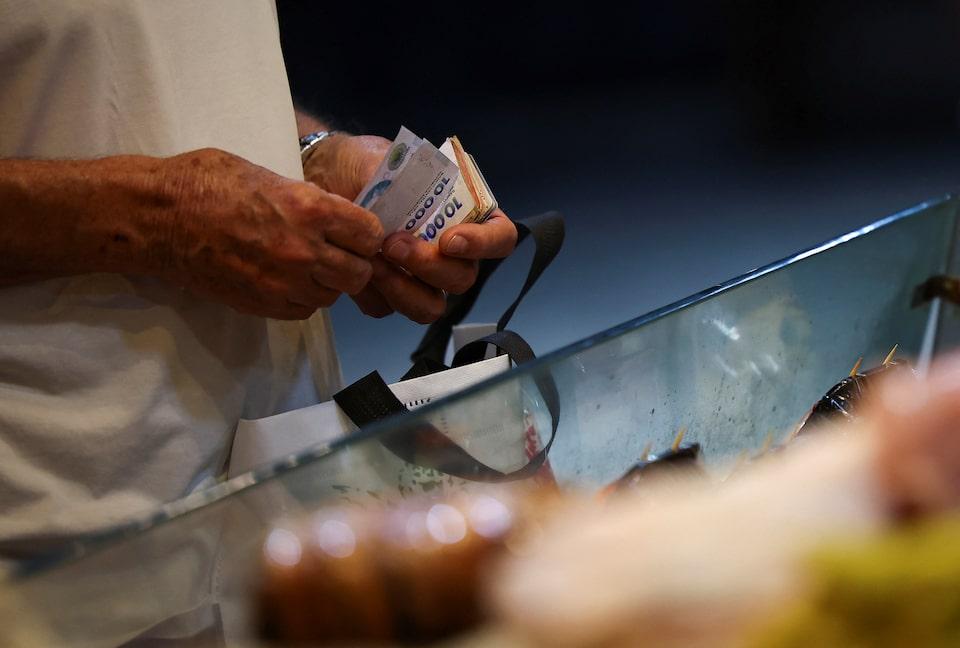
BUENOS AIRES, June 12 (Reuters) - Argentina's monthly inflation rate slowed to its lowest level in more than five years in May, official data showed on Thursday, adding momentum to President Javier Milei's drive to rid the country of chronically soaring prices. Prices during the month rose just 1.5% from the month before, national statistics agency INDEC said, well below the 2.0% estimate from analysts polled by Reuters. Sign up here. Monthly inflation has not been so low since May 2020, when much of the economy was paralyzed by pandemic lockdowns. Thursday's monthly inflation data is the lowest yet for libertarian Milei, whose economic policies have helped bring down triple-digit inflation and inspire confidence in investors and the International Monetary Fund, which recently approved a $20 billion loan package. Members of Milei's team were quick to offer Thursday's number as proof that the president's agenda, marked by austerity and state cutbacks, works. "Everything is going according to plan," said Finance Secretary Pablo Quirno on X. "When there's a fiscal surplus and the printing press slows down, inflation plummets. It's natural for this to happen. The fundamental laws of economics dictate this," Milei's spokesman Manuel Adorni added. In the 12 months through May prices rose 43.5%, slowing from the previous month's 47.3% rate and below the 44.2% rate predicted by analysts. Argentina's double-digit annual inflation rate remains among the world's highest, vexing everyday consumers who still feel the sting of inflation, even if it is slowing. "Prices don't stop rising, maybe 2%, 1%, or half a percent, but it doesn't stop," said Matias Vilar, a bus driver in Buenos Aires. Core inflation, often seen as a better indicator of price trends because it strips out volatile products, was slightly higher in May at 2.2%. In a bright spot for the country's poor, the price of a basic food basket tracked by INDEC, representing the cost of essential food items to meet minimum nutritional requirements, fell by 0.4% between April and May, the agency said. Overall, prices of food and non-alcoholic drinks were up half a percentage from April, among the lowest increases among the categories INDEC tracks. Analysts polled by the central bank see annual inflation falling to 28.6% by the year's end. https://www.reuters.com/world/americas/argentina-inflation-cools-may-lowest-over-five-years-2025-06-12/