2025-12-11 05:18
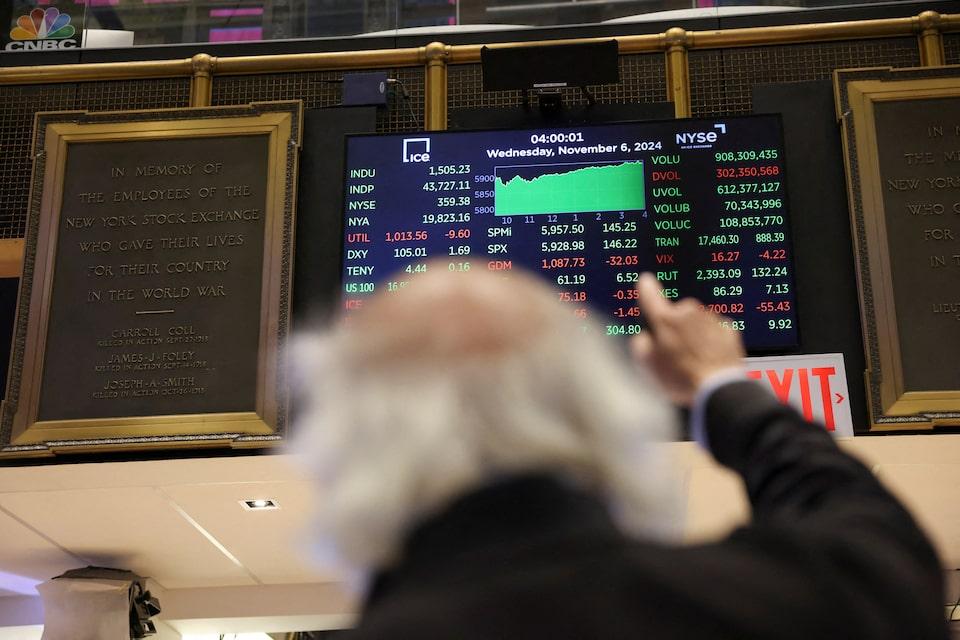
MUMBAI, Dec 11 (Reuters) - The Indian rupee weakened on Thursday, weighed down by outflows tied to near-term dollar payments by local corporates, which offset the positive impulse from the Federal Reserve's rate cut and less-hawkish-than-anticipated commentary. The rupee weakened nearly 0.3% to 90.21 against the U.S. dollar, as of 10:30 a.m. IST. Sign up here. A sharply divided U.S. Fed cut interest rates on Wednesday but signalled borrowing costs are unlikely to drop further in the near term. Asian currencies were trading mixed on Thursday, while the dollar index recouped some losses after dropping to a near two-month low following the Fed's rate decision. Weakness in the greenback offered little relief to the rupee, with traders citing dollar demand from foreign and local private lenders, likely tied to merchant payments. The rupee is on course for its worst yearly fall since 2022 as the currency has borne the brunt of challenges to India's external sector ranging from weakness in portfolio flows to steep U.S. trade tariffs on Indian exports. India Commerce Secretary Rajesh Agrawal met U.S. Deputy Trade Representative Rick Switzer to discuss bilateral trade and economic ties, the government said on Wednesday. Switzer is leading a U.S. team in New Delhi for two days of trade discussions, as India seeks relief from punitive tariffs imposed by Washington over its purchases of Russian oil. Analysts and bankers reckon that the rupee could be exposed to steeper losses in the absence of a trade deal with the U.S. Meanwhile, the focus will also be on a $5 billion dollar-rupee buy/sell swap to be conducted by the Reserve Bank of India next week, as part of its measures to inject liquidity into the local banking system. Traders and bankers expect the swap to see healthy interest from market participants and it could help ease the excess dollar liquidity in the banking system on account of the RBI's previous dollar-selling interventions and IPO related inflows. https://www.reuters.com/world/india/rupee-likely-open-higher-fed-outlook-pushes-back-dollar-2025-12-11/

2025-12-11 05:09
Oracle shares fall after quarterly results; Nasdaq down as well Dollar down against euro, other currencies in wake of Fed news Wed Treasury yields also fall Broadcom shares weaker after the bell NEW YORK, Dec 11 (Reuters) - Major stock indexes mostly rose on Thursday, with the Dow and S&P 500 posting record closing highs, while the dollar and U.S. bond yields extended declines from the day before, when the Federal Reserve cut interest rates but gave a less hawkish outlook than expected. It was the S&P 500's first record high close in over a month as investors shifted to sectors including financials and materials amid worries about the valuations of high-flying artificial intelligence stocks. Sign up here. The Nasdaq ended lower along with technology-related shares following disappointing forecasts from Oracle (ORCL.N) , opens new tab. Investors were considering the global interest rate outlook after the Fed lowered its benchmark funds rate, as expected, by 25 basis points to 3.5%-3.75% in a 9-3 split decision. Fed Chair Jerome Powell sounded balanced at a press conference, saying he did not "think a rate hike is anyone's base case." That left interest rate futures with at least two rate cuts priced in for next year. Shares of cloud computing company Oracle fell 10.8% after it reignited jitters over stratospheric tech valuations by missing analysts' sales and profit estimates and flagging a $15 billion AI overspend. The S&P 500 tech sector (.SPLRCT) , opens new tab was down as well and shares of AI leader Nvidia (NVDA.O) , opens new tab were down 1.6%. After the closing bell, shares of Broadcom (AVGO.O) , opens new tab were down about 3% even as the AI chipmaker projected first-quarter revenue above Wall Street estimates. Broadcom shares closed the regular session down 1.6%. "AI is going to remain in focus for the next 24 hours or so," said Michael O’Rourke, chief market strategist at JonesTrading in Stamford, Connecticut. While tech was a drag, the S&P 500 financial sector (.SPSY) , opens new tab rose 1.8% on Thursday and materials (.SPLRCM) , opens new tab gained 2.2%. The Dow Jones Industrial Average (.DJI) , opens new tab rose 646.26 points, or 1.34%, to 48,704.01, the S&P 500 (.SPX) , opens new tab added 14.32 points, or 0.21%, to 6,901.00 and the Nasdaq Composite (.IXIC) , opens new tab fell 60.30 points, or 0.25%, to 23,593.86. MSCI's gauge of stocks across the globe (.MIWD00000PUS) , opens new tab rose 3.53 points, or 0.35%, to 1,015.27. The pan-European STOXX 600 (.STOXX) , opens new tab index finished 0.55% higher. DOLLAR HITS MULTI-MONTH LOWS The U.S. dollar slumped, hitting multi-month lows against the euro, Swiss franc, and sterling and extending losses from the previous session. The Swiss franc drew support from the Swiss National Bank's decision to hold interest rates steady. Against the Swiss franc , the dollar was down 0.6% and earlier touched its lowest level since mid-November. The euro was last up 0.4% at $1.1740 and hit its highest level since October 3. Sterling was last flat on the day at $1.3387 after touching its highest level in roughly two months. The dollar also weakened against the yen, shedding 0.3% to 155.61 yen . U.S. Treasury yields also fell for a second straight session following the Fed policy news. The U.S. central bank also said on Wednesday that purchases of short-dated government bonds will begin on Friday, with an initial round totalling around $40 billion in Treasury bills - a move that was earlier and larger than what investors had expected. The yield on the benchmark U.S. 10-year Treasury note The yield on the 30-year bond shed 0.4 basis point to 4.792%. An auction of $22 billion in 30-year bonds was solid, according to analysts, with demand of 2.36 times the notes on sale in line with the long-term average. Earlier, the euro zone's benchmark Bund yield hovered near a nine-month high as investors shifted focus to next week’s European Central Bank meeting. Germany’s 10-year yields , the euro zone's benchmark, were down 1.5 bps at 2.84% on Thursday. They hit 2.894% on Wednesday, their highest level since mid-March. The gap between U.S. and German yields dropped to 126.01, its lowest since June 2023. Oil prices ended lower, with investors shifting their focus back to Russia-Ukraine peace talks. U.S. crude fell 86 cents to settle at $57.60 a barrel and Brent fell 93 cents to settle at $61.28. https://www.reuters.com/world/china/global-markets-wrapup-1-pix-2025-12-11/
2025-12-11 00:50
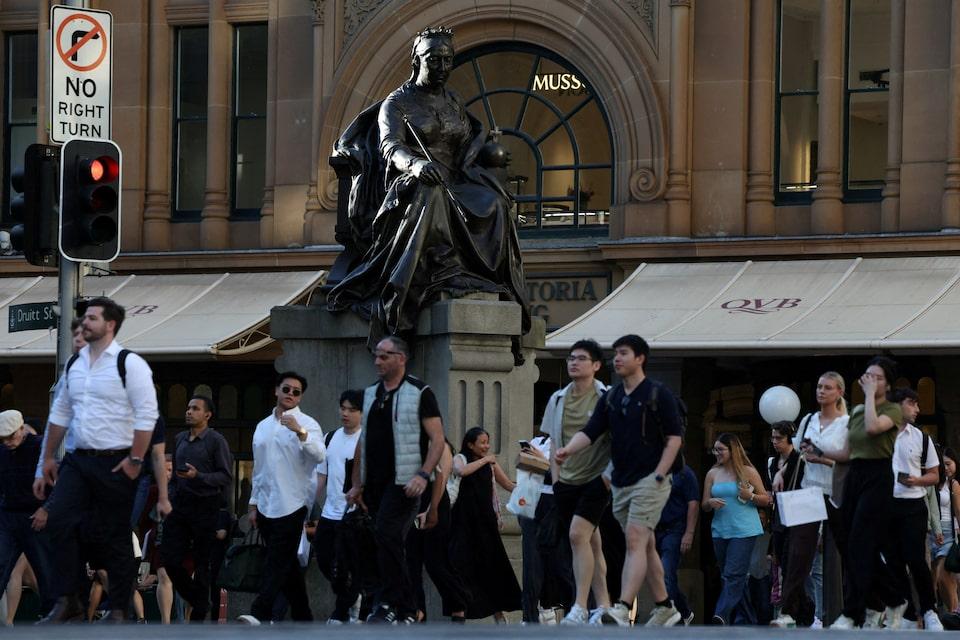
SYDNEY, Dec 11 (Reuters) - Australian employment fell by the most nine months in November as full-time jobs more than reversed a large increase the previous month, while the unemployment rate held steady as fewer people went looking for work. Figures from the Australian Bureau of Statistics on Thursday showed net employment fell 23,100 in November from October, when it jumped 41,200. That was far below market forecasts of a 20,000 gain. Full-time jobs dropped by 56,500. Sign up here. The jobless rate stayed at 4.3%, when analysts had looked for a rise to 4.4%. The participation rate fell to 66.7%, from 66.9%, while hours worked went flat after a strong run. https://www.reuters.com/world/asia-pacific/australia-jobs-drop-21300-november-unemployment-steady-2025-12-11/
2025-12-11 00:15
CARACAS, Dec 10 - The Venezuelan government has accused the United States of "blatant theft" after it seized a sanctioned oil tanker off the coast of Venezuela, it said in a statement. The Venezuelan government said it would "defend its sovereignty, natural resources, and national dignity with absolute determination," and said it would denounce the seizure of the tanker before international bodies. Sign up here. U.S. President Donald Trump confirmed the seizure of the ship earlier on Wednesday, a move that sent oil prices higher and sharply escalated tensions between Washington and Caracas. https://www.reuters.com/world/americas/venezuela-accuses-us-blatant-theft-after-tanker-seized-caribbean-2025-12-11/

2025-12-10 23:24
Brazil's benchmark rate stands near two-decade high of 15% Investors scour little-changed statement for clues on cuts Inflation forecast trimmed to 3.2% in mid-2027, near 3% target BRASILIA, Dec 10 (Reuters) - Brazil's central bank held interest rates at a nearly two-decade high on Wednesday for the fourth straight meeting and stuck to its hawkish tone, frustrating investors hoping for hints on when it might start cutting rates as economic activity loses steam. The bank's rate-setting committee, known as Copom, unanimously voted to leave the benchmark Selic rate at 15%, its highest since July 2006, as forecast by all 41 respondents in a Reuters poll. Sign up here. With the decision widely expected, investors were focused on Copom's little-changed accompanying statement, which gave no sign that policymakers were weighing imminent cuts, reiterating that conditions call for holding rates "for a very prolonged period." "Communication changed very little from the last meeting," said Carlos Lopes, an economist at Banco BV. "That shows the central bank has low conviction about starting rate cuts in January. The lack of signaling now isn't a dealbreaker, but it's a major constraint on changing the decision in January." MARKET BETS ON 2026 CUTS Policymakers halted an aggressive tightening cycle in July after lifting the benchmark Selic rate by 450 basis points to curb inflation. They now face growing pressure from Brazil's government to ease borrowing costs as President Luiz Inacio Lula da Silva gears up to run for reelection next year. Market bets have swung between expectations that easing could begin in January or March. The central bank noted the labor market's "resilience" in Wednesday's policy statement, softening last month's description of the labor market "still showing strength." Adding to a slightly more benign outlook, the bank trimmed its inflation forecast for its policy horizon, the second quarter of 2027, to 3.2% from 3.3% in November, edging closer to the 3% target. It also cut this year's estimate to 4.4% from 4.6% - now within the 1.5-point tolerance band of its official inflation target - and lowered the 2026 projection to 3.5% from 3.6%. "The central bank shows rate cuts are a bit closer, but still not ripe," said Felipe Salles, chief economist at C6 Bank. Salles said he still expects an initial 25 basis-point cut in March, which could turn into 50 basis points. GROWTH AND INFLATION EASING Since the November meeting, data showed Brazil's third-quarter gross domestic product grew just 0.1% from the previous quarter, losing momentum as weaker household consumption weighed on activity. Consumer inflation has also continued to ease on a 12-month basis, helped by lower commodity prices such as food and oil. Figures released on Wednesday showed annual inflation at 4.46% in November, the lowest in more than a year, while inflation expectations, closely watched by the central bank, have also retreated. Despite the softer backdrop, central bank chief Gabriel Galipolo has noted that both expectations and actual readings, although improving, remain above the bank's 3% target - a message repeated in the policy statement. He has also sought to temper market expectations by arguing that the central bank does not need to pre-announce when it might change course, stressing that decisions will depend on continuous assessment of incoming data. https://www.reuters.com/world/americas/brazils-central-bank-holds-interest-rates-expected-keeps-hawkish-tone-2025-12-10/
2025-12-10 23:02
Fed to buy $40 billion in Treasury bills to manage liquidity Move aims to reduce upward pressure on repo market borrowing rates Analysts expected asset purchases next year, Fed acts to ease year-end volatility NEW YORK, Dec 10 (Reuters) - The Federal Reserve’s move to expand its balance sheet again by buying Treasury bills is expected to ease money-market strains, calming investor worries that years of bond-portfolio runoff had drained too much liquidity from the financial system. The Fed said on Wednesday it would start buying short-dated government bonds to help manage market liquidity levels to ensure the central bank retains firm control over its interest rate target system. The purchases will begin on December 12 with an initial round that will total around $40 billion in Treasury bills, it said. Sign up here. The move is likely to ease upward pressure on borrowing rates in the roughly $4 trillion U.S. overnight repurchase agreements (repo) market, where banks and hedge funds exchange short-term loans backed by collateral such as U.S. Treasuries and other securities. Those rates have surged several times over the past few weeks, even after the Fed announced its intention to halt the reduction of its bond holdings - an operation known as quantitative tightening. Higher repo rates - as indicated by the Secured Overnight Financing Rate (SOFR) - reflect tighter liquidity, pushing lenders to charge a premium on repo transactions. "I think it's a positive development in that over time, you do need to have the Fed in an expanding balance sheet position," said Robert Tipp, chief investment strategist at PGIM Fixed Income. "It's important to have people doing arbitrage between Treasuries and futures to keep the market sufficiently liquid, and this provides a good backdrop for that," he added, referring to investors who buy Treasuries via debt raised in the repo market for so-called basis trades that profit from the price difference between Treasuries and Treasury futures. The tightening in money market liquidity earlier this year was due to a combination of factors, including a surge in U.S. Treasury bill issuance in recent months, as well as the U.S. government shutdown, which meant the Treasury accumulated funds in its account at the Fed due to a reduction in government payments of salaries and other expenses, analysts have said. Generally, a higher Treasury General Account (TGA) drains reserves from the banking system, meaning banks have less money to lend. The Fed this month ended quantitative tightening but the decision, announced in October, did about near-term liquidity strains in the repo market, where borrowing rates have remained stubbornly high in recent weeks, sometimes higher than the Fed policy rate. Many analysts had anticipated a pivot back to asset purchases, though most expected it early next year. The Fed’s decision to resume expanding its holdings now appears aimed at shoring up liquidity ahead of year-end, a period that often brings sharp but short-lived money-market volatility. "The reason they made it now is that pressure in the repo market, with repo trading above the administered rates, continued into early December, even after QT was formally concluded on December 1," said Stephen Douglass, chief economist of NISA Investment Advisors. "This is good, it does remove the risk of funding pressure, or some kind of repo dysfunction," he said. https://www.reuters.com/business/finance/investors-expect-relief-money-markets-fed-resumes-t-bill-purchases-2025-12-10/