2025-06-12 10:08
TSX ends up 0.4% at 26,615.75 Eclipses Wednesday's record closing high Nine of 10 major sectors notch gains Materials group adds 0.9% as gold rises June 12 (Reuters) - Canada's main stock index rose on Thursday to a new record high as gold prices climbed and investors weighed prospects of Canada moving closer to a trade deal with the United States at a Group of Seven leaders summit that begins this weekend. The S&P/TSX composite index (.GSPTSE) , opens new tab ended up 91.59 points, or 0.4%, at 26,615.75, eclipsing Wednesday's record closing high. Sign up here. U.S. Treasury Secretary Scott Bessent said he expects to attend the Group of Seven leaders meeting in Canada, which runs from June 15 to 17, with President Donald Trump, and he expects the two of them will meet with Canadian Prime Minister Mark Carney. "For Canadian investors, I think there's a building expectation that Carney and Trump may achieve some sort of agreement to de-escalate the trade and tariff war between our two countries," Brian Madden, chief investment officer at First Avenue Investment Counsel Inc. "Carney has got some bargaining chips so I think there's grounds for some sort of deal to be made," Madden said. "Maybe the government decides to stand down on the digital services tax, which we know the (Trump) administration doesn't like." A U.S. tax and spending bill under consideration contains a proposed tax, known as Section 899, that applies a progressive tax burden of up to 20% on foreign investors' U.S. income as pushback against countries that impose taxes the U.S. considers unfair, such as digital service taxes. The materials group, which includes metal mining shares, rose 0.9% as geopolitical risks and a weaker U.S. dollar helped push up the price of gold . Copper prices also climbed. Still, shares of Ivanhoe Mines (IVN.TO) , opens new tab were down 7.2% after the diversified mining company cut its output forecast. Utilities gained 0.9% as long-term borrowing costs declined. The Canadian government 10-year bond yield was down 2.4 basis points at 3.328%. Technology was the only one of 10 major sectors to lose ground, falling 0.8%. https://www.reuters.com/markets/europe/tsx-futures-fall-middle-east-tensions-weigh-sentiment-2025-06-12/
2025-06-12 09:45
Expects trading revenue to grow mid-to-high single digit in Q2 Consumer spending, credit quality remains strong Investment banking fees expected up to $1.2 billion, below Q2 2024 NEW YORK, June 11 (Reuters) - Bank of America (BAC.N) , opens new tab expects its trading revenue to grow by a mid-single-digit percentage this quarter, the 13th consecutive gain, CEO Brian Moynihan said on Wednesday. By contrast, investment banking fees are likely to fall to about $1.2 billion in the second quarter from $1.6 billion a year earlier, he told investors at a conference. That is "not where we want to be, but great prospects, great conversations," Moynihan said. Sign up here. Dealmaking has slowed this year as U.S. President Donald Trump's tariffs on trading partners fanned turmoil in markets and sparked concerns about slowing economic growth. Still, banking executives have expressed optimism about a recovery in investment banking while noting their trading divisions have cashed in on volatile markets. Morgan Stanley (MS.N) , opens new tab CEO Ted Pick told investors on Tuesday he expected a strong finish this quarter, while Citigroup's (C.N) , opens new tab head of banking Vis Raghavan said performance in its banking and trading divisions will improve. Moynihan reiterated the bank's guidance for growth in net interest income this year. The lender earlier projected its NII - the difference between what it earns on loans and pays out for deposits - to climb to a range of $15.5 billion to $15.7 billion by the fourth quarter, versus $14.6 billion in the first. BofA's earnings per share are expected to rise to 90 cents in the second quarter from 83 cents a year earlier, as it brings in more income from interest payments, according to LSEG estimates. Consumers are spending on travel and entertainment, and credit quality is strong, Moynihan said, as clients pay off debts on time. But he cautioned small businesses are more affected by uncertainty over the tariffs. Separately, BofA is working independently and with other industry participants on a stablecoin - a type of cryptocurrency designed to maintain a stable value relative to a reference asset, such as the dollar. "We've not been quite sure how big it will be, but we have to be ready," Moynihan said. Federal legislation currently before the Senate that would establish rules around stablecoins "will allow us to figure out whether there's really a business proposition," he added. Big U.S. banks are holding internal discussions about expanding into cryptocurrencies as they get stronger endorsements from regulators, but initial steps will be tentative, centering on pilot programs, partnerships or limited crypto trading, Reuters reported in May. https://www.reuters.com/business/finance/bank-america-expects-markets-business-post-13th-quarter-revenue-growth-2025-06-11/
2025-06-12 09:18
Long bets on Taiwan dollar highest since end-2020 S. Korean won bullish bets at near 2.5-year high Yuan long positions rise Respondents turn bearish on the Indian rupee June 12 (Reuters) - Bullish bets firmed up on most Asian currencies as the lack of clarity on a U.S.-China trade agreement kept the dollar on the back foot, a Reuters poll showed on Thursday. Long positions in the Taiwan dollar touched their highest since December 2020, while bullish bets on the South Korean won were the strongest in nearly two-and-a-half years, according to the poll of 10 respondents. Sign up here. Bullish bets on the Chinese yuan too edged up and were at their highest since October. Markets were focused all week on trade negotiations between delegates from the U.S. and China, which culminated in a framework agreement that covered tariff rates, secured the removal of Chinese export restrictions on rare earth minerals, and allowed Chinese students to access U.S. universities. While the agreement restored a delicate truce between the sparring countries, it left markets yearning for details on how the deals would be implemented. The dollar index has weakened more than 9% this year and is expected to decline further in the coming months, benefiting Asian currencies. "In an environment where we are looking for the U.S. economy to slow, the Fed to cut and a Trump administration pursuing various protectionist measures, cyclical factors and structural factors are aligned to keep the USD on a downtrend," said Fiona Lim, senior FX strategist at Maybank. The South Korean won has risen more than 8%, rallying sharply after the election of liberal party candidate Lee Jae-myung as president earlier this month. Lee took office after riding a wave of anger over a brief martial law imposed by his predecessor and on promises of devising an emergency package to address stagnating economic growth and aid households. Long positions in the Taiwan dollar spiked, with much of the currency's 10% surge this year coming in last month. The currency carried its positive momentum into June from May, when it had appreciated more than 6% on speculation that the island nation would allow appreciation of the currency to smooth trade relations with Washington - a notion that Taiwanese authorities had vigorously denied. On the other hand, poll participants were less upbeat about the Singapore dollar and the Philippine peso where long positions were trimmed slightly. The trend flipped only for the Indian rupee with bets turning marginally bearish for the first time in two months after the country's central bank delivered a larger than expected 50-basis-point cut on Friday. The Asian currency positioning poll is focused on what analysts and fund managers believe are the current market positions in nine Asian emerging market currencies: the Chinese yuan, South Korean won, Singapore dollar, Indonesian rupiah, Taiwan dollar, Indian rupee, Philippine peso, Malaysian ringgit and the Thai baht. The poll uses estimates of net long or short positions on a scale of minus 3 to plus 3. A score of plus 3 indicates the market is significantly long U.S. dollars. The figures include positions held through non-deliverable forwards (NDFs). The survey findings are provided below (positions in U.S. dollar versus each currency): https://www.reuters.com/world/china/bulls-load-up-asian-currencies-trade-uncertainty-knocks-dollar-2025-06-12/
2025-06-12 08:24
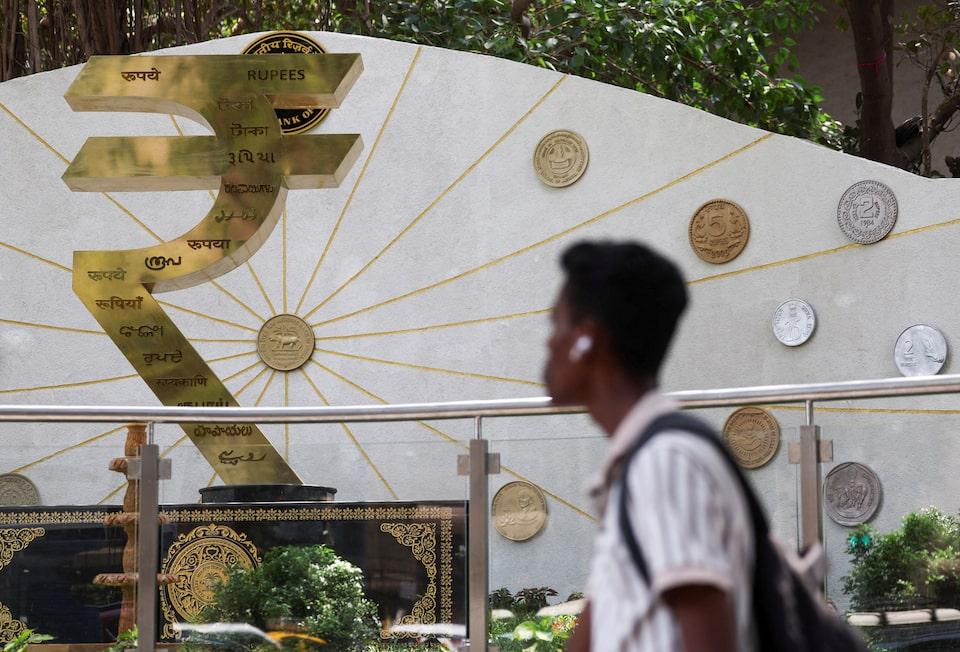
MUMBAI, June 12 (Reuters) - Goldman Sachs' sales and trading desk is recommending an options play on the Indian rupee that will pay off if the South Asian currency rallies to 83 per U.S. dollar over the next nine months. The call — effectively a bet on a 3% appreciation in the rupee from its current level of 85.50 — is underpinned by India's improving macroeconomic fundamentals, a revival in foreign inflows, lower oil prices, and the potential for a U.S.-India trade deal. Sign up here. The rupee has lagged behind its Asian peers this year, showing little response to the dollar index’s more than 9% decline. Goldman Sachs is recommending buying a 9-month USD/INR binary put option with a strike price of 83. A binary put option is a type of digital option that pays a fixed amount if the currency pair settles below the strike level at the expiry of the contract. "We chose 9-month tenor for the trade as INR typically tends to appreciate during India’s financial year end", which concludes on March 31, according to a sales note from Goldman Sachs. In support of their constructive outlook on the rupee, Goldman Sachs analysts highlighted that India’s GDP growth accelerated to 7.4% year-on-year in the March quarter from 6.4% in the previous three months. Their monthly activity tracker indicates that consumption remained robust in April. The investment bank's note pointed to a return of foreign equity inflows, with over $4 billion flowing into Indian equities over the past two months. Goldman expects this trend to continue and potentially accelerate, driven by improving corporate earnings. The possibility of a U.S.-India trade deal and lower oil prices could be other catalysts for the rupee. Goldman said that a rollback of the 10% reciprocal tariff would be seen as a positive development for Indian risk assets and the rupee. While the U.S. had initially proposed a 26% levy on Indian shipmemts, the country-specific tariffs have been paused until July 8. On oil, Goldman's commodities research team expects Brent crude to average $60 for the remainder of 2025 and fall to $56 in 2026. Lower energy prices are a net positive for oil-importing countries like India and could support the rupee. https://www.reuters.com/world/india/top-wall-street-bank-pitches-options-play-ride-potential-indian-rupee-rally-83-2025-06-12/
2025-06-12 07:57
BRUSSELS, June 12 (Reuters) - The European Union is preparing a package of measures to improve data centres' energy savings, the bloc's energy commissioner said on Thursday. "I will propose a data centre energy efficiency package," EU energy commissioner Dan Jorgensen told a conference in Brussels, without providing further details. Sign up here. Data centres account for 3% of EU electricity demand, but their consumption is expected to increase rapidly this decade due to the expansion of artificial intelligence. https://www.reuters.com/sustainability/eu-plans-energy-saving-measures-data-centres-2025-06-12/

2025-06-12 07:44
Trump said US personnel were being moved out of Middle East US preparing partial evacuation of Iraqi embassy Energy companies continuing operations in Iraq, official says DUBAI, June 12 (Reuters) - The sixth round of U.S.-Iran nuclear talks will be held on Sunday in Muscat, the Omani foreign minister said on Thursday, after U.S. President Donald Trump reiterated that Tehran would not be allowed to have a nuclear weapon. Trump said on Wednesday U.S. personnel were being moved out of the Middle East because "it could be a dangerous place". Sign up here. Reuters reported earlier that the U.S. was preparing an evacuation of its Iraqi embassy and would allow military dependents to leave locations around the Middle East due to heightened security risks in the region, according to U.S. and Iraqi sources. The four U.S. and two Iraqi sources did not say what security risks had prompted the decision. Reports of the potential evacuation pushed up oil prices by more than 4% before prices eased on Thursday. Foreign energy companies were continuing their operations as usual, a senior Iraqi official overseeing operations in southern oilfields told Reuters on Thursday. A U.S. official said the State Department had authorized voluntary departures from Bahrain and Kuwait. The State Department updated its worldwide travel advisory on Wednesday evening to reflect the latest U.S. posture. "On June 11, the Department of State ordered the departure of non-emergency U.S. government personnel due to heightened regional tensions," the advisory said. The decision by the U.S. to evacuate some personnel comes at a volatile moment in the region. Trump's efforts to reach a nuclear deal with Iran appear to be deadlocked and U.S. intelligence indicates that Israel has been making preparations for a strike against Iran's nuclear facilities. "They are being moved out because it could be a dangerous place, and we'll see what happens," Trump told reporters. "We've given notice to move out." Asked whether anything could be done to lower the temperature in the region, Trump said: "They can't have a nuclear weapon. Very simple, they can't have a nuclear weapon." Trump has repeatedly threatened to strike Iran if stuttering talks over its nuclear programme fail and in an interview released earlier on Wednesday said he was growing less confident that Tehran would agree to stop enriching uranium, a key American demand. While the evacuation of non-essential personnel raised concerns about a possible regional escalation, a senior Iranian security official told Iran's Press TV on Thursday that U.S. military dependents leaving did not constitute a threat. SHIPPING WARNING On Wednesday, Iran's defence minister warned Washington that Tehran would hit U.S. regional bases if drawn into a war in the case of nuclear talks failing. The United States has a military presence across the major oil-producing region, with bases in Iraq, Kuwait, Qatar, Bahrain and the United Arab Emirates. U.S. Defense Secretary Pete Hegseth had authorized the voluntary departure of military dependents from locations across the Middle East, a U.S. official said. Another U.S. official said that was mostly relevant to family members located in Bahrain - where the bulk of them are based. On Wednesday Britain's maritime agency warned that increased tensions in the Middle East might lead to an escalation in military activity that could impact shipping in critical waterways. It advised vessels to use caution while travelling through the Gulf, the Gulf of Oman and the Straits of Hormuz, which all border Iran. Tensions inside Iraq have heightened since the start of the war in Gaza in October 2023, with Iran-aligned armed groups in the country repeatedly attacking U.S. troops, though attacks have subsided since last year. https://www.reuters.com/world/middle-east/oman-confirms-next-round-us-iran-nuclear-talks-amid-fears-regional-risks-2025-06-12/