2025-06-12 07:41
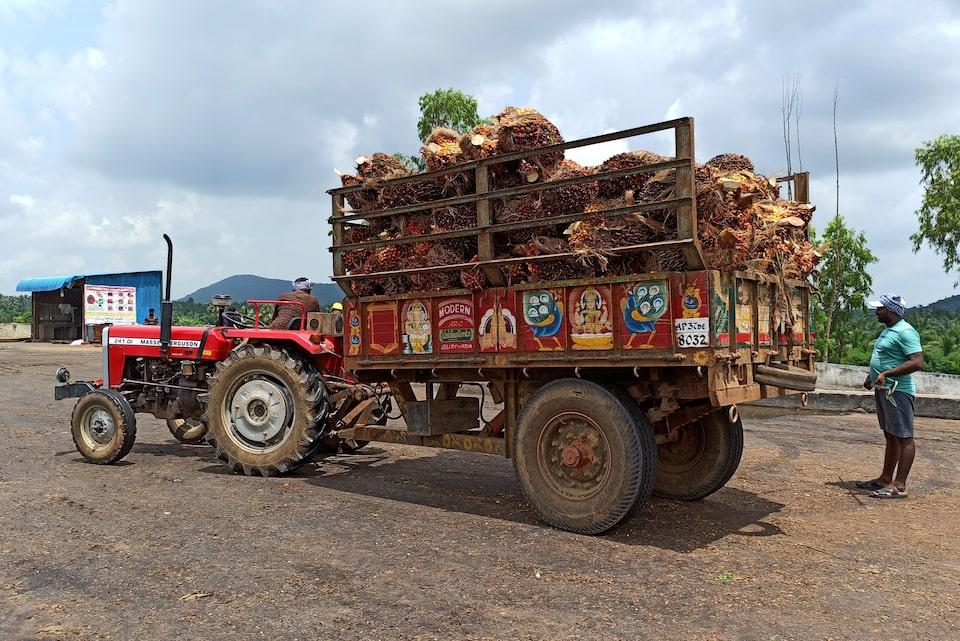
Palm oil imports jump to 592,888 T, highest since Nov Soyoil imports rise 10.4% to 398,585 T, highest since Jan Sunflower oil imports rose 1.9% to 183,555 T MUMBAI, June 12 (Reuters) - India's palm oil imports jumped to a six-month high in May, driven by low inventories and the tropical oil's price discount to rival soyoil and sunflower oil, which prompted refiners to boost purchases, an industry body said on Thursday. Higher imports of palm and soyoil by India, the world's biggest buyer of vegetable oils, could support Malaysian palm oil prices and U.S. soyoil futures . Sign up here. Palm oil imports rose 84% in May from April to stand at 592,888 metric tons, the highest since November 2024, the Solvent Extractors' Association of India (SEA) said. India imported an average of more than 750,000 tons of palm oil each month during the marketing year that ended in October 2024, the SEA said. Imports of soyoil increased 10.4% to 398,585 tons, the highest since January, and sunflower oil imports rose 1.9% to 183,555 tons, it added. Higher imports of palm oil and soyoil lifted India's total vegetable oil imports in May by 33% from a month before to 1.19 million tons, the highest since December, it said. Below-average imports from January to April reduced domestic vegetable oil stocks to 1.33 million tons by June 1, the lowest since July 2020, according to SEA data. Palm oil imports are likely to increase further in June and could rise to about 850,000 tons, as the oil is trading at a discount to soyoil, said Rajesh Patel, managing partner at GGN Research, an edible oil trader. Soyoil imports in June will hold steady around 400,000 tons, Patel said. India buys palm oil mainly from Indonesia and Malaysia, while it imports soyoil and sunflower oil from Argentina, Brazil, Russia and Ukraine. Vegetable oil imports are expected to pick up in the coming months as this month's duty cut will help boost demand, said a New Delhi-based trader. India halved the basic import tax on crude edible oils to 10% in a bid to reduce food prices and help the domestic refining industry. https://www.reuters.com/business/energy/indias-may-palm-oil-imports-surge-84-mm-hit-six-month-high-2025-06-12/
2025-06-12 07:39
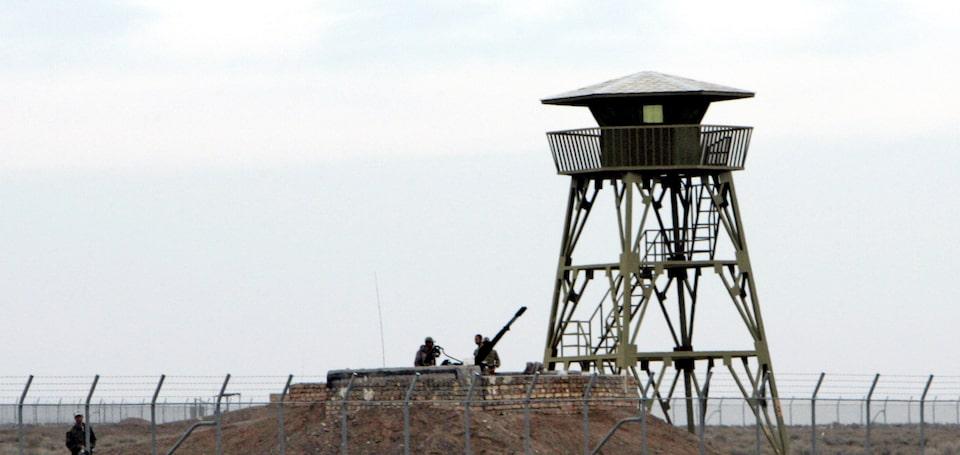
VIENNA, June 22 (Reuters) - President Donald Trump said on Saturday the U.S. military had conducted a "very successful attack" on nuclear sites in Iran, including a facility buried deep in a mountain at Fordow, south of Tehran. Israel has hit Iranian nuclear sites since launching attacks on Iran on June 13, including striking Natanz, which is at the heart of Iran's uranium enrichment programme, and Khondab, a partially built heavy-water research reactor. Sign up here. Below are some of Iran's main nuclear facilities. WHERE ARE IRAN'S NUCLEAR FACILITIES? Iran's nuclear programme is spread over many locations. While the threat of Israeli airstrikes has loomed for decades, only some of the sites have been built underground. DOES IRAN HAVE A NUCLEAR WEAPONS PROGRAMME? The United States and the U.N. nuclear watchdog believe Iran had a coordinated, secret nuclear weapons programme that it halted in 2003. The Islamic Republic denies ever having had one or planning to have one. Iran agreed to restrictions on its nuclear activities in exchange for relief from international sanctions under a 2015 deal with world powers. That pact fell apart after Trump, in his first term as president, pulled the United States out of it in 2018. Tehran started abandoning the restrictions in the following year. IS IRAN INCREASING ITS URANIUM ENRICHMENT? Yes. Iran has been expanding its uranium enrichment programme since the pact broke down, reducing the "breakout time" needed to produce enough weapons-grade uranium for a nuclear bomb to days or little more than a week from at least a year under the 2015 deal. Actually making a bomb with that material would take longer. How long is less clear and is the subject of debate. Iran is now enriching uranium to up to 60% fissile purity, close to the 90% of weapons-grade, at two sites, and in theory it has enough material enriched to that level, if enriched further, for six bombs, according to a yardstick of the International Atomic Energy Agency, the U.N. watchdog. NATANZ A complex at the heart of Iran's enrichment programme on a plain abutting mountains outside the Shi'ite Muslim holy city of Qom, south of Tehran. Natanz houses facilities including two enrichment plants: the vast, underground Fuel Enrichment Plant and the above-ground Pilot Fuel Enrichment Plant. An exiled Iranian opposition group revealed in 2002 that Iran was secretly building Natanz, igniting a diplomatic standoff between the West and Iran over its nuclear intentions that continues today. The FEP was built for enrichment on a commercial scale, able to house 50,000 centrifuges. Before the Israeli and U.S. attacks, around 16,000 centrifuges were installed there, roughly 13,000 of them in operation, refining uranium to up to 5% purity. Diplomats with knowledge of Natanz describe the FEP as being about three floors below ground. There has long been debate about how much damage Israeli airstrikes could do to it. Damage has been done to centrifuges at the FEP by other means, including an explosion and power cut in April 2021 that Iran said was an attack by Israel. The above-ground PFEP houses only hundreds of centrifuges but Iran has been enriching to up to 60% purity there. FORDOW On the opposite side of Qom, Fordow is an enrichment site dug into a mountain and therefore probably better protected from potential bombardment than the FEP. Trump posted on social media after the U.S. strikes: "Fordow is gone." The 2015 deal with major powers did not allow Iran to enrich at Fordow at all. Before the Israeli and U.S. attacks, the facility had around 2,000 centrifuges operating, most of them advanced IR-6 machines, of which up to 350 were enriching to up to 60%. The United States, Britain and France announced in 2009 that Iran had been secretly building Fordow for years and had failed to inform the IAEA. Then-President Barack Obama said then: "The size and configuration of this facility is inconsistent with a peaceful programme." ISFAHAN Iran has a large nuclear technology centre on the outskirts of Isfahan, its second largest city. It includes the Fuel Plate Fabrication Plant and the uranium conversion facility that can process uranium into the uranium hexafluoride that is fed into centrifuges. Iran also stores enriched uranium at Isfahan, diplomats say. There is equipment at Isfahan to make uranium metal, a process that is particularly proliferation-sensitive since it can be used to devise the core of a nuclear bomb. The IAEA has said there are machines for making centrifuge parts at Isfahan, describing it in 2022 as a "new location". KHONDAB Iran has a partially built heavy-water research reactor, originally called Arak and now Khondab. Heavy-water reactors pose a nuclear proliferation risk because they can easily produce plutonium which, like enriched uranium, can be used to make the core of an atomic bomb. Under the 2015 deal, construction was halted, the reactor's core was removed and filled with concrete to make it unusable. The reactor was to be redesigned "to minimise the production of plutonium and not to produce weapon-grade plutonium in normal operation". Iran informed the IAEA that it planned to start operating the reactor in 2026. TEHRAN RESEARCH CENTRE Iran's nuclear research facilities in Tehran include a research reactor. BUSHEHR Iran's only operating nuclear power plant, on the Gulf coast, uses Russian fuel that Russia then takes back when it is spent, reducing the proliferation risk. https://www.reuters.com/world/middle-east/irans-main-nuclear-facilities-long-israels-sights-2024-10-02/
2025-06-12 07:38
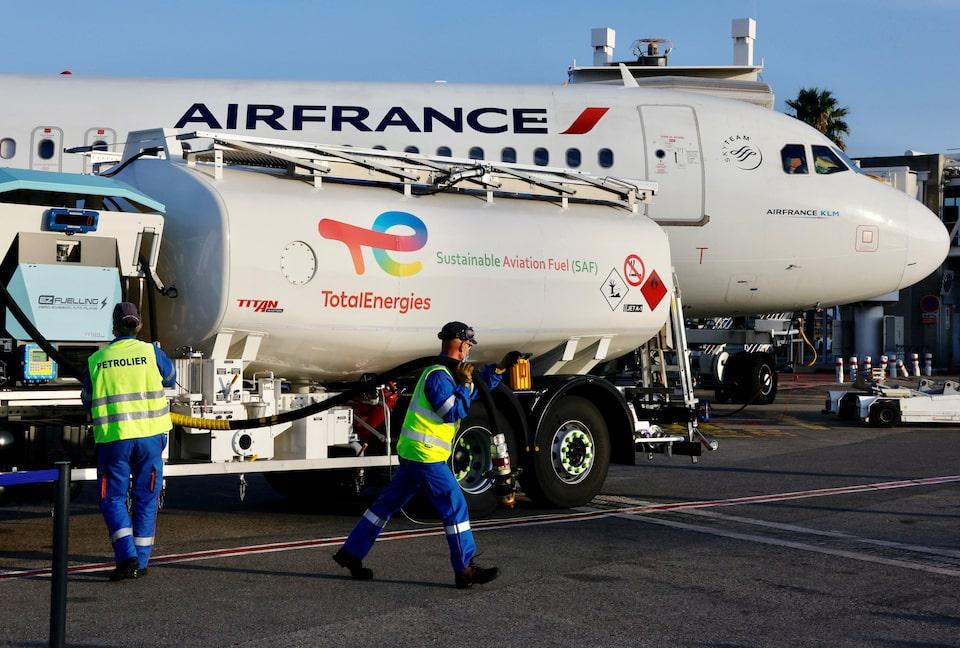
BRUSSELS, June 11 (Reuters) - (This June 11 story has been refiled to correct a typo in the headline) The European Union has offered to subsidise airline purchases of more than 200 million litres of sustainable aviation fuels to encourage carriers to swap kerosene for cleaner alternatives, Reuters calculations show. Sign up here. The calculations, based on European Commission data, suggest that the subsidies could trigger a significant boost to airline demand for sustainable aviation fuels (SAF), given the volume equates to about 15% of global SAF production. Global SAF output last year totalled 1.3 billion litres, according to airline industry association IATA. The EU has earmarked revenue from the sale of 20 million carbon emissions permits to help airlines to cover the price gap between conventional kerosene and more expensive SAF on flights within Europe. Reuters calculations showed these subsidies would cover purchases of up to 216 million litres of e-fuels - synthetic fuels made using captured CO2 emissions - or as much as 2.6 billion litres of biofuels. The EU subsidies cover up to 6 euros per litre for e-fuels and 0.5 euros per litre for biofuels. Aviation is among the hardest sectors to decarbonise, with zero-emission aircraft not expected this decade. Sustainable fuels, which have net-zero emissions or lower emissions than fossil fuel kerosene, can help to reduce air travel's carbon footprint in the near term. However, SAF costs three to five times more than traditional jet fuel and makes up only 0.3% of global jet fuel supply. Airlines have warned that EU targets to use more SAF are therefore impossible to meet, though a Boston Consulting Group report this year found that the sector is investing only 1%-3% of revenue or budget allocation in SAF. The EU requires 2% of fuel made available at EU airports to be SAF in 2025, rising to 6% in 2030. Airlines must buy permits from the EU carbon market to cover their emissions from European flights. Until last year, the EU gave airlines most permits free of charge, but it is now phasing out free permits to drive faster emissions reductions. https://www.reuters.com/sustainability/boards-policy-regulation/eu-susbsidise-high-volume-greener-aviation-fuel-boost-airline-demand-2025-06-11/
2025-06-12 06:50
GDP falls larger-than-expected 0.3% in April ONS cites end of property tax break, US tariff impact Goods exports to US drop by record 2 billion pounds Sterling weakened against dollar, gilt yields fell LONDON, June 12 (Reuters) - Britain's economy slowed sharply in April, reflecting shockwaves from U.S. President Donald Trump's announcement of wide-ranging tariffs and a one-off hit from the end of a tax break on property sales, official data showed on Thursday. Gross domestic output shrank by a larger-than-expected 0.3% in April from March - the biggest monthly drop since October 2023 and more than the 0.1% fall forecast in a Reuters poll, following 0.2% growth in March. Sign up here. Finance minister Rachel Reeves said the GDP numbers were "clearly disappointing". Thursday's data comes a day after she set out a multi-year spending review which divided up more than 2 trillion pounds of public spending between government departments. Britain's economy has grown slowly since the COVID-19 pandemic, and the fall in monthly GDP was led by a 0.4% contraction in output from the dominant services sector. A big factor in this was a slump in real estate and legal activity in April after the end of a temporary tax break on house purchases, which contributed 0.2 percentage points of the overall 0.3 percentage point fall in output in April. Car makers also reported lower output and exports to both the United States and the European Union. Sterling fell by close to half a cent against the dollar on the back of the figures, and gilt yields hit a one-month low. TARIFFS IMPACT British goods exports to the U.S. fell by 2.0 billion pounds ($2.7 billion) in April, the largest drop since monthly records began in 1997. So far, Britain is the only major economy to have agreed a trade deal with the U.S., which is intended to exempt it from Trump's increased tariffs on aluminium and steel imports. A 10% goods levy remains in place. The U.S. and China this week agreed on a plan, subject to approval from Trump and his Chinese counterpart Xi Jinping, to ease trade tensions after two days of talks in London. Monthly GDP data tends to be volatile and some economists have noted a pattern since 2022 of British GDP being stronger in the first quarter of each year and weaker in the second half, raising questions about seasonal adjustment since the pandemic. "Looking through the noise and data quality issues, we expect the underlying pace of growth to remain underwhelming over the next couple of years," Matt Swannell, chief economic advisor to the EY ITEM Club, said. "The drag from U.S. trade policy has added to a range of domestic headwinds, including the significant tightening of fiscal policy and the lagged pass-through of past interest rate rises." Britain's economy had expanded by 0.7% in the first quarter of 2025, outstripping growth in other countries in the Group of Seven advanced economies and prompting the Bank of England to revise up its full-year growth forecast to 1% last month. However, the BoE revised down its growth forecast for 2026 to 1.25% and said it expected the tariffs to knock 0.3% off British output in three years' time. BoE policymakers are expected to keep interest rates unchanged next week as they are faced with competing forces of stubborn inflation and a relatively sluggish economy, but most economists polled by Reuters expect two more rate cuts this year. "Though the door is probably closed on an interest rate cut next week, these downbeat figures increase the likelihood of a policy loosening in August, despite lingering concerns over high inflation," Suren Thiru, economics director at ICAEW, an accountancy body, said. Recent business surveys have shown firms slowing their hiring and investment plans due to big increases in labour costs announced by Reeves last October. Of Britain's main economic sectors, construction showed the only growth in month-on-month terms in April, increasing by 0.9%, the ONS data showed. Industrial output fell 0.6%, driven by a 0.9% fall in manufacturing. Separately, the ONS released trade data showing that Britain's goods trade deficit widened to 23.2 billion pounds in April from 19.9 billion pounds in March, much bigger than the 20.4 billion expected in a Reuters poll. ($1 = 0.7376 pounds) https://www.reuters.com/sustainability/sustainable-finance-reporting/uk-economy-shrinks-by-03-april-ons-says-2025-06-12/
2025-06-12 06:36
BAGHDAD, June 12 (Reuters) - Foreign energy firms continue operating normally in Iraq, a senior Iraqi official told Reuters on Thursday, after U.S. President Trump said U.S. personnel were being moved out of the Middle East because "it could be a dangerous place". The Iraqi oil ministry did not receive any notification from operators regarding staff reductions, added the official, who oversees operations in southern oilfields. Sign up here. On Wednesday, sources told Reuters that the U.S. was preparing an evacuation of its Iraqi embassy due to heightened security risks in the region. https://www.reuters.com/business/energy/foreign-energy-companies-continuing-normal-operations-iraq-official-says-2025-06-12/

2025-06-12 06:15
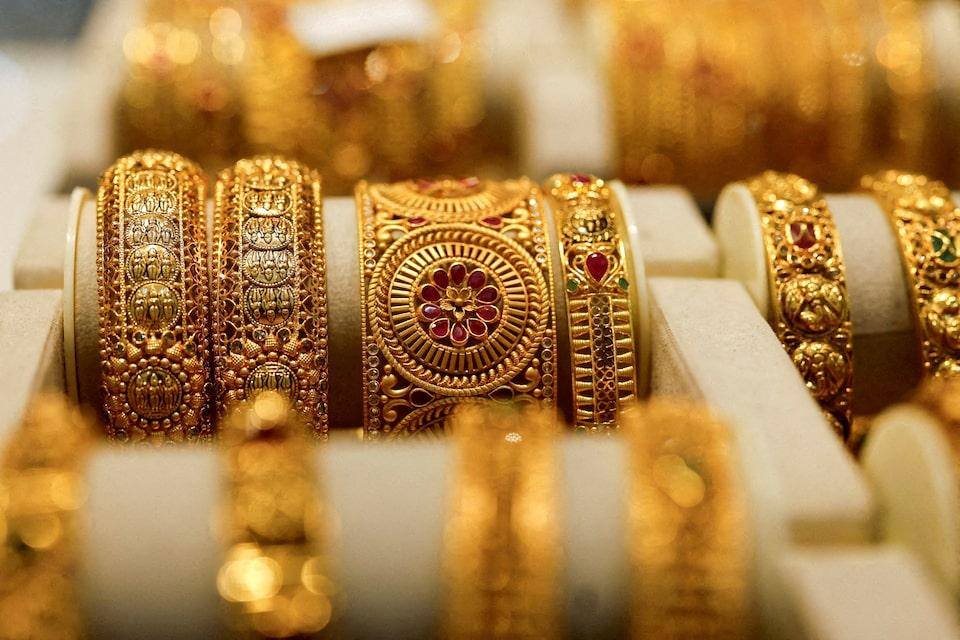
US producer price index data due at 1230 GMT Dollar hit more-than-three-year low US to pull some Middle East personnel as Iran tensions rise June 12 (Reuters) - Gold prices rose 1% to a one-week high on Thursday as tensions in the Middle East and trade uncertainties fuelled demand for the safe-haven asset. Spot gold was up 0.9% at $3,382.61 an ounce as of 1123 GMT, after hitting its highest level since June 5 earlier in the day. Sign up here. U.S. gold futures climbed 1.8% to $3,403.0. The U.S. dollar index (.DXY) , opens new tab fell 0.8% to a more-than-three-year low, making dollar-priced bullion more attractive to overseas buyers. "You have Middle East tensions and equity markets dropping because of renewed uncertainty about the trade situation. All of that is helping to boost the appeal of haven assets," said Fawad Razaqzada, market analyst at City Index and FOREX.com. U.S. President Donald Trump said on Wednesday he might extend the July 8 deadline for completing trade talks with countries before higher U.S. tariffs take effect, while letters to other countries to accept or reject trade terms would soon be sent out. Washington and Beijing have agreed on a framework to restore a fragile truce in the U.S.-China trade war, potentially avoiding higher tariffs. In a sign of increased Middle East volatility, Trump said on Wednesday U.S. personnel were being moved out of the region as it could be a "dangerous place" and that the United States would not allow Iran to have a nuclear weapon. Gold, a safe-haven asset, often thrives during times of economic uncertainty and in low-interest-rate environments. Investors are now turning their focus to the U.S. Producer Price Index (PPI) data due at 1230 GMT, ahead of the Federal Reserve's meeting on June 17–18. "PPI will be watched to see whether they can spring a CPI-like surprise or whether expectations for rising input prices will be confirmed," said Ole Hansen, head of commodity strategy at Saxo Bank. Elsewhere, spot silver was steady at $36.24 per ounce, platinum rose 0.7% to $1,264.57, hovering at a more-than four-year high, while palladium was down 1.7% at $1,062.04. https://www.reuters.com/world/china/gold-rises-weaker-dollar-rising-middle-east-tensions-2025-06-12/