2025-06-12 06:10
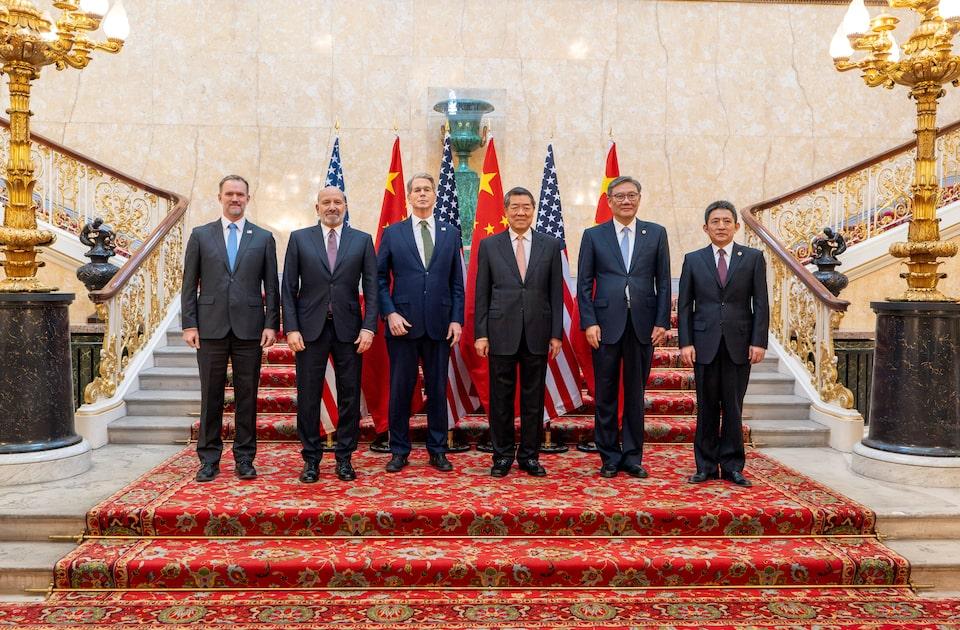
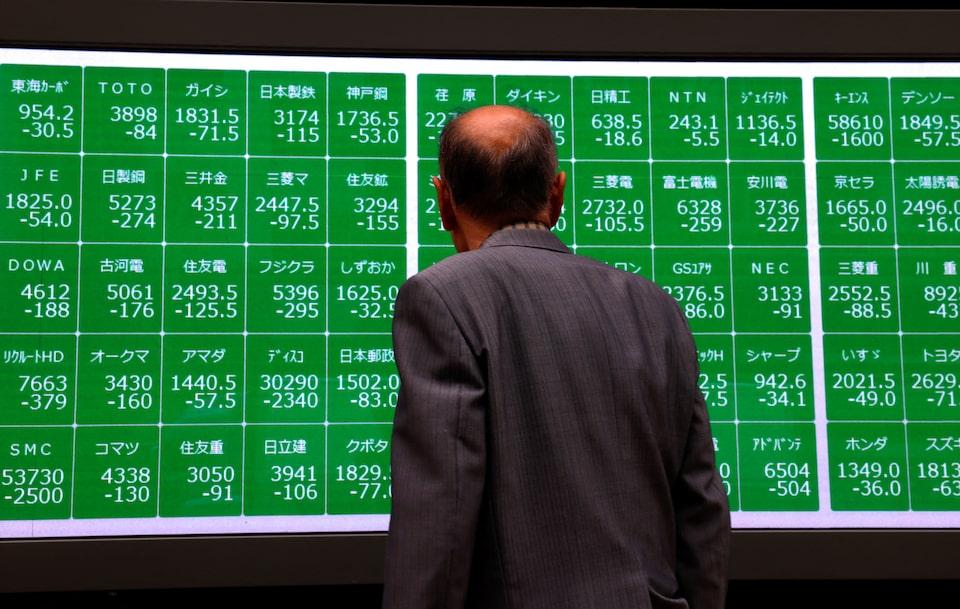
Wall Street stocks edge up, dollar down Rising Middle East tension dents sentiment, gold gains Markets give lukewarm reception to U.S.-China truce agreement Trump's latest tariff salvo unnerves investors Soft U.S. CPI sets stage for Fed meeting next week June 12 (Reuters) - The dollar hit a 2025 low on Thursday but Wall Street stocks continued their recent rally as traders weighed low inflation readings, rising Middle East tensions, and the fragility of a U.S.-China trade truce. U.S. consumer and producer inflation reports showed overall price pressures remained contained in May, largely due to declines in the cost of gasoline, cars and housing, or services like air transport. But most economists expect inflation to pick up as the impact of U.S. tariffs begins to bite. Sign up here. The dollar, which has lost around 10% in value against a basket of currencies this year, fell to its lowest since April 2022, as weaker-than-expected U.S. inflation data for May suggested that the Federal Reserve could resume cutting interest rates sooner rather than later. Global stocks continued an almost-unbroken rally since early April, leaving the MSCI All-Country World index (.MIWD00000PUS) , opens new tab up 0.3%, just below Wednesday's all-time high. On Wall Street, the Dow Jones Industrial Average (.DJI) , opens new tab added 0.24%, while the S&P 500 (.SPX) , opens new tab rose about 0.4%, and the Nasdaq Composite (.IXIC) , opens new tab gained 0.24%. Shares of planemaker Boeing BA.N , opens new tab lost nearly 5% after an Air India aircraft carrying more than 200 people crashed in India's western city of Ahmedabad, and aviation tracking site Flightradar24 said the plane was a Boeing 787-8 Dreamliner. Oracle (ORCL.N) , opens new tab shares rose 13% after the cloud service provider its annual revenue growth forecast. European equities logged their fourth consecutive decline on Thursday as trade optimism waned, with the STOXX 600 (.STOXX) , opens new tab down 0.3%. Stocks in China and Hong Kong also fell, led by declines in the tech sector. The U.S. administration said on Wednesday U.S. personnel were being moved out of the Middle East due to heightened regional security risks, which briefly drove oil prices up by 4% before they receded. "(A flare-up in tensions) is a significant tail risk, but I don't think it is anybody's baseline forecast. So it's something to watch if there is a real escalation there, then markets will take fright and that would have ramifications for the oil price," Daiwa Capital economist Chris Scicluna said. Iran said it will not abandon its right to uranium enrichment, a senior Iranian official told Reuters, adding that a "friendly" regional country had alerted Tehran over a potential military strike by Israel. Classic safe-haven assets got a lift. The Swiss franc and Japanese yen strengthened, pushing the dollar down 1.1% against the franc and down 0.7% against the yen, while gold rose about 1% to $3,387 an ounce. Relief stemming from a positive conclusion to U.S.-China trade talks earlier this week, which President Donald Trump said was a "great deal with China," evaporated by Thursday. RED, WHITE AND BLUE LETTERS Adding yet another dose of market uncertainty, Trump said the U.S. would send out letters in one to two weeks outlining the terms of trade deals to dozens of other countries, which they could embrace or reject. "Markets may have no choice but to respond to Trump's tariff threat — even if it's just posturing to bring others to the table. The gap between 'risk-on' positioning and real-world risks has stretched too far," said Charu Chanana, chief investment strategist at Saxo Bank. Trump's erratic tariff policies have roiled global markets this year, prompting hordes of investors to exit U.S. assets, especially the dollar, as they worried about rising prices and slowing economic growth. The euro rose 0.77% to $1.15 after touching its highest level since October 2021. U.S. Treasuries also rallied in price, pushing yields down 5.9 basis points to below 4.355%, while two-year yields , which are more sensitive to inflation and interest-rate expectations, eased 3.9 bps to 3.906%. Wednesday's consumer inflation index kept alive the prospect of the Federal Reserve cutting rates by a quarter point, but only in September, as policymakers assess how tariffs work their way through the real economy. On Thursday, the Labor Department reported that U.S. producer prices increased less than expected in May, restrained by lower costs for services including flights. Chris Zaccarelli, chief investment officer for Northlight Asset Management in Charlotte, said the new inflation data this week gives the Fed cover to wait for more information on how the new tariffs and trade talks might impact price stability. "This gives the Fed room to sit on their hands," he wrote in an email. Oil, which has fallen by 20% in the last year , eased 0.17% to $69.65 a barrel, but was still pinned near two-month highs, adding another moving part to the outlook for interest rates. https://www.reuters.com/world/china/global-markets-wrapup-1-2025-06-12/
2025-06-12 06:09
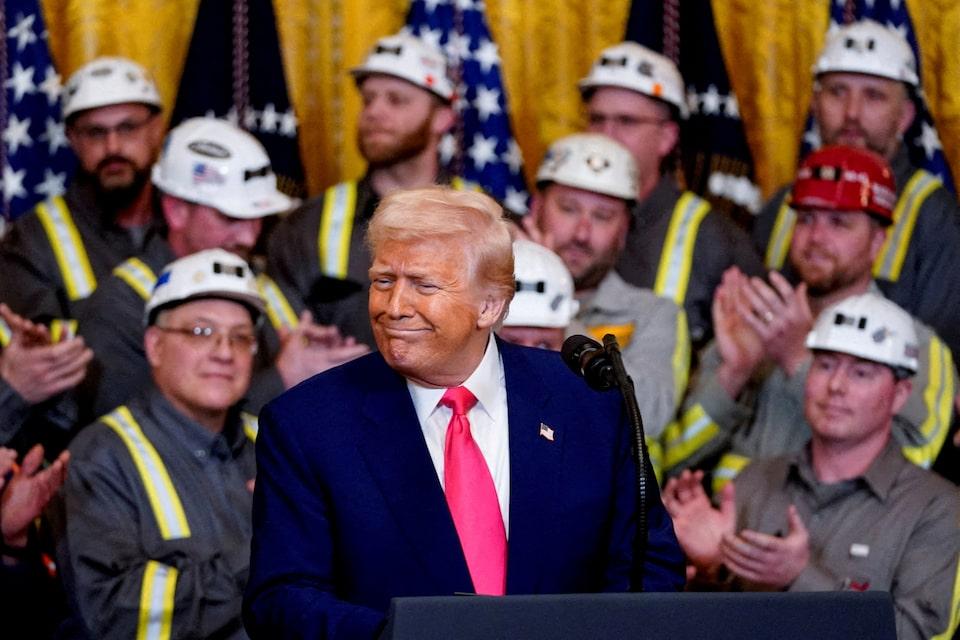
Section 899 proposes up to 20% tax on foreign investors' income Proposal is part of President Trump's signature tax bill The tax could deal a hefty blow to European oil giants' profits LONDON, June 12 - A proposed U.S. tax targeting foreign investors could hurt European energy giants that operate in America's booming oil and gas sector, undermining what President Donald Trump describes as his energy dominance agenda. Trump's sweeping tax and spending bill under review by the Senate includes an additional tax of up to 20% on foreign investors' income, such as dividends and royalties. Sign up here. The tax, known as Section 899, was devised as a pushback against countries that impose what the bill describes as "unfair foreign taxes" on U.S. companies, such as digital services taxes. Section 899 is believed to be targeting companies headquartered in the European Union and Britain, which both have tax systems considered discriminatory by the Trump administration. The provision is a significant threat to London-listed Shell (SHEL.L) , opens new tab and BP (BP.L) , opens new tab as well as France's TotalEnergies (TTEF.PA) , opens new tab and Spain's Repsol (REP.MC) , opens new tab, which all have sprawling operations in the United States. Trump, who often used the slogan "drill, baby, drill" in his election campaign, has portrayed himself as pro-fossil fuel, vowing on his first day in office to maximise oil and gas production. But if approved, Section 899 could have the opposite effect. BP last year invested more than $6 billion, about 40% of its capital expenditure, in the United States, where its interests include onshore and offshore oil and gas operations, two refineries, thousands of retail fuel stations and a power trading business. The country is also home to more than a third of BP's global workforce of about 90,000 and accounted for roughly 30% of its 2024 revenue of $189 billion and more than a quarter of its $21 billion net profit. Shell, the biggest European oil major, is also a huge investor in the United States, which accounted for 23% of its 2024 revenue of $284 billion. It invests about 30% of its capital expenditure in the country, where it has oil and gas production facilities, a petrochemicals plant, a vast retail network, liquefied natural gas (LNG) purchasing agreements and major trading operations. SHAKEN CONFIDENCE The United States became increasingly important to Big Oil companies in recent decades thanks to its stable fiscal and regulatory environment while other regions presented a variety of challenges. Take Russia, for example. Its vast oil and gas resources started attracting investments from many companies in the 1990s after the collapse of the Soviet Union, but the country is now uninvestible owing to western sanctions that followed Russia's invasion of Ukraine in 2022. Similarly, western companies have limited opportunities to invest in the Middle East, where national oil companies dominate. Europe, meanwhile, has limited natural resources and strict environmental regulation. The multinational nature of oil and gas companies means they have plenty of experience dealing with tax uncertainty, but shifting tax policies tend to delay investments. Company boards require long-term confidence to proceed with large, multi-decade capital projects such as oil and gas fields or LNG plants. The industry's confidence in the United States was already shaken under Trump's predecessor, Joe Biden, who in 2020 revoked a construction permit for the Keystone XL pipeline. The Biden administration also paused approvals for new LNG projects in 2024 because of climate concerns. Trump lifted the pause when he entered the White House. A HEAVY BLOW According to Section 899, multinational companies could face a new tax on dividends sent overseas and inter-company loans, potentially reducing profit. The Gulf of Mexico accounted for about 10% of Shell's 2024 free cash flow of $40 billion, it said in a presentation. That means that Section 899 could shave $800 million from its free cash flow per year from Gulf of Mexico operations alone. BP made about $1.5 billion in free cash flow in the United States last year, Reuters calculations show. A 20% dividend tax could translate into a $300 million loss in free cash flow. Faced with the worsening fiscal terms, companies could opt to direct funds away from the United States. Though options for deploying capital elsewhere on a similar scale are limited, companies could choose to spread their investments more widely. Such a scenario could be a boon for countries such as Canada, Brazil, Mozambique and Namibia, which have large untapped natural resources. Another option would be for companies to transfer their headquarters and listings to the United States - a costly and politically complicated option. Shell previously contemplated such a move to boost its share value, though it appears to have abandoned the idea. Ultimately, it is very likely that the Senate would push to modify Section 899 or limit its scope, given the potential far-reaching impact on many sectors. But barring a radical change, Section 899 poses a huge risk for European oil and gas giants that are heavily dependent on the United States. Achieving the Trump administration’s energy dominance agenda will almost certainly require more foreign investment, not less, so if the CEOs of European energy companies complain loudly enough, the president may well listen to them. The opinions expressed here are those of the author, a columnist for Reuters. Enjoying this column? Check out Reuters Open Interest (ROI) , opens new tab, your essential new source for global financial commentary. ROI delivers thought-provoking, data-driven analysis. Markets are moving faster than ever. ROI , opens new tab can help you keep up. Follow ROI on LinkedIn , opens new tab and X. , opens new tab https://www.reuters.com/markets/commodities/trumps-energy-dominance-agenda-could-be-ravaged-by-section-899-2025-06-12/
2025-06-12 06:04
Project jointly developed by Hive Energy and BuiltAfrica Says can produce at $650 per metric ton Global price is around $760 a ton CAPE TOWN, June 12 (Reuters) - A $5.8 billion project on South Africa's east coast seeks to use the country's infrastructure and cheap renewable power to make some of the world's cheapest green ammonia for clients in Europe and Asia, an executive said. South Africa is vying with other African nations, including Egypt, Morocco and Namibia, to meet rising demand in the European Union and Asia for hydrogen and ammonia described as green because they are produced from renewable energy. Sign up here. Ammonia is used in making fertiliser and by the chemical industry and it is also the means to deliver hydrogen, which is sought after to reduce carbon emissions but is very difficult to ship or pipe. The project at the port of Coega, jointly developed by Britain's Hive Energy and South African partner BuiltAfrica, is expected to ship around one million metric tons a year of green ammonia to clients by late 2029, Hive Energy's Africa CEO Colin Loubser told Reuters. "Our project, we believe, will provide the lowest cost green ammonia globally," he said on the sidelines of an energy conference in Cape Town. The project can use existing infrastructure and ample wind and solar energy. A desalination plant on site, operated by South Africa's biggest salt-maker by volume Cerebos, for example, will also help to offset capital expenditure. Benchmarking global indices, Loubser said green ammonia was priced at around $760 a ton free-on-board, but the Coega operations could produce the commodity for less. "We can produce at $650 a tonne and still give an investor a very attractive double-digit internal rate of return," he said, adding that the company was in talks with customers in Europe, Japan and Korea. According to South Africa's Department of Trade, Industry and Competition, the country could approach $1 per kilogramme of green hydrogen by 2050. Loubser said subsidy programmes in countries such as Australia and India may pose a threat to South Africa, but that it should remain competitive in the nascent sector. Strategically situated along a major shipping route, Hive's project could eventually quadruple production to 4 million tpa, Loubser said. https://www.reuters.com/sustainability/south-africas-58-billion-hive-project-aims-lead-low-cost-ammonia-output-2025-06-12/

2025-06-12 06:01
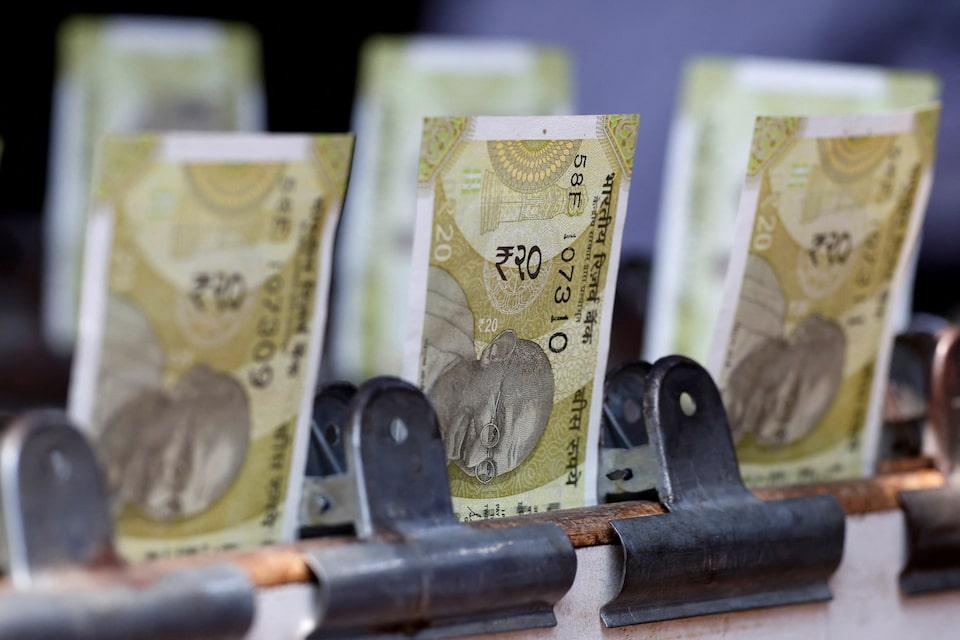
MUMBAI, June 12 (Reuters) - India's FX market traders have increased activity in the dollar-rupee forwards market as spot market price action continues to be rangebound on two-sided client flows and the lack of firm cues. The rupee has hovered in the 85.30 to 86.02 range against the U.S. dollar over June so far with its 1-month realised volatility declining to 4.5%, the lowest in about six weeks. Sign up here. Dollar-rupee forward premiums, meanwhile, have witnessed sharper moves, sparked by the Reserve Bank of India's outsized rate cut last week and changes in expectations of U.S. rate cuts. The 1-year dollar-rupee implied yield fell to its lowest in nearly one year earlier this month while the 1-month forward premium has fallen about 4 paisa to its lowest level since November. The fall in dollar-rupee forward premiums leaves the rupee vulnerable to further depreciation by reducing the currency's "carry trade" appeal and diminishing the incentive for exporters to hedge receivables, analysts said. Speculative activity has picked up on forward premiums as markets are "largely playing the range (on spot USD/INR)," a trader at a large private bank said. To be sure, large moves in global foreign exchange markets could spur the dollar/rupee to break out of its prevailing range, said Apurva Swarup, vice president at Shinhan Bank India. If the dollar index breaks below the 98 level, that could unlock room for rupee appreciation from prevailing levels, Swarup said. On Thursday, the rupee was nearly flat against the U.S. dollar at 85.5125 as of 11:00 a.m. IST. Asian currencies were mostly stronger with the offshore Chinese yuan rising 0.2% as the latest trade truce between Washington and Beijing raised hopes that the world's two largest economies could avoid escalations in their tariff row. https://www.reuters.com/world/india/interbank-traders-turn-focus-dollar-rupee-forwards-spot-treads-water-2025-06-12/
2025-06-12 05:58
Euro jumps along with safe-haven Swiss franc and yen Geopolitical risks in focus Trump says he will send out letters with trade deal terms US PPI data shows cooling inflation in May US rate futures pricing in two cuts this year NEW YORK, June 12 (Reuters) - The dollar slumped on Thursday, as weaker-than-expected U.S. inflation data for May suggested that the Federal Reserve could resume cutting interest rates sooner rather than later, while the safe-haven yen and Swiss franc benefited from rising Mideast tension. The euro, on the other hand, soared to its highest level in almost four years against the dollar. The greenback also fell to a two-month low versus the Swiss franc and a roughly one-week trough against the yen. Sign up here. Data showed that the U.S. Producer Price Index (PPI) increased less than expected in May, curbed by lower costs for services like air fares, a report that undermined the dollar. Wednesday's data also indicated cooling inflation, with a lower-than-expected rise in the U.S. Consumer Price Index (CPI). Vassili Serebriakov, FX analyst at UBS in New York, said higher tariffs are not showing just yet on inflation data, although he noted U.S. growth seemed to be slowing. "We already priced in two cuts for the Fed this year, which was less than two last week," said Serebriakov. "The data is seen as potentially opening the window for the Fed cutting either a little bit sooner or a little bit more." Futures tracking the Fed's policy rate showed rising bets the U.S. central bank will deliver a pair of back-to-back interest rate cuts starting in September. Before the data, bets were for a rate cut in September followed by one in December. Following weaker-than-anticipated readings for producer and consumer prices last month, Nomura has revised lower its forecast for the core Personal Consumption Expenditure (PCE) price index, another inflation measure, to 0.169% from its pre-PPI estimate of 0.349%. That pushes the three-month annualized core PCE inflation lower to 1.52%, the lowest since November 2020. "Three consecutive benign readings of monthly core PCE inflation suggest that the underlying inflation trend has decelerated recently," wrote Nomura in a research note. Thursday's U.S. data also showed that the number of Americans filing new applications for unemployment benefits was unchanged at higher levels last week, as labor market conditions continued to steadily ease. Investors also rushed into safe-haven assets, with geopolitical risks in focus after U.S. President Donald Trump said some U.S. personnel were being moved out of the Middle East because "it could be a dangerous place" and that Washington would not allow Iran to develop a nuclear weapon. A combination of rising Middle East tensions and concern over the fragility of the U.S.-China trade deal drew investors into safe-haven assets. Analysts noted that the dollar serves as a key barometer of trade talk sentiment, while geopolitical instability prompted investors to buy the Swiss franc and yen. In afternoon trading, the dollar was down more than 1% at 0.8114 Swiss francs , after dropping to 0.8104, the lowest since April 22. The dollar slid 0.7% to 143.59 yen. Earlier in the session, it fell to a one-week low. The euro reached its highest since October 2021 against the dollar at $1.1632 and was last up 0.8% at $1.1576. Some analysts said the euro also gained support from a hawkish European Central Bank, which hinted at a pause in its year-long easing cycle after inflation finally returned to its 2% target. However, ECB policymaker Isabel Schnabel said on Thursday the strong euro exchange rate is being driven by safe-haven investors in a positive confidence shock in Europe, and not by interest rate differentials. "The dollar has lost some of its safe-haven characteristics," said UBS' Serebriakov. "And I think the euro just benefits from that as being the second most important global reserve currency, the second most important trade invoicing currency, and really just the first alternative to the dollar." In trade, Trump said he would be willing to extend a July 8 deadline for completing talks with other countries. But the U.S. will send out letters in coming weeks specifying trade terms to dozens of other countries which they could embrace or reject, he added. This keeps the risk of a July 9 jump in U.S. import tariffs on the table, a negative for the dollar, some investors noted. The greenback and U.S. Treasuries dropped sharply after Trump announced a blitz of reciprocal tariffs - which he dubbed "Liberation Day" - in early April. Against a basket of currencies, the dollar fell 0.5% to 97.95. It hit 97.786, its lowest since March 2022. https://www.reuters.com/world/africa/dollar-slides-easing-trade-tensions-fed-expectations-2025-06-12/
2025-06-12 04:57
LAUNCESTON, Australia, June 12 (Reuters) - The tentative deal between the United States and China may represent a retreat from the worst-case scenario of a total collapse of trade between the world's two biggest economies, but it creates more problems than it solves. President Donald Trump touted the agreement, which is still subject to final approvals on both sides, as a "great deal" that will be good for both countries. Sign up here. "We have everything we need, and we're going to do very well with it. And hopefully they are too," Trump told reporters prior to attending a performance on Wednesday evening at Washington's Kennedy Center. While not all the details are known, what has been revealed shows a deal that will probably hurt both economies, and not solve some of the pressing issues, such as China's dominance of the rare earths supply chain. The United States will impose tariffs of 55% on imports from China, while China can levy 10% on its purchases from the United States. This still represents a sharp increase in tariffs from the 25% on imports from China that was in place when Trump returned to the White House in late January. Tariffs at such a level are likely high enough to cause trade to shrink while boosting inflation in the United States, and lowering economic growth in both countries. If Beijing does keep 10% tariffs on imports of U.S. energy commodities, these will be high enough to ensure that virtually no U.S. crude oil, coal or liquefied natural gas enters China, eliminating one of the few products that China is able to buy in large quantities from the United States. It's also questionable whether the tariffs will be enough to prompt more manufacturing in the United States, or whether they will simply cause some production to shift from China to countries with lower import duties. Trump did single out rare earths when talking up the trade deal, saying China will provide the metals that are found in a wide range of electronics and vehicles "up front". But the deal does little to solve the underlying problem with rare earths, magnets and other refined metals such as lithium and cobalt, which are dominated by Chinese supply chains. At best, the agreement this week is a kick the can down the road type of deal, insofar as it prevents an immediate crisis in manufacturing in the United States, but leaves open the possibility that Beijing will once again threaten supplies if there are problems between the two sides in the future. China controls 85% of global rare earths refining, a situation that has hitherto largely benefited Western companies as they have been able to source the metals at prices far lower than what they would have had to pay had they tried to mine and process the elements by themselves. CRITICAL MINERALS Rare earths are an example of the wider problem with so-called critical minerals. It's all very well to designate a mineral as critical, but if you don't actually do anything to secure a supply chain, then you really have to question just how critical the mineral is. Rare earths aren't really that rare, although finding economic deposits is challenging. It's the same for lithium, copper, cobalt, tungsten and a range of other metals that many governments designate as critical. But developing supply chains for these minerals and refined metals outside of China is costly, and so far Western countries and companies have been unwilling to commit funds. Companies won't develop new mines and processing plants if they have to compete with China at market prices, as very few projects would be economic. Governments have been sluggish in developing policies that would support new supply chains, such as guaranteeing offtake at prices high enough to justify investment, or by providing loans or other incentives. This means that the world remains beholden to China for these metals, and is likely to remain so until governments start to act rather than just talk. It's also worth noting that China will have learned from its latest talks with the Trump administration. As Trump himself may have put it, the United States doesn't hold all the cards, with Beijing having a few aces up its sleeve as well. The danger is always in overplaying one's hand. If Beijing keeps using rare earths as a trump card, it runs the risk that the West will cough up the cash to build its own supply chain. Enjoying this column? Check out Reuters Open Interest (ROI), your essential new source for global financial commentary. ROI delivers thought-provoking, data-driven analysis of everything from swap rates to soybeans. Markets are moving faster than ever. ROI can help you keep up. Follow ROI on LinkedIn , opens new tab and X , opens new tab. The views expressed here are those of the author, a columnist for Reuters. https://www.reuters.com/markets/commodities/china-us-trade-deal-kicks-rare-earths-can-down-road-2025-06-12/