2025-06-12 04:51
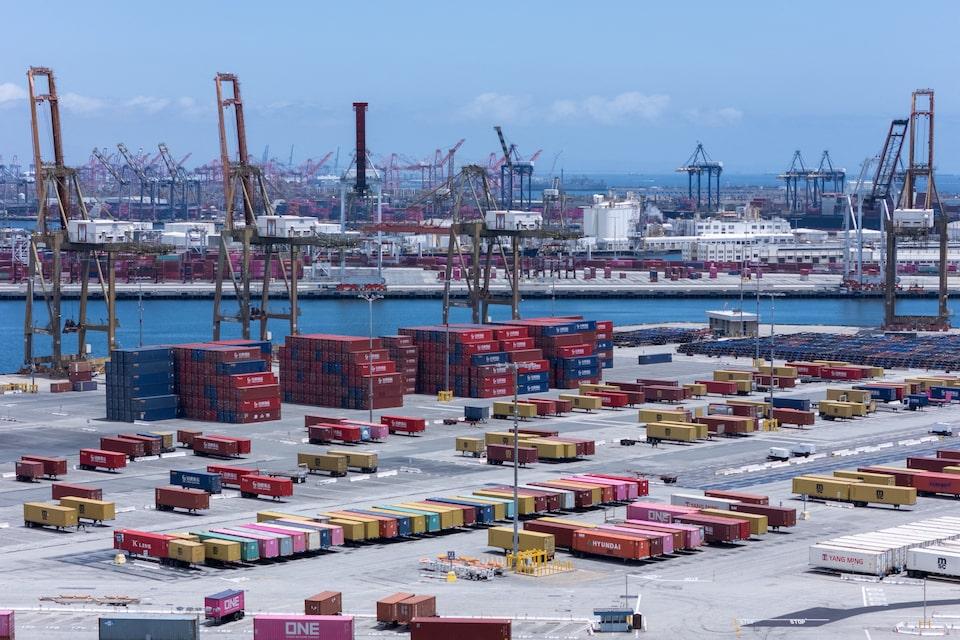
A look at the day ahead in European and global markets from Johann M Cherian European investors are set to wake up to a souring mood as rapidly rising tensions in the Middle East and yet another tariff salvo from U.S. President Donald Trump triggered a new wave of dollar-selling and risk-off moves. Sign up here. The much-hyped U.S.-China talks culminated in a fragile truce that may have put a lid on simmering trade tensions between the world's top two economies for now but the lack of details has left investors unnerved. For starters, China President Xi Jinping is yet to give his approval on the 'deal'. And details on how the new tariffs will be implemented are yet to be ironed out and U.S. export restrictions on high-end artificial intelligence chips are still in place. And with the July 8 deadline on worldwide tariffs fast approaching, Trump is back to his unilateral style of policymaking as he said he would send out letters in one to two weeks outlining terms of trade to dozens of other countries, which they could embrace or reject. Markets will be hoping for another TACO moment. While backward looking inflation reports are yet to reflect the price pressures, companies are starting to sound the alarm. Zara-owner Inditex (ITX.MC) , opens new tab was the latest to issue a disappointing quarterly report and flag headwinds from trade uncertainty. And as if investors did not have enough to juggle with already, geopolitical tensions in the Middle East are flaring, adding to the risks of rising crude prices fuelling inflation pressures. Supply concerns out of the oil-rich region pushed Brent and West Texas Intermediate futures to two-month highs of nearly $70 a barrel each. In all of this, as my colleague Jamie McGeever points out, valuations in equities and stocks are beginning to appear stretched, compounding the risks to investors in the event of a market selloff. European futures were down 0.7%, while futures in the U.S. are pointing to a lower open on Thursday, but the benchmark indexes in the regions are just about 2% away from their respective record highs. Further, investors continue to question the dollar's safe-haven status. On Thursday, the euro hit a seven-week high and is up 11% this year, poised for its biggest yearly advance since 2017. The central bank bonanza next week could perhaps throw more light on the global economy's outlook. The U.S. Federal Reserve along with the Bank of Japan and the Bank of England are due to announce their policy decisions. Meanwhile, investors will look for a string of UK economic data including reports on gross domestic product and manufacturing output later in the day. Both are expected to reflect a decline in activity on a monthly basis, reigned in by the BoE's cautious approach to monetary policy easing. Key developments that could provide more direction to markets on Thursday: - In the UK: GDP, industrial output, manufacturing output and trade data - In the U.S.: Producer inflation data, initial weekly jobless claims report and an auction of 30-year bonds worth $22 billion - Policymakers expected to speak include ECB's Jose Luis Escriva, Reserve Bank of Australia's David Jacobs - UniCredit (CRDI.MI) , opens new tab CEO sees slim hopes of BPM (BAMI.MI) , opens new tab deal, says Commerzbank (CBKG.DE) , opens new tab too costly - Oracle (ORCL.N) , opens new tab raises annual forecast on robust cloud services demand - Warner Bros' (WBD.O) , opens new tab credit rating downgraded to junk by Fitch on split-up https://www.reuters.com/world/china/no-relief-us-china-trade-truce-2025-06-12/
2025-06-12 03:02
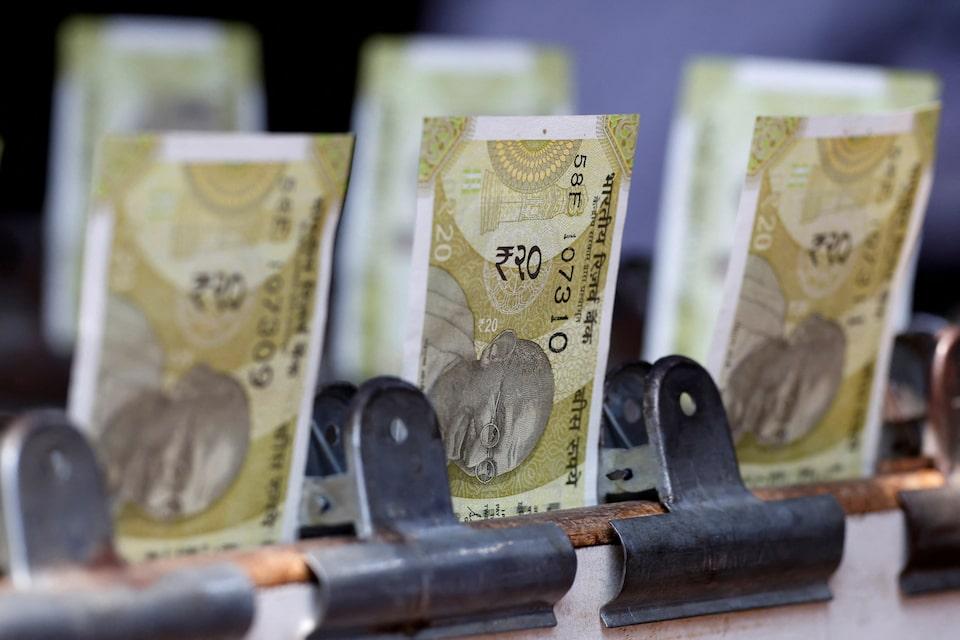
MUMBAI, June 12 (Reuters) - The Indian rupee is expected to open marginally higher on Thursday, supported by a weaker dollar following further signs that U.S. President Donald Trump is taking a conciliatory approach on tariffs and on rising expectations of Federal Reserve rate cuts later this year. The 1-month non-deliverable forward indicated an open in the 85.42-85.44 range, versus 85.51 in the previous session. Sign up here. The dollar index fell 0.5% on Wednesday and extended losses in the Asia session on Thursday. The decline lifted regional currencies, with most Asian units rising between 0.1% and 0.4%. The dip in USD/INR at the open may "at best" extend to the 85.30–85.35 zone, a currency trader at a state-run bank said. A move below that zone would mark a significant victory for rupee bulls, he added. The trader's remarks come against the backdrop of relatively range-bound trading in the Indian currency over recent sessions. TRADE AND FED WEIGH ON THE DOLLAR Expectations of cooing trade tensions and potential Fed rate cuts kept the dollar under pressure. Trump said on Wednesday he would be willing to extend a July 8 deadline for completing trade talks with countries before higher U.S. tariffs are imposed. Further, Trump said that a deal to get the fragile truce in the U.S.-China trade war back on track is done. Meanwhile, data on Wednesday showed U.S. consumer prices rose less than expected in May, leading traders to ramp up bets of a rate cut at the Fed's September policy meeting. The inflation report "eased some fears around persistent inflation acceleration" and accordingly, additional Fed easing was priced in with about 5-6 basis points of incremental easing added to end-2025 and 2026, Morgan Stanley said in its daily commentary. KEY INDICATORS: ** One-month non-deliverable rupee forward at 85.54; onshore one-month forward premium at 9 paisa ** Dollar index down at 98.40 ** Brent crude futures down 0.6% at $69.4 per barrel ** Ten-year U.S. note yield at 4.4% ** As per NSDL data, foreign investors bought a net $359.6 million worth of Indian shares on June 10 ** NSDL data shows foreign investors bought a net $159.4 million worth of Indian bonds on June 10 https://www.reuters.com/world/india/rupee-likely-be-buoyed-by-fed-cut-bets-softer-us-trade-signals-2025-06-12/
2025-06-12 01:04
SEOUL, June 12 (Reuters) - South Korea's central bank governor said on Thursday "excessive" policy interest rate cuts could cause another round of price upswings in the property market and increase volatility in currency markets, although the domestic economy remains sluggish. "If we rely too much on economic stimulus policies out of urgency, there may be greater side effects later on. For example, if we cut the base interest rate excessively, there is a high risk that it will lead to a rise in real estate prices," Governor Rhee Chang-yong said in a speech prepared for the bank's 75th anniversary. Sign up here. His comments come after the bank flagged more rate cuts to come on the day it trimmed borrowing costs by a quarter percentage point to 2.5% on May 29, to reflect the impact of the U.S. trade tariffs and tepid domestic consumption. The widely expected rate cut, the fourth in the current easing cycle, came as the newly elected President Lee Jae-myung geared up for major stimulus measures including this year's second extra budget to boost growth. Rhee's concerns about excessively cutting interest rates also stemmed from recent currency market volatility. "The gap between domestic and foreign interest rates may widen further as the U.S. Federal Reserve adjusts the pace of its interest rate cuts, and uncertainty surrounding the results of trade negotiations with major countries may increase, leading to increased volatility in the foreign exchange market," Rhee said in the speech. https://www.reuters.com/world/asia-pacific/bank-korea-chief-says-excessive-rate-cuts-could-cause-price-upswing-property-2025-06-12/

2025-06-12 00:51
SAO PAULO, June 11 (Reuters) - The Brazilian government published on Wednesday an executive order altering taxes levied on investments, as well as a new decree walking back part of the recently announced hikes on the IOF tax on financial transactions. The government had announced in May the increase of the IOF tax, including on credit and foreign-exchange transactions, to boost public revenues. Sign up here. The move triggered strong pushback from both Congress and market players, prompting the government to seek an alternative path as lawmakers threatened to overturn the measure. A revised version of the IOF decree was published on Wednesday evening, partially or fully backtracking on several hikes to the rate, including on IOF levies on credit to companies and on the so-called forfait operations. As part of the alternatives to the IOF hike, the government also published an executive order, which will need Congress' approval to remain valid, with measures including broad changes on income tax on financial investments, as well an increase in the tax rate on sports betting firms' revenue. Among the changes to investment taxes, the government will now set the rate on investment income and capital gains, including stocks and bonds, at 17.5%, replacing the current sliding scale of 15% to 22.5%. It also sets a 5% income tax on investments currently except from income levy, and raises the income tax rate levied on so-called interest on equity (JCP) payments to 20% from 15%. The finance ministry did not release an estimate of the financial impact of the measures in its budget. https://www.reuters.com/world/americas/brazil-government-revises-iof-taxes-after-pushback-tweaks-investment-levies-2025-06-12/

2025-06-12 00:51
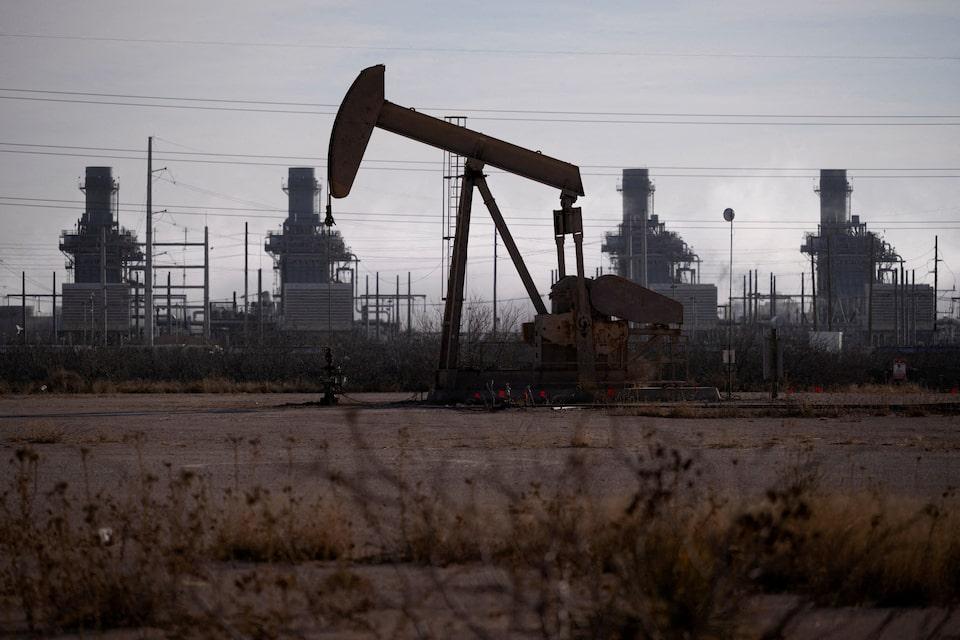
Oil prices close lower after hitting two-month high on Wednesday Market focusing on Middle East tensions, US-Iran talks US, Iranian officials to meet on Sunday in Oman NEW YORK, June 12 (Reuters) - Oil prices settled slightly lower on Thursday as traders booked profits from a 4% rally in the prior session, driven by concerns that worsening tensions in the Middle East could cause supply disruptions. Brent crude futures settled down 41 cents, or 0.6%, at $69.36 a barrel. U.S. West Texas Intermediate crude fell 11 cents, or 0.2%, to settle at $67.97 a barrel. Sign up here. U.S. President Donald Trump on Thursday said an Israeli strike on Iran "could very well happen," but added that he would not call it imminent and prefers to avoid conflict. The U.S. had earlier decided to move personnel out of the Middle East, sending both crude oil benchmarks up more than 4% to their highest since early April on Wednesday. The surge put the market in overbought territory based on several technical indicators, so it was likely due for a brief correction, StoneX Energy analyst Alex Hodes said. U.S. and Iranian officials were scheduled to hold a sixth round of talks on Tehran's uranium enrichment programme in Oman on Sunday, according to officials from both countries and their Omani mediators. Trump has repeatedly threatened strikes against Iran if the nuclear talks fail to reach an agreement. Tehran, which asserts its nuclear activity is for peaceful purposes, has said it would retaliate against strikes by hitting U.S. bases in the region. Rising tensions in the region have oil traders worried about possible supply disruptions. Britain's maritime agency warned on Wednesday that increased tensions in the Middle East may escalate military activity and impact shipping in critical waterways. "For the oil market, the absolute nightmare is a closure of the Strait of Hormuz," Arne Rasmussen, an analyst at Global Risk Management, said in a LinkedIn post. "If Iran blocks this narrow chokepoint, it could affect up to 20% of global oil flows," he added. JPMorgan said oil prices could surge to $120-$130 a barrel if the Strait of Hormuz were to be shut, a scenario the bank considered to be severe but a low risk. Still, oil traders were growing cautious. "We are still higher than two days ago as some short investors prefer to stay on the sidelines amid the uncertainty," said Giovanni Staunovo, an analyst at UBS. U.S. special envoy Steve Witkoff plans to meet Iranian Foreign Minister Abbas Araghchi in Oman on Sunday to discuss Iran's response to a U.S. proposal for a deal. The U.N. nuclear watchdog's 35-nation Board of Governors declared Iran in breach of its non-proliferation obligations on Thursday for the first time in almost 20 years, raising the prospect of reporting it to the U.N. Security Council. https://www.reuters.com/business/energy/oil-prices-tick-up-worries-escalating-us-iran-tension-2025-06-12/
2025-06-11 22:56
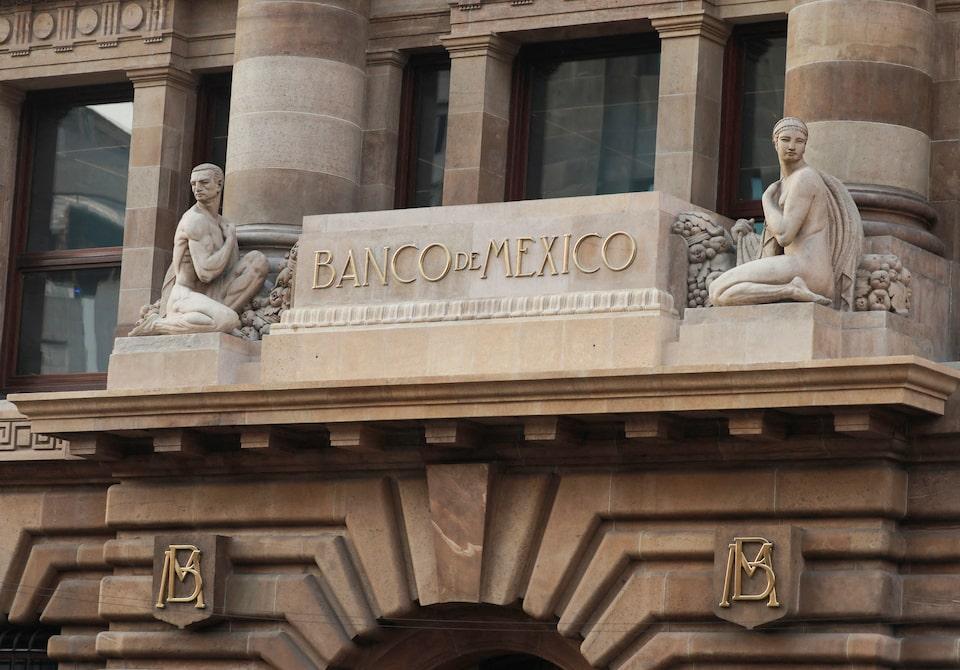
Mexican financial system resilient and solid, central bank says Banking system has sufficient liquidity and capital, per report Stress tests showed system can withstand adverse scenarios Bank Governor: Premature to think high inflation is imminent MEXICO CITY, June 11 (Reuters) - Mexican Central Bank Governor Victoria Rodriguez urged confidence in Mexico's banking system and economy on Wednesday, seeking to assuage fears about rising inflation and stagnant growth in Latin America's second-largest economy. The central bank offered an optimistic outlook in its biannual stability report released on Wednesday, saying Mexico's financial system has shown "resilience" despite ongoing trade tensions with the U.S. and a "global context characterized by the slowdown in economic activity." Sign up here. Banxico, as the central bank is known, is facing a challenging balancing act as it seeks to ease rising inflation while stimulating Mexico's sluggish economy. Despite the challenges, Mexico's banking system maintains "solid" liquidity with capital levels above regulatory minimums. Stress tests show that it can confront "simulated adverse scenarios," the report said. "Our country has a solid macroeconomic framework," Rodriguez said during a presentation of the report. Rodriguez downplayed concerns of long-term high inflation, saying it remains on a downward trajectory and far from the highs reached in 2022, when it peaked at 8.7%. Headline inflation in Mexico accelerated to 4.42% in May, exceeding the upper end of the central bank's target range of 3%, plus or minus a percentage point. Core inflation, which excludes volatile items like food and oil, rose to 4.06%, its highest level in almost a year. Banxico currently forecasts inflation will fall in the third quarter before converging to its target by the third quarter of 2026. "It would be premature to conclude or think that the Mexican economy is or will soon be in a period of high inflation," Rodriguez added. Rodriguez reiterated the board's position that is appropriate to continue easing the bank's monetary policy, following its 50 basis-point cut to its benchmark interest rate last month. A dozen economists surveyed by Reuters expect the Bank of Mexico to implement a fourth consecutive rate cut of 50 basis points at its next meeting on June 26, despite the inflation uptick. https://www.reuters.com/world/americas/mexican-financial-system-resilient-despite-risks-says-cenbank-2025-06-11/