2025-06-12 07:38
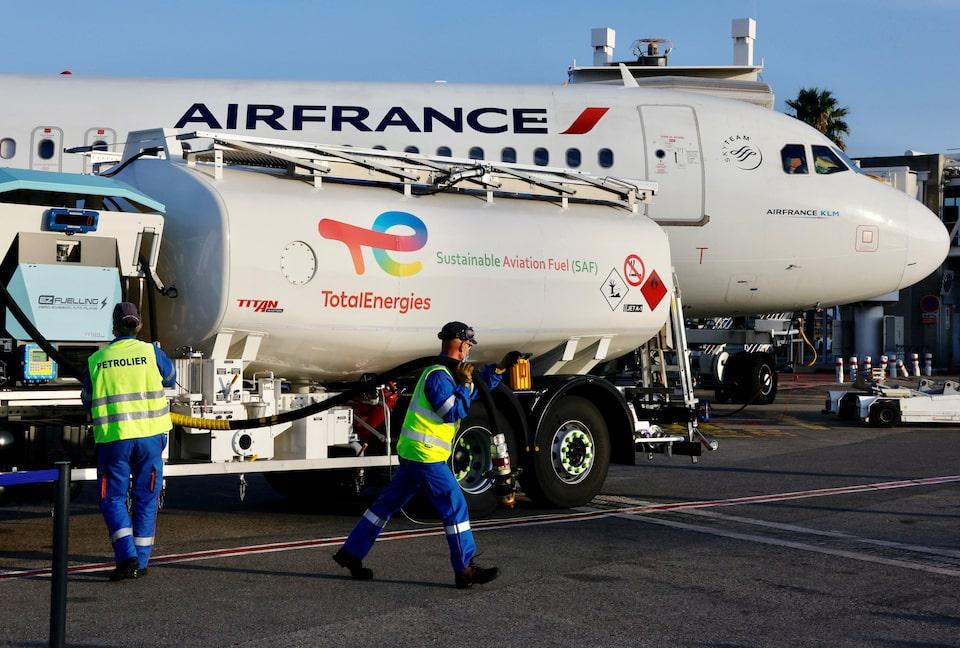
BRUSSELS, June 11 (Reuters) - (This June 11 story has been refiled to correct a typo in the headline) The European Union has offered to subsidise airline purchases of more than 200 million litres of sustainable aviation fuels to encourage carriers to swap kerosene for cleaner alternatives, Reuters calculations show. Sign up here. The calculations, based on European Commission data, suggest that the subsidies could trigger a significant boost to airline demand for sustainable aviation fuels (SAF), given the volume equates to about 15% of global SAF production. Global SAF output last year totalled 1.3 billion litres, according to airline industry association IATA. The EU has earmarked revenue from the sale of 20 million carbon emissions permits to help airlines to cover the price gap between conventional kerosene and more expensive SAF on flights within Europe. Reuters calculations showed these subsidies would cover purchases of up to 216 million litres of e-fuels - synthetic fuels made using captured CO2 emissions - or as much as 2.6 billion litres of biofuels. The EU subsidies cover up to 6 euros per litre for e-fuels and 0.5 euros per litre for biofuels. Aviation is among the hardest sectors to decarbonise, with zero-emission aircraft not expected this decade. Sustainable fuels, which have net-zero emissions or lower emissions than fossil fuel kerosene, can help to reduce air travel's carbon footprint in the near term. However, SAF costs three to five times more than traditional jet fuel and makes up only 0.3% of global jet fuel supply. Airlines have warned that EU targets to use more SAF are therefore impossible to meet, though a Boston Consulting Group report this year found that the sector is investing only 1%-3% of revenue or budget allocation in SAF. The EU requires 2% of fuel made available at EU airports to be SAF in 2025, rising to 6% in 2030. Airlines must buy permits from the EU carbon market to cover their emissions from European flights. Until last year, the EU gave airlines most permits free of charge, but it is now phasing out free permits to drive faster emissions reductions. https://www.reuters.com/sustainability/boards-policy-regulation/eu-susbsidise-high-volume-greener-aviation-fuel-boost-airline-demand-2025-06-11/
2025-06-12 06:50
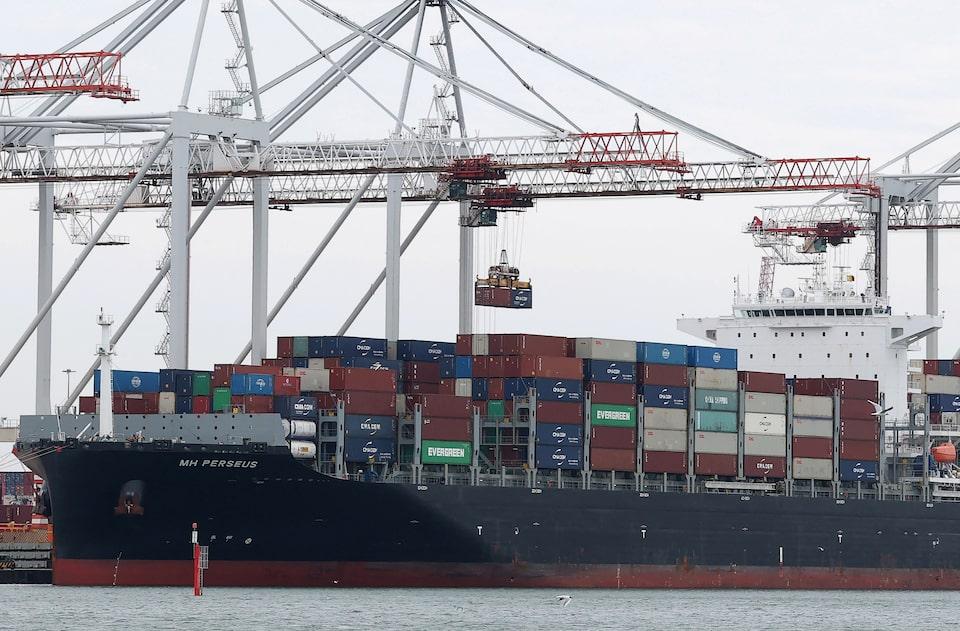
GDP falls larger-than-expected 0.3% in April ONS cites end of property tax break, US tariff impact Goods exports to US drop by record 2 billion pounds Sterling weakened against dollar, gilt yields fell LONDON, June 12 (Reuters) - Britain's economy slowed sharply in April, reflecting shockwaves from U.S. President Donald Trump's announcement of wide-ranging tariffs and a one-off hit from the end of a tax break on property sales, official data showed on Thursday. Gross domestic output shrank by a larger-than-expected 0.3% in April from March - the biggest monthly drop since October 2023 and more than the 0.1% fall forecast in a Reuters poll, following 0.2% growth in March. Sign up here. Finance minister Rachel Reeves said the GDP numbers were "clearly disappointing". Thursday's data comes a day after she set out a multi-year spending review which divided up more than 2 trillion pounds of public spending between government departments. Britain's economy has grown slowly since the COVID-19 pandemic, and the fall in monthly GDP was led by a 0.4% contraction in output from the dominant services sector. A big factor in this was a slump in real estate and legal activity in April after the end of a temporary tax break on house purchases, which contributed 0.2 percentage points of the overall 0.3 percentage point fall in output in April. Car makers also reported lower output and exports to both the United States and the European Union. Sterling fell by close to half a cent against the dollar on the back of the figures, and gilt yields hit a one-month low. TARIFFS IMPACT British goods exports to the U.S. fell by 2.0 billion pounds ($2.7 billion) in April, the largest drop since monthly records began in 1997. So far, Britain is the only major economy to have agreed a trade deal with the U.S., which is intended to exempt it from Trump's increased tariffs on aluminium and steel imports. A 10% goods levy remains in place. The U.S. and China this week agreed on a plan, subject to approval from Trump and his Chinese counterpart Xi Jinping, to ease trade tensions after two days of talks in London. Monthly GDP data tends to be volatile and some economists have noted a pattern since 2022 of British GDP being stronger in the first quarter of each year and weaker in the second half, raising questions about seasonal adjustment since the pandemic. "Looking through the noise and data quality issues, we expect the underlying pace of growth to remain underwhelming over the next couple of years," Matt Swannell, chief economic advisor to the EY ITEM Club, said. "The drag from U.S. trade policy has added to a range of domestic headwinds, including the significant tightening of fiscal policy and the lagged pass-through of past interest rate rises." Britain's economy had expanded by 0.7% in the first quarter of 2025, outstripping growth in other countries in the Group of Seven advanced economies and prompting the Bank of England to revise up its full-year growth forecast to 1% last month. However, the BoE revised down its growth forecast for 2026 to 1.25% and said it expected the tariffs to knock 0.3% off British output in three years' time. BoE policymakers are expected to keep interest rates unchanged next week as they are faced with competing forces of stubborn inflation and a relatively sluggish economy, but most economists polled by Reuters expect two more rate cuts this year. "Though the door is probably closed on an interest rate cut next week, these downbeat figures increase the likelihood of a policy loosening in August, despite lingering concerns over high inflation," Suren Thiru, economics director at ICAEW, an accountancy body, said. Recent business surveys have shown firms slowing their hiring and investment plans due to big increases in labour costs announced by Reeves last October. Of Britain's main economic sectors, construction showed the only growth in month-on-month terms in April, increasing by 0.9%, the ONS data showed. Industrial output fell 0.6%, driven by a 0.9% fall in manufacturing. Separately, the ONS released trade data showing that Britain's goods trade deficit widened to 23.2 billion pounds in April from 19.9 billion pounds in March, much bigger than the 20.4 billion expected in a Reuters poll. ($1 = 0.7376 pounds) https://www.reuters.com/sustainability/sustainable-finance-reporting/uk-economy-shrinks-by-03-april-ons-says-2025-06-12/
2025-06-12 06:36
BAGHDAD, June 12 (Reuters) - Foreign energy firms continue operating normally in Iraq, a senior Iraqi official told Reuters on Thursday, after U.S. President Trump said U.S. personnel were being moved out of the Middle East because "it could be a dangerous place". The Iraqi oil ministry did not receive any notification from operators regarding staff reductions, added the official, who oversees operations in southern oilfields. Sign up here. On Wednesday, sources told Reuters that the U.S. was preparing an evacuation of its Iraqi embassy due to heightened security risks in the region. https://www.reuters.com/business/energy/foreign-energy-companies-continuing-normal-operations-iraq-official-says-2025-06-12/

2025-06-12 06:15
US producer price index data due at 1230 GMT Dollar hit more-than-three-year low US to pull some Middle East personnel as Iran tensions rise June 12 (Reuters) - Gold prices rose 1% to a one-week high on Thursday as tensions in the Middle East and trade uncertainties fuelled demand for the safe-haven asset. Spot gold was up 0.9% at $3,382.61 an ounce as of 1123 GMT, after hitting its highest level since June 5 earlier in the day. Sign up here. U.S. gold futures climbed 1.8% to $3,403.0. The U.S. dollar index (.DXY) , opens new tab fell 0.8% to a more-than-three-year low, making dollar-priced bullion more attractive to overseas buyers. "You have Middle East tensions and equity markets dropping because of renewed uncertainty about the trade situation. All of that is helping to boost the appeal of haven assets," said Fawad Razaqzada, market analyst at City Index and FOREX.com. U.S. President Donald Trump said on Wednesday he might extend the July 8 deadline for completing trade talks with countries before higher U.S. tariffs take effect, while letters to other countries to accept or reject trade terms would soon be sent out. Washington and Beijing have agreed on a framework to restore a fragile truce in the U.S.-China trade war, potentially avoiding higher tariffs. In a sign of increased Middle East volatility, Trump said on Wednesday U.S. personnel were being moved out of the region as it could be a "dangerous place" and that the United States would not allow Iran to have a nuclear weapon. Gold, a safe-haven asset, often thrives during times of economic uncertainty and in low-interest-rate environments. Investors are now turning their focus to the U.S. Producer Price Index (PPI) data due at 1230 GMT, ahead of the Federal Reserve's meeting on June 17–18. "PPI will be watched to see whether they can spring a CPI-like surprise or whether expectations for rising input prices will be confirmed," said Ole Hansen, head of commodity strategy at Saxo Bank. Elsewhere, spot silver was steady at $36.24 per ounce, platinum rose 0.7% to $1,264.57, hovering at a more-than four-year high, while palladium was down 1.7% at $1,062.04. https://www.reuters.com/world/china/gold-rises-weaker-dollar-rising-middle-east-tensions-2025-06-12/

2025-06-12 06:10
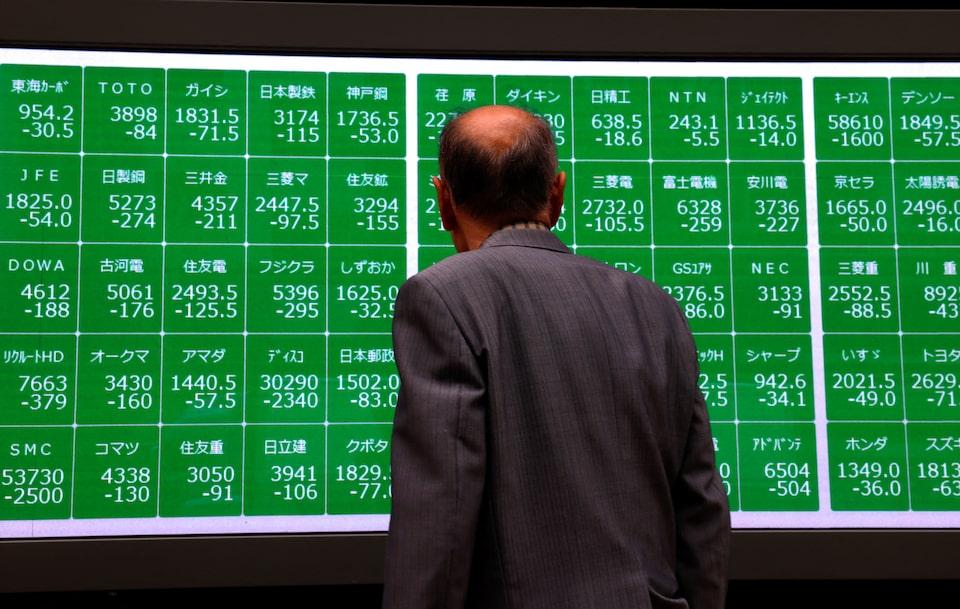
Wall Street stocks edge up, dollar down Rising Middle East tension dents sentiment, gold gains Markets give lukewarm reception to U.S.-China truce agreement Trump's latest tariff salvo unnerves investors Soft U.S. CPI sets stage for Fed meeting next week June 12 (Reuters) - The dollar hit a 2025 low on Thursday but Wall Street stocks continued their recent rally as traders weighed low inflation readings, rising Middle East tensions, and the fragility of a U.S.-China trade truce. U.S. consumer and producer inflation reports showed overall price pressures remained contained in May, largely due to declines in the cost of gasoline, cars and housing, or services like air transport. But most economists expect inflation to pick up as the impact of U.S. tariffs begins to bite. Sign up here. The dollar, which has lost around 10% in value against a basket of currencies this year, fell to its lowest since April 2022, as weaker-than-expected U.S. inflation data for May suggested that the Federal Reserve could resume cutting interest rates sooner rather than later. Global stocks continued an almost-unbroken rally since early April, leaving the MSCI All-Country World index (.MIWD00000PUS) , opens new tab up 0.3%, just below Wednesday's all-time high. On Wall Street, the Dow Jones Industrial Average (.DJI) , opens new tab added 0.24%, while the S&P 500 (.SPX) , opens new tab rose about 0.4%, and the Nasdaq Composite (.IXIC) , opens new tab gained 0.24%. Shares of planemaker Boeing BA.N , opens new tab lost nearly 5% after an Air India aircraft carrying more than 200 people crashed in India's western city of Ahmedabad, and aviation tracking site Flightradar24 said the plane was a Boeing 787-8 Dreamliner. Oracle (ORCL.N) , opens new tab shares rose 13% after the cloud service provider its annual revenue growth forecast. European equities logged their fourth consecutive decline on Thursday as trade optimism waned, with the STOXX 600 (.STOXX) , opens new tab down 0.3%. Stocks in China and Hong Kong also fell, led by declines in the tech sector. The U.S. administration said on Wednesday U.S. personnel were being moved out of the Middle East due to heightened regional security risks, which briefly drove oil prices up by 4% before they receded. "(A flare-up in tensions) is a significant tail risk, but I don't think it is anybody's baseline forecast. So it's something to watch if there is a real escalation there, then markets will take fright and that would have ramifications for the oil price," Daiwa Capital economist Chris Scicluna said. Iran said it will not abandon its right to uranium enrichment, a senior Iranian official told Reuters, adding that a "friendly" regional country had alerted Tehran over a potential military strike by Israel. Classic safe-haven assets got a lift. The Swiss franc and Japanese yen strengthened, pushing the dollar down 1.1% against the franc and down 0.7% against the yen, while gold rose about 1% to $3,387 an ounce. Relief stemming from a positive conclusion to U.S.-China trade talks earlier this week, which President Donald Trump said was a "great deal with China," evaporated by Thursday. RED, WHITE AND BLUE LETTERS Adding yet another dose of market uncertainty, Trump said the U.S. would send out letters in one to two weeks outlining the terms of trade deals to dozens of other countries, which they could embrace or reject. "Markets may have no choice but to respond to Trump's tariff threat — even if it's just posturing to bring others to the table. The gap between 'risk-on' positioning and real-world risks has stretched too far," said Charu Chanana, chief investment strategist at Saxo Bank. Trump's erratic tariff policies have roiled global markets this year, prompting hordes of investors to exit U.S. assets, especially the dollar, as they worried about rising prices and slowing economic growth. The euro rose 0.77% to $1.15 after touching its highest level since October 2021. U.S. Treasuries also rallied in price, pushing yields down 5.9 basis points to below 4.355%, while two-year yields , which are more sensitive to inflation and interest-rate expectations, eased 3.9 bps to 3.906%. Wednesday's consumer inflation index kept alive the prospect of the Federal Reserve cutting rates by a quarter point, but only in September, as policymakers assess how tariffs work their way through the real economy. On Thursday, the Labor Department reported that U.S. producer prices increased less than expected in May, restrained by lower costs for services including flights. Chris Zaccarelli, chief investment officer for Northlight Asset Management in Charlotte, said the new inflation data this week gives the Fed cover to wait for more information on how the new tariffs and trade talks might impact price stability. "This gives the Fed room to sit on their hands," he wrote in an email. Oil, which has fallen by 20% in the last year , eased 0.17% to $69.65 a barrel, but was still pinned near two-month highs, adding another moving part to the outlook for interest rates. https://www.reuters.com/world/china/global-markets-wrapup-1-2025-06-12/
2025-06-12 06:09
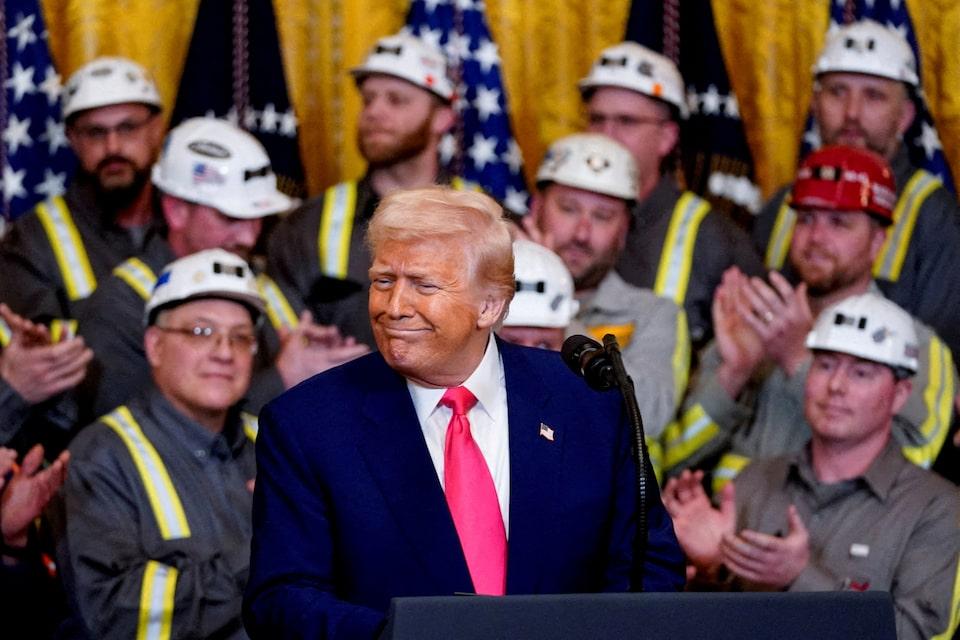
Section 899 proposes up to 20% tax on foreign investors' income Proposal is part of President Trump's signature tax bill The tax could deal a hefty blow to European oil giants' profits LONDON, June 12 - A proposed U.S. tax targeting foreign investors could hurt European energy giants that operate in America's booming oil and gas sector, undermining what President Donald Trump describes as his energy dominance agenda. Trump's sweeping tax and spending bill under review by the Senate includes an additional tax of up to 20% on foreign investors' income, such as dividends and royalties. Sign up here. The tax, known as Section 899, was devised as a pushback against countries that impose what the bill describes as "unfair foreign taxes" on U.S. companies, such as digital services taxes. Section 899 is believed to be targeting companies headquartered in the European Union and Britain, which both have tax systems considered discriminatory by the Trump administration. The provision is a significant threat to London-listed Shell (SHEL.L) , opens new tab and BP (BP.L) , opens new tab as well as France's TotalEnergies (TTEF.PA) , opens new tab and Spain's Repsol (REP.MC) , opens new tab, which all have sprawling operations in the United States. Trump, who often used the slogan "drill, baby, drill" in his election campaign, has portrayed himself as pro-fossil fuel, vowing on his first day in office to maximise oil and gas production. But if approved, Section 899 could have the opposite effect. BP last year invested more than $6 billion, about 40% of its capital expenditure, in the United States, where its interests include onshore and offshore oil and gas operations, two refineries, thousands of retail fuel stations and a power trading business. The country is also home to more than a third of BP's global workforce of about 90,000 and accounted for roughly 30% of its 2024 revenue of $189 billion and more than a quarter of its $21 billion net profit. Shell, the biggest European oil major, is also a huge investor in the United States, which accounted for 23% of its 2024 revenue of $284 billion. It invests about 30% of its capital expenditure in the country, where it has oil and gas production facilities, a petrochemicals plant, a vast retail network, liquefied natural gas (LNG) purchasing agreements and major trading operations. SHAKEN CONFIDENCE The United States became increasingly important to Big Oil companies in recent decades thanks to its stable fiscal and regulatory environment while other regions presented a variety of challenges. Take Russia, for example. Its vast oil and gas resources started attracting investments from many companies in the 1990s after the collapse of the Soviet Union, but the country is now uninvestible owing to western sanctions that followed Russia's invasion of Ukraine in 2022. Similarly, western companies have limited opportunities to invest in the Middle East, where national oil companies dominate. Europe, meanwhile, has limited natural resources and strict environmental regulation. The multinational nature of oil and gas companies means they have plenty of experience dealing with tax uncertainty, but shifting tax policies tend to delay investments. Company boards require long-term confidence to proceed with large, multi-decade capital projects such as oil and gas fields or LNG plants. The industry's confidence in the United States was already shaken under Trump's predecessor, Joe Biden, who in 2020 revoked a construction permit for the Keystone XL pipeline. The Biden administration also paused approvals for new LNG projects in 2024 because of climate concerns. Trump lifted the pause when he entered the White House. A HEAVY BLOW According to Section 899, multinational companies could face a new tax on dividends sent overseas and inter-company loans, potentially reducing profit. The Gulf of Mexico accounted for about 10% of Shell's 2024 free cash flow of $40 billion, it said in a presentation. That means that Section 899 could shave $800 million from its free cash flow per year from Gulf of Mexico operations alone. BP made about $1.5 billion in free cash flow in the United States last year, Reuters calculations show. A 20% dividend tax could translate into a $300 million loss in free cash flow. Faced with the worsening fiscal terms, companies could opt to direct funds away from the United States. Though options for deploying capital elsewhere on a similar scale are limited, companies could choose to spread their investments more widely. Such a scenario could be a boon for countries such as Canada, Brazil, Mozambique and Namibia, which have large untapped natural resources. Another option would be for companies to transfer their headquarters and listings to the United States - a costly and politically complicated option. Shell previously contemplated such a move to boost its share value, though it appears to have abandoned the idea. Ultimately, it is very likely that the Senate would push to modify Section 899 or limit its scope, given the potential far-reaching impact on many sectors. But barring a radical change, Section 899 poses a huge risk for European oil and gas giants that are heavily dependent on the United States. Achieving the Trump administration’s energy dominance agenda will almost certainly require more foreign investment, not less, so if the CEOs of European energy companies complain loudly enough, the president may well listen to them. The opinions expressed here are those of the author, a columnist for Reuters. Enjoying this column? Check out Reuters Open Interest (ROI) , opens new tab, your essential new source for global financial commentary. ROI delivers thought-provoking, data-driven analysis. Markets are moving faster than ever. ROI , opens new tab can help you keep up. Follow ROI on LinkedIn , opens new tab and X. , opens new tab https://www.reuters.com/markets/commodities/trumps-energy-dominance-agenda-could-be-ravaged-by-section-899-2025-06-12/