2025-06-11 21:52
EPA proposes repeal of carbon, mercury rules to save money EPA administrator says coal, gas power needed for data centers Environmental groups warn of higher public health costs WASHINGTON, June 11 (Reuters) - President Donald Trump's administration has proposed repealing rules passed under former President Joe Biden to curb emissions of carbon dioxide, mercury and other air pollutants from power plants, Environmental Protection Agency Administrator Lee Zeldin said on Wednesday. The announcement, following through on a promise EPA made in March, is a key step in Trump's broader efforts to unwind environmental regulations he views as unnecessary barriers to industrial development and expanded energy production. Sign up here. "EPA is taking an important step, reclaiming sanity and sound policy, illustrating that we can both protect the environment and grow the economy," Zeldin said at EPA headquarters. Electric utilities and miners cheered the move to eliminate the Biden-era rules, which Zeldin said would save companies $120 million a year. Environmental groups slammed the proposal, saying it would cost more than that in damage to the environment and public health. In March, Zeldin announced his intent to unwind three dozen existing agency air and water rules. Wednesday's announcement focuses on carbon emission and mercury regulations and launches the formal process to repeal those regulations. The EPA has already exempted 47 companies from regulations to curb mercury and air toxics for coal-fired power plants for two years, according to a list of facilities published by the EPA in April. That move was intended to prevent power plants from having to retire as the U.S. faces an expected jump in electricity demand linked to a surge in data center construction. Zeldin said data centers will consume 10% of U.S. electricity supply within 10 years, up from 3 to 4% currently, so more gas and coal power will be needed to "make America the AI capital of the world." Biden's carbon emission rules for power plants would have reduced greenhouse gas emissions by 1 billion metric tons by 2047, a crucial part of his administration's fight against climate change. The electricity sector is responsible for nearly a quarter of U.S. greenhouse gas pollution. Zeldin said the rules, if finalized, would mean no power plant would be able to emit more than it emits today or as much as it did a year or two ago. The proposal has two parts: the first would repeal the carbon pollution standards finalized last year by the Biden EPA calling for carbon emission reductions from existing coal- and new gas-fired power plants. The second, which Zeldin said would save $120 million a year, would repeal Biden's move to strengthen the 2012 mercury and air toxics rule, requiring continuous monitoring requirements. American Lung Association President Harold Wimmer said the mercury limit rollback was “indefensible from a public health standpoint and a betrayal of EPA’s mission." Shaun Goho, legal director at Clean Air Task Force, said: “These regressive proposals are bad for public health and bad for climate, all to prop up some of the highest polluting power plants in the nation." "Eliminating Biden-era power plant standards will erase $240 billion in climate benefits and $120 billion in public health savings," said Evergreen Action Senior Power Sector Policy Lead Charles Harper. Alex Bond, director of legal policy at the Edison Electric Institute, said: “Regulatory flexibility and certainty are critical for electric companies as they work to meet the nation’s growing demands for reliable electricity, while also keeping customer bills as low as possible." EEI said it still supports the EPA's authority to regulate greenhouse gas emissions under the federal Clean Air Act. National Mining Association President Rich Nolan said nullifying the EPA's two most consequential air rules removes "deliberately unattainable standards and leveling the playing field for reliable power sources, instead of stacking the deck against them." U.S. Representative Rob Bresnahan, a Pennsylvania Republican whose district will have nine new data center projects in coming years, said repealing the power plant rules will enable more gas plants to come online to help power surging electricity demand. "The simple fact is we need more power on the grid to power all of this," he said. https://www.reuters.com/sustainability/climate-energy/trump-administration-set-announce-rollback-power-plant-rules-sources-say-2025-06-11/

2025-06-11 21:05
ORLANDO, Florida, June 11 (Reuters) - TRADING DAY Making sense of the forces driving global markets Sign up here. By Jamie McGeever, Markets Columnist I'm excited to announce that I'm now part of Reuters Open Interest (ROI), an essential new source for data-driven, expert commentary on market and economic trends. You can find ROI on the Reuters website, and you can follow us on LinkedIn and X. The US and China have reached a trade deal, or at least agreed on the framework of a deal, which together with surprisingly soft U.S. inflation data, gave markets a lift on Wednesday. But Wall Street's gains were mild, and they were later wiped out by rising tensions in the Middle East. In my column today I look at the 'equity risk premium' and other metrics that suggest relative U.S. equity and bond valuations are getting very stretched. More on that below, but first, a roundup of the main market moves. If you have more time to read, here are a few articles I recommend to help you make sense of what happened in markets today. Today's Key Market Moves Good vibrations turn sour It's a "done" deal, according to U.S. President Donald Trump, although the he and Chinese leader Xi Jinping still have to finalize the wording of the trade agreement between the two superpowers and sign off on it. The main points of the deal appear to be: China will remove export restrictions on rare earth minerals and other key industrial components; U.S. tariffs on Chinese goods will total 55%; Chinese tariffs on U.S. goods will total 10%. Trump could not have been more enthusiastic in his praise for the agreement on Wednesday, and Commerce Secretary Howard Lutnick said 'deal after deal' with other countries will follow in the weeks ahead. Yet, judging by the relatively muted market reaction, investors are less enthused. And given the chaotic and unpredictable nature of the Trump administration's tariff announcements thus far, the irony of Treasury Secretary Scott Bessent calling on China to be a "reliable partner" in trade negotiations will not be lost on some observers. Especially, one suspects, in Beijing. Based on these proposed China levies, and with the US expected to conclude more trade deals in the coming weeks, the overall U.S. effective tariff rate will be lower than feared a couple of months ago. That's a relief. But the effective tariff rate of around 15% that many economists expect will still be significantly higher than the 2.5% rate at the end of last year, and would be the highest since the 1930s. Also, as the May inflation figures showed, tariffs have yet to be felt on prices. Investors - and Fed policymakers, who meet next week - are in a state of limbo. How will corporate profits and consumer spending be affected? What proportion of the tariffs will companies "swallow", and how much will they pass on to their customers? Zooming out, inflation appears to be cooling around the world, although this trend is expected to reverse once tariffs start to fuel higher goods price inflation. Figures on Wednesday showed that U.S. consumer inflation and Japanese wholesale inflation were lower than expected in May. These reports follow similar numbers from Europe recently, and China remains stuck in its battle against deflation. Next up is India, which releases consumer inflation figures on Thursday, which are expected to show annual inflation slowed to 3.0% in May, the lowest in more than six years. Another focus for investors on Thursday will be the auction of 30-year U.S. Treasury bonds. US stocks-bonds warnings flash amber again Calm has descended on U.S. markets following the 'Liberation Day' tariff turmoil of early April. But Wall Street's rally has revived questions about U.S. equity valuations, as stocks once again look super pricey compared to bonds. Since the chaotic days of early April, U.S. equities have rebounded fiercely, with the S&P 500 up 25%, putting the Shiller cyclically adjusted price-earnings (CAPE) ratio for the index in the 94th percentile going back to the 1950s, according to bond giant PIMCO. Stocks are looking expensive in absolute terms, and in relation to bonds. The equity risk premium (ERP), the difference between equity yields and bond yields, is near historically low levels. According to analysts at PIMCO, the ERP is now zero. The previous two times it fell to zero or below were in 1987 and 1996–2001. In both instances, the ultra-low ERP precipitated a steep equity drawdown and sharp fall in long-dated bond yields. "The U.S. equity risk premium ... is exceptionally low by historical standards," they wrote in their five-year outlook on Tuesday. "A mean reversion to a higher equity risk premium typically involves a bond rally, an equity sell-off, or both." But reversion to the mean doesn't just happen by magic. A catalyst is needed. Equities have recovered largely because they were oversold in April, trade tensions have been dialed down, and investors remain confident that Big Tech will drive solid AI-led earnings growth. So even though huge economic, trade, and policy risks continue to hang over markets, there is no sign of an imminent catalyst that would cause an equity market selloff. CHEAP FOR A REASON The flip side of equities looking expensive is that bonds look like a bargain. Indeed, the relative divergence between stocks and bonds is such that, by one measure, U.S. fixed income assets are the cheapest relative to equities in over half a century. Using national flow of funds data from the Federal Reserve, retired strategist Jim Paulsen calculates that the total market value of U.S. bonds as a percentage share of the total market value of U.S. equities is the lowest since the early 1970s. "Since the aggregate U.S. portfolio is currently aggressively positioned, investors may have far more capacity and desire to boost bond holdings in the coming years than most appreciate," Paulsen wrote last week. But bonds are 'cheap' for a reason. Washington's profligacy – the reason ratings agency Moody's recently stripped the U.S. of its triple-A credit rating – and inflation worries have kept yields stubbornly high. The term premium - the risk premium investors demand for holding long-term debt rather than rolling over short-dated loans - is the highest in over a decade, reflecting concerns about Uncle Sam's long-term fiscal health. And the diagnosis here shows no signs of improving. Trump's 'Big Beautiful Bill' is expected to add $2.4 trillion to the U.S. debt over the next decade, according to the nonpartisan Congressional Budget Office, likely putting more upward pressure on yields. Of course, equity investors do seem to be pricing in a very rosy scenario, and the past few months have shown how quickly the market landscape can change. The U.S. economy could weaken more than expected, the trade war could escalate, or there could be a geopolitical surprise that causes bond yields and equity prices to fall. Investors should therefore be mindful of the warnings being sent by ERPs and other absolute and relative valuation metrics. However, they should also remember that stretched valuations can get even more stretched. As the famous saying goes, markets can stay irrational longer than investors can remain solvent. What could move markets tomorrow? Opinions expressed are those of the author. They do not reflect the views of Reuters News, which, under the Trust Principles , opens new tab, is committed to integrity, independence, and freedom from bias. https://www.reuters.com/world/china/global-markets-trading-day-graphic-pix-2025-06-11/

2025-06-11 21:03
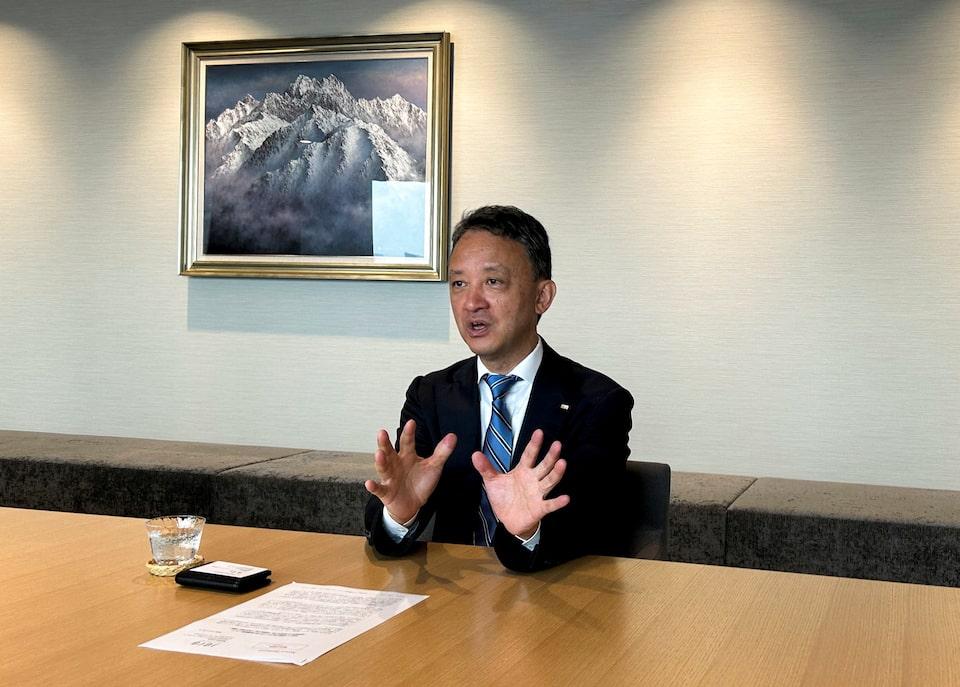
JERA's US LNG supply to rise from 10% to nearly 30% of its mix JERA signs heads of agreement with Sempra, Cheniere for LNG supply All four are FOB contracts with no destination restrictions TOKYO, June 12 (Reuters) - JERA, Japan's biggest power generator, has agreed to new supply deals for U.S. liquefied natural gas from four projects to diversify its global portfolio away from its reliance on Australia, it said on Thursday. JERA plans to buy up to 5.5 million metric tons per annum (mtpa) of U.S. LNG under 20-year contracts, with deliveries starting around 2030. That total includes some previously reported deals as well as newly announced agreements. Sign up here. Of the 5.5 mtpa announced on Wednesday 2.5 mtpa are non-binding agreements, also called Heads of Agreement (HOA). The move illustrates Japan's efforts to seek stable and flexible LNG supply to strengthen energy security and meet growing electricity demand driven by expanding data centres. The country is the world's second-largest LNG importer after China. The move also boosts U.S. President Donald Trump's efforts to expand LNG exports from the United States, already the world's top shipper of the super-cooled fuel, to help domestic producers and improve the trade balance with Japan. Doug Burgum, the U.S. Interior Secretary, said at an event at the Department of Energy headquarters in Washington that the agreements are about prosperity and peace. "When we can sell energy to our friends and allies, our great ally like Japan, so that they don't have to buy it from our adversaries, that makes the world a more secure place." Among the agreements, Japan's biggest LNG buyer signed an HOA with Sempra Infrastructure for 1.5 mtpa from its Port Arthur LNG phase 2 project and an HOA with Cheniere Energy (LNG.N) , opens new tab for up to 1 mtpa from Corpus Christi LNG and Sabine Pass LNG. The Japanese utility also signed a 20-year sales and purchase agreement with U.S. LNG developer Commonwealth LNG for 1 mtpa from its Louisiana project. On Tuesday, sources familiar with the negotiations told Reuters about the deal, although both companies declined to comment at the time. The 5.5 mtpa figure also includes its deal announced on May 29 with NextDecade (NEXT.O) , opens new tab to buy 2 mtpa from its Rio Grande LNG project. All four are 20-year, free-on-board contracts with no destination restrictions, although the Cheniere deal could go beyond 20 years, JERA said. "We made these decisions because cost-competitive and flexible LNG is essential as we look towards the 2030s," JERA's global CEO and chair, Yukio Kani, told Reuters. He added that LNG has become increasingly important amid rising power demand from data centres and the soaring costs of cleaner alternatives like hydrogen and ammonia. "We were also aiming to secure contracts with the projects already under development and tied to the EPC (engineering, procurement, and construction) agreements before the recent surge in LNG project costs and interest rates," he said. REBALANCING SUPPLIES The announcement comes amid ongoing trade talks between Japan and the United States, though Kani stressed there was no government pressure behind the deals which he said were purely private-sector decisions. "We are rebalancing towards the global supply mix," he said, to reduce its weighting toward Australia. After the new deals, the U.S. will supply nearly 30% of JERA's LNG mix, up from 10% now. Oceania and Asia, including Australia, currently account for more than half. Cheniere said in the last decade it has found it challenging to find a Japanese buyer for its LNG. "We're honoured that off-taker is Japan's, and the world's, largest buyer of LNG." Cheniere Chief Commercial Officer Anatol Feygin said at the event on Wednesday. Sempra said it was happy to work with JERA. "With this announcement, we continue to make steady progress towards reaching a final investment decision for the project," said Justin Bird, chief executive officer of Sempra Infrastructure. Commonwealth LNG said it was delighted to be partnering with JERA, considering the Japanese buyer's prominent role and extensive experience along the full LNG value chain. JERA, jointly owned by Tokyo Electric Power (9501.T) , opens new tab and Chubu Electric Power (9502.T) , opens new tab, already buys U.S. supply from Freeport LNG and Cameron LNG. In 2023, it signed a 20-year contract to buy 1 mtpa from Venture Global's (VG.N) , opens new tab CP2 project. https://www.reuters.com/business/energy/japans-jera-agrees-buy-us-lng-rebalance-supply-portfolio-2025-06-11/
2025-06-11 20:52
Codelco to focus on public-private partnerships for growth Global demand for copper and lithium drives Codelco's strategy Codelco strengthens exploration budget, aims for $150M annually by 2025 SANTIAGO, June 11 (Reuters) - Chile's Codelco, the world's largest copper producer, will focus on more public-private partnerships to buoy finances and improve its capacity to develop new projects amid efforts to boost production, CFO Alejandro Sanhueza told Reuters on Wednesday. A growing global appetite for copper and lithium amid the energy transition has led to sky-rocketing demand at a time when Codelco has been struggling to lift production after hitting quarter-century lows in 2023, partly due to dropping ore grades and delays in projects to overhaul key mines. Sign up here. The CFO's comments are the strongest to date that the state-run company will focus on private backing to boost growth. Sanhueza said public-private partnerships will be a "pillar of growth" and are not intended for the overhaul projects or any existing operations so as to comply with the company's nationalization regulations that do not allow it to accept private money in its mines. "Greenfield initiatives (new projects) are a key part of our growth strategy and an opportunity to continue partnerships with third parties," Sanhueza said in a written response to Reuters, adding that it will also help diversify risk. "Our exploration partnerships allow us to attract external financing and (production) capacity, enabling us to accelerate value generation with additional resources beyond those available to Codelco." Aside from recent lithium joint ventures, Codelco reached agreements with Rio Tinto (RIO.AX) , opens new tab, (RIO.L) , opens new tab and BHP (BHP.AX) , opens new tab to prospect new potential copper mines, which sources with knowledge of the matter have described as promising. Codelco already has a partnership in the El Abra mine with Freeport McMoRan and also owns a fifth of Anglo American Sur. This year, it also acquired a 10% stake in the Quebrada Blanca deposit from the small state-owned company Enami. Sanhueza said another goal is to build joint infrastructure, facilitate access to new technology, or minimize environmental impacts. Codelco announced an unprecedented agreement earlier this year to jointly operate neighboring copper mines with Anglo American (AAL.L) , opens new tab that the company said would increase production by 120,000 metric tons per year for 21 years. According to sources, the company is seeking to finalize the agreement by September. The company is also strengthening its own exploration budget Sanhueza said, which increased to an average of $83 million annually in 2023 and 2024 and will grow to an average of $150 million annually during the 2025-2029 period. "Codelco has a significant stock of mining resources, which is a privilege in the industry," Sanhueza said. "This collaboration with third parties allows us to make better use of these resources, which are complementary to our own projects." https://www.reuters.com/business/energy/chiles-codelco-focus-public-private-partnerships-boost-finances-production-cfo-2025-06-11/
2025-06-11 20:48
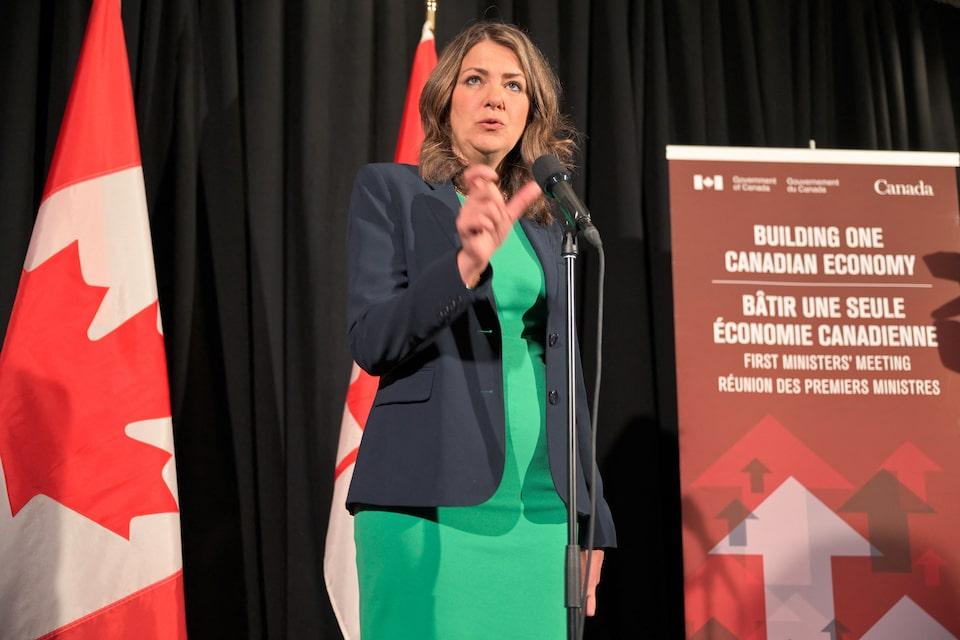
Alberta seeks private sector lead for new pipeline project Canada aims to diversify oil exports amid US trade tensions Pathways Alliance project linked to pipeline for emissions reduction CALGARY, June 11 (Reuters) - Alberta Premier Danielle Smith said on Wednesday the province is working to present Canadian Prime Minister Mark Carney with a proponent and route for a potential new crude pipeline from Alberta to the Port of Prince Rupert in British Columbia. Smith told reporters at an energy conference in Calgary that her government is in talks with Canada's major pipeline companies in the hope that a private sector proponent will take the lead on Alberta's vision of a new, 1-million-barrel-per-day crude oil conduit to B.C.'s northwest coast. Sign up here. She said Alberta aims to gauge private companies' interest in coming together as a consortium to build the pipeline. "Or if one (company) emerges as being a principal proponent, then we'll be interested in talking to them too," Smith said. Canada currently sends approximately 90 per cent of its oil exports to the U.S., but has been seeking to diversify due to trade tensions and tariff threats from President Donald Trump. Alberta, Canada's main oil-producing province, is keen to see construction of a new export pipeline, to give Canada's oil industry the ability to boost production long-term. No private company has publicly expressed interest in building such a project. Smith said she hopes Carney, who won a minority government in April, will make good on his pledge to speed permitting times for major infrastructure projects. Companies will not commit to building a pipeline, Smith said, without confidence in the federal government's intent to bring about regulatory reform. Alberta is proposing that a new oil pipeline be built in tandem with the Pathways Alliance's carbon capture and storage project, which has been proposed by a consortium of oil sands companies to reduce emissions from Canada's energy sector. The companies have not been successful in negotiating an agreement with both levels of government over funding support for the project. Smith said the Pathways project, which could cost between $10 billion and $20 billion to build, would be more likely to be green-lit by oil companies if they had the assurance of revenue growth that a new crude export pipeline would bring. Canada is the world's fourth-largest oil producer. The country achieved record oil production last year as the opening of the Trans Mountain pipeline expansion in May 2024 tripled the country's oil export capacity off the B.C. west coast to 890,000 barrels per day. However, construction of that project was marred by regulatory delays and costs soaring to more than four times the pipeline's original budget. https://www.reuters.com/sustainability/climate-energy/alberta-premier-says-province-working-proposal-new-crude-oil-pipeline-port-2025-06-11/
2025-06-11 20:42
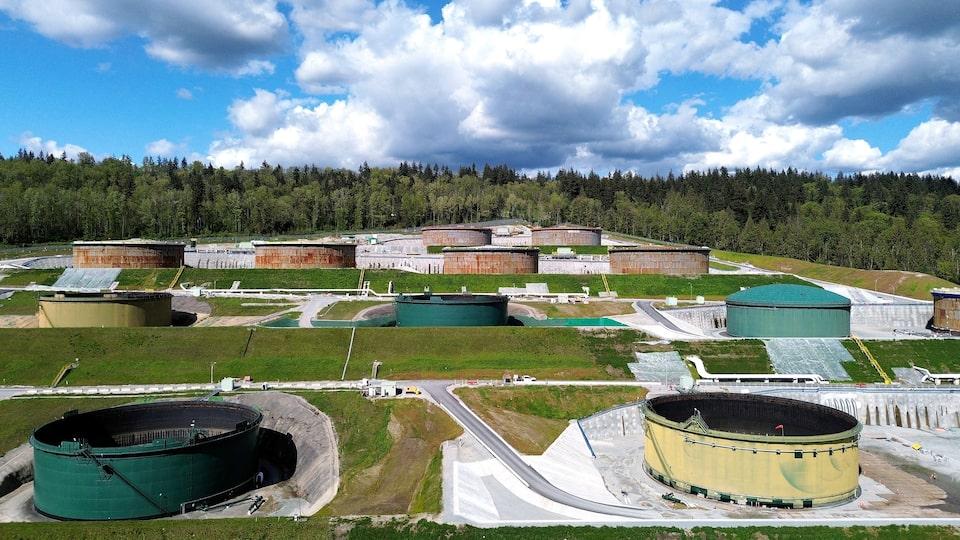
Trans Mountain exploring capacity increase of 200,000-300,000 barrels per day Asian markets now accessible for Canadian crude via Trans Mountain CEO Maki advises waiting for capacity improvements before selling pipeline CALGARY, June 11 (Reuters) - Canada should not rush to sell the newly expanded Trans Mountain oil pipeline, its CEO, Mark Maki, said on Wednesday at a conference in Canada. The Canadian government, which owns the pipeline and spent C$34 billion ($24.9 billion) completing an expansion that opened last spring, has indicated it does not wish to be the long-term owner of the pipeline. Sign up here. Maki said on Wednesday he believes the government can recover its investment in the pipeline, but will receive a better sale price for the asset if it waits until Trans Mountain has had longer to prove its value and certain uncertainties related to capacity and utilization have been resolved. "It's ultimately their decision," Maki said. "The one thing we have said consistently to the government is, 'don't hurry.'" Use of the newly expanded pipeline, which carries oil from Alberta to British Columbia's west coast where it can then be transported by ship to overseas markets, has increased more slowly than expected. This is in part because oil companies have been hesitant to pay the higher tolls Trans Mountain has been charging customers to cover construction cost overruns, raising questions about the pipeline's ability to generate revenue and in turn about Ottawa's ability to attract a private sector buyer. Maki told reporters on the sidelines of Wednesday's conference that the 890,000-barrel-per-day pipeline has been operating at approximately 85% capacity in the second quarter. Trans Mountain had earlier been forecasting 96% utilization on the pipe every year starting in 2025. Its best month so far was March of this year, when the pipeline was just under 90% full, Maki said. The Trans Mountain pipeline has successfully achieved its goal of opening up Asian export markets to Canadian crude, Maki said, and he said he expects that continued demand from that continent for Canadian barrels should support the pipeline's long-term utilization. Trans Mountain is also exploring both short- and long-term optimization projects aimed at increasing pipeline capacity by 200,000 to 300,000 barrels per day. Maki said it makes sense for the government to hold off selling the pipeline until the capacity improvements are finalized. A regulatory hearing with the aim of resolving the tolling dispute between the pipeline operator and its oil shipping customers has been scheduled for late 2025. $1 = 1.3667 Canadian dollars https://www.reuters.com/business/energy/canada-should-not-rush-potential-sale-tmx-pipeline-trans-mountain-ceo-says-2025-06-11/