2025-06-11 20:39
GameStop falls after reporting decline in quarterly revenue US consumer prices rise moderately in May Stocks move lower on Iraqi embassy evacuation S&P 500 -0.27%, Nasdaq -0.50%, Dow flat June 11 (Reuters) - The S&P 500 ended lower on Wednesday, with investors spooked by Middle East tensions, while a tame inflation report calmed concerns around tariff-driven price pressures and traders awaited more details on China-U.S. trade talks. Wall Street erased modest gains after sources said the United States is preparing a partial evacuation of its Iraqi embassy due to heightened security risks in the region. A senior Iranian official said earlier that Tehran will strike U.S. bases in the region if nuclear negotiations fail and conflict arises with the United States. Sign up here. Amazon (AMZN.O) , opens new tab lost 2% and Nvidia (NVDA.O) , opens new tab dipped 0.8%, with both weighing on the S&P 500. Data showed consumer prices increased only marginally in May, while economists expect inflation to accelerate in the coming months due to the Trump administration's import tariffs. Annually, headline inflation stood at 2.4%, lower than the 2.5% rise estimated by economists polled by Reuters. "There's still concern about Trump's tariffs being inflationary but this report was better than expected and it fuels hope that the Federal Reserve will be able to step in with rate cuts later on this year," said Robert Pavlik, senior portfolio manager at Dakota Wealth. Traders project a 70% chance that the Federal Reserve will cut interest rates by its September policy meeting, according to the CME Group's FedWatch tool. A U.S.-China trade deal is "done," U.S. President Donald Trump said, hours after negotiators from Washington and Beijing agreed on a framework to get a fragile trade truce back on track and remove Chinese export restrictions on rare earth minerals and other critical industrial components. The S&P 500 declined 0.27% to end the session at 6,022.24 points. The Nasdaq declined 0.50% to 19,615.88 points, while the Dow Jones Industrial Average ended essentially unchanged at 42,865.77 points. Of the 11 S&P 500 sector indexes, seven declined, led lower by consumer discretionary (.SPLRCD) , opens new tab, down 1.02%, followed by a 0.98% loss in materials (.SPLRCM) , opens new tab. With investors betting the United States will reach trade agreements that reduce Trump's steep trade barriers, the S&P 500 is now trading just below its February record high. "The worst-case scenario is probably behind us. There's a little bit of face-saving for both sides," said John Praveen, managing director at Paleo Leon in Princeton, New Jersey. "They got an agreement. The question is whether it will be implemented." According to a White House official, the agreement with China allows the U.S. to charge a 55% tariff on imported Chinese goods, including a 10% baseline "reciprocal" tariff, a 20% tariff for fentanyl trafficking and a 25% tariff reflecting pre-existing tariffs. China will charge a 10% tariff on U.S. imports, the official said. Tesla (TSLA.O) , opens new tab edged up 0.1% after CEO Elon Musk said he regretted some of the negative social media posts he made last week about Trump as they had gone "too far". The U.S. stock market has rallied in recent weeks, recovering from a slump in April sparked by Trump's "Liberation Day" tariffs. Software development platform provider GitLab (GTLB.O) , opens new tab fell almost 11% after its quarterly results disappointed investors. Shares of videogame retailer GameStop (GME.N) , opens new tab dropped 5.3% after it reported a decline in first-quarter revenue. Declining stocks outnumbered rising ones within the S&P 500 (.AD.SPX) , opens new tab by a 1.9-to-one ratio. The S&P 500 posted 11 new highs and 2 new lows; the Nasdaq recorded 80 new highs and 43 new lows. Volume on U.S. exchanges was relatively heavy, with 18.9 billion shares traded, compared to an average of 17.8 billion shares over the previous 20 sessions. https://www.reuters.com/world/china/us-stock-futures-dip-lack-details-china-trade-talk-cpi-focus-2025-06-11/
2025-06-11 20:20
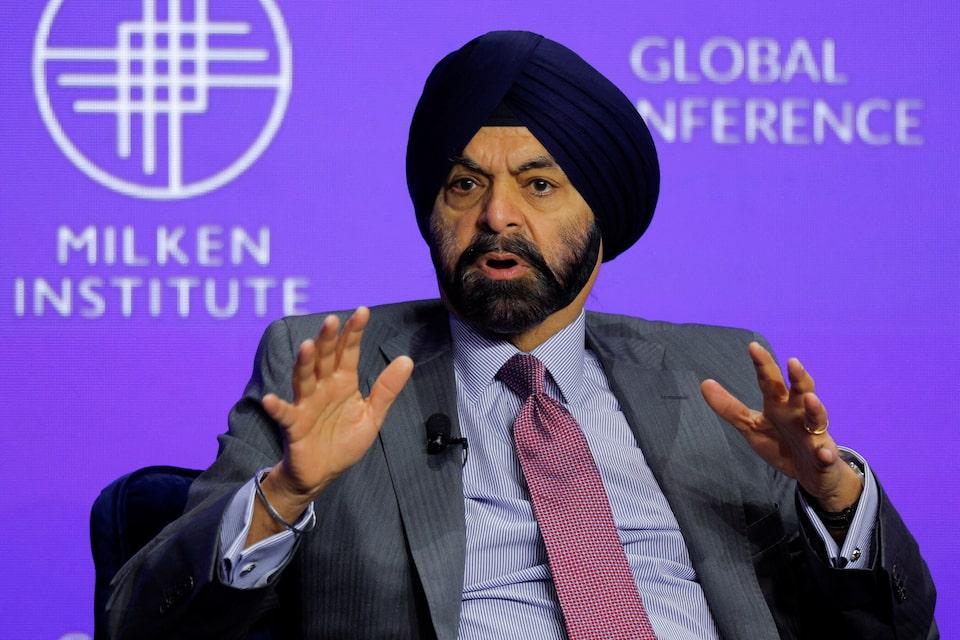
World Bank announced nuclear ban in 2013 World Bank to work closely with IAEA to build capacity Electricity demand is expected to more than double by 2035 WASHINGTON, June 11 (Reuters) - The World Bank's board has agreed to end a longstanding ban on funding nuclear energy projects in developing countries as part of a broader push to meet rising electricity needs, the bank's president Ajay Banga said on Wednesday. Banga outlined the bank's revised energy strategy in an email to staff after what he called a constructive discussion with the board on Tuesday. He said the board was not yet in agreement on whether the bank should engage in funding the production of natural gas, and if so, under what circumstances. Sign up here. The global development bank, which lends at low rates to help countries build everything from flood barriers to railroads, decided in 2013 to stop funding nuclear power projects. It announced in 2017 it would stop funding upstream oil and gas projects beginning in 2019, although it would still consider gas projects in the poorest countries. The nuclear issue was agreed fairly easily by board members, but several countries, including Germany, France and Britain, did not fully support changing the bank's approach to embrace upstream natural gas projects, sources familiar with the discussion said. "While the issues are complex, we've made real progress toward a clear path forward on delivering electricity as a driver of development," Banga said, adding that further discussion was required on the issue of upstream gas projects. Banga has championed a shift in the bank's energy policy since taking office in June 2023, arguing the bank should pursue an "all of the above" approach to help countries meet rising electricity needs and advance development goals. In his memo, he noted that electricity demand was expected to more than double in developing countries by 2035, which would require more than doubling today's annual investment of $280 billion in generation, grids and storage. The Trump administration has been pushing hard for ending the ban on nuclear energy projects since taking office. The U.S. is the bank's single largest shareholder - at 15.83%, followed by Japan with 7% and China with close to 6% - and the bank's decision to broaden its approach to energy projects will likely please President Donald Trump, who withdrew the U.S. from the Paris Climate Agreement and its emission-reduction targets as one of his first acts in January. Twenty-eight countries already use commercial nuclear power, with 10 more ready to start and another 10 potentially ready by 2030, according to the Energy for Growth Hub and Third Way. Banga said the World Bank Group would work closely with the International Atomic Energy Agency to strengthen its ability to advise on nuclear non-proliferation safeguards, safety, security and regulatory frameworks. The bank would support efforts to extend the life of existing nuclear reactors, along with grid upgrades. It would also work to accelerate the potential of small modular reactors. ENERGY MIX Trump administration officials and some development experts say developing countries should not be blocked from using inexpensive power to expand their economies while advanced economies like Germany continue to burn fossil fuels. But climate activists worry that funding more nuclear and natural gas projects will divert funds away from urgently needed efforts by developing countries to adapt to climate change and benefit from abundant alternative energy sources such as solar. "Net zero does not mean fossil fuel free. It means, still, that there will be 20% energy coming from fossil fuels," said Mia Mottley, prime minister of Barbados. "We know natural gas is that clean fuel." Banga said the bank's revised strategy would allow countries to determine the best energy mix, with some choosing solar, wind, geothermal or hydroelectric power, while others might opt for natural gas or, over time, nuclear. He said the bank would continue to advise on and finance midstream and downstream natural gas projects when they represented the least-cost option, aligned with development plans, minimized risk and did not constrain renewables. The bank would further study evolving technologies like carbon capture and ocean energy, Banga said, adding it aimed to simplify reviews and approvals. Banga said the bank would continue advising on and financing the retirement of coal plants, supporting carbon capture for industry and power generation, but not for enhanced oil recovery, which can typically secure commercial financing. https://www.reuters.com/sustainability/climate-energy/world-bank-end-ban-nuclear-energy-projects-still-debating-upstream-gas-2025-06-11/
2025-06-11 20:11
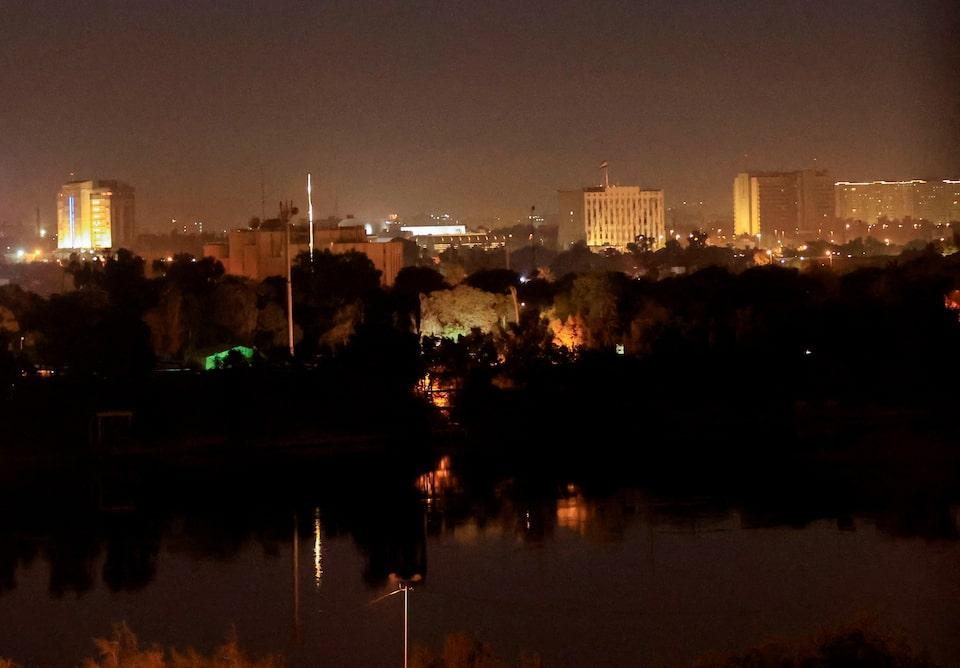
Officials cite 'heightened security risks' for decision US has previously threatened to strike Iran US military dependents authorised to leave region WASHINGTON/BAGHDAD, June 11 (Reuters) - U.S. President Donald Trump said on Wednesday U.S. personnel were being moved out of the Middle East because "it could be a dangerous place," adding that the United States would not allow Iran to have a nuclear weapon. Reuters reported earlier on Wednesday that the U.S. is preparing a partial evacuation of its Iraqi embassy and will allow military dependents to leave locations around the Middle East due to heightened security risks in the region, according to U.S. and Iraqi sources. Sign up here. The four U.S. and two Iraqi sources did not say what security risks had prompted the decision and reports of the potential evacuation pushed up oil prices by more than 4%. A U.S. official said the State Department had authorized voluntary departures from Bahrain and Kuwait. The State Department updated its worldwide travel advisory on Wednesday evening to reflect the latest U.S. posture. “On June 11, the Department of State ordered the departure of non-emergency U.S. government personnel due to heightened regional tensions,” the advisory said. The decision by the U.S. to evacuate some personnel comes at a volatile moment in the region. Trump's efforts to reach a nuclear deal with Iran appear to be deadlocked and U.S. intelligence indicates that Israel has been making preparations for a strike against Iran's nuclear facilities. "They are being moved out because it could be a dangerous place, and we'll see what happens," Trump told reporters. "We've given notice to move out." Asked whether anything can be done to lower the temperature in the region, Trump said: "They can't have a nuclear weapon. Very simple, they can't have a nuclear weapon." Trump has repeatedly threatened to strike Iran if stuttering talks over its nuclear programme fail and in an interview released earlier on Wednesday said he was growing less confident that Tehran would agree to stop enriching uranium, a key American demand. Iranian Defence Minister Aziz Nasirzadeh also said on Wednesday that if Iran was subjected to strikes it would retaliate by hitting U.S. bases in the region. The U.S. embassy in Kuwait said in a statement on Wednesday that it had "not changed its staffing posture and remains fully operational." MILITARY PRESENCE The United States has a military presence across the major oil-producing region, with bases in Iraq, Kuwait, Qatar, Bahrain and the United Arab Emirates. U.S. Defense Secretary Pete Hegseth has authorized the voluntary departure of military dependents from locations across the Middle East, a U.S. official said. Another U.S. official said that was mostly relevant to family members located in Bahrain - where the bulk of them are based. "The State Department is set to have an ordered departure for (the) U.S. embassy in Baghdad. The intent is to do it through commercial means, but the U.S. military is standing by if help is requested," a third U.S. official said. Iraq's state news agency cited a government source as saying Baghdad had not recorded any security indication that called for an evacuation. Another U.S. official said that there was no change in operations at Al Udeid Air Base in Qatar, the largest U.S. military base in the Middle East and that no evacuation order had been issued for employees or families linked to the U.S. embassy in Qatar, which was operating as usual. TENSIONS Oil futures climbed $3 on reports of the Baghdad evacuation with Brent crude futures at $69.18 a barrel. Earlier on Wednesday Britain's maritime agency warned that increased tensions in the Middle East may lead to an escalation in military activity that could impact shipping in critical waterways. It advised vessels to use caution while travelling through the Gulf, the Gulf of Oman and the Straits of Hormuz, which all border Iran. Britain's Foreign Office said it was monitoring the situation and would keep its embassy in Iraq under constant review following the U.S. moves. Iraq, a rare regional partner of both the United States and its arch regional foe Iran, hosts 2,500 U.S. troops although Tehran-backed armed factions are linked to its security forces. Tensions inside Iraq have heightened since the start of the war in Gaza in October 2023, with Iran-aligned armed groups in the country repeatedly attacking U.S. troops, though attacks have subsided since last year. Israel and Iran also twice exchanged fire last year - the first ever such direct attacks between the region's most entrenched enemies - with missiles and war drones hurtling across Iraqi airspace. Top U.S. regional ally Israel has also struck Iran-linked targets across the region, including Iraqi armed groups operating both inside Iraq and in neighbouring Syria. In recent months the United States has deployed more military assets in the Middle East, including B-2 bombers, which have since been replaced, and extending the deployment of a second aircraft carrier, which has since departed. The next round of nuclear talks between Iran and the United States is due in the coming days with Iran expected to hand over a counter proposal after rejecting an offer by Washington. A senior Iranian official told Reuters that a military threat had always been part of the United States’ negotiation tactics with Iran. “Any military action against Iran, whether by the U.S. or Israel, will have serious consequences,” the official warned. Iran's U.N. mission on Wednesday posted on X: "Threats of 'overwhelming force' won't change facts: Iran is not seeking a nuclear weapon and U.S. militarism only fuels instability." The statement appeared to be a response to an earlier comment by U.S. Army General Michael "Erik" Kurilla, the head of U.S. Central Command, that he had provided the president with "a wide range of options" to prevent a nuclear-armed Iran. Kurilla postponed testimony he was due to deliver before U.S. lawmakers on Thursday because of tensions in the Middle East, two other U.S. officials said. https://www.reuters.com/world/middle-east/us-embassy-iraq-preparing-ordered-evacuation-due-heightened-security-risks-2025-06-11/
2025-06-11 19:38
LONDON, June 11 (Reuters) - Britain has detected a case of the H5N1 bird flu in poultry in West Yorkshire, northern England, the Department for Environment, Food and Rural Affairs said on Wednesday. "All poultry on the premises will be humanely culled," a notice on the department's website said. Sign up here. https://www.reuters.com/business/healthcare-pharmaceuticals/uk-confirms-case-bird-flu-poultry-northern-england-2025-06-11/

2025-06-11 18:27
BENGALURU, June 11 (Reuters) - U.S. Treasury yields are set to decline further according to bond strategists who are clinging to expectations the Federal Reserve resumes cutting interest rates after pausing for more than half a year even as dealers are set to underwrite a deluge of new supply. A slight majority now expect another sell-off in longer-dated bonds, the maturities most at risk, by the end of this month. Sign up here. Concerns that President Donald Trump’s tax-cut and spending bill will add trillions of dollars to an already-staggering $36.2 trillion debt pile by 2034, along with tariff brinkmanship already have many holders of U.S. assets scrambling for the exit. The rising "term premium" – what investors demand as compensation for holding longer-dated debt – leaves the market more vulnerable, particularly among foreign investors, ahead of upcoming Treasury bond auctions. "The amount of debt we need to issue keeps rising and there doesn't appear to be anyone in Washington on either side that really has a plan to bring down deficits and address our fiscal situation," said Collin Martin, fixed income strategist, Schwab Center for Financial Research. "That'll weigh on the long end of the curve where we need to see yields rise a bit to attract that marginal buyer." Global sovereign bond yields have mostly risen in tandem over the past two months. A rapid sell-off in benchmark U.S. 10-year Treasuries in April pushed the yield up around 60 basis points. That yield, which rises when prices fall, has since steadied, oscillating around 4.50%. Median forecasts from nearly 50 bond strategists in a June 6-11 Reuters survey, most from dealers and sell-side firms, predicted the 10-year yield would decline a modest 13 bps to 4.35% in three months and to 4.29% in six from its current 4.48%. Despite predicting a decline, more than half upgraded their forecasts from a May survey with many flagging the risk of yields moving higher. "The 10-year will probably trade range-bound for a while between 4-4.50% and maybe even rise a little bit further, particularly given deficit concerns. The yield curve should continue to steepen as short-term yields drift gradually lower as the Fed cuts rates one or two more times by year-end," Schwab's Martin added. The more interest rate-sensitive 2-year yield was forecast to decline a slightly steeper 17 bps to 3.85% in three months and to 3.73% by end-November, the survey showed. Most economists polled by Reuters predict two or fewer rate cuts this year while rate futures are currently pricing two. An ongoing auction for three-year Treasury notes has been met with somewhat tepid demand though markets will be paying closer attention to sales of longer-dated 10- and 30-year bonds this week. "Given recent market behavior and the pressure we've seen on yields, it seems the long end of the yield curve is most susceptible to a supply-demand imbalance leading to higher rates," said Mark Heppenstall, chief investment officer at Penn Mutual Asset Management. "There has been some disruption at the long end of the curve and the 30-year Treasury bond supply is the biggest question mark for the week in light of all the supply that is hitting. But that isn't to say threes and 10s are going to be necessarily easy either." A Reuters survey of foreign exchange strategists conducted last week showed a near-90% majority expecting a decline in demand for dollar-denominated assets this year with Europe widely slated to be the biggest beneficiary. "On the bond side European investors who are looking at the U.S. market would normally hedge currency risk, but that's become very expensive. So on a hedged basis, Treasuries are just not very attractive to European investors anymore," said Chris Iggo, CIO of AXA IM Core, AXA Investment Managers. "There's been a lot of talk about defence spending and infrastructure but you know 'Show me the money!' - we haven't really seen the opportunity set increased massively just yet." https://www.reuters.com/business/hopes-fed-rate-cuts-keep-us-treasury-yield-views-low-ahead-supply-deluge-2025-06-11/
2025-06-11 17:11
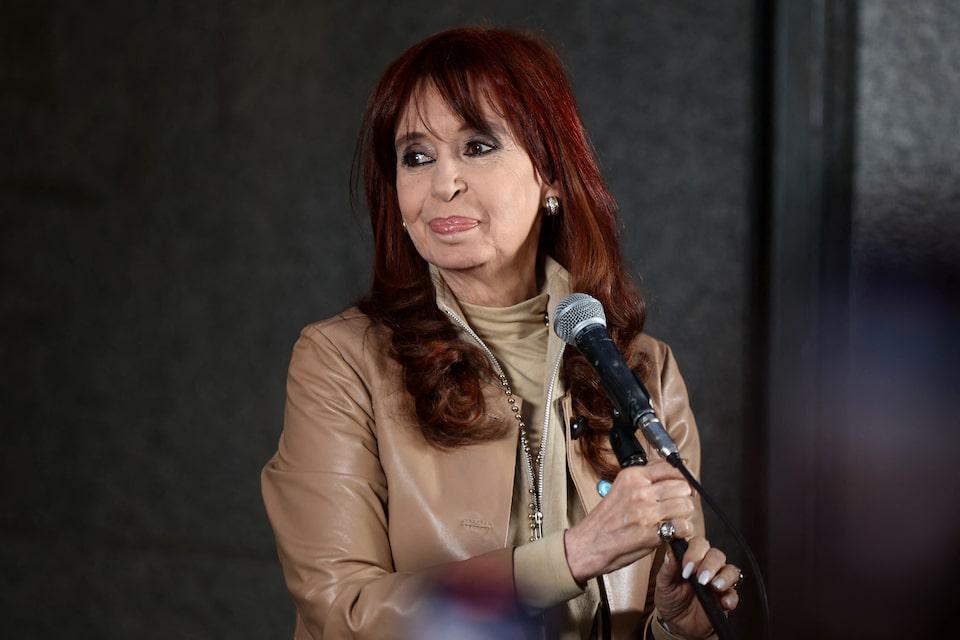
BUENOS AIRES/NEW YORK, June 11 (Reuters) - Argentine traders cheered on Wednesday a court's political ban on populist former President Cristina Fernandez de Kirchner, a powerful but divisive politician who often clashed with investors and creditors. The country's Supreme Court on Tuesday upheld a ruling against the former president, who was sentenced to six years in prison and banned from holding public office for fraud, rejecting an appeal by the leader of the Peronist opposition. Sign up here. "All investors fear a return to Kirchnerism. A future without Cristina.... clears the outlook," said Mariano Sardans of local financial firm FDI Gerenciadora de Patrimonios, citing high-spending, interventionist policies under the Peronists. "The specter that always looms over investors is Kirchnerism and Argentina's falling back into policies of that nature." Current market-friendly libertarian President Javier Milei has been well received by investors, helping boost equities and bonds since he took office in late 2023, ushering in tough austerity and a "zero deficit" drive. Legislative elections in October are seen as a test of his popularity. A positive result in those ballots will help ensure the success of some of his investor-friendly reforms. Fernández, the government's strongest opposition figure, will now be barred from running for a seat she sought in Buenos Aires Province. Sovereign dollar bonds were trading slightly higher on the day while the benchmark S&P Merval stock index (.MERV) , opens new tab fell over 1% after rising more than 4% on Tuesday. Other analysts were more cautious, warning about tough economic challenges ahead, including rebuilding foreign exchange reserves. "The impact on the market will most likely be limited, since the Supreme Court's ruling doesn't solve Argentina's macroeconomic problems," said Roberto Geretto, an economist at local firm Adcap. https://www.reuters.com/business/finance/argentine-market-traders-cautiously-cheer-future-without-cristina-2025-06-11/