2025-11-25 17:54
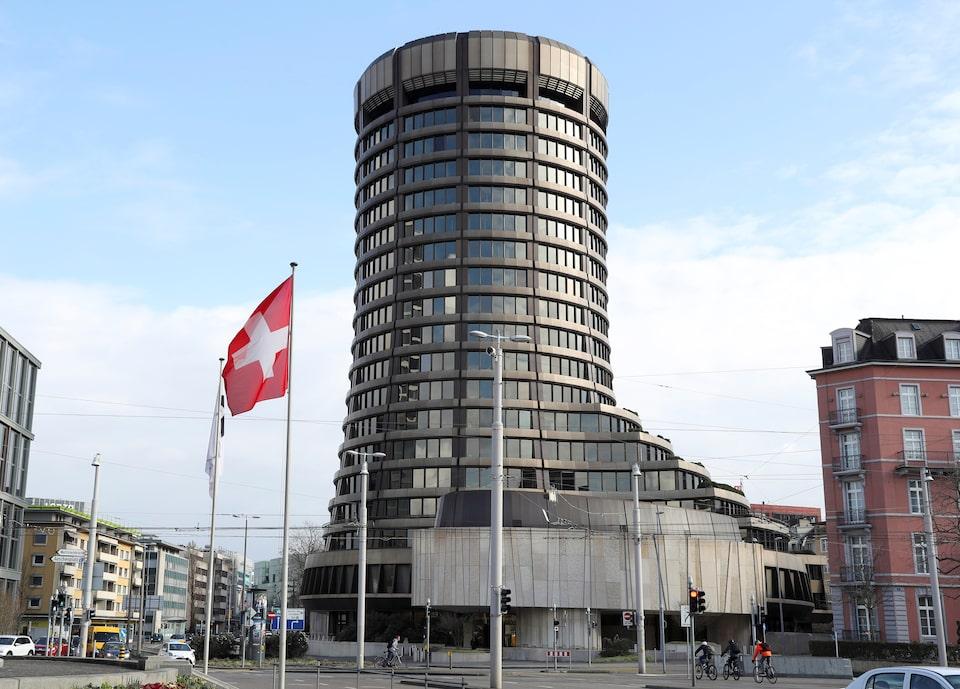
LONDON, Nov 24 (Reuters) - (This Nov 24 story has been corrected to change the month of former Hub head Cecilia Skingsley's departure to June, from May, in paragraph 1) The Bank for International Settlements, the umbrella body for central banks, on Tuesday named a new head of its Innovation Hub that oversees its influential work on digital currencies, artificial intelligence and other up-and-coming technologies. Sign up here. Tommaso Mancini-Griffoli, assistant director for payments, currencies and infrastructure at the International Monetary Fund (IMF), will join the Switzerland-based BIS at the start of March, BIS said in a statement. Often dubbed the central bankers' central bank, the BIS has been looking to fill the role since former Swedish central banker Cecilia Skingsley left in June, two years before her term was due to end. The BIS innovation unit was set up in 2019 to identify and develop new technologies and rapidly expanded to seven financial centres from London to Hong Kong, though reports this year said it was set to be pared back. Central bank digital currencies in particular have become a geopolitical hot topic and late last year the BIS suddenly quit a flagship project it had been collaborating on with China and a number of other Asian central banks. It has also issued increasingly stark warnings about stablecoins - a type of cryptocurrency usually pegged 1:1 to the dollar - and urged countries to move rapidly towards the tokenisation of their currencies. Mancini-Griffoli will lead its efforts to foster international collaboration among central banks on innovative financial technology, BIS said. https://www.reuters.com/business/finance/central-bank-body-bis-appoints-new-head-digital-currency-hub-2025-11-25/
2025-11-25 17:00
Package exceeds government's initial forecast of $4-$5 billion Economy Minister Espinoza announces aid talks Bolivia's dollar bonds rise to highest since 2022 LA PAZ, Nov 25 (Reuters) - Bolivia is negotiating multilateral financing that will exceed $9 billion for public and private projects, Economy Minister Jose Gabriel Espinoza said Tuesday in the first major policy announcement since centrist President Rodrigo Paz took office this month. The package, arranged with a consortium of lenders, exceeds the government's initial $4–$5 billion forecast and is designed to stabilize an economy battered by high inflation, a widening fiscal deficit, and a shortage of foreign currency. Sign up here. Espinoza, who announced the aid talks during a press conference on Tuesday, said roughly a third of that financing is expected to arrive within the next 60 to 90 days. Bolivia's U.S. dollar bonds rose on Tuesday and were both trading at their highest levels since 2022, at around 92 cents on the dollar each, according to LSEG data. Bolivian bonds have risen close to 60% this year, among the best performers in JPMorgan's emerging markets bond index. Funds from creditors including the World Bank and the Development Bank of Latin America (CAF) will support private sector initiatives in infrastructure, renewable energy, and financial inclusion, the minister told Reuters in an interview ahead of the press conference. "It's not just public sector borrowing," Espinoza said. "This marks a new phase of development where the private sector will play a very important role," he said. Bolivia, a major producer of natural gas and grains, is facing one of its worst economic crises in decades after years of state-heavy policies and nationalization under the previous socialist administration deterred foreign investment and strained public finances. Paz, who took office on Nov. 8, has pledged a market-oriented approach to attract foreign investment while avoiding abrupt shocks to the economy that could undermine Bolivia's social safety net. As part of Tuesday's announcement, the government scrapped the country's wealth tax, citing its role in discouraging investment. Taxes on financial transactions were also lifted. The fresh credit lines and tax measures still require congressional approval before they can take effect. A more austere 2026 budget will include a 30% cut in public spending, Espinoza said. The government took the spending reduction decision on its own and not as a result of any pressure from the International Monetary Fund (IMF), he said, adding Bolivia remains open to dialogue with the Fund. "If they (the IMF) approach us, that is welcome, but in the meantime we will proceed with our plans," he told Reuters. CRYPTO INTEGRATION As part of a broader modernization push, the government will integrate cryptocurrencies into the formal financial system, starting with stablecoins, Espinoza said. Banks will be allowed to offer crypto services so that they "begin to function as a legal tender payment instrument," Espinoza said. These services include savings accounts, credit cards and loans. Cryptocurrency adoption in Bolivia surged after a prior ban was lifted last year and analysts say volumes have since grown sharply as more customers use the assets as a hedge against the depreciating boliviano. "You can't control crypto globally, so you have to recognize it and use it to your advantage," Espinoza said, adding the policy could boost financial inclusion. https://www.reuters.com/world/americas/bolivia-negotiating-9-billion-multilateral-loans-spur-recovery-2025-11-25/

2025-11-25 14:47
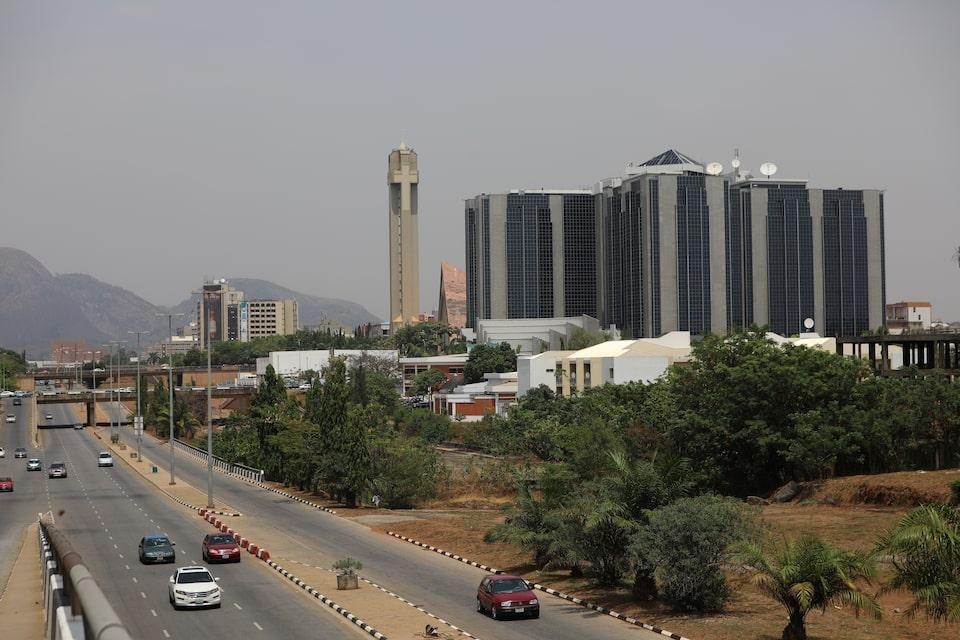
Monetary Policy Rate stays at 27% Economists had predicted another rate cut Analysts say lower deposit rate signals confidence Bank wants to see inflation fall to single digits ABUJA, Nov 25 (Reuters) - Nigeria's central bank left its main interest rate unchanged on Tuesday, saying it wanted inflation to fall further, but it lowered a deposit rate in a sign of confidence in the economic outlook. The decision came as a surprise as economists polled by Reuters had predicted a 1-percentage-point cut to the Monetary Policy Rate (MPR) (NGCBIR=ECI) , opens new tab, following up on the first rate reduction since 2020 in September. Sign up here. Inflation slowed for the seventh month in a row in October to 16.05% year on year (NGCPIY=ECI) , opens new tab. But central bank Governor Olayemi Cardoso said inflation was still too high, and the MPR was maintained at 27%. "Headline inflation remains high at double digits, requiring sustained efforts towards moderating it further," Cardoso told a press conference. "The decision was underpinned by the need to sustain the progress made so far towards achieving low and stable inflation." Cardoso said the bank was adjusting the corridor on its Standing Facility to +50 to -450 basis points around the MPR, cutting its deposit rate and encouraging banks to lend rather than parking money with the central bank. Razia Khan, head of Africa research at Standard Chartered, said the changes to the standing facility were the real talking point. "It is a very significant de facto easing, signalling confidence in both the inflation trajectory and FX stability." Another reason why the central bank held off from cutting its key rate could be that it wants to monitor whether inflation rises before its next policy meeting, analysts said. "If they cut rates now, January could reveal that it did not make sense. They moved the next meeting to February, which means that they would be using January inflation," said Tajudeen Ibrahim, director of research at investment firm Chapel Hill Denham. Cardoso previously said the central bank is gunning for inflation to fall to single digits in the next few years. Inflation hit repeated 28-year highs last year, spurred by President Bola Tinubu's moves to devalue the naira currency and remove energy subsidies after taking office in 2023. https://www.reuters.com/world/africa/nigerias-central-bank-holds-benchmark-rate-27-2025-11-25/
2025-11-25 14:28
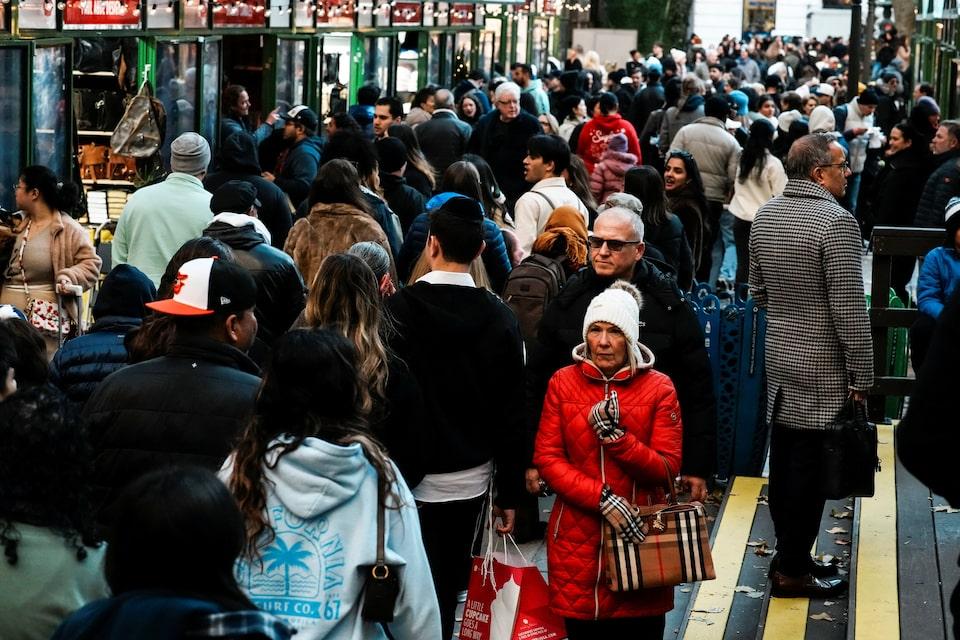
NEW YORK, Nov 25 (Reuters) - U.S. retail sales 0.2% after an unrevised 0.6% gain in August, the Commerce Department said on Tuesday, short of the 0.4% rise expected by economists polled by Reuters. Separately, the Labor Department said the Producer Price Index for final demand 0.3%, which matched expectations, after an unrevised 0.1% drop in August. Sign up here. In the 12 months through September, the PPI increased 2.7% after advancing by the same margin in August. Both reports were delayed by the 43-day government shutdown. MARKET REACTION: STOCKS: S&P E-minis moved slightly lower and were last down 3.25 points, or 0.05% BONDS: Treasury yields held declines and the yield on benchmark U.S. 10-year notes was last off 2.3 basis points to 4.013% FOREX: The dollar index briefly moved higher before paring gains after a brief spike and was last 0.29% lower at 99.91 COMMENTS: SLAWOMIR SOROCZYNSKI, HEAD OF FIXED INCOME, CROWN AGENTS INVESTMENT MANAGEMENT, LONDON: “There’s no real trade here, because this September data is not going to change the picture much here, I dare to say no matter how much it deviates from expectations, because if it is too far from expectations, the market will question its quality.” BRIAN JACOBSEN, CHIEF ECONOMIST, ANNEX WEALTH MANAGEMENT, MENOMONEE FALLS, WISCONSIN: "Pre-shutdown, retail sales rose a tepid 0.2% and producer prices rose an annoyingly firm 0.3%. The shutdown didn’t help the trend that has been forming of softer consumer spending. The inflation picture has changed more than the consumer spending picture has. With tariff exemptions for a lot of food products and the détente between the U.S. and China, the adjustment of prices to the new tariff reality may not be over, but it may be closer to the end than to the beginning. "Taking a pause on rate cuts would probably do more damage to sentiment than a cut would help, but Powell doesn’t need to be the Grinch that stole Christmas." PETER CARDILLO, CHIEF MARKET ECONOMIST, SPARTAN CAPITAL SECURITIES, NEW YORK: (On PPI) “Top line was a little bit more than we expected, but the core rate was actually a little bit cooler than expected. The good news is that year-on-year is under 3%, so it's a good reading. Of course it reflects September and we're in November, but nevertheless the trend seems to be that inflation is not worsening and that opens the door to a December rate cut. “During the shutdown, if anything, inflation may have improved and not worsened because you had less demand. That's on the yes side. On the other hand (the data is) outdated news, so you have to look at it from that perspective. It is a guide.” (On retail sales) “Going into the holiday season, I don't think this bodes well in terms of consumer spending increasing to an amount that would surpass last year. This has been an uneven economy where the wealthier (consumers) have been spending and holding up consumer spending while the weaker ones have held back and that's partly because of the shutdown.” “A divided consumer and that means the economy has slipped and is slipping. And so that’s another point that supports the need to lower rates in December.” ADAM SARHAN, CHIEF EXECUTIVE, 50 PARK INVESTMENTS, NEW YORK "The (stock) market barely moved on the news. This is old news, and the market is a forward-looking mechanism. For now, a 0.3 percent (increase) in producer prices, it's not really moving the needle in any big way. It's September's data. We're going into December. The market's muted reaction tells me pretty much that investors are looking forward." TIM GHRISKEY, SENIOR PORTFOLIO STRATEGIST, INGALLS & SNYDER, NEW YORK: "The key number today was the weakness in retail sales. It’s a very broad definition of retail sales that was weak. I don't think it was a big surprise and was generally expected. It's from September, a dated number. Once we get something more recent, we'll have a better idea of what's going on. "It's positive but below consensus. That's what's surprising people here. It's a knee jerk reaction but I don't think it’s going to become a big impact on the market as the day goes on because it is dated. We have almost two months of more recent still missing data." https://www.reuters.com/business/view-retail-sales-miss-expectations-september-producer-prices-rise-2025-11-25/
2025-11-25 14:08
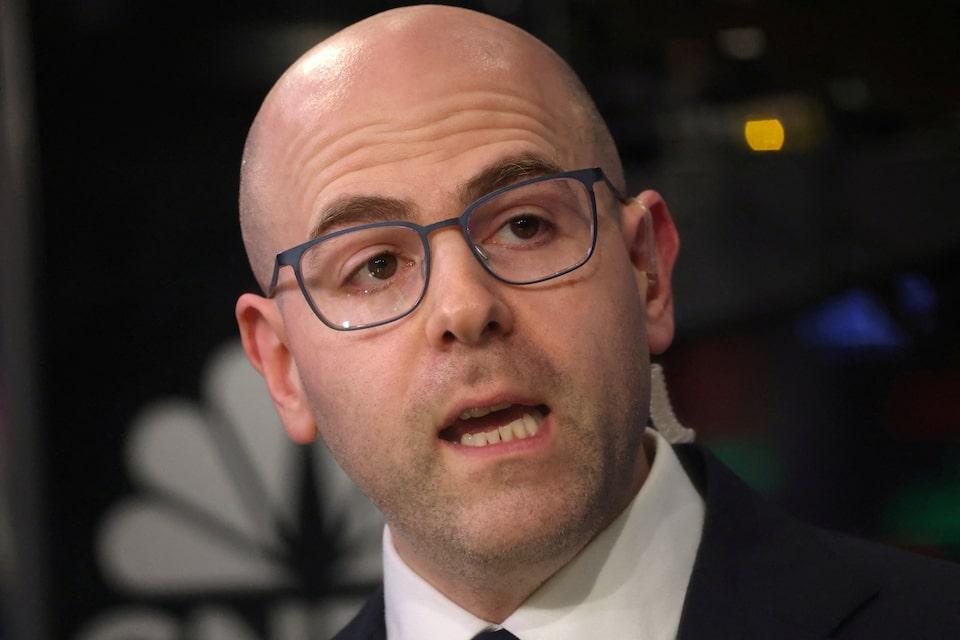
Nov 25 (Reuters) - Federal Reserve Governor Stephen Miran said in a television interview on Tuesday that a deteriorating job market was happening because of where the central bank has set it short-term interest rate target. “We have to recognize that the unemployment rate has been drifting higher, and that is a function of monetary policy being too tight,” Miran said in an interview on Fox Business. Sign up here. “My concern is that if we don't continue cutting rates and do so at a reasonably quick pace” the jobless rate will continue to rise and "we will be the source of continuing increases in unemployment, which is not a good thing." In the interview, the Fed governor, who is controversially on leave from the Trump White House to serve at the central bank, reiterated that he favored aggressive rate cuts given that he expected still high inflation pressures to abate over time. Miran did not comment on the size of the action he would like to see from the Fed at its next meeting, but he said in the interview that "I think the economy calls for large interest rate cuts to get monetary policy to neutral". The most recent jobs data, for September, showed that while payroll gains were larger-than-expected, the unemployment rate ticked up to 4.4%, from 4.3% in August. The Federal Open Market Committee is set to deliberate on interest rates at its December 9-10 meeting. Financial markets expect to see a quarter percentage point cut to what is now a 3.75% to 4% federal funds target rate range. https://www.reuters.com/sustainability/boards-policy-regulation/feds-miran-ties-rising-unemployment-current-setting-monetary-policy-fox-business-2025-11-25/
2025-11-25 13:24
Nov 25 (Reuters) - Swedish fintech firm Klarna (KLAR.N) , opens new tab on Tuesday said it will launch a U.S. dollar-backed stablecoin, becoming the latest major payments company to move deeper into digital assets as regulators tighten oversight of the sector. The token, called KlarnaUSD, is currently in testing and will be available on the mainnet in 2026, will be fully backed by the U.S. dollar the company said. Sign up here. Stablecoins are cryptocurrencies whose value is tied to traditional money, and they have surged in use in recent years as traders seek a relatively steady asset to move funds between more volatile tokens. Klarna said it aims to position KlarnaUSD for everyday payments and cross-border transactions, pitching it as a faster and cheaper alternative to conventional banking. The buy-now-pay-later company, one of Europe's largest fintech firms, has its biggest user base in the United States. The stablecoin will run on Tempo, a payments-focused blockchain developed by Stripe and crypto investment firm Paradigm. Bigger rival PayPal (PYPL.O) , opens new tab launched its own U.S. dollar token, followed by peer Stripe's launch of a stablecoin after its $1.1 billion acquisition of crypto firm Bridge earlier this year. These moves come as regulators in the U.S. and Europe advance new rules for digital assets. Klarna, like other stablecoin firms, is expected to benefit from frameworks such as the GENIUS Act in the U.S. and MiCA in Europe. "Crypto is finally at a stage where it is fast, low-cost, secure, and built for scale. This is the beginning of Klarna in crypto," CEO Sebastian Siemiatkowski, a once vocal crypto skeptic, said in a statement. Klarna last week beat analysts' revenue expectations in its first quarterly report since a blockbuster stock market listing in September. https://www.reuters.com/business/finance/klarna-launch-dollar-backed-stablecoin-race-digital-payments-heats-up-2025-11-25/