2025-06-11 12:29
BRUSSELS, June 11 (Reuters) - European Union countries may demand that Brussels simplify the EU's methane emissions law, which has stoked concerns from companies that it could hamper imports of U.S. liquefied natural gas, according to a document seen by Reuters. From this year, the EU requires importers of oil and gas to monitor and report the methane emissions associated with these imports. Methane, which escapes from leaky gas infrastructure, is the second-biggest cause of climate change after carbon dioxide emissions. Sign up here. Draft conclusions from a meeting of EU countries' energy ministers on Monday showed governments are preparing to ask the European Commission to add the methane law to its "simplification" drive to cut bureaucracy for companies. The draft asked the Commission to quickly assess which EU energy laws can be simplified, "in order to decrease the administrative burden on Member States, industry and citizens, for example the methane regulation as it might impact the cooperation with economic operators from outside of the EU". The conclusions are still being drafted by Poland, which holds the EU's rotating presidency, and could change before ministers adopt them on Monday. The EU agreed its methane law last May, but the policy has come under increased scrutiny as the EU attempts to quit Russian gas - and to buy more U.S. liquefied natural gas to replace it. Washington and Brussels have each indicated that EU purchases of U.S. LNG could form part of a broader U.S.-EU trade deal. U.S. President Donald Trump has set a July 9 deadline for the EU to reach a deal and avert steep tariffs. Romania and Slovakia are among countries warning that the methane law could disrupt gas imports. Some U.S. LNG firms have warned they will struggle to comply with the EU law, since the fragmented nature of the country's industry means they cannot track emissions along their entire value chains, down to specific gas wells. Environmental groups have rejected this idea, arguing that systems exist which can digitally trace gas through the value chain, in line with the EU law's demands. In a letter to U.S. and EU officials this month, seen by Reuters, U.S. industry group LNG Allies asked for a trade deal to ensure U.S. gas exporters are deemed to be following "equivalent" methane rules to those of the EU, and therefore automatically comply with the methane law. https://www.reuters.com/sustainability/boards-policy-regulation/eu-countries-consider-softening-methane-emissions-law-gas-imports-2025-06-11/

2025-06-11 12:19
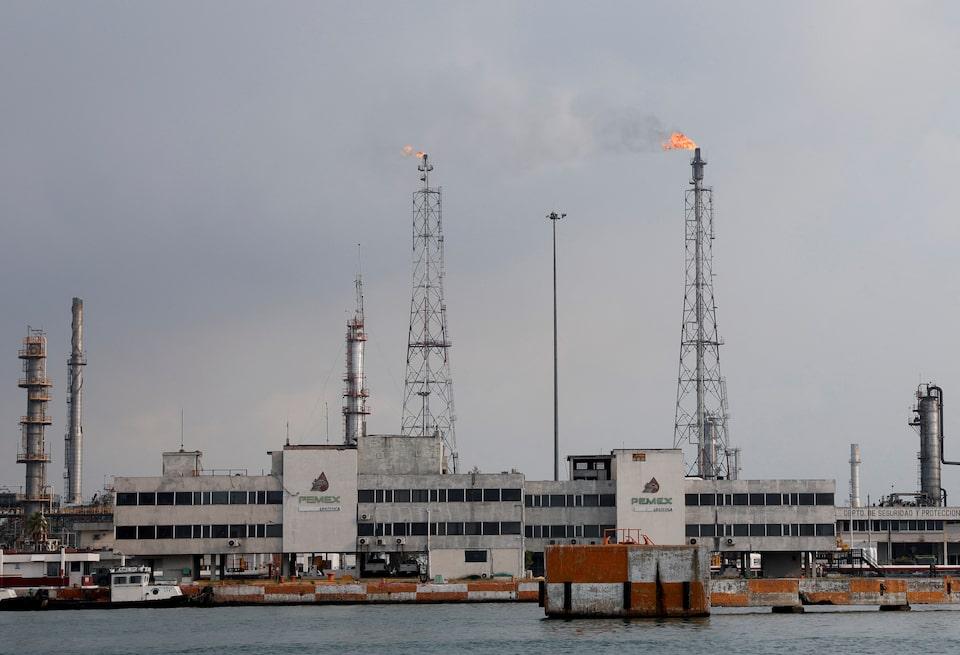
Pemex is often months behind on payments for oil and gas State company's commercial arm PMI is seen as more reliable Hokchi Energy is owed some $380 mln by Pemex, source says MEXICO CITY, June 11 (Reuters) - Mexico's Hokchi Energy, frustrated by months of delayed payments for its oil and gas from state company Pemex, has sought to change its contract so it can do business directly with the company's commercial arm, PMI Comercio Internacional, three sources familiar with the matter said. Hokchi Energy's bid to change who buys its production highlights the challenges of doing business with Pemex, even as the government wants to attract private investment to help the state company increase output. Sign up here. PMI, which exports crude oil and imports refined fuels such as gasoline and diesel, is widely seen as a more reliable business partner than Pemex, one source said. The attempt to change the contract is the latest twist in a long-running saga of Pemex's delayed payments to Hokchi Energy, one of Mexico's largest oil and gas producers, which is among a growing number of companies reluctant to work with Pemex, the world's most indebted energy company. One source said Pemex owes Hokchi Energy over $300 million. Under the proposed new contract, Hokchi Energy would sell directly to PMI, in the same way as if it were selling to any global trader, the sources said. Under the existing contract, Hokchi Energy sells its production to Pemex and is dependent on getting paid by Pemex, which can use the production in its own refineries or sell it via PMI to buyers worldwide. The sources said that Hokchi Energy had already tried twice to change terms of the contract, making its second attempt earlier this year in hopes Mexico's new government would be more inclined to accommodate the request, but the request was denied. All sources spoke on the condition of anonymity because the matter is commercially sensitive. Mexican Energy Minister Luz Elena Gonzalez denied the request this year, according to the other two sources. Neither the energy ministry nor Pemex responded to a request for comment. Hokchi Energy operates the shallow-water Hokchi field in the Salina del Istmo basin in the Gulf of Mexico, secured through the 2014 landmark energy reform that opened the country up to private investment. The field produces some 23,000 barrels of oil equivalent per day. Hokchi Energy said in a statement that "our dialogue with Pemex is constant and productive" and "our operations have been maintained." Harbour Energy, which also has a stake in the field, declined to comment. The total debt Pemex owes to Hokchi Energy amounts to around $380 million, said the second source, adding that the exact value fluctuates because it is for crude, which is priced daily. Pemex itself disclosed debts invoiced to the company of $92.41 million in 2024 and $88.66 million this year, official data from March showed. The source said the real debt is higher than disclosed because some outstanding invoices have not been included. In 2023, Hokchi Energy took legal action against Pemex to demand it pay the money it owed. Hokchi Energy filed another lawsuit in recent months, the second source added. Pemex has for years struggled to pay providers for everything from hydrocarbon productions to services and infrastructure, according to interviews with dozens of separate sources across the sector. In dire need of new investment and technology, Pemex's production has been declining as older fields are being depleted and newer discoveries have largely disappointed. Reuters reported last month that Pemex planned to open old wells in a bid to boost output. Pemex also owes some $20 billion to service providers like Baker Hughes, Halliburton and SLB, official filings show, as well as smaller Mexican companies, some of which have warned that they could go bankrupt as a result of Pemex not paying. Even when owed substantial amounts, companies are reluctant to speak out or take legal action for fear of being penalized by the state behemoth that dominates the energy market, the industry sources said. Mexican President Claudia Sheinbaum has repeatedly said that her government was working on various payment mechanisms to address the issue. Despite unprecedented support from her predecessor and political mentor, energy nationalist President Andres Manuel Lopez Obrador, Pemex still has a financial debt of some $101 billion. https://www.reuters.com/business/energy/frustrated-by-mexicos-pemex-hokchi-energy-pushed-change-who-buys-its-oil-sources-2025-06-11/

2025-06-11 12:03
WASHINGTON, June 11 (Reuters) - Oklo (OKLO.N) , opens new tab, a U.S. company hoping to build micro nuclear power plants, said on Wednesday the energy logistics agency of the Defense Department has issued a notice of intent to award a power purchase agreement for a pilot reactor. WHY IT'S IMPORTANT Nuclear power companies are seeking U.S. military contracts after President Donald Trump signed executive orders last month on boosting nuclear power. Sign up here. In his first administration Trump also directed agencies to develop small nuclear reactors on military bases but that did not result in plants coming on line. Oklo's project for the Air Force would produce up to 75 megawatts of electricity and usable heat. That's tiny compared to today's 1,000 MW on average reactors, but developers hope the smaller unit can be replicated easily in factories. IS THE AGREEMENT FINAL? No, but under the terms of the notice, Oklo would design, construct, own, and operate the power plant, delivering electricity and heat at Eielson Air Force Base in Alaska, under a long-term agreement. The value of the deal was not disclosed. The U.S. Nuclear Regulatory Commission denied Oklo an operating license in 2022. Oklo plans to reapply late in 2025 and hopes to receive one in 2027. Last month, Trump directed the NRC to issue licenses within 18 months. WHAT HAPPENED THE FIRST TIME? In 2023, the U.S. military made an initial agreement for Oklo to build a microreactor at Eielson by the end of 2027. But later that year the military withdrew the intent to award Oklo a more than $100 million contract. PROLIFERATION CONCERNS Some non-proliferation experts worry because Oklo's project would extract energy from plutonium which can be used in a nuclear weapon. Oklo says the plutonium would be wrapped up in other highly-radioactive substances which would make it nearly impossible use as fissile material. https://www.reuters.com/business/energy/oklo-moves-closer-nuclear-power-agreement-with-us-air-force-2025-06-11/
2025-06-11 11:59
Congo declared four-month export ban in February Ban pushed Glencore to declare force majeure on some contracts Some clients still receiving deliveries while others are not LONDON, June 11 (Reuters) - Glencore (GLEN.L) , opens new tab declared force majeure on some deliveries of cobalt from Democratic Republic of Congo days after the government suspended exports of the battery material, three sources familiar with the matter told Reuters. Congo, the world's largest cobalt producing country, introduced a four-month ban on all cobalt exports in February in an attempt to curb a supply glut that helped send prices to nine-year lows and stifled its tax revenues. Sign up here. As a result of the ban, London-listed Glencore took the rare step of declaring force majeure on some supply agreements for cobalt produced at its Congolese operations, invoking a measure meant for unforeseeable circumstances that prevent a contract's execution, the sources said. Glencore declined a Reuters request for comment. Glencore, the world's second-largest cobalt producing company, mined 35,100 metric tons of cobalt contained in concentrate and hydroxide at its Congo operations last year. Many of its customers are still receiving cobalt under their contracts, the sources said. And while others are not, it was unclear to what extent the supply issue had affected their operations. Cobalt is a byproduct of copper production in Congo, which accounted for 220,000 tons, or 78%, of global cobalt output last year. In metal form, it is used to manufacture parts for aerospace and military equipment. Most of the cobalt produced in Congo, however, comes in the form of hydroxide and is used to make chemicals for batteries used in electric vehicles and mobile devices. Growing surpluses - partly due to lower than expected demand for electric vehicles and a supply surge from operations owned by China's CMOC Group (603993.SS) , opens new tab - drove down cobalt prices to nearly $10 a pound or $22,000 a ton in February. Congo's export ban and a force majeure declaration in March by Eurasian Resources Group have since helped prices recover by around 35% to trade at $15.8 cents or a pound or $34,832 a ton on Wednesday . Congo has not said whether the export suspension will be extended when the ban ends on June 22, or if the government would look at export quotas. https://www.reuters.com/world/africa/glencore-halted-some-cobalt-deliveries-over-congo-export-ban-2025-06-11/

2025-06-11 11:52
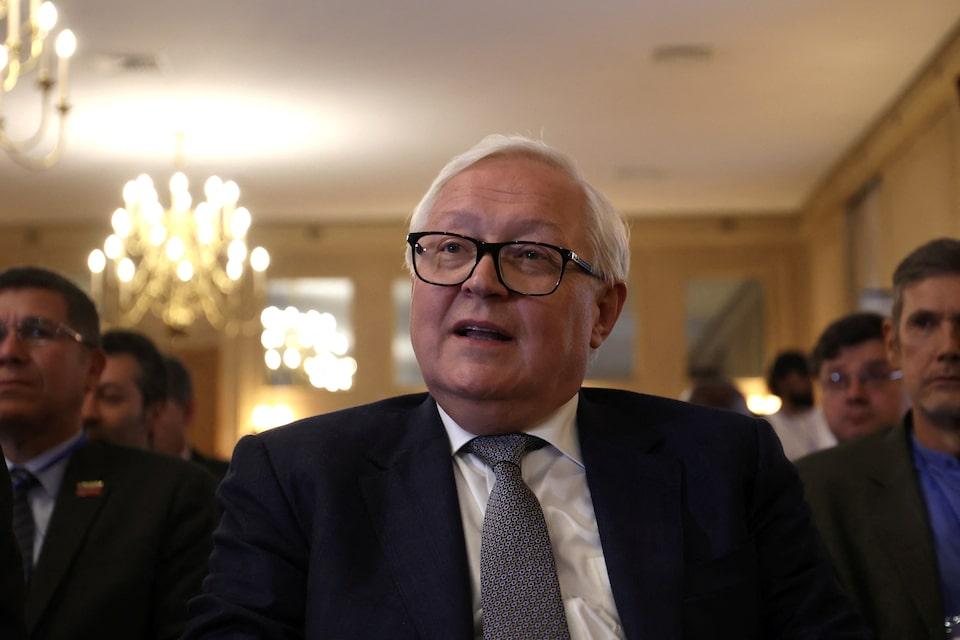
Russia says efforts for a deal should be redoubled Moscow says ready to accept nuclear materials MOSCOW, June 11 (Reuters) - Russia said on Wednesday it stood ready to remove highly enriched uranium from Iran and convert it into civilian reactor fuel as a potential way to help narrow U.S.-Iranian differences over the Islamic Republic's nuclear programme. Tehran says it has the right to peaceful nuclear power, but its swiftly-advancing uranium enrichment programme has raised fears in the wider West and across the Gulf that it wants to develop a nuclear weapon. Sign up here. The United States is trying to broker a deal to get Iran to rein in its nuclear activities, but President Donald Trump said in an interview released on Wednesday he was less confident than a couple of months ago that Iran will agree to halt enrichment. Last week, the Kremlin said President Vladimir Putin had told Trump in a phone call that he was ready to use Russia's close partnership with Iran to help advance those negotiations. On Wednesday, Russian Deputy Foreign Minister Sergei Ryabkov, who oversees arms control and U.S. relations, told Russian media that efforts to reach a solution should be redoubled and that Moscow was willing to help in practical ways. "We are ready to provide assistance to both Washington and Tehran, not only politically, not only in the form of ideas that could be of use in the negotiation process, but also practically: for example, through the export of excess nuclear material produced by Iran and its subsequent adaptation to the production of fuel for reactors," Ryabkov said. He did not make clear whether the nuclear fuel would then be returned to Iran for use in its civil nuclear energy programme, which Moscow has helped develop. The United States wants all of Iran's highly enriched uranium (HEU) to be shipped out of the country. Tehran says it should only send out any excess amount above a ceiling that was agreed in a 2015 deal and cannot abandon enrichment altogether. Kremlin spokesman Dmitry Peskov on Wednesday confirmed Moscow's readiness to accept the uranium. "Here it is very important to say that if necessary, if the parties deem it necessary, Russia will be ready to provide such services," Peskov told reporters. Russia, the world's biggest nuclear power, does not want to see Iran acquire nuclear weapons, but believes it has every right to develop its own civilian nuclear programme - as a member of the 1970 global Non-Proliferation Treaty - and that any use of military force against it would be illegal. Moscow has bought weapons from Iran for its war in Ukraine and signed a 20-year strategic partnership deal with Tehran earlier this year. During his 2017-2021 term, Trump withdrew the U.S. from a landmark 2015 deal between Iran and world powers, including Russia, that had placed strict limits on Tehran's nuclear activities in exchange for sanctions relief. After Trump pulled out in 2018 and reimposed tough U.S. economic sanctions, Iran breached and far surpassed the 2015 deal's limits on enrichment, producing stocks far above what the West says is necessary for a civilian energy programme. https://www.reuters.com/world/europe/russia-says-it-is-ready-remove-excess-nuclear-materials-iran-2025-06-11/
2025-06-11 11:36
Peru the No. 1 blueberry exporter globally, top supplier to USA Local growers are looking to diversify markets amid trade war Peru, USA have a free trade agreement dating back to 2009 PISCO, Peru, June 11 (Reuters) - In Peru's Pisco Desert, rows of blueberry bushes towering as much as two meters high stretch towards the horizon, finally giving way to sand dunes. Traditional blueberries need chilly nights to bring fruit, but genetic innovations have created varieties like Eureka Sunset that can grow in this kind of arid landscape some 250 kilometers (155 miles) south of Lima. For more than a decade the healthy berries have rolled north to U.S. supermarket shelves, but there is a rival buyer in town: China. Growers in Peru are looking for new markets as production rises and their best customer, the United States, is waging a trade tariff war on partners around the world. China has insatiable demand and has built a huge new port near Lima that cuts shipping time across the Pacific in half. Sign up here. "There will be a rebalancing of export share to different markets," said Miguel Bentín, general manager of major producer the Valle y Pampa farm, which began production in 2012 when the blueberry harvest was a tenth of the size it is today. The desert has long been a source of grapes made for Pisco brandy, the base for Pisco Sour cocktails, but blueberry growers have transformed the landscape by drilling wells up to 100 meters (328 feet) deep to find water for the crops and bringing in workers to care for them. Now, Bentin says, they are looking for new buyers. "The full potential of the Chinese market for our products has not yet been fully realized," Bentín told Reuters at the farm. Valle y Pampa typically ships 60% of its blueberries to the United States and the rest to Europe. This year, though, it is planning its first big China shipment to mitigate the impact of a 10% U.S. tariff on all goods from Peru. Peru overtook Chile in 2021 as the world's largest exporter of blueberries and the sector has been adding new markets, according to half a dozen ministers, farming and export officials, and government presentations seen by Reuters. "The search for new markets in Asia, Europe and Oceania (Australia) for agricultural exports has intensified," Peru's Foreign Trade and Tourism Minister Úrsula León said in mid-May, explaining that U.S. tariffs could slow the deep purple fruit's booming rise that boosted Peru's exports by some $2.3 billion last year. Production during the 2025-2026 harvest is expected to grow by 25% to 400,000 tons. "If the U.S. tariff measure is maintained, there would be a drop in shipments, especially in the agricultural, textile and mining sectors," added León following a meeting with the Trump administration. She named India, Indonesia and China as markets with growth potential. Peru is negotiating to end U.S. tariffs, which it says breach a free trade agreement. If supplies from Peru decrease, U.S. consumers will likely see prices rise. The Andean country is its top supplier of blueberries ahead of Mexico and Chile. "With a significant portion of produce being imported to the U.S. and not easily produced domestically, tariffs may have an impact on product availability," said Ben Wynkoop, global industry strategist of grocery & convenience, at Blue Yonder, which provides supply chain software to global retailers. "Depending on the severity of the shortage, smaller retailers with limited negotiation power may face significant inventory shortages, particularly for blueberries," he added. "It won't be a moderate effect, it will be quite big," said Gabriel Amaro, head of the Peruvian Association of Agricultural Producers' Guilds, adding farmers were lobbying the government to find ways to soften the blow and protect the free trade deal. "Our strategy is market diversification. We have a whole list of products, especially to open up markets in Asia." David Magaña, senior research analyst at Rabobank, who specializes in the global fruit market downplayed the impact of tariffs. For one, China produces its own berries for more months of the year than the United States, he said. "I don't think anybody in the industry is expecting China to surpass the U.S. as the primary destination for Peruvian blueberries," added Magaña. CHINA-OWNED PORT A 'GAME CHANGER' Peru's wider farm exports - also including grapes and avocados - rose 22% to $12.8 billion last year, mainly to the United States and Europe. Exports of blueberries dipped 30% year-on-year in the first quarter of this year, reflecting a change in harvest timing. However, even as quarterly U.S. shipments ticked down, those to China rose, from a lower base. Peru's new Chinese-controlled port of Chancay, meanwhile, cuts the sea journey times to Asia in half to around 20 days, a big plus for keeping fruit fresh. China's Guangzhou port in April joined others by opening a direct route to Chancay. U.S. fruit firm Fruitist, which produces most of its blueberries in Peru and is one of the Andean country's top exporters of the fruit, sent some 15-18 containers of blueberries to China late last year via Chancay. "It transforms the shipping part, the logistical part for everyone who's in fresh fruit in Peru," said John Early, Fruitist's director of global sales. "There is a huge opportunity to expand that business in China." Back in the Pisco Desert, Valle y Pampa manager Bentín agreed, forecasting a noticeable increase to China as the harvest begins to peak around August. "The port of Chancay, especially with its costs and faster transit times, is a game changer," he said. https://www.reuters.com/sustainability/climate-energy/peru-usas-top-blueberry-supplier-looks-china-tariffs-hit-2025-06-11/


