2025-06-11 06:03
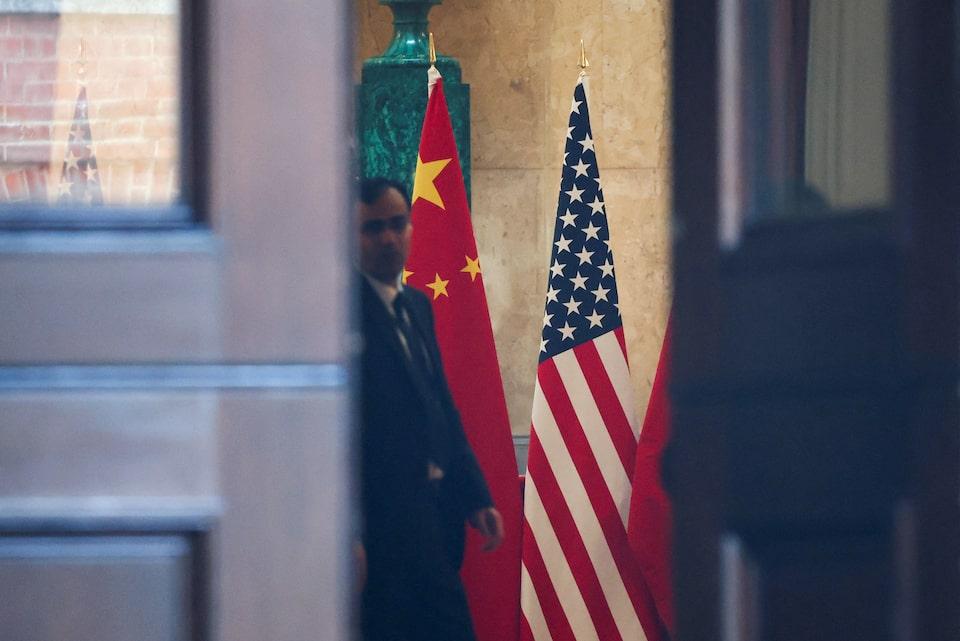
Japan's cashless payment ratio hits 42.8% in 2024 BOJ policymakers call for action to keep settlements attractive CBDC could become critical infrastructure in Japan, Uchida says No guarantee central bank currency will retain key settlement status TOKYO, June 11 (Reuters) - Bank of Japan officials are ramping up calls to keep pace with rapid developments around digital currencies that may accelerate a shift to cashless payments in a country better known for its belief that "cash is king." Once seen as a society favouring physical currency, Japan saw the ratio of cashless payments rise to 42.8% in 2024, up from 13.2% in 2010 and hitting the government's 40% goal a year earlier than targeted, government data showed. Sign up here. While Japan is a global laggard on payment technology, the increase in cashless transactions is forcing policymakers to ensure they are ready to adapt to shifting public preference on payment and settlement means. This includes the option of a central bank digital currency (CBDC). While no decision has been made on whether to issue a digital yen, the BOJ began a pilot programme for developing a CBDC in 2023, and has been consulting with private firms and the government on its framework and design. "Although banknote issuance remains high in Japan, usage of notes could fall significantly in the future amid rapid digitalisation," BOJ Executive Director Kazushige Kamiyama told a meeting last week with private firms on the pilot programme. "As such, Japan must consider what steps it can take now to ensure its retail settlement system is convenient, efficient, accessible universally, while being safe and resilient." BOJ Deputy Governor Shinichi Uchida said a CBDC may become "a critical piece of infrastructure" shaping the future of Japan's payment and settlement systems, but stressed that he did not expect demand for cash to disappear in Japan any time soon. In his speech on Saturday, Uchida spoke about a hypothetical world in which the yen is overtaken by another instrument - such as crypto assets - as the main form of payment in Japan. Such a world would not occur as long as the public believes in the BOJ's ability to keep the value of the yen stable, which could come into question if the central bank fails to fulfil its mission of price stability, Uchida said. "Looking to the future, in a society that has made significant advances in digitalization, there is no guarantee that currency issued by the central bank of a sovereign nation will continue to function as a generally acceptable payment instrument," he said. CBDCs are back in the spotlight after U.S. President Donald Trump issued an executive order in January banning the Federal Reserve from issuing a digital dollar, seemingly as part of a drive to promote cryptocurrencies and stablecoins instead. The growing presence of stablecoins, or cryptocurrencies backed by a hard currency, and the potential risk of an erosion in the U.S. dollar's dominance have also piled pressure on central banks to consider issuing their own digital currencies. The European Central Bank has called for the need to issue a digital euro to respond to Trump's push to promote stablecoins, and develop an electronic means of payment that does not rely on dominant U.S. providers such as Visa. China is racing ahead with global ambitions to internationalise the yuan with transactions of the digital yuan more than tripling between June 2023 and June 2024. https://www.reuters.com/world/china/japans-shift-cashless-society-prods-boj-call-payment-innovation-2025-06-11/
2025-06-11 06:03
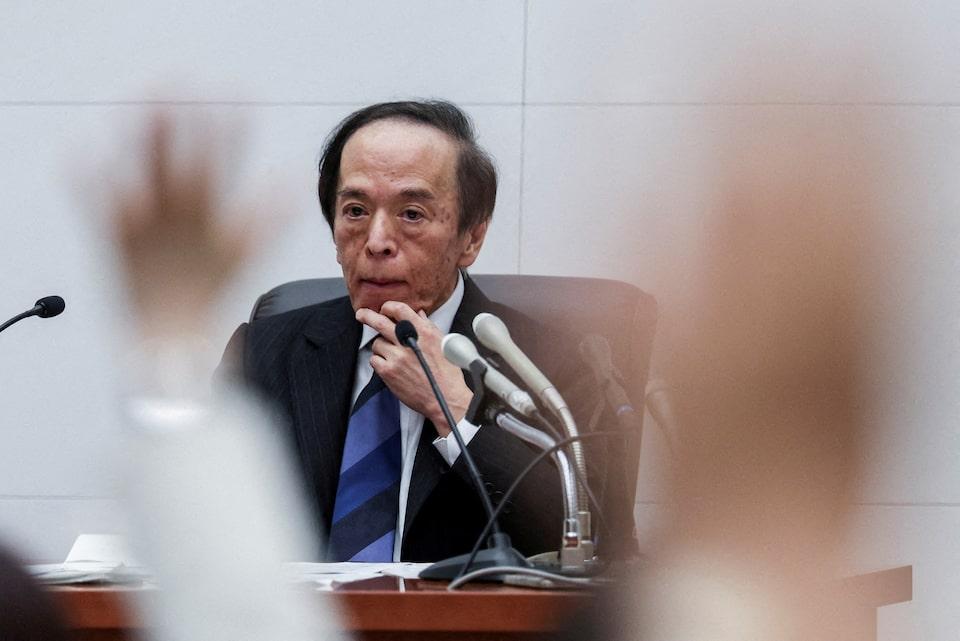
US CPI rises moderately in May US-China deals done: 55% tariffs on China, 10% on US US rate futures see higher chance of rate cut in September NEW YORK, June 11 (Reuters) - The U.S. dollar slid on Wednesday after data showed inflation in the world's largest economy rose less than expected last month, suggesting that the Federal Reserve could resume cutting interest rates sooner rather than later. The greenback, however, briefly trimmed losses after President Donald Trump said a U.S. trade deal with China is done, with Beijing to supply magnets and rare earth minerals while the U.S. will allow Chinese students in its colleges and universities. Sign up here. A White House official also said the agreement allows the U.S. to charge a 55% tariff on imported Chinese goods. This includes a 10% baseline "reciprocal" tariff, a 20% tariff for fentanyl trafficking and a 25% tariff reflecting pre-existing tariffs. China would charge a 10% tariff on U.S. imports, the official said. In afternoon trading, the dollar slid 0.2% against the yen to 144.58 , while the euro rose 0.5% to $1.1484 , after briefly paring gains earlier as sentiment on the U.S. currency somewhat improved with the China news. On the data front, the consumer price index (CPI) increased 0.1% last month after rising 0.2% in April, the Labor Department's Bureau of Labor Statistics (BLS) said. Economists polled by Reuters had forecast the CPI climbing 0.2%. Underlying price pressures were also muted in May, with core CPI increasing just 0.1% after a 0.2% rise in April. But year-on-year inflation advanced advanced 2.4% after gaining 2.3% in April. "Inflation momentum is slowing and that has led to the downward adjustment to U.S. interest rate expectations. Fed funds futures have started to firm up the chances of 50 basis points in cuts by yearend," said Elias Haddad, senior markets strategist, at Brown Brothers Harriman in London. "Inflation from higher tariffs have so far been subdued, considering average tariffs in the U.S. have gone up from 2% in January to over 15%. We're not seeing the full effects yet of tariffs on inflation. I suppose we'll see the impact in the second half of the year." Following the CPI data, traders of short-term interest rate futures had priced in a 71% chance that the Fed would cut rates by a quarter of a percentage point by September, compared with 57% before the data. Futures also factored in 50 bps in cuts, compared with 45 bps earlier this week. The currency market, meanwhile, showed little reaction to comments from U.S. Commerce Secretary Howard Lutnick on Wednesday that the 55% tariffs imposed by the United States on China will not change. He added that trade deals with other countries can be expected starting next week. "The worst-case scenario is probably behind us. There's a little bit of face-saving for both sides. From the U.S. point of view, the rare earth thing was a big deal," said John Praveen, managing director, at investment firm Paleo Leon in Princeton. "They got an agreement. The question is whether it will be implemented. The fact they have some kind of agreement is probably at least a relief for the market. ... The fact that things are de-escalating is the important point," Praveen said. Against the Swiss franc, the greenback was 0.3% lower at 0.8205 franc . Versus China's offshore yuan , the dollar edged higher, up 0.1% at 7.197. Sterling, meanwhile, rose against an overall weak dollar, gaining 0.3% to $1.3542 . Britain's multi-year spending review underlined fiscal challenges, dividing up more than 2 trillion pounds ($2.7 trillion) of public spending to boost growth. https://www.reuters.com/world/china/dollar-holds-steady-after-us-china-reach-framework-deal-ease-export-curbs-2025-06-11/
2025-06-11 05:56
US CPI data due at 1230 GMT US, China reach deal to ease export curbs, keep tariff truce alive Platinum hits highest level since May 2021 June 11 (Reuters) - Gold prices firmed on Wednesday as investors stayed cautious amid lingering uncertainty over the U.S.-China trade truce and waited for key U.S. inflation data for clues on the Federal Reserve's interest rate trajectory. Spot gold was up 0.3% to $3,330.69 an ounce at 1122 GMT. U.S. gold futures were up 0.3% to $3,351.60. Sign up here. U.S. and Chinese officials said on Tuesday they had agreed on a framework to put their trade truce back on track and remove China's export restrictions on rare earths, but offered little sign of a durable resolution to longstanding trade differences. In April, the U.S. and China imposed tit-for-tat tariffs on each other, triggering a trade war. After negotiations in Geneva last month, both countries agreed to scale back tariffs from triple-digit levels. "Markets are well aware that the path towards a trade deal between major economies is not a straightforward affair," said Han Tan, chief market analyst at Exinity Group. "Gold should remain supported as long as global trade tensions risk escalating further, or even just staying elevated for longer." The U.S. consumer price index (CPI) report, due at 1230 GMT, could give investors more guidance on the Fed's policy path. "Markets are expecting an uptick in the CPI prints, which should keep the odds for Fed rate cuts in check," Tan added. The central bank will keep rates steady for at least another couple of months, according to most economists polled by Reuters, as risks of inflation rebounding due to President Donald Trump's tariff policies loom. Elsewhere, spot silver fell 0.9% to $36.20 per ounce, but remained close to a more than 13-year high. "We expect silver to reach $38/oz in the coming months. Market deficit considerations and a weaker USD hold the key for even higher prices - a test of $40/oz is possible," UBS said. Platinum rose 2.8% to $1,256.29, its highest since May 2021. Palladium added 1.1% to $1,072.25. https://www.reuters.com/world/china/gold-rises-us-china-trade-uncertainty-persists-investors-eye-inflation-data-2025-06-11/
2025-06-11 05:37
CPI data shows little change in prices U.S. stocks dip, dollar declines Treasury yields fall; strong interest in a $39 billion sale of 10-year notes Oil surges to 7-week high amid Middle East tensions Trump says US-China trade deal 'done' but details lack June 11 (Reuters) - Wall Street stocks and the dollar fell on Wednesday, while U.S. Treasury yields eased, amid fresh tension in the Middle East, a lack of detail in a U.S.-China trade deal, and U.S. consumer prices showing only a mild increase. The U.S. is preparing a partial evacuation of its embassy in Iraq and will allow military dependents to leave locations around the Middle East due to heightened security risks in the region, U.S. and Iraqi sources. Oil prices rose more than 4% to their highest in more than two months, with Brent crude futures settled at $69.77 a barrel. Sign up here. Earlier in the day, U.S. President Donald Trump said a deal getting the fragile truce in the U.S.-China trade war back on track was done after negotiators from Washington and Beijing agreed on a framework covering tariff rates. The deal also removes Chinese export restrictions on rare earth minerals and allows Chinese students access to American universities. The latest trade truce offered investors hope that the two superpowers can reach a lasting resolution and prevent further market disruption, but the absence of detailed terms leaves room for potential future tariff conflicts. Separately, the Consumer Price Index (CPI) increased 0.1% in May amid cheaper gasoline after rising 0.2% in April, the U.S. Labor Department said on Wednesday, but inflation is expected to accelerate in the coming months on the back of the Trump administration's import tariffs. For U.S. stocks, the Dow Jones Industrial Average (.DJI) , opens new tab finished a day of choppy trading little changed, while the S&P 500 (.SPX) , opens new tab fell 0.27%, and the Nasdaq Composite (.IXIC) , opens new tab lost 0.5%. Scott Wren, senior global market strategist at the Wells Fargo Investment Institute, said there were still plenty of risks in equities, such as additional trade negotiations, rising inflation and growth slowing noticeably. There are "still plenty of potential downside triggers out there," he wrote in an email. Asian shares were slightly more positive, with MSCI's broadest index of Asia-Pacific shares outside Japan (.MIAPJ0000PUS) , opens new tab up about 0.7%, while the STOXX benchmark for major European shares (.STOXX) , opens new tab closed 0.3% lower. DOLLAR DOWN, TREASURY YIELDS EASE The U.S. dollar slid against most major currencies, with the dollar index down about 0.3% to 98.6 . The dollar weakened slightly against the Japanese yen to trade at 144.6 , while the euro edged up 0.5% to $1.148 . Ten-year Treasury yields fell 5.8 basis points to 4.416% as the U.S. Treasury Department saw strong interest in a $39 billion sale of 10-year notes on Wednesday, indicating that demand for the debt remains strong despite concerns that foreign investors are moving away from the market. Concerns about huge U.S. budget deficits and debt have combined with unease over the White House's shifting policies to make investors demand a higher term premium for holding Treasuries. Traders of short-term interest-rate futures now price in a 70% chance of a quarter-point reduction in the Fed policy rate by September, compared with 57% earlier. Policymakers are widely expected to keep rates unchanged next week. . "The longer-term inflation challenge they pose remains," Ellen Zentner, chief economic strategist for Morgan Stanley Wealth Management, wrote in an email. "Given the Fed likely shares that outlook, no one should be looking for rate cuts in the near future." Gold gained 0.76% to $3,347 an ounce . https://www.reuters.com/world/china/global-markets-wrapup-1-2025-06-11/
2025-06-11 04:51
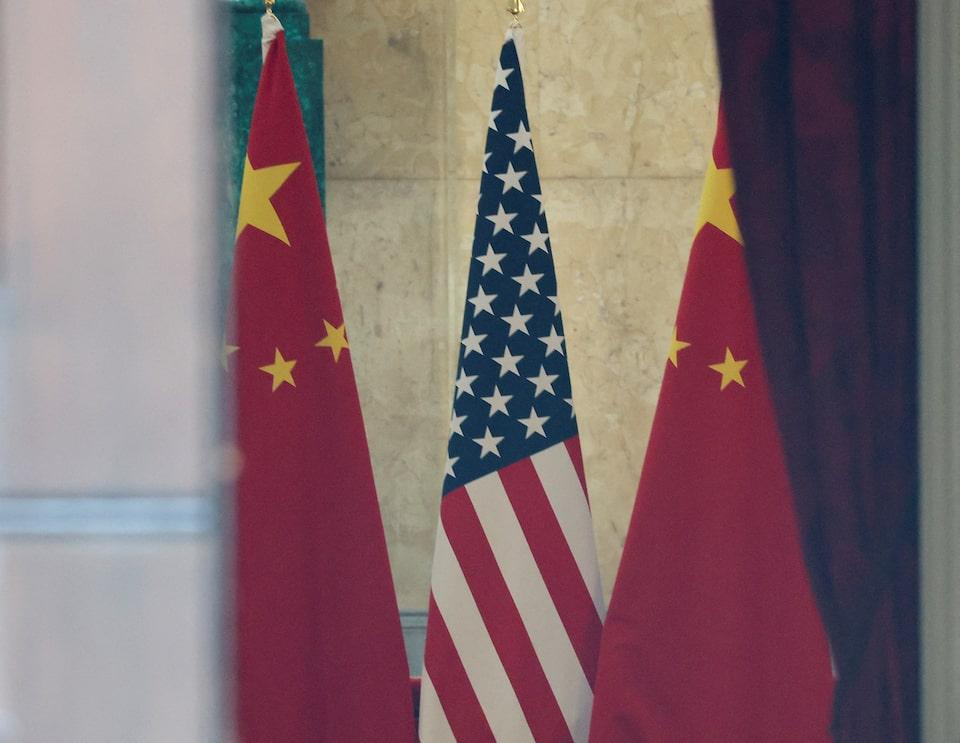
MUMBAI, June 11 (Reuters) - The Indian rupee nudged higher in early trading on Wednesday, aided by mild U.S. dollar sales by foreign banks, while Asian currencies were steady after the U.S. and China agreed on a framework to ease trade tensions. The rupee was at 85.46 as of 10:00 a.m. IST, up about 0.2% from its close at 85.6025 in the previous session. Sign up here. The South Asian currency, alongside its regional peers, has witnessed range-bound price action over recent trading sessions as concerns over a trade war between the world's two largest economies eased, cooling volatility. At the end of two days of negotiations, U.S. and Chinese officials said on Tuesday the framework also included removing China's export restrictions on rare earths. U.S. Commerce Secretary Howard Lutnick said the framework deal puts "meat on the bones" of an agreement reached last month in Geneva to ease bilateral retaliatory tariffs. "The latest talks appear to be a constructive step forward, reducing the risk of a full-blown trade war," MUFG Bank said in a note. The positive conclusion of the talks "could help Asian currencies to consolidate their recent gains against the US dollar," the note added. Meanwhile, Indian and U.S. officials also made progress in bilateral trade talks in New Delhi, according to Indian government sources. On the day, modest dollar sales from at least two large foreign banks, likely on behalf of custodial clients, helped the rupee out, a trader at a state-run bank said. U.S. consumer price inflation data will be in focus later on Wednesday for cues on the future path of the Federal Reserve's benchmark policy rates. Interest rate futures are currently pricing in about 43 basis points worth of rate cuts over the remainder of 2025. https://www.reuters.com/world/india/rupee-aided-by-foreign-banks-dollar-sales-asia-fx-holding-pattern-2025-06-11/
2025-06-11 04:32
June 11 (Reuters) - A look at the day ahead in European and global markets from Wayne Cole. So, apparently, they have the concept of a plan for a proposal on a framework for a deal to break the latest U.S.-China trade impasse. Which was only needed because President Trump sent that tweet claiming Beijing had broken the old deal. Sign up here. This deal now needs to be approved by Trump and Chairman Xi, and then implemented. At least the Chinese side thought the talks were "rational", which was a step forward. Details were scant, though the U.S. team did claim that it would resolve China's export restrictions on rare earth minerals and magnets. What Beijing got in return was not yet clear. Neither was it clear whether this truce would last any longer than the last one, which might be why the early market response was less than enthusiastic. U.S. and European stock futures were all down between 0.2% and 0.6%, and Asian shares modestly firmer. There is still the small matter of whether the April 2 levies are actually legal, with a federal appeals court allowing the tariffs to remain in effect while it reviews a lower court decision blocking them. The dollar and Treasuries were little changed as the U.S. CPI looms later in the day and any upside surprise would fan stagflationary fears, to the detriment of both markets. Analysts assume lower energy prices will keep the headline rise to 0.2%, while the core is seen up 0.3%. Attention will be on whether tariffs show up in goods prices, though the full impact is likely to appear from June onwards. Measures of volatility suggest investors really aren't prepared for a high number, so anything in line will be a relief. Treasuries also have a 10-year auction to weather, with the focus on the share taken by indirect bidders which include foreign central banks. The latter took a hefty 71% of the May sale, while primary dealers got just 8.9%. A repeat performance would be warmly welcomed. Key developments that could influence markets on Wednesday: https://www.reuters.com/world/china/global-markets-view-europe-2025-06-11/