2025-06-10 15:20
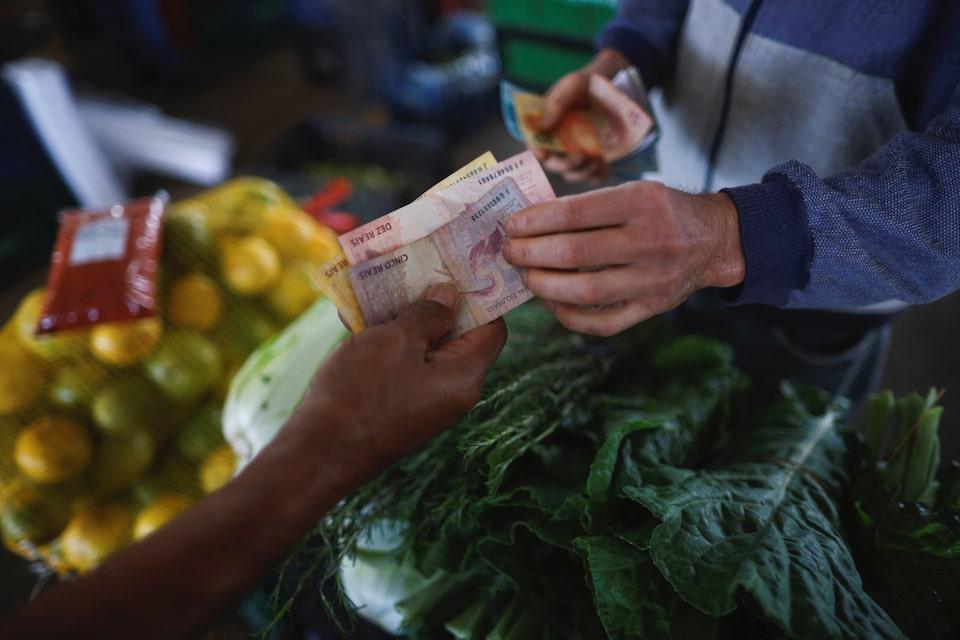
SAO PAULO, June 10 (Reuters) - Brazil's inflation rate slowed more than expected in May, but the 12-month gauge remained above the central bank's target, raising questions about what stance policymakers will take at their interest rate-setting meeting next week. Consumer prices in Latin America's largest economy rose 0.26% last month and 5.32% in the 12 months through May, statistics agency IBGE said on Tuesday, undershooting forecasts for rises of 0.33% and 5.40%, respectively, in a Reuters poll of economists. Sign up here. The data marked a decline from April's 0.43% monthly rate and the 12-month reading of 5.53%, though the latter exceeded the official target of 3% plus or minus 1.5 percentage points for an eighth consecutive month. Brazil's central bank will hold its rate-setting meeting on June 17-18, with policymakers vowing "flexibility and caution" while still voicing discomfort with above-target inflation. They have said they would remain data-driven and keep their options open after raising the central bank's benchmark interest rate by 50 basis points to 14.75% last month, a sixth straight hike that pushed borrowing costs in Brazil to their highest level in nearly 20 years. Following the release of the latest inflation data, markets were pricing in a 76% chance that the central bank would halt its tightening cycle and hold rates steady next week, while the remaining 24% leaned toward a 25-basis-point hike. Jason Tuvey, deputy chief emerging markets economist at Capital Economics, said it was "more likely than not" that policymakers would deliver a final 25-basis-point hike next week, citing the strength of underlying price pressures, robust economic growth in the first quarter and a tight labor market. Tatiana Pinheiro, chief economist at Galapagos Capital, also forecast that the central bank would hike its benchmark rate to 15%, saying that despite the more favorable consumer price data, activity was resilient and inflation items sensitive to monetary policy remained under pressure. However, Julio Cesar de Mello Barros, an economist at Banco Daycoval, said the lower-than-expected inflation data "pointed toward the end of the interest rate hike cycle at the next meeting," with an expectation that cuts would resume in 2026. IBGE noted that the costs of transport and household articles dropped in May. Food and beverage price increases, which are closely watched, slowed to 0.17% from 0.82% in April. https://www.reuters.com/world/americas/brazils-inflation-undershoots-forecasts-ahead-rate-decision-2025-06-10/
2025-06-10 14:27
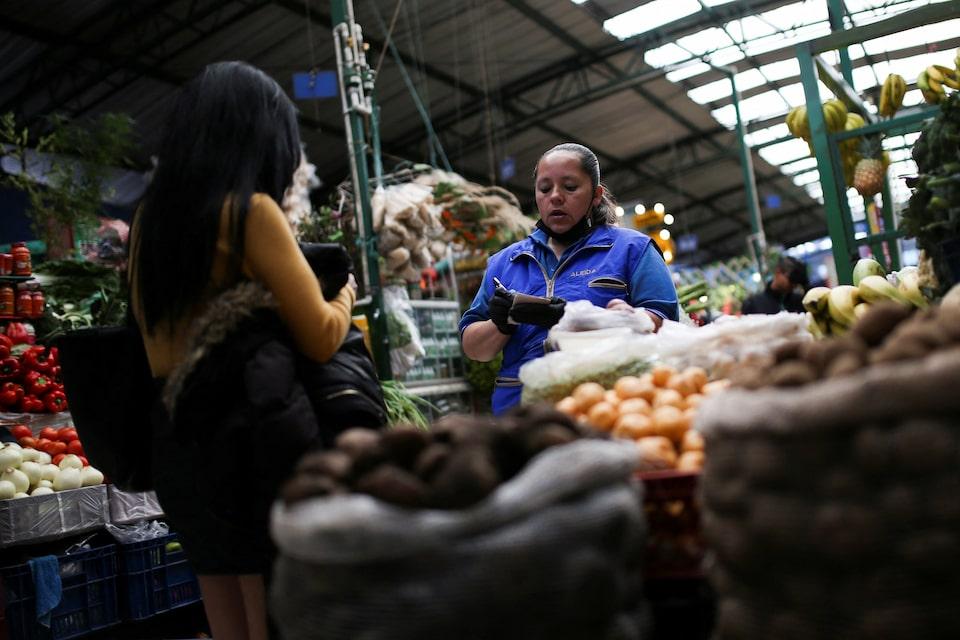
BOGOTA, June 10 (Reuters) - Colombia's government has authorized the use of an "escape clause" to temporarily suspend compliance with its fiscal rule, a government source told Reuters on Tuesday, amid deteriorating public finances. The fiscal rule, established in 2011 by Latin America's fourth-largest economy, imposes limits on government spending and debt to ensure the long-term sustainability of public finances and macroeconomic stability. Sign up here. The suspension allows the government to raise its targeted fiscal deficit for the year from the previously forecast 5.1% of gross domestic product (GDP). The fresh fiscal deficit goal is now at 7.1%, market sources told Reuters. Finance ministry officials met with banks and brokers earlier in the day to outline the changes, the sources said. The finance ministry plans to hold a press conference on Friday to discuss the changes and release its medium-term fiscal framework detailing new financing objectives. "It's possible that these include piecemeal austerity measures," wrote analysts at Capital Economics in a note. "But the government has a track record of missing its targets by a wide margin in recent years." The peso currency closed down around 1.45% against the dollar on Tuesday, reaching a four-week low. "It doesn't look like the deterioration in the fiscal situation has been fully priced in (by the market) yet," the Capital Economics analysts said, adding that sovereign dollar bond spreads could widen a further 30 basis points. In 2024, Colombia logged a fiscal deficit of 6.8% of GDP, above the targeted 5.6%. While the government maintains that it adhered to the fiscal rule that year, analysts generally disagree. Last week, Finance Minister German Avila - a close ally of President Gustavo Petro - said that the government would roll out measures including increased borrowing and spending cuts, though he did not provide details. Colombia's autonomous committee on fiscal rule (CARF) previously estimated that the nation would need budget adjustments of between 40 trillion pesos ($9.74 billion) and 75 trillion pesos ($18.26 billion) to comply with the 5.1% deficit target. In mid-May, ratings agency Moody's said that Colombia's sovereign credit rating, currently at Baa2, was dependent on the "frank disclosure" of the country's fiscal figures in the forthcoming fiscal framework. https://www.reuters.com/world/americas/colombia-suspend-fiscal-rule-public-finances-worsen-source-says-2025-06-10/
2025-06-10 12:21
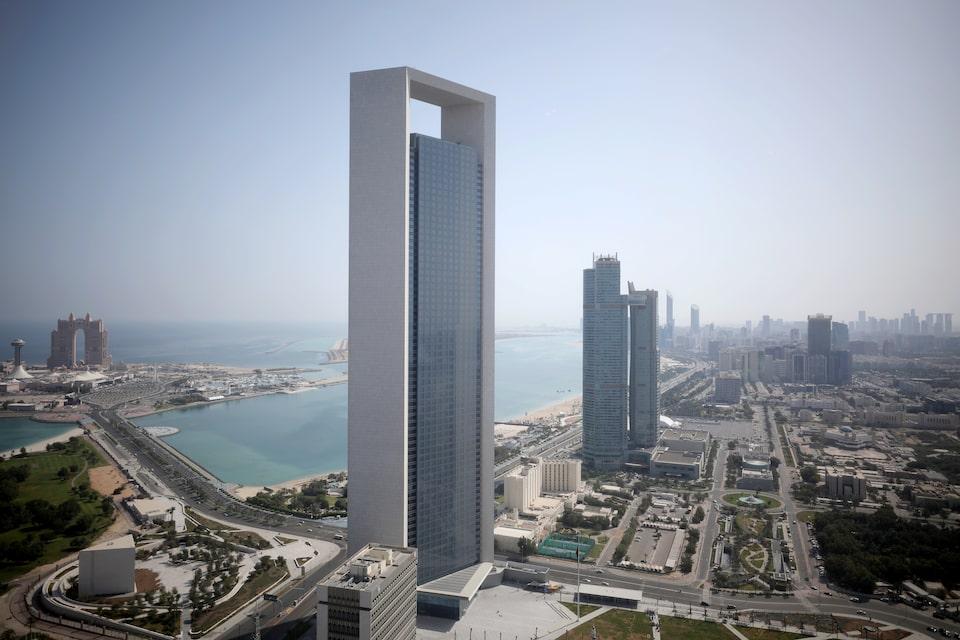
DUBAI, June 10 (Reuters) - ADNOC Gas (ADNOCGAS.AD) , opens new tab said on Tuesday it had taken a final investment decision on the first phase of its Rich Gas Development (RGD) Project, awarding $5 billion in contracts to expand and improve efficiency at the project. The contracts involve expanding processing units to boost throughput and improve operational efficiency across its Asab, Buhasa, Habshan onshore facilities and its offshore Das Island liquefaction facility, the company said in a statement. Sign up here. The contracts were awarded to British oilfield services firms Wood Group (WG.L) , opens new tab and Petrofac (PFC.L) , opens new tab, and to Kent. ADNOC Gas, a subsidiary of the United Arab Emirates' state energy company, became operational at the start of 2023 as ADNOC consolidated its gas processing, LNG and industrial gas operations into one company. The unit plans to take final investment decisions on two additional phases of the RGD project at Habshan and Ruwais to boost production capacity, it said, without providing a specific timeline. https://www.reuters.com/business/energy/adnoc-gas-awards-5-billion-contracts-first-phase-rich-gas-development-project-2025-06-10/
2025-06-10 11:57
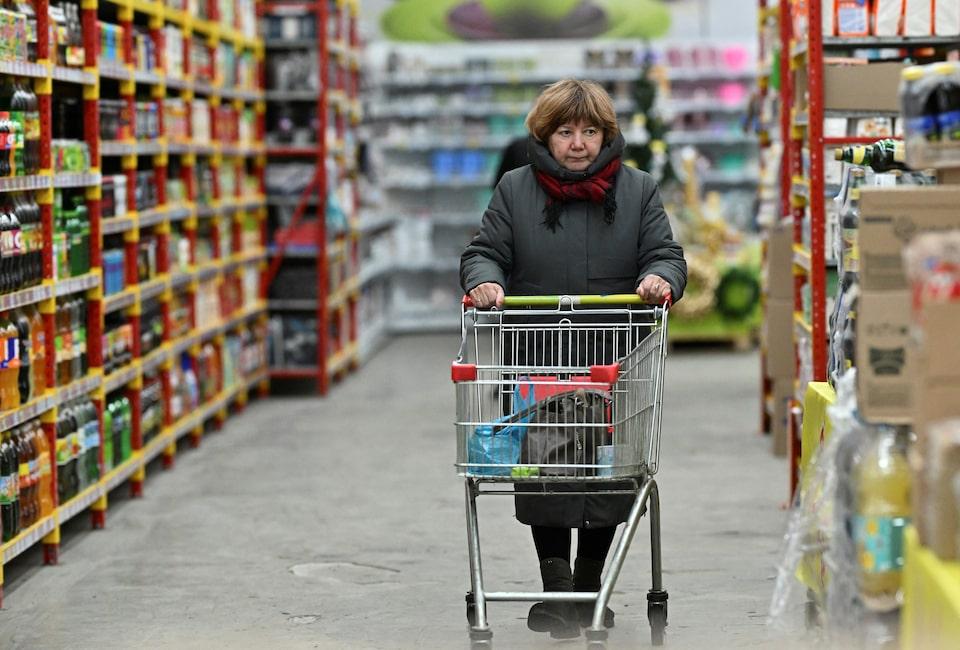
By Gleb Bryansk and Evgeniy Matveev SERGIEVSKIY, Russia, June 10 (Reuters) - At a farm near Moscow, newly arrived guest workers from India are planting potatoes and cabbages - work closely monitored by central bank analysts as they prepare for board meetings to set interest rates. Sign up here. While in developed economies such as the United States food accounts for about 14% of the basket used to calculate inflation, in Russia it makes up a hefty 40% or so, and surging prices for potatoes and other staples have been a major reason for its tight monetary policy. The central bank trimmed its benchmark rate to 20% on June 6 but even that is around the highest since 2003. More worryingly, people's inflationary expectations - a driver for price pressures - remain high despite actual inflation slowing down. Potato prices, which have tripled since last year when the crop fell by 12%, are not helping matters. "It is crazy. Potatoes have always been very cheap. At this price, I will not buy them - I think few people will," said Tamara, a 67-year-old pensioner outside a Pyaterochka discount store in Moscow. Central bank governor Elvira Nabiullina acknowledged the problem in her press conference after the rate cut. "On a daily basis, people are not buying smartphones and television sets," she said. "They are buying food. If prices there are growing faster, it forms high inflationary expectations." Russian households spent almost 35% of income on food in April, a record in five years of data and up from 29% last April, a study by the Romir think tank showed. POTATO CRISIS Pyaterochka sells Russian old crop potatoes for 84 roubles ($1.06) per kilo and new crop potatoes for 120 ($1.53) per kilo, compared with an average 43 roubles per kilo in retail stores this time last year. That is even higher than the roughly $0.92 per kilo charged in Britain's biggest supermarket chain Tesco. Prices for onions, cabbage, beets, carrots and other ingredients of beetroot soup, a popular dish across Eastern Europe often used to gauge food inflation, have also surged. The crisis even caught out President Vladimir Putin, who has been touting Russia's agricultural development and growing exports despite Western sanctions as a success story, despite similar spikes in butter and egg prices earlier this year. The government has responded by boosting imports. Egypt has tripled potato supplies to Russia, while Belarus, Russia's backup potato supplier, said it had run out of stocks. STABILIZATION IN JULY Farmers blame poor weather last year for the lower crop but also point to rising costs for machinery, fuel, fertilizers and labour, as well as high interest rates as factors behind the price surge. "Last year, at first it was very cold, then came drought," said Yaroslav Ivanov, head of the Sovkhoz Sergiyevsky farm. "There was a shortage of potatoes, their quality was worse than average. The good quality potatoes sold out quickly, and the situation began to worsen." He added that high prices this year compensated for some of the losses suffered by potato farmers after a bumper harvest in 2023, when retail prices slumped. This year, the harvest is expected to be better. "We will see a decrease in price, a stabilization starting from July," said Agriculture Minister Oksana Lut. The TsMAKP think tank, which advises the government, estimated inflation for the poor - calculated using basic food, utilities and medicine costs - exceeded 20% in April, ten percentage points above the official rate. "The continued rapid increase in food prices has led to a significant divergence between the price index for the consumption basket of low-income populations and the overall inflation rate," TsMAKP said. Pensioners make up more than a quarter of the population and the average monthly pension was 23,448 roubles ($298) in April. In real terms, it fell throughout last year before rising 1.4% since the start of 2025. "Low-income individuals are hit much harder by inflation," said Sergei Aleksashenko, a former central bank official and opposition economist living in exile in the U.S., pointing to pensioners and public sector workers. ($1 = 78.5000 roubles) https://www.reuters.com/markets/europe/potato-price-surge-fuels-inflation-pain-russias-poorest-2025-06-10/
2025-06-10 11:23
Maruti to cut production in first half of FY25-26 by two-thirds Aims to make up lost ground later to meet full-year target China's curbs on rare earth exports have hit global car industry Indian auto companies yet to see magnet supplies resume NEW DELHI, June 11 (Reuters) - Maruti Suzuki (MRTI.NS) , opens new tab has cut near-term production targets for its maiden electric vehicle e-Vitara by two-thirds because of rare earths shortages, a document showed, in the latest sign of disruption to the auto industry from China's export curbs. India's top carmaker, which said on Monday it had not seen any impact yet from the supply crisis, now plans to make about 8,200 e-Vitaras between April and September, versus an original goal of 26,500, according to a company document seen by Reuters. Sign up here. It cited "supply constraints" in rare earth materials that are vital in making magnets and other components across a range of hi-tech industries. Maruti still plans to meet its output target of 67,000 EVs for the year ending March 2026 by ramping up production in subsequent months, the document said. China's curbs on some rare earth exports have rocked the global auto industry, with companies warning of severe supply chain disruptions. While some companies in the United States, Europe and Japan are seeing supplies easing as they secure licences from Beijing, India is still waiting for China's approval amid fears of production stoppages. Launched amid much fanfare at India's car show in January, the e-Vitara is crucial to Maruti's EV push in the country, marking its entry in a segment that Prime Minister Narendra Modi's government wants to grow to 30% of all car sales by 2030 from about 2.5% last year. The setback could also hurt parent Suzuki Motor (7269.T) , opens new tab, for which India is the biggest market by revenue and a global production hub for EVs. The bulk of the made-in-India e-Vitaras are earmarked for export by Suzuki to its major markets like Europe and Japan around summer 2025 , opens new tab. Maruti told reporters last week the rare earths issue had no "material impact" on the e-Vitara's launch timeline. Chair RC Bhargava said there was "no impact at the moment" on production, local media , opens new tab reported on Monday. Maruti and Suzuki did not respond to requests for comment on Tuesday. Maruti shares trading on the Indian stock exchange fell as much as 1.4% to the day's low after the news. Maruti is yet to open bookings for the e-Vitara with some analysts warning it is already late to launch EVs in the world's third-largest car market where Tesla is also expected to begin sales this year. Under its previous plan "A", Maruti was to produce 26,512 e-Vitaras between April and September - the first half of the fiscal year. Under the revised plan "B", it will manufacture 8,221, the document showed, indicating a two-thirds cut in its production schedule. However, in the second half of the financial year - between October and March 2026 - Maruti plans to ramp up production to 58,728 e-Vitaras, or about 440 per day at its peak, versus a previous target of 40,437 for those six months under plan A. Two supply chain sources confirmed Maruti's plan to scale back e-Vitara production because of rare earth magnet shortages but were not privy to the exact numbers. The rare earths crisis comes as Maruti is already grappling to recover market share lost to Tata Motors (TAMO.NS) , opens new tab and Mahindra & Mahindra's (MAHM.NS) , opens new tab feature-rich SUVs. These companies also lead India's EV sales. Maruti's share of India's passenger vehicle market is down to 41% from a recent peak of about 51% in March 2020. Suzuki has trimmed its sales target for India to 2.5 million vehicles by March 2031 from 3 million previously, and scaled back its lineup of EV launches to just four, instead of the six planned before, as competition in the South Asian nation intensifies. https://www.reuters.com/business/autos-transportation/indias-maruti-suzuki-cuts-near-term-ev-production-amid-rare-earths-crisis-2025-06-10/

2025-06-10 11:15
LONDON, June 10 (Reuters) - Britain's Financial Conduct Authority (FCA) said on Tuesday it had appointed Sarah Pritchard as its deputy chief executive, a new role created to reflect the watchdog's expanding remit, including the regulation of stablecoin and crypto firms. "Since joining us, Sarah helped bring together our supervision, policy and competition functions and has led some of our most high-profile work" FCA Chief Executive Nikhil Rathi said in a statement. Sign up here. https://www.reuters.com/sustainability/boards-policy-regulation/uk-financial-watchdog-names-deputy-ceo-reflect-growing-remit-2025-06-10/