2025-06-10 11:01
JOHANNESBURG, June 10 (Reuters) - A severe cold front sweeping across South Africa since the weekend brought heavy snowfall which has led to road closures, power outages and a fatal road accident, officials said. Five people were killed in a road accident along the N2 highway due to the adverse weather, Eastern Cape transport department spokesperson Unathi Binqose told local broadcaster Newzroom Afrika on Tuesday. Sign up here. The South African Weather Service warned citizens late last week there would be a big drop in temperatures this week across the country, accompanied by disruptive rain, damaging winds, and snow over eastern areas. South Africa regularly receives snowfall during its winter months from June through August, with temperatures diving below zero degrees Celsius (32 degrees Fahrenheit). Snow has been reported since Monday across provinces including Eastern Cape, KwaZulu-Natal and Free State, prompting closures along sections of the N2 highway that connects the provinces, according to the KwaZulu-Natal transport department. Power utility Eskom said in a post on X that it was "experiencing a high number of customer calls nationally, due to widespread power outages caused by inclement weather." More resources were being secured to ensure prompt resolution to the power outages, Eskom said. The weather service forecast that the cold front would persist through midweek. https://www.reuters.com/business/environment/severe-cold-front-bringing-snow-south-africa-causes-fatal-accident-power-outages-2025-06-10/

2025-06-10 10:54
LONDON, June 10 (Reuters) - What matters in U.S. and global markets today I'm excited to announce that I'm now part of Reuters Open Interest (ROI) , opens new tab, an essential new source for data-driven, expert commentary on market and economic trends. You can find ROI on the Reuters website , opens new tab, and you can follow us on LinkedIn , opens new tab and X. , opens new tab Sign up here. Markets have effectively flatlined awaiting the outcome of this week's U.S.-China trade talks in London, though as we near the halfway point of 2025, investors are taking an increasingly benign view of the disruptive and often chaotic last six months, as I discuss in today's column. But now onto all of today's market news. Today's Market Minute * Global stocks and the dollar edged higher on Tuesday as trade talks between the United States and China were set to extend to a second day, giving investors some reason to believe tensions between the world's two largest economies may be easing. * The Trump administration on Monday ordered U.S. Marines into Los Angeles and intensified raids on suspected undocumented immigrants, fueling more outrage from street protesters and Democratic leaders who raised concerns over a national crisis. * All three major U.S. asset classes – stocks, bonds and the currency – have had a turbulent 2025 thus far, but only one has failed to weather the storm: the dollar. Hedging may be a major reason why, claims ROI columnist Jamie McGeever. * Asian countries aren't rushing to buy U.S. energy commodities, even though doing so would help them meet President Donald Trump's demand for lower trade surpluses. Read the latest from ROI columnist Clyde Russell. * European defence stocks have been on a tear since the devastating conflict in Ukraine started in 2022, a trend that has only accelerated since announcements of European rearmament plans. But the beneficial economic impact of the European defence supercycle may be heavily dependent on how it’s financed, argues Panmure Liberum investment strategist Joachim Klement. White smoke or London fog? U.S. and Chinese officials resumed trade talks for a second day in London on Tuesday, hoping to secure a breakthrough over export controls on rare earths and other issues threatening to widen the rupture between the world's two biggest economies. The two delegations, led on the U.S. side by Treasury Secretary Scott Bessent, Commerce Secretary Howard Lutnick and Trade Representative Jamieson Greer opposite a Chinese contingent helmed by Vice Premier He Lifeng, are meeting at the ornate Lancaster House in the British capital. The talks ran for almost seven hours on Monday and are set to resume on Tuesday, with both sides expected to issue updates. Lutnick said the talks would continue all day. U.S. President Donald Trump said the talks were difficult but going well: "We're doing well with China. China's not easy." White House economic adviser Kevin Hassett on Monday said the U.S. was likely to agree to lift export controls on some semiconductors in return for China speeding up the delivery of rare earths. Wall Street stocks (.SPX) , opens new tab were little changed on Monday, with a marginal outperformance for the tech sector . Treasuries were in better form, with yields on long-term maturities ebbing in a week of heavy new debt sales. Those start with a $58 billion auction of 3-year notes later on Tuesday, followed by sales of 10- and 30-year tenors on Wednesday and Thursday. The U.S. May consumer price report tomorrow will barrel into the middle of everything. On that score, the New York Federal Reserve's monthly household survey for May showed Americans' anxiety about the future path of inflation easing last month. That tallies with a broader investor take on the tariff crunch. Many seem to feel that the worst fears are being scaled back as bilateral deals get thrashed out and business sentiment appears to calm. However, the resilience likely hinges on further détente in the trade war. And that's why this week's London talks are so important, especially given that Trump's 90-day pause on wider 'reciprocal' tariffs ends early next month. On the currency front, sterling weakened as Bank of England easing bets rose following the release of the latest UK labor data. Pay growth in Britain slowed sharply, and unemployment rose to its highest in nearly four years in the three months to April. Elsewhere, European (.STOXXE) , opens new tab and Chinese stocks (.CSI300) , opens new tab were more downbeat and lower on the day. Japan's Nikkei (.N225) , opens new tab bucked that trend and pushed higher due to reduced fears about the domestic bond market. European indexes were weighed down partly by a reversal of recent gains for Swiss banking giant UBS (UBSG.S) , opens new tab. The stock retreated as much as 7% as Swiss markets reopened after a long weekend and investors reacted to government proposals that would require the bank to hold an additional $26 billion in capital. Vaccine makers such as AstraZeneca (AZN.L) , opens new tab and Sanofi (SASY.PA) , opens new tab pushed higher, brushing off news that U.S. Health Secretary Robert Kennedy fired all 17 members of a Centers for Disease Control and Prevention panel of vaccine experts. Be sure to check out today's column, which looks at why a turbulent year so far for markets is being perceived more positively as half-time in 2025 approaches. Chart of the day While sentiment survey readings should be taken with a grain of salt, it is still notable that the New York Federal Reserve's household survey for May showed Americans' anxiety about the future path of inflation easing, with the outlook for inflation ebbing across all time horizons. Five years from now, the public expects inflation to be running at 2.6%, a sliver below April's 2.7% outlook, although still well above the Fed's 2% inflation target. Market pricing shows five-year inflation 'breakevens' from the inflation-protected Treasury market slightly lower at about 2.35%, and the five-year inflation swaps market comes in around 2.45%. Today's events to watch * U.S. May NFIB small business survey (6:00 AM EDT) * U.S. Treasury auctions $58 billion of 3-year notes * U.S. corporate earnings: JM Smucker Opinions expressed are those of the author. They do not reflect the views of Reuters News, which, under the Trust Principles , opens new tab, is committed to integrity, independence, and freedom from bias. https://www.reuters.com/business/finance/global-markets-view-usa-2025-06-10/
2025-06-10 09:59
US to sell $119 billion in Treasury notes, bonds this week Auction stats show demand remains steady overall US 30-year bonds in focus as fiscal concerns weigh NEW YORK, June 9 (Reuters) - U.S. Treasury auctions of notes and bonds this week are even more in focus than usual as tests of market sentiment on U.S. assets, and while investors look like keen buyers of short and medium-term debt, appetite at the long end is more dicey. These once-routine auctions have become a focus for investors as a gauge of demand, both foreign and domestic, with the July 9 deadline for the 90-day pause on reciprocal tariffs fast approaching. Sign up here. Aside from bills, the U.S. Treasury will sell a total of $119 billion in three- and 10-year notes, as well as 30-year bonds. The latter will be closely watched for signs that bond investors are putting their foot down and rejecting countries with huge fiscal deficits and mountains of debt. "We are now in an environment where investors are looking at...demand that could be dropping at a time when supply seems to be on the precipice of rising further," said Zachary Griffiths, head of investment grade and macro strategy at CreditSights in Charlotte. Bond vigilantes, seemingly back with a vengeance, have questioned fiscal profligacy around the world amid concerns U.S. President Donald Trump's trade war and tax cuts will fuel inflation, while the tariffs will additionally curb global growth and force governments to spend more. At the same time, last month's U.S. credit rating downgrade by Moody's is a stark reminder that the world's largest economy is courting disaster with a $36 trillion debt pile. On Tuesday, the Treasury will sell $58 billion in three-year notes, followed by $39 billion in 10-year debt on Wednesday, and $22 billion in 30-year bonds on Thursday. Overall, analysts expect these auctions to go smoothly. "The trend in these auctions has been reassuring so far," said Guneet Dhingra, head of U.S. rates strategy at BNP Paribas, in New York. "Largely the auction numbers suggest that there has been no meaningful dent in both foreign and domestic demand." Last month's three-year note auction showed solid results. Indirect bids, which include foreign central banks, took in 62% of the total issuance, lower than April's numbers, but roughly in line with the average for the last 12 auctions. Offshore investors, particularly foreign official buyers, typically gravitate toward shorter-term Treasuries, specifically those with maturities of less than five years, according to the latest U.S. Treasury survey. Jay Barry, head of global rates strategy at J.P. Morgan, wrote in a research note that foreign official institutions' focus on the front end suggested that any rotation away from Treasuries "could be realized through letting holdings run off and not reinvesting, rather than selling securities outright." US 10-YEAR SUPPLY VS CPI In the case of the 10-year note auction on Wednesday, the outcome is a little trickier to forecast, analysts said, given that it comes on the same day as the release of the U.S. consumer price index data. However, based on auction statistics, there will be no shortage of buyers for the 10-year, analysts said. ast month's 10-year auction showed a sturdy outcome. Indirect bids took in about 76% of the total issue, higher than the 12-auction average of 72%. "The primary driver of a buyer's strike was thought to be the trade war and stepping back from the Treasury market," Ben Jeffery, vice president, interest rates trading, at BMO Capital Markets, said in a podcast on Friday. "Now...the opposite argument might be true, and that is: why would one preemptively pull back from the Treasury market, rather than demonstrate ongoing sponsorship for Treasuries as a negotiating tool? We have yet to see any clear evidence of foreign sponsorship pulling back from Treasuries." The U.S. 30-year bond auction, meanwhile, could go either way and some analysts said they would not be surprised if it comes out weaker than expected given the spate of poor long-dated sales globally. That has led to the surge in yields on the back end, particularly U.S. 30-year bonds, which hit 5.16% last month, the highest since October 2023. "The 30-year is the poster child for all the market's fiscal concerns," said BNP's Dhingra. "But if you look at the statistics available until April, you can see that the 30-year bond auction numbers have seen pretty stable demand from dealers." But last month's 30-year auction was not well-received, picking up a yield that was higher than the expected rate at the bid deadline, suggesting investors demanded a premium to purchase the bond. Indirect bids were marginally lower than the 12-auction average. The 30-year bond also did not fare well at the April auction. "Demand from foreign investors for 30-year bonds has probably plateaued," said CreditSights' Griffiths. https://www.reuters.com/business/looming-us-treasury-debt-auctions-an-important-sentiment-test-2025-06-09/
2025-06-10 09:56
LONDON, June 10 (Reuters) - The British pound fell against the dollar and the euro on Tuesday as soft UK labour market data bolstered investors' bets for more rate cuts this year from the Bank of England. Pay growth slowed sharply while the unemployment rate rose to its highest level in nearly four years in the three months to April, Britain's Office for National Statistics said. Sign up here. The downturn appeared to gather pace in May as more timely tax office data showed a slump of 109,000 in the number of employees on company payrolls, the biggest decline since May 2020 at the height of the COVID-19 pandemic. "The latest official read on UK labour market activity provided broad confirmation that conditions were easing," said Nikesh Sawjani, senior UK economist at Lloyds. "Should the labour market continue to cool further in the coming months and quarters, consistent with the indication provided by a range of surveys, we believe that should give the Bank of England confidence to deliver further cuts in the Bank Rate over the next year or so." The pound was last down 0.5% against the dollar at $1.3488, having earlier dropped to its lowest since June 2 at $1.3458. The Bank of England meets next week and although it is expected to stand pat on rates, money market traders added to bets for additional rate cuts this year. Short-term rate futures priced in about 48 basis points of cuts by the end of the year, implying about two quarter-point cuts, compared with 39 bps before the data. "This (labour market data) puts a question mark on the hawkish bias that we've seen from the Bank of England," said Kirstine Kundby-Nielsen, FX analyst at Danske Bank. "Markets are very firm that we won't get a cut next week, and I think that's definitely the case, but it can open the door when we get to the August meeting." The pound was down about 0.4% at 84.6 pence per euro, its weakest level against the single currency since May 9. https://www.reuters.com/world/uk/sterling-weakens-soft-labour-market-data-supports-uk-rate-cut-bets-2025-06-10/
2025-06-10 07:59
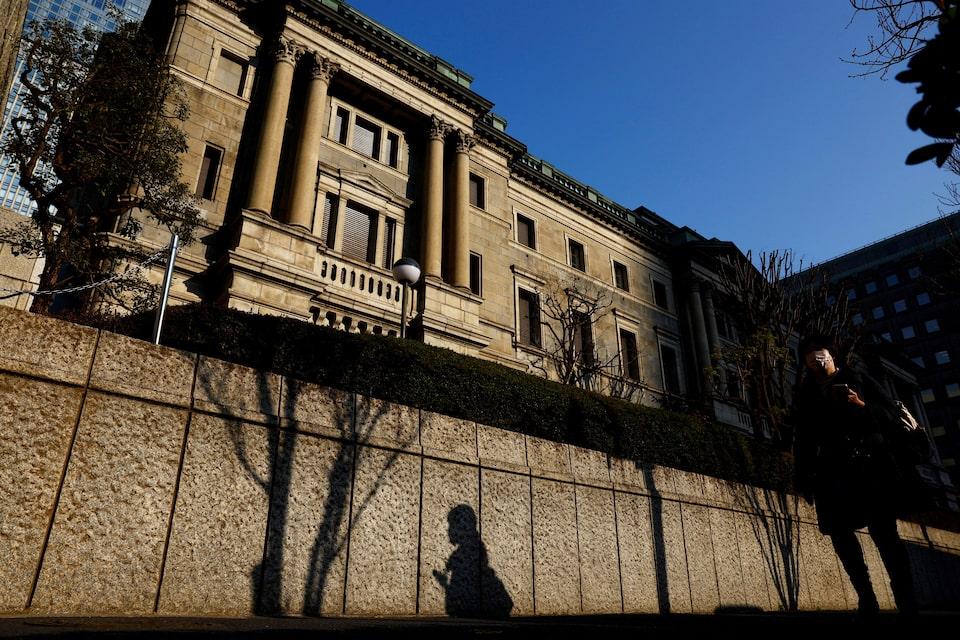
BOJ decision due 0330-0430 GMT Tuesday Board likely to keep short-term rates steady at 0.5% BOJ to mull slowing pace of bond taper from fiscal 2026 Focus on Governor Ueda's view on food inflation Governor Ueda to brief media 0630 GMT TOKYO, June 10 (Reuters) - The Bank of Japan is expected to keep interest rates steady next week and consider slowing reductions in its bond purchases from next fiscal year, a move that would signal its preference to move cautiously in normalising still-easy monetary policy. But BOJ Governor Kazuo Ueda may deliver a less dovish tone on the interest rate outlook on prospects of a de-escalation in global trade tensions caused by U.S. President Donald Trump and persistent sticky domestic food inflation, analysts say. Sign up here. "If trade negotiations between countries proceed and uncertainty over trade policies diminish, overseas economies will resume a moderate growth path. That, in turn, will accelerate Japan's economic growth," Ueda said in a speech last week, signaling the BOJ's readiness to keep raising rates. At its two-day meeting ending June 17, the BOJ is widely expected to leave its short-term policy rate unchanged at 0.5%. Markets are focusing on the board's review of an existing bond-tapering plan running through the March end of the current fiscal year, and the announcement of a new programme that will likely extend through fiscal 2026. Sources have told Reuters the BOJ will make no big changes to the current taper plan and consider slowing the pace of tapering from next fiscal year - a move that signals a preference to avoid big market disruptions. Many analysts expect the BOJ to cut its quarterly taper size to around 200 billion yen from fiscal 2026, half the reduction under the current plan laid out last year. "The taper process has gone smoothly so far, though it makes sense to give markets some room for breather," said a source familiar with the BOJ's thinking. "The BOJ's basic approach is to allow market forces to drive yield moves," a second source said. "But it must also ensure its bond tapering doesn't cause big disruptions in the market." RICE INFLATION IN FOCUS The BOJ ended its yield curve control and began tapering its huge bond buying last year as part of its effort to wean the economy off a decade of massive stimulus. It also raised short-term rates to 0.5% in January on the view Japan was making progress towards durably achieving its 2% inflation target. While risks to Japan's export-heavy economy from U.S. tariffs have pushed backed market bets on the next rate-hike timing, investors are on the lookout for any clues from Ueda on how soon rate increases could resume. Ueda is expected to hold a news conference at 3:30 p.m. (0630 GMT) on June 17 to explain the BOJ's policy decision. The BOJ sharply cut its growth and inflation forecasts at the previous meeting on May 1, when market volatility was at its peak due to fears Trump's threats of higher tariffs could tip the global economy into recession. While Japan has yet to reach a trade deal with the U.S., market jitters have calmed somewhat as Washington takes a more conciliatory tone in trade negotiations including with China. Some analysts say the BOJ may not be able to afford pausing rate hikes for too long due to inflationary pressure from stubbornly high food costs, particularly for Japan's staple rice. Japan's core inflation has exceeded the BOJ's 2% target for over three years and hit a more than two-year high of 3.5% in April due largely to a 7% spike in food prices. While Ueda has predicted a moderation in food inflation, he warns that persistent cost pressures could affect public perceptions of future price moves - signaling the BOJ's growing attention to the risk of too-high inflation. Japan was now experiencing a second round of food price inflation driven by supply shocks, which adds to inflationary momentum from higher wages, Ueda said. "Given that underlying inflation is closer to 2% than a few years ago, we need to be careful about how food price inflation will impact underlying inflation," he said a speech on May 27. "Through Ueda's speech comments, the BOJ appears to be fine-tuning its communication somewhat by flagging not just downside but upside risks" to growth and inflation, said Mari Iwashita, executive rates strategist at Nomura Securities. https://www.reuters.com/markets/asia/boj-consider-slowing-bond-taper-market-jitters-persist-2025-06-10/
2025-06-10 07:32
Dollar-backed stablecoin to be issued on Ethereum, Solana blockchains Public trading expected to start in July -SocGen's crypto arm SG-FORGE sees demand for a regulated dollar-based stablecoin PARIS, June 10 (Reuters) - France's Societe Generale (SOGN.PA) , opens new tab said on Tuesday it plans to launch a publicly tradable, dollar-backed stablecoin through its digital asset subsidiary, making it the first major bank to enter the growing market of dollar-pegged cryptocurrencies. The new digital currency, named "USD CoinVertible", will be issued on both the Ethereum and Solana blockchains, with public trading expected to start in July, SocGen's crypto arm SG-FORGE said in a statement. Sign up here. Stablecoins are a type of cryptocurrency typically pegged to a traditional currency, usually the dollar, allowing people to move large sums of money using blockchain networks instead of traditional banking payment systems. The sector has seen rapid growth, driven by crypto company Tether, which has issued $155 billion of its dollar-pegged tokens. SG-FORGE launched a euro-based stablecoin in 2023, although it has not been widely adopted, with just 41.8 million euros ($47.62 million) in circulation, according to its website. SocGen said its stablecoins are classed as e-money tokens and will be regulated under MiCA, the European Union's landmark crypto regulation adopted in 2023. Tether does not have a licence to operate in the European Union under MiCA. Jean-Marc Stenger, CEO of SG-FORGE, said that there was demand for a regulated dollar-based stablecoin. "At the moment, there are no other banking-related players in that space ... that's definitely the feedback we have from the market, both corporates, financial institutions, but also crypto exchanges," he said. "There is a very, very strong need for well-regulated, robust offering in the crypto and stablecoin space". Stablecoin issuers typically take in dollars from customers and give them the crypto token in return. The issuers profit by investing these dollar holdings into yield-bearing assets such as bonds. BNY will serve as the custodian for SG-FORGE's reserves, which will initially be kept in a cash account, before later being invested into other assets, Stenger said. SG-FORGE said that its token can be used for crypto trading, cross-border payments, foreign exchange transactions and management of collateral and cash, and will be listed on various crypto exchanges, without giving further details. The subsidiary has "more than 15" crypto exchanges and brokers being onboarded as clients, Stenger added. In the U.S., Congress is poised to pass legislation to create a regulatory framework for stablecoins. Bank of America could launch a stablecoin, its CEO said earlier this year, and some other large banks are considering issuing a joint stablecoin. Tether is the world's largest stablecoin issuer. Its CEO said in a post on X that the company was the seventh biggest buyer of U.S. government debt in 2024, because it holds its dollar reserves in Treasuries. The second-largest issuer, Circle, went public on the U.S. stock market on June 5 and saw its shares soar 48% on Friday. Regulators have long warned that stablecoins could impact market stability by creating connections between mainstream finance and more volatile crypto markets. ($1 = 0.8778 euros) https://www.reuters.com/business/finance/societe-generale-launch-dollar-pegged-stablecoin-2025-06-10/