2025-06-10 05:07
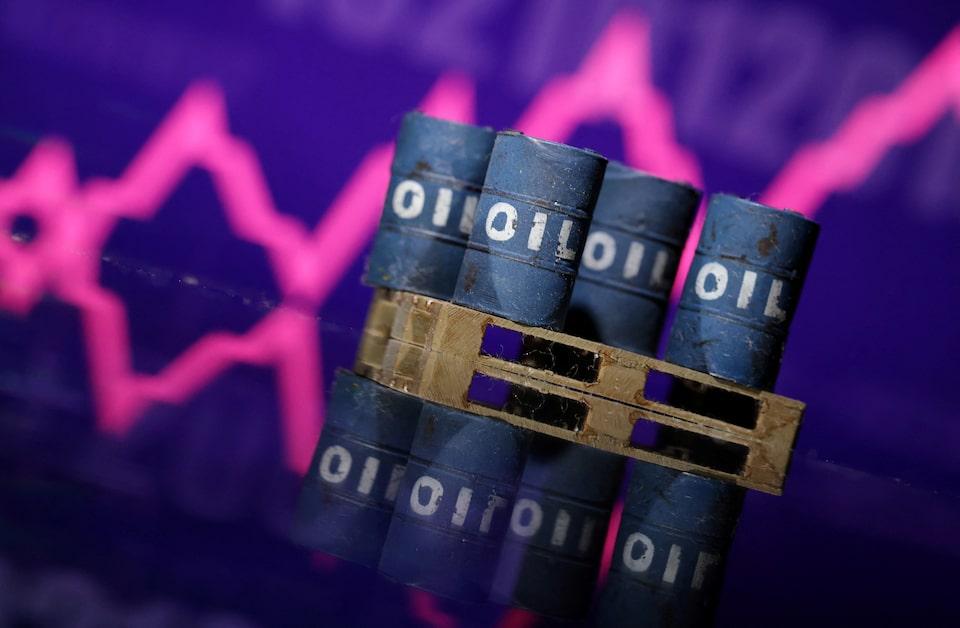
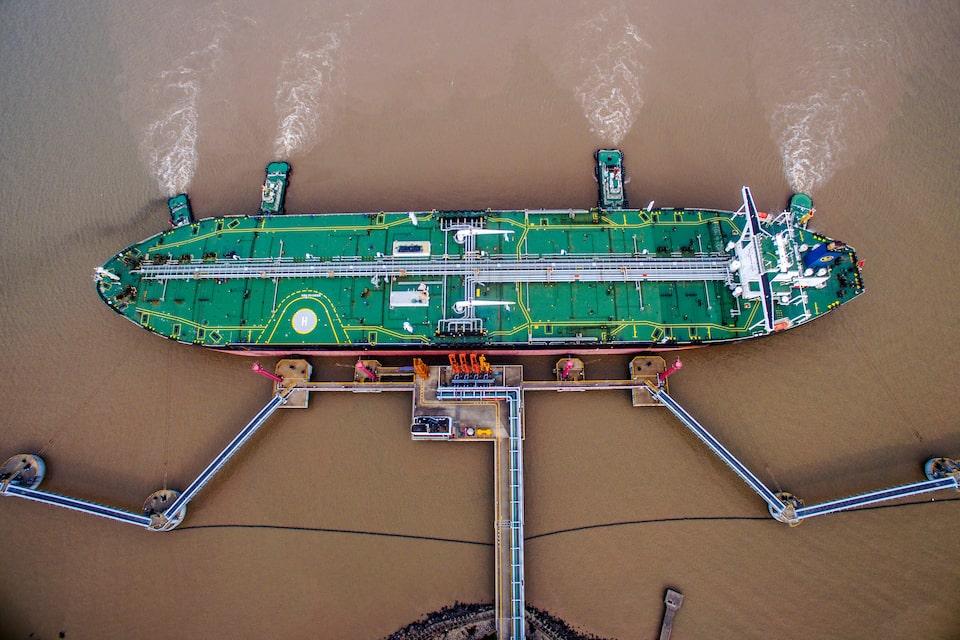
LAUNCESTON, Australia, June 10 (Reuters) - Asian countries aren't rushing to buy U.S. energy commodities, even though lifting imports of crude oil, liquefied natural gas and coal will help meet President Donald Trump's demand for lower trade surpluses. While rare earths may be the immediate talking point in the current talks between the Trump administration and China, the real action behind any deal will be in the big three energy commodities. Sign up here. The same is true for other Asian economies seeking to curry favour with Trump and get a better deal than the hefty tariffs imposed on many in his so-called "Liberation Day" measures announced on April 2, and subsequently paused for 90 days. But in the four full months since Trump returned to the White House, Asia's imports of U.S. energy commodities have actually fallen from the same period last year. Imports of crude oil from February to May declined to 1.53 million barrels per day (bpd) from 1.55 million bpd in the same period in 2024, according to data from commodity analysts Kpler. Asia's imports of U.S. LNG were 4.78 million metric tons in the February to May period, down 40% from the 8.04 million tons in the same four months last year. Arrivals of all grades of coal were 13.79 million tons in the four-month period, down from 14.19 million tons from February to May last year. What these numbers show is that Asia, the world's top commodity importing region, isn't increasing its purchases of U.S. commodities. What the numbers don't show is that within the broader picture there are some dynamics at work that show that some Asian countries may be in the early stages of trying to ramp up imports of U.S. energy. India is buying more from the United States, with Kpler estimating imports of 253,000 bpd of crude oil in the four months from February to May, up from 175,000 bpd over the same period last year. June crude arrivals are forecast by Kpler to be 439,000 bpd, which would be the second-highest monthly total on record. While U.S. oil is still less than 10% of India's total imports, the fact that it is rising in what is a competitive market for pricing may indicate a desire to do more trade with the United States. India has also been buying more U.S. coal, with Kpler data showing imports of 3.1 million tons in May, the highest on record. India's imports of U.S. coal were 8.82 million tons in the four months from February to May, up 12% from the 7.85 million tons for the same period last year. Similar to crude, U.S. coal is a small percentage of India's total coal imports, but the rising imports are worth noting given U.S. coal has a more costly freight component than its competitors from Indonesia, Australia and South Africa. JAPAN, SOUTH KOREA Outside of India, other Asian coal importers haven't been increasing shipments from the United States, with second-biggest buyer Japan importing 1.75 million tons in the February to May period, down from 2.15 million tons for the same months in 2024. Japan has also been buying less U.S. LNG, with only 1.04 million tons arriving from February to May, down from 1.75 million tons for the same period in 2024. The drop in shipments of U.S. LNG to Asia is most likely price-related as higher spot prices have seen cargoes move to Europe, which is using LNG to refill natural gas storages depleted during the northern winter. The loss of China as a market for U.S. LNG amid the ongoing tariff war has also hurt U.S. volumes to Asia, with Kpler showing no cargoes arrived in the world's biggest buyer of the super-chilled fuel in March, April and May. China's imports of U.S. coal have also dropped to almost zero, with only one cargo of around 35,000 tons arriving in May, according to Kpler, while no crude was imported in May. Outside of India, the only other major importer in Asia that has increased its purchases of U.S. energy is South Korea, with imports of crude rising to the second-highest on record in May at 593,000 bpd. South Korea has also lifted its imports of U.S. LNG in recent months, with May's 560,000 tons the highest since October last year, with Kpler forecasting another increase in June to 570,000 tons. However, the overall picture is that Asia's commodity importers are largely holding back on increasing imports of U.S. energy. It may be the case that they are still planning on using imports as leverage in talks with the Trump administration, or it may also be the case that the delivered prices of U.S. crude, coal and LNG are not competitive. But for now buying more U.S. energy in order to lower trade surpluses is not yet a thing in Asia. Enjoying this column? Check out Reuters Open Interest (ROI), your essential new source for global financial commentary. ROI delivers thought-provoking, data-driven analysis of everything from swap rates to soybeans. Markets are moving faster than ever. ROI can help you keep up. Follow ROI on LinkedIn , opens new tab and X , opens new tab. The views expressed here are those of the author, a columnist for Reuters. https://www.reuters.com/markets/commodities/no-rush-us-energy-asias-imports-slip-under-trump-russell-2025-06-10/
2025-06-10 04:59
Rare earths, chips deal in focus on trade talks Sterling weakens after soft labor market data US inflation due on Wednesday, focus on tariff impact Yen steady as Ueda suggests BoJ may stay on pause NEW YORK, June 10 (Reuters) - The dollar gained on Tuesday, helped by comments from U.S. officials that trade negotiations between Beijing and Washington were going well, although there was no clear consensus of a deal as the talks continued for a second day. U.S. Commerce Secretary Howard Lutnick repeated President Donald Trump's upbeat tone on the trade discussions with top Chinese economic officials, but provided no details. Sign up here. Sterling, on the other hand, slid against the greenback as British jobs data pointed to a weaker labor market. Officials from the world's two largest economies were meeting in London to try to defuse a dispute that has widened from tariffs to restrictions over rare earths. Marc Chandler, chief market strategist at Bannockburn Forex in New York, said it was not only tariffs at stake in these negotiations but also export controls, and "that's going to be the basis for the quid pro quo." Chandler said there are the makings of a deal: U.S. semiconductor chips for China's magnets and rare earths. But what should be noted, he said, is the asymmetry. "China can replace the chips that the U.S. exports easier than we can replace their magnets and processed earths." Trump and his Chinese counterpart Xi Jinping spoke by phone last week at a crucial time for both economies as signs of strain emerged from the former's cascade of tariff orders since January. "Should the talks actually produce a substantial deal, traders would deem that to be very good news, and risk-reducing," wrote Thierry Wizman, global FX and rates strategist at Macquarie in New York. "But we would expect that the U.S. would rally, in keeping with the recent pattern of seeing the U.S. dollar act as a risk currency. However, we would also expect that rally to be short-lived." In afternoon trading, the dollar was up 0.2% against the yen at 144.92 yen , having lost about 8.5% against the Japanese currency this year. The yen has been supported overall by safe-haven flows during the market tumult unleashed by Trump's tariffs. The Bank of Japan is also expected to maintain borrowing costs at current levels at next week's policy meeting. Its governor, Kazuo Ueda, suggested on Tuesday that the timing of the next interest rate hike could be pushed back. Risks to Japan's export-heavy economy from Trump's tariffs have pushed back market bets on the timing of the next rate hike, and investors are on the lookout for clues from Ueda on how soon rate increases could resume. British wages rose by a slower-than-forecast 5.2% in the three months to April, pushing sterling down 0.4% against the dollar to $1.3496. The BoE is due to meet next week and is expected to keep the interest rate unchanged. Money market traders are pricing in about 48 basis points of cuts by year-end, up from about 39 bps before the data. The dollar index , which measures the U.S. currency against six others, edged higher to 99.087. It is down more than 8% this year as investors, worried about the impact of tariffs and trade tensions on the U.S. economy and growth, sold some U.S. assets and looked for alternatives. The euro, on the other hand, was flat at $1.1420 , while the Australian dollar , often seen as a proxy for risk sentiment, was also little changed at US$0.6519. Investor focus this week will be on the U.S. consumer price index report for May due on Wednesday. The report could give insight into the impact of tariffs, with investors wary of any flare-ups in inflation ahead of the Federal Reserve's policy meeting next week. The U.S. central bank is also expected to hold rates steady next week, with traders pricing in nearly two 25 basis-point cuts by the end of the year. https://www.reuters.com/world/china/dollar-steady-traders-await-details-us-china-talks-2025-06-10/
2025-06-10 04:34
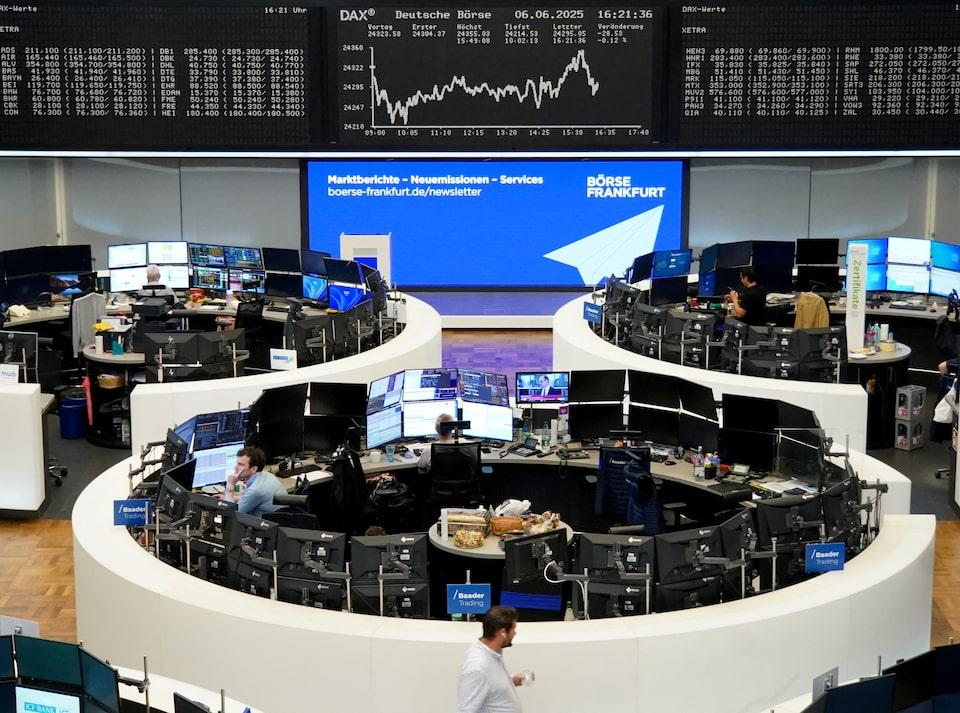
A look at the day ahead in European and global markets from Johann M Cherian With precious little to report out of Sino-U.S. trade talks in London, investors are ready to pounce on almost any sign a thaw in the frigid relationship between the two superpowers is just around the corner. Sign up here. Stocks in Asia are creeping higher, as are U.S. and European equity futures , while the dollar was also a tad firmer after President Donald Trump said he was getting "good reports" from Monday's meeting with China. Talks resume at 0900 GMT on Tuesday at Lancaster House and markets want a deal to flesh out details around U.S. tech export controls and those around Chinese rare earths, and of course, where the final average rate of tariffs will settle. Recent data indicates the trade war is taking a toll on both major economies, which could soon rattle other major economies. Global investors are also in the market for fresh trade deals, with about a month left before Trump's tariff pause expires. Also expected out of the UK will be an employment report with investors and the Bank of England keen on how pay growth - a reflection of broader price pressures - fared in April. Signs of cooling wage growth could be a relief for BoE policymakers who are currently divided on the approach to further monetary policy easing. Meanwhile, the global healthcare sector was caught in the crossfire as vaccine sceptic U.S. Health Secretary Robert F. Kennedy Jr. fired all members of a U.S. Centers for Disease Control and Prevention panel of vaccine experts. The move could be a headache for companies such as GSK (GSK.L) , opens new tab, Sanofi (SASY.PA) , opens new tab, AstraZeneca (AZN.L) , opens new tab, Moderna (MRNA.O) , opens new tab and BioNTech (22UAy.DE) , opens new tab as they face longer waits for vaccine approvals. Advertising firms weren't spared from scrutiny either as the Wall Street Journal reported that the U.S. Federal Trade Commission has sought information from some of the industry's leading firms. Omnicom (OMC.N) , opens new tab, WPP (WPP.L) , opens new tab, Dentsu (4324.T) , opens new tab, Interpublic Group (IPG.N) , opens new tab and Publicis Groupe (PUBP.PA) , opens new tab were among those asked by the watchdog on whether advertising and advocacy groups violated antitrust laws by coordinating boycotts of certain sites. Key developments that could influence markets on Tuesday: - UK May BRC retail sales - UK April employment data - U.S. 3-year Treasury note auction - Reserve Bank of Australia Governance Board meeting Trying to keep up with the latest tariff news? Our new daily news digest offers a rundown of the top market-moving headlines impacting global trade. Sign up for Tariff Watch here. https://www.reuters.com/world/china/global-markets-view-europe-2025-06-10/
2025-06-10 03:02
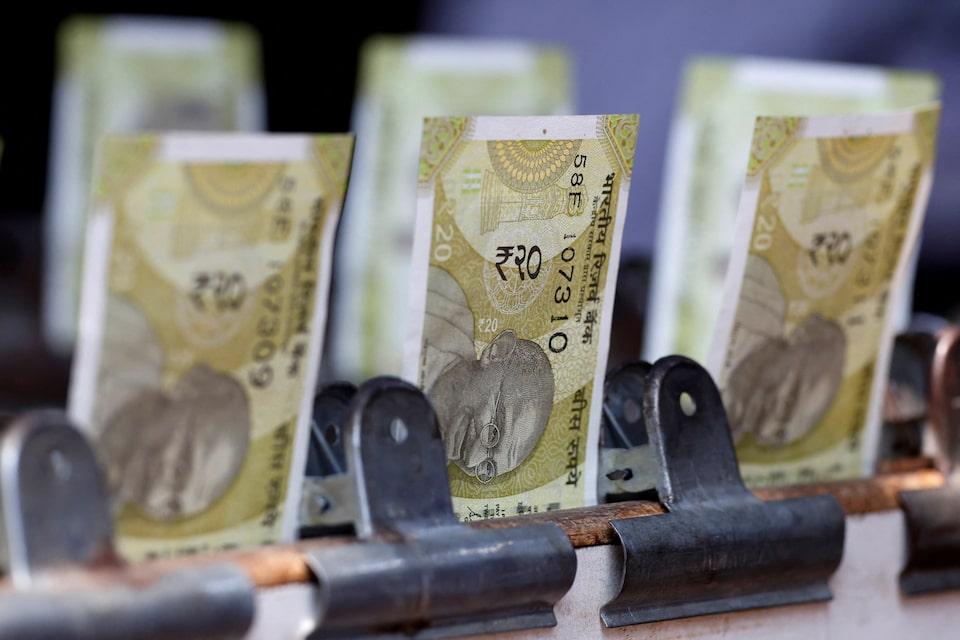
MUMBAI, June 10 (Reuters) - The Indian rupee will likely see slight pressure on Tuesday in the wake of a mostly firm U.S. dollar, while the market focuses on the outcome of the U.S.-China trade talks. The one-month non-deliverable forward indicated an open in the 85.63-85.66 range versus 85.62 in the previous session. Sign up here. The dollar index was up 0.24% on the day, while the majority of the Asian currencies were slightly weaker. "There's not much happening in Asia and the rupee anyway is essentially stuck in a narrow band," said a currency trader at a Mumbai-based bank. "It'll likely be a session with a 20-paisa range at most," he said, adding that the bias, if any, leans modestly to the downside for the rupee. The Reserve Bank of India's (RBI) larger-than-expected 50-basis-points interest rate cut on Friday has had little impact on the rupee so far, the trader pointed out. The currency is marginally higher than it was before the RBI's outsized cut. The market's attention is firmly fixed on updates from London, where the U.S. and Chinese officials are holding trade talks that are aimed at easing trade tensions between the world's two largest economies. On Monday, U.S. President Donald Trump struck an optimistic tone, saying his administration was doing well and that he had received "good reports" on the progress of the discussions. The meeting between the officials of the two countries is set to extend to a second day on Tuesday, with analysts noting that while headline risks around U.S. trade policy have diminished, significant concerns still persist. The uncertainty remains elevated on U.S. trade policy amid concerns about the timeline of any bilateral trade deals and the legality of tariffs following the U.S. Court of International Trade ruling that declared most tariffs illegal, ANZ Bank said. KEY INDICATORS: ** One-month non-deliverable rupee forward at 85.75; onshore one-month forward premium at 8 paise ** Dollar index up at 99.20 ** Brent crude futures up 0.5% to $67.4 per barrel ** Ten-year U.S. note yield at 4.49% ** As per NSDL data, foreign investors bought a net $147.5 million worth of Indian shares on June 6 ** NSDL data shows foreign investors bought a net $85.8 mln worth of Indian bonds on June 6 https://www.reuters.com/world/china/mild-bearish-bias-rupee-dollar-strength-us-china-talks-eyed-2025-06-10/
2025-06-10 02:32
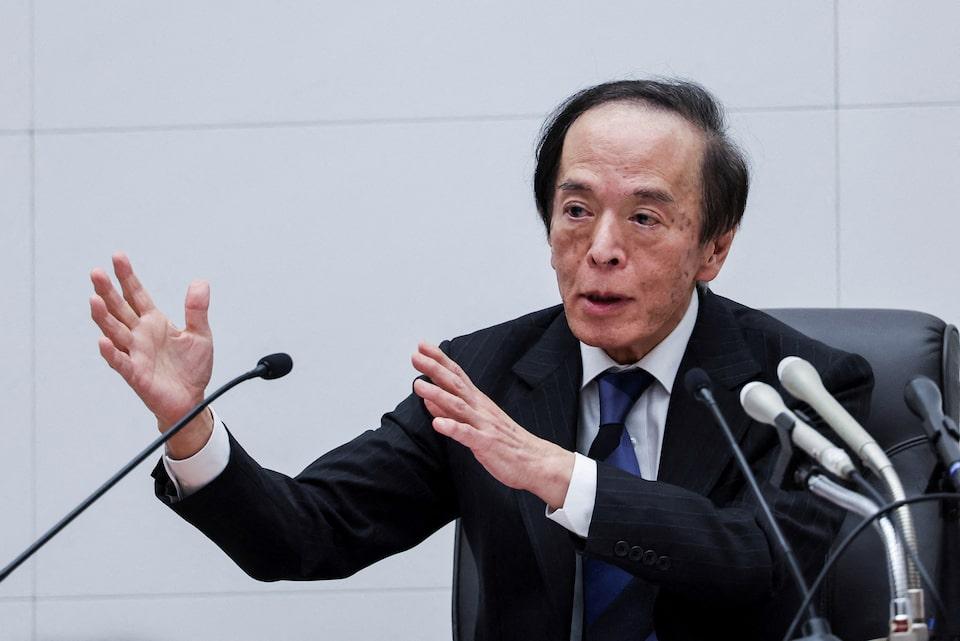
TOKYO, June 10 (Reuters) - Bank of Japan Governor Kazuo Ueda on Tuesday stressed anew the central bank's readiness to keep raising interest rates if underlying inflation approaches its 2% target. The BOJ has said underlying inflation, or demand-driven price pressure measured by various indicators, remains short of its 2% target - even though the broader core consumer inflation has exceeded that level for three years. Sign up here. Ueda said the BOJ is keeping real interest rates negative to ensure that underlying inflation reaches 2%, and stabilises around that level in a sustainable fashion. "Once we have more conviction that underlying inflation will approach 2% or hover around that level, we will continue to raise interest rates to adjust the degree of monetary support," Ueda told parliament. The BOJ ended a decade-long, massive stimulus programme last year and in January raised short-term interest rates to 0.5% on the view Japan was on the cusp of durably meeting its 2% inflation target. While the central bank has signalled readiness to raise rates further, the economic repercussions from higher U.S. tariffs forced it to cut its growth forecasts and complicated decisions around the timing of the next rate increase. Although the BOJ is eyeing further rate hikes, Ueda said the central bank must be mindful of the risk of hitting the zero lower bound again - or being forced to push interest rates down to zero and leaving itself with few tools to battle a recession. "It's not something that could happen immediately. But if the economy and prices come under strong downward pressure, the BOJ would have limited scope to cut interest rates and underpin growth," Ueda said. "That's why we need to be mindful of the zero lower bound." The BOJ is widely expected to keep interest rates steady at 0.5% at its next policy meeting on June 16-17. (This story has been corrected to say 'because,' from 'to ensure,' in paragraph 2) https://www.reuters.com/en/bojs-ueda-vows-keep-raising-rates-if-underlying-inflation-accelerates-2025-06-10/
2025-06-10 00:53
US and China enter second day of talks in London Saudi crude exports to China set to fall slightly Upcoming: US oil inventory data from API and EIA NEW YORK, June 10 (Reuters) - Oil prices held near a seven-week high on Tuesday as the market awaited direction from trade talks between the U.S. and China. Analysts have said a trade deal between the countries with the world's two biggest economies could boost prices by supporting global economic growth and increasing oil demand. Sign up here. Brent crude futures slid 17 cents, or 0.3%, to settle at $66.87 a barrel, while U.S. West Texas Intermediate crude fell 31 cents, or 0.5%, to settle at $64.98. On Monday, Brent settled at its highest since April 22 and WTI at its highest since April 3. Trade talks between the U.S. and China stretched through a second full day and into the evening in London as the two countries pushed for a breakthrough on duelling export controls that have threatened to unravel a delicate tariff truce. U.S. Commerce Secretary Howard Lutnick said trade talks with Chinese officials were going well and he hoped they would end on Tuesday night, but said they could run into Wednesday. The World Bank, meanwhile, slashed its global growth forecast for 2025 by four-tenths of a percentage point to 2.3%, saying that higher tariffs and heightened uncertainty posed a "significant headwind" for nearly all economies. On the supply side, allocations to Chinese refiners showed that Saudi Arabia's state oil company Saudi Aramco will ship about 47 million barrels of oil to China in July, 1 million barrels less than June's allotted volume, Reuters reported. The Saudi allocations could be an early sign that the unwinding of OPEC+ production cuts might not result in much additional supply, said Harry Tchilinguirian, group head of research at Onyx Capital. "The prospect of further hikes in OPEC supply continues to hang over the market," ANZ senior commodity strategist Daniel Hynes said in a note. OPEC+, which pumps about half of the world's oil and includes the Organization of the Petroleum Exporting Countries and allies such as Russia, put forward plans for an output increase of 411,000 barrels per day for July as it looks to unwind production cuts for a fourth straight month. A Reuters survey found OPEC's May increase to oil output was limited, with Iraq, the second biggest OPEC producer behind Saudi Arabia, pumping below target to compensate for earlier overproduction, and Saudi Arabia and the United Arab Emirates making smaller increases than agreed. Elsewhere, Iran said it would soon make a counter-proposal for a nuclear deal in response to a U.S. offer that Tehran deems "unacceptable," while U.S. President Donald Trump made clear that the two sides remained at odds over whether Tehran would be allowed to continue enriching uranium on Iranian soil. Iran is the third-largest OPEC producer and any easing of U.S. sanctions on Tehran should allow Iran to export more oil, which should reduce crude prices. Meanwhile, the European Commission proposed an 18th package of sanctions against Russia for its invasion of Ukraine, aimed at Moscow's energy revenues, banks and military industry. Russia was the world's second biggest crude producer in 2024 behind the U.S., and any increase in sanctions will likely keep more of that oil out of global markets, which could support oil prices. U.S. OIL INVENTORIES AND EXPORTS The American Petroleum Institute trade group and the U.S. Energy Information Administration are due to release U.S. oil inventory data on Tuesday and Wednesday, respectively. , Analysts forecast energy firms pulled about 2 million barrels of oil from U.S. stockpiles during the week ended June 6, marking the first time they withdrew oil from storage for three weeks in a row since January. That compares with an increase of 3.7 million barrels during the same week last year and an average increase of 2.8 million barrels over the past five years (2020-2024). https://www.reuters.com/business/energy/oil-inches-up-outcome-us-china-trade-talks-awaited-2025-06-10/