2025-06-09 23:47
NAPERVILLE, Illinois, June 9 (Reuters) - Second-worst ever. That’s how health conditions for the 2025 U.S. winter wheat crop were described last autumn. But winter wheat ratings now sit at a six-year high for early June, just as the harvest is kicking off. This is exactly what U.S. exporters need to continue – and potentially expand – their impressive sales into next year. Sign up here. As of Sunday, the U.S. Department of Agriculture rated 54% of the U.S. winter wheat crop in good or excellent (GE) condition, above trade expectations and up from 50% two weeks earlier. That is up significantly from 38% GE in late October, which was the crop’s second-worst start in the 39-year dataset. The 16-percentage-point improvement since then is the period’s largest. U.S. winter wheat at 54% GE is the date’s best rating since 64% in 2019. The crop was 62% GE at this point in 2016, which still holds the record U.S. winter wheat yield. Final yields were about 13% and 7% above the long-term trend in 2016 and 2019, respectively. For comparison, winter wheat was 47% GE one year ago and final yields were close to trend. Analysts expect USDA on Thursday to make a marginal increase to its 2025-26 U.S. winter wheat harvest forecast, but the trade has already been wrong on this crop. A month ago, USDA’s crop peg was at the very top of market guesses. USDA a month ago pegged 2025-26 U.S. winter wheat yield at a nine-year high of 53.7 bushels per acre, which would be roughly 3% above trend. RAIN, RAIN, GO AWAY Not everything is going perfectly. The U.S. winter wheat harvest was 4% completed as of Sunday, a weekly advancement of just 1 percentage point. The trade was looking for 8%. In the No. 3 winter wheat state of Oklahoma, only 5% of the crop has been harvested compared with 44% a year ago and a five-year average of 23%. Over the past couple of weeks, top hard red winter wheat (HRW) states like Kansas and Oklahoma have observed more than double their normal rainfall totals. Some HRW wheat areas may continue experiencing heavier rains over the next several days, mainly in the southern portion. Top grower Kansas should remain on the drier side in the next week or so, favoring harvest pace there. If excessive rains were to continue, it could be a problem. Not only do they delay harvest, but they could reduce grain quality, clipping both test weights and starch content and ultimately, the value. Foreign buyers are counting on that wheat. As of May 29, U.S. wheat export sales for the 2025-26 marketing year that began on June 1 sat at a 12-year high for the date following a surge in bookings last month. Some 39% of those bookings were for the HRW variety, the date’s largest portion in five years and up from 24% a year ago. By volume, U.S. HRW export sales for 2025-26 are at a 17-year high. New-crop U.S. hard red spring wheat also rang in 2025-26 with total sales among the best in decades. U.S. spring wheat health is trending positively, too. Some 53% of that crop was rated GE as of Sunday, up from the initial 45% two weeks earlier. Ironically, as with winter wheat, that was spring wheat’s second-worst initial health rating on record. The 53% is still below average for the date, but the big improvement is promising. U.S. spring wheat producers may be able to partly offset their 55-year low in plantings should weather continue its favorable trajectory. Karen Braun is a market analyst for Reuters. Views expressed above are her own. Enjoying this column? Check out Reuters Open Interest (ROI) , opens new tab, your essential new source for global financial commentary. ROI delivers thought-provoking, data-driven analysis of everything from swap rates to soybeans. Markets are moving faster than ever. ROI , opens new tab can help you keep up. Follow ROI on LinkedIn , opens new tab and X. , opens new tab https://www.reuters.com/markets/commodities/us-wheat-gets-glow-up-multiyear-highs-crop-health-export-sales-braun-2025-06-09/

2025-06-09 23:15
Takes total government investment to 17.8 billion pounds Project will supply 6 million homes with electricity Total expected cost of the project not revealed LONDON, June 10 (Reuters) - Britain will invest a further 14.2 billion pounds ($19.25 billion) to build the Sizewell C nuclear plant in southeast England, the government said on Tuesday, as part of its wider spending review which will define its priorities over the next four years. Britain is seeking to build new nuclear plants to replace its ageing fleet to boost its energy security, reach its climate targets and also create new jobs. Sign up here. The funding announced on Tuesday takes the total amount the government has committed to the project to 17.8 billion pounds, with 3.6 billion pounds invested prior to the spending review. "This Labour Government is launching a new era of nuclear power here in Britain," Chancellor Rachel Reeves told a trade union conference on Tuesday, calling the investment the biggest rollout of nuclear power in a generation. The Sizewell C plant in Suffolk is expected to create around 10,000 jobs during the peak of construction, and produce enough electricity to power around 6 million homes when built. Britain has been seeking to bring new investors into the project but Tuesday's announcement did not mention any other parties. The government has not said how much the project is expected to cost in total or given a date for when it is expected to be completed. "With the continued secrecy about Sizewell C's total cost, how can voters decide whether the 18 billion pounds pledged to Sizewell C is a good use of their money?" said Alison Downes of campaign group Stop Sizewell C. It would be only the second new nuclear plant built in Britain in more than two decades, after French state-owned EDF's Hinkley Point C which has had several delays and cost overruns and is currently expected to start operations in 2029, with an estimated cost of between 31 and 34 billion pounds at 2015 prices. EDF initially said Sizewell C would be around 20% cheaper than Hinkley C. Simone Rossi, CEO of EDF in the UK welcomed the British government's decision to go ahead with Sizewell C and said: "It is also a vote of confidence in Hinkley Point C, which has re-started the UK nuclear industry and built the experience and skills that will benefit Sizewell C." Sizewell C was originally being developed by EDF and China's General Nuclear Power Group but the government bought out the Chinese firms stake in 2022 amid security concerns. The UK government's stake was 83.8% and EDF's stake was 16.2% at the end of December, EDF financial results showed in February with EDF's stake expected to decrease following Tuesday's announcement. The project's developer last December told Reuters there were five investors involved in a bidding process. ($1 = 0.7378 pounds) https://www.reuters.com/sustainability/boards-policy-regulation/britain-invest-142-billion-pounds-sizewell-c-nuclear-project-2025-06-09/

2025-06-09 23:04
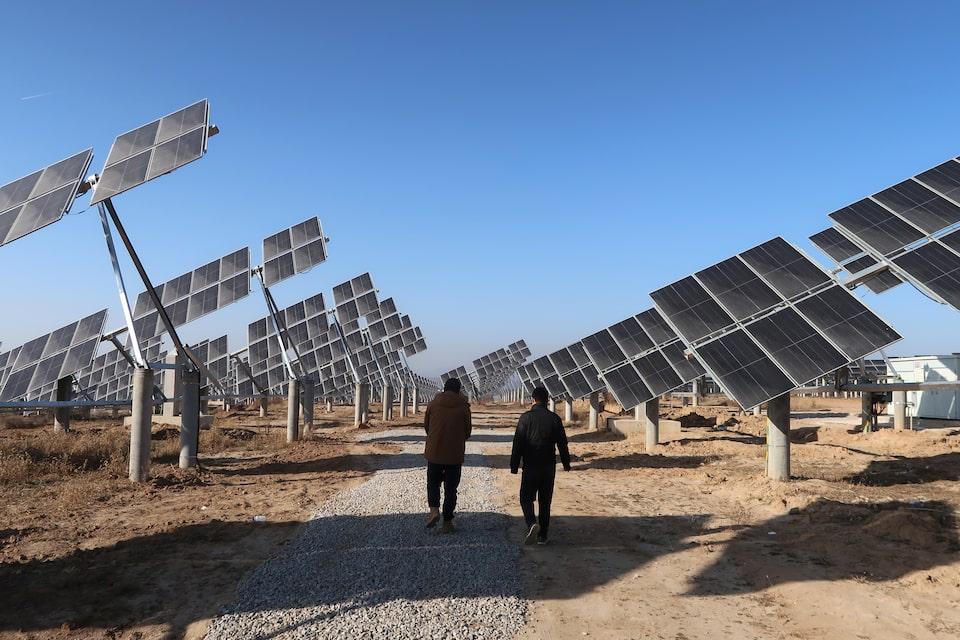
SNEC PV+ Photovoltaic Power Conference runs June 10-13 Chinese solar panel producers face losses amid oversupply Beijing cutting back on subsidies, creating demand uncertainty SHANGHAI, June 10 (Reuters) - As the world's biggest solar energy conference kicks off in Shanghai on Tuesday, the mood is likely to be subdued as Chinese solar panel producers grapple with oversupply and price reforms. Most of the world's solar farms are powered by cells and modules made in China, but the country's top producers are facing billions of dollars in losses as breakneck competition has pushed prices below cost level. Sign up here. Producers are trimming back production in response, just as they also face uncertainty about the outlook for demand due to policy changes on solar power project investment. Participants at the annual SNEC PV+ Photovoltaic Power Conference and Exhibition - which runs until Friday and is expected to draw half a million people from around the world - will be watching speeches from executives at top manufacturers like Trina Solar (688599.SS) , opens new tab and Longi Green Energy (601012.SS) , opens new tab for what comes next. Global output of solar panels dropped 7% in May from the previous month and will fall by another 4-5% in June, according to industry research outlet Shanghai Metals Market. But that may be a drop in the ocean as production capacity in China alone has reached more than twice the level of global demand in recent years. Last year, solar manufacturing heads called for help from the Chinese government, which subsequently introduced limited measures such as voluntary investment guidelines for solar photovoltaic (PV) manufacturing projects in an effort to rein in overcapacity. Still, China solar module prices as of the end of May were down nearly 30% from a year earlier, according to the OPIS assessment for advanced TOPCon modules. Complicating matters is uncertainty about the demand outlook for cells and modules as Beijing is scaling back subsidies for renewable energy projects after the boom in solar and wind power installations. New solar plants commissioned after June 1 will have to sell their power into the market instead of receiving a guaranteed rate benchmarked to the price of coal. The industry is still waiting for most of China's provincial governments to explain how their power auctions will work, and whether generators will receive a price backstop, known as a contract for difference. Officials in renewables-rich Inner Mongolia decided not to offer any price guarantee for new renewables built in the province's eastern grid, according to a report from industry website BJX.com citing official documents. "In my view, this is like the provincial government saying: 'We don't need any more renewables this year,'" said David Fishman, principal at Hong Kong-based the Lantau Group, an energy-focused consultancy, of the plan in a social media post on May 30. "'We don't care if anyone builds a single new wind or solar farm this year... If you still want to build, you'll have to find your own customers - don't come looking for me to derisk your project!'" https://www.reuters.com/sustainability/climate-energy/losses-pricing-reform-focus-shanghai-hosts-worlds-largest-solar-conference-2025-06-09/
2025-06-09 21:55
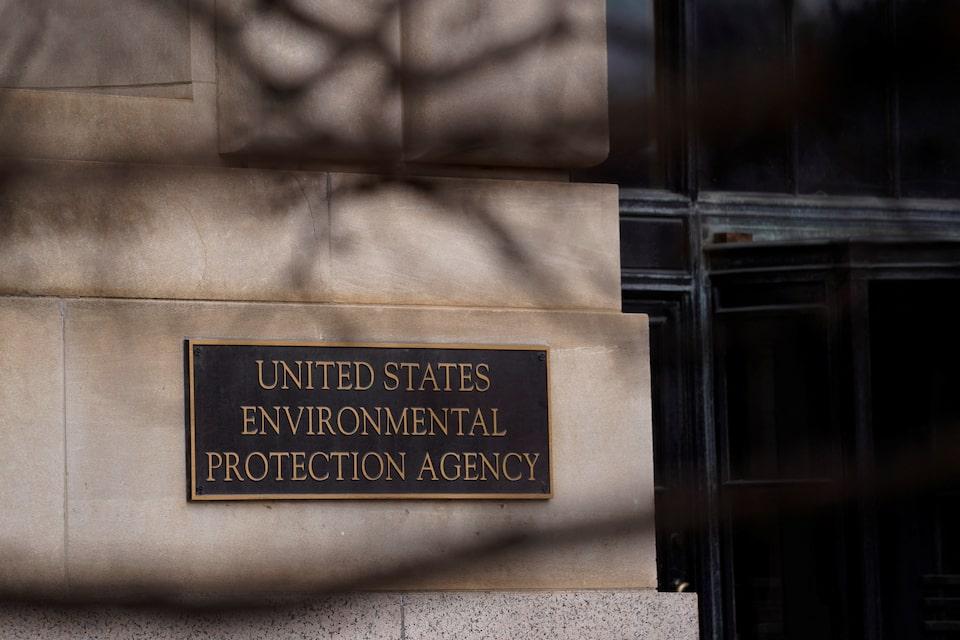
WASHINGTON, June 9 (Reuters) - The U.S. Environmental Protection Agency on Monday proposed approving Texas' application to oversee its own permitting for projects to inject carbon dioxide underground, a move long sought by that state's regulators and oil and gas companies with projects in the wings. EPA Administrator Lee Zeldin said Texas is best positioned to protect its drinking water from contamination while enabling lucrative CO2 injection projects, also known as carbon capture and storage (CCS) projects to mitigate climate change, to proceed. Sign up here. Carbon injection will enable the permanent storage of CO2 emissions from power plants and industrial facilities deep underground, a way some companies seek to offset the emissions from their operations. "EPA is taking a key step to support cooperative federalism by proposing to approve Texas to permit Class VI [CO2 injection] wells in the state,” Zeldin said in a statement. The planned approval comes amid concerns by some landowners and environmental groups that pumping CO2 into the ground could harm their groundwater and exacerbate earthquakes and old oil-well blowouts already happening in the Permian Basin as Texas struggles to manage wastewater disposal, for which it already has oversight authority. Federal tax credits to incentivize carbon sequestration projects that were expanded under the former Biden administration's Inflation Reduction Act legislation have been left largely intact, even as House Republicans voted to gut or defang other similar subsidies for clean energy and electric vehicles. The Trump administration, Republicans and some oil companies, like Occidental (OXY.N) , opens new tab, have maintained support for CCS technology, even as President Donald Trump has sought to roll back most regulations aimed at reducing CO2 and other greenhouse gas emissions. Oil companies that have expertise in deep underground drilling see an opportunity to expand their businesses by branching out to carbon sequestration. Some companies with industrial projects that still have voluntary emission reduction targets may seek to bury their CO2 emissions to reduce their carbon footprint “Texas is a leader in energy production, and part of that is pioneering carbon capture and storage practices,” said Texas Republican Senator John Cornyn. https://www.reuters.com/sustainability/boards-policy-regulation/us-epa-proposes-giving-texas-authority-oversee-co2-injection-permits-2025-06-09/
2025-06-09 21:43
BUENOS AIRES, June 9 (Reuters) - Argentina's central bank rolled out a broad package of economic measures on Monday to boost reserves, including a repurchase agreement, or repo, of up to $2 billion. The move comes ahead of an expected review with the International Monetary Fund of the country's recently signed $20 billion loan agreement. Sign up here. Argentina agreed with the IMF to strengthen its net foreign exchange reserves by $4.4 billion by the first review of the program, and has said it will not purchase dollars locally to do so. By last December, those reserves were in the red. The central bank will hold a dollar repo auction with international banks on June 11, the central bank said, following a $1 billion operation in December, as part of efforts to reinforce international reserves. The measures are included in President Javier Milei's 'Phase 3' economic plan, which includes easing monetary controls, floating the peso, and cleaning up the central bank's balance sheet. The central bank also said the market will now determine the interest rate, instead of the authority fixing a monetary policy rate. "This reorganization consolidates a more conventional monetary aggregates control framework, eliminating the notion of a 'monetary policy interest rate' typical of schemes such as inflation targeting," the central bank said. "Instead, the interest rate will be determined endogenously by the market, in line with a regime centered on monetary aggregates." The monetary authority did not immediately provide more detail on the benchmark rate, which had been set at 29%. The measures add to a recently issued $1 billion bond, further boosting reserves. In April, Argentina scrapped a crawling peg and let the peso float in a range between 1,000 and 1,400 pesos per dollar, while also undoing capital controls which restricted access to dollars. https://www.reuters.com/world/americas/argentina-launches-2-billion-repurchase-agreement-boost-reserves-2025-06-09/

2025-06-09 21:15
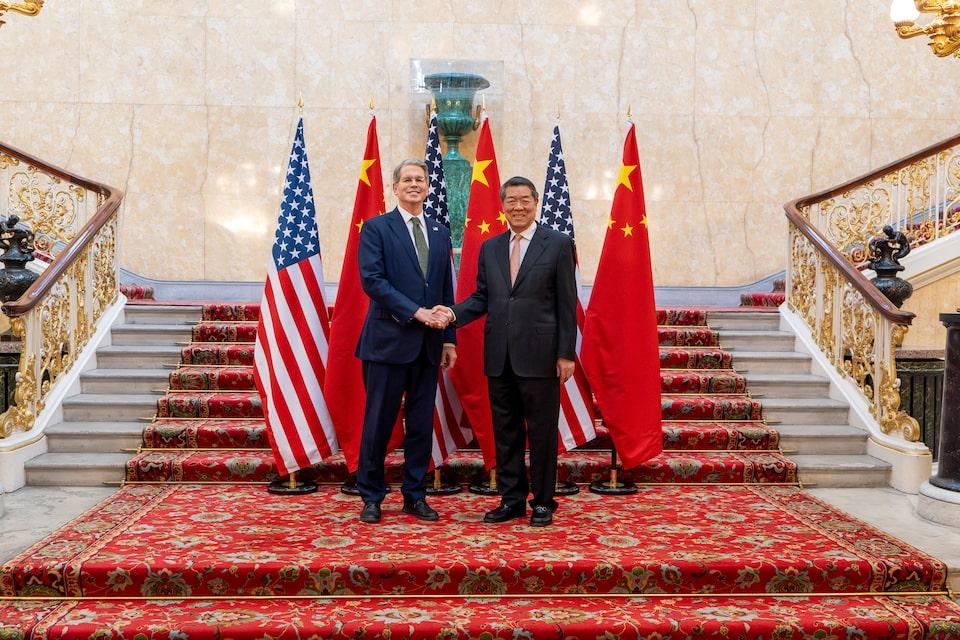
ORLANDO, Florida, June 9 (Reuters) - TRADING DAY Making sense of the forces driving global markets Sign up here. By Jamie McGeever, Markets Columnist I'm excited to announce that I'm now part of Reuters Open Interest (ROI), an essential new source for data-driven, expert commentary on market and economic trends. You can find ROI on the Reuters website, and you can follow us on LinkedIn and X. Trade tensions, policy uncertainty and shaky economic data continue to cloud the near-term outlook for world growth, but they remain on the back burner for now as investors kick off the week by pushing global stock markets higher. In my column today I look at why the dollar has depreciated significantly this year regardless of how U.S. stocks and bonds have performed. The main reason? Hedging. More on that below, but first, a roundup of the main market moves. If you have more time to read, here are a few articles I recommend to help you make sense of what happened in markets today. Today's Key Market Moves London calling, stocks crawling higher It was a fairly quiet start to the week across global markets on Monday, with strong equity gains in Asia followed by a grind higher on Wall Street which lifted the MSCI World index to a fresh record high. The main areas of focus for investors were China's economic 'data dump' for May, then the high-level U.S.-China trade talks in London. The two are connected - the U.S. is a less important market for China than it used to be, underscored in May's trade figures from Beijing and reflected in the lack of concrete progress from the negotiations in London. China's total exports rose 4.8% in May from a year earlier but this masks a huge split between the U.S. and the rest of the world. Exports to the U.S. plunged 34.4% year-on-year in value terms, the sharpest drop since February 2020 just before the pandemic, while exports to the rest of the world rose 11.4%. Monthly data are volatile, of course, and May's figures were also distorted by tariffs. Still, U.S.-bound shipments worth $28.8 billion last month were just 9% of the total $316 billion. Economist Phil Suttle notes that is less than half the average share in the decade leading up to President Donald Trump's first trade war. The London talks are expected to continue on Tuesday. But as was the case following Trump's telephone call with Chinese leader Xi Jinping on Thursday, there is little indication of a significant breakthrough, far less China bending to U.S. demands. "U.S. Treasury Secretaries who live in unbalanced economies might not want to throw barbs such as the 'most unbalanced in modern history' at China without first looking at some data," Suttle wrote on Monday. "The choice to fight an opponent should be conditioned on a clear-headed view of its strengths and weaknesses. The U.S. has done a marvelous job of (once again) deluding itself on this front," Suttle added. Still, divisions between the two countries and the threat to global supply chains are proving no barrier to rising stock markets. Japan's Nikkei and the MSCI emerging and Asia ex-Japan indexes rose around 1%, Hong Kong-listed tech stocks rose nearly 3%, and Wall Street closed in the green. Meanwhile, the dollar's trend this year of declining despite U.S. stocks and bonds rising was on full display on Monday. Wall Street closed slightly higher and Treasury yields fell as much as 5 basis points at the short end of the curve, yet the dollar slipped. Many analysts say one of the main reasons for this is non-U.S. investor hedging - more on that below. Dollar floored as investors seek that extra hedge All three major U.S. asset classes – stocks, bonds and the currency – have had a turbulent 2025 thus far, but only one has failed to weather the storm: the dollar. Hedging may be a major reason why. Wall Street's three main indices and the ICE BofA U.S. Treasury index are all slightly higher for the year to date, despite the post-'Liberation Day' volatility, while the dollar has steadily ground lower, losing around 10% of its value against a basket of major currencies and breaking long-standing correlations along the way. The dollar was perhaps primed for a fall. It's easy to forget, but only a few months ago the 'U.S. exceptionalism' narrative was alive and well, and the dollar scaling heights rarely seen in the past two decades. But that narrative has evaporated, as U.S. President Donald Trump's controversial economic policies and isolationist posture on the global stage have made investors reconsider their exposure to U.S. assets. But why is the dollar feeling the burn more than stocks or bonds? PENSION FUND-AMENTALS Non-U.S. investors often protect themselves against sharp currency fluctuations via the forward, futures or options markets. The difference now is that the risk premium being built into U.S. assets is pushing them – especially equity holders – to hedge their dollar exposure more than they have in the past. Foreign investors have long hedged their bond exposure, with dollar hedge ratios traditionally around 70% to 100%, according to Morgan Stanley, as currency moves can easily wipe out modest bond returns. But non-U.S. equity investors have been much more loath to pay for protection, with dollar hedge ratios averaging between 10% and 30%. This is partly because the dollar was traditionally seen as a 'natural' hedge against stock market exposure, as it would typically rise in 'risk off' periods when stocks fell. The dollar would also normally appreciate when the U.S. economy and markets were thriving – the so-called 'Dollar Smile' – giving an additional boost to U.S. equity returns in good times. A good barometer of global 'real money' investors' view on the dollar is how willing foreign pension and insurance funds are to hedge their dollar-denominated assets. Recent data on Danish funds' currency hedging is revealing. Danish funds' U.S. asset hedge ratio surged to around 75% from around 65% between February and April. According to Deutsche Bank analysts, that 10 percentage point rise is the largest two-month increase in over a decade. Anecdotal evidence suggests similar shifts are taking place across Scandinavia, the euro zone and Canada, regions where dollar exposure is also high. The $266 billion Ontario Teachers' Pension Plan reported a $6.9 billion foreign currency gain last year, mainly due to the stronger dollar. Unless the fund has increased its hedging ratio this year, it will be sitting on huge foreign currency losses. "Investors had embraced U.S. exceptionalism and were overweight U.S. assets. But now, investors are increasing their hedging," says Sophia Drossos, economist and strategist at the hedge fund Point72. And there is a lot of dollar exposure to hedge. At the end of March foreign investors held $33 trillion of U.S. securities, with $18.4 trillion in equities and $14.6 trillion in debt instruments. RIDING OUT THE STORM The dollar's malaise has upended its traditional relationships with stocks and bonds. Its generally negative correlation with stocks has reversed, as has the usually positive correlation with bonds. The divergence with Treasuries has gained more attention, with the dollar diving as yields have risen. But as Deutsche Bank's George Saravelos notes, the correlation breakdown with stocks is "very unusual". When Wall Street has fallen this year the dollar has fallen too, but at a much faster pace. And when Wall Street has risen the dollar has also bounced, but only slightly. This has led to the strongest positive correlation between the dollar and S&P 500 in years, though that's a bit deceptive, as the dollar is sharply down on the year while stocks are mildly stronger. Of course, what we could be seeing is simply a rebalancing. Saravelos estimates that global fixed income and equity managers' dollar exposure was at near record-high levels in the run-up to the recent trade war. This was a "cyclical" phenomenon over the last couple of years rather than a deep-rooted structural one based on fundamentals, meaning it could be reversed relatively quickly. But, regardless, the dollar's hedging headwind seems likely to persist. "Given the size of foreign holdings of both stocks and bonds, even a modest uptick in hedge ratios could prove a considerable FX flow," Morgan Stanley's FX strategy team wrote last month. "As long as uncertainty and volatility persist, we think that hedge ratios are likely to rise as investors ride out the storm." What could move markets tomorrow? Opinions expressed are those of the author. They do not reflect the views of Reuters News, which, under the Trust Principles , opens new tab, is committed to integrity, independence, and freedom from bias. https://www.reuters.com/business/autos-transportation/global-markets-trading-day-graphic-pix-2025-06-09/