2025-06-09 21:55
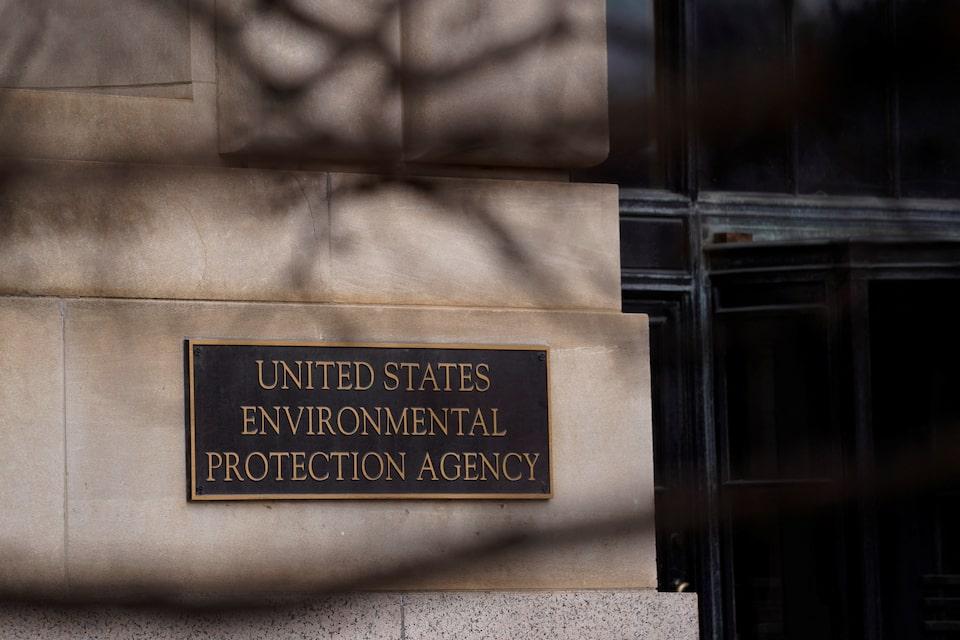
WASHINGTON, June 9 (Reuters) - The U.S. Environmental Protection Agency on Monday proposed approving Texas' application to oversee its own permitting for projects to inject carbon dioxide underground, a move long sought by that state's regulators and oil and gas companies with projects in the wings. EPA Administrator Lee Zeldin said Texas is best positioned to protect its drinking water from contamination while enabling lucrative CO2 injection projects, also known as carbon capture and storage (CCS) projects to mitigate climate change, to proceed. Sign up here. Carbon injection will enable the permanent storage of CO2 emissions from power plants and industrial facilities deep underground, a way some companies seek to offset the emissions from their operations. "EPA is taking a key step to support cooperative federalism by proposing to approve Texas to permit Class VI [CO2 injection] wells in the state,” Zeldin said in a statement. The planned approval comes amid concerns by some landowners and environmental groups that pumping CO2 into the ground could harm their groundwater and exacerbate earthquakes and old oil-well blowouts already happening in the Permian Basin as Texas struggles to manage wastewater disposal, for which it already has oversight authority. Federal tax credits to incentivize carbon sequestration projects that were expanded under the former Biden administration's Inflation Reduction Act legislation have been left largely intact, even as House Republicans voted to gut or defang other similar subsidies for clean energy and electric vehicles. The Trump administration, Republicans and some oil companies, like Occidental (OXY.N) , opens new tab, have maintained support for CCS technology, even as President Donald Trump has sought to roll back most regulations aimed at reducing CO2 and other greenhouse gas emissions. Oil companies that have expertise in deep underground drilling see an opportunity to expand their businesses by branching out to carbon sequestration. Some companies with industrial projects that still have voluntary emission reduction targets may seek to bury their CO2 emissions to reduce their carbon footprint “Texas is a leader in energy production, and part of that is pioneering carbon capture and storage practices,” said Texas Republican Senator John Cornyn. https://www.reuters.com/sustainability/boards-policy-regulation/us-epa-proposes-giving-texas-authority-oversee-co2-injection-permits-2025-06-09/
2025-06-09 21:43
BUENOS AIRES, June 9 (Reuters) - Argentina's central bank rolled out a broad package of economic measures on Monday to boost reserves, including a repurchase agreement, or repo, of up to $2 billion. The move comes ahead of an expected review with the International Monetary Fund of the country's recently signed $20 billion loan agreement. Sign up here. Argentina agreed with the IMF to strengthen its net foreign exchange reserves by $4.4 billion by the first review of the program, and has said it will not purchase dollars locally to do so. By last December, those reserves were in the red. The central bank will hold a dollar repo auction with international banks on June 11, the central bank said, following a $1 billion operation in December, as part of efforts to reinforce international reserves. The measures are included in President Javier Milei's 'Phase 3' economic plan, which includes easing monetary controls, floating the peso, and cleaning up the central bank's balance sheet. The central bank also said the market will now determine the interest rate, instead of the authority fixing a monetary policy rate. "This reorganization consolidates a more conventional monetary aggregates control framework, eliminating the notion of a 'monetary policy interest rate' typical of schemes such as inflation targeting," the central bank said. "Instead, the interest rate will be determined endogenously by the market, in line with a regime centered on monetary aggregates." The monetary authority did not immediately provide more detail on the benchmark rate, which had been set at 29%. The measures add to a recently issued $1 billion bond, further boosting reserves. In April, Argentina scrapped a crawling peg and let the peso float in a range between 1,000 and 1,400 pesos per dollar, while also undoing capital controls which restricted access to dollars. https://www.reuters.com/world/americas/argentina-launches-2-billion-repurchase-agreement-boost-reserves-2025-06-09/

2025-06-09 21:15
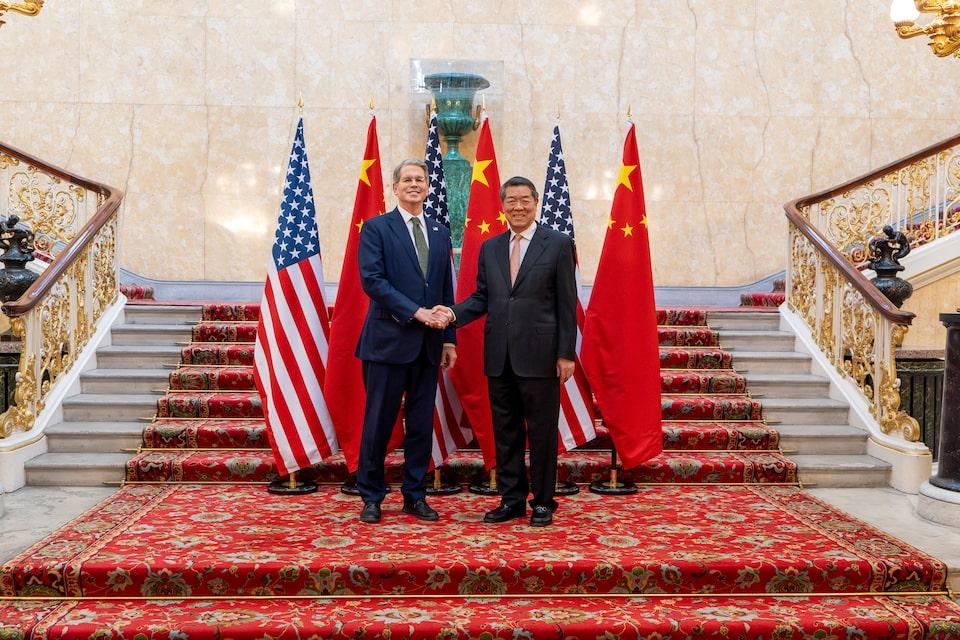
ORLANDO, Florida, June 9 (Reuters) - TRADING DAY Making sense of the forces driving global markets Sign up here. By Jamie McGeever, Markets Columnist I'm excited to announce that I'm now part of Reuters Open Interest (ROI), an essential new source for data-driven, expert commentary on market and economic trends. You can find ROI on the Reuters website, and you can follow us on LinkedIn and X. Trade tensions, policy uncertainty and shaky economic data continue to cloud the near-term outlook for world growth, but they remain on the back burner for now as investors kick off the week by pushing global stock markets higher. In my column today I look at why the dollar has depreciated significantly this year regardless of how U.S. stocks and bonds have performed. The main reason? Hedging. More on that below, but first, a roundup of the main market moves. If you have more time to read, here are a few articles I recommend to help you make sense of what happened in markets today. Today's Key Market Moves London calling, stocks crawling higher It was a fairly quiet start to the week across global markets on Monday, with strong equity gains in Asia followed by a grind higher on Wall Street which lifted the MSCI World index to a fresh record high. The main areas of focus for investors were China's economic 'data dump' for May, then the high-level U.S.-China trade talks in London. The two are connected - the U.S. is a less important market for China than it used to be, underscored in May's trade figures from Beijing and reflected in the lack of concrete progress from the negotiations in London. China's total exports rose 4.8% in May from a year earlier but this masks a huge split between the U.S. and the rest of the world. Exports to the U.S. plunged 34.4% year-on-year in value terms, the sharpest drop since February 2020 just before the pandemic, while exports to the rest of the world rose 11.4%. Monthly data are volatile, of course, and May's figures were also distorted by tariffs. Still, U.S.-bound shipments worth $28.8 billion last month were just 9% of the total $316 billion. Economist Phil Suttle notes that is less than half the average share in the decade leading up to President Donald Trump's first trade war. The London talks are expected to continue on Tuesday. But as was the case following Trump's telephone call with Chinese leader Xi Jinping on Thursday, there is little indication of a significant breakthrough, far less China bending to U.S. demands. "U.S. Treasury Secretaries who live in unbalanced economies might not want to throw barbs such as the 'most unbalanced in modern history' at China without first looking at some data," Suttle wrote on Monday. "The choice to fight an opponent should be conditioned on a clear-headed view of its strengths and weaknesses. The U.S. has done a marvelous job of (once again) deluding itself on this front," Suttle added. Still, divisions between the two countries and the threat to global supply chains are proving no barrier to rising stock markets. Japan's Nikkei and the MSCI emerging and Asia ex-Japan indexes rose around 1%, Hong Kong-listed tech stocks rose nearly 3%, and Wall Street closed in the green. Meanwhile, the dollar's trend this year of declining despite U.S. stocks and bonds rising was on full display on Monday. Wall Street closed slightly higher and Treasury yields fell as much as 5 basis points at the short end of the curve, yet the dollar slipped. Many analysts say one of the main reasons for this is non-U.S. investor hedging - more on that below. Dollar floored as investors seek that extra hedge All three major U.S. asset classes – stocks, bonds and the currency – have had a turbulent 2025 thus far, but only one has failed to weather the storm: the dollar. Hedging may be a major reason why. Wall Street's three main indices and the ICE BofA U.S. Treasury index are all slightly higher for the year to date, despite the post-'Liberation Day' volatility, while the dollar has steadily ground lower, losing around 10% of its value against a basket of major currencies and breaking long-standing correlations along the way. The dollar was perhaps primed for a fall. It's easy to forget, but only a few months ago the 'U.S. exceptionalism' narrative was alive and well, and the dollar scaling heights rarely seen in the past two decades. But that narrative has evaporated, as U.S. President Donald Trump's controversial economic policies and isolationist posture on the global stage have made investors reconsider their exposure to U.S. assets. But why is the dollar feeling the burn more than stocks or bonds? PENSION FUND-AMENTALS Non-U.S. investors often protect themselves against sharp currency fluctuations via the forward, futures or options markets. The difference now is that the risk premium being built into U.S. assets is pushing them – especially equity holders – to hedge their dollar exposure more than they have in the past. Foreign investors have long hedged their bond exposure, with dollar hedge ratios traditionally around 70% to 100%, according to Morgan Stanley, as currency moves can easily wipe out modest bond returns. But non-U.S. equity investors have been much more loath to pay for protection, with dollar hedge ratios averaging between 10% and 30%. This is partly because the dollar was traditionally seen as a 'natural' hedge against stock market exposure, as it would typically rise in 'risk off' periods when stocks fell. The dollar would also normally appreciate when the U.S. economy and markets were thriving – the so-called 'Dollar Smile' – giving an additional boost to U.S. equity returns in good times. A good barometer of global 'real money' investors' view on the dollar is how willing foreign pension and insurance funds are to hedge their dollar-denominated assets. Recent data on Danish funds' currency hedging is revealing. Danish funds' U.S. asset hedge ratio surged to around 75% from around 65% between February and April. According to Deutsche Bank analysts, that 10 percentage point rise is the largest two-month increase in over a decade. Anecdotal evidence suggests similar shifts are taking place across Scandinavia, the euro zone and Canada, regions where dollar exposure is also high. The $266 billion Ontario Teachers' Pension Plan reported a $6.9 billion foreign currency gain last year, mainly due to the stronger dollar. Unless the fund has increased its hedging ratio this year, it will be sitting on huge foreign currency losses. "Investors had embraced U.S. exceptionalism and were overweight U.S. assets. But now, investors are increasing their hedging," says Sophia Drossos, economist and strategist at the hedge fund Point72. And there is a lot of dollar exposure to hedge. At the end of March foreign investors held $33 trillion of U.S. securities, with $18.4 trillion in equities and $14.6 trillion in debt instruments. RIDING OUT THE STORM The dollar's malaise has upended its traditional relationships with stocks and bonds. Its generally negative correlation with stocks has reversed, as has the usually positive correlation with bonds. The divergence with Treasuries has gained more attention, with the dollar diving as yields have risen. But as Deutsche Bank's George Saravelos notes, the correlation breakdown with stocks is "very unusual". When Wall Street has fallen this year the dollar has fallen too, but at a much faster pace. And when Wall Street has risen the dollar has also bounced, but only slightly. This has led to the strongest positive correlation between the dollar and S&P 500 in years, though that's a bit deceptive, as the dollar is sharply down on the year while stocks are mildly stronger. Of course, what we could be seeing is simply a rebalancing. Saravelos estimates that global fixed income and equity managers' dollar exposure was at near record-high levels in the run-up to the recent trade war. This was a "cyclical" phenomenon over the last couple of years rather than a deep-rooted structural one based on fundamentals, meaning it could be reversed relatively quickly. But, regardless, the dollar's hedging headwind seems likely to persist. "Given the size of foreign holdings of both stocks and bonds, even a modest uptick in hedge ratios could prove a considerable FX flow," Morgan Stanley's FX strategy team wrote last month. "As long as uncertainty and volatility persist, we think that hedge ratios are likely to rise as investors ride out the storm." What could move markets tomorrow? Opinions expressed are those of the author. They do not reflect the views of Reuters News, which, under the Trust Principles , opens new tab, is committed to integrity, independence, and freedom from bias. https://www.reuters.com/business/autos-transportation/global-markets-trading-day-graphic-pix-2025-06-09/
2025-06-09 20:49
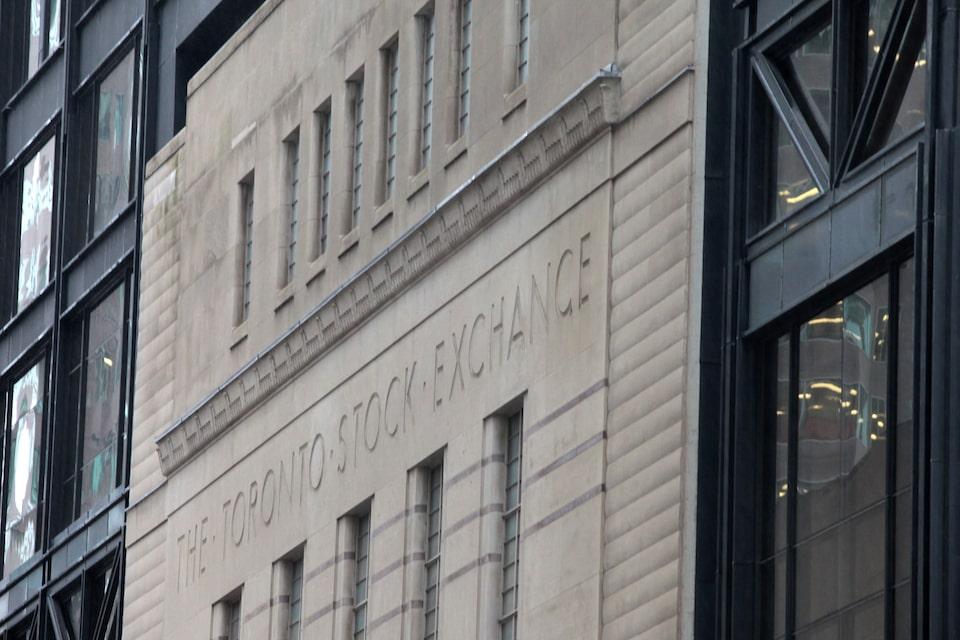
TSX ends down 0.2% at 26,375.80 Canada vows to hit NATO defense spending target Bombardier gains 5.4% Tech sector falls 0.8% June 9 (Reuters) - Canada's main stock index edged lower on Monday as technology and financial shares lost ground, but the move was restrained as investors weighed prospects of Canada reaching a trade deal with the United States. The S&P/TSX composite index (.GSPTSE) , opens new tab ended down 53.33 points, or 0.2%, at 26,375.80, after posting on Friday a record closing high. Sign up here. U.S. President Donald Trump said that he was getting good reports as U.S. officials hold trade talks with China in London. "As much as Trump seems to be having positive talks with China, there's some optimism that he's getting close to doing a deal with Canada as well and I think that's been a lot of the reason why the Canadian dollar is doing better and also why the TSX is back to an all-time high," said Greg Taylor, chief investment officer at PenderFund Capital Management. The Canadian dollar edged higher against its U.S. counterpart as Canadian Prime Minister Mark Carney said his government would hit NATO's military spending target of 2% of GDP this fiscal year, five years earlier than promised, a move that some analysts say could ease the path to a trade deal with the United States. Canada has been under pressure from the United States and other NATO allies for years to increase military funding. Shares of jet maker Bombardier (BBDb.TO) , opens new tab and aviation simulation and training company CAE (CAE.TO) , opens new tab gained 5.4% and 2.3%, respectively. Still, the industrials sector ended 0.2% lower, while financials lost 0.3% and technology was down 0.8%. The materials sector added 0.6% as gold and copper prices climbed. Shares of uranium supplier Cameco jumped 10.7% after a number of analysts raised their price target on the stock. https://www.reuters.com/markets/europe/tsx-futures-lifted-by-gains-metal-prices-eyes-us-china-trade-talks-2025-06-09/
2025-06-09 20:20
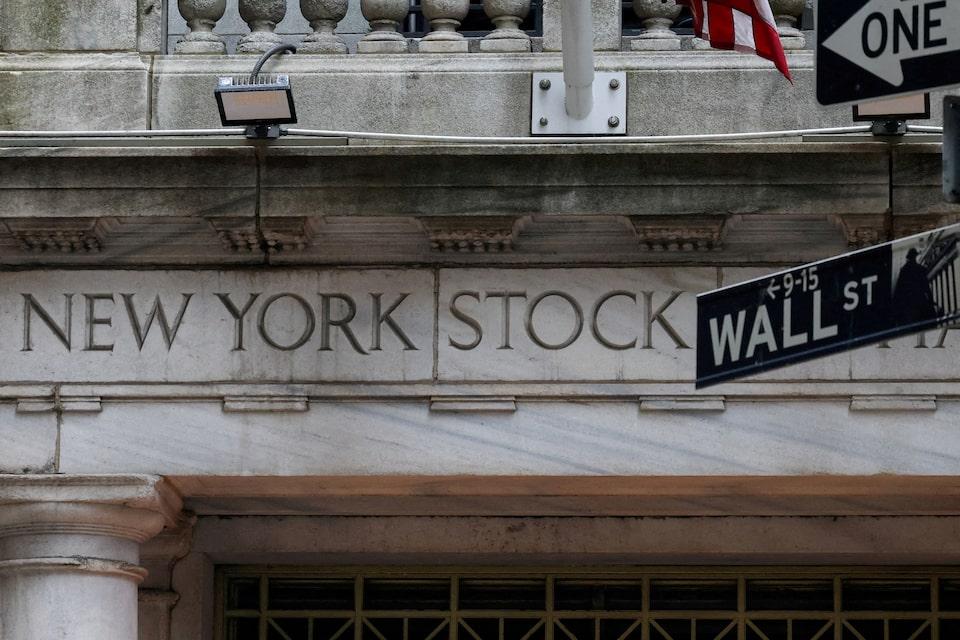
Robinhood falls after platform left out of S&P 500 Warner Bros shares down after co said it plans to split businesses McDonald's falls after Morgan Stanley downgrade S&P 500 +0.09%, Nasdaq +0.31%, Dow flat June 9 (Reuters) - The S&P 500 ended slightly higher on Monday, lifted by Amazon and Alphabet, while investors watched U.S.-China negotiations aimed at mending a trade dispute that has rattled financial markets for much of the year. Top officials from both countries have kicked off discussions, looking to get back on track with a preliminary trade agreement struck last month that had briefly cooled tensions between the world's largest economies. Sign up here. “The market deems any dialogue with Beijing as progress, whether or not it leads to tangible results. The market is just going to take the administration's word for it, until proven otherwise,” said Jake Dollarhide, CEO of Longbow Asset Management in Tulsa, Oklahoma. Amazon (AMZN.O) , opens new tab and Google parent Alphabet (GOOGL.O) , opens new tab each gained more than 1% and helped keep the S&P 500 in positive territory. Amazon.com said it plans at least $20 billion in Pennsylvania to expand data center infrastructure, adding to the billions of dollars the technology giant has committed to the expansion of artificial intelligence. Apple (AAPL.O) , opens new tab dipped 1.2% after the iPhone maker kicked off its annual software developer conference with incremental developments that did little to impress investors. The S&P 500 climbed 0.09% to end the session at 6,005.88 points. The Nasdaq gained 0.31% to 19,591.24 points, while the Dow Jones Industrial Average ended essentially unchanged at 42,761.76 points. Of the 11 S&P 500 sector indexes, six declined, led lower by utilities (.SPLRCU) , opens new tab, down 0.66%, followed by a 0.55% loss in financials (.SPSY) , opens new tab. Expectations of more trade deals between the U.S. and its major trading partners, along with upbeat earnings and tame inflation data, helped U.S. equities rally in May, with the S&P 500 and the tech-heavy Nasdaq (.IXIC) , opens new tab notching their best monthly gains since November 2023. The S&P 500 remained about 2% below its all-time high touched in February, while the Nasdaq is about 3% below its December record high. Warner Bros Discovery (WBD.O) , opens new tab fell about 3% after the company said it would separate its studios and streaming business from its struggling cable television networks. Immediately after the announcement, it had surged as much as 13%. Shares of McDonald's dipped 0.8% after Morgan Stanley downgraded the fast-food restaurant to "equal-weight" from "overweight". Robinhood Markets (HOOD.O) , opens new tab dropped almost 2% after S&P Dow Jones Indices left S&P 500 constituents unchanged in its latest rebalancing, following recent speculation that the online brokerage would be added to the benchmark index. Major data releases this week include readings on May consumer prices on Wednesday and initial jobless claims on Thursday. While investors widely expect the Federal Reserve to keep interest rates unchanged next week, focus will be on any signs of pick-up in inflation as Trump's tariffs risk raising price pressures. Advancing issues outnumbered falling ones within the S&P 500 (.AD.SPX) , opens new tab by a 1.1-to-one ratio. The S&P 500 posted 16 new highs and 4 new lows; the Nasdaq recorded 97 new highs and 46 new lows. Volume on U.S. exchanges was relatively light, with 17.1 billion shares traded, compared to an average of 17.8 billion shares over the previous 20 sessions. https://www.reuters.com/world/china/wall-street-futures-subdued-ahead-us-china-trade-talks-2025-06-09/
2025-06-09 20:03
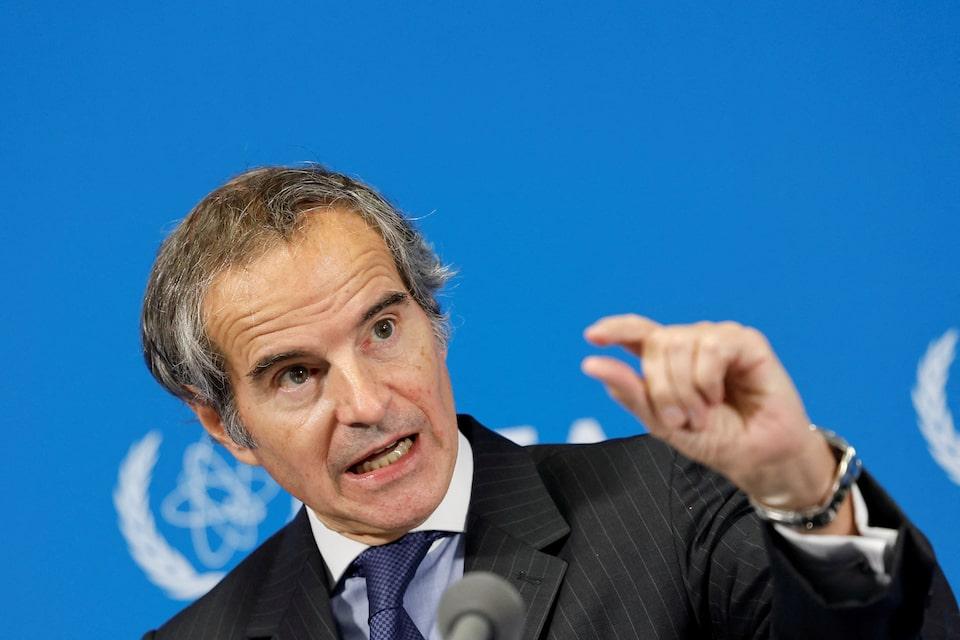
CAIRO, June 9 (Reuters) - International Atomic Energy Agency (IAEA) chief Rafael Grossi said Iranians warned him that an Israel strike on the country's nuclear facilities could cause Iran to be more determined about developing a nuclear weapon, according to an interview broadcast and published on Monday. “A strike could potentially have an amalgamating effect, solidifying Iran’s determination – I will say it plainly – to pursue a nuclear weapon or withdraw from the Treaty on the Non-Proliferation of Nuclear Weapons,” Grossi said in the interview, published on the Jerusalem Post website and broadcast on i24NEWS TV on Monday. Sign up here. Grossi, however, doubted that Israel would strike Tehran's nuclear facilities, the Jerusalem Post reported. The Iranian nuclear program "runs wide and deep," Grossi told the Jerusalem Post. "Disrupting them would require overwhelming and devastating force." Tehran and Washington have recently engaged in Oman-mediated nuclear talks. Iran is set to hand a counter-proposal for a nuclear deal to the United States via Oman, Iranian foreign ministry spokesperson Esmaeil Baghaei said on Monday, in response to a U.S. offer that Tehran deems "unacceptable". Last week, U.S. President Donald Trump said he had warned Israeli Prime Minister Benjamin Netanyahu not to take actions that could disrupt nuclear talks with Iran. "I told him this would be inappropriate to do right now because we're very close to a solution now," Trump told reporters in the Oval Office. "That could change at any moment." Trump and Netanyahu are expected to speak over the phone on Monday. (This story has been corrected to fix the name of the television channel to i24NEWS in paragraph 2) https://www.reuters.com/world/middle-east/iaea-chief-relays-iran-warning-against-israeli-strikes-nuclear-facilities-2025-06-09/