2025-06-09 12:22
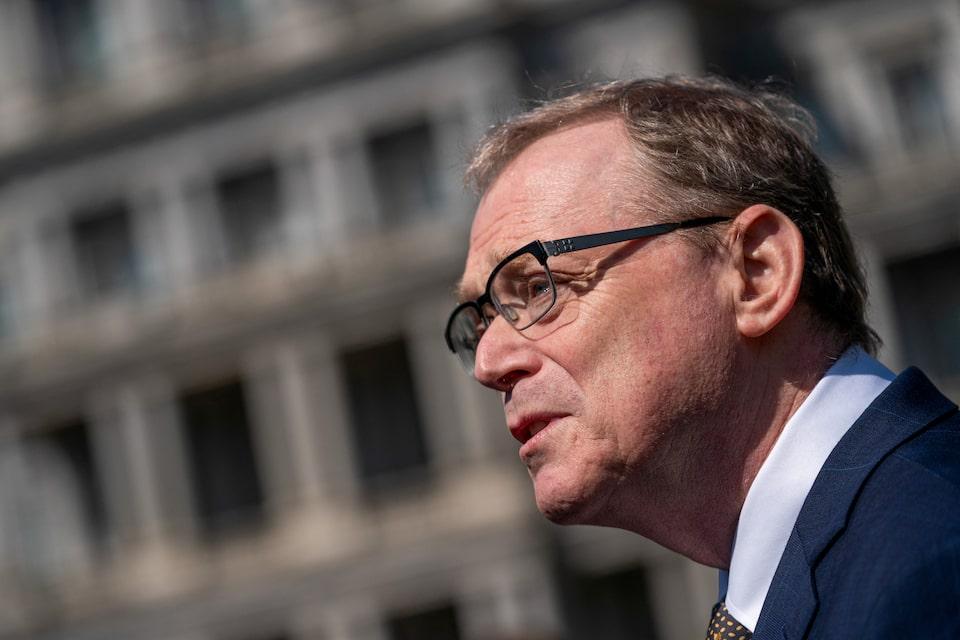
WASHINGTON, June 9 (Reuters) - The three top U.S. trade negotiators are seeking a handshake with China in London talks to seal the agreement on rare earths reached by Presidents Donald Trump and Xi Jinping, White House economic adviser Kevin Hassett said on Monday. "The purpose of the meeting today is to make sure that they're serious, but to literally get handshakes," Hassett, director of the National Economic Council, told CNBC in an interview. Sign up here. "I expect it to be a short meeting with a big, strong handshake," Hassett added. Treasury Secretary Scott Bessent, Commerce Secretary Howard Lutnick and U.S. Trade Representative Jamieson Greer were set to meet with Chinese counterparts in London on Monday to defuse the trade dispute between the two superpowers that has widened in recent weeks to include export controls over goods critical to global supply chains. Chinese export controls on rare earths was a very significant sticking point, Hassett said. With China controlling most of the global rare earth and magnet supply, its restrictions on sending those to the U.S. could disrupt production for American companies, including automakers, that rely on those materials, he said. Asked about the Chinese objection to U.S. curbs on semiconductor exports, Hassett said: "Our expectation is that after the handshake, then immediately after the handshake, any export controls from the U.S. will be eased, and the rare earths will be released in volume, and then we can go back to negotiating smaller matters." https://www.reuters.com/world/china/us-seeking-handshake-rare-earths-china-white-house-aide-says-2025-06-09/
2025-06-09 12:19
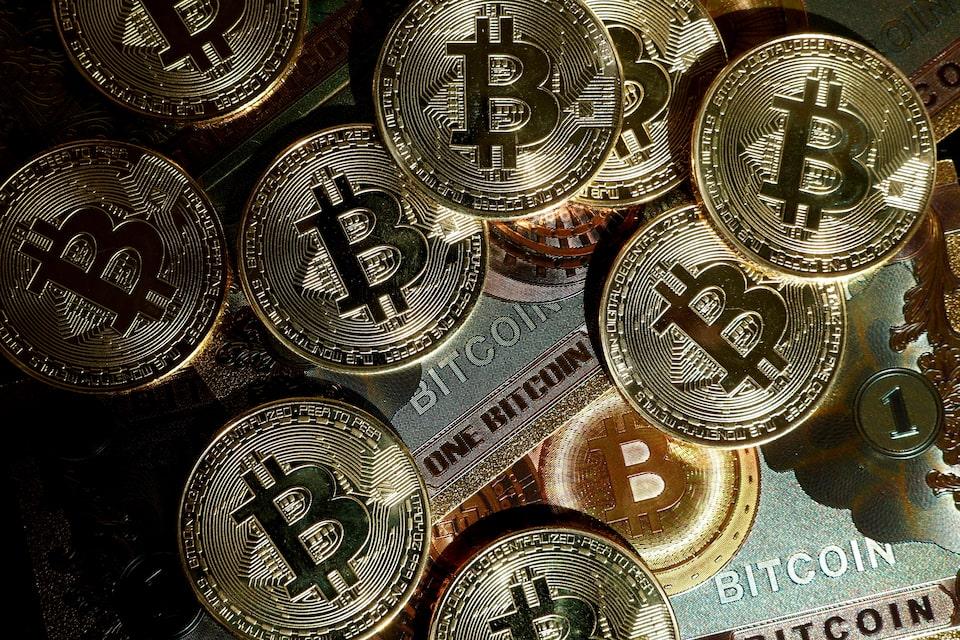
June 9 (Reuters) - (This June 9 story has been corrected to change the last name of the analyst and founder of Coin Bureau to Puckrin, not Puckri, in paragraph 5) Assets held in crypto funds hit a record high in May as easing trade tensions lifted risk appetite and some investors used the digital currencies to hedge against market volatility and diversify from their U.S. holdings. Sign up here. Morningstar data on 294 crypto funds shows they attracted $7.05 billion in net inflows last month, the highest since December, bringing total assets under management to a record $167 billion. Nicolas Lin, CEO of fintech firm Aether Holdings, said bitcoin "is starting to come into its own again", not just as a high-volatility asset, but as something that more investors are using to hedge their exposure. Bitcoin has gained more than 15% over the past three months, outperforming a 3.6% rise in the MSCI World Index (.MIWO00000PUS) , opens new tab and a 13.3% gain for gold. Nic Puckrin, analyst and founder of Coin Bureau, said one of the main drivers of bitcoin's rise is a loss of faith in the U.S. investment story. "The greenback is projected to keep plummeting, bond yields are rising, there’s uncertainty about the equity markets. But bitcoin seems to be holding strong." Bitcoin has been buoyed by institutional inflows over the past year following the approval of spot bitcoin and ether ETFs in the United States. In contrast to the crypto funds, Lipper data showed a net $5.9 billion flowed out of global equity funds in May, while gold funds posted their first outflow in 15 months, of $678 million, pointing to a broader shift in portfolio diversification. "I think flows will stay strong, but probably more steady than the rush we saw after the ETFs launched," said Aether Holdings' Lin. "That initial wave was a bit of a release valve. What’s happening now is more important, it’s the start of crypto becoming a permanent fixture in diversified portfolios." According to Coinshares data, bitcoin funds attracted a net $5.5 billion and ether funds a net $890 million in May. https://www.reuters.com/sustainability/boards-policy-regulation/crypto-funds-assets-hit-record-high-investors-hedge-diversify-2025-06-09/
2025-06-09 11:59
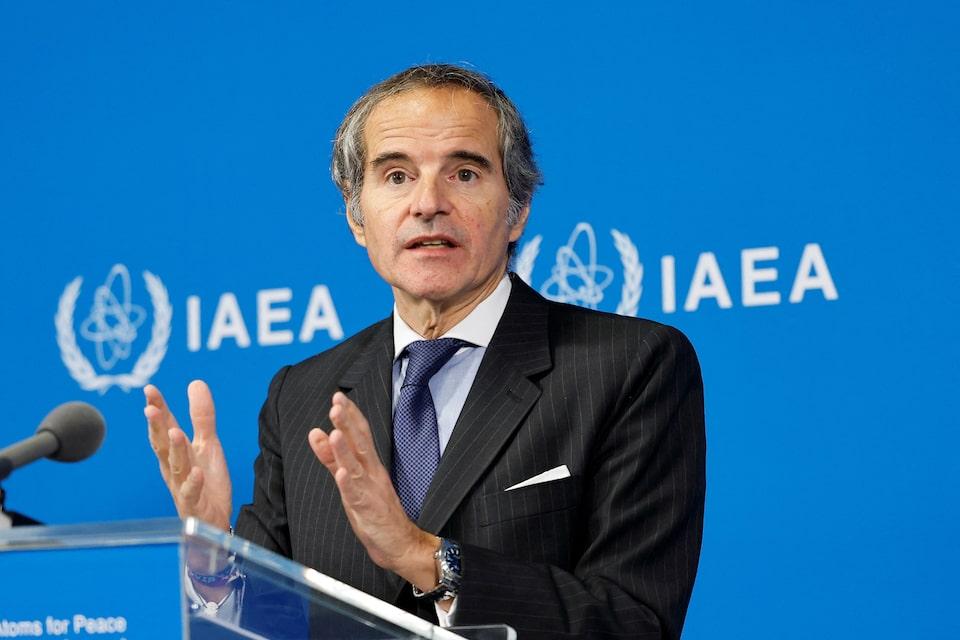
IAEA report said Iran 'actively collected' documents Iran said the accusation is slanderous, unsubstantiated Grossi says material includes assessments on equipment VIENNA, June 9 (Reuters) - Iran's acquisition of confidential U.N. nuclear watchdog documents is a 'bad' step that goes against the spirit of cooperation that should exist between the agency and Tehran, its chief Rafael Grossi said on Monday. The International Atomic Energy Agency said in a confidential report on Iran to member states on May 31 seen by Reuters that it had "conclusive evidence of highly confidential documents belonging to the Agency having been actively collected and analysed by Iran". Sign up here. The report said that "raises serious concerns regarding Iran's spirit of collaboration" and could undermine the IAEA's work in Iran, but Tehran said in a statement to member states last week that the accusation in the report was "slanderous" and had been made "without presenting any substantiated proof or document". The IAEA's 35-nation Board of Governors is holding a quarterly meeting this week. The United States, Britain, France and Germany plan to propose a resolution for the board to adopt that would declare Iran in breach of its non-proliferation obligations over other failings outlined in the report. "Here, unfortunately, and this dates to a few years ago ... we could determine with all clarity that documents that belong to the agency were in the hands of Iranian authorities, which is bad," Grossi told a press conference. "We believe that an action like this is not compatible with the spirit of cooperation." Asked about the nature of the documents and whether they were originally Iranian ones that had been seized by Israel and supplied to the agency, Grossi said: "No. We received documents from member states, and also we have our own assessments on documents, on equipment, etc." https://www.reuters.com/world/china/iran-obtaining-iaea-documents-is-bad-shows-poor-cooperation-grossi-says-2025-06-09/
2025-06-09 11:55
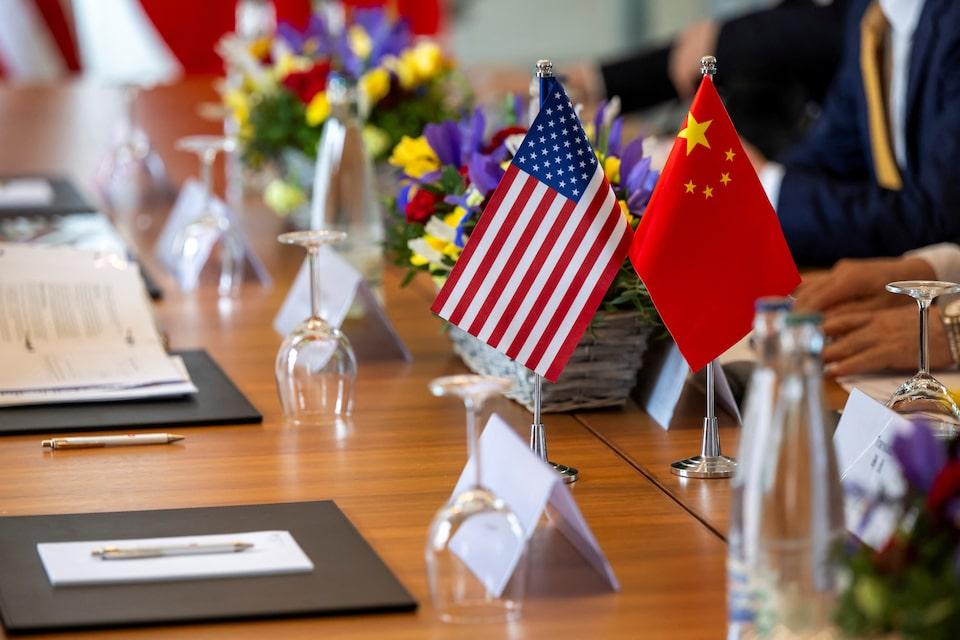
Sides look to get Geneva trade truce back on track 'China's not easy' but talks going well, Trump says US wants 'handshake' on export controls, says White House adviser Inclusion of Lutnick signals importance of rare earths Geneva deal had fostered a global relief rally in stocks LONDON, June 9 (Reuters) - U.S.-China trade talks were set to extend to a second day in London as top economic officials from the world's two largest economies sought to defuse a bitter dispute that has widened from tariffs to restrictions over rare earths, threatening a global supply chain shock and slower economic growth. Talks at Lancaster House, an ornate UK government mansion, wrapped for the night on Monday and were set to resume at 10 a.m. BST (0900 GMT) on Tuesday, a U.S. source familiar with the negotiations said. Sign up here. Washington and Beijing are trying to revive a temporary truce struck in Geneva that had briefly lowered trade tensions and calmed markets. Since then, the U.S. has accused China of slow-walking its commitments, particularly around rare earths shipments. U.S. President Donald Trump on Monday put a positive spin on the talks, saying that they were going well and he was "only getting good reports" from his team in London. "We're doing well with China. China's not easy," Trump said, offering no details on the substance of the discussions. Asked about lifting export controls, Trump told reporters at the White House: "We're going to see." White House economic adviser Kevin Hassett had said earlier on Monday that the U.S. team wanted a handshake from China on rare earths after Trump said Chinese President Xi Jinping agreed to resume shipments in a rare call between the two leaders last week. Hassett told CNBC in an interview that the U.S. would expect export controls to be eased and rare earths released in volume immediately afterwards. The London talks come at a crucial time for both economies, which are showing signs of strain from Trump's cascade of tariff orders since his return to the White House in January. Customs data showed that China's exports to the U.S. plunged 34.5% year-on-year in May in value terms, the sharpest drop since February 2020, when the outbreak of the COVID-19 pandemic upended global trade. In the U.S., business and household confidence has taken a pummeling, while first-quarter gross domestic product contracted due to a record surge in imports as Americans front-loaded purchases to beat anticipated price increases. So far, the impact on inflation has been muted and the jobs market has remained fairly resilient, though economists expect cracks to become more apparent over the summer. Attending the talks in London are U.S. Treasury Secretary Scott Bessent, Commerce Secretary Howard Lutnick and U.S. Trade Representative Jamieson Greer. The Chinese contingent led by Vice Premier He Lifeng includes Commerce Minister Wang Wentao and the ministry's chief trade negotiator, Li Chenggang. The inclusion of Lutnick, whose agency oversees export controls for the U.S., is one indication of how central rare earths have become. Some analysts saw it as a sign that Trump is willing to put recently imposed Commerce Department export restrictions on the table. China holds a near-monopoly on rare earth magnets, a crucial component in electric vehicle motors. Lutnick did not attend the Geneva talks at which the countries struck a 90-day deal to roll back some of the triple-digit tariffs they had placed on each other. Meanwhile, the U.S. court fight over an effort to invalidate Trump's tariffs on goods from China and other trading partners advanced on Monday with the Trump administration filing arguments in its appeal of a U.S. trade court's ruling that the levies exceeded Trump's legal authority. The federal appeals court could rule at any time on the Trump administration's request to keep the tariffs in place while the appeal proceeds. It could go all the way to the Supreme Court. POSITIVE CONCLUSION Trump and Xi spoke by phone last week, their first direct interaction since Trump's January 20 inauguration. During the call, Xi told Trump to back down from trade measures that roiled the global economy and warned him against threatening steps on Taiwan, according to a Chinese government summary. But Trump said on social media the talks focused primarily on trade led to "a very positive conclusion," setting the stage for Monday's meeting in the British capital. The next day, Trump said Xi had agreed to resume shipments to the U.S. of rare earths minerals and magnets. Reuters reported that China granted temporary export licenses to rare-earth suppliers of the top three U.S. automakers. EXPORT RESTRICTIONS China's decision in April to suspend exports of a wide range of critical minerals and magnets upended the global supply chains central to automakers, aerospace manufacturers, semiconductor companies and military contractors. Kelly Ann Shaw, a former White House trade adviser during Trump's first term and now a trade partner at the Akin Gump law firm in Washington, said she expected China to reaffirm its commitment to lift retaliatory measures, including export restrictions, "plus some concessions on the U.S. side, with respect to export controls measures over the past week or two." But Shaw said she expected the U.S. to only agree to lift some new export curbs, not longstanding ones such as for advanced artificial intelligence chips. In May, the U.S. ordered a halt to shipments of semiconductor design software and chemicals and aviation equipment, revoking export licenses that had been previously issued. The preliminary deal in Geneva sparked a global relief rally in stock markets, and U.S. indexes that had been in or near bear market levels have recouped the lion's share of their losses. But Ian Bremmer, president of the Eurasia Group, said while a temporary truce was possible, there was little prospect for the bilateral relationship to become constructive given broader decoupling trends and continued U.S. pressure on other countries to take China out of their supply chains. "Everyone around Trump is still hawkish and so a breakthrough U.S.-China trade deal is unlikely, especially in the context of other deals that are further along and prioritized," he said in an analyst note. https://www.reuters.com/world/china/key-us-china-trade-talks-set-monday-london-2025-06-09/
2025-06-09 11:44
Macron says ratification on track for January start High Seas Treaty needs 60 ratifications to take effect UN's Guterres warns of threats to ocean ecosystems US not ratifying treaty, not bound by it NICE, France, June 9 (Reuters) - The international treaty on the high seas, which focuses on conservation and sustainable use of maritime areas beyond national jurisdictions, has received sufficient support to take effect early in 2026, French President Emmanuel Macron said on Monday. Speaking at the third United Nations Ocean Conference in Nice, Macron said 55 countries' ratifications of the treaty have been completed, around 15 are in progress with a definite date, and another 15 will be completed by the end of the year, meaning that the required 60 ratifications will be achieved. Sign up here. "This means that this treaty will be able to enter into force on January 1 of next year, which means we would finally have an international framework to regulate and administer the high seas,” Macron said at close of day one of the conference, which is being held for the first time in Nice. The High Seas Treaty, adopted in 2023, would permit countries to establish marine parks in international waters, which cover nearly two-thirds of the ocean and are largely unregulated. Hitherto, only an estimated 1% of international waters, known as the "high seas", have been protected. The treaty comes into force once 60 countries ratify it. Once the 60th ratification deposited, the treaty will enter into force after 120 days, setting the stage for the first-ever legally binding global framework to protect marine biodiversity in areas beyond national jurisdiction, according to the highseasalliance.org, which tracks the number of signatures. At the end of May, after the European Union and six EU member states deposited their ratification at the UN, the number stood at 28. At the opening of UNOC3 in Nice on Monday, U.N. Secretary-General Antonio Guterres urged world leaders to ratify the treaty. Guterres cautioned that illegal fishing, plastic pollution and rising sea temperatures threatened delicate ecosystems and the people who depend on them. "The ocean is the ultimate shared resource. But we are failing it," Guterres said, citing collapsing fish stocks, rising sea levels and ocean acidification. Oceans also provide a vital buffer against climate change, by absorbing around 30% of planet-heating CO2 emissions. But as the oceans heat up, hotter waters are destroying marine ecosystems and threatening the oceans' ability to absorb CO2. The drive for nations to turn years of promises into meaningful protection for the oceans comes as President Donald Trump pulls the United States out of climate projects and as some European governments weaken green commitments as they seek to support anaemic economies and fend off nationalists. The United States has not yet ratified the treaty and will not do so during the conference, Rebecca Hubbard, director of The High Seas Alliance, said. "If they don't ratify, they are not bound by it," she said. "The implementation will take years but it is critical we start now and we won’t let the U.S. absence stop that from happening." Ocean experts have also seized on the conference as an opportunity to rally investment for the ocean economy, which has long struggled to attract sizeable funding commitments. At a two-day gathering of bankers and investors in Monaco over the weekend, philanthropists, private investors and public banks committed 8.7 billion euros over five years to support a regenerative and sustainable blue economy. Investments in ocean health totalled just $10 billion from 2015-2019 - far below the $175 billion per year needed, the U.N. has said. To address this gap, the U.N. said on Sunday it was starting work to design a new financing facility, to be launched in 2028, which aims to unlock billions of dollars to restore ocean health by mobilising new and diverse sources of capital. https://www.reuters.com/sustainability/climate-energy/un-urges-ratification-treaty-protect-planets-fragile-oceans-2025-06-09/

2025-06-09 11:39
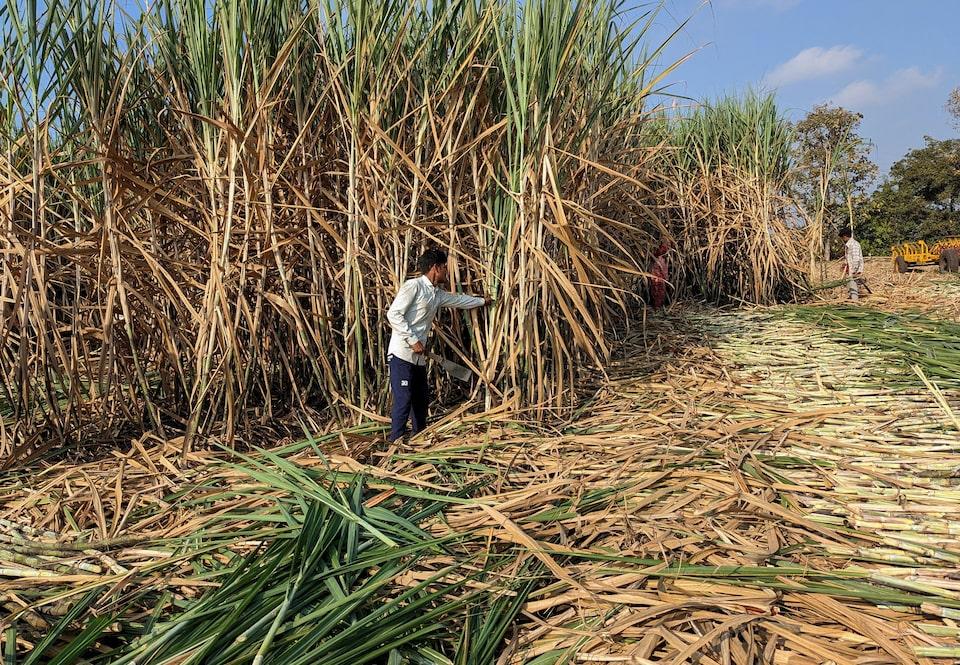
SATARA, India, June 9 (Reuters) - India is set to produce surplus sugar for at least two consecutive years, as millions of farmers expand the area under sugarcane cultivation amid ample rainfall, boosting crop yields, growers and industry officials said. The rebound in production would allow the world's second-largest sugar producer to increase exports in 2025/26, they said, after poor rainfall cut sugarcane yields and led to two years of export restrictions. Sign up here. "Sugarcane usually gives us good returns, but sometimes we can't plant it due to a lack of water," said Umesh Jagtap as he planted the crop on a three-acre plot in Maharashtra, a leading sugar producing state in the west. "This year, we had heavy rain in May, and the forecast says more rain is on the way. So we're planning to plant more than usual." Farmers from Maharashtra and neighbouring Karnataka struggle to irrigate their sugarcane crop in May. This year, however, Maharashtra and Karnataka received 1,007% and 234% more rainfall than average, respectively. The rainfall will benefit the crop to be harvested in the 2025/26 season, starting October, and will also support planting for the 2026/27 harvest, said Prakash Naiknavare, managing director of the National Federation of Cooperative Sugar Factories (NFCSF). Sugarcane typically takes 10 to 18 months from planting to harvest. As a result, farmers who began planting this month are expected to harvest their crop during the 2026/27 season. The NFCSF estimates gross sugar production in 2025/26 to rise by nearly a fifth from a year earlier, reaching 35 million metric tons. For the 2024/25 marketing year to September, India's net sugar production is expected to fall below consumption for the first time in eight years. This decline stems from a 2023 drought that hit sugarcane planting and forced India to prohibit sugar exports in 2023/24 and allowing merely 1 million tons in 2024/25. India was the world's No. 2 sugar exporter during the five years to 2022/23, with volumes averaging 6.8 million tons annually. "Looks like production is set to bounce back strongly, so New Delhi will probably have no trouble allowing exports of over 3 million tons in the next season starting October," said a Mumbai-based trader with a global trade house. https://www.reuters.com/sustainability/land-use-biodiversity/india-faces-two-years-sugar-surplus-growers-officials-say-2025-06-09/