2025-06-09 10:31
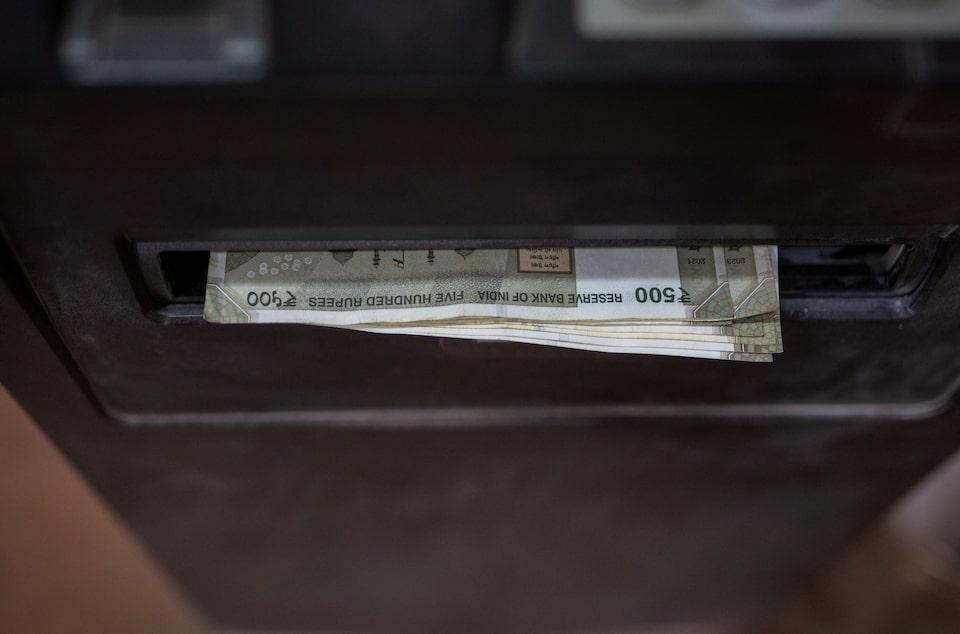
MUMBAI, June 9 (Reuters) - The Indian rupee closed marginally higher on Monday, tracking muted moves in Asian peers even as the dollar weakened ahead of closely watched trade talks between U.S. and China scheduled to take place in London. The rupee closed at 85.62 against the U.S. dollar. It had closed at 85.6250 in the previous session. Sign up here. Dollar-rupee forward premiums, meanwhile, eased to multi-month lows, with analysts pointing out that a fall in forward premiums could leave the currency vulnerable to further depreciation. The dollar index was down 0.2% at 98.9 while most Asian currencies tiptoed higher. Top U.S. and Chinese trade officials will meet for a second round of talks on Monday, days after Presidents Trump and Xi held a call to address escalating trade tensions. The scheduled talks "should keep the risk environment calm and the dollar supported," ING Bank said in a note. "With a speculative market already short dollars, (the dollar index) could drift towards the 99.40/50 area in anticipation of some good news out of U.S.-China trade discussions," the note added. Worries about the economic impact of U.S. trade policies have continued to weigh on the dollar, which is down by around 8.5% against major peers over the year so far. The rupee, meanwhile, is little changed on the year even as its regional peers have benefited from a broadly weaker dollar. Weak capital flows alongside relatively muted demand to hedge against prospective weakness in the dollar has held back the rupee, analysts said. Foreign investors have sold about $11.6 billion of Indian stocks over the year on a net basis so far. On the day, India's benchmark equity indexes, the BSE Sensex (.BSESN) , opens new tab and Nifty 50 (.NSEI) , opens new tab both ended in the green, lifted by the central bank's bumper monetary policy measures and signs of progress in U.S. tariff negotiations with its key trading partners. https://www.reuters.com/world/china/rupee-ends-nearly-flat-tracking-subdued-asia-fx-us-china-talks-focus-2025-06-09/
2025-06-09 10:13
Milei credited with stabilizing economy, taming inflation Government's austerity program has led to public discontent Milei's party leads in polls, opposition Peronists face internal divisions BUENOS AIRES, June 9 (Reuters) - Argentina's firebrand right-wing President Javier Milei has largely tamed runaway inflation with a ruthless austerity plan and he aims to solidify power when his party and its allies take on a divided opposition in legislative elections in October. The trash-tweeting, shaggy-haired economist, who famously handed tech billionaire Elon Musk a chainsaw at an event in Washington earlier this year, has overseen a steady dollar-peso peg but relies on legislative allies in Congress to pass his agenda. Many of the changes he has implemented have been through presidential decrees, like his ideological ally, U.S. President Donald Trump, who called Milei his favorite president. Sign up here. Voters will choose about half the seats in the lower chamber of Argentina's Congress and a third of the upper Senate on October 26. A big victory would not give Milei a legislative majority, but it would offer him leverage to make deals to sell off government-owned companies, cut social spending, change tax and labor policy and embrace social conservatism. That plan is in stark contrast to the program of the parties that are the ideological descendants of General Juan Peron, who ruled the country from 1946-1955 and 1973-1974, and his wife Evita. Their governments nationalized industries, unveiled pro-labor policies and rolled out social programs including free health care. The economic stability spurred by Milei, who took power in late 2023 and quickly slashed spending as part of a shock therapy program to pull the South American country out of a deep crisis, has not translated into across-the-board improvements. Prices of basic goods like jeans and tennis shoes are reportedly double what they are in other parts of the Americas. Pensioners continue to protest the cost of living, and anger over the relatively poor salaries of healthcare workers at a respected pediatric hospital has turned into a months-long saga. Nearly 40% of Argentines remain in poverty, and many of them reject Milei's policies. "I'm not a Peronist, but I'll vote for them because I'd vote for anyone before Milei," said Jorge, a 42-year-old "cartonero" who collects cardboard for recycling, an extremely poor living. The man, who declined to give his last name, said one of his four children was treated at the pediatric hospital where staff are protesting. Posing another threat to Milei's popularity is the possibility that he may in coming months have to further tighten economic policy to meet the terms of a $20 billion International Monetary Fund loan that has boosted Argentina's reputation among investors, whose dollars the country desperately needs. 'RUPTURE IS INEVITABLE' Up for grabs in the election is the vast province surrounding the capital, Buenos Aires, which is the geographic heart of Peronism and home to 40% of the country's voters. A government source told reporters Milei has vowed to defeat Peronist Governor Axel Kicillof there. Milei's candidate unexpectedly placed first in a recent Buenos Aires local election, and consulting firm Observatorio Electoral shows Milei's Libertad Avanza party with a slim 37%-36% advantage over the center-left Peronists. Nationally, 42% of voters favor Milei against 23% for the Peronists. Beating the standard-bearers of Juan Peron's legacy would have seemed impossible a few years ago, but with inflation down to a projected 30% this year, from 118% last year, and Milei credited with cutting corruption, some voters are ready to give the political firebrand more power. "I'll vote for Milei again because he's achieved a degree of normality in the economy," said Federico Segovia, a 22-year-old university student who blamed the last Peronist president, Alberto Fernandez, for leaving the economy in disastrous shape. A recent survey by the consulting firm Synopsis found that the share of those who viewed Milei positively rose to 43.4% in May from 40.9% in April. Perhaps the biggest wind in Milei's sails comes from the power struggle that has pitted Kicillof and his one-time mentor, former President Cristina Fernandez de Kirchner. Kicillof, who served as economy minister in Fernandez de Kirchner's government from 2013 to 2015, is expected to run for president in the 2027 election. "The rupture is inevitable," a Peronist source told Reuters. The two opposition politicians are still debating whether they will join forces for the congressional elections. "If there is no agreement for the legislative elections and Peronism is divided, La Libertad Avanza will win the elections in the province of Buenos Aires," the source said. Milei, meanwhile, has patched over divisions with his closest ideological neighbor, agreeing to offer a combined list of candidates with the center-right PRO party. The Peronists make up the largest party in Congress and have dozens of governors and mayors across the country. Observatorio Electoral pollster Julio Burdman, however, thinks that power base won't be enough to stop Milei's forces. "The ruling party has all the conditions" to win the most votes, he said. "I can't imagine any other result." https://www.reuters.com/world/americas/argentine-leader-milei-licking-his-chops-ahead-october-elections-2025-06-09/

2025-06-09 08:20
June 9 (Reuters) - Citigroup has pushed back its U.S. rate cut forecast to September from July and now expects three cuts this year instead of four, after a stronger-than-expected May jobs report in an otherwise cooling labor market. The Wall Street brokerage anticipates 75 basis points (bps) of cuts this year in three equal tranches in September, October and December, revising its earlier forecast of 100 bps of cuts. Sign up here. The brokerage also forecast two rate cuts of 25 bps each in January and March of 2026. The Federal Reserve's last rate cut was in December 2024, when it reduced the key lending rate by 25 bps. U.S. non-farm payrolls increased by 139,000 jobs last month after a downwardly revised rise of 147,000 in April, data showed. Economists polled by Reuters had estimated May payrolls to rise by 130,000 jobs. The U.S. central bank is expected to keep interest rates unchanged at its meeting next week, while traders have priced in close to two 25-bps cuts by December. On Friday, Citi lifted its S&P 500 (.SPX) , opens new tab year-end target to 6,300 from 5,800 earlier, expressing renewed optimism in corporate earnings resilience and the accelerating momentum of artificial intelligence-driven growth. The benchmark S&P 500 index closed above 6,000 for the first time since late February on Friday. https://www.reuters.com/business/citigroup-drops-july-rate-cut-bets-us-trims-forecast-75-bps-2025-06-09/

2025-06-09 06:54
June 6 (Reuters) - Uncertainty from Washington's tariff tactics remains rife, but investors realise that whatever U.S. President Donald Trump threatens doesn't tend to last long before he delays or backs down, meaning recent volatility has ebbed. This tendency to U-turn, dubbed the TACO trade - "Trump Always Chickens Out" - has caught on but it's also given investors something to bank on so they can focus on upcoming reads on inflation and trade. Sign up here. Here's a look at what's coming up for world markets from Kevin Buckland in Tokyo, Naomi Rovnick and Amanda Cooper in London and Alden Bentley in New York. 1/ TACOS FOR BREAKFAST The high-voltage volatility that shook markets in April and through May has subsided, with investors becoming accustomed to Trump's on-again-off-again approach to anything from tariffs to personal relationships - the meltdown with erstwhile DOGE chief and Tesla Chief Executive Elon Musk being the latest. Wall Street's fear-gauge, the VIX index, has slipped back below the 20-line that many view as a watermark. Since Trump became the 47th president on January 20, the index has topped 20 on 47 occasions. In the five months prior to that, it breached that level 18 times. In the last month, there have been just seven days when the VIX has popped above 20, compared with every day from April 2 "Liberation Day" to early May. If anything, the TACO trade is taking some spice out of the market. 2/ INFLATION HIDE AND SEEK Investors are hoping any rise in Wednesday's May consumer inflation report won't be as severe as feared, given Trump's erratic trade tactics. Recent data shows inflation falling close to the Federal Reserve's 2% target. Price pressures in manufacturing and services sectors are picking up, however. A good gauge of markets' long-term inflation view indicates only moderate concern. The inflation breakeven rate on five-year Treasury Inflation Protected Securities suggests investors believe the rate will average less than 0.3 percentage points above the target for the next five years. The Fed's most recent Beige Book showed economic activity is weakening, while costs and prices are rising across the different regions - a combination policymakers do not want to see. Traders expect the Fed to make no rate change at its June 18 meeting. 3/ A RARE DISPUTE Washington and Beijing's trade spat has brought a familiar issue back to the surface. China has a stranglehold on global supply of so-called rare earths, critical ingredients in almost every high-tech device out there, from cars to cruise missiles. When China cuts off supply, everything withers. The auto industry is feeling it. Suzuki (7269.T) , opens new tab suspended production of the Swift subcompact, weeks after Ford (F.N) , opens new tab did the same for its Explorer SUV. The White House has blasted Beijing for reneging on tariff rollbacks agreed in Geneva last month, but China is doing the same, lambasting the U.S. over revoked student visas and cutting-edge chip curbs. Chinese trade data on Monday will illuminate what's at stake, while inflation figures that day will show if Beijing's efforts to stoke domestic demand are working. U.S. and Chinese officials are due to meet in London on Monday to discuss trade and defuse the high-stakes dispute. 4/ A NICE BALANCE April trade data for the European Union on June 13 could offer a reasonably clean read on where things stood as Trump's on-off tariffs began to roll out. The EU is firmly in the U.S. president's crosshairs. Trump has said more than once the sole purpose of the EU is to "take advantage" of America, on the grounds that his country boasts a $200 billion trade deficit with the bloc in goods alone, making the EU its second-biggest goods trade partner behind China. EU sales of cars, steel, pharmaceuticals and luxury goods and apparel among other things are big business. Trump on May 23 said he would impose a 50% tariff on all EU imports, only to back down two days later by delaying the duties by a month after a "very nice call" with European Commission President Ursula von der Leyen. 5/ TAX OR OFFEND Britain, often a prime target for bond vigilantes that attack indebted governments for financial mismanagement, has been pushed into these traders' peripheral vision by U.S. budget concerns. The Labour government's first spending review on Wednesday could bring the UK back into the spotlight. Even if finance minister Rachel Reeves manages to slash departmental spending, this will merely highlight how few cost-cutting options she has left, Bank of America says. UK public debt has swelled, leaving Reeves minimal headroom to avoid breaking self-imposed fiscal rules and less able to resist tax hikes. Still, businesses and borrowers still scarred by the gilt market riot after then Prime Minister Liz Truss' 2022 mini-budget may prefer higher taxes if that lowers the odds of bond vigilantes showing up. https://www.reuters.com/business/take-five/global-markets-themes-graphic-2025-06-06/

2025-06-09 06:45
MUMBAI, June 9 (Reuters) - The Reserve Bank of India’s surprise outsized rate cut last week will leave the rupee vulnerable to further depreciation by pressuring already depressed foreign exchange forward premiums, several analysts said on Monday. The rupee has underperformed its Asian peers in 2025 amid weak capital flows. A narrowing interest rate differential — with the U.S. Federal Reserve moving slower than the RBI in cutting rates — suggests the Indian currency may continue to lag. Sign up here. MARKET REACTION The 1-month U.S. dollar/rupee forward premium — typically more sensitive to liquidity conditions — fell to 7.5 paisa, its lowest level since November. Meanwhile, the 1-year premium , which is more responsive to rate differential between the U.S. and India, declined to 1.5250 rupees, marking its lowest level in nearly a year. GRAPHIC: WHY IT'S IMPORTANT A drop in dollar/rupee forward premiums makes the rupee less attractive for carry trades, and diminishes the incentive for exporters to hedge future receivables. At the same time, it raises the likelihood that importers—who typically hedge near-term payment obligations—will step up their hedging activity. The decline in premiums - a less favourable rate differential between the U.S. and India - could leave the rupee open to sharper depreciation. CONTEXT Against the backdrop of benign inflation and the need to support growth, the Reserve Bank of India last Friday delivered a larger-than-expected 50 basis point rate (bps) cut, exceeding the 25 bps anticipated by economists. In a further easing move, the central bank slashed the cash reserve ratio for banks. KEY QUOTES "One thing the rupee had going for it is that it offered attractive carry ... with the 50-bps rate cut from the RBI, carry attraction has been reduced," Mitul Kotecha, head of FX and EM macro strategy Asia at Barclays, adding that in an environment where investors are again focussed on carry, the rupee's appeal has been diminished. Falling premiums can be a "mild added headwind" for the rupee amid globally elevated yields, Dhiraj Nim, FX strategist at ANZ Research, said, and pointed out that if India growth data weaken, there could be scope for one more rate cut. https://www.reuters.com/world/india/india-central-banks-large-rate-cut-squeezes-forward-premiums-leaves-rupee-2025-06-09/
2025-06-09 06:33
LONDON, June 9 (Reuters) - U.S. President Donald Trump's move to double tariffs on aluminium imports heightens the risk of a full-blown scrap war with the European Union. Although they are supposed to be blanket tariffs with no exceptions or exemptions, there is one significant gap in the tariff wall. Sign up here. Aluminium scrap is explicitly excluded on the grounds it constitutes a key raw material for U.S. manufacturers. The Trump administration's decision to lift aluminium tariffs to 25% effective the start of March has already caused U.S. imports of recyclable material to rise. This week's doubling of the tariff rate to 50% could turn the import flow into a flood. The European Union, which is mulling export duties on aluminium recyclables to stop what it terms "scrap leakage", is coming under pressure to move sooner rather than later. US PREMIUM SURGES AGAIN The U.S. Midwest aluminium premium has rocketed to a record $1,325 per metric ton after Wednesday's doubling-down on import tariffs. That's the price U.S. buyers will pay over and above the international price traded on the London Metal Exchange (LME), currently $2,430 per ton for cash metal. What once reflected the cost of transport to get metal to the U.S. Midwest manufacturing hub is now a tariff premium, capturing the fracture of the global aluminium pricing structure. U.S. consumers of aluminium goods will ultimately foot the bill but mid-stream processors are likely to do well. Fabricators converting raw metal to semi-finished goods such as can sheet were the prime beneficiaries of the first Trump administration's 10% tariffs, according to a report by consultancy Harbor Aluminum commissioned by the Beer Institute. Mid-stream processors passed on the tariff, even if the raw material was domestically sourced scrap, Harbor found. The new tariffs will incentivise fabricators not only to maximise their domestic purchases of scrap but to tap overseas markets, where U.S. buyers can now outbid just about anyone else for available material. SCRAP WARS U.S. imports of aluminium recyclable materials jumped to over 80,000 tons in March, the highest monthly volume since 2022. There were sharp increases in supply from Canada and Mexico, the two largest and nearest suppliers to the U.S. market. However, the tariff differential has started to draw material out of Europe, according to the European Aluminium association. Exports from EU countries to the United States spiked in the first quarter of the year, it said. They are only going to accelerate as the transatlantic price gap widens after this week's doubling of tariffs. The EU is facing a "full-blown scrap crisis", according to the association. Director General Paul Voss called on the European Commission to immediately impose a corresponding duty on scrap exports to the United States. The Commission has already identified high aluminium scrap exports as a key hurdle in its ambition to meet the bloc's "Circular Economy" targets. A March "Action Plan" , opens new tab for both the aluminium and steel sectors promised a decision by the third quarter of this year on suitable trade measures, including reciprocal export tariffs on countries "that apply unfair subsidies" to their recycling industries. There's now a sense of urgency that some sort of defensive trade barrier will be required to stem export flows. CHINA EXPOSED Aluminium scrap is a highly globalised marketplace but that looks set to change as Europe figures out how to stop the loss of raw material to the United States. Caught in the middle of this tug-of-war is China, the world's largest aluminium scrap buyer. The country has imported 1.8 million tons in each of the last two years and although it sources much of its material from Asia, it is a significant buyer of both U.S. and European end-of-life scrap. Beijing last year relaxed the purity rules on imports of both copper and aluminium scrap to encourage greater domestic recycling. This is particularly important for China's aluminium sector, where production of primary metal is now close to the government's mandated capacity cap, meaning supply growth will have to come from recycling. Chinese buyers are facing the twin challenge of export restrictions in Europe and competition with U.S. players in their own Asian supply chain. The scrap wars have only just begun. The opinions expressed here are those of the author, a columnist for Reuters. Enjoying this column? Check out Reuters Open Interest (ROI), your essential new source for global financial commentary. ROI delivers thought-provoking, data-driven analysis of everything from swap rates to soybeans. Markets are moving faster than ever. ROI can help you keep up. Follow ROI on LinkedIn , opens new tab and X , opens new tab. https://www.reuters.com/markets/commodities/us-aluminium-tariffs-threaten-scrap-clash-with-european-union-2025-06-09/


